TL;DR

Get home appliances delivered free with Prime
- Fast, free delivery on millions of items
- Prime Video, Amazon Music and more included
- Member-only deals all year
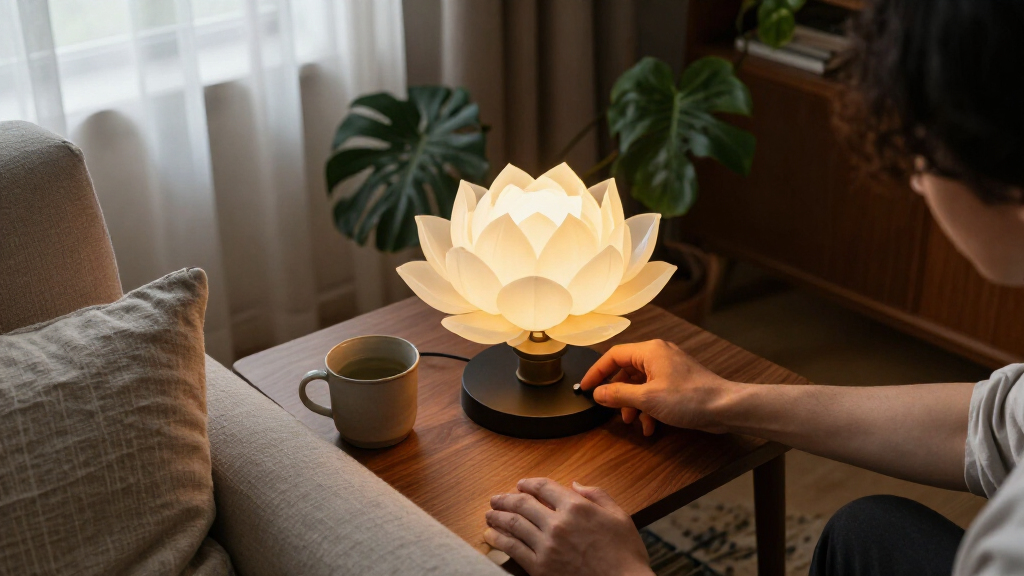
Gubi has returned Carlo Nason’s Lotus table lamp to production, more than five decades after its 1969 debut. The reissue keeps its four-layer mouth-blown glass design and adds a re-engineered steel base intended to improve stability and make cleaning and bulb changes easier.
Gubi has brought Carlo Nason’s Lotus table lamp back into production, reviving a design first introduced in 1969 as the LT305. The Danish design brand says the reissue preserves the lamp’s four nested, mouth-blown glass shades while updating its steel base for greater stability and easier maintenance.
The lamp’s form consists of four distinct glass shades, each mouth-blown and nested inside the next. Their overlapping, rounded profiles create the flower-like shape that led collectors to call it the “Lotus lamp”. Gubi has adopted that established nickname for the reissue rather than the original model designation, LT305.
According to Gubi, the shades are made using pulegoso, a Murano glassmaking technique that introduces small air bubbles into the glass, creating a textured, semi-opaque finish. The lamp’s central overlap conceals the bulb, while sections formed by a single layer of glass allow light through. Gubi CEO Marie Kristine Schmidt said this arrangement helps produce a glow without glare or harsh shadows.
The company says it worked with Alberto Nason, the designer’s son, during development. The main practical change is a re-engineered steel base, which holds the bulb socket and supports the shades. Gubi says the updated construction improves stability and makes the lamp easier to take apart for cleaning and bulb replacement. The lamp is available through Gubi’s website and select retailers, according to the report.
A Collector Design Returns to Production
The return puts a design associated with collectors back into current production, making it available beyond the limited period when the original LT305 was manufactured. The source report says the lamp was produced for only a few years after its 1969 introduction, though it does not provide exact production dates or figures. Its revival offers design buyers a new route to acquire the model rather than relying solely on vintage examples.
The project also connects the lamp’s original craftsmanship to a current product. Gubi says it has retained the mouth-blown, bubble-textured glass and the layered silhouette, while making changes to parts used for support and maintenance. That distinction matters for buyers weighing the appeal of an older design against the practical demands of using and caring for a contemporary lamp.
The reissue has added significance because Nason died earlier this year, according to the source report. Alberto Nason described the relaunch as a way for a wider audience to experience his father’s work. The revival therefore serves both as a commercial product launch and as a continuation of the designer’s public legacy, although the company has not disclosed production volumes or sales expectations.
As an affiliate, we earn on qualifying purchases.
From LT305 to the Lotus Name
Carlo Nason came from a family of Murano glassmakers and developed expertise in the island’s glassblowing traditions. The source report says he pursued more experimental, contemporary forms than the highly decorative work associated with many of his family members and peers. The LT305 reflected influences from industrial product design and the Space Age style popular in the 1960s.
Introduced in 1969, the lamp stayed in production for only a few years, according to the report. It later gained a following among design collectors, who gave it the Lotus name. Schmidt said Gubi chose to use that name because it had become part of the lamp’s identity and history. The report does not specify when Gubi began developing the reissue or when it first became available to purchase.
The new production retains the original design’s central idea: layers of glass that appear to open outward like a flower. Gubi says it consulted with Alberto Nason and sought to preserve the original intention while making limited construction changes. The source material does not provide a detailed comparison between the original lamp’s technical specifications and those of the reissue.
““Collectors had already given the lamp a name that captures the design beautifully. The name had become part of the design’s identity and history, and we wanted to respect that.””
— Marie Kristine Schmidt, Gubi CEO
Murano pulegoso glass table lamp four shades
As an affiliate, we earn on qualifying purchases.
As an affiliate, we earn on qualifying purchases.
Price, Quantities and Specifications
The source report does not state the lamp’s price, production quantity, materials specifications beyond the glass and steel base, or delivery schedule. It also does not give exact dates for the original production run or quantify the lamp’s collector following. Gubi’s description of improved stability and easier disassembly is a company statement; the report supplies no independent testing or detailed technical measurements.
The report says the lamp is available through Gubi and select retailers but does not identify those retailers or say whether availability differs by country. It is also unclear whether the reissue will be produced continuously or in limited batches.
vintage Carlo Nason LT305 Lotus lamp
As an affiliate, we earn on qualifying purchases.
As an affiliate, we earn on qualifying purchases.
Availability Through Gubi Retailers
For now, the next step for prospective buyers is to check Gubi’s website and select retailers for current availability and local pricing. The source report does not announce a launch schedule, further color or finish options, or plans for additional Nason designs to return to production. Any updates on stock, regional access, or product specifications would need to come from Gubi or its retail partners.
modern Italian glass mushroom table lamp
As an affiliate, we earn on qualifying purchases.
As an affiliate, we earn on qualifying purchases.
Key Questions
What is the Lotus table lamp?
It is a table lamp designed by Carlo Nason and first introduced in 1969 as the LT305. Collectors later gave it the Lotus name, which Gubi has adopted for the reissue.
What has Gubi changed for the reissue?
Gubi says it has re-engineered the steel base to improve stability and make the lamp easier to disassemble for cleaning and bulb replacement. The company says the change does not alter the design’s visual expression.
How is the lamp’s glass made?
The four shades are mouth-blown and made using the Murano technique known as pulegoso, which adds small air bubbles to create a textured, semi-opaque appearance. Gubi says natural variations mean each lamp differs.
Where can buyers find the reissued lamp?
The source report says the Lotus Table Lamp is available at gubi.com and select retailers. It does not provide a price or list the retailers.
Source: rss
Fall yard work Picks
leaf blowers
As an affiliate, we earn on qualifying purchases.