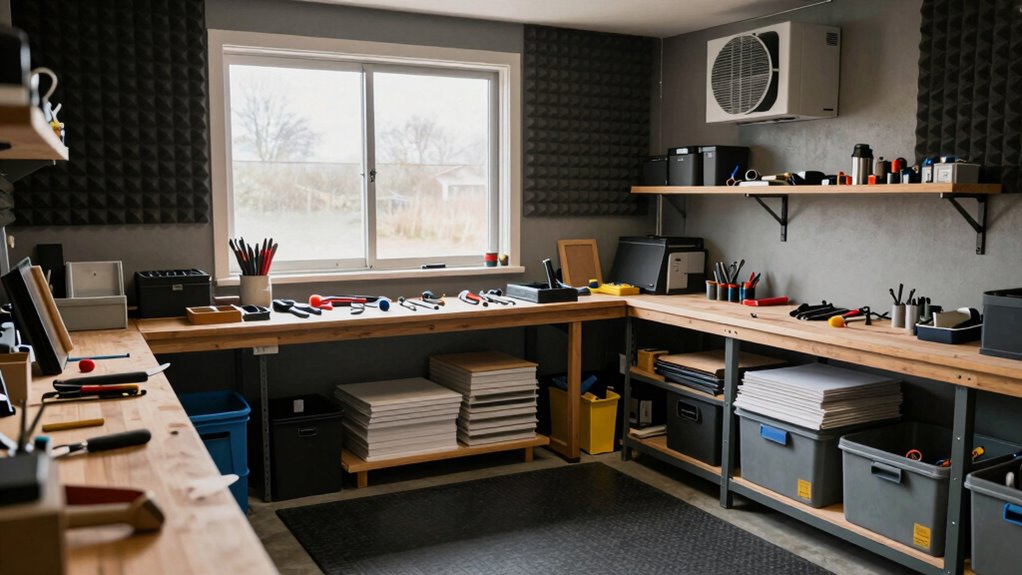
To keep your garage workshop quiet, focus on soundproofing walls with insulation and acoustic panels, and install solid-core doors and double-glazed windows to block noise. Use sound-absorbing materials on walls, ceiling, and floors, and add barriers around vents and noisy equipment. Maintain your tools and machinery, and seal gaps to prevent sound leaks. Want to learn more ways to create a peaceful workspace? Keep exploring for practical tips to reduce noise effectively.

Get home appliances delivered free with Prime
- Fast, free delivery on millions of items
- Prime Video, Amazon Music and more included
- Member-only deals all year
Key Takeaways
- Install soundproof doors, windows, and insulation to block noise transmission through structural elements.
- Use acoustic panels, foam tiles, and sound-absorbing materials on walls and ceilings to reduce echoes and bounce.
- Seal gaps around vents, doors, and windows with acoustic caulk to prevent sound leaks.
- Choose quieter power tools and incorporate vibration dampening and enclosures for noisy equipment.
- Maintain organization to minimize clutter, which helps reduce echoes and improves overall noise control.
As an affiliate, we earn on qualifying purchases.
Assess Your Garage’s Noise Levels and Problem Areas
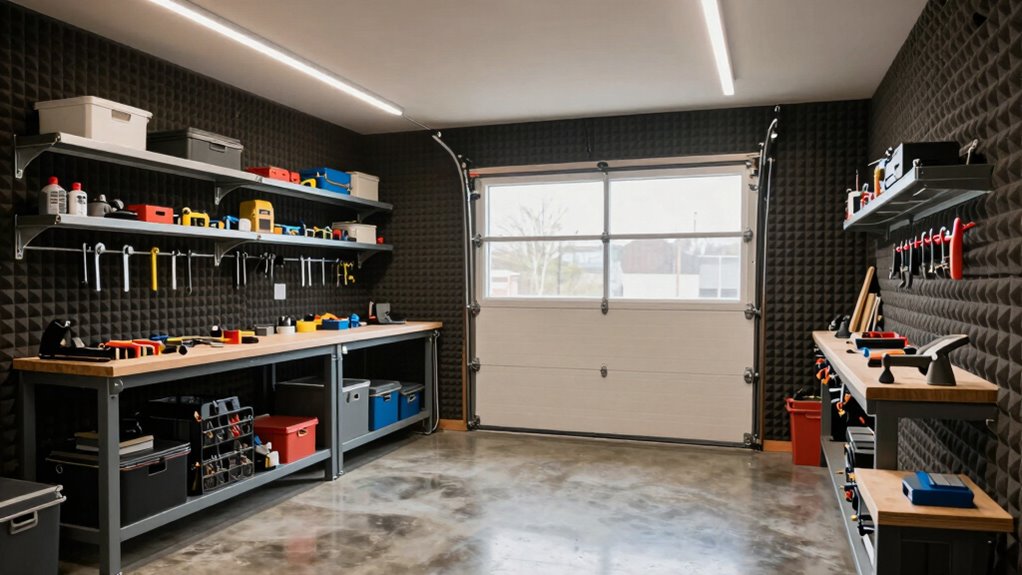
Before you can effectively reduce noise in your garage workshop, you need to understand where the loudest problems are. Start by evaluating your garage’s noise levels during typical work sessions. Note which tools or activities generate the most sound. As part of this, appraise your garage organization; clutter and disorganized spaces can amplify noise and make it harder to identify problem areas. Also, consider lighting improvements—poor lighting can cause you to work inefficiently, leading to extra noise from unnecessary movements or mistakes. By pinpointing these trouble spots, you can develop targeted solutions. Organizing your workspace properly and enhancing lighting not only makes your garage quieter but also safer and more efficient. Knowing where the noise originates is the first step toward effective sound control. Incorporating elements of garage workspace organization can further help in minimizing noise disruptions. Additionally, understanding soundproofing techniques can provide long-term solutions for maintaining a quieter environment. Implementing noise-reducing materials in your garage can also significantly help in dampening sound transmission, especially when combined with proper sound insulation methods. Research indicates that integrating sound healing science principles, like specific frequencies and vibrations, can sometimes be applied to mitigate noise issues in certain environments.
As an affiliate, we earn on qualifying purchases.
How Noise Travels in Your Garage and Why It Matters
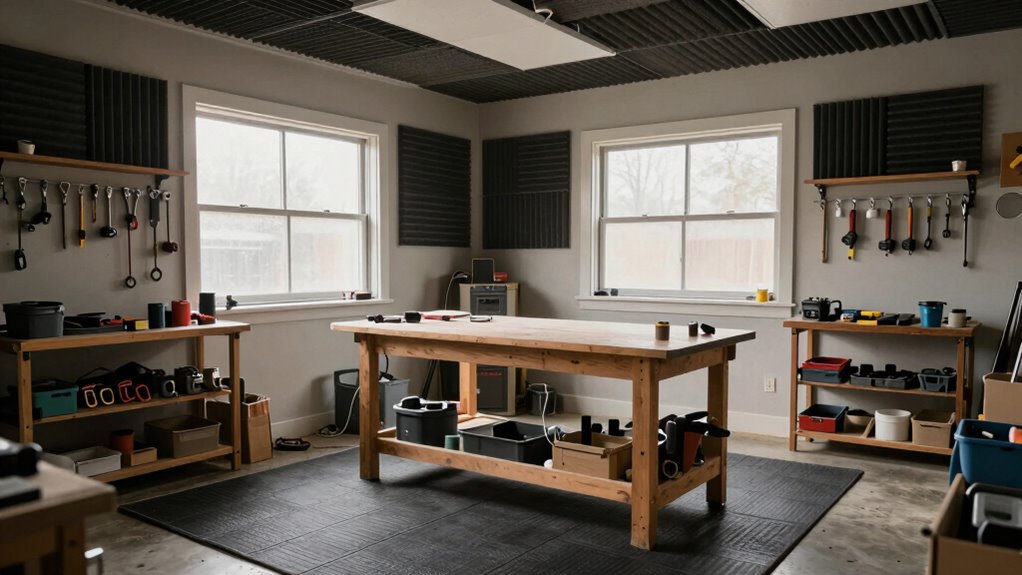
Understanding how noise travels in your garage helps you identify the main pathways it uses, like through walls, ceilings, and floors. Structural vibrations can amplify sound, making noise worse than it seems. Choosing the right materials can absorb sound better and keep your workshop quieter.
Sound Transmission Pathways
Sound travels through your garage in three main ways: airborne transmission, structural transmission, and through vents or openings. Airborne noise moves directly through the air, so cluttered garage organization can help reduce echoes and sound bounce. Structural transmission occurs when vibrations pass through walls, floors, and ceilings, making proper insulation and soundproofing critical. Vents and openings also allow noise to escape or enter, especially if they aren’t sealed well. Lighting improvements can indirectly reduce noise by encouraging better organization and tidiness, minimizing loose tools or materials that amplify sound. Sealing gaps around vents and doors can block sound pathways. Additionally, soundproofing techniques can significantly enhance noise control by addressing multiple transmission routes simultaneously. Recognizing how sound travels helps you identify the most effective areas to focus your efforts for noise reduction. Understanding the sound transmission pathways in your garage can guide you to select the most appropriate soundproofing materials and strategies for effective noise mitigation.
Structural Vibrations Effect
Vibrations from tools, machinery, or even footsteps can travel through the structure of your garage, carrying noise beyond the source. This is where vibration isolation becomes essential. By installing mounts or pads designed to absorb or deflect vibrations, you prevent them from spreading through the building’s frame. Structural damping also plays a critical role; it reduces the energy of vibrations, minimizing their transmission. Without these measures, vibrations can reverberate through walls, floors, and ceilings, making your garage noisier and disturbing adjacent spaces. Understanding how noise travels via structural vibrations helps you target key areas for soundproofing. Proper wiring practices and cable management can also reduce additional noise and vibrations caused by loose or poorly installed cables. Additionally, assessing building materials can help identify those that naturally dampen vibrations, further enhancing your workshop’s quietness. The use of damping materials can significantly improve vibration absorption and help create a quieter environment. Implementing vibration isolation strategies and structural damping techniques ensures that noise stays confined, making your workshop quieter and more comfortable. Recognizing the importance of material properties can guide you in choosing the best construction options for noise reduction.
Material Sound Absorption
Materials that absorb sound are essential for controlling noise in your garage because they prevent sound waves from bouncing around and amplifying. Acoustic paneling is an effective solution, as it absorbs echoes and reduces overall noise levels. You can install these panels on walls or ceilings where sound tends to reflect most. Soundproof curtains are another practical option; hanging them over doors or windows helps block noise from escaping or entering. Both options improve the acoustics of your workspace and keep sound contained. Using these sound-absorbing materials doesn’t just make your garage quieter—it also creates a more comfortable environment for working or relaxing. By strategically placing acoustic paneling and soundproof curtains, you notably reduce noise transmission and enhance your overall workshop experience.
double glazed windows for noise reduction
As an affiliate, we earn on qualifying purchases.
As an affiliate, we earn on qualifying purchases.
How to Soundproof Garage Walls Effectively
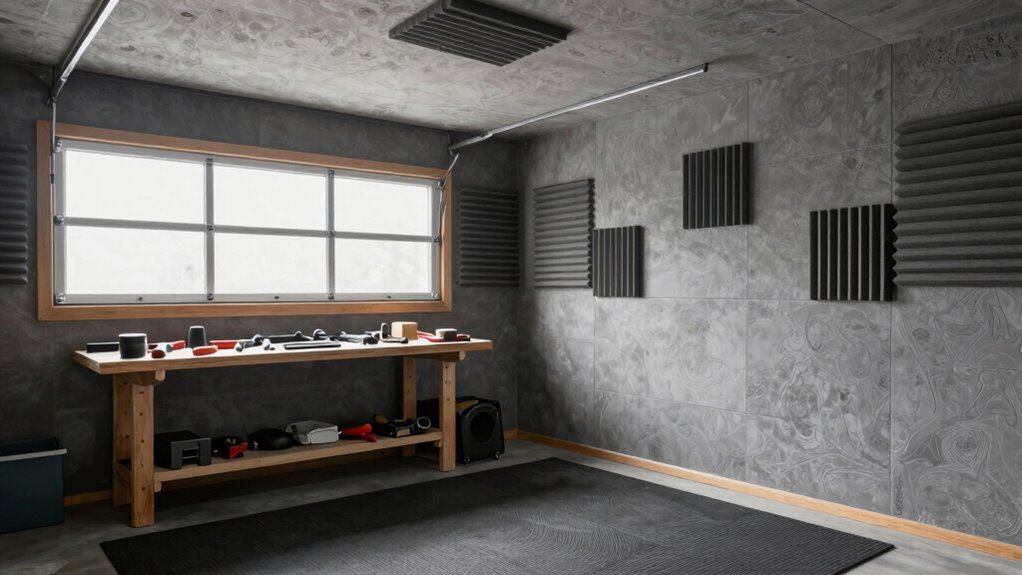
To effectively minimize noise transfer through your garage walls, you need to focus on the right soundproofing techniques. Start by adding mass with insulation or drywall to absorb sound. Seal gaps and cracks using acoustic caulk to prevent sound leaks. Incorporate soundproof panels or decoupling techniques for better results. While working, optimize garage lighting and storage organization to reduce clutter, which can amplify noise. Properly organized storage minimizes vibrations and rattling, further reducing noise transfer. Additionally, natural sound-absorbing materials can enhance the overall effectiveness of your soundproofing efforts. For a more comprehensive approach, consider cabling solutions that can help manage electrical noise and vibrations, contributing to a quieter workspace. Using soundproofing accessories can also provide an extra layer of noise reduction and improve overall sound insulation. Employing effective sealing methods is essential to ensure that no sound escapes through small gaps or openings. Incorporating specialized insulation materials can significantly enhance soundproofing by adding additional mass and damping vibrations.
As an affiliate, we earn on qualifying purchases.
Installing Acoustic Doors and Windows for Better Noise Control
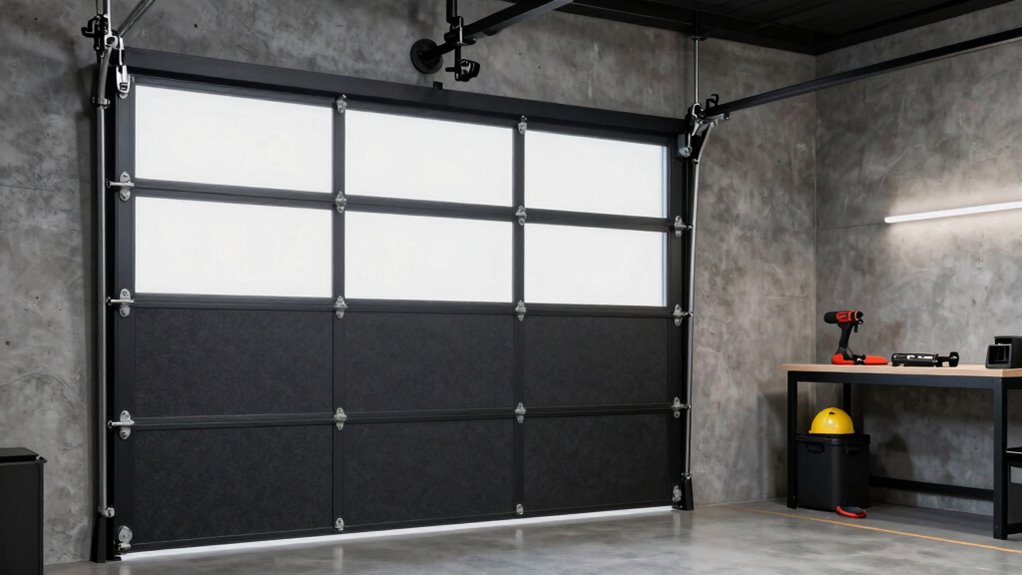
Installing acoustic doors and windows is one of the most effective ways to enhance noise control in your garage workshop. These specialized doors and windows help prevent sound leaks, making your space quieter. When choosing them, prioritize models with solid cores and double-glazed panes for maximum soundproofing. Proper garage insulation around these openings further improves noise reduction, creating a seamless barrier. Be mindful of ventilation systems, as they can compromise soundproofing if not properly designed. Opt for quiet, insulated ventilation options that maintain airflow without letting noise escape. Ensuring a tight seal around doors and windows is essential for ideal noise control. Additionally, understanding metal detecting etiquette can help you maintain a respectful environment if your workshop is in a shared space. Incorporating soundproofing materials into your walls and ceilings can also significantly enhance the overall noise reduction. Using appropriate sealing techniques around doors and windows ensures minimal sound leakage. Moreover, selecting acoustic treatment options aligned with your specific needs can further optimize the noise environment. Properly integrating soundproofing and insulation techniques can make a noticeable difference in reducing sound transmission throughout your workshop. With these improvements, you’ll enjoy a quieter work environment while maintaining good airflow and insulation.
Choosing and Installing Sound Absorbing Materials for Your Garage
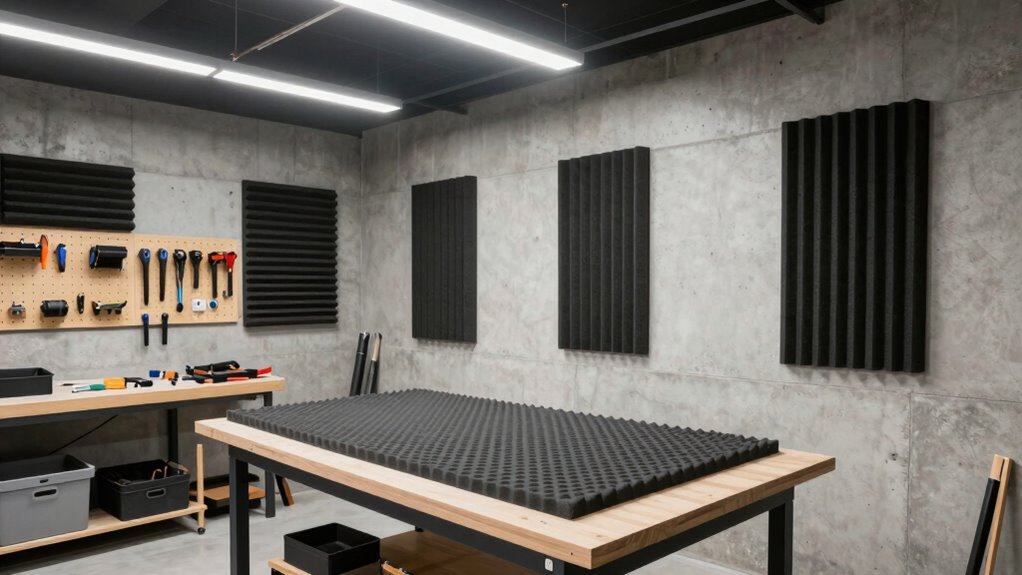
Have you considered how the right sound-absorbing materials can transform your garage workshop into a quieter, more comfortable space? Start by choosing materials like foam panels, mineral wool, or acoustic tiles that absorb sound effectively. Proper placement is key; install panels on walls where noise bounces most, especially near workbenches or noisy equipment. When organizing your garage, keep clutter and tools off surfaces to prevent echo and improve sound absorption. Consider lighting improvements as well—brighter, well-placed lighting reduces shadows and helps you see clearly, reducing the need for loud corrections. Incorporating soundproofing techniques can further enhance your space by blocking external noise sources. Combining sound-absorbing materials with thoughtful garage organization and lighting upgrades creates a more peaceful workspace where noise is minimized, and productivity is maximized.
Adding Soundproof Flooring to Reduce Vibrations and Impact Noise
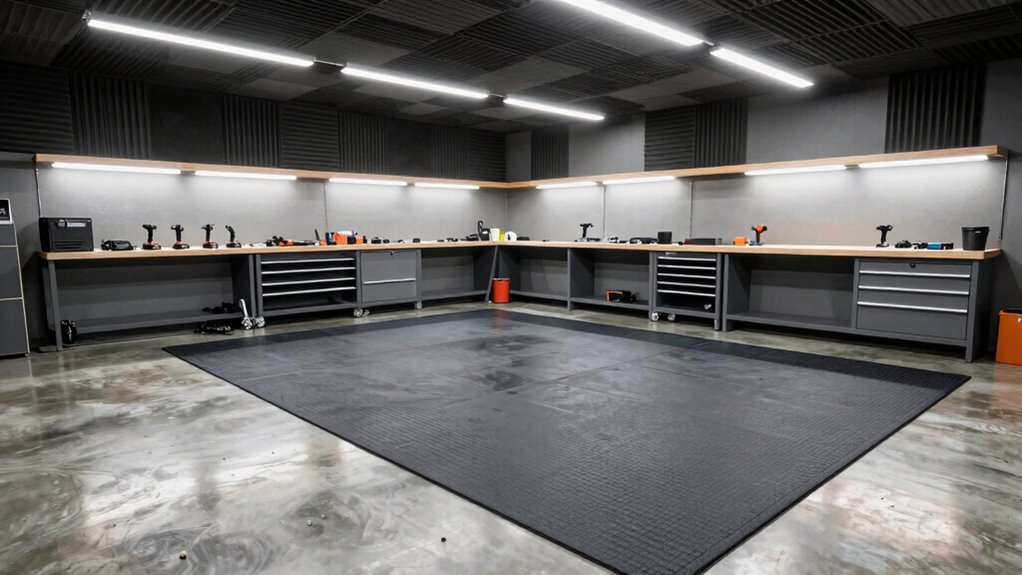
Vibrations and impact noises often travel through garage floors, making it difficult to keep your workspace quiet and comfortable. To combat this, adding soundproof flooring is essential. Start by installing proper floor insulation, which absorbs vibrations and prevents noise from traveling to other areas. Consider using materials like rubber mats or foam underlays designed for soundproofing, which help dampen impact sounds. Applying noise reduction coatings directly onto your existing floor can further improve sound insulation by creating a barrier that minimizes sound transmission. These coatings are easy to apply and provide an extra layer of soundproofing, especially in high-traffic areas. Incorporating sustainable materials into your soundproofing solutions can also reduce environmental impact and enhance durability. Combining floor insulation with noise reduction coatings results in a quieter, more comfortable workshop environment.
Creating Physical Barriers to Contain Garage Noise
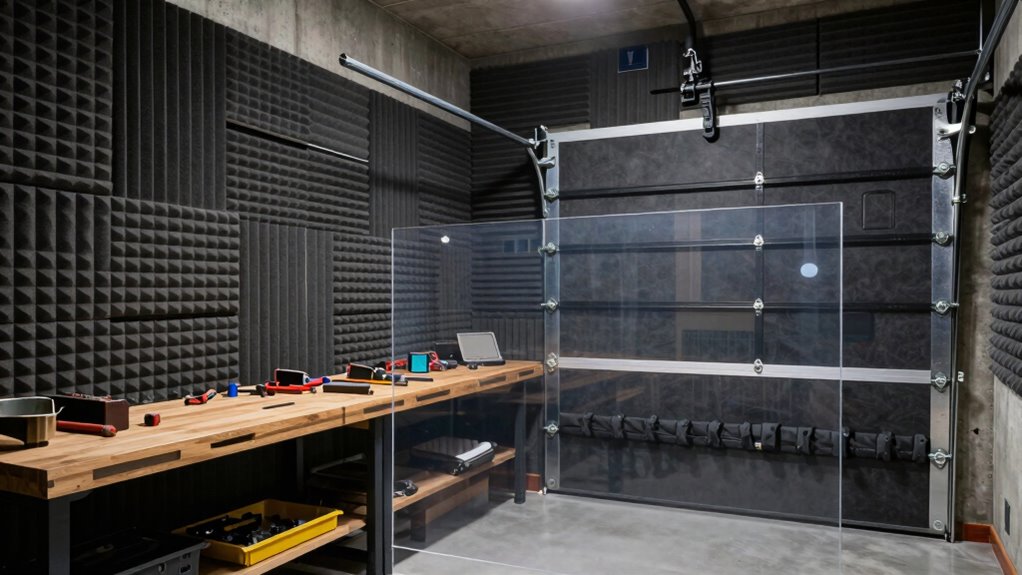
To effectively contain garage noise, creating physical barriers can be a highly practical solution. Start with garage door insulation to minimize sound escape and block outside noise from entering. Insulated garage doors are essential for reducing vibration and noise transmission. Additionally, consider installing barriers around ventilation openings to address ventilation noise control. You can add soundproof panels or acoustic blankets around vents to prevent noise from leaking through these areas. These barriers effectively contain noise within your garage, preventing disturbance to neighboring spaces or rooms inside your house. Properly designed physical barriers are a straightforward, cost-effective way to improve soundproofing. By focusing on insulation and strategic barriers, you’ll markedly reduce noise levels and create a quieter, more comfortable workshop environment.
Tips for Managing Power Tools and Machinery Noise
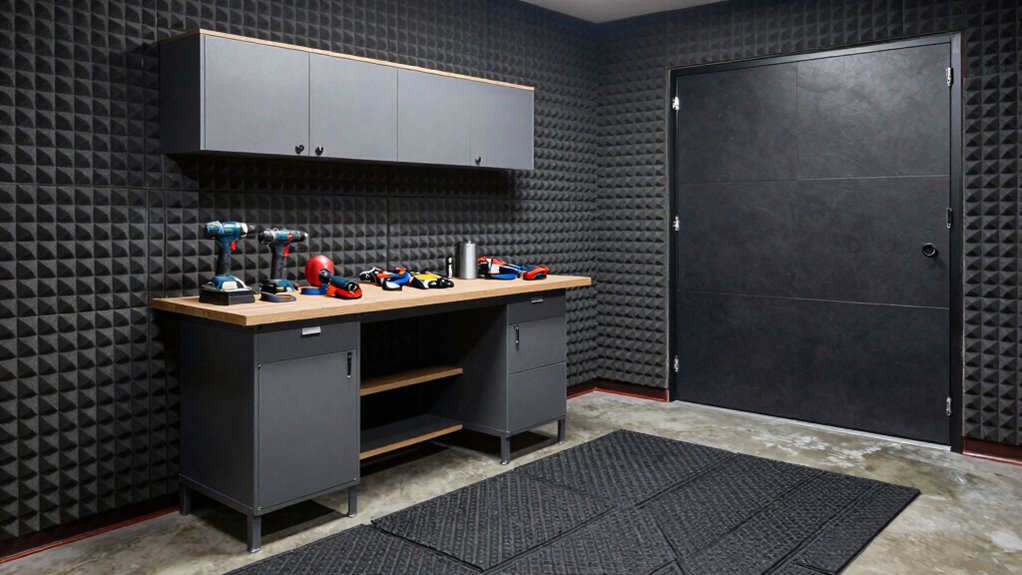
Managing the noise generated by power tools and machinery is essential for maintaining a quieter workshop environment. To reduce noise pollution, start by choosing quieter models when possible, as modern soundproofing technology can considerably cut down noise levels. Use mufflers, vibration dampeners, and anti-vibration mats to minimize sound transmission. Operate tools at lower speeds when feasible, and keep blades and bits sharp to reduce unnecessary noise. Regular maintenance ensures machinery runs smoothly, decreasing loud vibrations. Additionally, isolate noisy equipment in separate areas or enclosures to contain sound. Wearing hearing protection also helps, but controlling noise at its source is more effective. Implementing these tips will help you manage machinery noise and create a more comfortable, quieter garage workshop.
Maintaining and Improving Your Garage Soundproofing Over Time
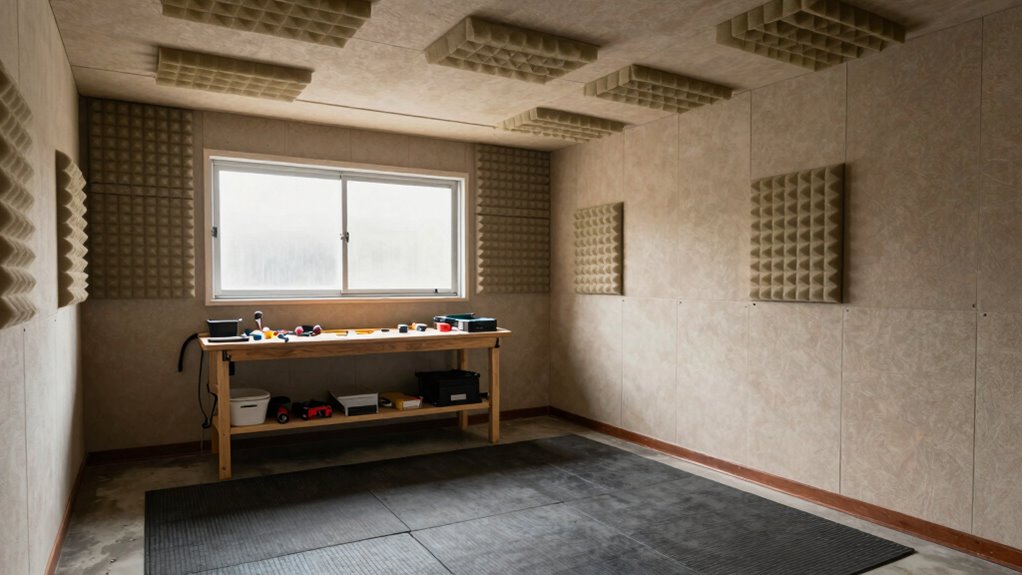
Over time, regular maintenance and thoughtful upgrades are essential to guarantee your garage soundproofing remains effective. Keep your garage organized by regularly checking for gaps or damaged insulation that could reduce soundproofing efficiency. Reassess your storage solutions to prevent clutter from interfering with soundproofing barriers. Consider lighting improvements that don’t compromise soundproofing, such as installing fixtures that minimize vibrations or noise. Proper lighting also helps you identify and fix weak spots in your soundproofing setup. Periodic inspection ensures seals around doors and windows stay intact. Upgrading or replacing worn materials can restore soundproofing levels. Staying proactive with these steps ensures your garage remains a quiet workspace while maintaining a tidy and safe environment.
Frequently Asked Questions
How Do I Measure the Current Noise Levels in My Garage?
To measure noise levels in your garage, you should use sound level meters. First, turn on the meter and hold it at ear level, about a foot from your ear, to get an accurate reading. Conduct a noise level comparison by recording the decibel (dB) readings during different activities. This helps you identify loud spots and find the best ways to reduce noise in your workshop.
What Are the Most Cost-Effective Soundproofing Options for a Beginner?
Looking for budget-friendly soundproofing options? Have you considered using soundproofing materials like foam panels or mass-loaded vinyl? They’re affordable and perfect for beginners. You can easily install them yourself with basic tools, making DIY installation straightforward. Focus on sealing gaps around doors and windows to boost effectiveness. These simple steps considerably reduce noise without breaking the bank, turning your garage into a quieter, more comfortable workspace.
Can Weather Conditions Affect the Effectiveness of Garage Soundproofing?
Weather conditions can definitely affect the effectiveness of your garage soundproofing. Extreme temperatures, humidity, and rain can cause certain soundproofing materials to expand, contract, or degrade over time, reducing their insulating properties. To minimize weather impact, select durable soundproofing materials like foam panels with weather-resistant coatings or insulated barriers. Regularly inspecting and maintaining your soundproofing helps guarantee it remains effective, regardless of weather changes outside.
How Long Does It Typically Take to Install Garage Soundproofing Solutions?
Installing garage soundproofing solutions is like planting seeds for peace and quiet; it usually takes a few hours to a full day. You’ll start by installing garage insulation to block noise, then hang soundproof curtains for extra barrier. Factors like room size and materials can influence the timeline. Prepare to dedicate a day or so to transform your space into a tranquil retreat, free from outside noise.
Are There Any Legal Noise Restrictions I Should Be Aware Of?
Yes, you should be aware of noise ordinances and legal limits in your area. Local regulations often set maximum decibel levels for garage activities, especially during certain hours. Check with your city or county’s noise ordinances to make certain your workshop stays compliant. Ignoring these rules could lead to fines or conflicts with neighbors. It’s best to stay informed and adjust your noise levels accordingly to avoid issues.
Conclusion
By taking these steps, you’re building a fortress of silence around your garage workshop, turning chaos into calm. Think of soundproofing as planting a shield that keeps unwanted noise at bay, so you can focus on your projects or enjoy peace without interruption. With patience and the right materials, you’ll find that silence isn’t just golden—it’s within your reach, transforming your garage into a tranquil haven amidst the noise of everyday life.
Halloween Picks
halloween
As an affiliate, we earn on qualifying purchases.