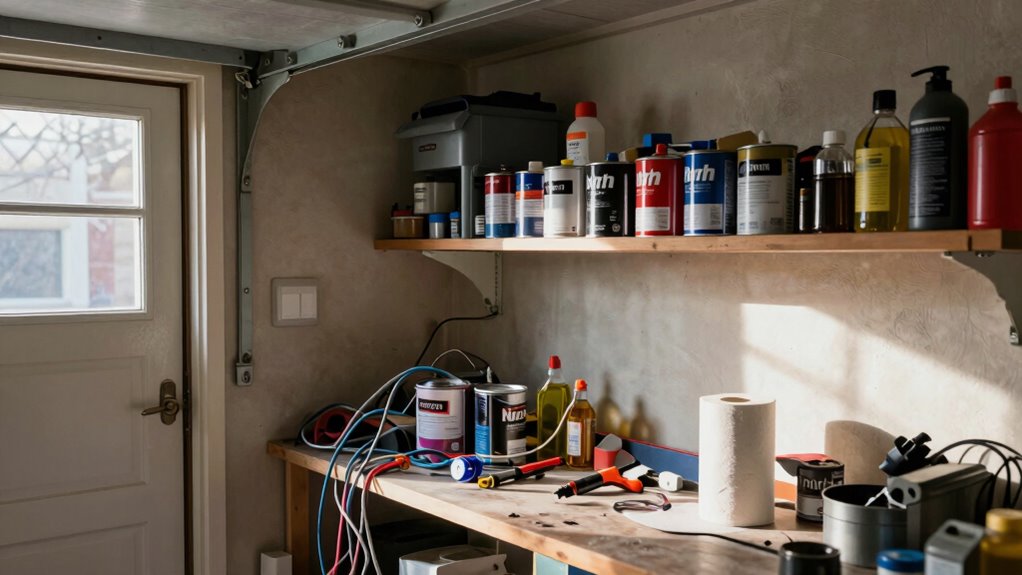

Many homeowners overlook key garage fire risks, like clutter blocking exits and hiding ignition sources, or storing flammable liquids near heat. Poor electrical wiring, outdated appliances, and overloaded circuits also increase danger. Additionally, unorganized spaces and inadequate ventilation can trap heat and smoke, making fires worse. By paying attention to these hidden hazards and practicing regular maintenance, you can greatly reduce your risk. If you want to know more about preventing fires, keep exploring these important safety tips.

Get home appliances delivered free with Prime
- Fast, free delivery on millions of items
- Prime Video, Amazon Music and more included
- Member-only deals all year
Key Takeaways
- Many homeowners overlook the fire hazards posed by cluttered garage storage blocking exits and hiding ignition sources.
- Improper storage of flammable liquids and chemicals in unapproved containers significantly increases fire risk.
- Outdated or damaged electrical wiring often goes unnoticed, creating hidden fire hazards.
- Poor ventilation can trap heat and smoke, intensifying fire damage and danger.
- Regular maintenance and safety inspections are frequently neglected, allowing small hazards to escalate into fires.
fire-resistant garage storage cabinets
As an affiliate, we earn on qualifying purchases.
As an affiliate, we earn on qualifying purchases.
What Are the Most Common Garage Fire Hazards?
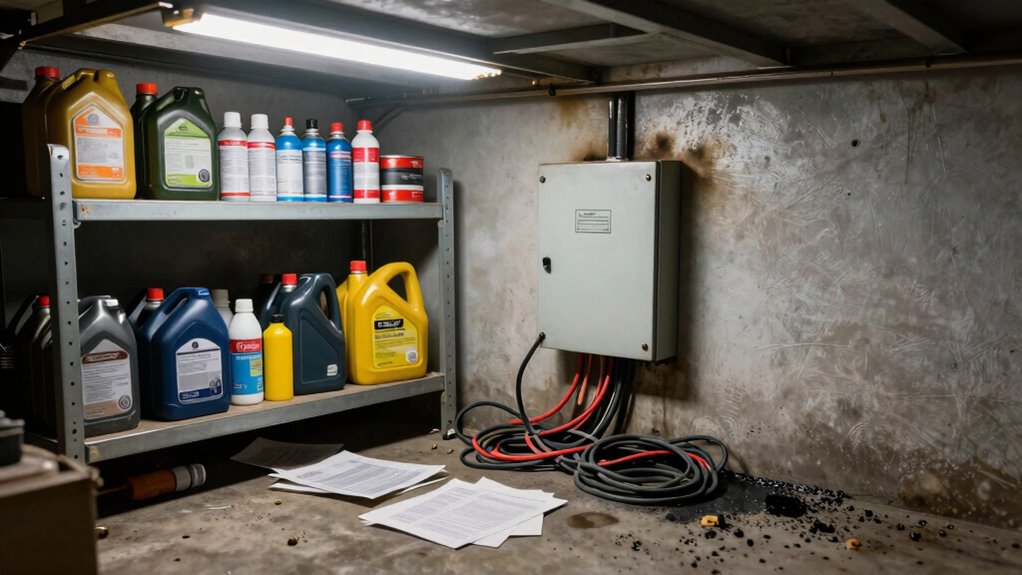
Garages often contain items that can easily ignite or cause fires if not properly managed. Poorly installed garage insulation can trap heat or flames, increasing fire risk. Cluttered storage solutions create hazards by blocking exits and hiding potential ignition sources. Flammable materials like cardboard, paper, and fabrics stored near heat sources can quickly ignite. Old appliances or electrical equipment with frayed wires are also risky, especially if they’re not maintained. Unorganized storage can lead to accidental fires when sparks come into contact with combustible items. To minimize danger, keep your garage tidy, assure proper insulation, and store flammable objects safely away from heat sources. Additionally, understanding fire safety awareness can help homeowners identify and address hidden risks before they cause damage. Regularly inspecting electrical systems and appliances is essential to prevent electrical fires, which are a common cause of garage fires. Proper storage practices further reduce the likelihood of accidental ignition and should be part of routine safety checks. Incorporating fire-resistant storage solutions can provide an extra layer of protection against potential hazards. Being aware of proper wiring techniques can also significantly reduce the chances of electrical faults that lead to fires.
flammable liquid storage containers
As an affiliate, we earn on qualifying purchases.
As an affiliate, we earn on qualifying purchases.
How Flammable Liquids and Chemicals Increase Fire Risk
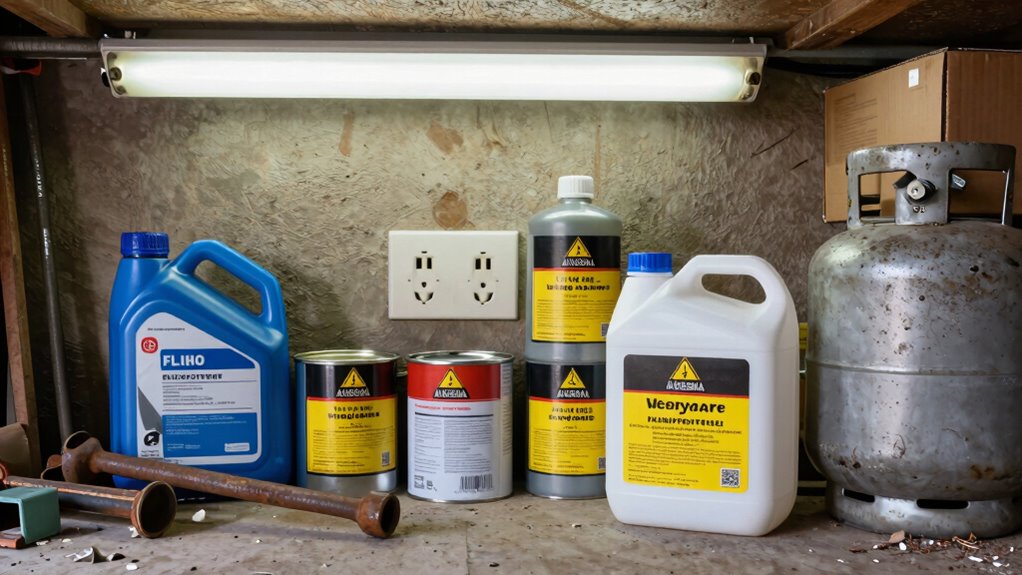
Flammable liquids and chemicals considerably raise the risk of garage fires if not stored properly. Improper chemical storage can lead to accidental ignition, especially if these substances come into contact with heat sources or sparks. Flammable liquids, such as gasoline, paint thinners, and certain cleaning products, are highly volatile and can ignite easily. Storing these chemicals in unapproved containers or near open flames increases danger. Always keep flammable liquids in approved, tightly sealed containers and store them in cool, well-ventilated areas away from heat sources. Proper handling and storage reduce the chance of accidental fires, protecting your home and family. Being mindful of chemical storage is critical to preventing garage fires caused by combustible liquids and chemicals. Additionally, understanding the importance of storage safety standards can help ensure that your storage solutions are safe and effective. Regularly inspecting your chemical storage areas for potential hazards can further minimize risks and ensure compliance with safety guidelines. Maintaining chemical stability by following proper storage procedures is essential to prevent leaks or spills that could ignite. Staying informed about fire prevention measures is essential for maintaining a safe environment in your garage.
garage electrical wiring inspection kit
As an affiliate, we earn on qualifying purchases.
As an affiliate, we earn on qualifying purchases.
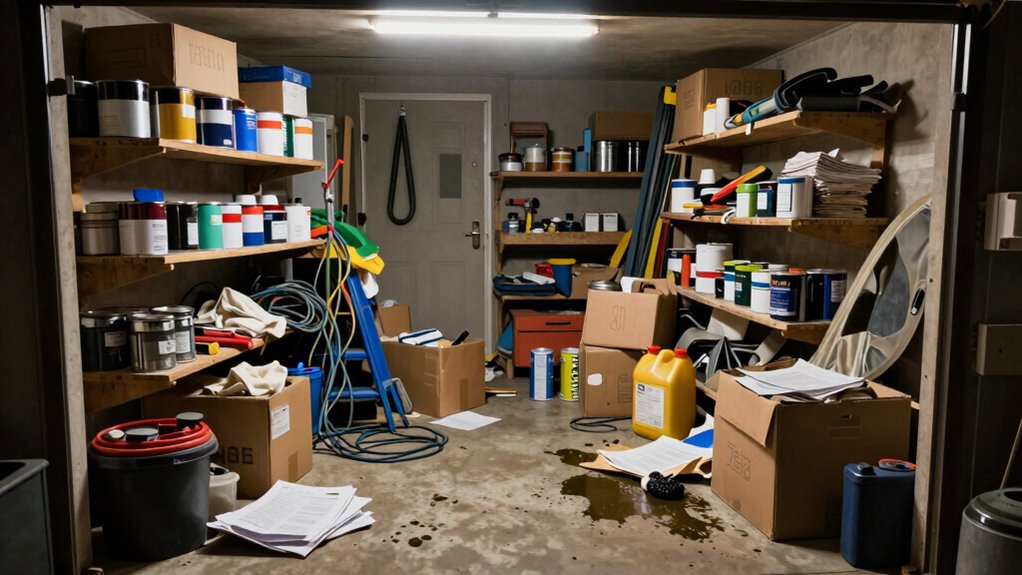
Clutter and disorganization can secretly increase your risk of a garage fire by creating hazards you might not notice. When items are piled haphazardly, it’s harder to spot potential fire risks like flammable materials or leaks. Proper storage optimization helps keep your garage safe by reducing clutter and ensuring dangerous items are stored correctly. Keeping things organized also makes pest prevention easier, since clutter provides hiding spots for rodents and insects that can damage wiring or introduce fire hazards. Regularly sorting and decluttering your garage minimizes these risks and keeps pathways clear for quick access in emergencies. A tidy, well-organized space not only enhances safety but also allows you to identify potential fire risks early, giving you peace of mind and better protection for your home. Additionally, understanding and applying fire safety etiquette can significantly reduce the chances of accidental fires. Maintaining an organized garage also supports fire hazard awareness, helping homeowners recognize dangers before they escalate. Incorporating risk assessment practices into your routine can further improve safety by proactively spotting and addressing hazards. Moreover, implementing safety protocols can ensure that all potential fire sources are managed appropriately and consistently. Regularly inspecting your storage areas for signs of flammable material leaks can prevent dangerous situations before they occur.
As an affiliate, we earn on qualifying purchases.
Electrical Wiring and Systems: Fire Triggers You Should Know

Electrical wiring and systems often pose hidden fire risks in your garage if they’re outdated, damaged, or improperly installed. Faulty wiring can lead to electrical overloads, which generate excessive heat and ignite nearby materials. Over time, wires can become frayed or corroded, increasing the risk of sparks. If your wiring hasn’t been upgraded in years, it might not handle modern power demands, especially if you run multiple tools or appliances simultaneously. Recognizing early warning signs, like bruised or discolored wiring, can help prevent dangerous situations before a fire occurs.
Be mindful of these hazards:
- Overloaded circuits due to too many devices plugged in
- Damaged or exposed wiring from wear and tear
- Faulty connections or poor installation
- Ignoring the need for wiring upgrades
Regular inspections and updates can markedly reduce fire risks, especially when employing proper electrical safety practices to ensure your system’s integrity. Additionally, understanding electrical code compliance can help ensure your wiring system adheres to safety standards. Incorporating regular maintenance can also detect issues early before they escalate into hazards.
Why Regular Maintenance Is Key to Garage Fire Prevention
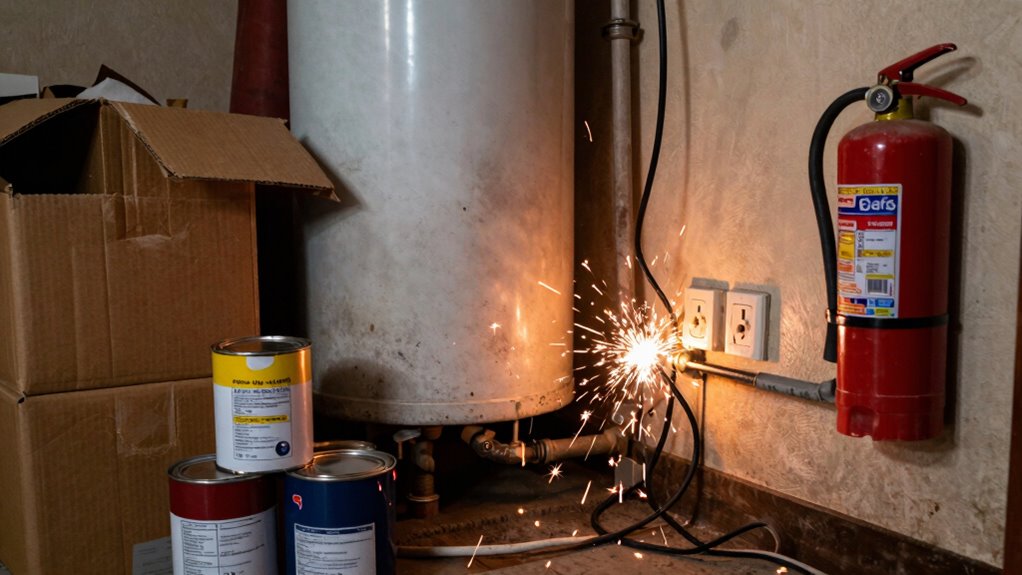
Regular maintenance helps catch fire hazards before they become serious. You should inspect your electrical wiring regularly, keep clutter and flammable items away, and schedule safety checks with professionals. Staying proactive keeps your garage safe and reduces the risk of a fire. Additionally, understanding regional flavors and insights can help you identify specific fire risks associated with certain materials or customs in your area. Incorporating the use of tracking gear can also assist in monitoring and preventing accidental fires caused by equipment or appliances. Being aware of Free Floating features and their impact on your outdoor space can further help you create a safer environment. Regularly reviewing home safety tips tailored to your household can help you stay ahead of potential hazards specific to your region. Implementing efficient water systems in your maintenance routine can also minimize electrical hazards linked to water-related equipment.
Inspect Electrical Wiring Regularly
How often do you check the wiring behind your garage walls? Regular wiring inspection is crucial to prevent electrical hazards that can lead to fires. Over time, wiring can wear out, become frayed, or develop faults that pose serious risks. Staying proactive can help catch problems early, saving you from costly repairs and potential danger.
Consider these tips:
- Look for exposed or damaged wires during inspections
- Check for warm outlets or flickering lights
- Make sure circuit breakers aren’t frequently tripping
- Hire a professional electrician for annual inspections
Clear Clutter and Flammable Items
Keeping your garage tidy and free of flammable items is essential for fire prevention. Clutter and misplaced objects can easily ignite or block exits during emergencies. Use effective storage solutions like shelves and bins to organize tools, chemicals, and other items. Store flammable liquids in approved containers made from fire-resistant materials and keep them away from heat sources. Regularly review your garage to remove unnecessary items that could fuel a fire. Avoid stacking combustible materials near electrical outlets or appliances. Maintaining a clean, organized space minimizes fire hazards and helps you spot potential dangers early. Remember, a clutter-free garage not only reduces fire risk but also makes it easier to access tools and safely exit in case of an emergency.
Schedule Professional Safety Checks
Scheduling professional safety checks for your garage is essential because trained technicians can identify potential fire hazards that might go unnoticed during routine inspections. Regular maintenance guarantees your garage stays safe and reduces the risk of fire. These experts can examine your electrical systems, ventilation, and storage practices to spot issues early.
To improve garage safety and fire prevention, consider:
- Checking electrical wiring and outlets for damage or overloads
- Inspecting heating units and appliances for proper function
- Ensuring fire extinguishers are accessible and in working order
- Identifying any signs of wear or corrosion on safety equipment
How Garage Doors and Ventilation Affect Fire Safety
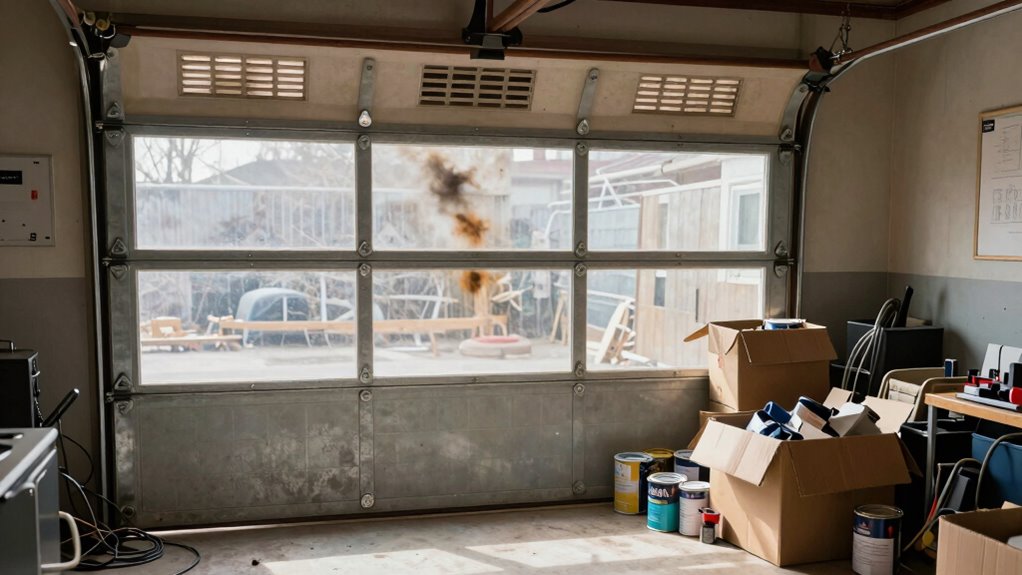
Your garage door material can influence how quickly fire spreads, with some materials offering less resistance than others. Proper ventilation placement is essential because it helps control smoke and heat, reducing damage and risk. Ensuring good airflow and choosing the right garage door can substantially improve your fire safety.
Ventilation’s Role in Fire
Have you ever reflected on how garage doors and ventilation impact fire safety? Proper air circulation and ventilation systems are vital in controlling heat and smoke during a fire. Good ventilation helps vent toxic gases and reduce fire intensity, giving you more time to react. Conversely, poor ventilation can trap heat and smoke, making fires worse and increasing danger.
Key points to contemplate include:
- Adequate vents allow smoke and heat to escape quickly.
- Garage doors with ventilation panels promote better air circulation.
- Sealed or poorly ventilated garages trap heat, escalating fire risks.
- Installing exhaust fans or vents can improve safety by controlling airflow.
Understanding how ventilation affects fire behavior can help you make smarter safety choices and potentially save lives.
Garage Door Material Risks
The material of your garage door plays a crucial role in fire safety, especially when ventilation is limited. Durable materials like steel or aluminum offer better resistance to heat and flames, reducing the risk of door failure during a fire. Conversely, weaker materials such as wood or certain composites may crack, warp, or ignite more easily, increasing fire spread. Additionally, material corrosion can compromise the structural integrity of metal doors over time, making them more vulnerable in a fire. When corrosion weakens the door’s frame, it’s less able to contain a fire or prevent smoke from escaping. Choosing a garage door with high durability and corrosion resistance is essential for minimizing fire risks and protecting your garage and home.
Proper Ventilation Placement
Proper ventilation placement is vital for controlling fire and smoke spread within a garage. Proper airflow efficiency depends on strategic ventilation placement, which helps remove dangerous fumes and heat quickly. Well-placed vents and windows allow hot gases to escape, reducing the risk of fire escalation.
Consider these tips:
- Position vents high on walls or ceilings for effective smoke release
- Avoid blocking vents with storage or equipment
- Use garage doors with vents or louvers for better airflow
- Make certain ventilation openings are unobstructed for maximum airflow efficiency
Good ventilation placement limits fire growth and improves safety. It’s necessary to plan your garage’s ventilation system carefully, so smoke and heat don’t accumulate and cause dangerous conditions during a fire.
Top Tips to Prevent Garage Fires and Protect Your Home
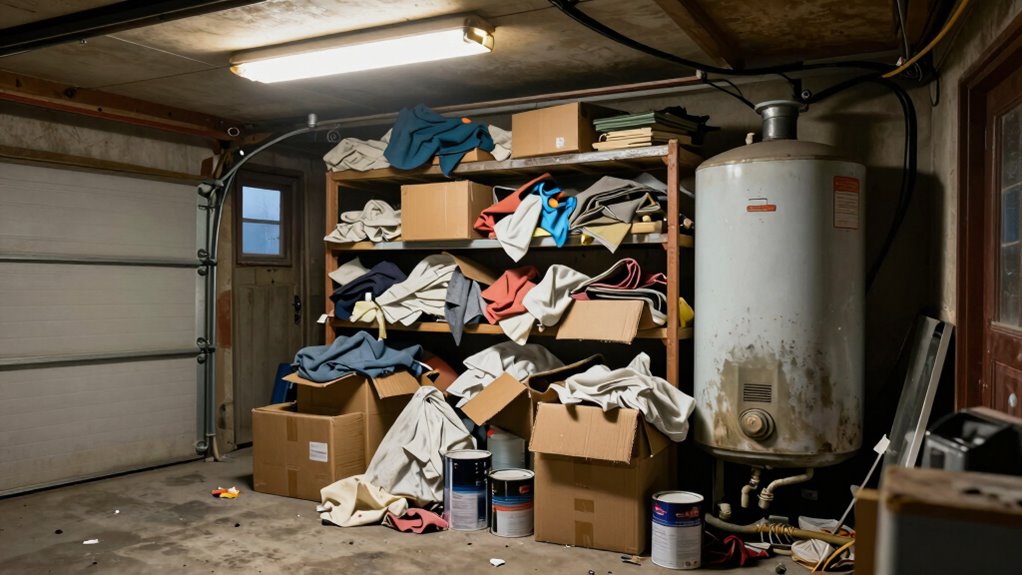
Preventing garage fires starts with simple, proactive steps you can take today. Many homeowners believe garage fire myths, but understanding the facts helps you stay safe. One responsibility is regularly cleaning out clutter, especially flammable materials like paper, rags, and gasoline. Keep electrical cords in good condition and avoid overloading outlets. Store chemicals and fuels in approved containers away from heat sources. Never ignore the importance of proper ventilation, which reduces fire risk. Regularly inspect your garage for potential hazards, and ensure smoke detectors are working. Educate yourself about your homeowner responsibilities, like maintaining electrical systems and safe storage practices. Taking these precautions minimizes fire risks and helps protect your home, family, and belongings from preventable tragedies.
What to Do If a Garage Fire Breaks Out: Emergency Steps
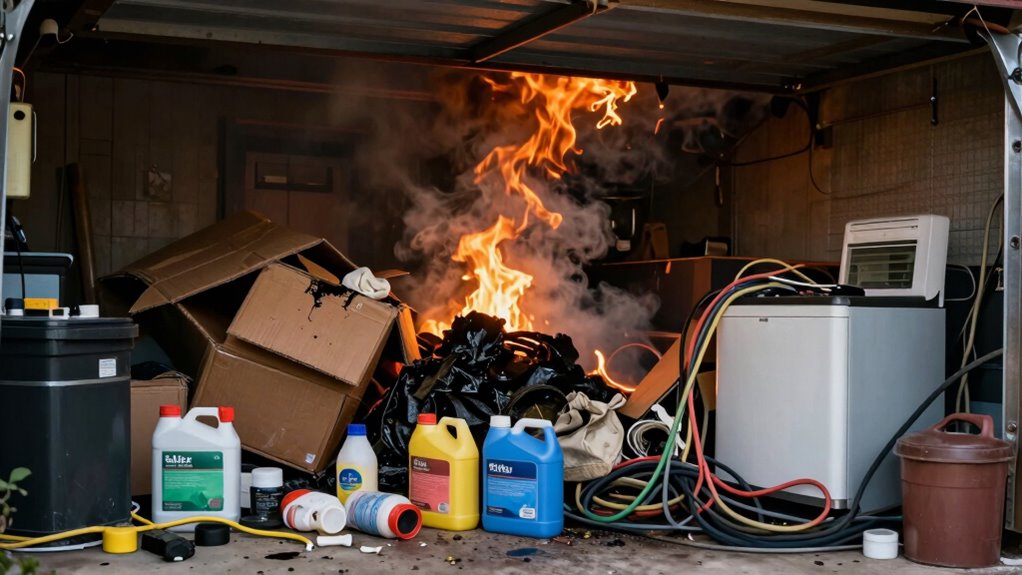
When a garage fire breaks out, acting quickly can make all the difference in protecting yourself and your loved ones. First, alert everyone nearby and call 911 immediately. Use a nearby fire extinguisher—ensure your fire extinguisher placement is accessible and known—aiming at the base of the flames. Do not attempt to fight large fires; instead, evacuate immediately. Know your emergency escape routes and leave through the safest, most direct path. Once outside, stay at a safe distance and do not re-enter the garage until professionals declare it safe. Remember, your priority is safety. Keep a clear head, follow your escape plan, and rely on emergency responders to handle the fire. Quick, decisive action can save lives and minimize damage.
Frequently Asked Questions
Can Garage Door Materials Influence Fire Spread?
Yes, garage door materials greatly influence fire spread. Durable, fire-resistant materials like steel or aluminum can slow or prevent flames from penetrating your garage, reducing fire hazards. Garage door durability guarantees it withstands high temperatures longer, giving you more time for evacuation. Choosing a fire-resistant garage door helps contain fires and minimizes damage, making it an essential safety feature in your home.
Are There Specific Fire Codes for Garage Ventilation Systems?
You should know that fire codes for garage ventilation are vital; over 50% of garage fires involve poor ventilation. These codes guarantee proper airflow to prevent combustible fumes buildup, reducing fire risk. By prioritizing garage ventilation and guaranteeing fire code compliance, you minimize hazards. Regular inspections and adherence to local regulations help keep your garage safe, protecting your property and loved ones from potential fires caused by inadequate ventilation systems.
How Often Should Electrical Systems Be Inspected for Safety?
You should have your electrical systems inspected at least once every year to guarantee wiring safety checks are up-to-date. Regular inspections play a crucial role in electrical fire prevention by catching potential hazards early. If you notice flickering lights, burning smells, or exposed wires, schedule an immediate inspection. Staying proactive with wiring safety checks helps protect your garage and home from fire risks and keeps your electrical system functioning safely.
What Are the Best Storage Practices for Flammable Liquids?
Did you know that improper flammable liquid storage causes many garage fires each year? To stay safe, always store flammable liquids in approved safety container guidelines, like metal or high-quality plastic containers with secure lids. Keep these containers in well-ventilated, cool, and away from heat sources. Avoid storing them near electrical appliances or sparks, and never mix different chemicals. Proper storage minimizes fire risks and keeps your garage safe.
Do Garage Insulation Materials Affect Fire Risk?
Yes, garage insulation materials can affect fire risk. Insulation fire hazards depend on their material ignition points—some materials ignite easily, increasing fire danger, while others are fire-resistant. You should choose insulation with high ignition points, like mineral wool or foam insulations designed for fire safety. Proper installation and regular inspection can minimize fire risks, ensuring your garage remains safe even if flammable liquids are stored nearby.
Conclusion
Did you know that garages account for nearly 30% of home fires? Staying aware of common hazards like flammable liquids, clutter, and faulty wiring can considerably reduce your risk. Regular maintenance and safety checks are your best defense. By taking simple steps today, you can protect your home and loved ones from devastating fires. Remember, a proactive approach isn’t just smart—it could save your life. Stay vigilant and keep your garage safe!
Fall Picks
fall essentials
As an affiliate, we earn on qualifying purchases.