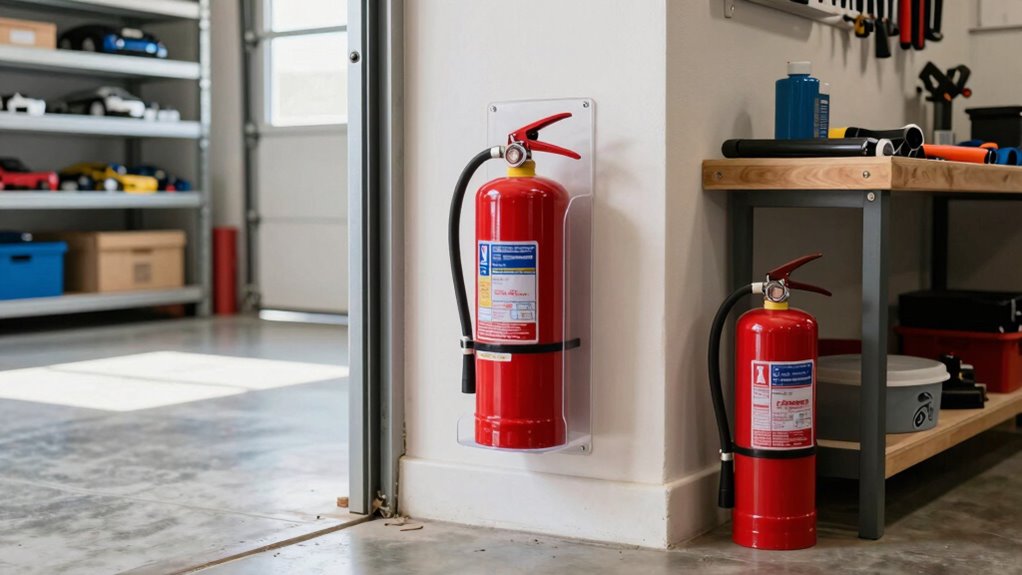

Place fire extinguishers near garage entrances, along pathways, and at central locations for quick access in emergencies. Mount them at about 3 to 5 feet off the ground on sturdy walls away from heat sources like furnaces or electrical panels. Make certain they’re unobstructed by tools or storage and clearly visible with proper signage. Proper placement and regular maintenance are key to safety—continue exploring to learn how to maximize their effectiveness.

Get home appliances delivered free with Prime
- Fast, free delivery on millions of items
- Prime Video, Amazon Music and more included
- Member-only deals all year
Key Takeaways
- Mount extinguishers near garage entrances and main exits for quick access during emergencies.
- Place them at 3 to 5 feet above ground on sturdy, unobstructed walls.
- Position extinguishers away from heat sources like furnaces and electrical panels.
- Ensure visibility with clear signage and labels, avoiding clutter or storage blocking access.
- Regularly inspect and maintain extinguishers, ensuring they are easily reachable and in working condition.
garage fire extinguisher wall mount
As an affiliate, we earn on qualifying purchases.
As an affiliate, we earn on qualifying purchases.
Where Should You Mount Fire Extinguishers in Your Garage?
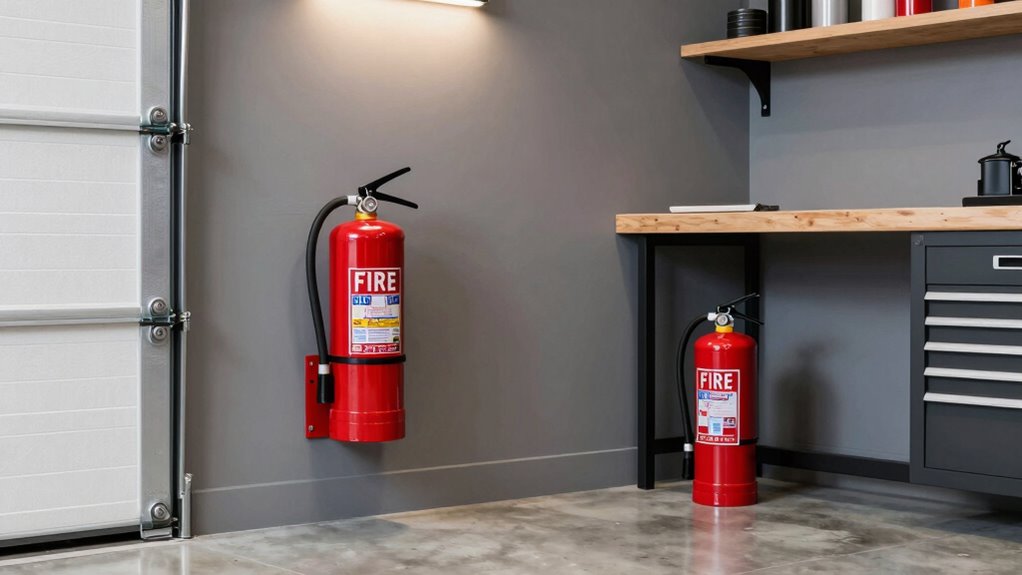
Where is the best place to mount fire extinguishers in your garage? You want quick access during an emergency, so mount fire extinguisher types near your garage’s main exits and along pathways. Place them at a height where you can grab them easily—typically around 3 to 5 feet from the ground—so they’re visible and reachable. Make sure they’re not blocked by storage or other obstacles. According to garage safety tips, install extinguishers on sturdy walls away from heat sources or potential fire hazards like the furnace or electrical panel. Keep them in a central location, so you can reach them quickly from any part of the garage. Proper placement guarantees safety and faster response times during a fire. Understanding fire safety can help you make informed decisions about extinguisher placement and emergency preparedness.
ABC fire extinguisher for garage
As an affiliate, we earn on qualifying purchases.
As an affiliate, we earn on qualifying purchases.
How to Choose the Best Locations for Fire Extinguishers
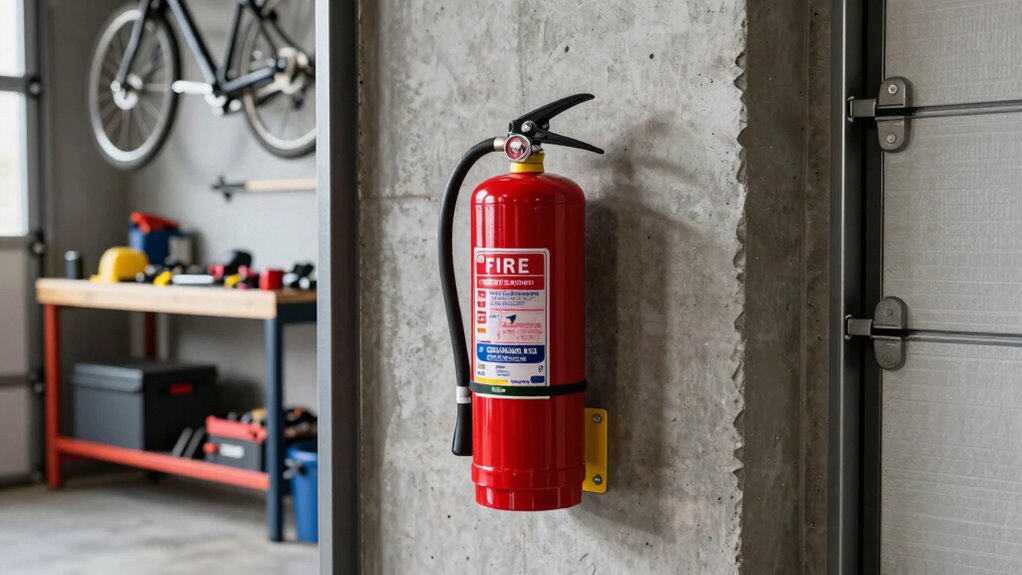
Choosing the right locations for fire extinguishers guarantees you can respond quickly when fire strikes. Consider fire extinguisher types, such as ABC or CO2, to match potential garage hazards. Place extinguishers near the garage entrance, away from high-heat areas, but still accessible. Avoid obstructions that hinder quick access, like storage shelves or tools. Regular maintenance tips include checking pressure gauges, ensuring seals are intact, and inspecting for corrosion or damage. Mount extinguishers at a standard height for easy reach, typically about 3-5 feet off the ground. Remember, the goal is to minimize response time and maximize safety, so choose visible, unobstructed locations that align with the types of fires most likely to occur in your garage. Additionally, understanding how contrast ratio affects visibility can help you select a spot that remains clearly visible even in low-light conditions. Ensuring the visibility of safety equipment is crucial for quick identification during an emergency. Proper placement also involves considering the location of fire hazards, so extinguishers are always within immediate reach of potential fire sources. Being aware of regional safety standards can further guide you in optimal placement practices.
CO2 fire extinguisher for home garage
As an affiliate, we earn on qualifying purchases.
As an affiliate, we earn on qualifying purchases.
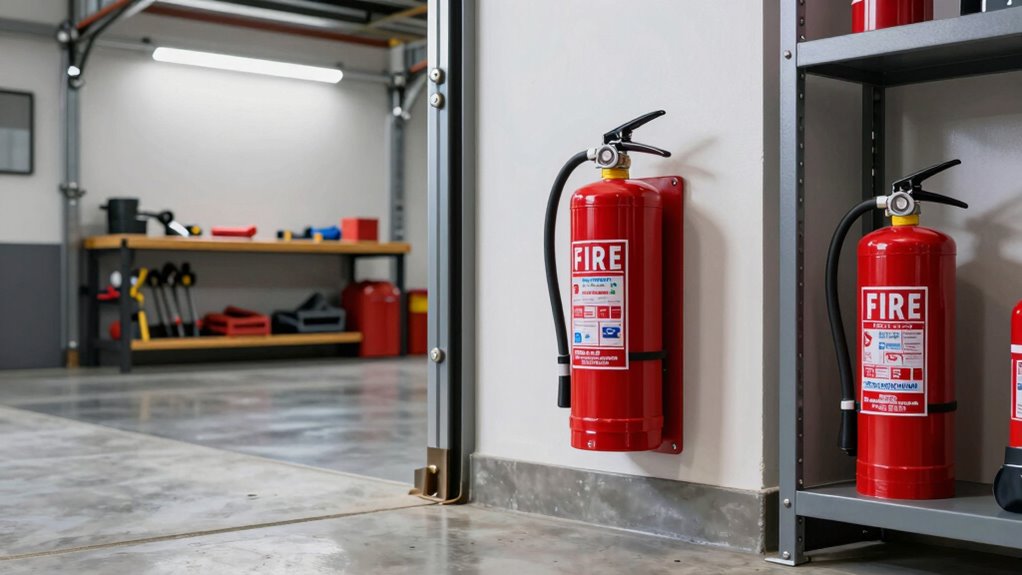
Key Factors to Consider When Placing Fire Extinguishers
| Factor | Consideration | Importance |
|---|---|---|
| Fire extinguisher types | Select appropriate classes for garage fires | Guarantees effective fire suppression. Proper selection based on fire hazards ensures quick and efficient response. |
| Accessibility | Place within easy reach, not blocked | Enables quick response. Ensuring unobstructed access is crucial in emergency situations. |
| Maintenance schedule | Regular inspections and servicing | Ensures functionality. Routine checks prevent malfunctions during critical moments. |
| Proper placement according to safety standards | Ensures compliance and optimal safety | Enhances overall fire safety preparedness. Additionally, understanding fire safety guidelines helps in making informed placement decisions. Regularly reviewing fire safety standards can help maintain compliance and adapt to new safety practices. To further improve safety, staying updated on fire prevention strategies is essential. |
As an affiliate, we earn on qualifying purchases.
How to Mark and Install Fire Extinguishers for Quick Access
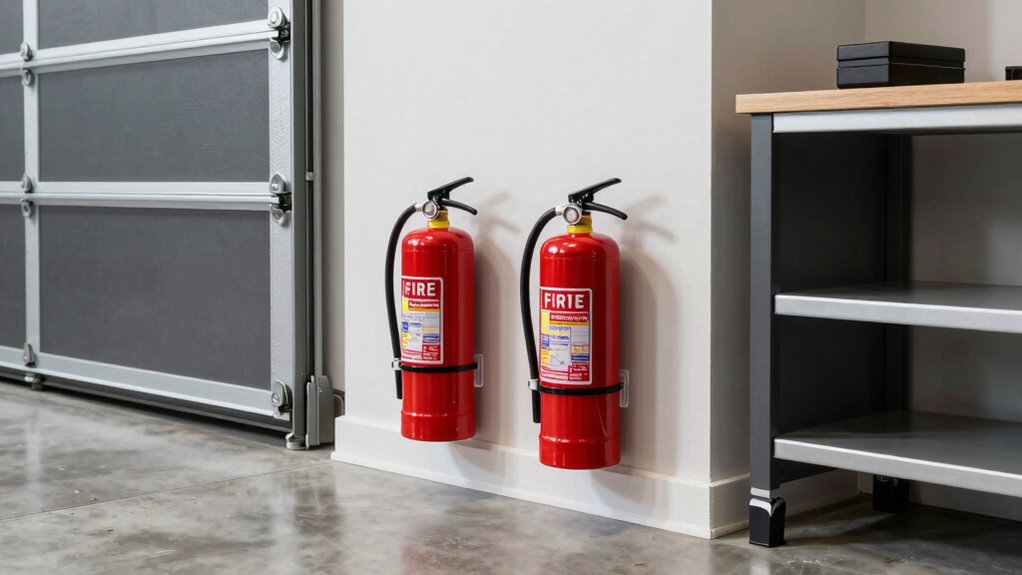
To guarantee fire extinguishers can be accessed quickly in an emergency, proper marking and installation are vital. Use clear signage, like bright labels or wall-mounted signs, to indicate their locations. Mount fire extinguishers at a consistent height—typically around 48 inches from the floor—to ensure quick reach. Make certain the type of fire extinguisher, whether ABC, CO2, or foam, is visible and matches the potential fire hazards in your garage. Regular maintenance and inspection are essential; check pressure gauges, seals, and overall condition monthly. Replace or service extinguishers as needed to keep them functional. Proper marking, solid installation, and routine checks guarantee that you’ll access the right fire extinguisher swiftly when every second counts. Additionally, understanding home safety principles can help you optimize the placement for maximum efficiency. Considering environmental considerations, such as proper disposal and storage, can also contribute to a safer garage environment. Ensuring your fire extinguishers are properly labeled with clear instructions can further enhance quick identification during emergencies. Incorporating fire safety education into your routine can also improve response times in case of a fire. Being familiar with fire extinguisher types can help you select the most appropriate device for different fire scenarios.
Common Mistakes to Avoid When Positioning Fire Extinguishers
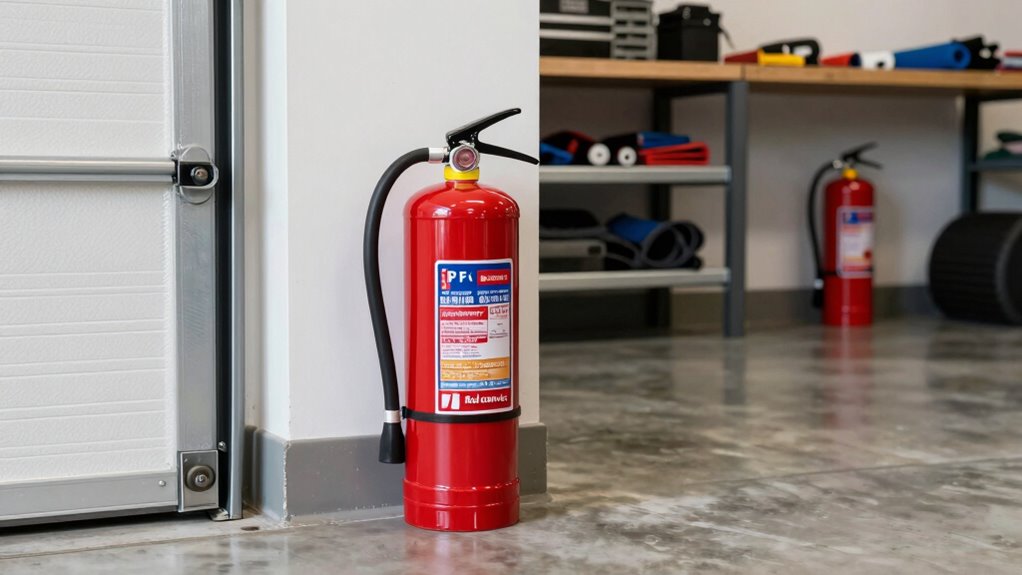
One common mistake is placing fire extinguishers too high or too low on the wall, which can delay your response during an emergency. Make sure you select the right fire extinguisher size for your garage, so it’s easy to grab quickly. Mounting it at an accessible height is vital; too high, and you might struggle to reach it, too low, and it could be obstructed or accidentally knocked off. Another mistake is neglecting your maintenance schedule. Regularly inspect and service your extinguisher to confirm it’s functional and fully charged. An expired or improperly maintained extinguisher won’t work when needed most. Proper positioning and routine checks are key to effective fire safety, helping you respond swiftly and confidently in an emergency. Additionally, understanding fire safety guidelines can help you organize your garage space efficiently, ensuring safety equipment is both accessible and unobstructed. Incorporating fire safety knowledge into your planning can further enhance your readiness and reduce hazards.
Frequently Asked Questions
How Often Should Fire Extinguishers in the Garage Be Inspected?
You should inspect your garage fire extinguishers at least once a month as part of your maintenance schedule. Regular checks ensure the pressure gauge is in the operable range and that there’s no visible damage. Additionally, verify that fire extinguisher placement remains accessible and unobstructed. Annual professional inspections are also recommended to guarantee your extinguishers are fully functional, giving you peace of mind during emergencies.
What Types of Fire Extinguishers Are Best for Garage Fires?
Coincidentally, the best fire extinguishers for garage fires are multipurpose ABC types, perfect for kitchen hazards and electrical safety. These extinguishers tackle common fires involving wood, paper, gasoline, and electrical equipment. Their versatility makes them essential in garages, where various fire risks coexist. You’ll want an ABC extinguisher nearby, so you can swiftly respond to different fire types, protecting your space and loved ones effectively.
Are There Legal Requirements for Fire Extinguisher Placement in Garages?
Yes, there are legal requirements for fire extinguisher placement in garages. You should guarantee fire extinguishers are easily accessible, typically near garage entrances or exits, and visible with proper fire safety signage. Good garage ventilation also plays a role in fire safety, helping prevent buildup of flammable fumes. Always check local codes, as regulations may specify minimum extinguisher sizes and locations to ensure your safety and compliance.
How Can I Tell if My Fire Extinguisher Is Still Effective?
You can tell if your fire extinguisher is still effective by checking its pressure gauge—if the needle is in the green zone, it’s ready to use. Regular fire extinguisher maintenance and fire safety training help guarantee you understand how to inspect it properly. Also, look for any visible damage, corrosion, or leaks. If in doubt, have it professionally inspected or replaced to keep your garage safe.
Should Fire Extinguishers Be Stored Near Specific Garage Tools or Equipment?
You should store fire extinguishers near common garage tools and equipment to enhance safety and quick access. Position them close to areas with potential fire hazards, like near the garage door, workbenches, or electrical panels. Proper garage storage guarantees tool safety and readiness in emergencies. Regularly check that extinguishers are easily reachable, visible, and not obstructed, so you’re prepared when every second counts.
Conclusion
Think of your garage fire extinguisher as a trusted guardian, always ready to protect what matters most. Position it where it can be reached in a heartbeat, symbolizing safety and peace of mind amid potential chaos. When you place it thoughtfully, you’re not just installing a device—you’re embedding a promise to safeguard your home and loved ones. In those vital moments, your extinguisher becomes a beacon of hope, guiding you through the darkness toward safety.
Halloween Picks
halloween
As an affiliate, we earn on qualifying purchases.