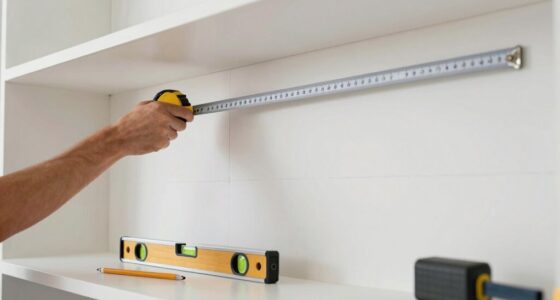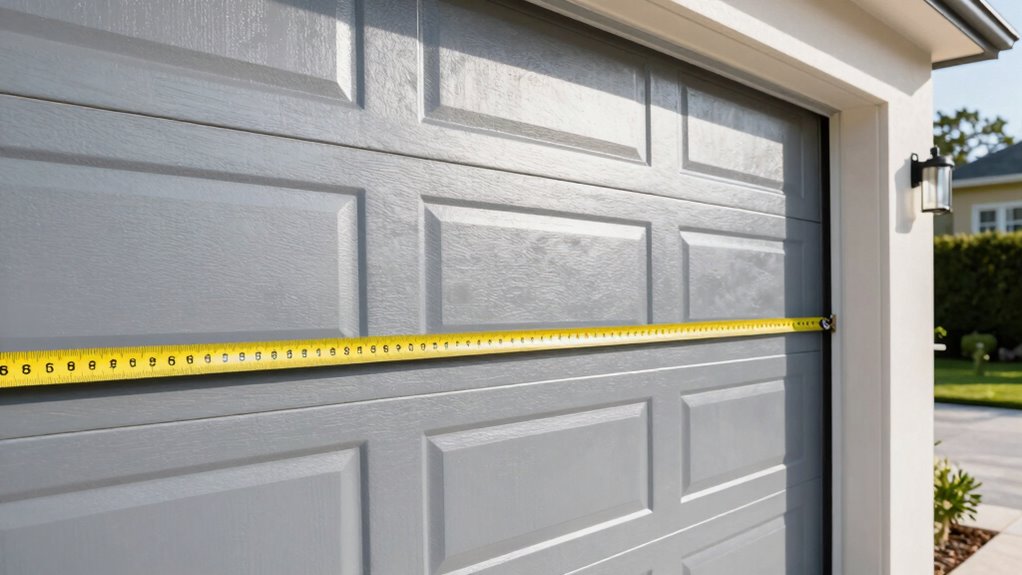

Understanding garage door clearance is key before making a big purchase. It guarantees your new door fits properly, operates smoothly, and keeps pests and drafts out. Measure from the floor to the ceiling and check the space above the opening, considering your door type’s specific clearance needs. Proper clearance also helps avoid installation issues and future problems. Keep these tips in mind, and you’ll discover how to make the right choice for your garage setup.
Key Takeaways
- Measure the height from floor to ceiling and from floor to the bottom of the closed door to determine adequate clearance.
- Different garage door types require specific minimum clearance, such as 12-14 inches for sectional doors.
- Ensure clearance accounts for insulation, hardware, and any obstructions to prevent installation issues.
- Proper clearance ensures smooth operation, security, energy efficiency, and aesthetic appeal.
- Verify manufacturer recommendations and local building codes before purchasing a new garage door.

Zadery Garage Door Spring Measure Tool, Residential Pocket Wire Gauge .187 -.312
Precision spring gauge: Accurately measure .187 to .312 torsion springs for garage door repair & DIY installation
As an affiliate, we earn on qualifying purchases.
As an affiliate, we earn on qualifying purchases.
Why Garage Door Clearance Is Key to a Perfect Fit
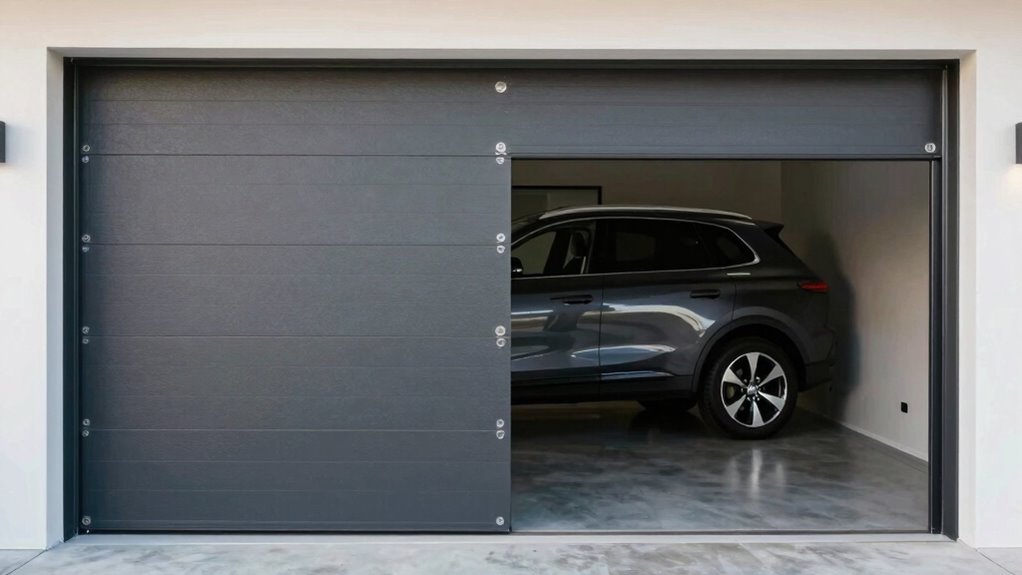
Having the right garage door clearance is crucial because it directly affects how well your door fits and functions. Proper clearance ensures your garage door operates smoothly, which boosts garage security by preventing gaps that intruders could exploit. It also plays an essential role in insulation efficiency. When clearance is just right, it minimizes drafts and heat transfer, keeping your garage warmer in winter and cooler in summer. Too little clearance can cause the door to bind, compromising security and making it easier for pests or unauthorized individuals to access your space. Conversely, excessive clearance might lead to gaps that reduce insulation effectiveness. Ensuring correct garage door clearance helps maintain a secure, energy-efficient garage that operates seamlessly and offers better protection for your belongings. Additionally, understanding garage door clearance can help you choose the right size and type of door for your space, ensuring a proper fit and optimal performance. Being aware of standard door measurements and how they impact fit can also prevent costly mistakes during installation or replacement. Properly assessing installation requirements beforehand can save you time and money in the long run. Recognizing standard clearance measurements is also essential for achieving the best overall fit and function. In addition, consulting with professionals about custom adjustments can help tailor your garage door setup to your specific needs.

Commercial Garage Door Adjustable A-Frame Top Bracket, Galvanized Steel, Fits 3" Horizontal Strut, for Sectional Garage Doors
Commercial-Grade Adjustable Top Bracket – Designed for sectional garage doors in high-cycle commercial and industrial environments
As an affiliate, we earn on qualifying purchases.
As an affiliate, we earn on qualifying purchases.
How to Accurately Measure Your Garage Door Clearance
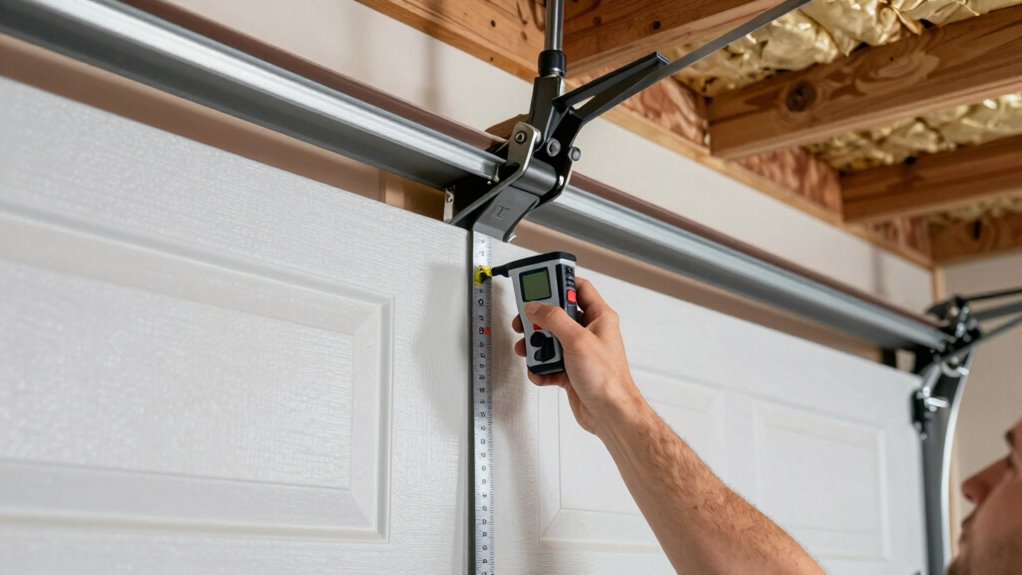
Wondering how to get an accurate measurement of your garage door clearance? Start by measuring the height from the floor to the highest point of the garage ceiling, ensuring you consider any insulation importance that might add to the overall space. Next, follow these steps:
- Use a tape measure to determine the distance from the floor to the bottom of the garage door when closed.
- Measure the height of any obstructions, like light fixtures or storage, that could impact clearance.
- Record the total available headroom, factoring in garage aesthetics, such as ceiling finishes or decorative elements, which may influence door operation.
- Remember that understanding the techniques and measurements used in garage design can help ensure your door fits perfectly and functions smoothly.
- Additionally, being aware of the natural light and wellness touches can help you optimize your garage space for comfort and style.
- Taking note of garage layout and how it interacts with your door clearance can further assist in selecting the right garage door for your space. Moreover, understanding building codes and safety standards ensures your installation complies with local regulations and enhances safety.
- Recognizing the importance of insulation and energy efficiency can also impact your choice of garage door and overall space usability.
Accurate measurements help you select a garage door that enhances garage aesthetics while providing sufficient clearance for smooth operation and insulation effectiveness.

Reach Barrier 3009 Garage Door Insulation Kit
Reach Barrier(Tm) Reflective Insulation And Bubble Barrier Technology Blocks Up To 95-Percent Of Radiant Heat Which Will Help…
As an affiliate, we earn on qualifying purchases.
As an affiliate, we earn on qualifying purchases.
What Clearance Do Different Types of Garage Doors Need?
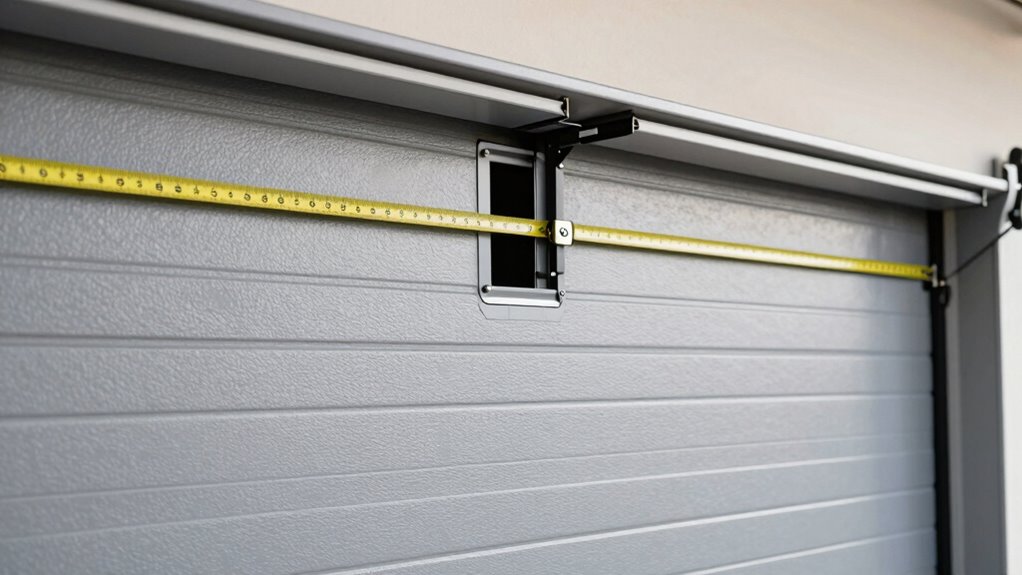
Different types of garage doors require varying amounts of clearance to operate smoothly and safely. For example, sectional doors need more vertical space, while tilt-up doors require less. The clearance influences not only functionality but also garage door aesthetics and noise reduction. Here’s a quick overview:
| Door Type | Clearance Needed | Best For |
|---|---|---|
| Sectional Doors | 12-14 inches above opening | Noise reduction, aesthetics |
| Tilt-up Doors | 10-12 inches above opening | Simplicity, space efficiency |
| Roll-up Doors | 8-10 inches above opening | Compact spaces, noise control |
| Side-hinged Doors | Minimal clearance needed | Classic look, easy access |
Knowing these clearances helps you choose the right garage door for your space and style needs.
Reach Barrier 3009 Garage Door Insulation Kit
Reach Barrier(Tm) Reflective Insulation And Bubble Barrier Technology Blocks Up To 95-Percent Of Radiant Heat Which Will Help…
As an affiliate, we earn on qualifying purchases.
As an affiliate, we earn on qualifying purchases.
How to Ensure Proper Clearance When Replacing Your Garage Door
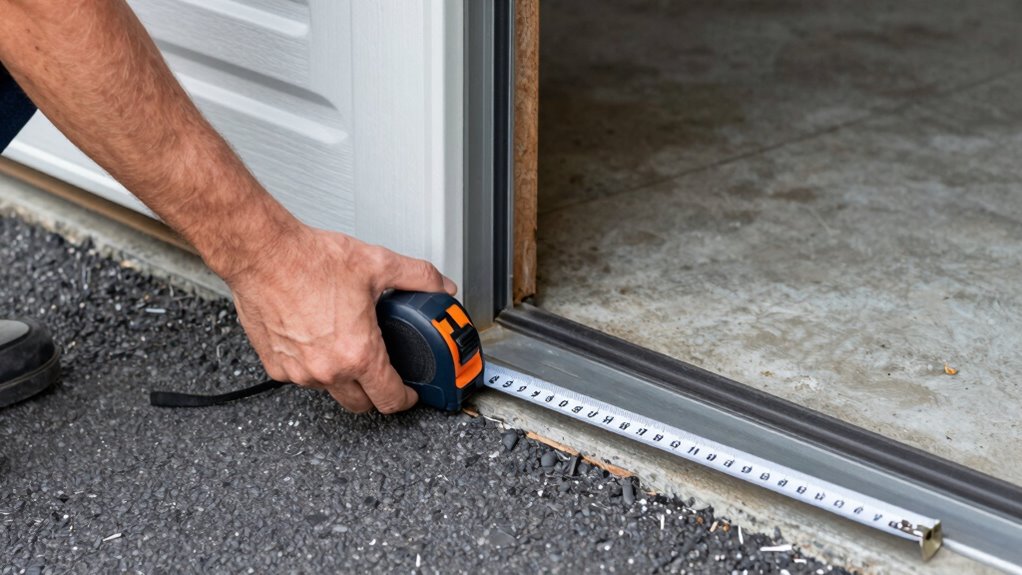
When replacing your garage door, ensuring the proper clearance is essential for smooth operation and safety. Proper clearance affects not only functionality but also garage door aesthetics and noise reduction. To achieve this, consider these steps:
- Measure the height and width of your opening accurately, accounting for any trim or molding.
- Verify the manufacturer’s recommended clearance standards for your specific door type.
- Adjust the tracks and hardware to maintain consistent clearance, reducing vibrations that cause noise and preserving a clean appearance. Regularly inspecting and maintaining the garage door components can help prevent misalignments and ensure optimal clearance. Additionally, understanding clearance standards can assist you in planning your installation more effectively.
- Be mindful of ethical considerations in consumer choices, such as selecting quality materials and responsible installation practices. It’s also important to be aware of installation guidelines, which can vary depending on the garage door model and setup, to ensure safety and compliance. Additionally, understanding garage door clearance standards can help you plan effectively and avoid costly mistakes.
Troubleshooting Garage Door Clearance Problems Before Buying
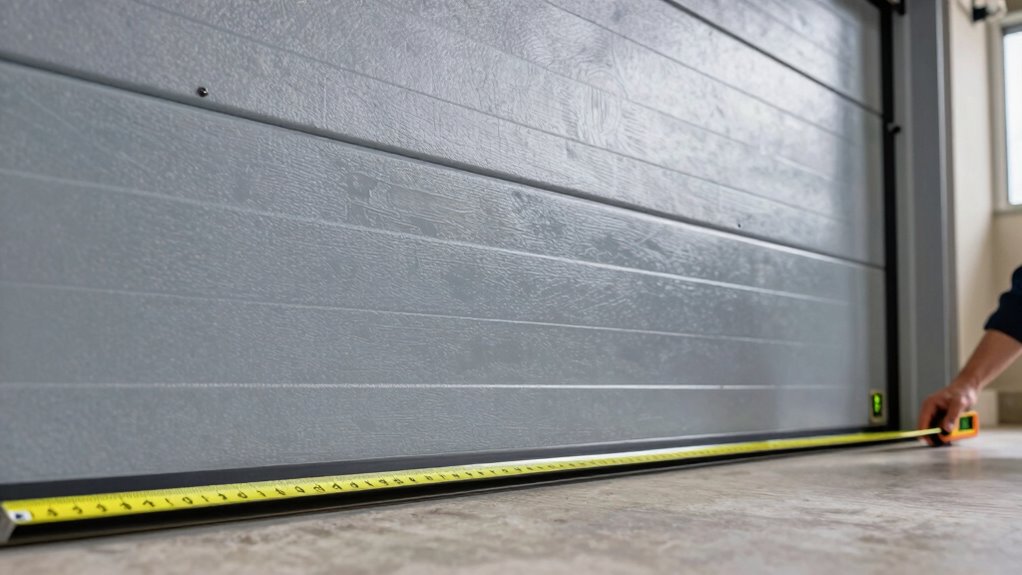
Before purchasing a new garage door, it’s important to troubleshoot potential clearance issues that could arise. Check if the door’s height matches your garage opening, considering garage door aesthetics and insulation needs. If the door is too tall or too short, it may interfere with ceiling space or limit functionality. Also, verify if the insulation adds bulk, affecting clearance. Use this table to evaluate your priorities:
| Priority | Considerations | Impact on Clearance |
|---|---|---|
| Aesthetics | Style, color, design | May influence door size choices |
| Insulation | Thickness for energy efficiency | Adds bulk, reduces clearance |
| Garage Ceiling Height | Space above opening | Limits door height options |
| Functional Requirements | Auto-open, security features | Affects clearance and design |
Address these factors before buying to prevent clearance issues later. Additionally, understanding how filter sizing/flow and other system components impact your garage setup can help ensure compatibility and optimal performance. Being aware of door hardware can also help in selecting a system that accommodates your space constraints effectively. It’s also beneficial to consider installation requirements to avoid unexpected modifications that could affect clearance. Being mindful of insulation considerations can help you choose a door that balances energy efficiency with available space.
Frequently Asked Questions
How Often Should I Recheck Garage Door Clearance Measurements?
You should recheck your garage door clearance at least every six months, especially during routine garage door maintenance. Regular safety inspections help catch any misalignments or issues early, ensuring smooth operation and safety. If you notice any unusual sounds, difficulty opening, or closing, do a quick clearance check immediately. Consistent monitoring prevents accidents and costly repairs, keeping your garage door functioning properly and safely over time.
Can Clearance Issues Affect Garage Door Security?
Coincidentally, clearance issues can indeed impact your garage door security. When clearance isn’t maintained, it weakens the structural integrity, making it easier for intruders to force entry. Insufficient clearance can cause misalignments, which compromise the door’s locking mechanisms and safety features. Addressing these issues promptly guarantees your garage remains secure, protecting your belongings and family from potential security concerns caused by unnoticed clearance problems.
Are There Specific Clearance Needs for Custom or Oversized Garage Doors?
Yes, custom sizes and oversized doors require specific clearance considerations. You need to make certain there’s enough space for the door to open fully without hitting the ceiling or nearby structures. Measure carefully, accounting for the door’s height, width, and hardware. Oversized doors may need additional headroom or side clearance, so always consult your garage door manufacturer or installer to confirm your space meets their specifications for safe, smooth operation.
What Tools Are Best for Measuring Garage Door Clearance Accurately?
You should use a tape measure for garage door installation to guarantee measurement accuracy. A steel tape measure is ideal because it provides precise readings for both width and height. For added accuracy, use a level to verify the measurements are straight and consistent. Make certain to measure at multiple points—center, sides, and top—to account for any irregularities in your garage opening, ensuring a smooth installation process.
Does Climate Impact Garage Door Clearance Requirements?
Climate definitely impacts garage door clearance requirements. In colder climates, you need extra clearance to account for insulation expansion and contraction, preventing the door from sticking or jamming. Warmer or humid environments might require less clearance but still demand careful planning for climate adaptation. Always consider insulation considerations and seasonal changes when measuring clearance, ensuring your garage door operates smoothly year-round without risking damage or safety issues.
Conclusion
Now that you understand garage door clearance, you’re armed with the blueprint to avoid costly mishaps. Think of it as charting a course through a maze—your careful measurements and knowledge act as a guiding light, leading you to a smooth, perfect fit. With this insight, you can confidently navigate the world of garage doors, transforming a potential obstacle into a seamless entryway. Your driveway’s future just became a well-paved path, ready for action.