
To install an EV charger, first identify the right type for your needs—Level 1, Level 2, or DC fast charger—based on your vehicle and daily capacity. Confirm your electrical system can support the charger’s power requirements, usually involving a dedicated circuit. Obtain necessary permits and follow local regulations for safety and compliance. Proper installation involves securing the mount, wiring correctly, and testing thoroughly. Keep safety in mind, and as you explore further, you’ll find tips to optimize and troubleshoot your setup.
Key Takeaways
- Confirm vehicle compatibility and select the appropriate charger type based on charging speed needs.
- Ensure electrical support with dedicated circuits and proper wiring, adhering to local codes and standards.
- Obtain necessary permits and inspections from local authorities before installation.
- Choose a suitable, accessible location near parking for safe, efficient charger setup.
- Follow safety guidelines during installation, including turning off power and using proper protective equipment.

ChargePoint HomeFlex Level 2 EV Charger J1772 – Fast Smart Battery Power Charging at Home for Electric Automobile Vehicles – Hardwired for Electric Car
Charge with Confidence: ChargePoint builds reliable, flexible EV charging stations for home, business, and fleets. Get 24/7 support…
As an affiliate, we earn on qualifying purchases.
As an affiliate, we earn on qualifying purchases.
Types of EV Chargers Explained
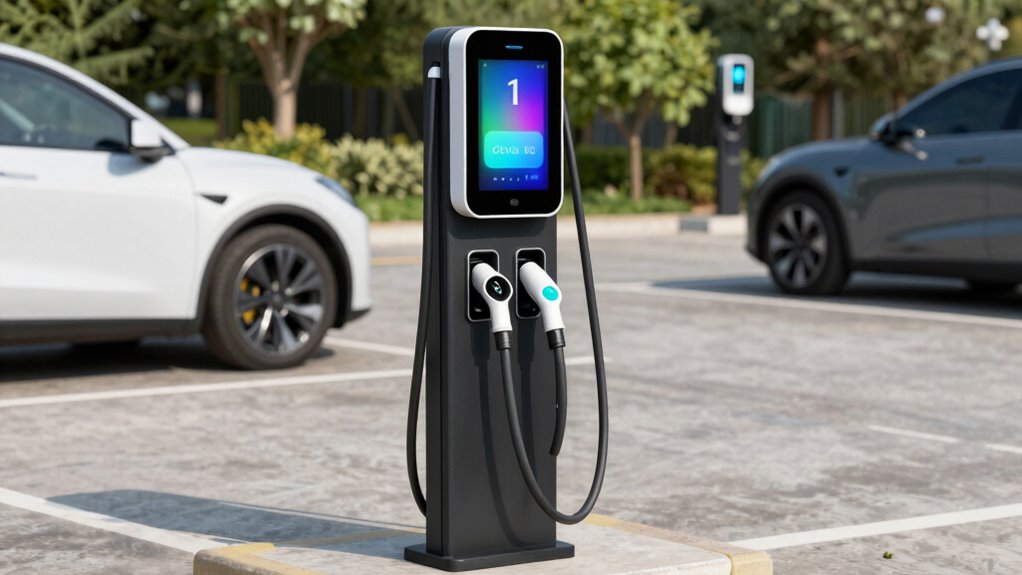
Understanding the different types of EV chargers is essential for choosing the right one for your needs. There are three main types: Level 1, Level 2, and DC fast chargers. Level 1 chargers connect to a standard household outlet and offer a low power output, making them suitable for overnight charging at home. Level 2 chargers require a dedicated charging station with higher power output, allowing faster charging times—perfect if you need quicker top-ups. DC fast chargers provide the highest power output, enabling rapid charging, often in 30 minutes or less, ideal for public charging stations on long trips. Knowing these options helps you determine the best fit based on your driving habits and charging requirements, ensuring your EV is always ready when you need it. Additionally, understanding charging infrastructure can enhance your overall charging experience, especially as the availability of fast charging networks continues to expand, making long-distance travel more convenient.

FOCSPROD for NACS to CCS1 Charger Adapter, Max 500A 1000V Fast Charge NACS to CCS Adapter, CCS1 Electric Vehicle Charging Compatible with Tesla Superchargers -UL 2252
NOTE: Verify Compatibility Before Purchase -PLEASE CONFIRM your CCS electric vehicle manufacturer has enabled access to the respective…
As an affiliate, we earn on qualifying purchases.
As an affiliate, we earn on qualifying purchases.
How to Choose the Right EV Charger for Your Needs
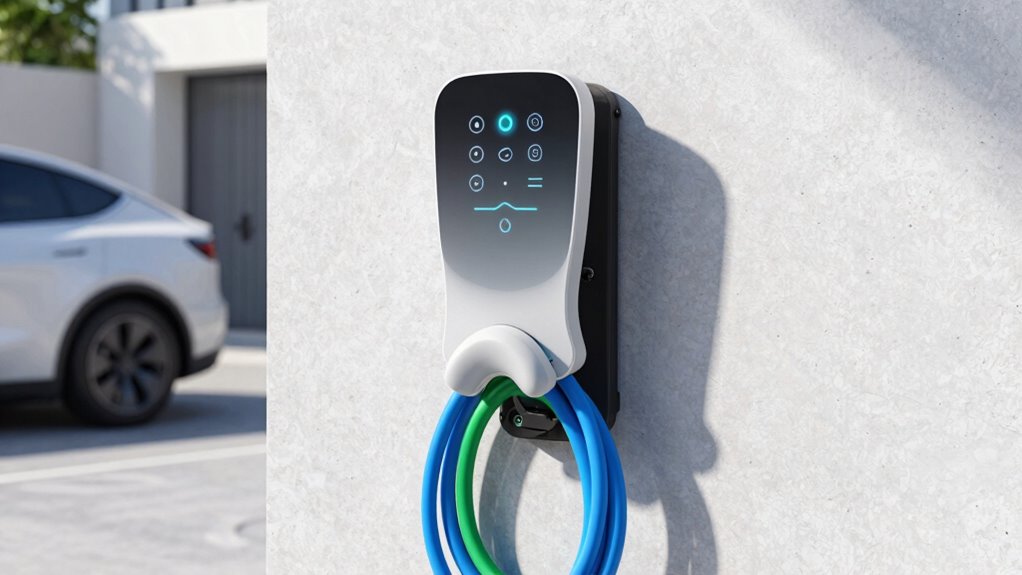
Choosing the right EV charger depends on your charging speed needs and your vehicle’s compatibility. Faster chargers can save time but may require more power and installation considerations. Make sure to check your car’s specifications to find a charger that works best for you. Additionally, understanding the different types of chargers and their installation requirements can help you make a more informed decision. Considering the Gold IRA markets can also guide you in making secure and trustworthy investments related to your charging infrastructure. Being aware of travel planning tips can ensure your charging setup supports your travel needs effectively. Staying informed about industry trends and technological advancements can help you choose a more future-proof charging solution.
Charging Speed Options
When selecting an EV charger, it’s essential to take into account how quickly you want to recharge your vehicle. Charging speed varies based on the type of charging station you choose, affecting how long it takes to replenish your battery capacity. Faster chargers deliver higher wattage, reducing overall charging time. Consider these options:
- Level 1 chargers: Use standard household outlets; ideal for overnight charging, but slow.
- Level 2 chargers: Require a dedicated circuit; suitable for daily use with moderate charging speeds.
- DC fast chargers: Provide rapid charging, perfect for quick top-ups during long trips, but often more costly and less common. Incorporating smart home technology can help you better monitor and manage your vehicle’s charging process, making it more efficient and convenient. Understanding battery capacity is also crucial for choosing the right charging speed to match your driving habits. Additionally, integrating energy management systems can optimize your overall energy consumption while your vehicle charges.
Matching your daily driving needs with the appropriate charging station guarantees efficient, convenient recharging without unnecessary delays. For optimal home use, understanding smart thermostat setup and protocols can help you better manage energy consumption while your vehicle charges.
Compatibility With Vehicle
Ever wonder how to guarantee your new EV charger works seamlessly with your vehicle? The key is understanding vehicle compatibility and charging standards. Not all chargers fit every car, so check your vehicle’s specifications to match the connector type and power requirements. Some EVs support only Level 1 or Level 2 charging, while others can handle faster DC fast charging. Make sure the charger you choose aligns with your vehicle’s charging standards and capacity. Consult your car’s manual or manufacturer’s recommendations to confirm compatibility. This way, you avoid compatibility issues and maximize charging efficiency. Additionally, being aware of dream symbolism related to time and life can help you understand the importance of choosing the right moment and method for charging, much like aligning with the right timing in your dreams. By selecting the right charger based on your vehicle’s specifications, you’ll get a reliable, safe, and efficient charging experience tailored to your needs.
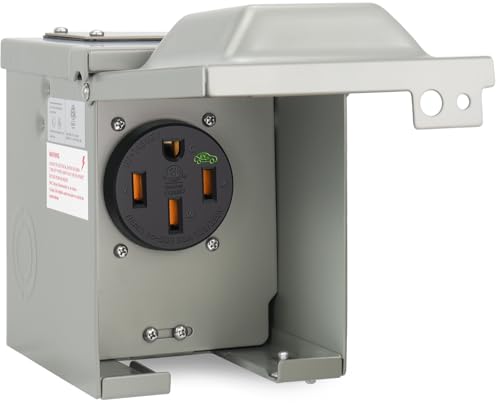
50 Amp 125/250 Volt EV Power Outlet Box, NEMA 14-50R 50 Amp EV Charging Receptacle Outlet Box, Enclosed Lockable Weatherproof Outdoor Electrical NEMA 14-50R Receptacle Panel, Heavy Duty, ETL Listed
ETL Listed: NEMA 14-50R receptacle 125/250V, 50 Amp EV outlet with rainproof type 3R enclosure, designed for plug-in…
As an affiliate, we earn on qualifying purchases.
As an affiliate, we earn on qualifying purchases.
Electrical Requirements for EV Charger Installation
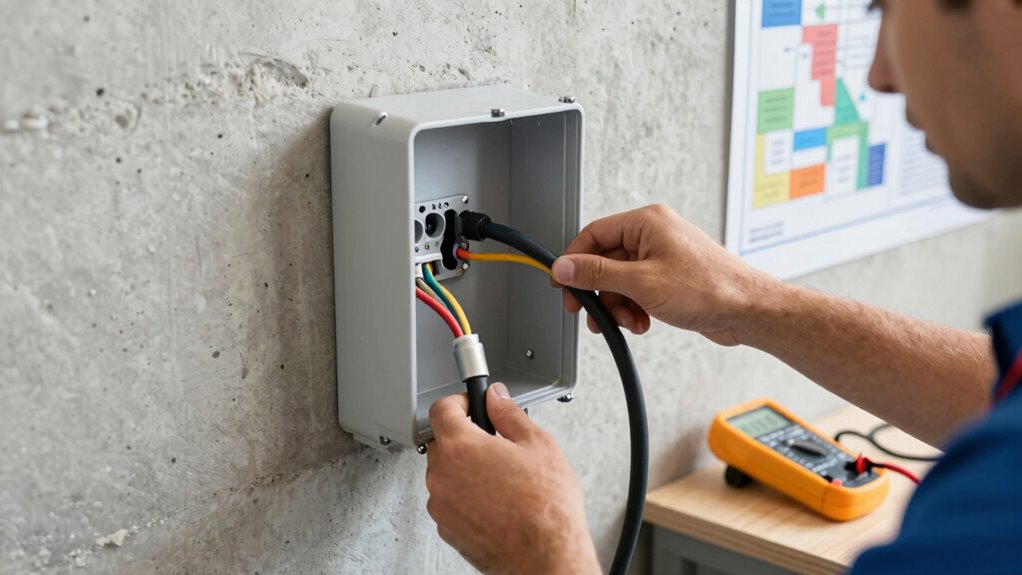
What electrical requirements do you need to meet to safely install an EV charger? First, confirm your electrical wiring can handle the charger’s power demand, typically requiring a dedicated circuit. Second, verify that your circuit breaker is rated appropriately—usually a 40-50 amp breaker for Level 2 chargers—to prevent overloads. Third, check that the wiring and breaker are compatible with local electrical codes and standards. Proper wiring installation ensures safety and efficiency, while a correctly rated circuit breaker protects your home from potential electrical faults. Additionally, ensuring your electrical system is up to date can prevent future issues and adhere to safety standards. Regularly inspecting your electrical components and understanding your home’s electrical capacity can help in maintaining a safe installation. Being aware of cable failures and their signs can also prevent unexpected hazards. Staying informed about electrical system upgrades can further enhance safety and performance. By meeting these requirements, you reduce risks and guarantee your EV charger operates reliably. Always consult a licensed electrician to confirm your electrical system is suitable before installation.

NEMA 14-50 Outlet for EV Charging,50 Amp EV Charging Receptacle,14-50R EV Outlet,50 Amp Straight Blade Device Receptacle,3-Pole 4-Wire,125/250V,for Electric Vehicles RVs Large Appliance,ETL Listed.
ETL Listed: 50 Amp EV outlet, NEMA 14-50R receptacle 125/250 VAC, 3 pole 4 wire, straight blade, heavy…
As an affiliate, we earn on qualifying purchases.
As an affiliate, we earn on qualifying purchases.
Permits and Regulations for Installing an EV Charger
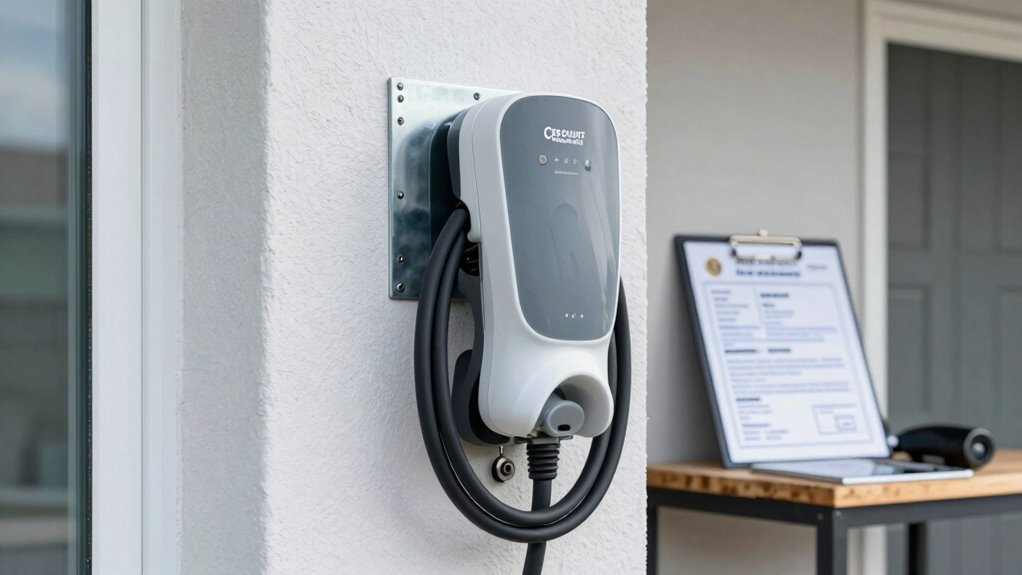
Before installing your EV charger, you’ll need to understand local code requirements and the permit application process. Checking with your city or county guarantees you follow all rules and avoid delays. Let’s go over what you need to know to get started smoothly. Additionally, understanding regulations for electrical installations can help ensure your setup meets safety standards and complies with local ordinances. Being aware of whole-home water systems and their efficiency tips can also provide valuable insights into comprehensive home upgrades. Incorporating knowledge about home security systems may further enhance your property’s safety during installation. Familiarizing yourself with home product roundups related to safety and comfort can offer new ideas for securing your space during the process. Understanding home improvement fundamentals can also help you plan and execute your EV charger setup more effectively.
Local Code Requirements
Controlling local code requirements is a crucial step when installing an EV charger, as it guarantees your setup complies with safety and legal standards. Understanding local code requirements helps you avoid fines and delays. You should consider:
- Reviewing local building codes and electrical standards to ensure compliance.
- Checking zoning restrictions that may limit charger placement or power capacity.
- Consulting with local authorities or inspectors to clarify specific regulations.
- Being aware of ethical considerations that may influence your decision to install an EV charger in certain areas.
These regulations vary by location, so it’s essential to verify requirements before installation. Failing to adhere to zoning restrictions or local code requirements can result in costly modifications or penalties. Staying informed ensures your installation is safe, legal, and ready for use without issues.
Permit Application Process
Steering through the permit application process is a vital step to guarantee your EV charger installation complies with local regulations. You’ll need to submit necessary documents, such as site plans and electrical diagrams, to your city or county office. Many jurisdictions require permits to assure safety and adherence to building codes, especially with home automation systems integrated for energy efficiency. Obtaining approval not only keeps you compliant but also helps optimize energy use and smart home features. Be prepared for inspections, which verify your installation meets these standards. Failing to secure permits can lead to fines or having to redo work. Taking the time to navigate this process ensures your EV charger is installed safely, efficiently, and in harmony with local regulations.
Step-by-Step Guide to Installing Your EV Charger
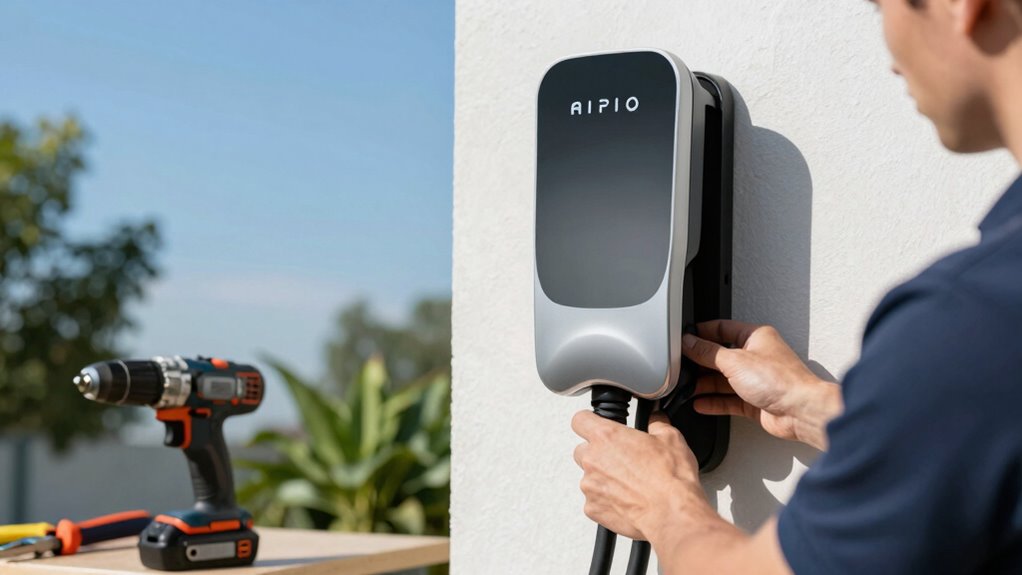
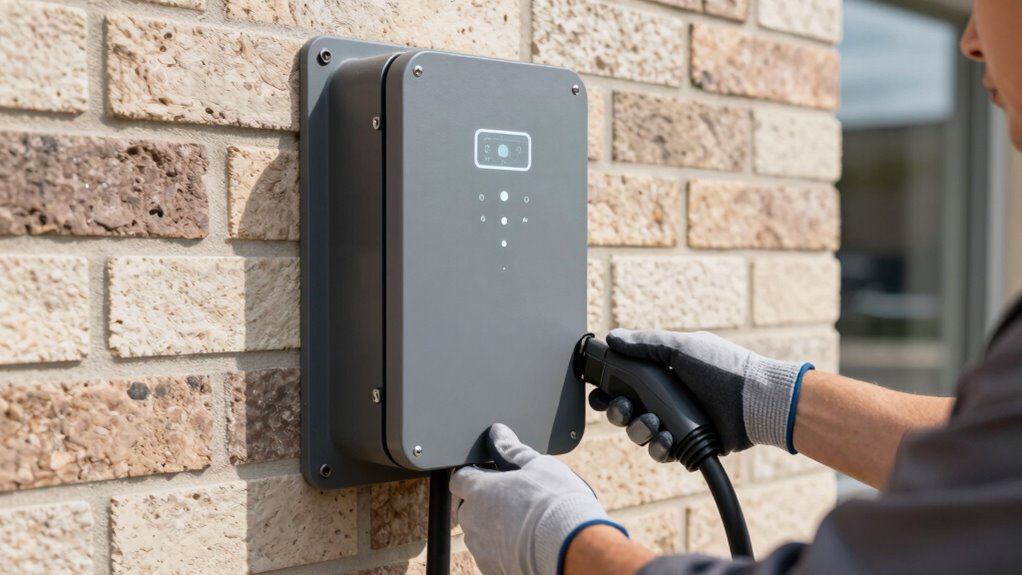
Installing your EV charger can seem overwhelming, but breaking it down into clear steps makes the process manageable. First, choose a suitable charging station location that’s accessible and near your vehicle’s parking spot. Consider the battery capacity of your EV to determine the right charger type and power level. Next, verify your electrical system can support the installation—this may involve upgrading circuits or wiring. Finally, follow these steps:
Installing an EV charger is manageable with clear steps and proper planning.
- Turn off power and install the mounting bracket securely.
- Connect the wiring according to manufacturer instructions, paying attention to proper grounding.
- Test the charger to ensure it functions correctly and is ready for use.
Safety Tips for EV Charger Installation
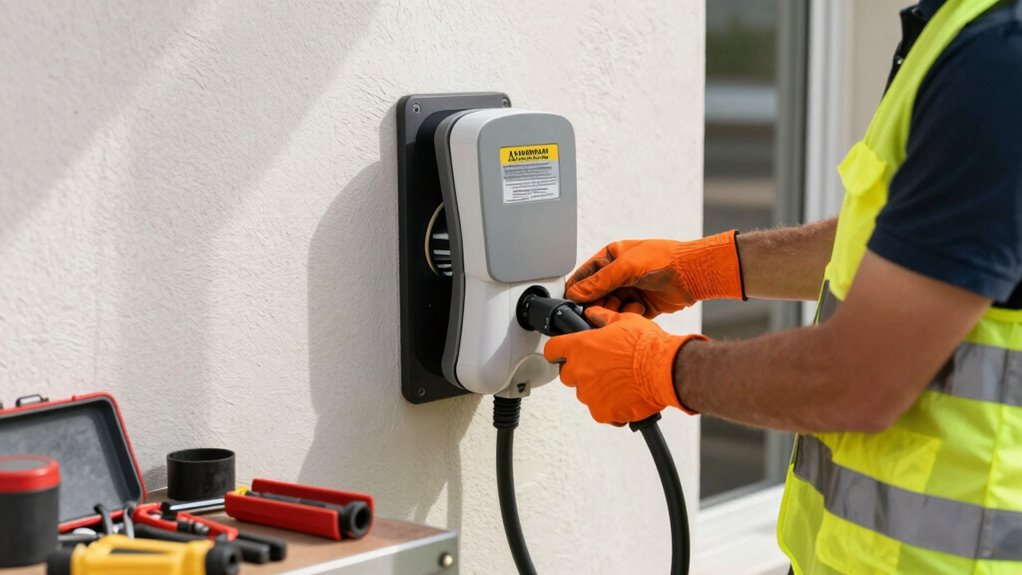
Ensuring safety during EV charger installation is vital to prevent accidents and protect your electrical system. Prioritize workplace safety by wearing proper gear, such as insulated gloves and eye protection, to reduce the risk of electrical shock. Keep your workspace clear of clutter and hazards to avoid trips or falls. Familiarize yourself with emergency procedures beforehand, including how to shut off power quickly in case of sparks or short circuits. Always turn off the main electrical supply before starting work and double-check that circuits are de-energized. Use appropriate tools and follow manufacturer instructions carefully. If you’re unsure about any step, consult a licensed electrician. Staying vigilant and prepared helps ensure a safe installation process for both you and your property.
Troubleshooting Common EV Charger Issues
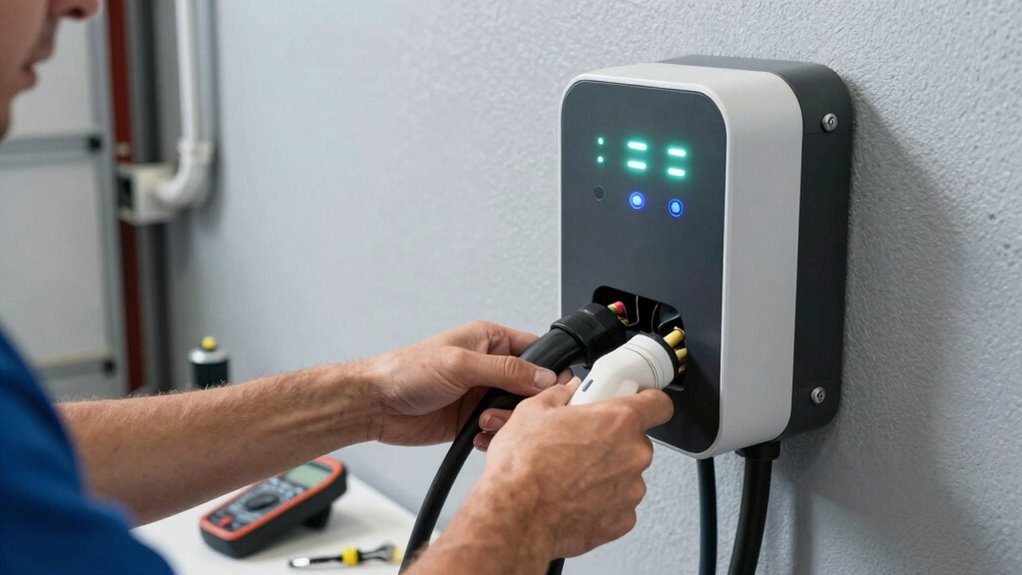
Even after a safe installation, EV chargers can encounter issues that disrupt charging or affect performance. Common problems often relate to battery management and signal interference. To troubleshoot:
- Check for signal interference from nearby electronics or Wi-Fi devices, which can disrupt communication between the charger and your vehicle. Moving devices away or re-routing cables may improve signal stability.
- Inspect the charger’s connection points and wiring for loose or damaged components, as this can hinder proper charging and battery management.
- Ensure your vehicle’s battery management system is functioning correctly; outdated software or sensor issues may cause charging errors. Updating firmware or resetting the system can often resolve these problems.
Addressing these issues promptly helps maintain efficient charging and prolongs your charger’s lifespan.
Cost of Installing an EV Charger
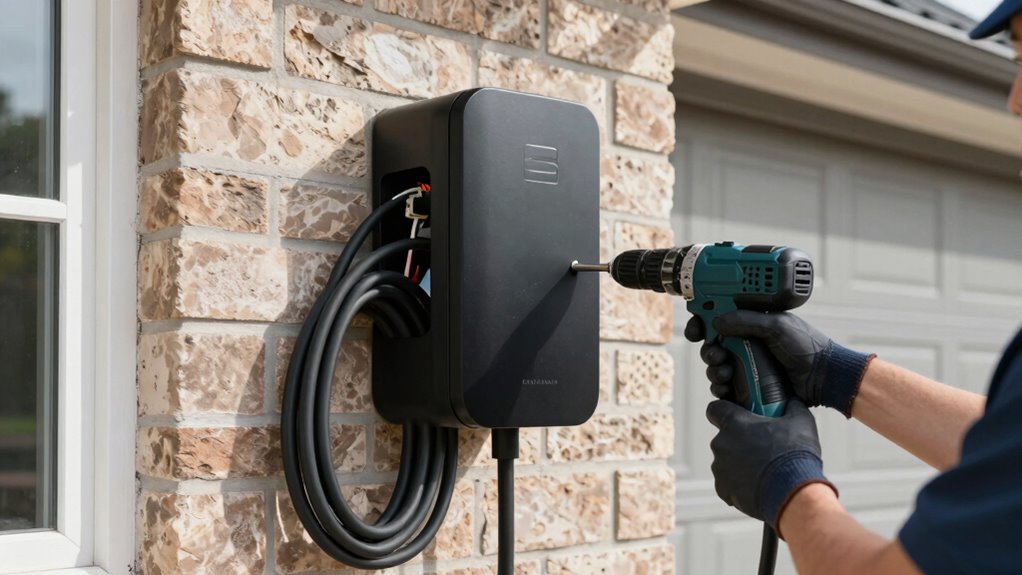
The cost of installing an EV charger can vary widely depending on several factors, including the type of charger you choose, your home’s electrical system, and whether upgrades are necessary. Basic Level 1 chargers may cost less to install, while Level 2 charging stations typically involve higher installation costs due to wiring and electrical panel upgrades. The overall expenses include the price of the charging station and installation fees, which can differ based on your home’s setup. Here’s a quick breakdown:
| Factor | Cost Range |
|---|---|
| Basic Level 1 Charger | $300 – $600 |
| Level 2 Charging Station | $500 – $2,500 |
| Installation Costs | $200 – $1,500 |
| Electrical Upgrades | Varies, $1,000+ |
| Total Estimated Cost | $700 – $4,500+ |
Understanding these costs helps you budget for your charging station installation.
Maintaining and Troubleshooting Your EV Charger
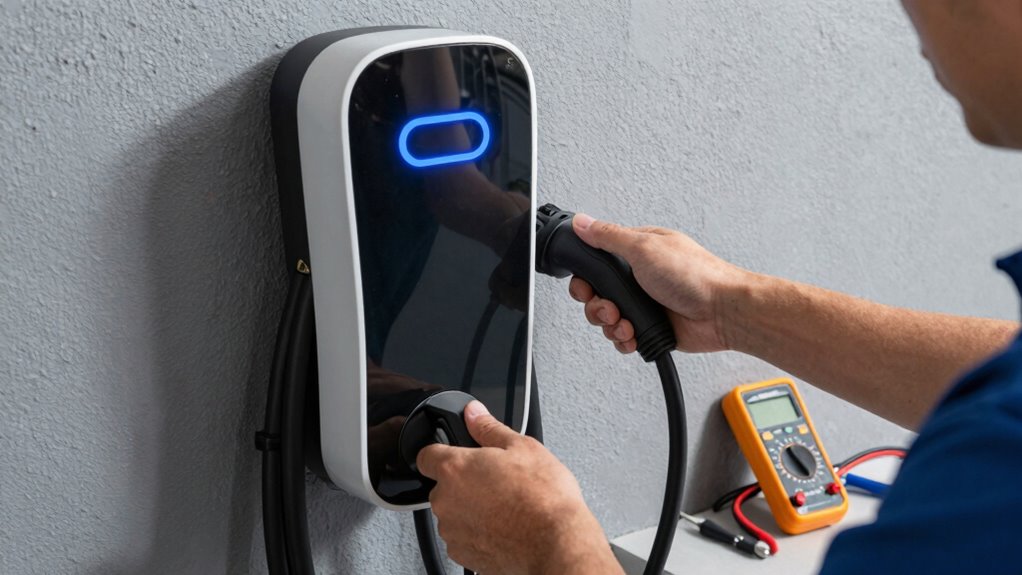
Once your EV charger is installed, regular maintenance and prompt troubleshooting can keep it running smoothly. Proper charger maintenance involves inspecting connections, cleaning components, and guaranteeing there’s no damage or corrosion. When troubleshooting, start with simple troubleshooting tips such as checking the power supply, resetting the charger, and verifying your vehicle’s compatibility.
Here are key steps to follow:
- Inspect connections regularly to prevent loose wiring.
- Clean the charger and connectors to avoid dust buildup.
- Check for error codes on the charger display and consult the manual for specific troubleshooting tips.
Staying proactive with charger maintenance and addressing issues early can prolong your charger’s lifespan and ensure reliable charging every time.
Frequently Asked Questions
Can I Install an EV Charger Myself or Should I Hire a Professional?
You can install an EV charger yourself, but you should prioritize DIY safety and verify licensing requirements in your area. If you’re comfortable with electrical work and follow proper safety procedures, a DIY approach might work. However, hiring a licensed electrician ensures the installation meets local codes and safety standards. For most, consulting a professional minimizes risks and guarantees your charger functions correctly and safely.
How Long Does It Typically Take to Install an EV Charger?
It usually takes a few hours to install an EV charger, but the exact time depends on your charging speed preferences and power requirements. If your electrical system needs upgrades or specific wiring, it might take longer. You don’t want to rush the job, so it’s best to leave it to a professional. They’ll guarantee your charger is installed safely and correctly, so you can hit the ground running with reliable charging.
What Is the Expected Lifespan of an EV Charging Station?
You can expect your EV charging station to last around 10 to 15 years, depending on charger durability and usage. Regular maintenance helps prolong its lifespan, so clean connections and check for damage periodically. Proper installation and avoiding harsh weather conditions also play a role. By staying attentive to maintenance requirements, you guarantee your charger remains reliable, efficient, and functional for many years.
Are There Any Hidden Costs Associated With EV Charger Installation?
Hidden fees can catch you off guard during EV charger installation, turning what seems like a straightforward project into a surprise expense. While the upfront cost might look clear, installation surprises such as additional wiring, permits, or upgrades can add to your total. Be prepared to budget for these hidden fees, and always ask your installer about potential extra costs upfront to avoid unexpected expenses later.
How Do I Upgrade My Existing Charger to a Faster Model?
To upgrade your existing charger to a faster model, first check charger compatibility with your vehicle and guarantee your current power supply can handle the increased demands. You might need to upgrade your electrical panel or wiring to meet new power supply requirements. Consult a professional electrician to assess these factors, confirm compatibility, and safely install the new, faster charger, ensuring peak performance and safety.
Conclusion
Think of installing your EV charger as planting a sturdy tree in your yard. With the right choice of tools, proper planning, and care, it will grow strong and serve you well for years to come. Follow the steps, prioritize safety, and stay patient through the process. Before long, you’ll enjoy the fruits of your labor—reliable, convenient charging—making your journey toward greener driving both rewarding and effortless.