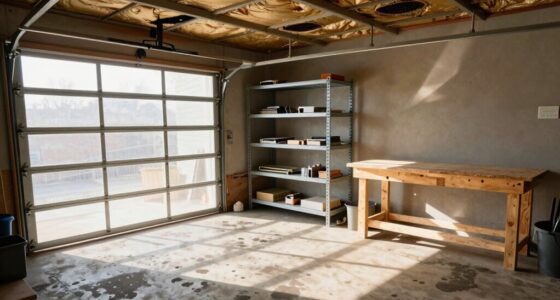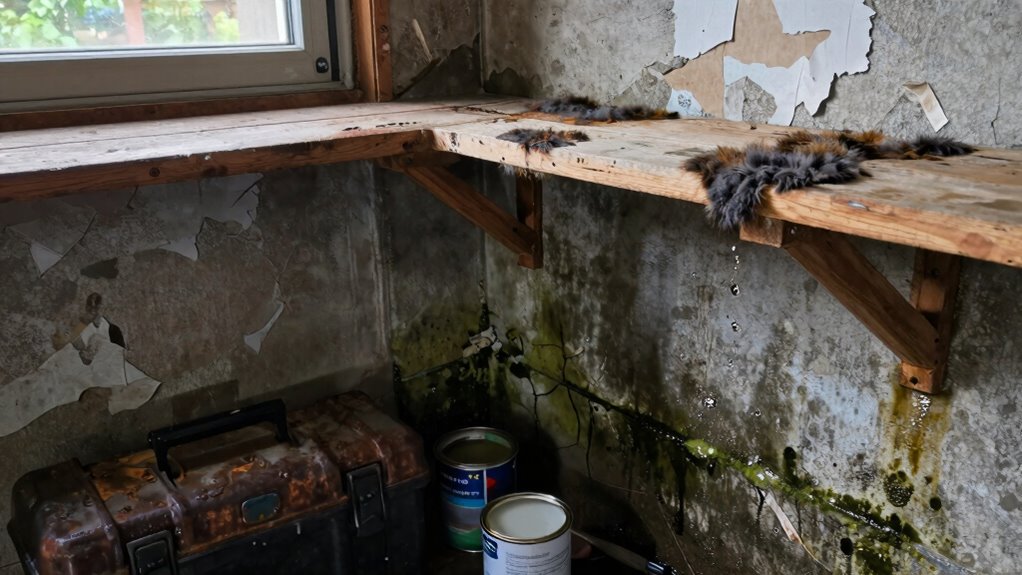

Mold in garages mainly results from excess moisture, poor ventilation, and organic materials like cardboard or dust that spores feed on. High humidity and limited airflow create ideal conditions for mold growth, especially on wooden surfaces or chipped paint. To prevent it, keep your garage dry, organize clutter, and improve ventilation with exhaust fans or dehumidifiers. If you want tips on spotting, cleaning, and maintaining a mold-free space, you’ll find useful insights below.
Key Takeaways
- Excess moisture from leaks, poor ventilation, and high humidity promotes mold growth in garages.
- Clutter and organic materials trap humidity, creating ideal conditions for mold development.
- Visible signs include dark patches, musty smell, and water stains indicating mold presence.
- Maintaining proper airflow, using dehumidifiers, and fixing leaks help prevent mold.
- Regular cleaning, moisture barriers, and good organization reduce mold risk long-term.

Dehumidifier, 95OZ Dehumidifier for Home 1000 Sq.Ft – Quiet with Auto Shut Off & Relaxing 7 Color Ambient Light,Ideal for Livingroom, Bedroom, Basement(Black)
Semiconductor dehumidifiers use thermoelectric cooling to remove moisture from the air. They create a drier, more comfortable environment…
As an affiliate, we earn on qualifying purchases.
As an affiliate, we earn on qualifying purchases.
What Causes Mold to Grow in Garages?
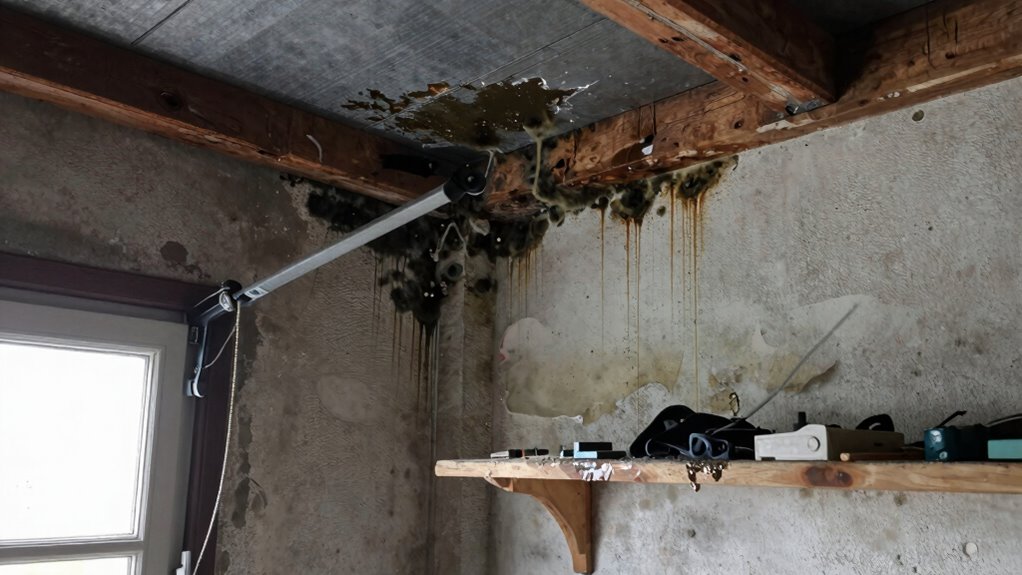
Mold in garages often starts growing when moisture accumulates and combines with organic materials like cardboard, wood, or dust. Poor garage organization creates clutter that traps humidity, making it easier for mold to thrive. When items are piled up haphazardly, airflow is restricted, and moisture gets trapped, increasing the risk of mold growth. To prevent this, keep your garage organized by storing items in sealed plastic containers and raising them off the floor. Good organization also helps with pest prevention, as pests like rodents and insects can carry mold spores or create conditions that promote mold growth. Regularly inspecting and cleaning your garage minimizes hidden moisture and organic debris, reducing mold risks and maintaining a healthier, pest-free environment. Using proper storage techniques can further reduce moisture buildup and prevent mold development. Additionally, maintaining proper ventilation in your garage helps to control humidity levels, further decreasing the likelihood of mold growth.

iLIVING 12" Wall Mounted Shutter Exhaust Fan, Automatic Shutter, with Thermostat and Variable Speed controller, 0.6A, 960 CFM, 1400 SQF Coverage Area Silver (ILG8SF12V-ST)
POWERFUL AIR VENTILATOR – 960 CFM, 115V, 0.6A, 1/20 Horse Power, 1650 RPM, Coverage up to 1400 square…
As an affiliate, we earn on qualifying purchases.
As an affiliate, we earn on qualifying purchases.
How Humidity and Ventilation Lead to Mold Growth
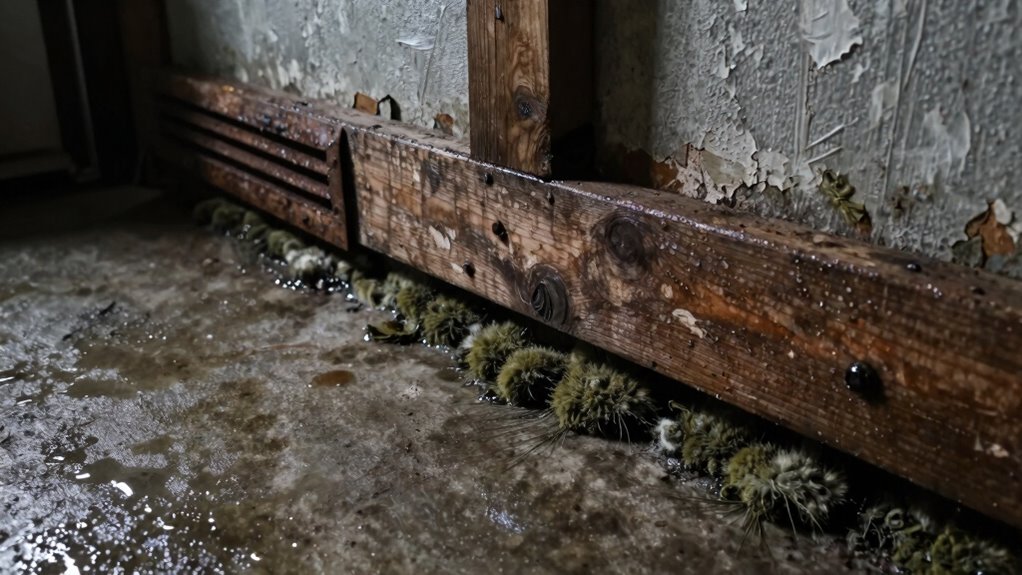
When humidity levels are high, moisture in the air creates the perfect environment for mold to grow. Poor ventilation traps this moisture, making it even easier for mold spores to settle and multiply. Keeping your garage dry and well-ventilated is key to preventing mold from taking hold. Incorporating modern farmhouse designs that emphasize good airflow and natural light can also help reduce indoor humidity levels. Using DIY tools such as dehumidifiers and exhaust fans can further improve air circulation and moisture control. Additionally, understanding piercing care and hygiene can help prevent issues related to excess moisture and bacteria buildup in storage areas. Regularly monitoring dog breeds overview can provide insights into breed-specific needs that may influence humidity control, especially for breeds sensitive to environmental conditions. Maintaining proper indoor air quality by controlling humidity and ensuring good ventilation is essential for mold prevention.
Excess Humidity Promotes Growth
Excess humidity creates the perfect environment for mold to thrive in your garage. When moisture levels stay high, mold spores find it easy to settle and grow on surfaces. Using a dehumidifier offers clear benefits by reducing moisture in the air, making your space less inviting for mold. Installing moisture barriers on floors and walls can also prevent ground moisture from seeping in and raising humidity levels. These barriers act as a first line of defense, keeping dampness out of your garage’s interior. Keeping humidity below 60% is essential for mold prevention. By controlling moisture with dehumidifiers and moisture barriers, you create an environment that’s less conducive to mold growth, protecting both your garage and your belongings. Incorporating proper ventilation further helps to regulate humidity and discourage mold development. Proper airflow management is also vital in maintaining consistent humidity levels and preventing pockets of dampness where mold can start.
Poor Air Circulation Risks
Poor air circulation in your garage can considerably increase the risk of mold growth, especially when humidity levels are high. Poor ventilation traps moisture, lowering air quality and creating a damp environment where mold thrives. Without proper airflow, humidity lingers, providing the perfect conditions for mold spores to settle and grow. Installing ventilation systems — like exhaust fans or vents — helps circulate air, reducing moisture buildup and improving overall air quality. Regularly opening windows or using dehumidifiers can also boost airflow, preventing stagnant, humid conditions. Additionally, understanding privacy policies related to smart ventilation devices can help you manage data collection and ensure your privacy is protected. Proper ventilation is essential for keeping your garage dry and mold-free, as humidity control plays a vital role in preventing mold development. By maintaining good air circulation, you reduce the chances of mold taking hold, protecting both your belongings and your health.

Sterilite 80 Qt Gasket Box, Stackable Storage Bin with Latching Lid and Tight Seal, Plastic Container to Organize Basement, Clear Base and Lid, 1-Pack
GASKET BIN: Organize your home and keep clutter-free with the Sterilite 80-quart stackable storage containers with hinged latch…
As an affiliate, we earn on qualifying purchases.
As an affiliate, we earn on qualifying purchases.
Materials and Surfaces Prone to Mold in Garages
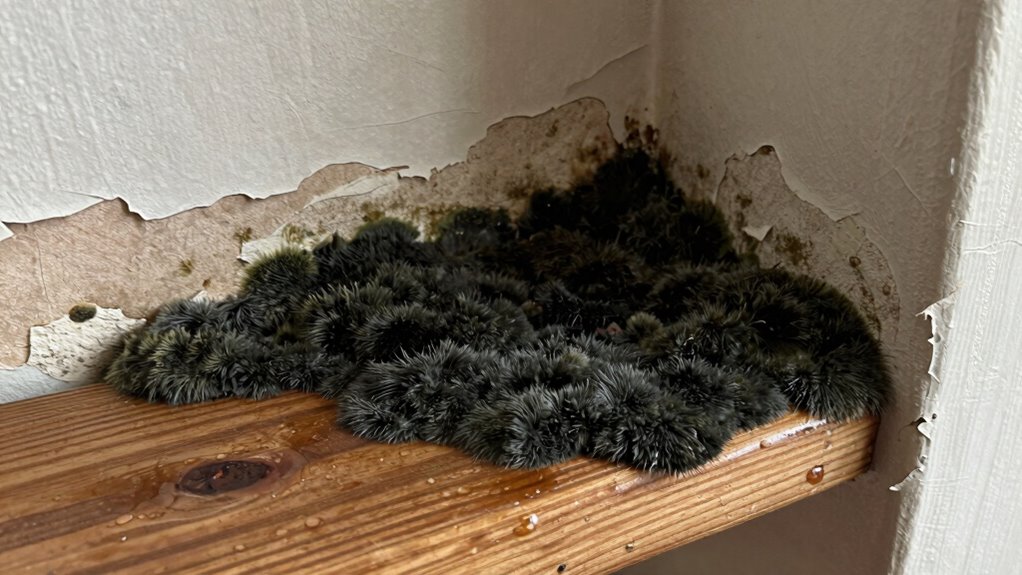
Certain materials and surfaces in your garage are especially vulnerable to mold growth, particularly those that retain moisture or offer organic nutrients. Garage door materials like wood or metal with paint surfaces can trap moisture, creating ideal conditions for mold. Paint surfaces, especially if chipped or cracked, can harbor mold spores and hold dampness. Additionally, moisture retention in poorly ventilated areas can further promote mold development. Ensuring proper ventilation can significantly reduce the risk of mold on these surfaces. Proper air circulation is essential to prevent stagnant, humid conditions that favor mold growth. Implementing natural ventilation strategies, such as opening windows or installing vents, can help maintain a dry environment and prevent mold growth. Using moisture barriers on floors and walls can also help prevent water seepage that promotes mold.

Vapor-Tek 440-100% Solids Epoxy Moisture Vapor Barrier for Basement Floors, Garage Floors and Warehouse Floors (3 Gallon Kit)
Helps reduce effects of moisture vapor transmission
As an affiliate, we earn on qualifying purchases.
As an affiliate, we earn on qualifying purchases.
How to Spot Mold and Why It’s Dangerous
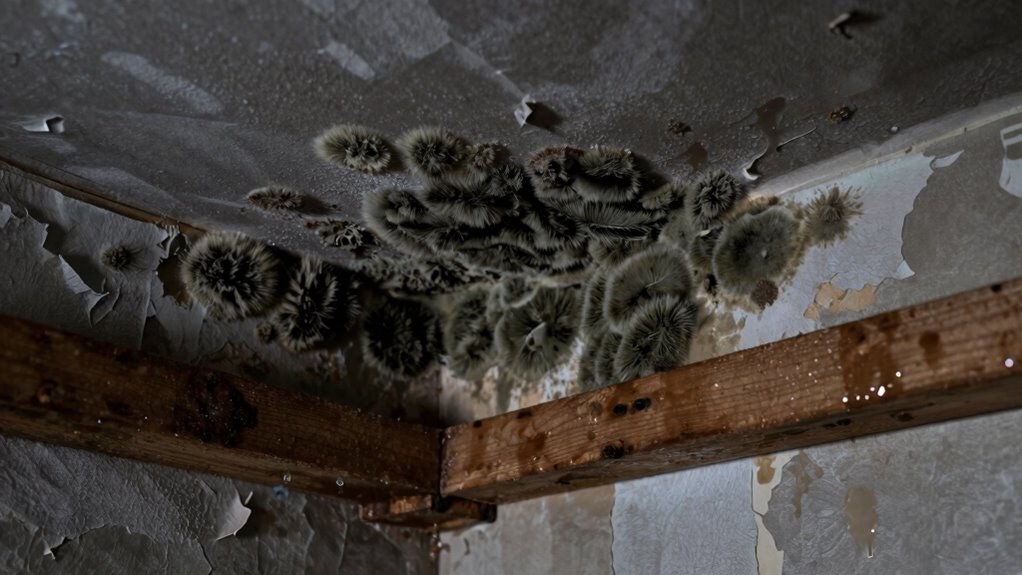
You might notice a musty smell or visible patches of discoloration on your garage walls or items, which are signs of mold growth. Ignoring these signs can lead to health problems like allergies, respiratory issues, or asthma flare-ups. Recognizing these dangers early helps you protect your health and prevent mold from spreading further. Additionally, maintaining proper ventilation and humidity levels can significantly reduce the risk of mold development in your garage. Ensuring adequate air circulation is essential, as poor ventilation can create a damp environment conducive to mold growth. Regularly monitoring air quality can help detect conditions favorable to mold before it becomes a larger problem. Proper storage conditions can also prevent moisture buildup and discourage mold growth on stored items. Implementing dehumidifiers can further control moisture levels and create an inhospitable environment for mold spores to thrive.
Signs of Mold Growth
Mold can often be tough to spot until it has already become a problem, but recognizing the signs early is crucial for preventing damage and health issues. One of the most noticeable indicators is a persistent mold odor—musty, earthy, and unpleasant—that lingers even after cleaning. Additionally, surface discoloration is a clear sign of mold growth; look for patches of dark, green, black, or white spots on walls, ceilings, or stored items. Pay close attention to areas with high humidity or poor ventilation. If these signs are present, it’s essential to act quickly to prevent mold from spreading further. Early detection helps you address the issue before it becomes more difficult and costly to remove, ensuring your garage stays safe and mold-free. Recognizing environmental factors such as high humidity can also help in understanding the causes of mold growth and implementing effective prevention measures.
Health Risks Involved
Have you ever noticed a persistent musty smell or seen dark patches on your garage walls? These are signs that mold may be growing nearby, and ignoring them can harm your indoor air quality. Mold releases spores into the air, which you breathe in daily. This exposure can lead to mold-related health issues like allergies, asthma, and respiratory infections. People with sensitivities or compromised immune systems are especially vulnerable. Continuous inhalation of mold spores can cause coughing, sneezing, and throat irritation. Over time, poor indoor air quality from mold can worsen existing health conditions or trigger new problems. Proper ventilation and controlling humidity levels are crucial for preventing mold growth in garages. It’s essential to recognize these signs early and address mold quickly to protect yourself and your family from these health risks. Additionally, understanding the importance of household moisture control can significantly reduce the chances of mold developing in your home. Maintaining proper ventilation practices is also key to minimizing indoor mold issues.
Effective Preventive Measures for Mold in Garages
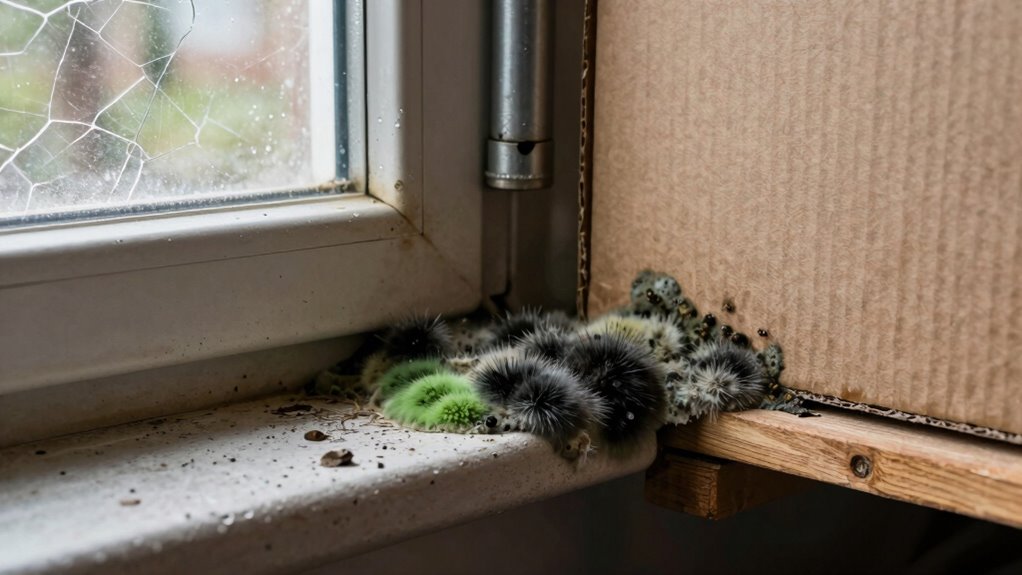
Maintaining a dry, well-ventilated garage is essential to prevent mold growth. Start by organizing your garage efficiently, keeping clutter to a minimum so air flows freely. Proper garage organization reduces hidden damp areas where mold can thrive. Installing moisture barriers on floors and walls creates a protective layer that prevents moisture seepage from the ground or outside. Use dehumidifiers or exhaust fans to control humidity levels, especially during damp seasons. Fix leaks promptly and guarantee gutters direct water away from your garage. Regularly inspect your space for signs of excess moisture or condensation, addressing issues immediately. These preventive measures help keep your garage dry, discourage mold development, and maintain a healthier environment for your belongings.
How to Clean and Remediate Mold in Your Garage
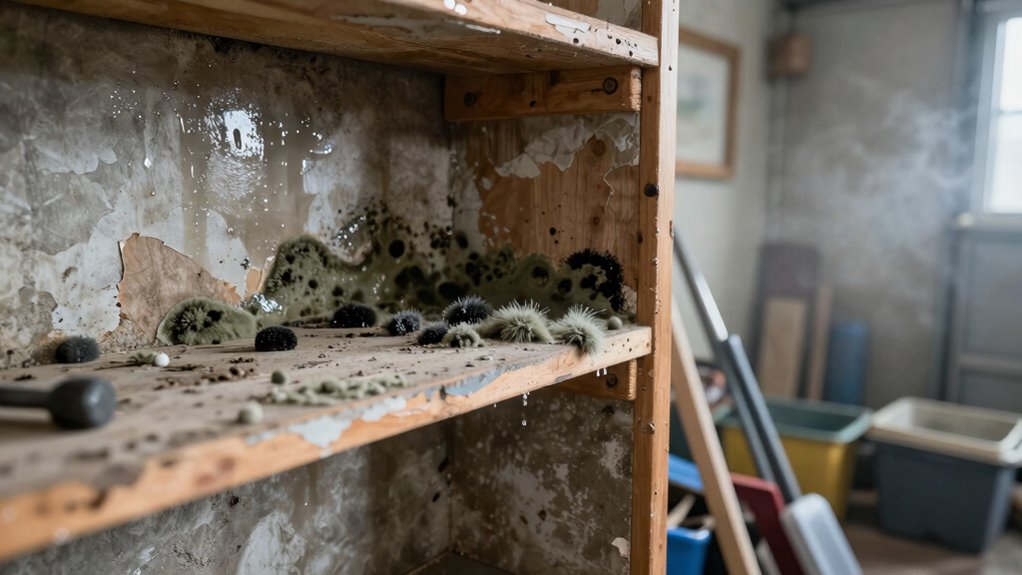
If you notice signs of mold in your garage despite your preventive efforts, it’s important to act quickly to clean and remediate the affected areas. Start with proper cleaning techniques to eliminate mold spores effectively. Wear gloves, a mask, and eye protection to avoid contact. Use a mixture of detergent and water or a commercial mold remover to scrub surfaces thoroughly. For porous materials like drywall or insulation, it’s best to remove and replace them, as mold can penetrate deeply. After cleaning, dry the area completely to prevent regrowth. Remember, mold removal isn’t a one-time fix; ongoing moisture control is essential. Address leaks or humidity issues promptly to prevent future mold problems. Proper cleaning and remediation protect your garage’s integrity and your health.
Long-Term Mold Prevention Strategies in Garages
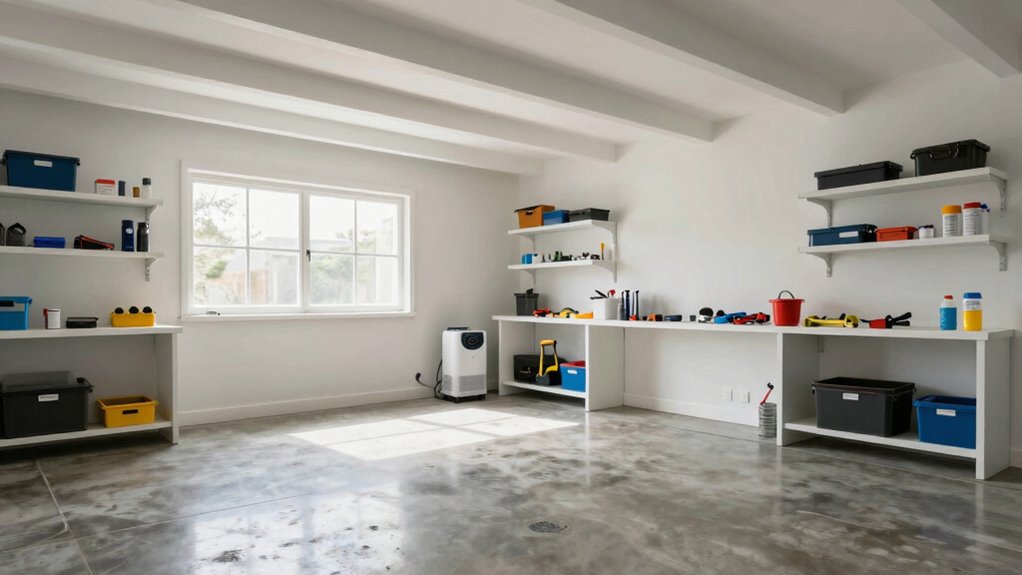
To effectively prevent mold from returning in your garage, you need to implement consistent moisture control measures. Proper garage insulation helps regulate temperature and reduces condensation, limiting moisture buildup. Regular pest control prevents rodents and insects that can introduce mold spores or damage insulation, creating entry points for moisture. Keep gutters clean and guarantee proper drainage to avoid water leaks. Ventilate your garage regularly to circulate air and dry out damp areas.
| Strategy | Action | Benefit |
|---|---|---|
| Garage insulation | Install or upgrade insulation | Reduces condensation |
| Pest control | Schedule routine treatments | Prevents mold carriers |
| Ventilation | Use exhaust fans or open windows | Maintains dry environment |
Frequently Asked Questions
Can Certain Garage Items Contribute to Mold Growth?
Yes, certain garage items can contribute to mold growth. Clutter creates hidden spots where moisture can accumulate, providing an ideal environment for mold. Items like paper, cardboard, and fabric absorb moisture and retain it, especially if your garage isn’t well-ventilated. To prevent mold, keep your garage organized, reduce clutter, and guarantee proper airflow. Regularly check for moisture accumulation around stored items to keep mold at bay.
How Does Temperature Affect Mold Development in Garages?
You might think temperature doesn’t matter much, but it actually plays a key role in mold development. Warmer temperatures can increase humidity levels, making your garage more prone to condensation issues. When the air’s warm and humid, mold spores thrive. To prevent this, keep your garage cool and well-ventilated, controlling temperature and humidity levels. This reduces the chances of mold growth by minimizing condensation and dampness.
Are There Specific Paints or Coatings That Prevent Mold?
You can use specialized mold resistant paints or anti mold coatings to prevent mold in your garage. These products contain antimicrobial agents that inhibit mold growth on surfaces. Apply these coatings on walls, ceilings, and other potential mold hotspots for the best protection. Regularly inspect your garage and reapply as needed, especially in high-humidity areas, to keep mold at bay and maintain a cleaner, healthier space.
Can Outdoor Mold Spores Enter and Grow Inside the Garage?
Yes, outdoor spores can enter your garage through gaps, vents, or open doors, especially if ventilation issues exist. Once inside, moisture intrusion and poor airflow create ideal conditions for mold growth. To minimize this, seal entry points, improve ventilation, and control humidity levels. Regularly inspecting and maintaining your garage helps prevent outdoor spores from settling and thriving indoors, keeping mold at bay.
What Are Natural Remedies for Eliminating Mold in Garages?
Imagine a fresh breeze sweeping through your garage, banishing stubborn mold. You can tackle it with DIY cleaning solutions like a mixture of white vinegar and water, which kills mold naturally. Add a few drops of essential oils like tea tree or lavender for their antifungal properties and pleasant scent. Spray the solution, scrub gently, and let it air out—this simple, natural approach keeps your space clean and mold-free.
Conclusion
Now that you know what fuels mold growth in your garage, it’s up to you to act before it spreads further. The next step isn’t just about cleaning—it’s about uncovering hidden dangers lurking behind your tools and boxes. Will you catch it early and protect your home’s integrity? Don’t wait until mold takes over completely—your garage’s future depends on the choices you make today. Are you ready to take control?