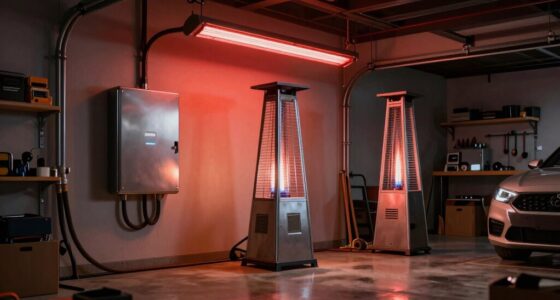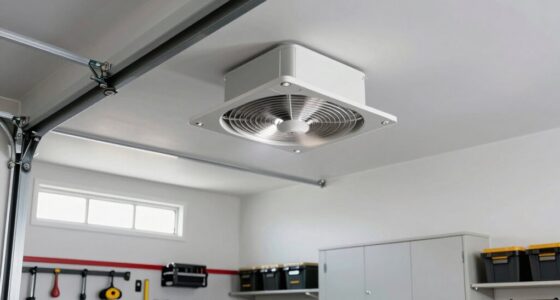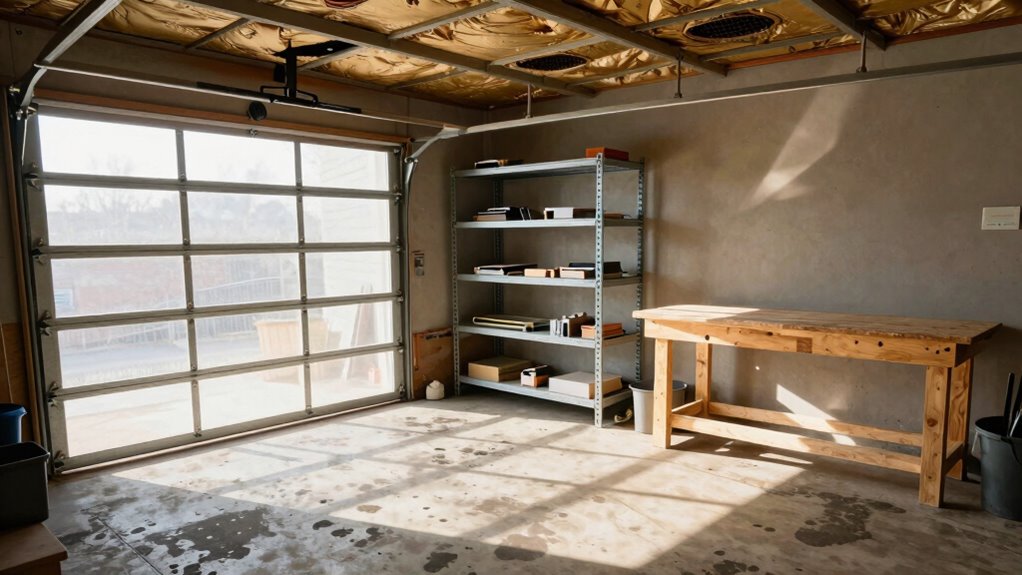

Your garage gets hot mainly because of poor insulation, inadequate ventilation, and direct sunlight exposure. Clutter traps heat and blocks airflow, while unshaded windows or a south-facing orientation let in more heat from the sun. To cool it down, you can improve ventilation, add insulation, and install shading features like overhangs or trees. Keep energy efficiency in mind—staying cooler is easier if you know more, so keep exploring to find lasting solutions.
Key Takeaways
- Poor organization and clutter block airflow, trapping heat and increasing interior temperature.
- Lack of proper ventilation and sealing allows hot outdoor air and moisture to enter the garage.
- Sun-facing garages absorb more heat, especially without shading or reflective surfaces.
- Insufficient insulation causes heat transfer from outside, raising indoor temperatures.
- Structural design and materials, like concrete walls and thermal mass, influence heat retention and dissipation.

Reach Barrier 3009 Garage Door Insulation Kit
Reach Barrier(Tm) Reflective Insulation And Bubble Barrier Technology Blocks Up To 95-Percent Of Radiant Heat Which Will Help…
As an affiliate, we earn on qualifying purchases.
As an affiliate, we earn on qualifying purchases.
Why Does My Garage Get So Hot in Summer?
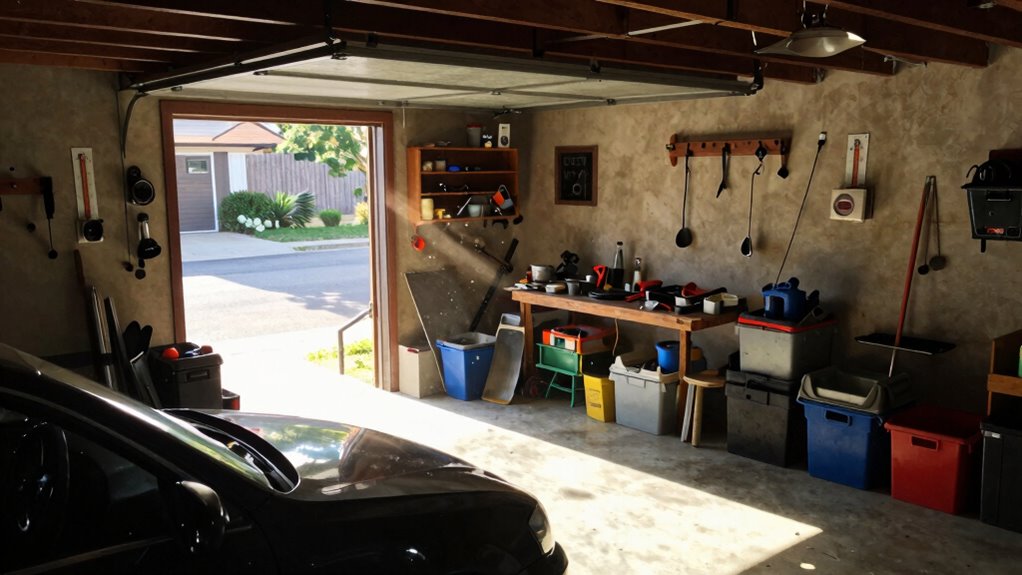
Have you ever wondered why your garage feels like a furnace during the summer? Poor garage organization can trap heat, making the space hotter than it needs to be. Clutter and disorganized storage block airflow and prevent heat from escaping, increasing the temperature. Additionally, clutter provides hiding spots for pests, which thrive in warm, dark environments. Pest prevention becomes more challenging when your garage is unorganized, leading to potential infestations that can damage stored items. Properly arranging and decluttering your garage allows air to circulate better, helping to keep temperatures down. Using proper ventilation techniques can significantly improve airflow and reduce heat buildup. Incorporating air circulation strategies can further enhance cooling and prevent heat pockets from forming. Proper ventilation not only helps with temperature control but also improves overall indoor air quality, reducing issues related to dust and pollutants. Use shelving and clear storage bins to reduce clutter, making it easier to spot issues early. A well-organized garage not only improves temperature control but also discourages pests, creating a cooler, cleaner space. Proper garage organization can also help improve overall airflow and reduce heat buildup, especially when combined with air circulation techniques.

iLIVING 12" Wall Mounted Shutter Exhaust Fan, Automatic Shutter, with Thermostat and Variable Speed controller, 0.6A, 960 CFM, 1400 SQF Coverage Area Silver (ILG8SF12V-ST)
POWERFUL AIR VENTILATOR – 960 CFM, 115V, 0.6A, 1/20 Horse Power, 1650 RPM, Coverage up to 1400 square…
As an affiliate, we earn on qualifying purchases.
As an affiliate, we earn on qualifying purchases.
What Causes Your Garage to Turn Into an Oven?
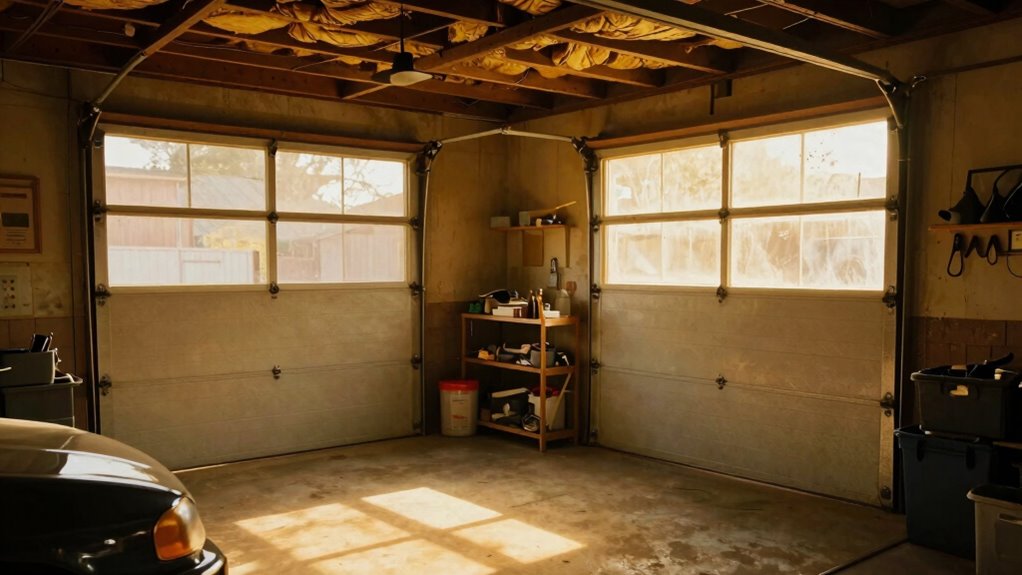
Your garage can quickly turn into an oven when sunlight heats up the surrounding air and the space isn’t properly ventilated. Without good garage insulation, heat easily seeps in and traps warm air inside. Gaps and leaks around doors, windows, and vents allow hot air to enter and make it harder to keep the space cool. Sealing leaks helps prevent warm outdoor air from infiltrating, while proper insulation keeps the interior temperature more stable. If your garage isn’t insulated or leaks aren’t sealed, the heat builds up rapidly, especially during summer days. This combination of poor insulation and unsealed gaps creates an oven-like environment, making it uncomfortable and increasing cooling costs. Addressing these issues is key to reducing heat buildup in your garage. Regularly maintaining humidity levels can also help prevent excess moisture that may contribute to temperature fluctuations and discomfort. Proper ventilation further enhances airflow, helping to keep the space cooler and more comfortable. Additionally, incorporating natural cooling techniques like shading or reflective paint can further mitigate heat absorption. Understanding the role of thermal insulation can significantly improve your efforts to keep the garage cooler. Being aware of airflow patterns inside the space can help identify areas where ventilation improvements are most needed.

Awning for Door Entrance, Window Awnings Exterior with Aluminum Bracket, UV, Rain & Snow Protection, Durable Polycarbonate Canopy for Entrance, Balcony, Garage, Gray 60x100cm/24x39in
Durable and Weather-Resistant Construction: The awning for door entrance is crafted from premium polycarbonate panels and strong aluminum…
As an affiliate, we earn on qualifying purchases.
As an affiliate, we earn on qualifying purchases.
How Sunlight and Garage Orientation Affect Heat
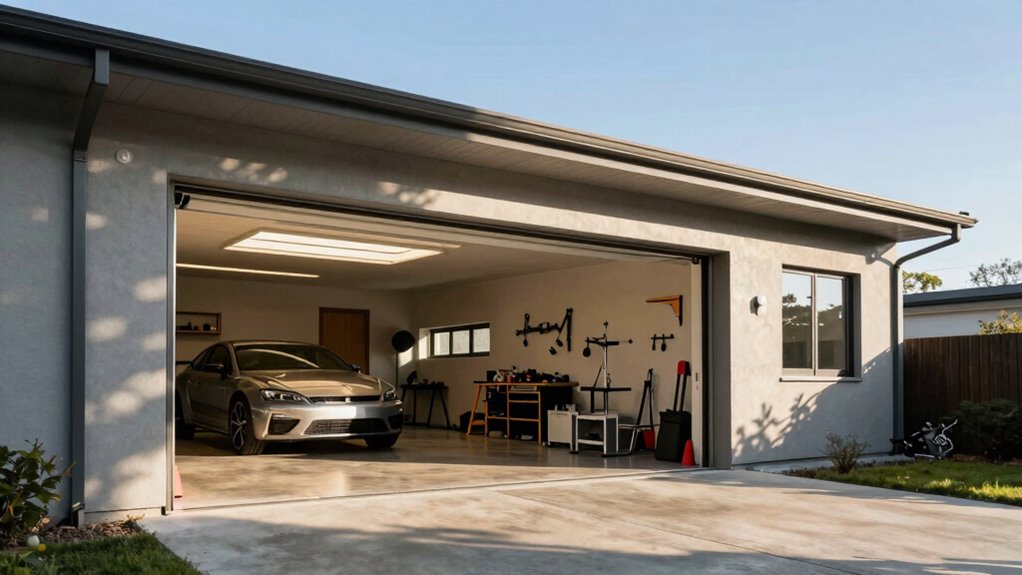
The amount of sunlight hitting your garage depends on its orientation, which can profoundly influence how hot it gets. If your garage faces east or south, it’s more exposed to direct sun, increasing heat buildup. Understanding how sunlight and garage position impact temperature can help you take targeted steps to keep it cooler. Additionally, using recycled materials in gardening around your property can help reduce overall heat absorption and improve outdoor shade options. Being mindful of urban heat island effect can also inform your efforts to create a cooler environment around your home. Recognizing the role of solar gain can further assist in implementing effective shading and insulation solutions, as well as considering building materials that reflect rather than absorb heat. Incorporating drone bee conservation practices can also contribute to maintaining a healthy local ecosystem, which ultimately benefits your environment.
Sunlight Exposure Impact
Sunlight streaming through garage doors and windows considerably influences how hot your space gets. The sunlight intensity that enters your garage can notably raise temperatures, especially during peak hours. If your garage faces the sun directly, it absorbs more heat, making it warmer. Shade placement becomes vital here; strategically shading windows or doors with awnings or plants can reduce solar gain. Windows left uncovered allow more sunlight to enter, increasing heat buildup. Conversely, tinted or reflective glass helps block some of this heat. Understanding how sunlight hits your garage helps you plan effective shade solutions, preventing excessive heat. Adjusting shade placement and controlling direct sunlight exposure are essential steps to keep your garage cooler and more comfortable. Considering the solar gain from sunlight exposure can guide you in choosing the most effective shading strategies. Implementing bioluminescent lighting options for outdoor shading can also help reduce heat absorption by creating ambient light without adding heat. Additionally, proper garage orientation can significantly influence how much sunlight your space receives throughout the day. Being aware of solar angles can further optimize your shading efforts for maximum cooling efficiency. Recognizing how thermal mass impacts heat retention can assist in selecting materials that help keep your garage cooler.
Garage Position Effects
Garage orientation considerably influences how much sunlight it receives throughout the day, directly impacting its temperature. Your garage layout and structural design determine its exposure to the sun and heat buildup. To optimize your garage’s position:
- Choose a shady side: Position your garage on the north or east side of your property to reduce direct sun exposure.
- Adjust garage door placement: Minimize large, south-facing doors that invite intense sunlight and heat.
- Incorporate shading features: Use overhangs, awnings, or trees to block sunlight, especially on the hottest parts of the day.
- Consider water-efficient landscaping: Adding trees and plants that provide natural shade can further reduce heat accumulation water conservation. Additionally, understanding how solar heat gain operates can be beneficial for managing indoor temperatures and improving energy efficiency. Recognizing heat transfer principles can help you implement more effective cooling strategies.

Sterilite 4-Pack 64 Quart Latching Box, Clear Plastic Storage Organizer Bins with White Lids – Large Stackable Containers for Home Bedroom, Dorm Room, and Closet Organization
Product Dimensions: With an outer size of 23 3/4" x 16" x 13 1/2" and an interior size…
As an affiliate, we earn on qualifying purchases.
As an affiliate, we earn on qualifying purchases.
Simple Ways to Keep Your Garage Cooler During Summer
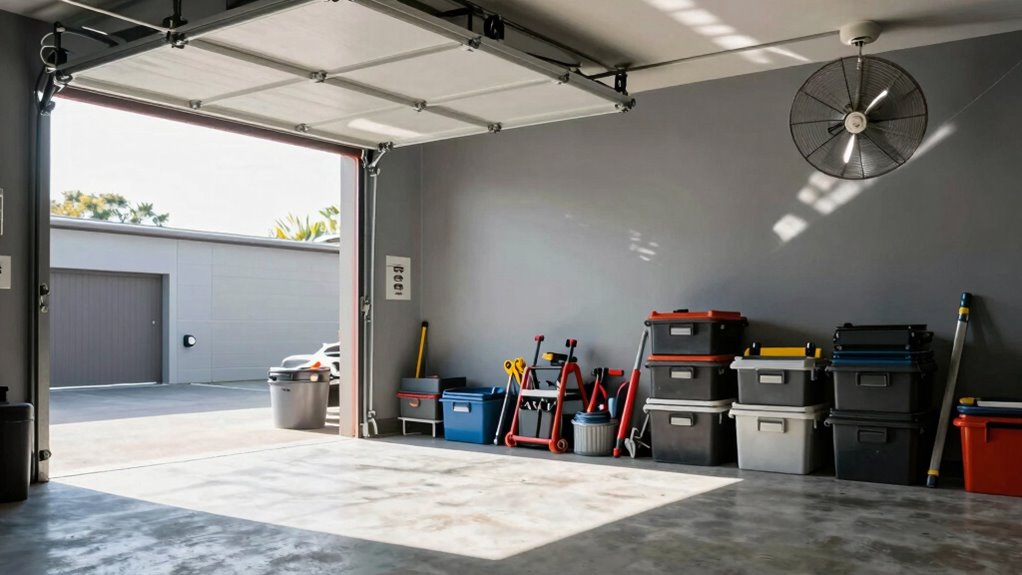
To keep your garage cooler during summer, improving ventilation is key—you can install vents or use exhaust fans to promote airflow. Reflective insulation on your garage walls and ceiling helps bounce heat away, reducing overall temperature. Combining these methods can make a noticeable difference in creating a more comfortable space. Additionally, ensuring that electrical tools and extension cords are used according to extension cord standards can prevent overheating and electrical hazards.
Improve Ventilation Techniques
Improving ventilation is one of the simplest and most effective ways to keep your garage cooler during summer. Proper ventilation systems promote airflow improvement, preventing heat buildup. To maximize cooling, consider these steps:
- Install exhaust fans or vents to actively draw out hot air.
- Open windows or garage doors during cooler parts of the day to enhance natural airflow.
- Use ridged or louvered vents to facilitate continuous air exchange and prevent stagnation.
Use Reflective Insulation
Reflective insulation is a simple yet effective way to keep your garage cooler by reflecting radiant heat away from the space. This method uses insulation materials that include reflective barriers, such as foil-faced foam boards or radiant barriers, which bounce heat back outside instead of absorbing it. Installing reflective insulation on your garage ceiling or walls minimizes heat transfer, especially during summer. Unlike traditional fiberglass insulation, reflective barriers don’t trap heat; instead, they redirect it. This helps maintain a cooler indoor temperature and reduces your air conditioning needs. To maximize effectiveness, make certain the reflective surface faces the heat source and is properly sealed. Using reflective insulation is a straightforward, cost-effective step toward a more comfortable, cooler garage during hot months.
Long-Term Solutions for Garage Temperature Control

Long-term solutions for garage temperature control focus on making structural and system improvements that provide consistent relief from heat buildup. Installing a smart thermostat allows you to regulate cooling systems efficiently, saving energy and maintaining a comfortable environment. Enhancing thermal mass, such as adding concrete or masonry walls, helps absorb and slowly release heat, lowering temperature swings. Here are three effective strategies:
- Upgrade to a smart thermostat for better climate management.
- Increase thermal mass to stabilize indoor temperatures.
- Improve insulation and sealing to prevent heat gain.
These modifications work together to create a more stable, cooler garage, reducing the need for constant cooling and making your space more comfortable year-round.
Year-Round Tips to Maintain a Cooler Garage
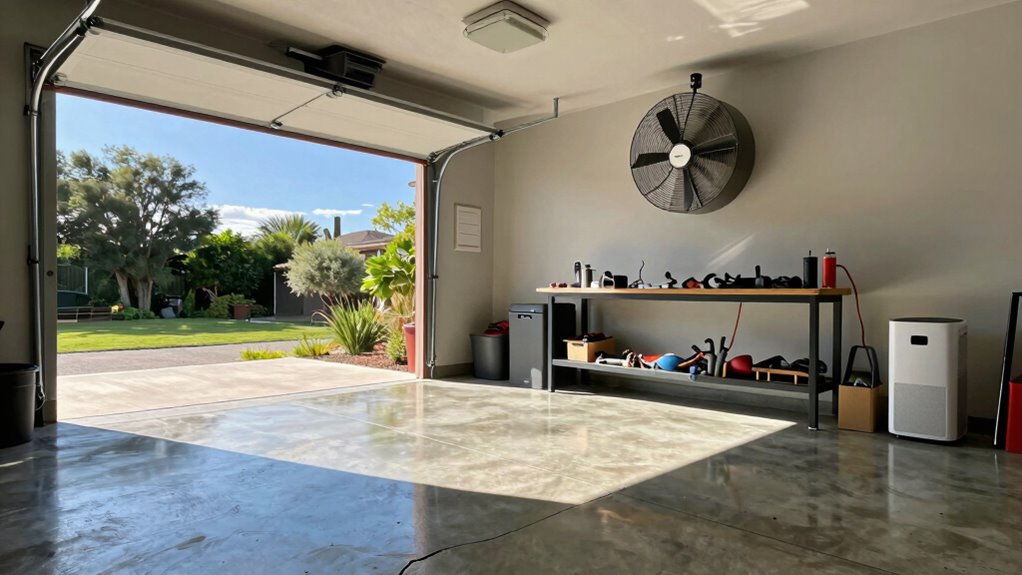
To keep your garage cooler throughout the year, consistent habits and simple adjustments can make a big difference. Staying organized helps air circulate better, reducing trapped heat. Regularly cleaning and decluttering prevents pest buildup, which can increase heat and humidity. Seal cracks and install vents to improve airflow and temperature control.
| Tip | Benefit |
|---|---|
| Keep garage organized | Enhances air circulation |
| Seal cracks and vents | Prevents heat buildup and pests |
| Regular pest prevention | Maintains cooler, cleaner space |
| Use reflective paint | Reflects sunlight and reduces heat |
Frequently Asked Questions
Can Insulation Alone Significantly Lower Garage Temperatures?
Insulation alone can considerably lower your garage temperature if you choose the right thermal barriers and insulation types. Proper insulation, like spray foam or fiberglass, reduces heat transfer through walls and ceilings, keeping your garage cooler. Combining insulation with other solutions, such as sealing gaps and adding reflective barriers, amplifies the effect. So, yes, insulation makes a big difference, but for ideal results, consider a thorough approach.
How Does Garage Door Material Influence Heat Retention?
Imagine your garage door as a shield against the sun’s relentless heat. The material you choose, like steel or wood, directly affects heat retention; sturdy, durable materials withstand temperature swings better. Garage door styles also matter—they influence insulation and reflectivity. A well-chosen material with the right style not only boosts durability but keeps the heat out, transforming your garage into a cooler, more comfortable space.
Are There Eco-Friendly Cooling Options for Garages?
You can choose eco-friendly cooling options like solar-powered fans, which harness sunlight to keep your garage cool without increasing energy bills. Additionally, applying eco-friendly paints reflects heat rather than absorbs it, helping to lower indoor temperatures. These solutions are sustainable, cost-effective, and environmentally conscious, making your garage more comfortable while reducing your carbon footprint. Combining solar fans and eco paints offers a smart, green way to beat the heat.
Does Adding Ventilation Impact Garage Temperature Effectively?
Adding ventilation considerably impacts your garage temperature by improving airflow. Different ventilation types, like passive vents or powered exhaust fans, help circulate hot air out and bring in cooler air. This airflow improvement reduces heat buildup, making your garage more comfortable. You should choose a ventilation system based on your garage size and climate, ensuring continuous air exchange. Proper ventilation is a practical, eco-friendly way to keep your garage cooler efficiently.
How Often Should Garage Insulation Be Maintained or Replaced?
Think of your garage insulation as a quiet guardian—its lifespan varies, but generally, you should check it every 10-15 years. Over time, insulation wears down like a fading mural, losing its effectiveness. Regularly inspect your ventilation systems to keep air flowing, which helps preserve insulation. When signs of deterioration appear—like sagging or mold—it’s time to replace or upgrade your insulation to maintain a comfortable, cool garage environment.
Conclusion
Understanding why your garage gets so hot helps you take effective steps to cool it down. Did you know that garages can reach temperatures up to 50°F hotter than the outside air? That’s a significant heat boost that impacts your comfort and energy bills. By implementing simple fixes and long-term solutions, you can make your garage much more comfortable year-round. Take control of your space and enjoy a cooler, more livable garage today.