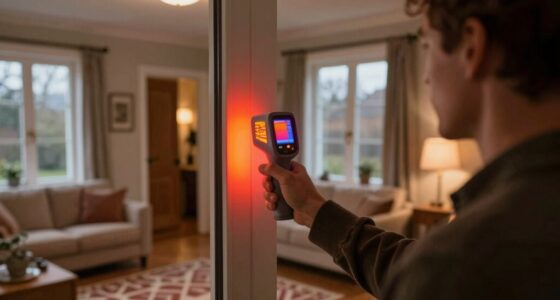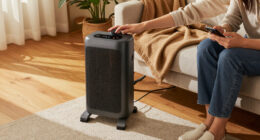

“Smart space heater” can mean a heater with its own phone app, or one designed to work within a smart-home platform. Those options solve different problems: a Wi-Fi model makes it easier to set schedules and adjust heat remotely, while a compatible model may let heating respond to sensors, routines or other connected devices. The right choice depends on whether you want convenient control of one room or a heater that participates in a larger system. This comparison uses typical product categories; features, safety functions and platform support vary by model, so check the specifications before buying.

Get home appliances delivered free with Prime
- Fast, free delivery on millions of items
- Prime Video, Amazon Music and more included
- Member-only deals all year

FLANUR 1500W Smart PTC Ceramic Tower Space Heater
- ✔ Heating element: PTC ceramic
- ✔ Power: 1500W
- ✔ Coverage: Up to 300 sq. ft. (manufacturer stated)

FLANUR 1500W Smart Ceramic Space Heater with WiFi and Voice Control
- ✔ Heating element: PTC ceramic
- ✔ Power: 1500W
- ✔ Heating coverage: 160–200 sq. ft. (manufacturer stated)

SereneLife Smart Wi-Fi PTC Ceramic Space Heater, 1500W, White
- ✔ Heating type: PTC ceramic, forced air
- ✔ Power: 1500W
- ✔ Dimensions and weight: 5.9 × 5.9 × 9.52 in; 2.9 lb
For most people heating a single room, a straightforward Wi-Fi heater is the better value and simpler purchase. Paying extra for platform integration makes sense when you already use that ecosystem and have a specific routine in mind. Neither type should be treated as unattended heating: follow the manufacturer’s placement and operating instructions, and never bypass built-in safety guidance.
At a Glance
| Criteria | Wi-Fi smart space heaters | Smart-home platform-compatible space heaters | Winner |
|---|---|---|---|
| Setup and everyday control | Usually configured through the manufacturer’s app; controls and app quality vary. | May require pairing with both the manufacturer’s app and a smart-home platform. | A |
| Smart-home automation | Often offers basic schedules, timers or voice control through supported assistants. | Can support routines using compatible devices or platform features, when explicitly supported. | B |
| Remote access and scheduling | Can commonly be adjusted remotely when connected to Wi-Fi; features differ by model. | May allow control through a platform dashboard or routines as well as the heater app. | Depends |
| Compatibility and reliability | Typically depends on the maker’s app and cloud service; connectivity may vary. | Depends on named platform support, network conditions and any cloud or hub requirements. | A |
| Safety and responsible use | Safety features are model-specific; smart control does not replace safe placement or supervision. | Integration adds convenience, not a substitute for the heater’s safety features or instructions. | Tie |
| Price and value | Often the lower-cost route to remote control, but app or subscription terms may vary. | Can cost more; the premium has value when integration is actually used. | A |
FLANUR 1500W Smart PTC Ceramic Tower Space Heater
This FLANUR is the most complete choice for buyers who want a smart heater to fit several daily routines. You can adjust it from the Havaworks app, compatible Alexa or Google Assistant devices, or the included remote. That range matters if one person prefers voice commands while another would rather use a handheld control. The 29-inch tower also oscillates across 70°, which may help spread warm air across a seating area instead of directing it in one fixed line.Its listed coverage of up to 300 square feet is the broadest stated figure in this group. That makes it the more plausible option for a larger room than either the other FLANUR, listed for 160–200 square feet, or the compact SereneLife, whose supplied details do not state a coverage area. The figure is still a product specification, not a promise that every room of that size will feel evenly warm. Drafts and room layout can change the result.The tradeoff is the tower’s size and dependence on a corded outlet. It is specified for dry indoor areas only, and app control requires 2.4GHz Wi-Fi. Its noise specification is as low as 23 dB, quieter on paper than the other FLANUR’s 36 dB figure, though actual sound may vary by setting and environment. Compared with SereneLife, this model has a clearer large-room role and voice compatibility; compared with the smaller FLANUR, it adds a remote and a higher stated coverage area. Choose it for that control flexibility, not if you need a heater for a bathroom or a tiny tabletop footprint.
Pros:
- App, Alexa, Google Assistant, and remote control options
- Manufacturer states coverage up to 300 sq. ft.
- 70° oscillation and multiple heat levels, ECO, and fan-only modes
- Includes tip-over, overheat, child-lock, and optional automatic shutoff features
Cons:
- App control requires 2.4GHz Wi-Fi
- Tower footprint is less convenient than a compact tabletop unit
- Specified for dry indoor use only
Best for: Buyers who want a tower heater for a larger dry room, with app, voice, and remote controls available.
Not ideal for: People who need a compact tabletop heater, use only 5GHz Wi-Fi for app devices, or want heat for a bathroom or other damp area.
Bottom line: We rank this first for combining the broadest listed coverage with the most flexible set of controls.
“We rank this first for combining the broadest listed coverage with the most flexible set of controls.”
FLANUR 1500W Smart Ceramic Space Heater with WiFi and Voice Control
This FLANUR is a straightforward match for buyers who expect a heater to respond to app schedules or voice commands. It supports the Havaworks app, Alexa, and Google Assistant, and pairs those controls with ECO mode, a thermostat, and a 12-hour timer. Its 70° oscillation gives it a familiar tower-heater role: warming a shared part of a room rather than occupying a desk or side table.Compared with the Best Overall FLANUR tower, it gives up two useful advantages: the supplied description lists no remote control and a smaller stated coverage range of 160–200 square feet. That can be a sensible compromise for a bedroom or office where a phone or voice assistant is already at hand, but it makes less sense if guests need a simple physical control or if you are choosing for a larger open room. SereneLife also includes a remote, although its compact shape makes it better for small placements than broad room circulation.The listed noise level is as low as 36 dB, versus 23 dB for the other FLANUR. Both numbers are manufacturer specifications; the difference may matter if you are especially sensitive to background sound, but settings and surroundings affect what you hear. This model adds a 30-second cool-down cycle and a broad set of protections, including dual fuse protection and 24-hour auto shutoff. It requires 2.4GHz Wi-Fi for connected functions and is not recommended for soft carpets or bathrooms, so placement is part of the decision. Choose it when voice and app operation matter more than having a remote or the largest listed coverage.
Pros:
- App scheduling and compatible Alexa and Google Assistant control
- 70° oscillation with High, Low, ECO, and fan-only modes
- Thermostat range from 41°F to 95°F and a 12-hour timer
- Includes a cool-down cycle, child lock, and multiple listed safety protections
Cons:
- No remote control is included
- App connectivity requires 2.4GHz Wi-Fi
- Not recommended for soft carpets or bathrooms
Best for: People who want voice and app control in a tower heater for a room within its stated 160–200 sq. ft. range.
Not ideal for: Buyers who want an included remote, need a heater for a soft-carpeted floor or bathroom, or prioritize the broadest stated coverage.
Bottom line: We recommend this tower when voice-first convenience is the priority and its smaller stated coverage suits the room.
“We recommend this tower when voice-first convenience is the priority and its smaller stated coverage suits the room.”
SereneLife Smart Wi-Fi PTC Ceramic Space Heater, 1500W, White
The SereneLife takes a different approach from the two FLANUR towers: it is a small, light heater designed for tabletop or floor placement. At 5.9 × 5.9 × 9.52 inches and 2.9 pounds, it is easier to move between a desk-side spot and another indoor room than a 29-inch tower. That convenience makes it the lineup’s clear pick for buyers who have limited floor space or want a heater they can carry as needed.It still covers the core smart-heater basics: Wi-Fi app operation, a remote, adjustable thermostat, and a 12-hour timer, alongside Power Heat, ECO, and fan-only modes. The remote is a meaningful advantage over the smaller FLANUR, which relies on app or voice control, while its compact form separates it from both towers. However, the supplied specifications do not list Alexa or Google Assistant compatibility, so we would not choose it on the assumption that it offers voice control. Nor is a coverage figure provided here, making it harder to compare its reach with the FLANUR heaters’ stated room areas.SereneLife is a more targeted choice than the Best Overall tower. It has a carry handle and weighs less, but does not bring the FLANUR’s stated coverage of up to 300 square feet or listed 70° oscillation. Its small housing may suit personal or nearby heat better than warming a broad shared area. The product information lists indoor use and standard tip-over, overheat, and child-lock protections; it does not specify a room coverage area or noise level. Pick it for portability and placement flexibility, and skip it if documented room reach or voice assistant control is central to your buying decision.
Pros:
- Compact 5.9 × 5.9 × 9.52-inch form and 2.9-pound weight
- Includes both Wi-Fi app and remote controls
- Three modes, adjustable thermostat, and 12-hour timer
- Lists overheat, tip-over, and child-lock protections
Cons:
- No coverage area or noise figure is specified in the supplied details
- Voice assistant compatibility is not listed
- Indoor use only
Best for: Buyers who need a lightweight, compact heater for a desk area, tabletop, or easy movement between indoor rooms.
Not ideal for: People choosing primarily for a large stated coverage area, tower-style oscillation, or confirmed Alexa and Google Assistant support.
Bottom line: We favor this SereneLife for portable, space-conscious placement rather than for documented large-room reach.
“We favor this SereneLife for portable, space-conscious placement rather than for documented large-room reach.”
As an Amazon Associate we earn from qualifying purchases.
Key Differences
The main difference is how much connected-home complexity you want. A Wi-Fi heater is generally built around its own app: choose a temperature, set a schedule, or switch it off remotely if the specific model permits. That is enough for many room-by-room needs. Platform-compatible heaters can add a layer of control, such as a routine that adjusts a setting based on other connected devices, but only when the heater, platform and relevant features all support that action.
That extra integration has a cost beyond the purchase price: setup can involve multiple apps, accounts or hubs, and the promised automation may not work across every platform. For a single heater, those tradeoffs often outweigh the convenience. In a home already organized around one smart-home system, however, compatible control can make the heater easier to manage alongside other devices.
Neither category is automatically safer or more efficient. App access and automation do not establish that a heater is suitable for unattended operation, and a temperature schedule does not guarantee lower energy use. Compare the actual heater’s safety functions, power, room suitability and instructions. Treat connectivity as a control feature, not a replacement for those basics.
Detailed Comparison
Setup and everyday control (Wi-Fi smart space heaters wins — moderate)
Wi-Fi models win by a minor to moderate margin for simplicity. They commonly center on one manufacturer’s app, though a weak app can still make control awkward. Platform-compatible models may require setup in that app plus a second platform. If you only want to adjust one room’s temperature from your phone, fewer setup steps are usually preferable.
Smart-home automation (Smart-home platform-compatible space heaters wins — major)
Platform-compatible models win, often by a major margin for users who will use the integrations. They may allow the heater to take part in routines with other compatible devices. A Wi-Fi heater can still have its own schedules or supported voice control, but that does not necessarily provide the same cross-device options. Verify that the precise model supports the platform and actions you want; “smart” alone does not promise them.
Remote access and scheduling (moderate difference)
This depends on the individual model, so there is no reliable category-wide winner. Both types may offer remote app control and schedules, while some limit controls or rely on an internet connection. A platform may provide another way to reach supported settings, but it does not guarantee more precise temperature control. Compare the app functions and connection requirements listed for each heater.
Compatibility and reliability (Wi-Fi smart space heaters wins — minor)
Wi-Fi models have a minor advantage when you want fewer dependencies. They still rely on the manufacturer’s software and network, and an app or cloud change can affect use. Platform-compatible models add another service that can introduce account, hub or compatibility requirements. They can work smoothly in an established setup, but buyers should confirm current support rather than assume a platform logo means every feature is available.
Safety and responsible use (major difference)
Neither category wins. A smart-home connection does not make a heater safe to leave running without supervision, and remote shutoff is not a substitute for following the manufacturer’s instructions. Safety provisions vary by product. Check the manual and product details for features such as tip-over protection and overheat protection, and follow required clearances and outlet guidance regardless of app capability.
Price and value (Wi-Fi smart space heaters wins — moderate)
Wi-Fi models usually win for value by a moderate margin. They can provide the main convenience many buyers want—app control—without paying for broader integration. The more expensive platform-compatible option earns its premium if you will use its supported automations and already have the necessary equipment. If it will simply be switched on and off in one app, the extra cost brings little practical benefit.
Wi-Fi smart space heaters: Pros and Cons
Pros:
- Often provides remote app control and scheduling with a relatively simple setup.
- Usually costs less than a model with broader smart-home integration.
- A practical fit for controlling heat in one room.
Cons:
- May be limited to the maker’s app and a small set of integrations.
- App, cloud and Wi-Fi dependence can affect remote features.
- Smart controls do not make unsafe placement or unattended use acceptable.
Smart-home platform-compatible space heaters: Pros and Cons
Pros:
- Can join compatible smart-home routines and controls.
- May suit households that already manage devices through one platform.
- Can offer a more unified control experience when the integrations work as expected.
Cons:
- Can cost more for functions a single-room user may never use.
- Setup and troubleshooting may involve more accounts, apps or equipment.
- Compatibility is model-specific and can change as platform support evolves.
Who Should Choose What
Choose Wi-Fi smart space heaters if:
- You want to set a room schedule or adjust heat from a phone without building automations.
- You are buying one heater and want to keep setup and cost down.
- You do not already use a smart-home platform for household routines.
Choose Smart-home platform-compatible space heaters if:
- You already use a smart-home platform and want the heater included in supported routines.
- You have checked that the exact heater supports the platform and controls you need.
- The time saved by unified controls is worth the higher purchase price to you.
Skip both if: You do not need app control, or you cannot find a model whose heating capacity, safety features, placement requirements and operating instructions suit your room and habits.
Value for Money
For a typical buyer heating one room, Wi-Fi control is the better value: it can cover remote adjustments and basic scheduling without charging for integrations that may go unused. Pay more for a platform-compatible heater only when you already have the matching setup and can name the routine or shared control you will use. Check whether the premium also buys meaningful heater features; a platform badge alone is not a reason to spend more. Running cost depends on the heater’s power, how long it operates, the room and the temperature setting, so connectivity by itself does not establish that one model will be cheaper to run.
Final Verdict
Choose a Wi-Fi smart space heater if you want straightforward app control for one room at the lowest sensible cost. It is the stronger default for most buyers because schedules and remote adjustments are useful without requiring a broader smart-home setup. Choose a platform-compatible heater if your household already uses that platform and you will use its confirmed integrations often enough to justify the extra cost. The deciding factor is whether cross-device automation solves a real need. Compare the individual heater’s safety provisions and instructions before either purchase; smart features do not compensate for a poor fit or unsafe use.
Frequently Asked Questions
Is a platform-compatible space heater better than a Wi-Fi heater?
Only for buyers who will use its supported smart-home controls. For basic remote adjustments or schedules, a Wi-Fi heater may be easier and less expensive. Check the exact model’s platform support and available actions.
Can I control either type when I am away from home?
Some models provide remote access through an app or platform, but this depends on the product, internet connection and service requirements. Review the manufacturer’s specifications. Remote control does not mean the heater is suitable for unattended operation.
Does a smart space heater use less electricity?
Not by virtue of being smart. A schedule or temperature control may help manage how long a heater runs, but actual electricity use depends on its power, operating time, settings and room conditions.
What safety features should I check?
Read the product details and manual for the safety provisions on that specific model, including any tip-over or overheat protection. Follow its placement, clearance, outlet and supervision instructions. App control does not replace those precautions.