
Espresso machine pressure is the force that pushes hot water through coffee grounds, essential for extracting rich flavors and creating a thick crema. Ideally, this pressure stays around 9 to 10 bars during brewing to guarantee balanced extraction and flavor complexity. Too low or inconsistent pressure can lead to sour or bitter shots. Proper maintenance, grinder settings, and technique help maintain steady pressure—keep going to discover more tips to perfect your espresso.
Listen free for 30 days with Audible
Thousands of audiobooks and originals — cancel anytime.
As an affiliate, we earn on qualifying purchases.
Key Takeaways
- Optimal espresso extraction typically occurs around 9 bars of pressure, essential for balanced flavor and crema.
- Proper pressure ensures water reaches the coffee grounds evenly, preserving aromatic compounds and flavor complexity.
- Consistent pressure enhances crema thickness, stability, and overall visual appeal of the espresso shot.
- Adjusting and maintaining pressure with gauges and calibration tools prevents under- or over-extraction.
- Regular machine maintenance, including cleaning and component checks, is vital for consistent pressure and brewing quality.
As an affiliate, we earn on qualifying purchases.
What Is Espresso Machine Pressure and Why Is It Important?
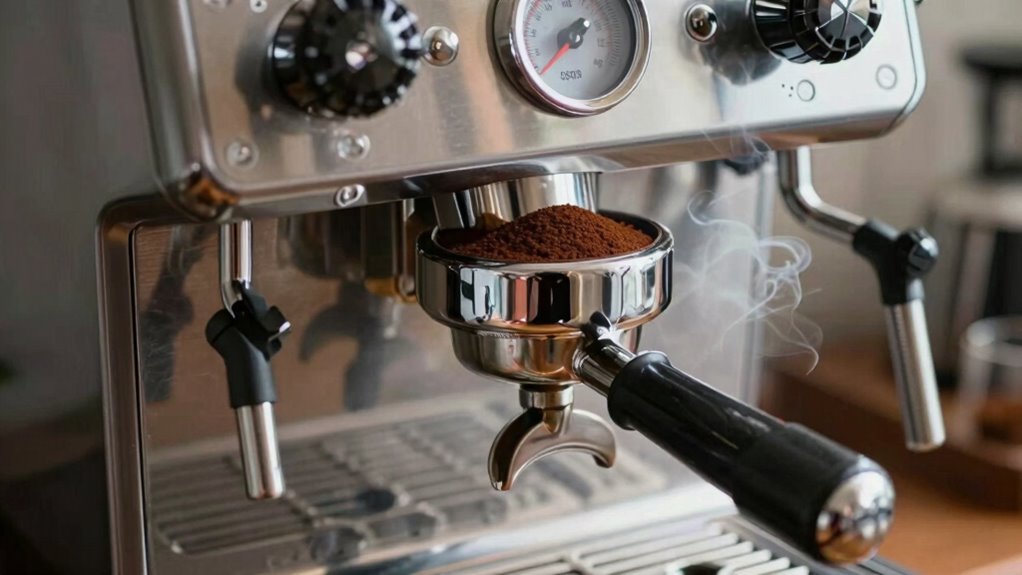
Have you ever wondered what makes a perfect shot of espresso? It all starts with espresso machine pressure, which is essential for proper extraction. It forces hot water through finely ground coffee, highlighting flavors from different coffee bean varieties. Without the right pressure, your espresso might taste flat or bitter. Brewing temperature also plays a role, but pressure guarantees water reaches the necessary depth of extraction. Typically, espresso machines operate at around 9 bars of pressure, creating that rich, crema-topped shot you crave. Too little pressure, and you won’t extract enough flavor; too much, and you risk over-extraction. Understanding how pressure influences the process helps you control quality, making sure each shot delivers the perfect balance of aroma, flavor, and body. Additionally, pressure stability is vital for consistent results, ensuring each shot maintains the same quality over time. Proper pressure regulation is key to achieving reliable and optimal extraction, and maintaining pressure consistency helps prevent fluctuations that can negatively impact taste and texture. A thorough understanding of how pressure interacts with other brewing variables can greatly improve your espresso experience.
espresso machine pressure calibration tools
As an affiliate, we earn on qualifying purchases.
As an affiliate, we earn on qualifying purchases.
How Does Espresso Pressure Affect Extraction and Flavor?
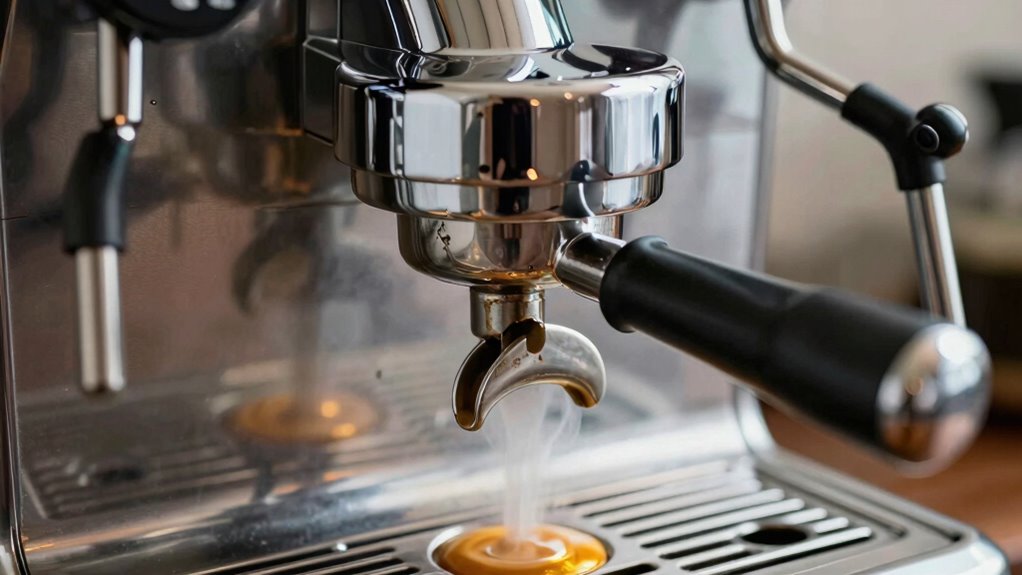
The pressure applied during espresso brewing directly influences how flavors are extracted from the coffee grounds. If the pressure is too low, you might end up with a weak, under-extracted shot that lacks flavor balance and aroma preservation. Conversely, too high pressure can cause over-extraction, resulting in bitterness and loss of delicate aromas.
Consider these effects:
- Ideal pressure enhances flavor complexity and richness.
- Proper pressure preserves aromatic compounds, boosting aroma intensity.
- Incorrect pressure can lead to sour or bitter tastes.
- Consistent pressure ensures even extraction, balancing acidity and body.
- Maintaining the proper espresso pressure is essential for achieving optimal flavor and aroma in each shot. Properly calibrated pressure also minimizes the risk of espresso machine malfunctions, ensuring longevity and consistent performance. Regular maintenance of the pressure calibration system can help prevent fluctuations that negatively impact extraction quality. Additionally, understanding and controlling pressure stability is crucial for consistent espresso quality. Ensuring pressure consistency across every shot helps maintain the desired flavor profile and overall machine performance.
best espresso machine for consistent pressure
As an affiliate, we earn on qualifying purchases.
As an affiliate, we earn on qualifying purchases.
What Is the Ideal Pressure Range for Brewing Espresso?
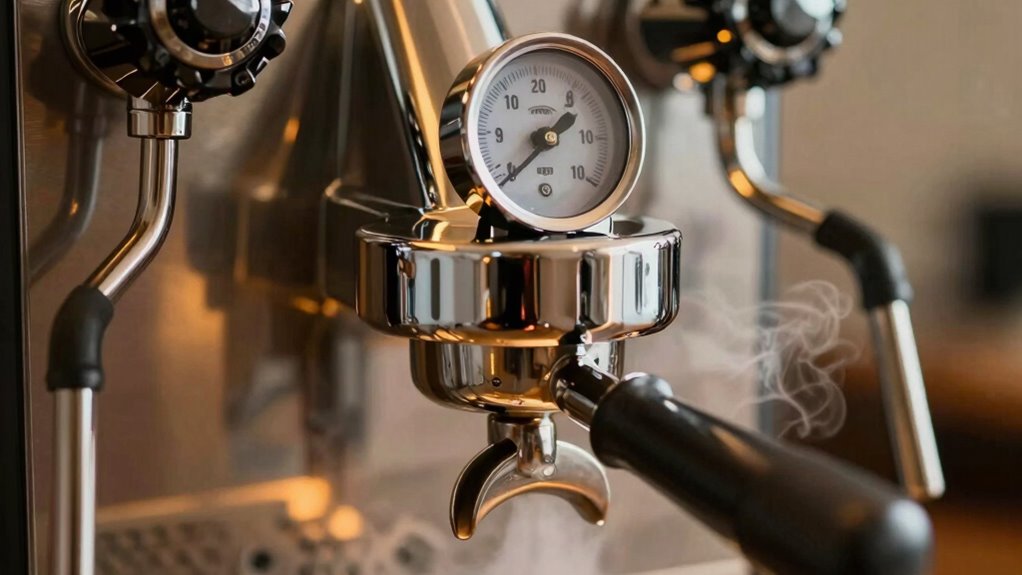
Achieving the perfect espresso shot hinges on maintaining the right pressure range during brewing. Typically, the ideal pressure falls between 9 and 10 bars, ensuring excellent extraction for flavor and crema. To hit this range consistently, start with quality coffee bean selection, as fresh, well-roasted beans produce better results. Regular machine cleaning also plays a vital role, preventing blockages and maintaining consistent pressure. If your machine’s pressure is too low or too high, it can lead to under- or over-extraction, affecting taste. Monitoring and adjusting the pressure within this range helps you achieve a balanced, flavorful shot. Remember, consistent maintenance and selecting the right beans are key to maintaining the perfect pressure and brewing excellent espresso every time. Proper machine maintenance ensures your equipment functions reliably and produces consistently great espresso. Additionally, understanding the pressure gauge on your machine can help you make precise adjustments for optimal brewing. Maintaining awareness of pressure stability is essential for consistently achieving high-quality espresso. Regularly checking your brew pressure can help you catch and correct issues before they impact your shot.
espresso machine maintenance kit
As an affiliate, we earn on qualifying purchases.
As an affiliate, we earn on qualifying purchases.
How Do Different Pressures Impact Crema and Taste?
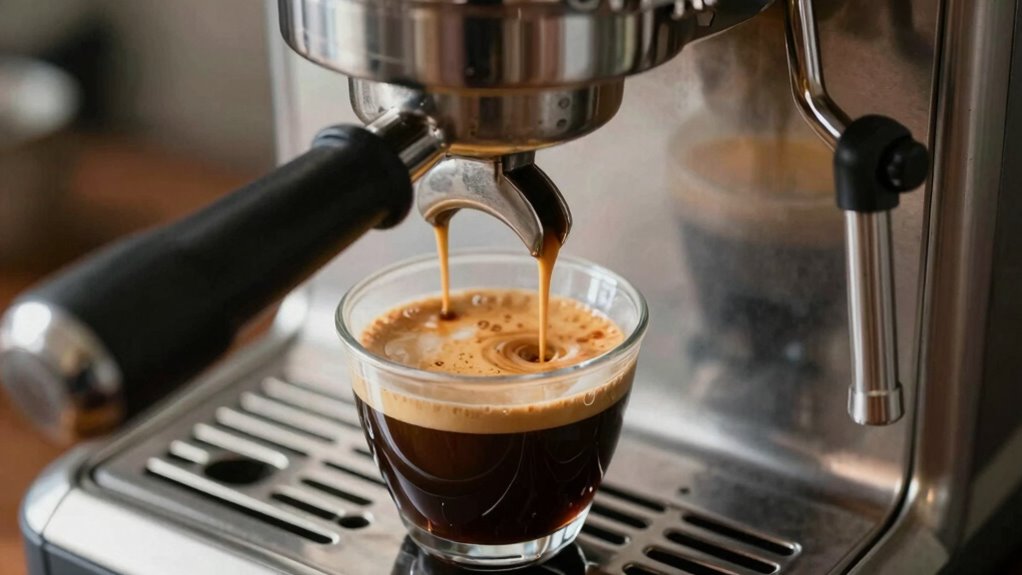
When you adjust the pressure on your espresso machine, it directly affects the crema’s thickness and richness, making your shot look more appealing. Higher pressures improve flavor extraction, revealing deeper, more complex tastes, while lower pressures can lead to under-extraction and sour notes. Understanding these impacts helps you fine-tune your brew for the perfect balance of crema and flavor. Additionally, knowing how to control espresso machine pressure allows you to troubleshoot common issues like channeling or weak crema, ensuring a more consistent and satisfying espresso shot. Proper pressure regulation is essential for achieving optimal brew quality and consistent results. Adjusting pressure correctly also helps avoid common problems like channeling, which can ruin the shot’s flavor and texture. Implementing evidence-based adjustments can further enhance your performance fluids for better extraction and flavor. Recognizing the impact of pressure on extraction efficiency can help you optimize your espresso every time.
Crema Thickness and Quality
Ever wondered how pressure levels influence the crema on your espresso? Higher pressure generally produces thicker, more velvety crema, while lower pressure might result in a thinner, less stable layer. Here’s what impacts crema quality:
- Coffee bean selection – fresh, high-quality beans create better crema regardless of pressure.
- Water temperature – ideal temp (around 195–205°F) enhances emulsification, improving crema thickness.
- Pressure consistency – steady pressure ensures uniform extraction, leading to richer crema.
- Extraction time – too short or long affects crema’s richness and stability.
- The pressure profile during extraction also plays a crucial role in achieving the perfect crema texture and flavor. Additionally, maintaining a consistent brew pressure helps prevent fluctuations that can negatively affect crema quality.
Adjusting pressure affects not just the crema’s appearance but also flavor complexity. Proper pressure, combined with quality beans and water temp, delivers that perfect, luscious crema you crave.
Flavor Extraction Efficiency
Different pressure levels during extraction markedly influence both the flavor profile and the quality of the crema. Higher pressures typically increase extraction efficiency, pulling out more oils and flavors from the coffee grounds. This can enhance flavor balance, making your espresso richer and more complex. However, too much pressure may lead to over-extraction, resulting in bitter or harsh tastes. Conversely, lower pressures might produce under-extracted coffee with weak flavors and a thin crema. Maintaining ideal pressure guarantees extraction consistency, which is vital for a balanced, well-rounded espresso. By adjusting your machine’s pressure, you can fine-tune the flavor profile to match your preferences, achieving the perfect harmony of taste and crema quality. Proper pressure control helps you extract the best flavors from your coffee beans every time.
Troubleshooting Low or Inconsistent Espresso Pressure
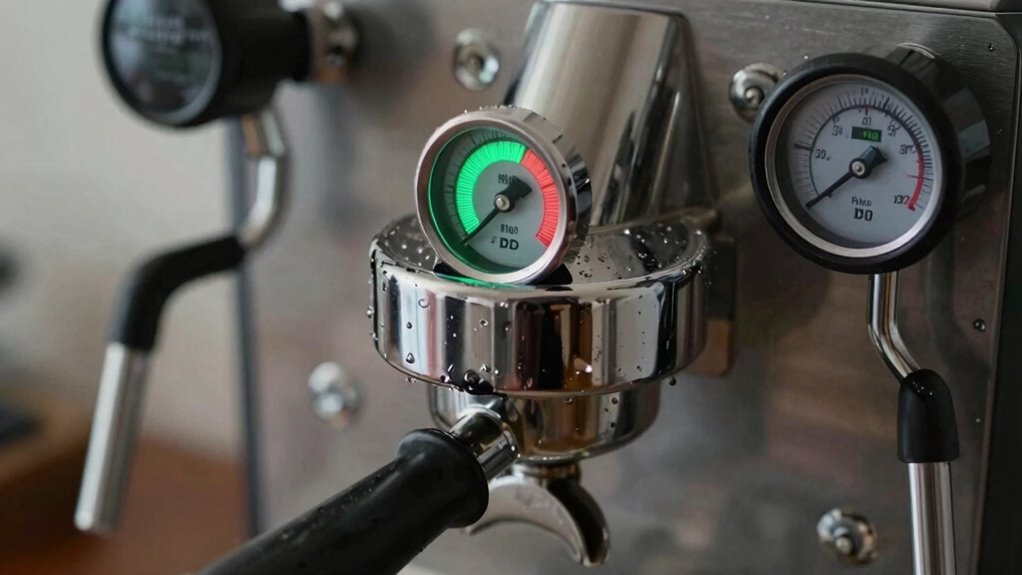
If your espresso pressure feels low or inconsistent, start by checking your coffee grind size—if it’s too fine or coarse, it can affect flow. Next, inspect your machine components, such as the portafilter and group head, for clogs or wear. Finally, make sure you’re tamping evenly and with proper firmness to maintain steady pressure throughout the shot. Additionally, ensuring all machine parts are properly maintained can help prevent pressure issues and optimize your brewing experience. Regularly cleaning and descaling your machine can also help maintain consistent regional flavors and performance. For optimal results, consider consulting best gear and knife roundups to find the right tools for maintenance and troubleshooting.
Check Coffee Grind Size
When your espresso pressure feels low or inconsistent, checking your coffee grind size is a crucial first step. A grind that’s too coarse can cause insufficient resistance, leading to low pressure, while too fine a grind can clog the machine, causing pressure buildup. Here’s what to do:
- Make sure your coffee beans are fresh; stale beans can affect grind consistency and extraction.
- Adjust the grind size to be slightly finer if pressure is too low, or coarser if it’s too high.
- Confirm your machine is properly calibrated for your specific grind and coffee type.
- Test your grind after each adjustment to find the ideal size for consistent pressure and extraction.
- Keep an eye on emerging digital publishing trends that could influence how you access and learn about coffee brewing techniques.
Keeping these factors in check helps maintain proper pressure and perfect espresso.
Inspect Machine Components
Have you checked the machine’s components lately? Inspecting key parts can help identify issues causing low or inconsistent pressure. Start with the water reservoir—verify it’s full and seated correctly, as low water levels can affect flow. Look at the machine aesthetics; cracks or blockages in the brew head or portafilter can restrict pressure. Check the user interface for any error messages or alerts indicating malfunctions. Examine the steam wand and pressure relief valves for clogs or leaks. Clean any buildup that might interfere with proper operation. Loose fittings or damaged seals can also cause pressure drops. Regularly inspecting these components keeps your machine in top shape and ensures your espresso maintains consistent pressure and flavor.
Maintain Proper Tamping
Proper tamping guarantees the coffee grounds are evenly compressed, which directly impacts the pressure during extraction. If your espresso has low or inconsistent pressure, focus on maintaining tamping consistency. Here are key tips:
- Apply uniform pressure—use steady, firm force to ensure even tamping.
- Check coffee bean freshness—fresh beans produce better resistance, aiding consistent tamping.
- Avoid over or under-tamping—too much pressure impedes flow, too little causes uneven extraction.
- Practice consistent tamping technique—use the same pressure and method each time to improve pressure stability.
How to Measure and Adjust Espresso Machine Pressure
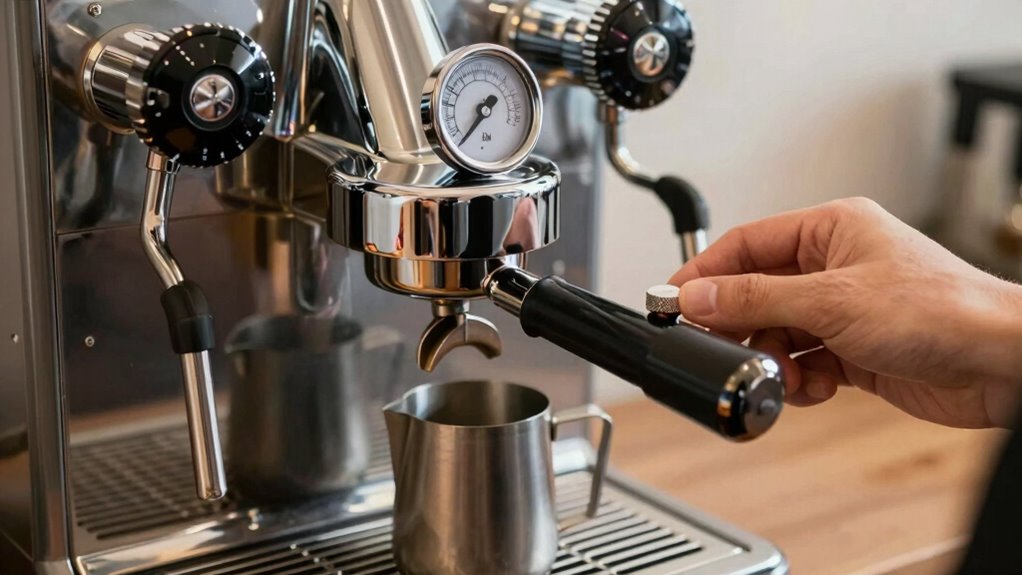
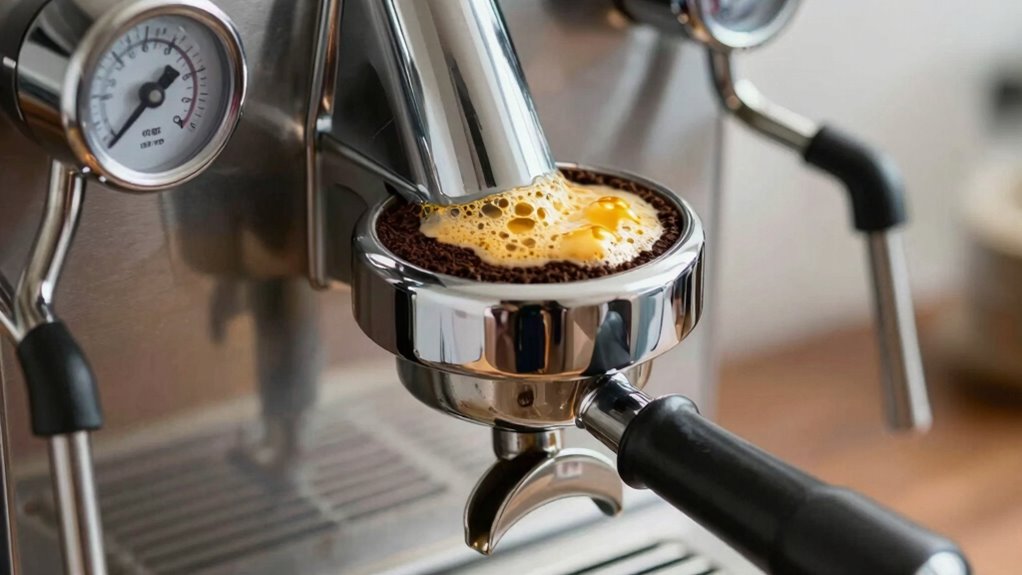
Measuring and adjusting the pressure on your espresso machine is essential for brewing the perfect shot. First, check your pressure gauge accuracy by observing the needle during extraction. If it doesn’t read around 9 bars, your machine may need calibration. For espresso machine calibration, consult your user manual or contact a technician if you’re unsure how to adjust the pressure. Most machines have a screw or knob to fine-tune pressure settings. Before making adjustments, run a test shot and note the gauge reading. Turn the calibration screw slowly to increase or decrease pressure, then re-test. Always *guarantee* your gauge is functioning correctly, as faulty readings can lead to improper adjustments. Regular calibration helps maintain consistent, high-quality espresso extraction.
How Pump and Lever Machines Handle Pressure Differently
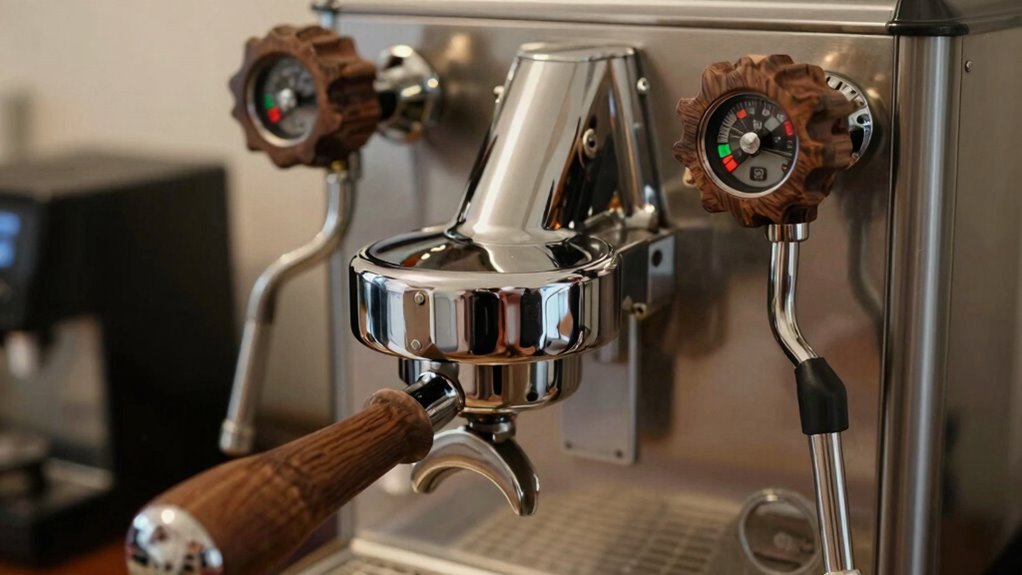
Pump and lever espresso machines handle pressure very differently, primarily due to their design and the way they generate force. Pump machines use an electric pump to create consistent pressure, allowing for controlled pressure buildup. They often include safety mechanisms that prevent over-pressurization, ensuring safe operation. Conversely, lever machines rely on manual force, giving you direct control over pressure application. This method requires skill to manage pressure buildup effectively. Here are four key differences:
- Pump machines maintain steady pressure automatically.
- Lever machines depend on your strength and technique.
- Safety mechanisms in pump machines prevent excessive pressure.
- Lever machines require careful monitoring to avoid pressure spikes.
These differences impact how each machine handles pressure, influencing your brewing experience.
How Grind Size and Tamping Influence Espresso Pressure
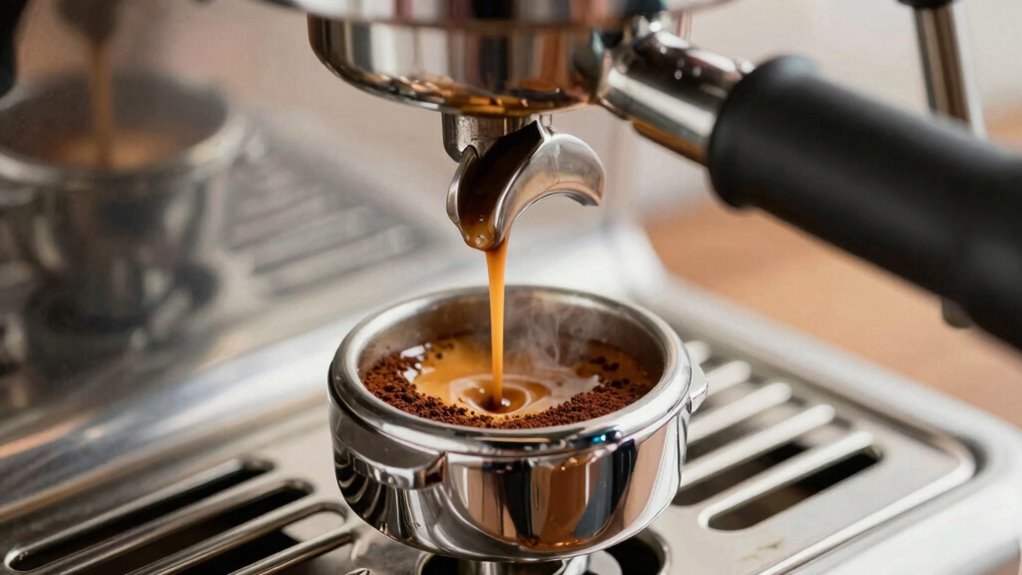
Your grind size and tamping technique directly affect the pressure during extraction. Using a finer grind increases resistance, requiring more pressure to push water through the coffee. Proper tamping guarantees even resistance, helping you achieve consistent pressure and better espresso quality.
Grind Size’s Role
The grind size of your coffee beans plays a crucial role in achieving the right espresso pressure, as it directly affects how water flows through the coffee bed. If the grind is too fine, water struggles to pass through, increasing pressure and risking over-extraction. Too coarse, and water flows too quickly, resulting in under-extraction and weak flavor.
Consider these factors:
- Coffee bean types influence suitable grind size for consistent extraction.
- Proper grind size helps maintain water temperature consistency, essential for stable pressure.
- Finer grinds increase resistance, raising pressure during extraction.
- Coarser grinds reduce resistance, lowering pressure and impacting flavor.
Adjusting grind size ensures your espresso machine operates at ideal pressure, revealing the full potential of your coffee.
Tamping Technique Impact
Since grind size and tamping work together to influence how water flows through the coffee bed, mastering their relationship is key to controlling espresso pressure. Your tamping technique directly affects this flow by creating uniform resistance. Applying consistent pressure ensures the coffee bed is evenly compacted, preventing channeling and maintaining ideal pressure. Proper barista training emphasizes the importance of even tamping, which enhances extraction and flavor. Coffee bean selection also plays a role; some beans require different grind sizes and tamping pressures to achieve the desired pressure. When you refine your tamping technique, you control the resistance water encounters, leading to better pressure and more balanced espresso. Remember, precision in tamping and careful coffee bean selection are essential for consistent, high-quality results.
Tips for Maintaining Optimal Pressure for Consistent Results
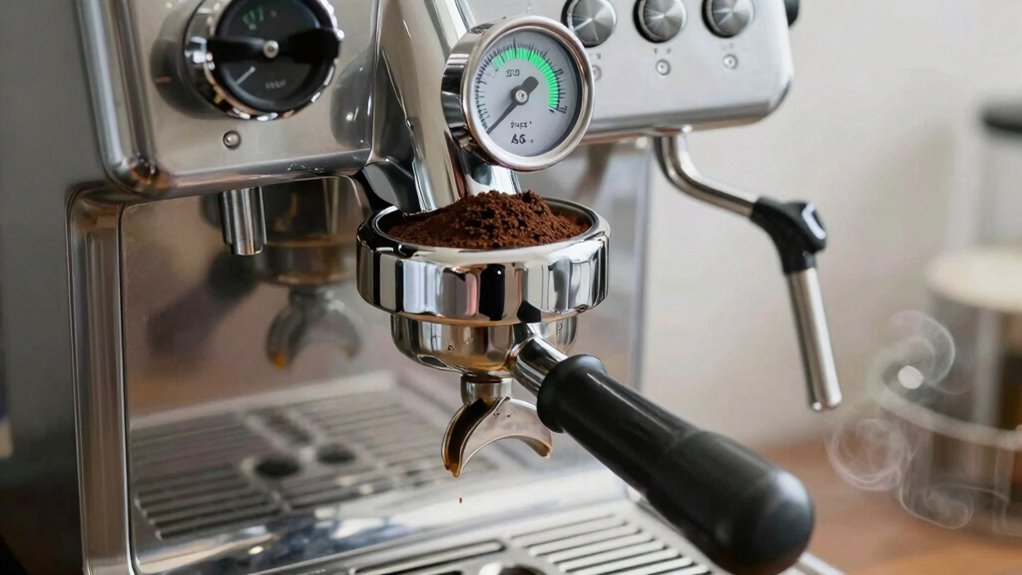
Maintaining ideal pressure in your espresso machine is essential for brewing consistently delicious shots. Proper pressure ensures peak extraction, which depends on stable brewing temperature and precise machine calibration. To keep pressure consistent:
Maintaining proper pressure is key to consistently excellent espresso shots.
- Regularly check and adjust your machine’s calibration to maintain the right pressure levels.
- Monitor brewing temperature, ensuring it stays within the perfect range for extraction.
- Clean your machine frequently to prevent blockages that can affect pressure.
- Use fresh, evenly tamped coffee grounds to promote even extraction and pressure stability.
Common Mistakes That Affect Espresso Pressure and How to Avoid Them
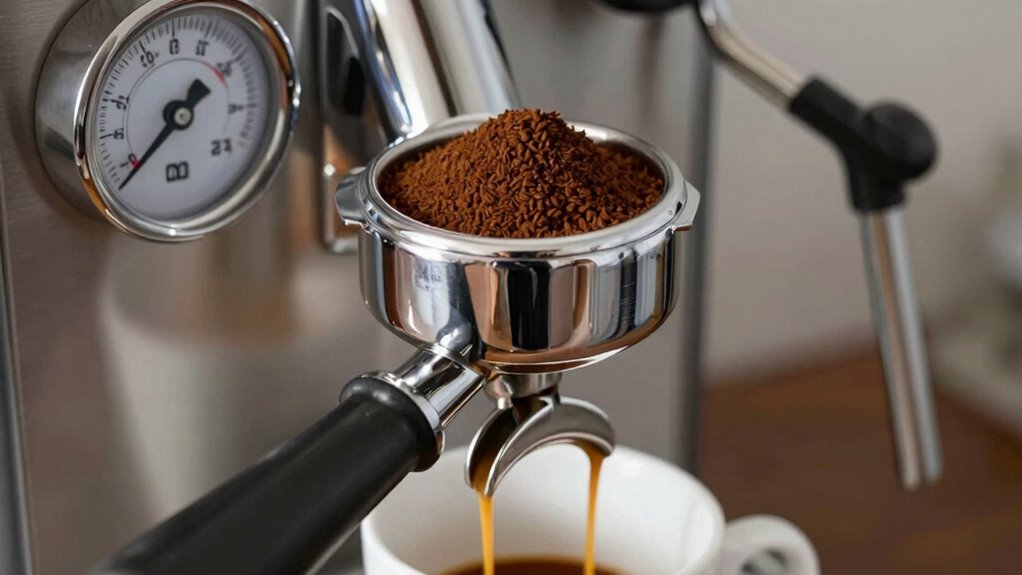
Many common mistakes can disrupt espresso pressure, leading to under- or over-extracted shots. One mistake is ignoring pressure sensors, which monitor and help maintain proper pressure levels. If sensors malfunction or aren’t calibrated correctly, pressure may fluctuate, ruining your shot. Additionally, poor portafilter design can cause uneven tamping or water flow, affecting pressure consistency. Using a flawed portafilter or improper tamping techniques increases resistance, leading to pressure build-up or loss. To avoid these issues, regularly check and calibrate pressure sensors and guarantee your portafilter fits well and is used correctly. Proper maintenance and attention to these details help you achieve stable pressure, resulting in better extraction and richer espresso flavor.
Frequently Asked Questions
Can Pressure Settings Be Customized on All Espresso Machines?
Most espresso machines don’t let you customize pressure settings directly, but many feature a pressure gauge to monitor brewing pressure. You can adjust your technique or modify certain components to influence the brewing pressure, ensuring you get the best shot. High-end models might offer more control, allowing you to fine-tune pressure for personalized espresso. Always check your machine’s manual to see if pressure adjustments are possible and how to implement them safely.
How Does Altitude Affect Espresso Machine Pressure?
Imagine you’re in Denver, where the high altitude can make your espresso taste flat. Altitude affects espresso machine pressure by reducing pressure stability, so you need to adjust for this. Altitude adjustment helps maintain consistent extraction, ensuring a rich, balanced shot. Without it, your espresso may lack flavor and crema. By tweaking your machine’s pressure settings, you can enjoy perfect espresso no matter the altitude, preserving flavor and quality.
Is Higher Pressure Always Better for Espresso Quality?
Higher pressure isn’t always better for espresso quality. You need pressure consistency to guarantee each shot is ideal, and excessive pressure can strain your machine, affecting its durability over time. Using the right pressure level suited to your machine and beans helps you achieve a balanced extraction, delivering rich flavor without damaging your equipment. Focus on maintaining steady pressure rather than simply increasing it for better espresso.
Do Different Coffee Beans Require Different Pressure Adjustments?
Yes, different coffee bean varieties often need pressure adjustments for ideal extraction. Light roasts or specialty beans may require slightly lower pressure, while darker roasts sometimes need higher pressure. You should also tweak grind size adjustments, as finer grounds typically need more pressure to extract flavors properly. Experimenting with these factors helps you find the perfect balance for each bean type, ensuring the best espresso quality every time.
How Often Should I Calibrate My Espresso Machine’s Pressure?
Think of your espresso machine as a musical instrument—regular tuning guarantees perfect harmony. You should calibrate your machine’s pressure every 1-2 months to maintain pressure stability, especially if you notice inconsistencies in your shots. Use calibration tools to fine-tune the pressure precisely. Consistent calibration keeps your espresso smooth and flavorful, turning every brew into a symphony of taste. Don’t wait too long—regular upkeep keeps your machine performing at its best.
Conclusion
Mastering espresso pressure transforms your brewing experience. Imagine finally dialing in your machine and enjoying rich, velvety shots every time—like Sarah, who struggled for months but finally achieved perfect crema after adjusting her tamping technique. When you understand how pressure impacts flavor and extraction, you’ll consistently craft espresso that delights your senses. Keep experimenting, troubleshooting, and maintaining your machine—your perfect cup is just a few adjustments away.
Flea & tick season Picks
flea and tick prevention
As an affiliate, we earn on qualifying purchases.