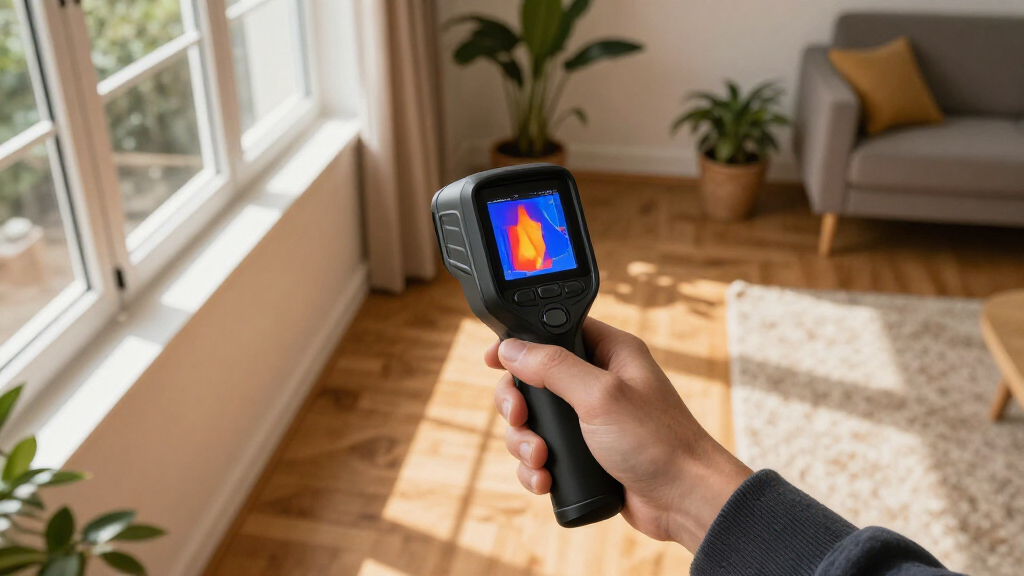
Choosing the best thermal imaging cameras requires balancing raw resolution with portability and software integration. My top overall pick is the FLIR E6-XT because it offers the ideal mix of high thermal sensitivity and rugged durability for field technicians. For those needing smartphone compatibility, the FLIR C5 stands out as the best compact option, while the HSFTOOLS HF96V delivers surprising value for DIY home inspectors. The main tradeoff in this category is between standalone handheld units, which offer better battery life and screen visibility, and smartphone attachments, which provide cheaper entry points but rely on your phone’s battery. Read on to see how these 15 models stack up against each other in real-world scenarios.

Get home appliances delivered free with Prime
- Fast, free delivery on millions of items
- Prime Video, Amazon Music and more included
- Member-only deals all year
Complete the kit


Key Takeaways
- Standalone units like the FLIR E6-XT offer superior screen visibility and battery independence compared to smartphone dongles, making them better for all-day field work.
- Resolution alone does not define quality; thermal sensitivity (NETD) determines how well a camera distinguishes subtle temperature differences, a spec often overlooked in budget models.
- Smartphone thermal cameras like the FLIR C5 and TOPDON TC004 have shifted from basic inspection tools to versatile diagnostic aids, though they drain mobile battery life rapidly.
- Software ecosystem matters as much as hardware; brands with robust cloud integration (like FLIR Ignite) streamline reporting, whereas lesser-known brands often lack reliable analysis tools.
- Marine-specific models like the FLIR M232 require different durability standards (IP ratings) and mounting options than general-purpose inspection cameras, limiting their cross-use versatility.
| FLIR Edge Wireless Thermal Imaging Camera for Smartphones |  | Best Smartphone-Compatible Pick | Native IR resolution: 80 × 60 | Enhanced resolution: 240 × 180 | Connectivity: Bluetooth; Wi-Fi uploads to FLIR Ignite | VIEW LATEST PRICE | See Our Full Breakdown |
| HSFTOOLS HF96V Thermal Camera with Visual Camera and Laser Pointer |  | Best for Long Work Shifts | Thermal sensor resolution: 96 × 96 | Super-resolution output: Up to 240 × 240 | Visual camera resolution: 640 × 480 | VIEW LATEST PRICE | See Our Full Breakdown |
| FLIR C5 Compact Thermal Imaging Camera with Wi-Fi and MSX |  | Best Compact Handheld | Thermal resolution: 160 × 120 pixels | Temperature range: -20°C to 400°C (-4°F to 752°F) | Visual camera: 5 MP | VIEW LATEST PRICE | See Our Full Breakdown |
| FLIR E6-XT Wi-Fi Thermal Imaging Camera |  | Best for High-Temperature Inspections | Thermal resolution: 240 × 180 pixels | Temperature range: -20°C to 550°C (-4°F to 1022°F) | Connectivity: Wi-Fi | VIEW LATEST PRICE | See Our Full Breakdown |
| UNI-T UTi120S Handheld Infrared Thermal Camera, 120 × 90 Resolution |  | Best Value for Straightforward Handheld Scans | Infrared resolution: 120 × 90 pixels | Display: 2.4-inch, 320 × 240 | Thermal sensitivity: 60 mK | VIEW LATEST PRICE | See Our Full Breakdown |
| HSFTOOLS P2W Wi-Fi Thermal Camera with 640 × 480 Super Resolution |  | Best for Connected Inspection Workflows | Infrared detector: 256 × 192 | Super-resolution output: 640 × 480 | Thermal sensitivity: <40 mK | VIEW LATEST PRICE | See Our Full Breakdown |
| FLIR E6 Pro Thermal Imaging Camera with Wi-Fi and Ignite Cloud |  | Best for Straightforward FLIR-Based Inspections | Infrared resolution: 240 × 180 | Imaging and focus: MSX; fixed focus | Display: 3-inch LCD | VIEW LATEST PRICE | See Our Full Breakdown |
| AccuMEMS TT27D Dual-Lens Wi-Fi Thermal Camera, 640 × 480 Resolution |  | Best Compact Dual-Camera Pick | Thermal resolution: 640 × 480 with AI upscaling | Visual camera: 2 MP | Display and frame rate: 3.5-inch, 640 × 480 touchscreen; 25 Hz | VIEW LATEST PRICE | See Our Full Breakdown |
| Klein Tools TI250 Rechargeable Thermal Imaging Camera, 19,200 Pixels |  | Best Simple, Pocketable Diagnostic Tool | Resolution: Over 19,200 pixels | Temperature range: -4°F to 752°F (-20°C to 400°C) | Emissivity range: 0.01 to 0.99 | VIEW LATEST PRICE | See Our Full Breakdown |
| Thermal Master Thor002 Handheld Thermal Camera, 512 × 384 Resolution |  | Best for Long Inspection Shifts | Thermal resolution and sensitivity: 512 × 384; 40 mK | Display and refresh rate: 3.5-inch, 640 × 480 IPS; 25 Hz | Visible-light camera: 2 MP | VIEW LATEST PRICE | See Our Full Breakdown |
| HSFTOOLS F2VW Thermal Camera with 2MP Visual Camera |  | Best for Image Context | Thermal detector resolution: 256×192 | Enhanced imaging resolution: 640×480 | Visual camera: 2MP | VIEW LATEST PRICE | See Our Full Breakdown |
| FLIR M232 Marine Thermal Camera with Pan, Tilt, and 2× Digital Zoom |  | Best for Marine Navigation | Resolution: 320×240 | Video refresh rate: 9 Hz | Zoom: 2× digital | VIEW LATEST PRICE | See Our Full Breakdown |
| AccuMEMS GT14S Thermal Imaging Camera with Thermometer Mode |  | Best for Long Inspection Sessions | Weight: 240 g (14.9 oz, as listed) | Temperature range: -4°F to 1022°F | Thermal sensitivity: NETD < 50 mK | VIEW LATEST PRICE | See Our Full Breakdown |
| Flagfront YXI96 Handheld Thermal Camera, 240 × 240 Resolution |  | Best for Rugged Everyday Inspections | Thermal resolution: 240×240 | Refresh rate: 25 Hz | Temperature range: -4°F to 1022°F | VIEW LATEST PRICE | See Our Full Breakdown |
| TOPDON TC004 Mini Thermal Imaging Camera, 240 × 240 TISR Resolution |  | Best Compact Camera for Photo Documentation | Native infrared resolution: 128×128 | Enhanced resolution: 240×240 with TISR | Field of view: 40° × 30° | VIEW LATEST PRICE | See Our Full Breakdown |
| thermal imaging camera | Temperature range |
|---|---|
| FLIR Edge Wireless Thermal Ima | — |
| HSFTOOLS HF96V Thermal Camera | -4°F to 1022°F |
| FLIR C5 Compact Thermal Imagin | -20°C to 400°C (-4°F to 752°F) |
| FLIR E6-XT Wi-Fi Thermal Imagi | -20°C to 550°C (-4°F to 1022°F) |
| UNI-T UTi120S Handheld Infrare | — |
| HSFTOOLS P2W Wi-Fi Thermal Cam | -4°F to 752°F |
| FLIR E6 Pro Thermal Imaging Ca | — |
| AccuMEMS TT27D Dual-Lens Wi-Fi | — |
| Klein Tools TI250 Rechargeable | -4°F to 752°F (-20°C to 400°C) |
| Thermal Master Thor002 Handhel | — |
| HSFTOOLS F2VW Thermal Camera w | -4°F to 1022°F |
| FLIR M232 Marine Thermal Camer | — |
| AccuMEMS GT14S Thermal Imaging | -4°F to 1022°F |
| Flagfront YXI96 Handheld Therm | -4°F to 1022°F |
| TOPDON TC004 Mini Thermal Imag | -4°F to 842°F |
More Details on Our Top Picks
FLIR Edge Wireless Thermal Imaging Camera for Smartphones
The FLIR Edge is the most phone-centered choice here: it connects to iOS and Android devices over Bluetooth, making it a compact option for buyers who prefer viewing and organizing thermal images on a familiar screen. MSX detail enhancement adds visual outlines to thermal imagery, while Vivid IR raises the displayed resolution to 240 × 180 from a native 80 × 60 sensor. That enhancement can make scenes easier to interpret, but it does not provide the same native detail as the FLIR C5 at 160 × 120 or the E6-XT at 240 × 180. The Edge is rated for 2-meter drops and supports Wi-Fi uploads to FLIR Ignite, yet its listed two-hour battery life is the shortest-runtime tradeoff among these five. I’d choose it for phone-based spot checks, not long inspection shifts.
Pros:- Bluetooth connection works with iOS and Android devices.
- MSX and Vivid IR make thermal scenes easier to interpret.
- Rated to withstand drops from 2 meters.
- Wi-Fi uploads to FLIR Ignite support image organization and sharing.
Cons:- Native thermal resolution is 80 × 60; 240 × 180 is enhanced output.
- Listed battery life is only two hours.
- Specified temperature accuracy applies only within stated unit and scene temperature ranges.
Best for: Homeowners and mobile technicians who want a lightweight thermal camera that pairs with an iOS or Android phone for short diagnostic checks.
Not ideal for: Inspectors who need longer sessions or higher native thermal detail; its battery is listed at two hours and its sensor is 80 × 60.
- Native IR resolution:80 × 60
- Enhanced resolution:240 × 180
- Connectivity:Bluetooth; Wi-Fi uploads to FLIR Ignite
- Compatibility:iOS and Android devices
- Temperature accuracy:±3°C or ±5%
- Battery life:2 hours
- Weight:5.28 ounces
- Focus:Fixed
Our verdict“Choose the FLIR Edge for phone-based portability and quick checks, but pick the FLIR C5 or E6-XT for higher native resolution or longer inspection work.”
HSFTOOLS HF96V Thermal Camera with Visual Camera and Laser Pointer
For work that involves repeated scans across a full day, the HSFTOOLS HF96V stands out for its listed up-to-11-hour battery life, scene detection, adjustable alarms, and hot- and cold-spot tracking. Its 96 × 96 thermal sensor is paired with a 640 × 480 visual camera, so fusion mode can provide useful scene context; live super-resolution outputs up to 240 × 240, though that is algorithm-enhanced rather than native sensor detail. Against the UNI-T UTi120S, the HF96V adds a visual camera, more diagnostic modes, and Windows analysis software, while the UNI-T is lighter and offers adjustable emissivity. The HF96V also brings IP54 protection and a 6.6-foot drop rating. Its 1.32-pound weight and modest native thermal resolution make it better for feature-rich field checks than fine-detail inspection.
Pros:- Up to 11 hours of listed battery life supports extended field work.
- Thermal, visual, and fusion modes pair a thermal sensor with a 640 × 480 visual camera.
- Scene detection, hot- and cold-spot tracking, and adjustable alarms help flag anomalies.
- IP54 protection and a 6.6-foot drop rating suit demanding work environments.
Cons:- Native thermal resolution is 96 × 96; 240 × 240 is algorithm-enhanced.
- At 1.32 pounds, it is heavier than the FLIR Edge and UNI-T UTi120S.
- Specified temperature accuracy is ±3.6°F.
Best for: Building-maintenance and electrical technicians who need alarms, visual context, and long battery runtime during extended inspection rounds.
Not ideal for: Buyers prioritizing high native thermal resolution or a lighter handheld; the sensor is 96 × 96 and the camera weighs 1.32 pounds.
- Thermal sensor resolution:96 × 96
- Super-resolution output:Up to 240 × 240
- Visual camera resolution:640 × 480
- Temperature range:-4°F to 1022°F
- Temperature accuracy:±3.6°F
- Thermal sensitivity:Below 50 mK
- Battery life:Up to 11 hours
- Protection:IP54; 6.6-foot drop rating
- Weight:1.32 lb
Our verdict“Pick the HF96V for long, feature-rich work rounds, but choose the FLIR E6-XT when higher native thermal resolution matters more than alarms and extended runtime.”
FLIR C5 Compact Thermal Imaging Camera with Wi-Fi and MSX
The FLIR C5 is my compact-handheld pick because it combines a built-in 5 MP visual camera, a 3.5-inch display, a flashlight, and 160 × 120 thermal resolution in a 190 g camera. MSX overlays visual details to help identify the part or surface behind a temperature pattern, while Wi-Fi and FLIR Ignite support sharing images and creating reports. Compared with the phone-dependent FLIR Edge, the C5 works as a self-contained handheld and offers higher native thermal resolution; compared with the FLIR E6-XT, it is much lighter but has a smaller 160 × 120 sensor and a lower maximum temperature of 400°C. Fixed focus keeps operation simple, though it limits adjustment for different distances. I’d favor it for portable building checks and documentation, not users who need the E6-XT’s broader temperature range or finer native detail.
Pros:- 160 × 120 thermal resolution exceeds the FLIR Edge’s 80 × 60 native sensor.
- MSX and a 5 MP visual camera help connect heat patterns to visible objects.
- Wi-Fi and FLIR Ignite support image sharing and report creation.
- Compact 190 g body includes a flashlight and 3.5-inch display.
Cons:- Fixed focus limits adjustment for different distances.
- Its 160 × 120 sensor has less native detail than the FLIR E6-XT’s 240 × 180 sensor.
- Maximum listed measurement temperature is 400°C, below the E6-XT’s 550°C.
Best for: Building inspectors and maintenance staff who want a self-contained, lightweight camera with on-device viewing and straightforward image sharing.
Not ideal for: Industrial users who regularly measure above 400°C or need the higher 240 × 180 native resolution of the FLIR E6-XT.
- Thermal resolution:160 × 120 pixels
- Temperature range:-20°C to 400°C (-4°F to 752°F)
- Visual camera:5 MP
- Display:3.5-inch LCD
- Connectivity:Wi-Fi
- Focus:Fixed; macro focus range 0.3 m
- Video:1080p, MP4
- Weight:190 g
- Warranty:2 years parts and labor; 10 years on detector
Our verdict“Choose the C5 for a compact, self-contained inspection camera with reporting tools; step up to the E6-XT for higher resolution and a wider temperature range.”
FLIR E6-XT Wi-Fi Thermal Imaging Camera
The FLIR E6-XT earns its place for technicians who need more native thermal detail and a wider measurement range than compact entry-level options provide. Its 240 × 180 infrared resolution is higher than the C5’s 160 × 120 and the HF96V’s 96 × 96 native sensor, while the -20°C to 550°C range suits building, electrical, and mechanical troubleshooting across varied equipment temperatures. MSX adds visible outlines, and Wi-Fi with FLIR Ignite supports image storage and sharing. The tradeoff is a larger, 1.27-pound plastic-bodied unit rather than the C5’s lighter pocketable format; the listed package also relies on a rechargeable lithium-ion battery. I’d favor the E6-XT when inspection coverage and measurement range matter more than compact size, though buyers seeking advanced visual-camera modes should compare the HF96V.
Pros:- 240 × 180 native thermal resolution is higher than the C5 and HF96V sensors.
- Temperature range extends from -20°C to 550°C.
- MSX adds visual detail to thermal images.
- Wi-Fi and FLIR Ignite support storing, editing, and sharing images.
Cons:- At 1.27 pounds, it is less compact than the FLIR C5.
- Plastic construction may feel less rugged than a buyer expects from a field tool.
- Operation depends on its rechargeable lithium-ion battery.
Best for: Electrical, mechanical, and building-service technicians who need 240 × 180 native thermal detail and measurements up to 550°C.
Not ideal for: Casual home users or inspectors who prioritize a light, compact camera; the C5 is substantially lighter and easier to carry.
- Thermal resolution:240 × 180 pixels
- Temperature range:-20°C to 550°C (-4°F to 1022°F)
- Connectivity:Wi-Fi
- Battery:Rechargeable lithium-ion
- Weight:1.27 lb
- Dimensions:3.7 × 9.6 × 5.5 in
- Material:Plastic
- Included components:Infrared camera, hard case, battery, USB cable, power supply/charger, documentation
- Warranty:2 years parts and labor; 10 years on thermal detector
Our verdict“Choose the E6-XT for higher native resolution and a broad temperature range, but pick the C5 if portability is the bigger priority.”
UNI-T UTi120S Handheld Infrared Thermal Camera, 120 × 90 Resolution
The UNI-T UTi120S makes the most sense for buyers who want a standalone camera with useful manual measurement controls and long runtime, without needing the HF96V’s visual camera and alarm features. Its adjustable emissivity lets users tune readings for different surface types, while six palettes and a 320 × 240 display provide flexible ways to view scans. The 120 × 90 infrared sensor is a step above the FLIR Edge’s 80 × 60 native sensor, though it falls short of the C5’s 160 × 120 and far behind the E6-XT’s 240 × 180. A focus-free design avoids focusing steps but offers no manual adjustment, so it is less adaptable when working at varied distances. With over nine hours of listed runtime, IP54 protection, and 2-meter drop resistance, it favors practical field durability over image detail.
Pros:- Adjustable emissivity from 0.01 to 0.99 supports readings across different surface types.
- Listed runtime of over nine hours suits extended rounds.
- IP54 protection, nonslip rubber cover, and 2-meter drop resistance support field use.
- 320 × 240 display and six palettes give users several viewing options.
Cons:- 120 × 90 infrared resolution is below the FLIR C5 and E6-XT.
- Focus-free design does not allow manual focus adjustment.
- No visual camera or fusion mode is listed, unlike the HSFTOOLS HF96V.
Best for: Maintenance workers and homeowners who want a durable standalone camera, adjustable emissivity, and long runtime for routine temperature checks.
Not ideal for: Inspectors who need high native thermal detail, manual focus, or a visual-camera overlay; the FLIR C5 and HF96V offer more scene context.
- Infrared resolution:120 × 90 pixels
- Display:2.4-inch, 320 × 240
- Thermal sensitivity:60 mK
- Temperature resolution:0.1°C
- Emissivity:Adjustable, 0.01–0.99
- Color palettes:6
- Battery runtime:Over 9 hours
- Image storage:Up to 20,000 BMP images
- Protection and charging:IP54; 2-meter drop resistance; USB Type-C
Our verdict“Pick the UTi120S for durable routine scans and adjustable emissivity, but choose the C5 or E6-XT when greater thermal detail is the priority.”
HSFTOOLS P2W Wi-Fi Thermal Camera with 640 × 480 Super Resolution
The P2W is a strong fit for inspections where sharing findings matters as much as spotting temperature differences. Its Wi-Fi app connection, PC analysis software, image and video recording, and threshold alerts make it easier to document an issue and pass it along than with the simpler Klein Tools TI250, which transfers images over USB-C. Five viewing modes combine thermal and visual details, while the 3.5-inch touchscreen and 16 GB of storage support work away from a desk.
One distinction matters: the infrared detector is 256 × 192; 640 × 480 is the super-resolution output, not the detector resolution. That makes this less compelling for buyers who want higher native thermal detail. Battery life is also capped at up to four hours, so it trails the Thermal Master Thor002 for longer inspection days. IP54 protection and tested drop protection add practical toughness, but do not remove those tradeoffs.
Pros:- Wi-Fi app support and PC analysis tools help share and review inspection findings.
- Five viewing modes combine thermal and visual context in different ways.
- Tracks hot, cold, and center temperatures and supports threshold alerts.
- 16 GB storage, IP54 protection, and tested 6.6-foot drop protection suit field work.
Cons:- The 256 × 192 detector is lower resolution than the 640 × 480 super-resolution output suggests.
- Up to four hours of battery life is shorter than the Thor002’s stated 10.5 hours.
- Its feature-rich inspection workflow may be unnecessary for occasional basic checks.
Best for: Building inspectors and maintenance teams who need on-device temperature alerts, visual context, and wireless sharing of inspection files.
Not ideal for: Buyers who need high native infrared resolution or regularly work inspection shifts longer than four hours without a charging break.
- Infrared detector:256 × 192
- Super-resolution output:640 × 480
- Thermal sensitivity:<40 mK
- Display and frame rate:3.5-inch touchscreen; 25 Hz
- Temperature range:-4°F to 752°F
- Temperature accuracy:Within max(±3.6°F, ±2%)
- Connectivity and storage:Wi-Fi; 16 GB eMMC
- Battery and protection:Up to 4 hours; IP54; tested to 6.6 ft
Our verdict“Choose the P2W if connected reporting and inspection tools matter more to you than native detector resolution or all-day battery life.”
FLIR E6 Pro Thermal Imaging Camera with Wi-Fi and Ignite Cloud
The E6 Pro suits buyers who want a dedicated, point-and-shoot thermal camera with a familiar FLIR workflow rather than a long list of measurement and connectivity extras. Its 240 × 180 infrared resolution and MSX imaging provide thermal readings with visual detail to help identify where a temperature pattern sits. Wi-Fi and Ignite Cloud support file sharing, while radiometric JPEGs retain temperature data for later review. Compared with the Klein Tools TI250, this model adds connected cloud workflow and MSX, though the Klein is lighter and includes adjustable emissivity.
The tradeoff is a comparatively modest feature set for a dedicated camera: the lens is fixed focus, zoom is limited to 2×, and video capture is 480p. The HSFTOOLS P2W offers more viewing modes and a larger touchscreen, while the Thor002 has substantially higher stated thermal resolution and longer battery life. FLIR counters with a stated 10-year detector warranty and a waterproof rating, but buyers needing fine detail or flexible framing should look elsewhere.
Pros:- MSX imaging adds visual detail to thermal images for clearer scene identification.
- Wi-Fi and Ignite Cloud support connected file sharing.
- Radiometric JPEG format retains temperature information for later review.
- The detector has a stated 10-year warranty, with two-year parts and labor coverage on the camera.
Cons:- Fixed focus limits flexibility when inspecting objects at different distances.
- Digital zoom stops at 2× and video capture is limited to 480p.
- The 240 × 180 detector offers less stated thermal resolution than the Thor002.
Best for: Trade professionals who want a dedicated FLIR camera for routine building or equipment checks, with cloud-based file sharing and long detector warranty coverage.
Not ideal for: Users who need close-up focusing, stronger zoom, high-resolution video, or more thermal detail than a 240 × 180 detector provides.
- Infrared resolution:240 × 180
- Imaging and focus:MSX; fixed focus
- Display:3-inch LCD
- Zoom:2× digital; 1× optical
- Video capture:480p
- File formats:JPEG; radiometric JPEG
- Connectivity and battery:Wi-Fi; up to 4 hours
- Weight and water resistance:1.3 lb; waterproof
- Warranty:2 years parts and labor on camera; 10 years on detector
Our verdict“Pick the E6 Pro for a straightforward FLIR inspection workflow and detector warranty coverage, not for close-focus flexibility or high-resolution imaging.”
AccuMEMS TT27D Dual-Lens Wi-Fi Thermal Camera, 640 × 480 Resolution
At just 8 ounces, the TT27D is the portable choice in this group for buyers who want both thermal and visible-light views without carrying a heavier inspection camera. Its 2 MP visual camera, five viewing modes, 3.5-inch touchscreen, and LED light cover common handheld inspection tasks, while Wi-Fi supports streaming and remote control through the AccuHeat app. Against the larger Thermal Master Thor002, the TT27D is easier to carry, but the Thor002 has a stated 512 × 384 thermal resolution, more storage, and a much longer listed battery runtime.
The TT27D’s headline 640 × 480 thermal resolution uses AI upscaling, so buyers should not read it as native detector resolution. Its 4 GB storage is also modest next to the HSFTOOLS P2W’s 16 GB. The broad stated temperature range, alarms, nine palettes, and compact body make it useful for quick checks; app dependence for connected features and the lack of a stated battery runtime make it a less clear choice for extended, app-free field work.
Pros:- Eight-ounce body is much lighter than the 3.12-pound Thermal Master Thor002.
- A 2 MP visual camera and five viewing modes help connect heat patterns with visible objects.
- Wide stated temperature range reaches 932°F and supports alarms and measurement tools.
- Wi-Fi streaming and remote control are available through the AccuHeat app.
Cons:- The 640 × 480 thermal figure is AI-upscaled rather than a stated native detector resolution.
- The 4 GB storage capacity is lower than the P2W’s 16 GB.
- Connected streaming and remote control require the AccuHeat app, and battery runtime is not specified.
Best for: Mobile technicians and homeowners who want a lightweight dual-camera imager for short inspections, with app-based streaming and remote control.
Not ideal for: Buyers who need confirmed native thermal resolution, large onboard storage, or a stated long battery runtime for extended field shifts.
- Thermal resolution:640 × 480 with AI upscaling
- Visual camera:2 MP
- Display and frame rate:3.5-inch, 640 × 480 touchscreen; 25 Hz
- Thermal sensitivity:<40 mK
- Temperature range and accuracy:-4°F to 932°F; ±3.6°F
- Viewing modes and palettes:5 modes; 9 color palettes
- Connectivity and storage:Wi-Fi; 4 GB; supports over 5,500 files
- Dimensions and weight:5.58 × 3.41 × 0.91 in; 8 oz
Our verdict“Choose the TT27D if a lightweight dual-camera tool matters more than native-resolution clarity, storage capacity, or a documented long runtime.”
Klein Tools TI250 Rechargeable Thermal Imaging Camera, 19,200 Pixels
The TI250 keeps the job focused: find hot and cold spots, set alarms, and save images without making Wi-Fi or a companion app part of the process. Its over 19,200 pixels, large LCD, and three selectable palettes give it a straightforward role for quick troubleshooting. Adjustable emissivity is a useful advantage when readings involve different surface materials, and its 8.6-ounce weight makes it easier to carry than the Thermal Master Thor002, which offers more resolution and a much broader feature set at the cost of a substantially heavier body.
The simpler design also limits flexibility. The TI250 has only three palettes and transfers images through USB-C, while the HSFTOOLS P2W provides Wi-Fi, multiple thermal-visual modes, and more onboard storage. Its rechargeable battery is non-removable, so users cannot swap in a spare during a long day. This is a sensible basic imager for localized checks, but it is not the pick for teams that need wireless reporting or richer image analysis.
Pros:- Over 19,200 pixels help show hot and cold areas for routine troubleshooting.
- Adjustable emissivity supports readings across different surface materials.
- High and low temperature alarms help flag readings outside chosen thresholds.
- Compact 8.6-ounce design includes a carrying case and USB-C image transfer.
Cons:- Images transfer over USB-C rather than the Wi-Fi workflow offered by the P2W.
- Three color palettes provide fewer viewing choices than the nine on the AccuMEMS TT27D.
- The rechargeable battery is non-removable, limiting swap-and-continue use.
Best for: Electricians, maintenance workers, and DIY users who want a lightweight imager with adjustable emissivity and simple USB image transfer.
Not ideal for: Inspection teams that need Wi-Fi sharing, visual-camera overlays, numerous palettes, or a removable battery for extended work.
- Resolution:Over 19,200 pixels
- Temperature range:-4°F to 752°F (-20°C to 400°C)
- Emissivity range:0.01 to 0.99
- Color palettes:3
- Image transfer:USB-C
- Battery:Rechargeable, non-removable
- Weight and dimensions:8.6 oz; 3.18 × 3.11 × 1.03 in
- Included components:Thermal imager, charging cable, carrying case, instructions
Our verdict“Choose the TI250 for portable, no-frills temperature checks with emissivity adjustment, and skip it if wireless reporting or extended battery flexibility is a priority.”
Thermal Master Thor002 Handheld Thermal Camera, 512 × 384 Resolution
The Thor002 is the performance-minded pick for longer inspection sessions. Its 512 × 384 thermal resolution gives it a clearer detail advantage over the FLIR E6 Pro’s 240 × 180 detector, while the 2 MP visible camera, six measurement points, and adjustable emissivity add useful context for checking equipment and building systems. A stated up to 10.5 hours of battery life also sets it apart from the P2W and E6 Pro, both listed for up to four hours. USB and Wi-Fi support image transfer, and the 32 GB of storage accommodates recorded files.
That capability comes with a real portability cost: at 3.12 pounds, it is far heavier than the AccuMEMS TT27D at eight ounces. Its ±3.6°F accuracy specification also gives buyers a defined limitation for precise temperature work, despite the broad range reaching 1,022°F. IP54 protection and stated two-meter drop resistance suit jobsite use, but this is better carried for planned inspection work than kept in a pocket for occasional checks.
Pros:- 512 × 384 thermal resolution exceeds the FLIR E6 Pro’s stated 240 × 180 resolution.
- Up to 10.5 hours of battery life is longer than the four-hour runtimes listed for the P2W and E6 Pro.
- 32 GB storage, USB, Wi-Fi, and photo and video recording support inspection documentation.
- IP54 protection and stated two-meter drop resistance suit demanding field conditions.
Cons:- At 3.12 pounds, it is much heavier than compact options such as the 8-ounce AccuMEMS TT27D.
- Specified temperature accuracy is ±3.6°F, which may not suit buyers who need tighter readings.
- Its larger handheld form is less convenient for quick pocketable checks.
Best for: Building and equipment inspectors who need higher stated thermal resolution, extended battery runtime, and onboard recording for full-day field work.
Not ideal for: Users who prioritize a light handheld camera for quick checks or need tighter stated temperature accuracy than ±3.6°F.
- Thermal resolution and sensitivity:512 × 384; 40 mK
- Display and refresh rate:3.5-inch, 640 × 480 IPS; 25 Hz
- Visible-light camera:2 MP
- Temperature range and accuracy:-4°F to 1,022°F; ±3.6°F
- Measurement and zoom:6 measurement points; 4× digital zoom
- Connectivity and storage:USB and Wi-Fi; 32 GB
- Battery:5,000 mAh; up to 10.5 hours; 18 W fast charging
- Protection:IP54; drop resistance up to 2 m
- Weight:3.12 lb
Our verdict“Pick the Thor002 for longer, detail-focused inspection work if its higher weight is an acceptable tradeoff.”
HSFTOOLS F2VW Thermal Camera with 2MP Visual Camera
The F2VW is a strong fit for inspectors who need more than a heat map: its 2MP visual camera pairs with a 256×192 thermal detector across Visual, Thermal, Fusion, and PIP modes. That context can make it easier to connect a hot spot to the pipe, panel, or building feature around it. Compared with the TOPDON TC004 Mini, the F2VW adds a visible-light camera and Wi-Fi sharing, while the TOPDON emphasizes a smaller, rugged design and photo storage. The F2VW’s AI-enhanced 640×480 image should not be mistaken for native thermal resolution, and its stated temperature accuracy is less precise than some buyers may want for close measurement work. Its 2.07-pound weight also makes it less appealing for long handheld inspections.
Pros:- Four viewing modes combine thermal data with visual context.
- Wi-Fi supports sharing inspection images to a smartphone or tablet.
- Adjustable emissivity, temperature alarms, and AI-assisted anomaly detection support varied inspection tasks.
- Built-in flashlight and tripod mount add practical options for dim or stationary inspections.
Cons:- Native thermal resolution is 256×192; 640×480 is AI-enhanced rather than detector resolution.
- Temperature accuracy is specified as ±3.6°F or ±2%, whichever is greater.
- At 2.07 pounds, it is heavier than compact handheld alternatives.
Best for: Home inspectors and maintenance technicians who want thermal readings alongside visible scene context and wireless image sharing.
Not ideal for: Buyers who need high native thermal resolution, highly precise temperature measurements, or a lightweight camera for extended handheld use.
- Thermal detector resolution:256×192
- Enhanced imaging resolution:640×480
- Visual camera:2MP
- Display:3.2-inch LCD
- Frame rate:25 Hz
- Temperature range:-4°F to 1022°F
- Image modes:Visual, Thermal, Fusion, PIP
- Connectivity and storage:Wi-Fi; 16 GB
Our verdict“Choose the F2VW if visual context and Wi-Fi sharing matter more to your inspections than native resolution or low weight.”
FLIR M232 Marine Thermal Camera with Pan, Tilt, and 2× Digital Zoom
The M232 serves a different job from handheld inspection cameras: it is a boat-mounted thermal camera designed to help crews scan the water and horizon for vessels, markers, or people. Its continuous 360° pan and adjustable tilt let compatible multifunction displays show a wider area than a fixed-view camera. Compared with the handheld HSFTOOLS F2VW, the M232 is built for marine integration rather than measuring temperatures on electrical or building components; it has no listed temperature range or inspection-focused alarms. The tradeoff is the 9 Hz refresh rate, which may show less motion detail than faster handheld cameras, plus wired Ethernet and 12 V power requirements. This is a specialized choice for boaters, not a general-purpose thermal imager.
Pros:- 320×240 thermal imaging supports broad marine viewing.
- Continuous 360° pan and adjustable tilt help cover surrounding areas.
- H.264 IP video can integrate with compatible multifunction displays.
- Compact camera form suits permanent outdoor installation.
Cons:- The 9 Hz refresh rate may limit detail when tracking fast-moving objects.
- Requires wired Ethernet and 12 V power rather than standalone battery operation.
- Marine integration makes it unsuitable as a general handheld inspection camera.
Best for: Boaters with a compatible multifunction display who want a fixed thermal view for scanning nearby water and the horizon.
Not ideal for: Home inspectors, electricians, and buyers seeking a portable camera with temperature measurements, onboard inspection tools, or wireless operation.
- Resolution:320×240
- Video refresh rate:9 Hz
- Zoom:2× digital
- Pan and tilt:360° continuous pan; +110° / −90° tilt
- Video output:H.264 IP video
- Connectivity:Wired Ethernet
- Power:12 V; 3 W
- Dimensions and weight:7.87 × 5.91 × 4.72 in; 3.8 kg
Our verdict“Pick the M232 for compatible boat installations where panoramic thermal awareness matters more than portability or inspection measurements.”
AccuMEMS GT14S Thermal Imaging Camera with Thermometer Mode
The GT14S puts emphasis on simple temperature checks and extended runtime. Its full-screen thermal and thermometer modes, adjustable emissivity and distance settings, and custom high- and low-temperature alarms cover common spot-inspection needs across a broad -4°F to 1022°F range. The stated 240 g weight is also a useful contrast with the heavier HSFTOOLS F2VW, though the listed package dimensions do not describe the camera’s size. Its battery is rated for up to 14 hours, making it a practical option for long rounds away from a charger. Compared with the TOPDON TC004 Mini, the GT14S lists no storage capacity or image-transfer method, so it is a weaker fit for documenting and sharing findings. Its 50° field of view favors broad scenes over narrow targeting.
Pros:- Thermal imaging and thermometer modes support both scene checks and point readings.
- Up to 14 hours of stated battery runtime suits extended inspection rounds.
- Adjustable emissivity and distance settings help tailor measurements to the target.
- Custom high- and low-temperature alarms flag readings outside chosen limits.
Cons:- No image storage or transfer details are provided.
- Measurement accuracy depends on correctly setting emissivity and distance.
- The 50° field of view may be less suitable for tightly focused targets.
Best for: Maintenance staff who need a straightforward handheld thermal and thermometer tool for long inspection shifts.
Not ideal for: Inspectors who need documented image storage, wireless sharing, or a clearly specified way to export findings.
- Weight:240 g (14.9 oz, as listed)
- Temperature range:-4°F to 1022°F
- Thermal sensitivity:NETD < 50 mK
- Field of view:50°
- Color palettes:7
- Battery capacity:2500 mAh
- Battery runtime:Up to 14 hours
- Warranty:1 year
Our verdict“Choose the GT14S for long shifts centered on temperature checks, but skip it if saving and sharing inspection images is part of your workflow.”
Flagfront YXI96 Handheld Thermal Camera, 240 × 240 Resolution
The YXI96 is the most appealing pick here for buyers who expect a handheld camera to take knocks on the job. Its IP54 protection and stated 6.6-foot drop resistance give it a durability advantage over the AccuMEMS GT14S, whose supplied details do not list comparable protection. A 240×240 image, 25 Hz refresh rate, and high- and low-temperature alarms make it suited to routine troubleshooting, while adjustable emissivity and distance settings help tailor readings. The stated accuracy is within 2%, but the listing does not explain the measurement conditions behind that figure. It also claims six palettes while naming only five, leaving one selection unclear. Compared with the TOPDON TC004 Mini, the YXI96 highlights ruggedness but provides less detail about image storage and capture.
Pros:- 240×240 resolution and a 25 Hz refresh rate support routine handheld inspections.
- IP54 rating and stated drop resistance up to 6.6 feet suit rougher work environments.
- High- and low-temperature alarms plus highest, lowest, and center readings aid quick checks.
- Adjustable emissivity and distance settings give users control over temperature measurements.
Cons:- The description names five palettes while claiming six are available.
- No image storage or transfer details are provided.
- It requires a lithium-ion battery, and no runtime is specified.
Best for: Tradespeople and building-maintenance workers who need a basic thermal camera with stated dust, water, and drop protection.
Not ideal for: Buyers who need a clearly documented palette list, built-in photo storage, or a well-specified image-transfer workflow.
- Thermal resolution:240×240
- Refresh rate:25 Hz
- Temperature range:-4°F to 1022°F
- Measurement accuracy:Within 2%
- Field of view:50°
- Color palettes:Six stated; five names listed
- Protection:IP54; drop resistance up to 6.6 feet
- Power:One included lithium-ion battery
Our verdict“The YXI96 makes sense for job-site users who value stated ruggedness, provided they can work without documented image storage.”
TOPDON TC004 Mini Thermal Imaging Camera, 240 × 240 TISR Resolution
The TC004 Mini stands out for buyers who want a compact thermal camera that can save inspection photos without a phone. Its 512 MB of built-in storage holds up to 8,000 photos, and temperature alerts can trigger automatic capture—useful when users need a record of unusual readings. The 240×240 TISR image is enhanced from a native 128×128 sensor, so buyers should distinguish the displayed resolution from the detector’s native detail. Compared with the HSFTOOLS F2VW, the TOPDON lacks a listed visual camera and Wi-Fi sharing, but it offers a more explicit onboard photo workflow and up to 15 hours of battery life. Its temperature range stops at 842°F, below the 1022°F ceiling listed for the F2VW and several other handheld options.
Pros:- 512 MB of built-in storage holds up to 8,000 photos.
- Temperature alerts can trigger automatic photo capture, with manual capture also available.
- Up to 15 hours of stated battery life supports extended use between charges.
- IP54 protection and stated 2-meter drop resistance add practical durability.
Cons:- The 240×240 image is TISR-enhanced from a native 128×128 infrared resolution.
- The temperature range tops out at 842°F, lower than several other handheld models here.
- Charging head is not included, and the paper manual must be replaced by a downloaded electronic version.
Best for: Electricians, home inspectors, and maintenance workers who want a compact camera with onboard photo records and automatic capture alerts.
Not ideal for: Users who inspect targets above 842°F, require native 240×240 thermal resolution, or want a visual camera and Wi-Fi sharing.
- Native infrared resolution:128×128
- Enhanced resolution:240×240 with TISR
- Field of view:40° × 30°
- Refresh rate:25 Hz
- Temperature range:-4°F to 842°F
- Temperature accuracy:±3.6°F / 2%
- Storage:512 MB eMMC; up to 8,000 photos
- Battery life and protection:Up to 15 hours; IP54; drop resistance up to 2 meters
Our verdict“Choose the TC004 Mini for stored inspection photos and long battery life, unless you need higher-temperature readings or native 240×240 sensing.”
How We Picked
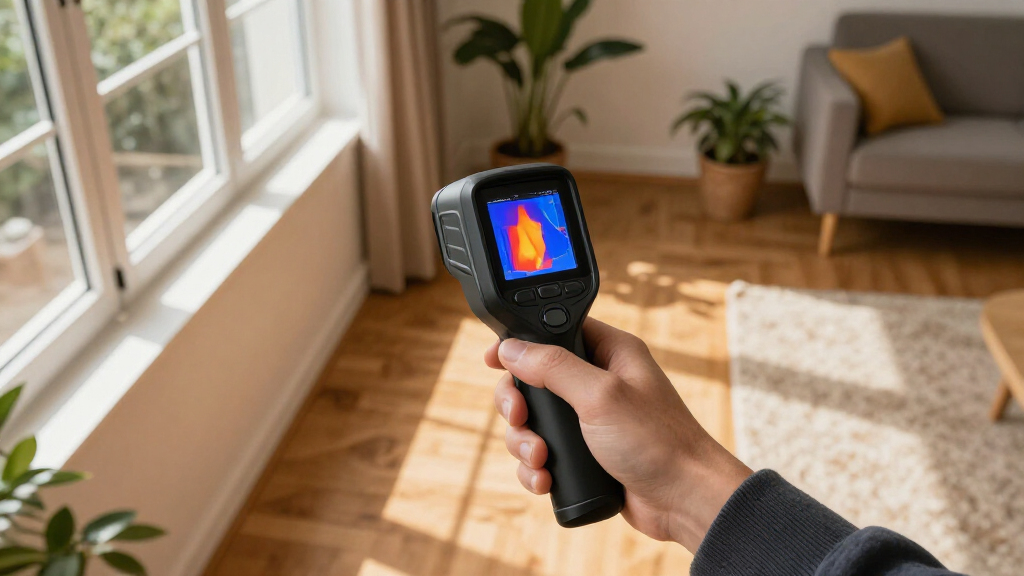
To select these products, I evaluated each camera based on thermal sensitivity, spatial resolution, and software ecosystem integration. I prioritized models that offer clear temperature accuracy for professional diagnostics over those that merely produce colorful heat maps. Build quality was another key factor, particularly for handheld units intended for rugged environments like construction sites or marine decks.
I also compared the ease of data transfer and report generation, recognizing that a camera is only as good as the workflow it supports. Products with poor app connectivity or limited analysis software were ranked lower, regardless of their hardware specs. This approach ensures the recommendations align with professional reliability and practical usability rather than just marketing claims.
| thermal imaging camera | Temperature range |
|---|---|
| FLIR Edge Wireless Thermal Ima | — |
| HSFTOOLS HF96V Thermal Camera | -4°F to 1022°F |
| FLIR C5 Compact Thermal Imagin | -20°C to 400°C (-4°F to 752°F) |
| FLIR E6-XT Wi-Fi Thermal Imagi | -20°C to 550°C (-4°F to 1022°F) |
| UNI-T UTi120S Handheld Infrare | — |
| HSFTOOLS P2W Wi-Fi Thermal Cam | -4°F to 752°F |
| FLIR E6 Pro Thermal Imaging Ca | — |
| AccuMEMS TT27D Dual-Lens Wi-Fi | — |
| Klein Tools TI250 Rechargeable | -4°F to 752°F (-20°C to 400°C) |
| Thermal Master Thor002 Handhel | — |
| HSFTOOLS F2VW Thermal Camera w | -4°F to 1022°F |
| FLIR M232 Marine Thermal Camer | — |
| AccuMEMS GT14S Thermal Imaging | -4°F to 1022°F |
| Flagfront YXI96 Handheld Therm | -4°F to 1022°F |
| TOPDON TC004 Mini Thermal Imag | -4°F to 842°F |
Factors to Consider When Choosing Best Thermal Imaging Cameras
Understanding the technical specifications behind thermal imaging is the only way to avoid buying a tool that fails you during a critical inspection. This guide breaks down the factors that actually impact performance in the field.
Thermal Sensitivity vs. Spatial Resolution
Many buyers fixate on pixel count, assuming higher resolution always means a better image. However, thermal sensitivity, measured as Noise Equivalent Temperature Difference (NETD), is often more important for detecting subtle issues like small leaks or insulation gaps. A camera with lower resolution but excellent sensitivity can reveal problems that a high-resolution but noisy sensor might miss. If you are hunting for hidden water damage or electrical faults, prioritize a lower NETD value. Conversely, if you need to read fine details from a distance, such as identifying specific components on a circuit board, spatial resolution becomes the priority. Balancing these two specs depends entirely on your typical inspection distance and target size.
Standalone Units vs. Smartphone Adapters
Deciding between a dedicated handheld device and a smartphone attachment is a fundamental workflow choice. Standalone units like the FLIR E6-XT feature large, bright screens that are readable in direct sunlight and have independent battery life. Smartphone adapters, such as the FLIR C5, are cheaper and lighter but drain your phone’s battery and offer smaller viewing angles. If you work in bright outdoor environments or need to take breaks without losing your device, a standalone unit is the safer bet. For occasional home use or tight budgets, a smartphone adapter provides incredible value and leverages the powerful processor and storage already in your pocket.
The Importance of Software and Reporting
A thermal image is useless if you cannot effectively communicate the findings to a client. The best thermal imaging cameras come with robust software ecosystems that allow for easy annotation, temperature measurement, and report generation. Proprietary software from established brands often integrates cloud storage, enabling you to share reports instantly with customers. Lesser-known brands may offer basic apps that lack these professional features, forcing you to use third-party tools or manual editing. Before purchasing, verify that the companion app supports the file formats and reporting styles required by your industry or clients.
Durability and Environmental Ratings
Thermal cameras are often used in harsh environments, so the Ingress Protection (IP) rating is a critical specification. An IP54 rating means the device is protected against dust and splashing water, which is sufficient for indoor home inspections but risky for outdoor construction sites. If you work in dusty, wet, or high-impact areas, look for higher IP ratings or ruggedized casings. Additionally, consider the operating temperature range; some consumer-grade cameras fail in extreme cold or heat, whereas professional-grade models are engineered to perform in wide temperature swings. Ignoring these environmental limits can lead to premature device failure.
Frame Rate and Image Smoothness
Frame rate determines how smooth the thermal image appears when you move the camera. Standard thermal cameras often operate at low frame rates, resulting in a choppy or lagging view when panning quickly. For applications requiring quick movement, such as electrical scanning or automotive diagnostics, a higher frame rate (30 Hz or more) significantly reduces motion blur and eye strain. While high frame rates are typically reserved for premium models, some newer mid-range options now offer enhanced refresh rates. If you find yourself constantly stopping to let the image stabilize, upgrading to a model with a higher frame rate will improve your workflow efficiency.
Frequently Asked Questions
Do I need a high-resolution thermal camera for home inspections?
For most home inspections, a high-resolution camera is not necessary and may be overkill. Home inspections typically involve identifying large temperature differences, such as missing insulation or major air leaks, which are visible on lower-resolution sensors. A camera with a resolution of 160 x 120 or 320 x 240 pixels is usually sufficient for these tasks. High-resolution models (640 x 480 or higher) are better suited for industrial applications where you need to see small details from a distance. Investing in a mid-range model allows you to allocate budget toward better software or accessories, which often provide more utility for residential work.
Can thermal cameras see through glass or walls?
No, thermal cameras cannot see through glass or solid walls. Thermal radiation does not pass through most solid materials, including glass, concrete, and drywall. Instead, the camera detects the heat emitted from the surface of the object. When you point a thermal camera at a wall, you are seeing the temperature of the wall’s surface, which may be influenced by what is behind it (like a hot pipe or missing insulation). If you try to look through a window, you will mostly see the reflection of your own heat signature, not the objects on the other side. Understanding this limitation is key to interpreting thermal images correctly.
Is a smartphone thermal camera accurate enough for professional use?
Smartphone thermal cameras have improved dramatically and can be accurate enough for many professional tasks, provided the model has a quality sensor. Brands like FLIR produce smartphone dongles that meet professional accuracy standards for electrical and mechanical inspections. However, they lack the ruggedness and independent battery life of standalone units, which can be a liability in demanding field conditions. For consultants who need to generate quick reports and value portability, a smartphone camera is often the preferred choice. For technicians working in harsh environments or needing long-duration inspections, a dedicated handheld unit remains the more reliable option.
What is the difference between MSX and Fusion imaging?
MSX (Multi-Spectral Dynamic Imaging) and Fusion are both techniques that blend visible light and thermal images to provide context. MSX overlays the edges and details from the visible light camera onto the thermal image, enhancing clarity without altering the thermal data. This results in a sharper, more recognizable image where you can easily identify pipes, wires, or studs. Fusion creates a side-by-side or blended view that can sometimes obscure thermal details if not calibrated correctly. For diagnostic purposes, MSX is generally preferred because it maintains the integrity of the thermal data while adding visual context, making it easier to pinpoint the exact location of a thermal anomaly.
How long do thermal camera batteries typically last?
Battery life varies significantly depending on whether the device is standalone or a smartphone attachment. Standalone thermal cameras typically offer 2 to 4 hours of continuous use, with some premium models featuring swappable batteries for all-day operation. Smartphone thermal cameras rely on your phone’s battery, which can be drained rapidly—often within 1 to 2 hours of active use—due to the power required for data transfer and processing. If you plan to use a smartphone-based camera for extended periods, carrying a power bank for your phone is practically mandatory. For professional use, a standalone unit with replaceable batteries offers far more flexibility and reliability.
Conclusion
Selecting the right thermal imaging camera depends on your specific workflow and budget. For the best overall performance, the FLIR E6-XT remains the gold standard for professionals who need reliability and high sensitivity. If you are a home inspector or DIY enthusiast looking for value, the HSFTOOLS HF96V offers excellent features for its price point, though you may sacrifice some software polish. For beginners or those who prefer a lightweight setup, the FLIR C5 is the ideal entry point, providing professional-grade imaging in a pocket-sized form factor. Finally, for marine applications, the FLIR M232 is the only logical choice due to its specialized mounting and durability. Choose the tool that matches your environment and reporting needs, and you will find the right balance of cost and capability.