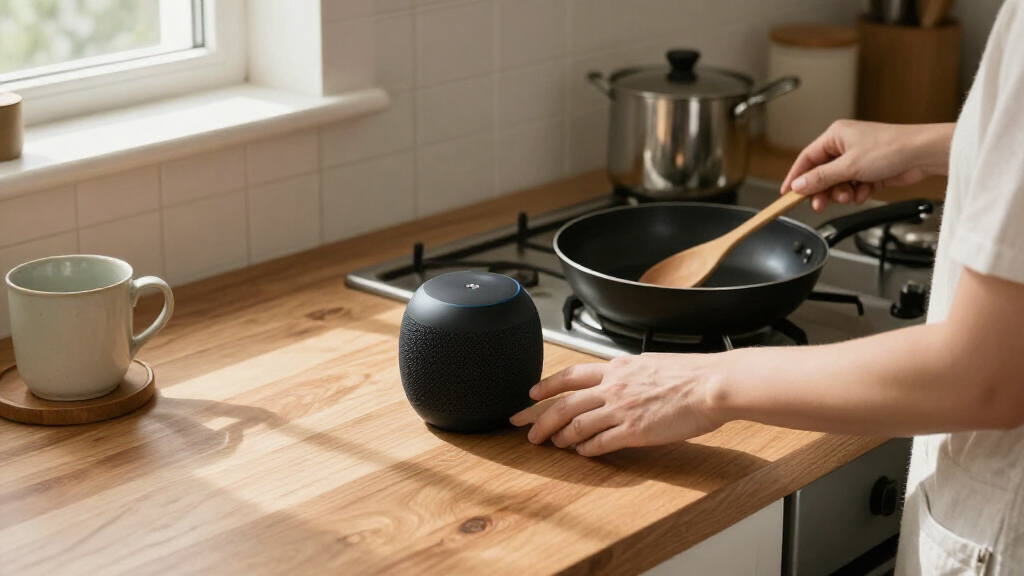
The best Alexa smart home devices depend on whether you want hands-free control, a central screen, or an easy way to automate existing appliances. I’d put the Amazon Echo Dot Max first for buyers who want one capable Alexa hub with room-filling sound, while the Echo Hub stands out for dedicated smart-home control and the Linkind Matter Smart Plug four-pack for adding several compatible outlets. The main tradeoffs are screen versus speaker, simple Alexa setup versus broader Matter compatibility, and a single versatile device versus several task-specific ones. A smart plug can automate a lamp, but it cannot replace a thermostat or provide a household control panel. Read on for how these 15 picks compare and which one best fits your setup.

Get home appliances delivered free with Prime
- Fast, free delivery on millions of items
- Prime Video, Amazon Music and more included
- Member-only deals all year
Complete the kit


Key Takeaways
- The Echo Dot Max is the strongest all-rounder in this lineup: it combines Alexa voice control and room-filling sound, while the Echo Hub is a better fit when touch control for smart-home devices matters more than speaker versatility.
- Displays solve different problems: the Echo Show 5 suits bedside basics, the Echo Show 11 gives a larger general-purpose screen, and the Echo Show 15 is designed for a more prominent shared household display.
- Matter compatibility is a meaningful distinction among plugs: the Linkind four-pack is the clearest choice for buyers who want Matter support, while several other packs focus on Alexa-compatible Wi-Fi control.
- Multi-packs suit homes with several lamps or small appliances, but a two-pack such as the Kasa EP10P2 may be a better match when you only need to automate a couple of outlets.
- Alexa compatibility does not make every device interchangeable: the Amazon Smart Thermostat controls home temperature, while smart plugs handle supported plug-in loads; buyers should match the device to the job.
| Linkind Matter Smart Plug, 4-Pack | 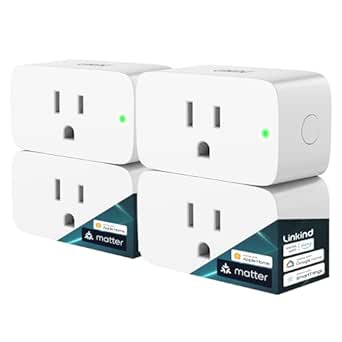 | Best for Cross-Platform Alexa Setups | Pack size: 4 plugs | Connectivity: 2.4 GHz Wi-Fi; IPv6 required | Compatibility: Apple Home, Alexa, Google Home, SmartThings, AiDot | VIEW LATEST PRICE | See Our Full Breakdown |
| Amazon Echo Dot Max Alexa Speaker with Room-Filling Sound, Graphite |  | Best Premium Alexa Hub Speaker | Dimensions: 4.27 × 4.27 × 3.9 in | Weight: 17.82 oz | Drivers: 0.8-inch tweeter and 2.5-inch woofer | VIEW LATEST PRICE | See Our Full Breakdown |
| Amazon Smart Thermostat with Alexa and Ring Compatibility |  | Best Alexa Climate Control | Dimensions: 3.56 × 3.56 × 0.84 in | Weight: 3.86 oz | HVAC compatibility: Most 24V systems, including forced-air, heat pump, and radiant boiler | VIEW LATEST PRICE | See Our Full Breakdown |
| Govee Smart Wi-Fi Plugs, 4-Pack |  | Best No-Hub Plug Set | Pack size: 4 plugs | Model: H5083 | Connectivity: Wi-Fi and Bluetooth | VIEW LATEST PRICE | See Our Full Breakdown |
| Amazon Echo Dot (5th Gen) Smart Speaker, Charcoal |  | Best Entry-Level Alexa Speaker | Generation: 5th Gen | Dimensions: 3.9 × 3.9 × 3.5 in | Weight: 10.7 oz | VIEW LATEST PRICE | See Our Full Breakdown |
| Amazon Echo Spot Smart Alarm Clock with Alexa, Black |  | Best Alexa Alarm Clock | Display: 2.83-inch touchscreen, 240 × 320 pixels | Dimensions: 4.5 × 4.1 × 4.4 inches | Weight: 14.3 oz (405 g) | VIEW LATEST PRICE | See Our Full Breakdown |
| Kasa Smart Wi-Fi Mini Plug EP10P2, 15A, 2-Pack |  | Best Two-Pack Smart Plug | Model: EP10P2 | Quantity: 2 plugs | Maximum current: 15 A | VIEW LATEST PRICE | See Our Full Breakdown |
| Amazon Echo Show 11 Smart Display with Full HD Touchscreen and Spatial Audio, Graphite |  | Best Premium Alexa Smart Display | Display: 10.95-inch Full HD touchscreen, 1920 × 1200 | Dimensions: 10 × 5 × 7.2 inches | Weight: 45.92 oz (1,302 g) | VIEW LATEST PRICE | See Our Full Breakdown |
| Amazon Echo Hub 8-Inch Smart Home Control Panel |  | Best Wall-Mounted Alexa Control Panel | Display: 8-inch touchscreen, 1280 × 800 | Connectivity: Dual-band Wi-Fi, Bluetooth, Zigbee, Matter, Thread, Amazon Sidewalk | Audio: Stereo playback with two top-ported full-range speakers | VIEW LATEST PRICE | See Our Full Breakdown |
| GHome Smart WiFi Plug, 4-Pack | 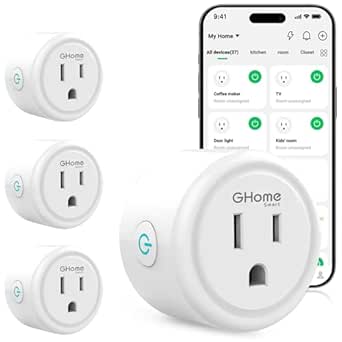 | Best Multi-Room Smart Plug Set | Model: WP3 | Quantity: 4 plugs | Connectivity: 2.4 GHz Wi-Fi | VIEW LATEST PRICE | See Our Full Breakdown |
| Amazon Echo Show 15 (2nd Gen), 15.6-Inch Full HD Smart Display with Fire TV and Alexa |  | Best Alexa Smart Display for Shared Spaces | Display: 15.6-inch, 1920 × 1080 | Dimensions: 16.1 × 10.1 × 1.4 inches | Weight: 4.96 lb | VIEW LATEST PRICE | See Our Full Breakdown |
| Amazon Smart Plug with Alexa |  | Best Single Plug for Alexa Beginners | Dimensions: 3.2 × 1.5 × 2.2 inches | Weight: 3.1 oz | Input: 120 VAC, 60 Hz, 15 A maximum | VIEW LATEST PRICE | See Our Full Breakdown |
| Amazon Echo Show 5 Smart Display with Alexa, Charcoal |  | Best Compact Alexa Display | Display: 5.5-inch touchscreen | Camera: 2 MP with built-in shutter | Dimensions: 5.8 × 3.6 × 3.2 inches | VIEW LATEST PRICE | See Our Full Breakdown |
| EIGHTREE Smart Wi-Fi Plug, 15A, 4-Pack |  | Best Multi-Platform Smart Plug Pack | Quantity: 4 plugs | Model: ET01 | Operating voltage: 120 V | VIEW LATEST PRICE | See Our Full Breakdown |
| Amazon Basics Smart Plug, Alexa-Compatible, 4-Pack, White | 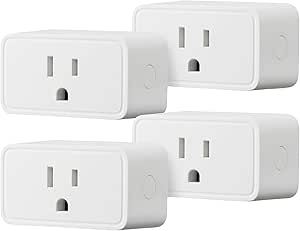 | Best Alexa-Only Multi-Pack | Quantity: 4 plugs | Compatibility: Amazon Alexa only | Connectivity: 2.4 GHz Wi-Fi | VIEW LATEST PRICE | See Our Full Breakdown |
| Alexa smart home device | Dimensions | Weight | Wi-Fi |
|---|---|---|---|
| Linkind Matter Smart Plug | — | — | — |
| Amazon Echo Dot Max Alexa Spea | 4.27 × 4.27 × 3.9 in | 17.82 oz | Wi-Fi 6E |
| Amazon Smart Thermostat with A | 3.56 × 3.56 × 0.84 in | 3.86 oz | 2.4 GHz, 802.11 b/g/n; no 5 GHz support |
| Govee Smart Wi-Fi Plugs | — | — | — |
| Amazon Echo Dot | 3.9 × 3.9 × 3.5 in | 10.7 oz | Dual-band 802.11a/b/g/n/ac, 2.4 and 5 GHz |
| Amazon Echo Spot Smart Alarm C | 4.5 × 4.1 × 4.4 inches | 14.3 oz (405 g) | Dual-band 802.11a/b/g/n/ac, 2.4 and 5 GHz |
| Kasa Smart Wi-Fi Mini Plug EP1 | — | — | — |
| Amazon Echo Show 11 Smart Disp | 10 × 5 × 7.2 inches | 45.92 oz (1,302 g) | Wi-Fi 6E (IEEE 802.11ax) |
| Amazon Echo Hub 8-Inch Smart H | — | — | — |
| GHome Smart WiFi Plug | 2.1 × 2.1 × 1.1 inches | — | — |
| Amazon Echo Show 15 | 16.1 × 10.1 × 1.4 inches | 4.96 lb | Wi-Fi 6E; tri-band, dual-antenna MIMO |
| Amazon Smart Plug with Alexa | 3.2 × 1.5 × 2.2 inches | 3.1 oz | 2.4 GHz, 802.11 b/g/n |
| Amazon Echo Show 5 Smart Displ | 5.8 × 3.6 × 3.2 inches | 16.1 oz | Dual-band 802.11a/b/g/n/ac |
| EIGHTREE Smart Wi-Fi Plug | — | — | — |
| Amazon Basics Smart Plug | 2.7 × 2.1 × 1.5 inches | — | — |
More Details on Our Top Picks
Linkind Matter Smart Plug, 4-Pack
The Linkind Matter Smart Plug 4-Pack is my pick for Alexa households that may also use Apple Home, Google Home, or SmartThings. Matter support and local network control give it an advantage over the Govee Smart Wi-Fi Plugs, which work with Alexa and Google but do not list Matter support. If your internet connection drops, Linkind can still respond over the home network, provided the setup supports that local control. The plugs also offer scheduling, timers, and a higher stated capacity than Govee’s 1200 W limit. The tradeoff is setup: using Alexa or several other platforms requires a Matter-certified controller, plus 2.4 GHz Wi-Fi and IPv6. Choose Govee if you want a simpler no-hub route; choose Linkind if cross-platform flexibility matters more.
Pros:- Matter compatibility spans Alexa, Apple Home, Google Home, and SmartThings
- Local network control can keep working when the internet is unavailable
- Scheduling, timers, and remote control are supported
- Compact build includes short-circuit and overload protection
Cons:- Alexa and several other platform integrations require a Matter-certified controller
- Requires 2.4 GHz Wi-Fi and an IPv6 network
- Four plugs may be more than needed for buyers outfitting only one device
Best for: Alexa users who also want to manage the same plugs through Matter-compatible Apple Home, Google Home, or SmartThings setups
Not ideal for: Buyers seeking the simplest Alexa-only setup, or households without 2.4 GHz Wi-Fi, IPv6, and a required Matter controller
- Pack size:4 plugs
- Connectivity:2.4 GHz Wi-Fi; IPv6 required
- Compatibility:Apple Home, Alexa, Google Home, SmartThings, AiDot
- Hub requirement:Matter-certified controller for supported platforms; AiDot app can be used without a hub
- Maximum load:15 A; 1800 W
- Plug type:Type A
- Protection:Short-circuit and overload
- Certifications:FCC, ETL
Our verdict“Choose Linkind if you want an Alexa-compatible plug set that can also fit a Matter-based, multi-platform home.”
Amazon Echo Dot Max Alexa Speaker with Room-Filling Sound, Graphite
The Echo Dot Max makes the most sense when one device needs to handle music, voice requests, and a wide range of smart-home connections. Its built-in hub supports Zigbee, Matter, and Thread, so it can connect to compatible devices without relying on the separate controller that the Linkind Matter Smart Plug may require. Room-adapting sound and a larger woofer also make it a stronger music pick than the Echo Dot (5th Gen), though this is still a compact mono speaker rather than a stereo system. The added hub and sensors give it more home-control range than a basic Echo, but some of its networking value depends on other equipment: eero extension works only with compatible eero networks and has device and speed limits. Choose the Echo Dot (5th Gen) for a simpler voice assistant; choose this model for broader hub duties.
Pros:- Built-in hub supports Zigbee, Matter, and Thread
- Room-adapting audio and a 2.5-inch woofer suit music better than a basic Echo Dot
- Presence, temperature, and light sensors can support smart-home routines
- Microphone disable button and additional privacy controls
Cons:- eero extension requires a compatible router and is limited to up to 100 Mbps and 10 or fewer connected devices in the 5 GHz band
- Bluetooth speakers requiring PIN codes are not supported
- Its hub features offer less value to households with few compatible smart-home devices
Best for: Alexa users who want a compact speaker that can also act as a Zigbee, Matter, and Thread hub for compatible devices
Not ideal for: Buyers who only need basic Alexa voice control, want stereo sound, or expect eero extension without a compatible eero network
- Dimensions:4.27 × 4.27 × 3.9 in
- Weight:17.82 oz
- Drivers:0.8-inch tweeter and 2.5-inch woofer
- Audio bandwidth:53 Hz–16 kHz at volume 6
- Wi-Fi:Wi-Fi 6E
- Smart home hub:Zigbee, Matter, Thread Border Router
- Sensors:Ambient temperature, ambient light, presence detection
- eero extension:Up to 1,000 sq. ft. on compatible eero networks
Our verdict“Pick the Echo Dot Max if you want stronger compact-speaker sound and a built-in hub, not just an Alexa assistant.”
Amazon Smart Thermostat with Alexa and Ring Compatibility
For Alexa households, this thermostat turns temperature control into a routine rather than another task to remember. You can manage schedules in the Alexa or Ring app, use voice commands with a compatible Echo, and set presence-based adjustments to respond when household routines change. That makes it a more purpose-built climate upgrade than the Echo Dot Max, which can coordinate compatible devices but does not replace a thermostat. The tradeoff is HVAC fit: this model supports most 24V systems, but not 110–240V electric baseboard heating, and it needs a C-wire or separately sold power adapter. It also uses 2.4 GHz Wi-Fi only. Buyers with compatible central heating and cooling get Alexa-centered scheduling and controls; anyone unsure about wiring or system voltage should check compatibility before choosing it.
Pros:- Schedules and presence detection support automatic temperature adjustments
- Controls are available through Alexa, Ring, compatible Echo devices, and on-device buttons
- Alexa app offers guided installation
- Includes wall plates and an installation tool
Cons:- Needs a C-wire or separately sold power adapter kit
- Does not support 110–240V systems such as electric baseboard heat
- Uses 2.4 GHz Wi-Fi only, and voice control requires an Alexa-enabled device
Best for: Homeowners with a compatible 24V HVAC system who want Alexa app scheduling, voice control, and presence-based temperature changes
Not ideal for: Renters or households with electric baseboard heat, incompatible HVAC wiring, or no C-wire and no plan to obtain the separate adapter
- Dimensions:3.56 × 3.56 × 0.84 in
- Weight:3.86 oz
- HVAC compatibility:Most 24V systems, including forced-air, heat pump, and radiant boiler
- Power:C-wire or separately sold power adapter kit
- Wi-Fi:2.4 GHz, 802.11 b/g/n; no 5 GHz support
- Controls:Three touch buttons, Alexa app, voice control, compatible Echo devices
- App features:Schedules, humidity sensing, emergency heat, vacation mode, energy dashboard
- Certifications:ENERGY STAR, ECOLOGO Gold
Our verdict“Choose this thermostat if your 24V HVAC system is compatible and you want climate schedules and controls built around Alexa.”
Govee Smart Wi-Fi Plugs, 4-Pack
The Govee Smart Wi-Fi Plugs suit Alexa users who want basic schedules and group control without adding a hub. They connect through 2.4 GHz Wi-Fi or Bluetooth and work with the Govee Home app, Alexa, and Google Assistant. That straightforward approach is less demanding than the Linkind Matter Smart Plug, which needs a Matter-certified controller for Alexa and several other platforms. Govee’s compromise is narrower platform flexibility: the supplied information does not list Matter or Apple Home support. It also has conflicting amperage figures—10 A in the description and 11 A in the specifications—so I would verify the intended load against the product labeling before connecting an appliance near that limit. With a stated maximum of 1200 W, these plugs are better suited to everyday compatible devices than higher-load needs.
Pros:- Works with Alexa and Google Assistant
- Schedules and group control simplify recurring appliance routines
- Wi-Fi and Bluetooth app connections are supported
- No hub is required
Cons:- Supports 2.4 GHz Wi-Fi only, not 5 GHz
- Amperage is listed as both 10 A and 11 A in the provided product information
- No Matter or Apple Home compatibility is listed
Best for: Alexa users who want a four-plug set for compatible household devices, simple schedules, and grouped control without a separate hub
Not ideal for: Buyers who need Matter or Apple Home support, 5 GHz Wi-Fi, or clear capacity information for a higher-load appliance
- Pack size:4 plugs
- Model:H5083
- Connectivity:Wi-Fi and Bluetooth
- Wi-Fi band:2.4 GHz; no 5 GHz support
- Voice assistants:Amazon Alexa, Google Assistant
- Maximum power:1200 W
- Plug type and certification:Type B; ETL, FCC
Our verdict“Choose Govee for simple, hub-free Alexa plug control, but pick Linkind if Matter support and broader platform options matter more.”
Amazon Echo Dot (5th Gen) Smart Speaker, Charcoal
The Echo Dot (5th Gen) is the straightforward starting point for Alexa voice control, timers, music, and basic smart-home routines. Its motion and temperature sensors can trigger compatible routines without requiring a separate sensor, while dual-band Wi-Fi and Matter support give it more connectivity flexibility than a basic speaker alone. Compared with the Echo Dot Max, it has a smaller full-range driver and lacks that model’s built-in Zigbee and Thread hub, so it is less suited to someone building a larger device network around one speaker. It can extend a compatible eero network, but that feature depends on having the right router and account setup. Choose this Dot for everyday Alexa functions and a compact footprint; choose the Max if better bass and broader hub support justify a more capable device.
Pros:- Handles Alexa voice assistance, timers, music, audiobooks, podcasts, and compatible device control
- Motion and temperature sensors can support automated routines
- Dual-band Wi-Fi supports both 2.4 and 5 GHz networks
- Matter compatibility and eero extension add options for compatible homes
Cons:- Mono audio and a 1.6-inch driver offer less sound range than the Echo Dot Max
- eero extension requires a compatible eero router, linked accounts, and setup in the eero app
- Some Alexa skills and services may require subscriptions or fees
Best for: First-time Alexa users who want a compact speaker for voice assistance, everyday audio, and sensor-based routines
Not ideal for: Buyers seeking fuller room-filling sound or a built-in Zigbee and Thread hub for a growing smart-home setup
- Generation:5th Gen
- Dimensions:3.9 × 3.9 × 3.5 in
- Weight:10.7 oz
- Driver:1.6-inch full-range driver
- Audio bandwidth:62 Hz–19 kHz at volume 6
- Wi-Fi:Dual-band 802.11a/b/g/n/ac, 2.4 and 5 GHz
- Smart home compatibility:Wi-Fi, Bluetooth Low Energy Mesh, Matter
- Sensors:Motion and indoor temperature
Our verdict“Pick the Echo Dot (5th Gen) for an approachable Alexa speaker with useful sensors, and move to the Dot Max for stronger sound and hub features.”
Amazon Echo Spot Smart Alarm Clock with Alexa, Black
The Echo Spot is the most bedroom-focused pick here: its 2.83-inch touchscreen can show the time, weather, or song information, while Alexa routines can link an alarm with gradual lighting or other compatible smart-home actions. That makes it more useful as a bedside control point than a basic speaker such as the Echo Dot (5th Gen), especially if you want visual information without a larger screen. Its built-in speaker handles music, podcasts, and audiobooks, but the compact display and single full-range speaker are not substitutes for the larger entertainment setup of the Echo Show 11. The camera-free design and microphone-off button may also appeal in a bedroom. The tradeoff is that its extra Wi-Fi coverage depends on a compatible eero router, and the small screen is best for glanceable details rather than video viewing.
Pros:- Customizable touchscreen presents time, weather, and song information at a glance
- Alexa routines can pair alarms with lighting and other compatible smart-home actions
- Built-in speaker plays music, podcasts, and audiobooks
- Camera-free design, microphone-off button, and in-app privacy controls
Cons:- Small screen is less suited to video and detailed smart-home control than the Echo Show 11
- Additional Wi-Fi coverage requires a compatible eero router and account setup
Best for: Alexa households that want a bedside alarm with routines, quick visual updates, and no camera
Not ideal for: Buyers who want a large video display, stronger room-filling audio, or eero coverage without owning a compatible eero router
- Display:2.83-inch touchscreen, 240 × 320 pixels
- Dimensions:4.5 × 4.1 × 4.4 inches
- Weight:14.3 oz (405 g)
- Camera:None
- Wi-Fi:Dual-band 802.11a/b/g/n/ac, 2.4 and 5 GHz
- Bluetooth:A2DP audio streaming and AVRCP remote control
- Speaker:1.73-inch full-range built-in speaker
- eero Built-in:Up to 1,000 sq. ft. additional coverage with a compatible eero router
Our verdict“Choose the Echo Spot for a camera-free Alexa bedside clock with useful routines, not for a full-size smart display or standalone Wi-Fi expansion.”
Kasa Smart Wi-Fi Mini Plug EP10P2, 15A, 2-Pack
The Kasa EP10P2 is a straightforward way to bring two lamps or small appliances into Alexa routines without adding a hub. Its compact form leaves the neighboring wall outlet available, a practical advantage over bulkier plugs when outlets are close together. Compared with the four-plug GHome Smart WiFi Plug, this set gives you fewer control points but a stated 15 A, 1,800 W maximum, rather than GHome’s 1,200 W limit. It also supports Google Assistant and SmartThings, so it is less tied to Alexa alone. Scheduling, timers, and Away Mode cover common automation needs, though setup still depends on a 2.4 GHz Wi-Fi network. I’d pick it for a small, mixed-assistant setup; households outfitting several rooms may prefer a four-pack, while anyone with a dual-band network lacking 2.4 GHz support should skip it.
Pros:- Compact design leaves the neighboring outlet unobstructed
- Supports Alexa, Google Assistant, and Samsung SmartThings
- No hub required for schedules, timers, and Away Mode
- UL certified, with a stated maximum load of 15 A
Cons:- Two plugs provide less whole-home coverage than four-pack alternatives such as the GHome plug set
- Requires a 2.4 GHz Wi-Fi connection
Best for: Alexa users automating a pair of lamps or small appliances who want a compact plug with broad assistant support
Not ideal for: Buyers outfitting multiple rooms at once or anyone whose Wi-Fi network does not provide 2.4 GHz connectivity
- Model:EP10P2
- Quantity:2 plugs
- Maximum current:15 A
- Maximum wattage:1,800 W
- Operating voltage:120 V AC
- Connectivity:2.4 GHz Wi-Fi
- Hub required:No
- Voice assistants:Amazon Alexa, Google Assistant, Samsung SmartThings
- Certifications:UL, RoHS, FCC, IC
Our verdict“Choose the Kasa two-pack for compact, hub-free control of two devices, but pick a four-pack if you need to automate more outlets at once.”
Amazon Echo Show 11 Smart Display with Full HD Touchscreen and Spatial Audio, Graphite
The Echo Show 11 is the strongest all-in-one choice for buyers who want a large screen, video calls, entertainment, and smart-home control in one Alexa device. Its 10.95-inch Full HD display and spatial audio give it a more immersive media role than the smaller Echo Hub, which is designed chiefly as a control panel. The built-in hub also connects compatible Zigbee, Matter, and Thread devices, reducing the need for separate bridges. A 13 MP auto-framing camera makes calls more flexible, while camera and microphone disable buttons address privacy concerns. The tradeoff is its larger footprint and greater focus on screen-based use: if the main goal is a dedicated wall-mounted dashboard, the Echo Hub is a more purpose-built fit. Buyers should also check connected-device needs, since some Bluetooth speaker setups and hands-free control of Mac OS X devices are unsupported.
Pros:- Large Full HD touchscreen pairs with spatial audio for media viewing and listening
- Built-in Zigbee, Matter, and Thread support can simplify smart-home connections
- 13 MP camera includes auto framing and 3.3× zoom for video calls
- Physical camera and microphone disable buttons provide direct privacy controls
Cons:- Larger and more entertainment-focused than the wall-oriented Echo Hub
- Does not support Bluetooth speakers that require PIN codes
- Hands-free voice control of connected Mac OS X devices is unsupported
Best for: Households wanting one Alexa display for video calls, entertainment, and control of Zigbee, Matter, or Thread devices
Not ideal for: Buyers who need a dedicated wall control panel, want a compact bedside display, or rely on unsupported Bluetooth speaker setups
- Display:10.95-inch Full HD touchscreen, 1920 × 1200
- Dimensions:10 × 5 × 7.2 inches
- Weight:45.92 oz (1,302 g)
- Camera:13 MP with auto framing and 3.3× zoom
- Audio:1 × 2.8-inch woofer and 2 full-range drivers
- Wi-Fi:Wi-Fi 6E (IEEE 802.11ax)
- Smart home hub:Zigbee, Matter, and Thread Border Router
- Bluetooth:Version 5.4
- Sensors:Ambient temperature, ambient light, presence detection, and camera
Our verdict“Choose the Echo Show 11 when a premium screen, video calls, and a multi-protocol hub matter more than a dedicated wall dashboard.”
Amazon Echo Hub 8-Inch Smart Home Control Panel
The Echo Hub is built around a different job from the Echo Show 11: it puts compatible lights, cameras, routines, and media controls on an 8-inch dashboard suited to a wall or fixed household control point. Its support for Zigbee, Matter, and Thread, alongside Wi-Fi and Bluetooth, gives it broader device-protocol coverage than a simple Alexa speaker. The included wall-mounting hardware makes it easier to place where family members can reach it, while a customizable layout lets you prioritize the controls you use most. Compared with the larger Echo Show 11, this is less compelling for video calls and immersive entertainment; its stereo speakers and 1280 × 800 screen are geared more toward control than media. The stand, cable pass-throughs, and PoE adapter are separate purchases, and setup requires internet access, so it is a fixed installation choice rather than a portable screen.
Pros:- Customizable dashboard with resizable sections for frequently used controls
- Supports Zigbee, Matter, Thread, Wi-Fi, Bluetooth, and Sidewalk
- Designed to manage compatible security devices, cameras, routines, and media
- Wall mount and installation hardware are included
Cons:- Not intended for handheld or portable use
- Tabletop stand, cable pass-throughs, and PoE adapter are sold separately
- Requires an internet connection for setup
Best for: Alexa households that want a shared wall-mounted dashboard for lights, cameras, routines, and compatible smart-home devices
Not ideal for: Buyers seeking a portable display, a video-call centerpiece, or a wall setup that includes a tabletop stand or PoE adapter
- Display:8-inch touchscreen, 1280 × 800
- Connectivity:Dual-band Wi-Fi, Bluetooth, Zigbee, Matter, Thread, Amazon Sidewalk
- Audio:Stereo playback with two top-ported full-range speakers
- Sensors:Passive infrared proximity sensor and ambient light sensor
- Power:12.5 W power adapter included
- Power over Ethernet:Supported with compatible USB-C converter and PoE+/PoE++
- Mounting:Wall mount included; tabletop stand sold separately
- Setup:Requires internet via Wi-Fi or Ethernet
Our verdict“Choose the Echo Hub for a fixed, multi-protocol Alexa control station, while the Echo Show 11 is a better fit for calls and entertainment.”
GHome Smart WiFi Plug, 4-Pack
For buyers adding Alexa control across several rooms, the GHome four-pack offers more outlets to automate than the two-plug Kasa EP10P2. Schedules, timers, remote app access, and group control make it easier to manage lamps or other compatible devices together, and the plugs also work with Google Home. The main compromise is load capacity: each plug is rated for up to 1,200 W, below Kasa’s 1,800 W limit, so I would check appliance requirements rather than treat these as universal outlet replacements. Setup also takes an extra step: each plug must first be configured through the GHome app before linking to Alexa or Google Home. Support for the Smart Life and Tuya apps adds app options, but this is still a 2.4 GHz Wi-Fi product, not a hub-based or protocol-flexible choice like the Echo Show 11’s smart-home hub.
Pros:- Four plugs provide more coverage than the Kasa two-pack
- Alexa and Google Home voice control, plus remote app access
- Schedules, timers, group control, and app sharing support household routines
- Compatible with GHome, Smart Life, and Tuya apps
Cons:- 1,200 W maximum is lower than the Kasa EP10P2’s 1,800 W limit
- Requires a 2.4 GHz Wi-Fi connection
- Each plug must be set up in the GHome app before linking with Alexa or Google Home
Best for: Alexa households that want to automate several lamps or low-to-moderate-wattage devices across multiple rooms
Not ideal for: Buyers controlling devices above the 1,200 W limit, or those who want to avoid separate app setup before Alexa linking
- Model:WP3
- Quantity:4 plugs
- Connectivity:2.4 GHz Wi-Fi
- Voice assistants:Alexa and Google Home
- Compatible apps:GHome, Smart Life, and Tuya
- Operating voltage:120 V
- Maximum wattage:1,200 W
- Dimensions:2.1 × 2.1 × 1.1 inches
- Certifications:ETL, FCC
Our verdict“Choose the GHome four-pack to spread Alexa-controlled plugs across several rooms, provided your devices stay within its 1,200 W limit.”
Amazon Echo Show 15 (2nd Gen), 15.6-Inch Full HD Smart Display with Fire TV and Alexa
The Echo Show 15 (2nd Gen) earns this role by combining a large family-facing screen with a built-in hub for Zigbee, Matter, and Thread devices. Its 15.6-inch Full HD display can show calendars and controls while also serving as a Fire TV screen, and the included remote makes streaming less dependent on voice commands. Compared with the smaller Echo Show 5, it is far more useful as a shared kitchen or household dashboard, but it needs wall space and a Wi-Fi connection. The 13 MP camera adds auto-framing for calls and has a physical shutter, though a large display is not the right fit for every room. I’d choose it when smart-home control and family information deserve a central screen; skip it if a compact device or simple plug control is all you need.
Pros:- 15.6-inch Full HD screen supports landscape or portrait placement
- Built-in Fire TV and included voice remote add convenient viewing options
- Hub supports Zigbee, Matter, and Thread devices
- 13 MP camera includes auto-framing and a physical privacy shutter
Cons:- Large footprint and wall-mounting setup make it less suited to small rooms
- Requires Wi-Fi and does not support ad-hoc Wi-Fi networks
- Some skills and streaming services may require separate subscriptions or fees
Best for: Households that want a wall-mounted family dashboard, video-call screen, streaming display, and hub for compatible smart-home devices in one place
Not ideal for: Buyers with limited wall or counter space, or anyone seeking an inexpensive, compact Alexa display for a bedroom
- Display:15.6-inch, 1920 × 1080
- Dimensions:16.1 × 10.1 × 1.4 inches
- Weight:4.96 lb
- Camera:13 MP with privacy shutter
- Smart home hub:Zigbee, Matter, and Thread Border Router
- Wi-Fi:Wi-Fi 6E; tri-band, dual-antenna MIMO
- Audio:Two 2-inch woofers and two 0.6-inch tweeters
- Orientation:Landscape or portrait
Our verdict“Choose the Echo Show 15 if you want a prominent shared Alexa dashboard with streaming and broad smart-home hub support, rather than a small bedside display.”
Amazon Smart Plug with Alexa
The Amazon Smart Plug is the straightforward pick for adding Alexa routines to one lamp or other compatible household device. It connects directly to 2.4 GHz Wi-Fi, needs no separate hub, and its compact shape leaves the neighboring outlet free. That makes it an easier first step than the EIGHTREE Smart Wi-Fi Plug 4-Pack, which offers more plugs and works with additional platforms but requires the Smart Life app for setup. The tradeoff here is a narrower ecosystem: this plug is Alexa-only, indoor-only, and cannot connect through 5 GHz Wi-Fi. A physical on/off switch is useful when you want manual control, and the plug can reconnect after power or Wi-Fi outages. I’d pick it for one-off Alexa automation, not for a mixed-assistant home or a multi-room plug setup.
Pros:- Adds Alexa voice control and routines without a separate hub
- Compact body leaves the second outlet available
- Physical on/off switch provides direct manual control
- Automatically reconnects to Alexa after power or Wi-Fi outages
Cons:- Works only with Alexa and does not support other voice assistants or smart hubs
- Uses 2.4 GHz Wi-Fi only and does not support ad-hoc networks
- Indoor use only
Best for: Alexa users who want to automate a single indoor lamp or compatible appliance without adding a hub or learning another smart-home platform
Not ideal for: Households using Google Assistant, a non-Alexa smart hub, or 5 GHz-only Wi-Fi, and buyers who need outdoor control
- Dimensions:3.2 × 1.5 × 2.2 inches
- Weight:3.1 oz
- Input:120 VAC, 60 Hz, 15 A maximum
- Output:15 A maximum
- Wi-Fi:2.4 GHz, 802.11 b/g/n
- Use:Indoor only
- Compatibility:Alexa only; no other voice assistants or smart hubs
- Warranty:1-year limited
Our verdict“Choose this plug for simple Alexa control of one indoor device; pick the EIGHTREE four-pack if you need multiple plugs or broader assistant compatibility.”
Amazon Echo Show 5 Smart Display with Alexa, Charcoal
The Echo Show 5 is the compact choice for buyers who want Alexa with a screen but do not have room for a full-size household display. Its 5.5-inch touchscreen can show quick information, support video calls, and provide a view of compatible cameras; the camera shutter and microphone/camera-off button give you direct privacy controls. Compared with the Echo Show 15 (2nd Gen), it takes up far less space, but it cannot serve as a large shared dashboard or match that model’s built-in Zigbee, Matter, and Thread hub. The small speaker and screen suit brief interactions better than room-filling entertainment. Its recycled materials are a plus, though buyers should note that it does not support ad-hoc or peer-to-peer Wi-Fi networks. I’d place it on a bedside table or desk, not at the center of a busy family space.
Pros:- Small 5.5-inch touchscreen fits bedside tables and desks
- Built-in camera supports video calls and viewing compatible cameras
- Physical camera shutter and microphone/camera-off button provide privacy controls
- Uses recycled fabric and aluminum, with recyclable packaging
Cons:- Small display and speaker are less suited to shared viewing or room-filling entertainment
- Does not support ad-hoc or peer-to-peer Wi-Fi networks
- Bluetooth speaker pairing does not support devices that require PIN codes
Best for: People who want a small bedside or desk display for Alexa, quick updates, video calls, and compatible camera viewing
Not ideal for: Families who need a large shared dashboard, a built-in Zigbee/Matter/Thread hub, or a display suited to group viewing
- Display:5.5-inch touchscreen
- Camera:2 MP with built-in shutter
- Dimensions:5.8 × 3.6 × 3.2 inches
- Weight:16.1 oz
- Speaker:Full-range 1.75-inch built-in speaker
- Wi-Fi:Dual-band 802.11a/b/g/n/ac
- Bluetooth:A2DP and AVRCP support
- Processor:MediaTek MT 8169
Our verdict“Choose the Echo Show 5 for a compact personal Alexa screen, while the Echo Show 15 is the better fit for a shared household display.”
EIGHTREE Smart Wi-Fi Plug, 15A, 4-Pack
The EIGHTREE 4-pack makes sense when you want several Alexa-controlled outlets but do not want to commit to Alexa alone. These plugs support Amazon Alexa, Google Assistant, and SmartThings, so they offer more platform flexibility than the Alexa-only Amazon Basics Smart Plug 4-Pack. Scheduling, timers, and remote control add practical ways to automate lamps and compatible appliances, while the compact housings help in tight spaces. The tradeoff is an extra setup step: voice control requires the Smart Life app, rather than working through the Alexa app alone. They also rely on 2.4 GHz Wi-Fi and need no hub, so they are simple to place but not a fit for 5 GHz-only networks. I’d choose EIGHTREE for a mixed-platform home; Alexa-only households may prefer Amazon Basics for its simpler app path.
Pros:- Four plugs support remote control, schedules, timers, and countdowns
- Compatible with Alexa, Google Assistant, and SmartThings
- Compact design fits behind furniture and in tight spaces
- No separate smart-home hub required
Cons:- Requires the Smart Life app for setup and voice control
- Supports 2.4 GHz Wi-Fi only
- Four-plug pack may be more than needed for buyers automating just one device
Best for: Households automating several indoor devices that use Alexa, Google Assistant, or SmartThings and want one plug platform across them
Not ideal for: Buyers who want setup entirely within the Alexa app, rely on 5 GHz-only Wi-Fi, or need outdoor-rated plugs
- Quantity:4 plugs
- Model:ET01
- Operating voltage:120 V
- Maximum wattage:1800 W
- Connectivity:2.4 GHz Wi-Fi
- Compatible assistants:Amazon Alexa and Google Assistant
- Smart home compatibility:SmartThings
- Setup app:Smart Life
- Certifications:ETL and FCC
Our verdict“Pick EIGHTREE for a multi-plug setup that may span Alexa, Google Assistant, and SmartThings; choose Amazon Basics if Alexa-only simplicity matters more.”
Amazon Basics Smart Plug, Alexa-Compatible, 4-Pack, White
For an Alexa household that wants to automate several outlets without adding another app, the Amazon Basics Smart Plug 4-pack keeps setup and routines within the Alexa ecosystem. You can control connected appliances by voice or remotely, and schedules can follow set times, sunrise, or sunset. Compared with the EIGHTREE Smart Wi-Fi Plug 4-Pack, it gives up Google Assistant and SmartThings support in exchange for avoiding a third-party setup app. That makes it the cleaner fit for homes already using Alexa, but a poor choice if you want flexibility across assistants. Each compact plug is designed to leave the adjacent outlet available and works without a separate hub. The main limitation is clear: Alexa-only compatibility, plus 2.4 GHz Wi-Fi. I’d buy this pack for straightforward Alexa routines in several rooms, not for a mixed-platform setup.
Pros:- Four plugs support Alexa voice control, remote access, and scheduled routines
- Routines can be set for specific times, sunrise, or sunset
- No separate hub or third-party app required
- Compact design is intended to leave the adjacent outlet available
Cons:- Works with Amazon Alexa only
- Requires 2.4 GHz Wi-Fi
- Does not offer the Google Assistant and SmartThings compatibility of the EIGHTREE four-pack
Best for: Alexa-focused households that want to schedule or remotely control several indoor appliances without a separate hub or third-party app
Not ideal for: Homes using Google Assistant or SmartThings, or buyers who may want to move these plugs to another assistant later
- Quantity:4 plugs
- Compatibility:Amazon Alexa only
- Connectivity:2.4 GHz Wi-Fi
- Hub required:No
- Plug type:Type B
- Amperage:15 A
- Dimensions:2.7 × 2.1 × 1.5 inches
- Warranty:1-year limited
Our verdict“Choose this pack for simple, app-light Alexa automation across several outlets, but choose EIGHTREE if you need support for other smart-home platforms.”
How We Picked
I ranked these products by how well they address distinct Alexa smart-home needs: voice control, household device management, room audio, visual information, or outlet and temperature automation. I weighed Alexa fit and everyday usability, the usefulness of each product’s core function, setup and compatibility considerations, and whether its design suits a specific room or a wider household. For smart plugs, I also looked at the practical difference between Matter support, Wi-Fi-based Alexa control, pack size, and stated electrical capacity. For speakers and displays, the ranking reflects whether the device is a flexible starting point or a more specialized screen or audio choice.
The order favors products that serve a clear, broadly useful role without requiring a buyer to build an entire system around them. Specialized products rank well when they solve a distinct need, but they are not treated as universal replacements: an Echo Hub is a control panel, not a room speaker, and the Echo Show 15 asks for a dedicated display location. Smart plugs are grouped by their strongest fit rather than presented as identical alternatives. I have not treated Alexa compatibility alone as proof of equal features, setup, or device support.
Factors to Consider When Choosing Best Alexa Smart Home Devices
Start with the job you want Alexa to do, then choose a device that handles it directly. A voice-first speaker, a touchscreen control point, an outlet switch, and a thermostat can all work with Alexa, but they address different needs and create different setup commitments.
Choose the Main Job Before Choosing a Form Factor
Decide whether your priority is voice commands, a visible control point, automating plug-in appliances, or managing heating. A speaker is convenient when you mainly want to ask Alexa questions, set timers, or control compatible devices by voice. A display helps when household members benefit from seeing controls or information without speaking a command. A plug only controls a compatible appliance through its outlet; it does not add smart features to every device. Buying by category first helps avoid paying for a screen or speaker that does not solve your actual problem.
Check Compatibility Beyond the Alexa Label
“Works with Alexa” describes a connection, not identical setup or control across every product. Before buying, check whether the device needs a separate app, account, hub, or wireless band, and confirm that its functions are available through Alexa rather than only in the maker’s app. Matter support can help a compatible device work across more than one smart-home ecosystem, but it does not mean every feature is available on every platform. If you already own smart-home gear, verify that the new product supports the exact functions you use. This can prevent a low-friction purchase from becoming another app and account to manage.
Match Smart Plugs to the Appliance and Outlet
A smart plug is best for a device that resumes its intended state when power returns, such as many lamps; it may not suit appliances that require a physical button press after a power interruption. Check the plug’s stated electrical rating and the appliance’s load before connecting anything, especially a high-draw device. Also consider whether the outlet will remain accessible and whether a bulky plug could block a neighboring socket. Multi-packs are useful when you already have several target devices, but buying more outlets than you need can leave you with unused hardware. For important equipment, avoid assuming a smart plug provides monitoring or safety features unless the product specifically lists them.
Decide Whether a Screen Will Be Used or Just Seen
A display earns its space when people regularly use touch controls, video, visual timers, or shared household information. Think about viewing distance, room lighting, counter or wall space, and whether a screen would be distracting in that location. A compact bedside display can serve a different role from a large shared screen, so a bigger panel is not automatically a better household choice. For voice-first routines, a speaker may be simpler and less visually demanding. Consider who in the home will interact with the device, not just who will set it up.
Plan for Placement, Power, and Household Access
Smart-home devices work best when their placement fits daily routines: a speaker needs a useful listening position, a control panel should be easy to reach, and a thermostat must suit the home’s existing heating system. Check power access and installation needs before choosing a location, especially for wall-mounted displays or a thermostat replacement. If several people will use a device, think about whether its controls are clear to guests and family members who do not manage the Alexa app. A device that is technically capable but awkward to reach or use can end up ignored. Planning its place in the home can matter as much as choosing its feature set.
Frequently Asked Questions
Should I buy an Echo speaker or an Echo display as my first Alexa device?
Choose a speaker if you mainly want voice commands, audio, timers, and a straightforward way to interact with Alexa. Choose a display if seeing information, using touch controls, or making video calls is part of your routine. A compact display can suit a bedside or small counter, while a larger model needs a more deliberate place in the room. If you are unsure whether you will use a screen, a speaker is the simpler starting point. You can add a display later without replacing compatible smart-home devices.
Does Matter support make a smart plug a better choice for an Alexa home?
Matter support can be useful if you want the option to connect compatible devices across more than one smart-home ecosystem. It is not a guarantee that every advanced function will work identically in every app or with every controller. If your household uses Alexa alone and the plug’s listed controls meet your needs, a Wi-Fi model may be sufficient. Check the product’s setup requirements and supported features before deciding that Matter is necessary. The Linkind pack is the lineup’s clearest Matter-focused option, while other plugs emphasize Alexa-compatible Wi-Fi operation.
Can I use a smart plug with any appliance?
No. A plug can switch electrical power, but some appliances will not restart or behave as expected when power returns. Check the appliance instructions, the plug’s rated capacity, and the device’s power requirements before use. Avoid relying on a smart plug for equipment that needs precise control or has safety requirements unless its manufacturer approves that setup. Lamps and other simple devices that resume their previous state are often more suitable. When uncertain, follow the appliance maker’s guidance rather than assuming Alexa compatibility means universal suitability.
Do I need an Echo Hub if I already own Alexa speakers?
An Echo Hub makes the most sense when you want a dedicated touchscreen for controlling compatible smart-home devices. Existing Echo speakers can already handle many commands by voice, so the Hub may add little if voice control is all you need. Consider whether a shared panel would help people who do not want to speak commands or use a phone app. Also check that your devices and preferred controls are supported on the Hub. It is a specialized control point, not a required upgrade for every Alexa household.
When is a large Echo Show a better choice than a small display?
A larger Echo Show is a better fit when the screen will be visible and useful from across a room or serve as a shared household display. A smaller model is easier to place on a bedside table or compact counter and may be more practical for brief interactions. Before choosing a large screen, identify a location with suitable power, viewing space, and regular use; otherwise its size can become a drawback. Consider whether you want a display for media, household information, or controls, since those uses call for different placement. If the device will mainly answer voice commands, an Echo speaker may be a better match than either screen.
Conclusion
My best overall pick is the Amazon Echo Dot Max for buyers who want Alexa voice control with room-filling sound in one device. For best value across multiple outlets, the Linkind Matter Smart Plug four-pack is a strong choice when Matter compatibility is useful; choose the Govee, GHome, EIGHTREE, or Amazon Basics packs only after checking which app and compatibility details suit your setup. The best premium, large-screen option is the Echo Show 15 for households prepared to give a substantial display a dedicated place, while the Echo Hub is the more focused pick for touch-based smart-home control. For beginners, the Echo Dot (5th Gen) offers a simpler voice-first starting point, and the Amazon Smart Plug is an easy route to automating a compatible appliance. Choose the Amazon Smart Thermostat for temperature control, the Echo Spot for bedside use, or the Echo Show 5 for a compact screen; match the device to its job rather than expecting one Alexa product to do everything.