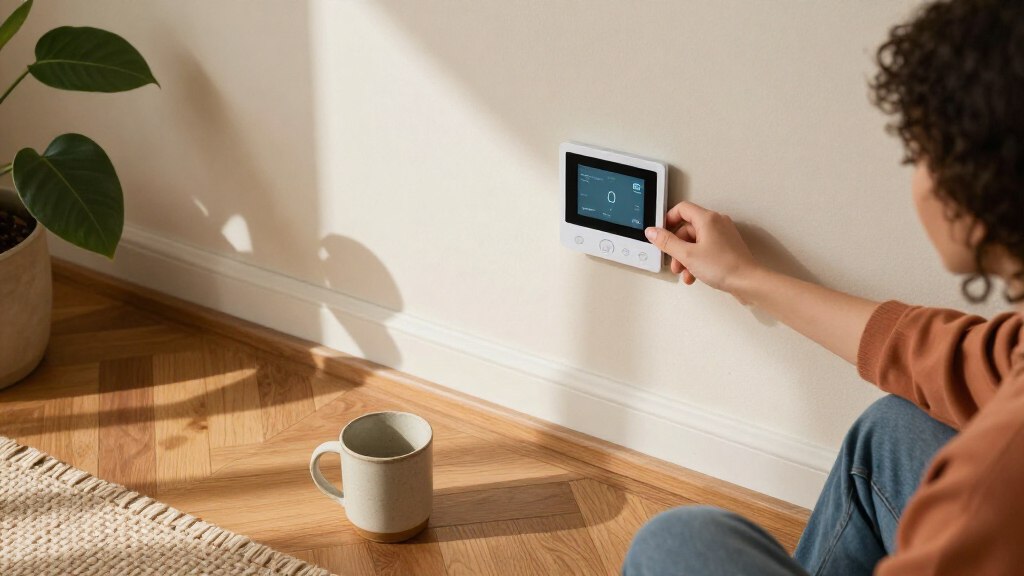
The best smart thermostat for most homes is the Google Nest Learning Thermostat (4th Gen) with Nest Temperature Sensor: it pairs adaptive scheduling with a sensor for rooms that need extra attention. The ecobee Smart Thermostat Premium is a standout for households that want broader smart-home features, while the Amazon Smart Thermostat offers a simpler route for Alexa users. The main tradeoffs are how much setup and automation you want, whether your wiring is compatible, and whether you need temperature readings from more than one room. I compared all 15 models for usability, system fit, sensing, and connected-home support. Read on for the full breakdown and help choosing the right match.

Get home appliances delivered free with Prime
- Fast, free delivery on millions of items
- Prime Video, Amazon Music and more included
- Member-only deals all year
Complete the kit



Key Takeaways
- The Nest Learning Thermostat (4th Gen) with sensor is the strongest all-around fit in this lineup because it combines adaptive scheduling with room-level temperature sensing.
- ecobee’s range separates by feature depth: Premium adds a richer connected-home experience, Enhanced balances control and sensing, and Essential keeps the focus on core thermostat functions.
- Alexa households have a straightforward value-oriented option in the Amazon Smart Thermostat, but buyers should weigh its ecosystem fit against the broader feature sets from Google Nest and ecobee.
- Room coverage is a meaningful differentiator: sensor-equipped Nest and ecobee models suit homes where one hallway thermostat cannot represent comfort in every occupied room.
- Model names do not settle compatibility: wiring, heating and cooling equipment, and any need for a C-wire or adapter should be checked before choosing among the 15 models.
| Sensi Touch 2 Smart Wi-Fi Thermostat, ST76 |  | Best for Room-by-Room Temperature Balancing | Model: ST76 | Connectivity: Wi-Fi, 2.4 GHz and 5.0 GHz | Voice assistants: Amazon Alexa and Google Assistant | VIEW LATEST PRICE | See Our Full Breakdown |
| Vine ST300 Wi-Fi Smart Thermostat with Large Knob and Night Light |  | Best for Simple, Hands-On Controls | Model: ST300 | Display: 3.5-inch LCD touchscreen | Connectivity: Wi-Fi | VIEW LATEST PRICE | See Our Full Breakdown |
| Google Nest Learning Thermostat Pro Edition with Temperature Sensor (4th Gen, Polished Silver) |  | Best for Learning Controls with a Room Sensor Included | Model: Nest Learning Thermostat Pro Edition, G5AJK GJQ8U | Generation: 4th generation, 2024 | Color: Polished Silver | VIEW LATEST PRICE | See Our Full Breakdown |
| Aqara Smart Thermostat W200 with Apple Adaptive Temperature |  | Best for Matter-Based Smart Homes | Model: W200 | HVAC compatibility: About 85% of HVAC systems | Display: 4-inch full-color touchscreen | VIEW LATEST PRICE | See Our Full Breakdown |
| Emerson Sensi Touch Smart Thermostat with Color Touchscreen, Wi-Fi, and App Control (ST75, Black) |  | Best for DIY-Friendly Touchscreen Scheduling | Model: ST75 | Color: Black | Display: 4.3-inch LCD touchscreen | VIEW LATEST PRICE | See Our Full Breakdown |
| Google Nest Smart Thermostat, Programmable Wi-Fi, Snow |  | Best for Straightforward Nest Control | Connectivity: Wi-Fi (2.4 GHz and 5 GHz), Bluetooth Low Energy | Smart home compatibility: Google Assistant, Alexa, Matter-certified voice assistants | Temperature control: Heating and cooling | VIEW LATEST PRICE | See Our Full Breakdown |
| Google Nest Learning Thermostat, 3rd Generation, Stainless Steel |  | Best for Automatic Schedule Learning | Generation: 3rd | Finish and material: Stainless steel; metal | Mounting: Wall mount | VIEW LATEST PRICE | See Our Full Breakdown |
| ecobee Smart Thermostat Premium with Wi-Fi, Siri and Alexa, and SmartSensor |  | Best Premium Room-by-Room Comfort | Connectivity: Wi-Fi | Voice assistants: Siri and Alexa built in | Included sensor: SmartSensor | VIEW LATEST PRICE | See Our Full Breakdown |
| Amazon Smart Thermostat with Alexa and Ring Compatibility |  | Best for Alexa-Centered Homes | Model: S6ED3R | Dimensions: 3.56 x 3.56 x 0.84 inches | Weight: 3.86 ounces | VIEW LATEST PRICE | See Our Full Breakdown |
| ecobee Smart Thermostat Essential, Wi-Fi, Energy Star Certified |  | Best Value for Multi-Platform Homes | Connectivity: Wi-Fi | Display: 3.74-inch LCD touchscreen | Power: Battery powered | VIEW LATEST PRICE | See Our Full Breakdown |
| Sensi ST55 Wi-Fi Smart Thermostat |  | Best for DIY Installation | Model: ST55 | Connectivity: Wi-Fi | HVAC compatibility: Air conditioner, boiler, furnace, and heat pump | VIEW LATEST PRICE | See Our Full Breakdown |
| Google Nest Learning Thermostat (4th Gen) with Nest Temperature Sensor (2nd Gen), Obsidian |  | Best for Learning Schedules and Room Comfort | Generation: Nest Learning Thermostat, 4th generation | Included sensor: Nest Temperature Sensor, 2nd generation | Connectivity: Wi-Fi | VIEW LATEST PRICE | See Our Full Breakdown |
| Honeywell Home Wi-Fi Smart Color Programmable Thermostat, Gray |  | Best for Customizable On-Thermostat Controls | Model: RTH9585WF1004 | Connectivity: Wi-Fi | Display: Customizable color LED touchscreen | VIEW LATEST PRICE | See Our Full Breakdown |
| Honeywell Home X7S Smart Wi-Fi Programmable Thermostat, Black |  | Best for Matter Smart-Home Integration | Display: Customizable 4.3-inch touchscreen | Connectivity: Wi-Fi and Matter certified | Wi-Fi requirements: 2.4 or 5.0 GHz; 802.11ax/ac/a/b/g/n router | VIEW LATEST PRICE | See Our Full Breakdown |
| ecobee Smart Thermostat Enhanced, Wi-Fi Programmable Thermostat |  | Best for Occupancy-Based Comfort | Connectivity: Wi-Fi | Compatible platforms: Amazon Alexa, Android, Apple HomeKit, Google Assistant, and iOS; also supports SmartThings | Power: 24 volts, corded electric | VIEW LATEST PRICE | See Our Full Breakdown |
| smart thermostat | Connectivity | Display | Model | Power |
|---|---|---|---|---|
| Sensi Touch 2 Smart Wi-Fi Ther | Wi-Fi, 2.4 GHz and 5.0 GHz | LCD touchscreen | ST76 | C-wire required |
| Vine ST300 Wi-Fi Smart Thermos | Wi-Fi | 3.5-inch LCD touchscreen | ST300 | Hardwired; C-wire required |
| Google Nest Learning Thermosta | Wi-Fi and Bluetooth | LCD | Nest Learning Thermostat Pro Edition, G5AJK GJQ8U | — |
| Aqara Smart Thermostat W200 wi | Dual-band Wi-Fi, Zigbee, Matter 1.4, and Thread | 4-inch full-color touchscreen | W200 | — |
| Emerson Sensi Touch Smart Ther | Wi-Fi | 4.3-inch LCD touchscreen | ST75 | — |
| Google Nest Smart Thermostat | Wi-Fi (2.4 GHz and 5 GHz), Bluetooth Low Energy | 1.07-inch LCD | — | Battery powered; 24 volts |
| Google Nest Learning Thermosta | Wi-Fi and Bluetooth; 2.4 GHz and 5 GHz Wi-Fi bands | Digital | — | Hardwired; 24 volts |
| ecobee Smart Thermostat Premiu | Wi-Fi | — | — | — |
| Amazon Smart Thermostat with A | — | — | S6ED3R | — |
| ecobee Smart Thermostat Essent | Wi-Fi | 3.74-inch LCD touchscreen | — | Battery powered |
| Sensi ST55 Wi-Fi Smart Thermos | Wi-Fi | LED screen | ST55 | 24 V AC; corded electric; includes 2 AA batteries |
| Google Nest Learning Thermosta | Wi-Fi | Touchscreen | — | Battery; one CR2 battery included |
| Honeywell Home Wi-Fi Smart Col | Wi-Fi | Customizable color LED touchscreen | RTH9585WF1004 | — |
| Honeywell Home X7S Smart Wi-Fi | Wi-Fi and Matter certified | Customizable 4.3-inch touchscreen | — | — |
| ecobee Smart Thermostat Enhanc | Wi-Fi | 4-inch LCD | — | 24 volts, corded electric |
More Details on Our Top Picks
Sensi Touch 2 Smart Wi-Fi Thermostat, ST76
I’d pick the Sensi Touch 2 for households where one thermostat reading doesn’t reflect how different rooms feel. It can work with up to 15 optional Sensi Room Sensors, giving it a room-balancing advantage over the Vine ST300, which focuses instead on simple knob-based control and scheduling. Its touchscreen, app access, voice control, usage reports, and guided installation cover the daily essentials without making smart-home integration the main event. The tradeoff is that the sensors are sold separately, so the room-focused benefit requires an additional purchase. A C-wire is required, which can rule it out for some older setups. I’d rank it above basic app-only choices for sensor flexibility, but below more expansive smart-home options such as the Aqara W200.
Pros:- Supports up to 15 optional Sensi Room Sensors for room-based temperature balancing.
- Combines touchscreen, app, and voice controls with remote access and flexible scheduling.
- Provides HVAC usage reports and app-guided DIY installation.
- ENERGY STAR certified and includes a stated commitment not to sell personal information to third parties.
Cons:- Requires a C-wire, limiting compatibility with some existing wiring setups.
- Room sensors are sold separately, adding a separate purchase for room-based control.
- Its smart-home feature set is less expansive than the Aqara W200’s Matter, Zigbee, and Thread capabilities.
Best for: Households with uneven temperatures between bedrooms and living areas that already have a C-wire and want optional room sensors.
Not ideal for: Homes without a C-wire or buyers who want room sensors included and do not want to buy them separately.
- Model:ST76
- Connectivity:Wi-Fi, 2.4 GHz and 5.0 GHz
- Voice assistants:Amazon Alexa and Google Assistant
- Compatible systems:Air conditioner, boiler, furnace, and heat pump
- Power:C-wire required
- Display:LCD touchscreen
- Dimensions:5.6 × 3.25 × 0.77 inches
- Room sensor compatibility:Up to 15 Sensi Room Sensors, sold separately
Our verdict“Choose the Sensi Touch 2 if you want optional room-by-room temperature balancing and already have a C-wire.”
Vine ST300 Wi-Fi Smart Thermostat with Large Knob and Night Light
The Vine ST300 is the straightforward pick for people who want smart scheduling without giving up a familiar physical control. Its large knob makes quick temperature changes easy at the wall, while the touchscreen, app access, and Alexa or Google Assistant support add remote and voice control. Compared with the Sensi Touch 2, the ST300 gives more emphasis to direct adjustment and adds an adjustable night light and child lock; the Sensi counters with optional room sensors and usage reports. The Vine also includes useful installation pieces such as wire labels and a jumper wire, but it still requires a C-wire and only works with supported 24V systems. Its appeal is ease of operation, not broad smart-home flexibility or room-by-room sensing.
Pros:- Large physical knob offers direct temperature adjustment alongside the touchscreen.
- Supports 7-day scheduling, Auto Home/Away mode, and remote app control.
- Works with Amazon Alexa and Google Assistant.
- Includes an adjustable night light, child lock, wall plate, wire labels, and installation tools.
Cons:- Requires a C-wire and hardwired installation.
- Compatibility is limited to supported 24V heating and cooling systems.
- Lacks the optional room-sensor support available with the Sensi Touch 2.
Best for: Households that want a physical knob for everyday adjustments, plus app scheduling and voice control on a compatible 24V system.
Not ideal for: Buyers without a C-wire, homes with HVAC equipment outside its supported 24V systems, or anyone seeking room sensors or broad Matter integration.
- Model:ST300
- Display:3.5-inch LCD touchscreen
- Connectivity:Wi-Fi
- Voice assistants:Amazon Alexa and Google Assistant
- Programming:7-day scheduling
- Modes:Auto Home/Away
- Compatible systems:Most supported 24V AC systems, including conventional, heat pump, heating-only, and cooling-only systems
- Power:Hardwired; C-wire required
Our verdict“Choose the Vine ST300 if a tactile knob and simple scheduled control matter more to you than room sensors or advanced integrations.”
Google Nest Learning Thermostat Pro Edition with Temperature Sensor (4th Gen, Polished Silver)
The Nest Learning Thermostat Pro Edition suits buyers who want the thermostat to learn household temperature preferences rather than rely only on manually set schedules. Its included Nest Temperature Sensor adds room-based control from the outset, unlike the Sensi Touch 2, whose compatible sensors are sold separately. The Pro Edition also lists support for a broad range of 24V HVAC systems, including heat pumps, radiant heating, and zoned systems, making it a strong fit for more involved setups. That capability comes with a different installation tradeoff: professional installation is recommended, so it is less appealing to DIY-focused buyers than the Sensi or Vine. The product data also specifies a nonstandard battery, a detail worth checking against your maintenance preferences before choosing it.
Pros:- Learns temperature preferences and supports programmable control.
- Includes a Nest Temperature Sensor for room-based temperature control.
- Compatible with many 24V systems, including heat pumps, radiant heating, and zoned systems.
- Connects through Wi-Fi and Bluetooth.
Cons:- Professional installation is recommended, making it less suited to buyers focused on DIY setup.
- Uses a nonstandard battery.
- Its learning-based approach may be more than needed for buyers who prefer simple schedules such as those on the Vine ST300.
Best for: Homeowners who want learning-based temperature control, an included room sensor, and access to professional installation for a compatible 24V system.
Not ideal for: DIY installers seeking a clearly app-guided setup, or buyers who prefer standard replacement batteries and simpler controls.
- Model:Nest Learning Thermostat Pro Edition, G5AJK GJQ8U
- Generation:4th generation, 2024
- Color:Polished Silver
- Connectivity:Wi-Fi and Bluetooth
- Display:LCD
- System compatibility:Most 24V HVAC systems, including heat pumps, radiant heating, and zoned systems
- Included sensor:Nest Temperature Sensor
- Installation:Professional installation recommended
- Battery:One nonstandard battery required
Our verdict“Choose this Nest Pro Edition if you want learning-based control and an included sensor, and are comfortable arranging professional installation.”
Aqara Smart Thermostat W200 with Apple Adaptive Temperature
The Aqara W200 is the most integration-focused pick here: Matter 1.4 support lets it work across Apple Home, Google Home, Alexa, and SmartThings, while built-in Zigbee and Thread hardware can give a compatible home more than temperature control alone. Its mmWave presence detection can support occupancy-based thermostat adjustments and automations, a different approach from the learning controls of the Nest Pro Edition or the room-sensor setup of the Sensi Touch 2. A 4-inch color touchscreen makes local adjustments clear, too. The tradeoff is setup complexity and conditional features: Apple Adaptive Temperature needs a compatible home hub and current specified Apple devices, while the C-wire adapter is sold separately if needed. Clean Energy Guidance is limited to the contiguous U.S.
Pros:- Supports Apple Home, Google Home, Alexa, and SmartThings through Matter 1.4.
- Includes a Zigbee hub, Matter controller, and Thread border router.
- Built-in mmWave radar can support presence-based thermostat adjustments and automations.
- Has a 4-inch full-color touchscreen and broad stated HVAC compatibility.
Cons:- Aqara C-Wire Adapter is sold separately for installations that need one.
- Apple Adaptive Temperature requires a compatible home hub and iPhone or Apple Watch running version 26 or later.
- Clean Energy Guidance is available only in the contiguous U.S.
Best for: Smart-home users who want a thermostat to join an Apple, Google, Alexa, or SmartThings setup through Matter and make use of presence-based automations.
Not ideal for: Buyers seeking a basic thermostat, those without the required Apple devices for Adaptive Temperature, or homes that need a C-wire adapter included.
- Model:W200
- HVAC compatibility:About 85% of HVAC systems
- Display:4-inch full-color touchscreen
- Connectivity:Dual-band Wi-Fi, Zigbee, Matter 1.4, and Thread
- Presence detection:Built-in mmWave radar
- Smart-home platforms:Apple Home, Google Home, Alexa, and SmartThings through Matter
- C-wire option:Aqara C-Wire Adapter sold separately
- Apple Adaptive Temperature requirement:Compatible home hub and iPhone or Apple Watch running version 26 or later
- Clean Energy Guidance:Available in the contiguous U.S. only
Our verdict“Choose the Aqara W200 if cross-platform smart-home integration and presence-based automations matter more than a simple, minimal setup.”
Emerson Sensi Touch Smart Thermostat with Color Touchscreen, Wi-Fi, and App Control (ST75, Black)
The Emerson Sensi Touch ST75 makes sense for buyers who want a color touchscreen and practical remote control, with installation details aimed at DIY users: a built-in level, illuminated terminals, and guided instructions help make wiring and mounting less guesswork-heavy. It also offers scheduling, usage reports, maintenance reminders, and broad voice and smart-home compatibility, including Apple HomeKit and SmartThings. Compared with the newer Sensi Touch 2, the ST75 lists features such as geofencing and auto changeover, while the Touch 2 supports optional room sensors and newer dual-band Wi-Fi. The ST75’s drawbacks are clear: it requires a C-wire, and system compatibility still depends on the home’s HVAC equipment. Its large 4.3-inch screen also favors buyers who want prominent on-device controls over a smaller, simpler interface.
Pros:- Large 4.3-inch color touchscreen with app, touch, and voice control.
- Offers programmable scheduling, auto changeover, and geofencing.
- Built-in level, illuminated terminals, and guided instructions support DIY installation.
- Provides usage reports, equipment alerts, and maintenance reminders.
Cons:- Requires a C-wire.
- Compatibility depends on the home’s HVAC equipment.
- Does not list the optional room-sensor support available with the Sensi Touch 2.
Best for: DIY-minded homeowners who want a large color touchscreen, guided installation details, and scheduling plus maintenance alerts on a compatible system.
Not ideal for: Homes without a C-wire, buyers seeking room-sensor support, or those who need compatibility confirmed for unusual HVAC equipment.
- Model:ST75
- Color:Black
- Display:4.3-inch LCD touchscreen
- Connectivity:Wi-Fi
- Voice and smart-home compatibility:Amazon Alexa, Apple HomeKit, Google Assistant, SmartThings, and Vera
- HVAC compatibility:Air conditioner, boiler, furnace, and heat pump
- Features:Programmable scheduling, auto changeover, geofencing, filter indicator, and daylight-savings-time readiness
- Installation requirement:C-wire required
Our verdict“Choose the Sensi Touch ST75 if you want a large touchscreen and DIY-oriented installation aids, and your system has a C-wire.”
Google Nest Smart Thermostat, Programmable Wi-Fi, Snow
I’d choose this Nest for a home that needs simple scheduling and remote control without the more involved learning features of the Nest Learning Thermostat. It can adjust temperatures when the home is unoccupied, and the Google Home app makes changes accessible away from the wall. Compared with the Amazon Smart Thermostat, it offers dual-band Wi-Fi and does not need a C-wire in many homes, while Amazon’s model requires a C-wire or separate adapter and connects only to 2.4 GHz Wi-Fi. The tradeoff is that this Nest’s 1.07-inch display is small, and some HVAC setups still need a C-wire or power accessory. I’d check system compatibility before buying, especially for zoned systems and heat pumps.
Pros:- Can adjust temperature when the home is unoccupied
- Google Home app provides remote temperature control
- Works with compatible Google Assistant, Alexa, and Matter-certified voice assistants
- DIY-oriented installation and no C-wire requirement in many homes
Cons:- Some HVAC systems require a C-wire or compatible power accessory
- Small 1.07-inch screen offers limited at-a-glance visibility
- Remote control and notifications depend on working internet and Wi-Fi
Best for: Homeowners who want app-based scheduling, occupancy adjustments, and Google Home control with minimal setup complexity
Not ideal for: Buyers who want a large, easy-to-read thermostat display or need guaranteed compatibility with a zoned or specialized HVAC system
- Connectivity:Wi-Fi (2.4 GHz and 5 GHz), Bluetooth Low Energy
- Smart home compatibility:Google Assistant, Alexa, Matter-certified voice assistants
- Temperature control:Heating and cooling
- Display:1.07-inch LCD
- Power:Battery powered; 24 volts
- C-wire:Not needed in most homes; required for some systems
- Controls:Buttons, voice, and app
- Color:Snow
Our verdict“Choose this Nest if you want an accessible Google Home thermostat with occupancy-based adjustments, but check wiring and HVAC compatibility first.”
Google Nest Learning Thermostat, 3rd Generation, Stainless Steel
This model suits buyers who want a thermostat to learn preferred temperatures and build an automatic routine, rather than relying only on a schedule they set themselves. Its energy history and HVAC monitoring give it more feedback than the standard Google Nest Smart Thermostat, whose appeal is simpler operation and a smaller, more basic display. The Learning Thermostat’s metal finish and bright digital display also make it a more polished wall control. That extra automation has limits: remote access and notifications rely on internet and Wi-Fi, and room-by-room sensing requires a Nest Temperature Sensor sold separately. I’d pick it over the ecobee Smart Thermostat Essential when learning behavior is the priority, but the ecobee offers broader stated smart-home compatibility.
Pros:- Learns preferred temperatures and adjusts the schedule automatically
- Energy history helps show patterns in thermostat use
- Bright digital display and stainless-steel metal finish
- App and compatible Alexa or Google Assistant voice control
Cons:- Nest Temperature Sensor is sold separately
- Remote access and mobile notifications require internet and Wi-Fi
- HVAC alerts apply only to eligible systems and are not a substitute for professional diagnosis
Best for: Households with recurring temperature routines that want automatic schedule learning and energy history
Not ideal for: Buyers seeking included room sensors, broad platform flexibility, or a thermostat that works well without internet access
- Generation:3rd
- Finish and material:Stainless steel; metal
- Mounting:Wall mount
- Display:Digital
- Connectivity:Wi-Fi and Bluetooth; 2.4 GHz and 5 GHz Wi-Fi bands
- Power:Hardwired; 24 volts
- Compatible assistants:Amazon Alexa and Google Assistant
- Temperature sensor compatibility:Nest Temperature Sensor, sold separately
Our verdict“Pick the Nest Learning Thermostat if automatic routine learning and a premium wall display matter more than included sensors or broader platform choice.”
ecobee Smart Thermostat Premium with Wi-Fi, Siri and Alexa, and SmartSensor
I’d put the ecobee Premium ahead of simpler schedule-first models for homes where room occupancy and uneven temperatures are everyday problems. Its included SmartSensor can help the thermostat respond to conditions beyond the main hallway, while the built-in air-quality monitor adds alerts and filter reminders. The built-in speaker with Siri and Alexa also gives it more smart-home and audio capability than the Google Nest Learning Thermostat, which focuses more narrowly on learning schedules and energy history. That broader feature set comes with dependencies: Siri needs an Apple home hub, some security alerts require a subscription, and certain doorbell features need compatible ecobee hardware. I’d choose it over the ecobee Smart Thermostat Essential for its included sensor and monitoring, but skip it if those premium extras would go unused.
Pros:- Included SmartSensor supports occupancy-aware comfort beyond the thermostat’s room
- Built-in air-quality monitoring provides alerts and filter reminders
- Built-in speaker supports Siri, Alexa, and audio streaming
- Power Extender Kit is included for supported installations without a C-wire
Cons:- Siri requires an Apple home hub
- Some smoke-alarm sound alerts require an ecobee Smart Security subscription
- Doorbell video and two-way talk require a compatible ecobee Smart Doorbell Camera
Best for: Households with rooms that heat or cool unevenly and buyers who want occupancy sensing, air-quality information, and built-in voice control
Not ideal for: Buyers who want a basic schedule-and-app thermostat, do not use voice assistants, or prefer to avoid subscription-dependent smart security features
- Connectivity:Wi-Fi
- Voice assistants:Siri and Alexa built in
- Included sensor:SmartSensor
- HVAC compatibility:Compatible with 95% of HVAC systems, according to the product description
- Energy certification:ENERGY STAR certified
- Air-quality monitor:Built in
- Installation accessories:Power Extender Kit and trim kit included
- Warranty:3 years
- Siri requirement:Apple home hub required
Our verdict“Choose the ecobee Premium when room-level sensing and built-in monitoring justify its extra setup and ecosystem requirements.”
Amazon Smart Thermostat with Alexa and Ring Compatibility
This is the clearest fit for households already using Alexa or Ring and looking for schedule control through familiar apps. It supports vacation and emergency heat modes, and the included wall plates can help cover marks left by an older thermostat. Compared with the Google Nest Smart Thermostat, Amazon’s model is more dependent on its ecosystem: voice control needs a separate Alexa-enabled device, and its Wi-Fi is limited to 2.4 GHz. It also requires a C-wire or separately sold power adapter, making wiring a more direct purchase constraint than with Nest, which works without one in many homes. The listed support for most 24V systems is useful, but electric baseboard and other 110–240V systems are outside its fit.
Pros:- Alexa and Ring app control alongside on-device touch buttons
- Includes schedules, vacation mode, and emergency heat mode
- Supports many 24V forced-air, heat-pump, and radiant-boiler systems
- Wall plate and cosmetic plate are included
Cons:- Requires a C-wire or separately sold power adapter kit
- Does not support 110–240V systems such as electric baseboard heat
- Uses 2.4 GHz Wi-Fi only, and voice control requires a separate Alexa-enabled device
Best for: Alexa- and Ring-using households with a compatible 24V HVAC system and an available C-wire or power adapter
Not ideal for: Homes with electric baseboard or other 110–240V heating, 5 GHz-only Wi-Fi, or no Alexa-enabled device for voice control
- Model:S6ED3R
- Dimensions:3.56 x 3.56 x 0.84 inches
- Weight:3.86 ounces
- HVAC compatibility:Most 24V systems, including conventional forced air, heat pumps, and radiant boilers
- Power requirement:C-wire or separately sold power adapter kit
- Wi-Fi:2.4 GHz, 802.11 b/g/n; does not support 5 GHz or ad-hoc networks
- Controls:Three touch buttons, Alexa app, Ring app, and voice with a compatible Alexa device
- Features:Humidity sensing, schedules, emergency heat mode, vacation mode, energy dashboard, and automatic air-filter ordering
- Certifications:ENERGY STAR and ECOLOGO Gold
Our verdict“Choose Amazon’s thermostat if your home is already Alexa-centered and its C-wire and 24V requirements match your HVAC setup.”
ecobee Smart Thermostat Essential, Wi-Fi, Energy Star Certified
The ecobee Essential is a good match for buyers who want programmable schedules and broad smart-home compatibility without paying for the Premium model’s built-in speaker, air-quality monitor, and included SmartSensor. Its 3.74-inch color touchscreen gives settings more room than the small screen on the Google Nest Smart Thermostat, while support for Apple HomeKit, Google Assistant, and Alexa makes it more flexible across households with mixed devices. The tradeoff is that the extras that make Premium stronger for uneven room temperatures are absent: SmartSensors are sold separately, as is the Power Extender Kit for homes without a C-wire. The product description says it works with 85% of systems, so I’d verify compatibility before installation rather than assume every 24 VAC setup will fit.
Pros:- Supports Apple HomeKit, Google Assistant, and Amazon Alexa
- 3.74-inch LCD touchscreen plus app control
- Auto-away, auto-scheduling, fan control, and indoor humidity detection
- Supports many common 24 VAC system types
Cons:- Power Extender Kit and trim kit are sold separately
- SmartSensors are sold separately
- Product description lists compatibility with 85% of systems, so HVAC fit needs checking
Best for: Households seeking a touchscreen schedule thermostat that can join Apple HomeKit, Google Assistant, or Alexa setups
Not ideal for: Buyers who need included room sensors, built-in air-quality monitoring, or installation accessories included for a no-C-wire setup
- Connectivity:Wi-Fi
- Display:3.74-inch LCD touchscreen
- Power:Battery powered
- Supported systems:Most 24 VAC systems, including gas, oil, electric, dual fuel, forced air, heat pumps, and boilers
- Smart-home compatibility:Apple HomeKit, Google Assistant, and Amazon Alexa
- Features:Auto-away, auto-scheduling, fan control, indoor humidity detection, and programmable temperature control
- Stated system compatibility:Compatible with 85% of systems, according to the product description
- Color and material:White plastic
- Mounting:Wall mount
Our verdict“Choose the ecobee Essential for touchscreen scheduling and broad platform support, but pick the Premium if included room sensing is a priority.”
Sensi ST55 Wi-Fi Smart Thermostat
The Sensi ST55 is a practical choice for buyers who want remote control and flexible scheduling without making installation a major project. Its built-in level and guided app instructions help with setup, and most homes do not need a C-wire—a real advantage over the Honeywell Home Wi-Fi Smart Color Programmable Thermostat, which requires one. The ST55 also provides HVAC usage reports, equipment alerts, and filter reminders, giving it useful maintenance tools alongside everyday temperature control. It supports several voice assistants and smart-home platforms, though its simpler LED display is less visually customizable than Honeywell’s color touchscreen. The tradeoff is that app and remote features rely on Wi-Fi, while compatibility still depends on the home’s HVAC wiring and equipment.
Pros:- Built-in level and guided app instructions support DIY installation.
- Most installations do not require a C-wire.
- Remote access, flexible schedules, and HVAC usage reports are included.
- Equipment alerts and filter reminders help track routine maintenance.
Cons:- Compatibility depends on the home’s HVAC system and wiring.
- Remote and app-based features depend on Wi-Fi connectivity.
Best for: DIY-minded homeowners with compatible 24V HVAC systems who want app scheduling and maintenance reminders without a C-wire in most installations.
Not ideal for: Households without reliable Wi-Fi or owners of HVAC equipment that is not compatible with the ST55.
- Model:ST55
- Connectivity:Wi-Fi
- HVAC compatibility:Air conditioner, boiler, furnace, and heat pump
- Smart-home compatibility:Amazon Alexa, Apple HomeKit, Google Assistant, SmartThings, and Vera
- Power:24 V AC; corded electric; includes 2 AA batteries
- Display:LED screen
- Controls:Buttons, app, touch, and voice
- Certification:ENERGY STAR
Our verdict“Choose the Sensi ST55 if you want an approachable DIY thermostat with broad platform support and often simpler wiring than the Honeywell color-screen model.”
Google Nest Learning Thermostat (4th Gen) with Nest Temperature Sensor (2nd Gen), Obsidian
This Nest package is the strongest fit for people who want the thermostat to adapt to their routines and address comfort differences between rooms. Learning temperature preferences can reduce the need to build every schedule manually, while the included second-generation Nest Temperature Sensor gives you a way to account for another room’s temperature. That bundle is a meaningful distinction from the ecobee Smart Thermostat Enhanced, which adjusts around occupancy and schedules but does not include a room sensor in the listed package. The Nest works with many 24V heating and cooling systems and often does not need a C-wire, though HVAC compatibility still needs checking. Its tradeoffs are reliance on Google Home for some features and less appeal for buyers who prefer direct manual scheduling over an adaptive system.
Pros:- Learns temperature preferences and adapts to changing routines.
- Includes a second-generation temperature sensor for another room.
- Works with many 24V heating and cooling systems, often without a C-wire.
- Supports Google Home and compatible voice assistants.
Cons:- Some features require the Google Home app.
- Compatibility depends on the home’s heating and cooling equipment.
Best for: Households with changing routines or one room that often feels warmer or cooler than the thermostat location.
Not ideal for: Buyers who want a simple manual schedule, do not want to use the Google Home app, or have HVAC equipment outside the supported systems.
- Generation:Nest Learning Thermostat, 4th generation
- Included sensor:Nest Temperature Sensor, 2nd generation
- Connectivity:Wi-Fi
- System compatibility:Many 24V heating and cooling systems
- Smart-home compatibility:Amazon Alexa, Android, Apple HomeKit, Google Assistant, and iOS
- Display:Touchscreen
- Power:Battery; one CR2 battery included
- Finish:Polished Obsidian aluminum
Our verdict“Pick this Nest bundle if you want adaptive scheduling and an included room sensor rather than the ecobee Enhanced’s occupancy-led approach and separately purchased sensors.”
Honeywell Home Wi-Fi Smart Color Programmable Thermostat, Gray
Honeywell’s RTH9585WF1004 makes the most sense for buyers who want a color touchscreen with clear, flexible schedule controls right on the wall. Temporary, permanent, and vacation holds make it easier to change a plan without rebuilding the schedule, and the thermostat adds energy reports, weather forecasts, and equipment reminders. Compared with the Sensi ST55, it offers a more configurable display and richer on-device interface, but installation is less forgiving: this model requires a C-wire. It also cannot control 120–240V electric baseboard heat, and heating-only oil furnace installations have their own C-wire requirement. Choose it when those wiring and system limits fit your home; skip it if you want a thermostat that is easier to install across varied wiring situations.
Pros:- Customizable color touchscreen makes on-device settings easy to distinguish.
- Supports temporary, permanent, and vacation schedule holds.
- Wi-Fi app access enables remote control and monitoring.
- Includes energy reports, weather forecasts, and equipment reminders.
Cons:- Requires a C-wire for installation.
- Does not support 120–240V electric baseboard heat.
- Heating-only oil furnace systems require a C-wire.
Best for: Homeowners with a compatible forced-air, boiler, steam, or heat-pump system and a C-wire who want scheduling controls visible on a color touchscreen.
Not ideal for: Owners of 120–240V electric baseboard heat, homes without a C-wire, or buyers seeking the simpler wiring flexibility of the Sensi ST55.
- Model:RTH9585WF1004
- Connectivity:Wi-Fi
- Display:Customizable color LED touchscreen
- Power and wiring:AC power; C-wire required
- Supported systems:Forced-air gas, oil, or electric; hot water and steam; heat pumps with electric backup
- Voice assistants:Amazon Alexa and Google Home
- Fan modes:On, automatic, and circulate
- Certification:ENERGY STAR
Our verdict“Choose this Honeywell if a customizable wall display and versatile schedule holds matter more than the Sensi ST55’s easier C-wire requirements.”
Honeywell Home X7S Smart Wi-Fi Programmable Thermostat, Black
The X7S stands apart for combining Matter support with occupancy detection and humidity monitoring, making it the most integration-focused pick in this group. Its 4.3-inch customizable touchscreen offers a larger control surface than the Sensi ST55, while occupancy sensing can adjust settings as the home shifts between occupied and empty. Matter compatibility gives it a route into more connected smart-home setups, alongside Alexa, Google Assistant, and Apple Home. The tradeoff is a more specific installation profile: it needs a C-wire, does not support electric baseboard heat, and humidity monitoring may depend on additional HVAC equipment or accessories. Compared with the learning Nest, this Honeywell centers more on connected-home compatibility and sensing than adapting to learned temperature preferences.
Pros:- Matter certified, with Alexa, Google Assistant, and Apple Home compatibility.
- Occupancy detection can adjust settings based on whether the home is occupied.
- Customizable 4.3-inch touchscreen provides a large on-device interface.
- Wi-Fi control and humidity monitoring add remote and environmental information.
Cons:- Requires a C-wire, although an adapter voucher is included if needed.
- Does not support 120–240V electric baseboard heat.
- Humidity monitoring may require extra HVAC equipment or accessories.
Best for: Smart-home households using Matter, Alexa, Google Assistant, or Apple Home that have compatible HVAC equipment and a C-wire.
Not ideal for: Owners of electric baseboard heat, homes without a C-wire, or buyers who want a thermostat that learns routines rather than relying on programmed controls and occupancy sensing.
- Display:Customizable 4.3-inch touchscreen
- Connectivity:Wi-Fi and Matter certified
- Wi-Fi requirements:2.4 or 5.0 GHz; 802.11ax/ac/a/b/g/n router
- Power and wiring:Hardwired; C-wire required; adapter voucher included if needed
- Supported HVAC:Up to 3 heat/2 cool heat pump with electric backup, or 2 heat/2 cool conventional systems; hot water and forced air
- Features:Auto-scheduling, occupancy detection, and humidity monitoring
- Smart-home compatibility:Amazon Alexa, Google Assistant, and Apple Home
- Certification:ENERGY STAR
Our verdict“Choose the X7S if Matter integration and occupancy sensing are priorities and your HVAC wiring meets its C-wire requirement.”
ecobee Smart Thermostat Enhanced, Wi-Fi Programmable Thermostat
The ecobee Smart Thermostat Enhanced suits households that want temperature control to respond to occupancy, schedules, and preferences rather than relying on a learning routine alone. It works with major platforms including Apple HomeKit and SmartThings, giving it wider listed smart-home reach than the Honeywell Home X7S, which instead adds Matter certification. Installation is also more flexible for homes without a C-wire because the package includes a Power Extender Kit, plus a trim kit for wall coverage. Its main limitation is room-level sensing: SmartSensors are sold separately, unlike the Nest Learning Thermostat bundle, which includes a temperature sensor. Check HVAC compatibility before installation, especially for less common configurations. This is a balanced choice when broad app control and occupancy response matter more than bundled room sensors.
Pros:- Adjusts temperature around occupancy, schedules, and preferences.
- Supports Alexa, Google Assistant, Apple HomeKit, and SmartThings.
- Includes a Power Extender Kit for homes without a C-wire.
- Includes a trim kit and carries a 3-year warranty.
Cons:- SmartSensors for room-by-room occupancy detection are sold separately.
- HVAC compatibility should be checked before installation.
Best for: Households that want occupancy-aware temperature adjustments, broad smart-home support, and a path to installation without a C-wire.
Not ideal for: Buyers who want room-by-room sensing included in the box or prefer a thermostat that learns schedules automatically.
- Connectivity:Wi-Fi
- Compatible platforms:Amazon Alexa, Android, Apple HomeKit, Google Assistant, and iOS; also supports SmartThings
- Power:24 volts, corded electric
- Display:4-inch LCD
- Supported HVAC:Air conditioner, boiler, furnace, heat pump, and humidifier
- Included installation accessories:Power Extender Kit and trim kit
- Certification:ENERGY STAR
- Warranty:3 years
Our verdict“Choose the ecobee Enhanced for occupancy-based control and broad platform support; choose the Nest bundle instead if you want a room sensor included.”
How We Picked
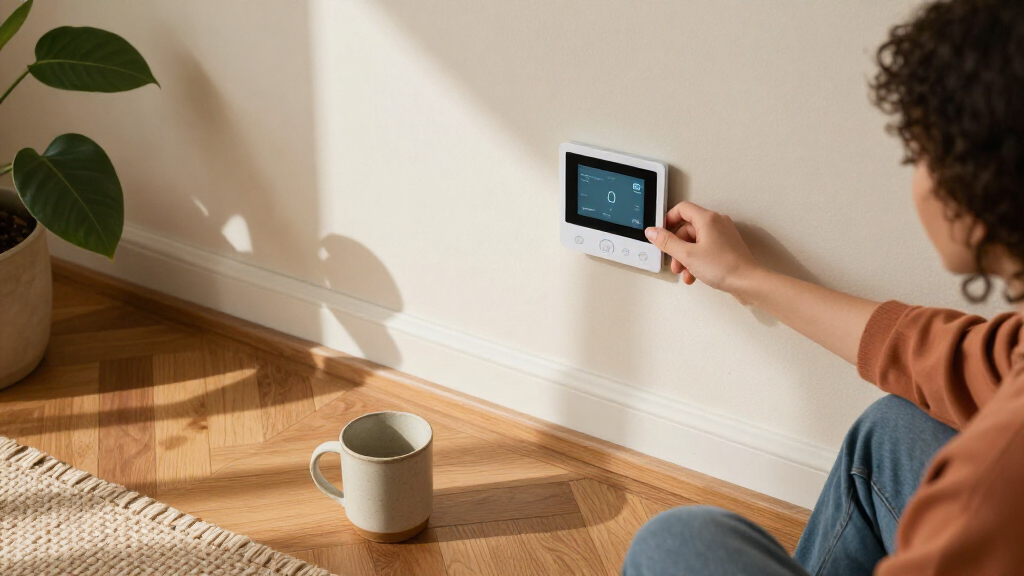
I ranked these thermostats by how well their features solve common household needs, rather than by brand name or feature count alone. I weighed HVAC compatibility and installation demands, daily control clarity, scheduling and automation, room-sensing options, and integration with major smart-home systems. A thermostat that offers advanced automation can be a poor match if setup is difficult or its controls do not fit the household’s habits.
The top spot goes to the Nest Learning Thermostat (4th Gen) with Temperature Sensor because it makes a strong case as a balanced choice for comfort management across rooms. The ecobee Premium ranks as the premium alternative for buyers who want a more feature-rich connected device, while simpler choices such as Amazon’s model and ecobee Essential suit people who prefer fewer extras. The Sensi, Vine, and Honeywell options remain relevant for particular control styles or households, but rank behind the leaders where sensing, ecosystem flexibility, or feature depth is less compelling. Every pick has a tradeoff, and installation compatibility can change which model is best for an individual home.
Factors to Consider When Choosing Best Smart Thermostats
Before choosing from the roundup, I would start with the parts that can rule out a thermostat entirely: your HVAC equipment, wiring, and preferred smart-home platform. Then decide whether you need room-level comfort or simply a more convenient way to set schedules. These checks can prevent a feature-rich purchase from becoming an installation or usability mismatch.
Check HVAC Compatibility Before Comparing Features
Start by identifying the heating and cooling equipment in your home, including whether it uses conventional furnace and air-conditioning wiring, a heat pump, or a more specialized system. Thermostats that look similar may support different equipment or require different wiring. Check the manufacturer’s compatibility information against your system and current thermostat terminals before ordering. A missing C-wire can affect installation, but the right solution depends on the thermostat and HVAC setup; do not assume every model includes an adapter. If your system has multiple stages, zoning, or unusual wiring, confirm support with the manufacturer or a qualified installer. This check is more useful than choosing by screen size or app features, since an incompatible model cannot deliver its advertised convenience.
Decide Whether One Temperature Reading Is Enough
A thermostat measures the area around its wall location, which may not reflect bedrooms, upstairs rooms, or spaces with strong sun exposure. Remote sensors can help a system respond to the temperatures in selected rooms, but they do not automatically make every room the same temperature. Think about when rooms are occupied and whether you want schedules to prioritize different spaces at different times. A sensor is most useful when a consistent comfort problem has a clear location; it may add little value in a compact, evenly heated home. Also check whether sensors are bundled or sold separately and which thermostat models support them. Buyers sometimes pay for sensing without deciding where or when those readings should influence heating and cooling.
Match Automation to the People Who Will Use It
Learning schedules can reduce routine adjustments, while a programmable thermostat gives you more direct control over when temperatures change. Neither approach suits every household: irregular work hours, shared homes, and changing caregiving routines can make fixed assumptions inconvenient. Consider who will use the controls, whether they prefer an app or a physical interface, and how easy it is to override an automated setting. A simple model can be the better choice if household members are unlikely to manage multiple modes or app accounts. If you choose a learning model, check how its schedule can be reviewed and corrected. The useful question is not how much automation a thermostat offers, but whether its behavior will remain understandable to everyone at home.
Choose a Smart-Home Platform Before Adding More Devices
Thermostat integrations matter most when you already use voice assistants, security products, or a connected-home platform. Google Nest, ecobee, Amazon, and Aqara each have different strengths, and support for one ecosystem should not be assumed to mean full compatibility with another. Verify that the specific model works with the voice assistant and routines you use, including any features that depend on an account or subscription. A thermostat that fits your existing setup can make everyday control simpler; a mismatched platform may leave you switching apps or losing automations. If multiple people share control, check how household access works before settling on a brand. Avoid choosing based only on a single advertised integration without checking the functions you actually plan to use.
Treat Installation and Maintenance as Part of the Purchase
Smart thermostats still depend on a correctly installed and configured HVAC control, so factor in the time and skill needed to replace your current unit. Photographing existing wiring and labeling terminals can help, but it does not replace verifying the manufacturer’s instructions. If you are uncertain about low-voltage wiring or your system has complex controls, professional installation may be the safer route. Also think about ongoing upkeep: firmware updates, app access, account management, and occasional schedule adjustments are part of owning a connected thermostat. Remote sensors may need batteries or placement changes, while an app-based model depends on a stable home network. These ownership details can matter more over time than a feature that looks attractive on a product page.
Pay for Features That Solve a Real Household Problem
Higher-feature models make the most sense when their added capabilities have a clear job, such as managing uneven temperatures, supporting a connected-home routine, or simplifying control for a busy household. A premium screen or extra smart-home functions may not improve daily comfort if you only need reliable scheduling. On the other hand, a lower-feature option can become a false economy if it lacks a sensor or integration your home depends on. Write down the one or two problems you want the thermostat to solve, then compare models against those needs rather than counting features. The lineup’s range—from basic connected control to adaptive learning and room sensing—shows why there is no single best feature set for everyone. Keep compatibility and ease of use ahead of extras you may rarely touch.
Frequently Asked Questions
How can I tell whether a smart thermostat will work with my HVAC system?
Find your current thermostat’s wiring labels and identify your heating and cooling equipment before selecting a replacement. Compare both with the exact model’s compatibility checker, since support can vary between thermostats from the same brand. Pay particular attention to heat pumps, multistage systems, and missing C-wires, which can change installation requirements. If the wiring or equipment is unclear, ask the thermostat maker or an HVAC professional rather than relying on a general compatibility chart. A quick check before purchase can prevent returns and installation delays.
Do I need a remote temperature sensor, or will the thermostat itself be enough?
The thermostat’s built-in reading is often enough when it sits in a representative part of a small, evenly heated home. A remote sensor can help when a particular room is routinely too warm or too cool compared with the thermostat location. It is most useful if the thermostat can use sensor readings in schedules that match how your household occupies rooms. Sensors do not correct airflow or insulation problems, so persistent temperature differences may need a separate HVAC or building fix. Consider placement and sensor cost as well as the feature itself.
Should I choose a learning thermostat or a programmable one?
A learning thermostat suits households that want the device to adapt to patterns, provided those patterns are reasonably stable and its schedule remains easy to adjust. A programmable model is a better fit when you prefer to set specific times and temperatures yourself. Unpredictable hours or several people with different routines can make automated assumptions less convenient. Before choosing, check how quickly you can override a setting and whether household members can understand the schedule. The best choice is the one whose control style you will actually keep using.
Will a smart thermostat save energy in every home?
No thermostat can guarantee energy savings, because results depend on the home, HVAC equipment, schedule, weather, and how settings change. Scheduling or remote control can help avoid heating or cooling an empty home, but frequent manual overrides may reduce that benefit. A smart thermostat cannot repair poor insulation, blocked vents, or an inefficient system. Use energy features as tools for managing operation, not as a promise of a particular bill outcome. Check whether the model’s controls make it easy to set a routine that fits your household.
Is it worth paying more for a premium smart thermostat?
Paying more can make sense if the premium model’s specific advantages match your needs, such as room sensing, richer connected-home features, or more flexible control. If you only want app access and a basic schedule, a simpler option may cover those jobs without added complexity. Check whether desired integrations or sensors are included, supported separately, or tied to a service requirement. It also helps to consider who will use the thermostat and whether they will benefit from its extra controls. Compare the features you will use regularly, not the longest feature list.
Conclusion
For most homes, I recommend the Google Nest Learning Thermostat (4th Gen) with Nest Temperature Sensor as the best overall choice, especially when room temperatures vary. Choose the ecobee Smart Thermostat Premium as the best premium option if its broader connected-home features fit your setup; the Amazon Smart Thermostat is a practical value pick for Alexa households that want simpler control. For beginners, I would start with the ecobee Smart Thermostat Essential or a straightforward model whose compatibility and controls suit the home, rather than paying for automation you may not use. If room comfort is the priority, focus on sensor-equipped options; if you mainly want familiar touchscreen controls, compare the Sensi Touch and Honeywell models. Check wiring and equipment compatibility first, then choose the thermostat that addresses your household’s clearest need.