TL;DR

Get home appliances delivered free with Prime
- Fast, free delivery on millions of items
- Prime Video, Amazon Music and more included
- Member-only deals all year
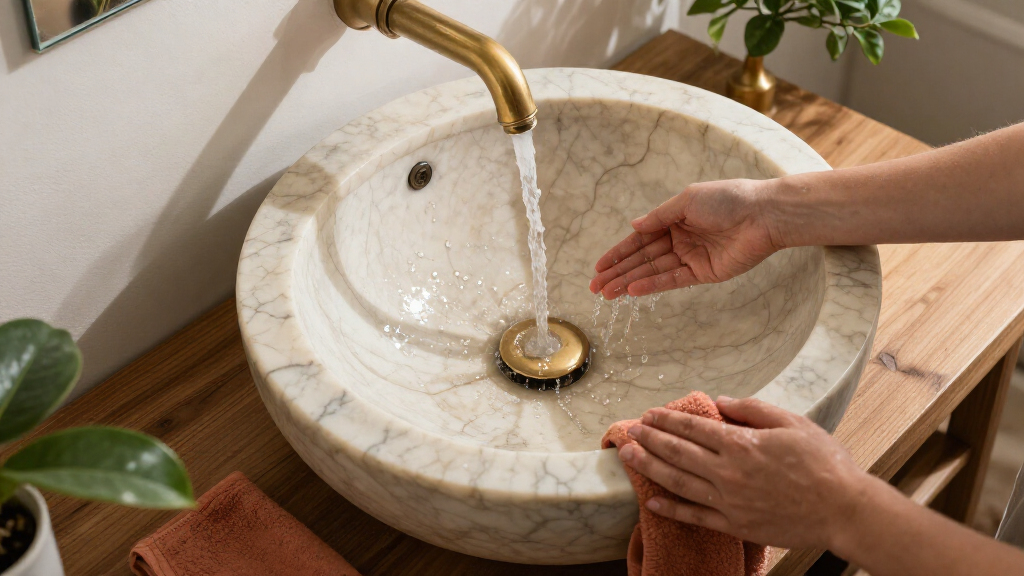
A Livingetc report describes a growing social-media trend of buying marble sinks directly from Turkish makers, drawn by competitive prices and the country’s stone-working expertise. Buyers still need to verify the exact stone, finish, dimensions, shipping costs and protections before ordering a heavy bespoke item internationally.
Turkish marble sinks are gaining attention among home renovation shoppers who see them promoted on social media as a comparatively affordable way to buy a distinctive stone basin. A Livingetc report examines why Turkish makers can offer competitive prices and warns that buyers should check the stone, specifications and import arrangements before paying for a large, heavy item from abroad.
The report, based on the writer’s observations of social posts and interviews with two design professionals, says buyers are finding decorative marble basins through online retail sites such as Etsy and purchasing directly from Turkish manufacturers. Some buyers quoted in the posts describe the process as “worth the risk,” but the article does not provide sales data, a count of buyers or evidence that the trend has reached a particular market size.
Damla Turgut, founder of tile brand Otto Tiles, attributes Turkey’s competitive pricing to large quarry reserves and an established domestic industry with processing facilities and workshops. She estimates Turkish marble can often cost roughly half as much as high-end Italian stone, while stressing that quality varies and that the two sources do not necessarily offer the same appearance.
Turgut says Turkish marble often has softer color and more uniform veining, while some Italian stones, including Carrara and Calacatta, are sought for stronger, more dramatic patterns. She cautions that individual slabs differ and that a basin made from one type of marble may not visually match tiles sourced from another. The report also identifies travertine, onyx and limestone among Turkey’s natural stones.
The Checks Behind a Lower Price
A low listed price is only one part of the cost of importing a stone sink. A basin is heavy and can be made to order, so buyers need to establish what the quoted price covers, including packing, freight, insurance, taxes or duties where applicable, and delivery to the home. The supplied report does not give a standard shipping price or a typical total landed cost; those figures will depend on the item, seller and destination.
Material and visual expectations matter as much as price. Buyers should ask for the stone’s name and origin, photographs of the actual piece or slab, and clear information about dimensions, finish, drain placement and any variation the maker allows. As Turgut’s comparison suggests, the word “marble” alone does not guarantee a particular color or veining pattern. A buyer seeking to coordinate a basin with existing stone should compare samples or confirm the match with the supplier before ordering.
The issue is also practical: a bespoke basin is difficult to assess in person when purchased from abroad, and damage, delays or a mismatch may be harder to resolve across borders. The article raises these buying concerns but does not document particular cases of damage or disputes. Its account supports careful checks, not a conclusion that Turkish imports are inherently risky or unreliable.
Products Worth Considering

Shark HydroVac MessMaster Corded Wet Dry Vacuum and Mop (WD161)

Philips Hue Secure Starter Kit with Contact Sensors, Motion Sensor, Bridge, and Color Smart Bulbs

Philips Hue White and Color Ambiance Smart Light Starter Kit, 2 A19 Bulbs with Hub
As an affiliate, we earn on qualifying purchases.
Turkey’s Stoneworking Background
Turgut describes Turkey as having a history of working with natural stone stretching back thousands of years, alongside large quarries, processing facilities and experienced workshops. She says more Turkish manufacturers have been making finished marble pieces for international interiors buyers in recent years, including sinks, fireplace surrounds and tables. The report does not supply industry export figures or a dated measure of how quickly this business is growing.
One design use highlighted in the article is the hammam basin, or kurna, a traditional form associated with Turkish bathing culture. Designer Tanya Selway, founder of Selway Design Studio, says Turkey is the place to seek a kurna carved with an understanding of the form. Her comment points to a craft and cultural dimension alongside the appeal of price; it is an expert’s view, not a claim that every Turkish-made basin follows a traditional design.
The report’s larger point is that direct buying connects consumers with an established manufacturing base, but products can differ in stone, workmanship and specification. A lower price compared with selected high-end Italian marble is not, by itself, a direct comparison of identical materials or finished products.
““Turkey has an incredibly rich history of working with natural stone, stretching back thousands of years.””
— Damla Turgut, founder of Otto Tiles
Import Costs and Seller Terms
The report does not establish how common direct purchases are, whether prices have changed over time, or what buyers typically pay once shipping and import charges are added. It also does not provide a checklist of verified sellers, standardized quality grades, warranties, return policies or dispute outcomes. Those details must be confirmed with each supplier and, where relevant, the buyer’s local import authorities or delivery company.
Stone appearance varies from slab to slab, and the article does not assess the quality of any specific listing or manufacturer. Social-media descriptions such as “worth the risk” are buyer characterizations, not independently verified evidence of typical outcomes. Before placing an order, shoppers should seek written specifications and clarify how the seller handles damage, delays, cancellations and returns.
What Buyers Should Verify
For anyone considering a purchase, the next step is to compare the full written quote with the product listing rather than relying on a social post or starting price. Confirm the stone type and origin, exact measurements, weight, finish, drain configuration, packing method, delivery arrangements and all charges. Ask whether images show the actual basin or a representative example, and request photographs of the finished piece before dispatch if the maker can provide them.
Buyers should also get the seller’s delivery timeline, payment terms, warranty and return or damage process in writing, and confirm that the basin can be installed safely with their existing plumbing and cabinetry. The Livingetc report offers no announced policy change or industry milestone to follow; the immediate decision rests on supplier-specific information and the complete delivered cost.
Key Questions
Why can Turkish marble sinks be less expensive?
Damla Turgut attributes lower prices, often roughly half the price of high-end Italian stones, to Turkey’s active quarries and established domestic processing industry. That is an approximate expert comparison, not a guaranteed price for every sink.
Does Turkish marble look the same as Italian marble?
No. Turgut says Turkish marble often has softer color and more uniform veining, while some Italian varieties are known for sharper, more dramatic patterns. She also says every slab differs, so buyers should check the specific stone.
What should I check before ordering a sink from Turkey?
Confirm the stone, actual dimensions, finish, weight, drain details, shipping and import costs, delivery timeline, and the seller’s terms for damage, returns and refunds. Request photos of the actual item or slab where possible.
Are Turkish marble sinks a proven social-media trend?
The Livingetc report says its writer has seen more buyers sharing purchases and describes growing manufacturer activity, but the supplied material includes no sales figures or market-size data. The scale of the trend is not established.
Source: livingetc.com