TL;DR

Get home appliances delivered free with Prime
- Fast, free delivery on millions of items
- Prime Video, Amazon Music and more included
- Member-only deals all year
Designers are bringing the listening-room idea into residential interiors, drawing inspiration from Japan’s Jazz Kissa cafés and music-focused venues. The spaces prioritize attentive listening, comfortable seating and a calm atmosphere; designers say a dedicated room is not required.
Designers are adapting music-focused listening rooms for residential interiors, using comfortable seating, considered sound systems and warm, tactile materials to create spaces for listening without screens. A report by House Beautiful describes the idea as a home-design trend inspired in part by Japan’s Jazz Kissa cafés, while noting that a listening area can be created in a corner of a living room rather than in a dedicated room.
The concept centers on giving music its own attention rather than treating it as background to conversation or television. Designers Joelle Kutner and Jesse Rudolph of Ome Dezin described a listening room as “a space designed for pause,” where someone can sit quietly and hear music without distraction. Their description is an account of the design intention, not a measured claim about how people use such rooms.
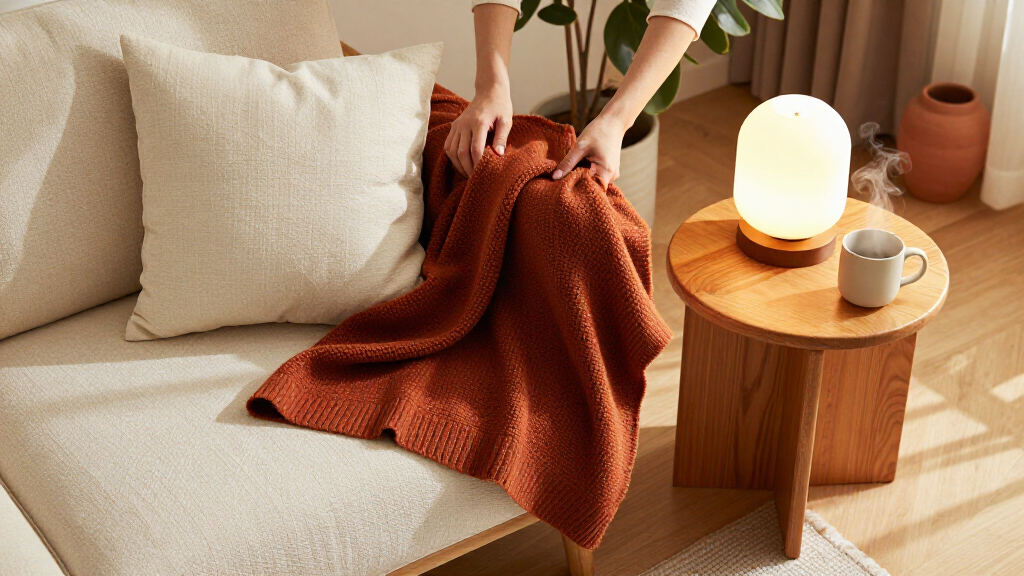
Designers cited in the report say the spaces often combine plush or upholstered seating, record storage and a sound system positioned for listening. Layered rugs, textiles and wood can soften the room’s look and sound, while warm, indirect lighting helps create an intimate mood. The report also describes projects with wet bars and, in some cases, outdoor “listening gardens.”
There is no single required format. A spare corner in a den may be enough, provided the seating and speakers are arranged with listening in mind. RIOS designer Sebastian Salvadó recommends centering the furniture and stereo for listening, while Kutner suggests materials such as wool, velvet, wood or cork. Christian Schulz of Studio Collective points to over-dyed rugs and ambient wall sconces as ways to add texture and warmth.
A Room Designed for Listening
The trend offers homeowners an alternative to rooms organized around screens. A listening area can make a familiar space serve a more focused purpose: sitting with an album, rather than keeping music on while attention is elsewhere. That may appeal to people seeking a quieter or more deliberate use of time at home, though the source provides no survey data showing how widespread the interest is.
Its practical appeal is that it does not depend on a full renovation or a specialist room. Seating, speaker placement and atmosphere are the design priorities described by the experts, so homeowners can adapt an existing living room or den. The idea also treats audio equipment as part of the room’s use rather than something that has to be hidden away.
The report connects the home trend to music-focused nightlife spaces, where sound quality and a comfortable setting are part of the experience. In homes, the same approach can give music a more prominent role without turning the space into a nightclub or requiring a large collection of equipment.
comfortable listening room armchair
As an affiliate, we earn on qualifying purchases.
As an affiliate, we earn on qualifying purchases.
From Jazz Kissa to Home
The inspiration named in the report is Japan’s Jazz Kissa cafés, where people historically gathered to listen to vinyl. House Beautiful says the current residential interpretation also follows experiments at nightlife venues that prioritize curated music, sound and seating over a conventional dance-floor setup. The report does not identify particular venues or provide a timeline for the shift.
Designer Adam Goldstein of Studio Collective links vinyl’s popularity at home and in nightlife to a response to digital listening. He says the abundance of instantly available songs and playlists makes listening to an entire album feel like a respite. This is his interpretation of the appeal, rather than evidence establishing why listeners choose vinyl.
The article frames listening rooms as one of several ways designers are creating spaces to unwind, alongside libraries, workout rooms and bathrooms designed for relaxation. Its central distinction is that these rooms are planned around attentive music listening, not simply equipped with a speaker.
““The idea of listening to an album all the way through, the way the artist actually intended for us to hear it, is a welcome respite.””
— Adam Goldstein, designer at Studio Collective
high quality stereo speaker system
As an affiliate, we earn on qualifying purchases.
As an affiliate, we earn on qualifying purchases.
How Broad Is the Trend?
The report describes listening rooms as appearing on designers’ moodboards and in residential projects, but it provides no sales figures, survey results or count of installations to measure how quickly the trend is growing or how many homeowners are adopting it. “On the rise” is the report’s characterization, not a quantified finding.
It is also unclear whether interest is concentrated among vinyl collectors, homeowners with dedicated media spaces, or people simply looking for a screen-free corner. The designers’ comments explain their approach and recommendations; they do not establish that a listening room improves relaxation for every household. The source offers no standardized acoustic specifications or budget range, and the equipment needed will depend on a person’s space and preferences.
As an affiliate, we earn on qualifying purchases.
How Homeowners Can Start
The report does not announce a product launch, industry forecast or next formal milestone. For homeowners interested in the idea, its designers’ advice is to start with a comfortable seat and a stereo system suited to the available space, then arrange them together for listening. A corner of an existing room can be enough.
Soft furnishings, rugs and warm lamps or wall sconces can help shape the atmosphere without requiring a full redesign. The source does not prescribe a particular speaker model, room treatment or spending level, so those choices remain specific to the home. Whether the trend will spread beyond the projects and moodboards described in the report is not yet established.
ambient wall sconces for living room
As an affiliate, we earn on qualifying purchases.
As an affiliate, we earn on qualifying purchases.
Key Questions
What is a listening room?
A listening room is a space arranged for focused music listening, with seating and audio equipment positioned to support the experience. Designers describe it as a place to pause and listen without screen distractions.
Do I need a separate room?
No. The report says a thoughtfully arranged corner of a living room or den can work. The main considerations are comfortable seating, speaker placement and an atmosphere suited to listening.
What design elements do designers recommend?
Designers cited in the report recommend upholstered seating, rugs and other tactile materials, along with warm, indirect lighting. Wool, velvet, wood and cork are among the materials Kutner suggests.
Is the trend’s growth supported by data?
The source describes listening rooms as a growing presence in design conversations and projects, but gives no figures or survey data that measure adoption. The scale of the trend remains unclear.
Source: rss
Fall yard work Picks
leaf blowers
As an affiliate, we earn on qualifying purchases.