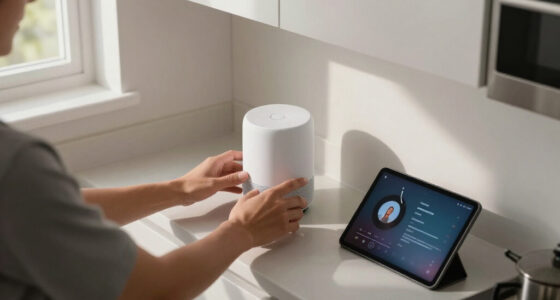

The best smart thermostat for most homes is the ecobee Smart Thermostat Enhanced, which balances remote control, room-comfort features, and broad smart-home support. For hands-off temperature adjustments, the Google Nest Learning Thermostat (4th Gen) stands out, while the Amazon Smart Thermostat suits Alexa households seeking straightforward app and voice control. The main tradeoffs are HVAC compatibility, the need for a C-wire or adapter, and whether you want learning features, remote sensors, or simple scheduling. More advanced models can improve comfort across rooms, but they may add setup steps or depend on a particular ecosystem. Read on for the full comparison, selection criteria, and advice on choosing a thermostat that fits your heating and cooling system.

Get home appliances delivered free — and shop member deals
- Fast, free delivery on millions of items
- Access to Prime Big Deal Days deals on October 6–7
- Prime Video, Amazon Music and more included
Complete the kit

![[Genuine] Waterdrop PF-01A Water Filter Replacement for W...](https://m.media-amazon.com/images/I/41+5tl9EiKL._SX342_SY445_QL70_FMwebp_.jpg)

Key Takeaways
- ecobee Smart Thermostat Enhanced is the strongest all-around balance in this lineup; the Premium adds more connected-home features, while the Essential keeps things simpler.
- Google Nest Learning Thermostat models prioritize automation, while the standard Nest Thermostat is a more straightforward choice for people who prefer manual schedule setup.
- Remote room sensing is a comfort decision, not just a thermostat feature. It can help address uneven temperatures, but sensor support and included accessories vary across models.
- Sensi ST55 and ST25 emphasize accessible DIY control; compare their feature needs against the more advanced amazon.com/dp/B0BKH83KF9?tag=whilehome-20&ascsubtag=dc-1157195″ target=”_blank” rel=”nofollow sponsored noopener”>Sensi Touch 2 before choosing a touchscreen model.
- Honeywell’s lineup spans very different priorities, from the color-screen RTH9600WF and touchscreen TH9320WF5003 to the more streamlined X2S and T5, so model-specific HVAC compatibility matters.
| Honeywell TH9320WF5003 Wi-Fi Programmable Touchscreen Thermostat |  | Best for Weekly Scheduling | Model: TH9320WF5003 | Connectivity: Wi-Fi | Controls: Touchscreen and app | VIEW LATEST PRICE | See Our Full Breakdown |
| Sensi Touch 2 Wi-Fi Smart Thermostat, ST76 |  | Best for Room-Sensor Expansion | Model: Sensi Touch 2 ST76 | Connectivity: Wi-Fi, 2.4 and 5.0 GHz | Display: LCD touchscreen | VIEW LATEST PRICE | See Our Full Breakdown |
| Amazon Smart Thermostat with Alexa and Ring Compatibility |  | Best for Alexa-Centered Homes | Model: S6ED3R | HVAC compatibility: Most 24V systems, including conventional forced air, heat pumps, and radiant boilers | Power requirement: C wire or separately sold power adapter | VIEW LATEST PRICE | See Our Full Breakdown |
| Google Nest Learning Thermostat (4th Gen) with Nest Temperature Sensor (2nd Gen), Obsidian |  | Best Premium Learning Thermostat | Generation: Nest Learning Thermostat, 4th Gen | HVAC compatibility: Most 24V heating and cooling systems | C wire: Not required in most homes; may be needed in some | VIEW LATEST PRICE | See Our Full Breakdown |
| Sensi Smart Thermostat Wi-Fi DIY Alexa Energy Star Certified ST55 |  | Best for DIY Installation | Model: ST55 | Connectivity: Wi-Fi | Compatible systems: Air conditioner, boiler, furnace, heat pump | VIEW LATEST PRICE | See Our Full Breakdown |
| Honeywell Home T5 Smart Wi-Fi Thermostat |  | Best for Flexible Scheduling | Model: RTH8800WF2022 | Connectivity: Wi-Fi | Temperature control: Heating and cooling | VIEW LATEST PRICE | See Our Full Breakdown |
| ecobee Smart Thermostat Enhanced |  | Best for Occupancy-Based Comfort | Connectivity: Wi-Fi | Display: 4-inch LCD | Compatible HVAC systems: Air conditioner, boiler, furnace, heat pump, humidifier | VIEW LATEST PRICE | See Our Full Breakdown |
| Honeywell Home Lyric T6 Pro Wi-Fi Programmable Thermostat |  | Best for Multi-Stage HVAC Systems | Model: TH6220WF2006/U | Connectivity: Wi-Fi | Compatible heat pump systems: Up to 2 heat and 1 cool stage | VIEW LATEST PRICE | See Our Full Breakdown |
| Honeywell Home RTH9600WF Smart Color Wi-Fi Thermostat |  | Best for a Customizable Touchscreen | Model: RTH9600WF | Connectivity: Wi-Fi | Display: Selectable-color LCD touchscreen | VIEW LATEST PRICE | See Our Full Breakdown |
| Honeywell Home X2S Smart Wi-Fi Thermostat, Gray |  | Best for Matter Smart Homes | Connectivity: Wi-Fi | Compatible conventional systems: Up to 2 heat and 2 cool stages | Compatible heat pump systems: Up to 2 heat and 1 cool stage | VIEW LATEST PRICE | See Our Full Breakdown |
| ecobee Smart Thermostat Essential Wi-Fi Thermostat |  | Best for Broad HVAC Compatibility | Connectivity: Wi-Fi | Display: 3.74-inch LCD touchscreen | Power source: Battery powered | VIEW LATEST PRICE | See Our Full Breakdown |
| Google Nest Learning Thermostat (3rd Gen), Stainless Steel |  | Best for Automatic Schedule Learning | Generation and finish: 3rd generation, stainless steel | Material: Metal | Power: Hardwired, 24 volts | VIEW LATEST PRICE | See Our Full Breakdown |
| Sensi Lite Smart Thermostat, WiFi, Alexa, DIY, Energy Star Certified, ST25 | 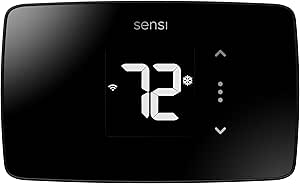 | Best for Privacy-Minded DIY Buyers | Model: ST25 | Connectivity: Wi-Fi | Display: LCD | VIEW LATEST PRICE | See Our Full Breakdown |
| ecobee Smart Thermostat Premium with Wi-Fi, Siri and Alexa |  | Best Premium Feature Set | Connectivity: Wi-Fi | Voice assistants: Siri and Alexa | Included accessory: SmartSensor | VIEW LATEST PRICE | See Our Full Breakdown |
| Google Nest Thermostat, Programmable Wi-Fi Smart Thermostat, Charcoal | 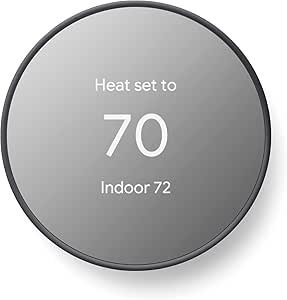 | Best for Simple Google Home Control | Color: Charcoal | Connectivity: Wi-Fi 2.4 GHz and 5 GHz; Bluetooth Low Energy | Display: 2-inch LCD | VIEW LATEST PRICE | See Our Full Breakdown |
| smart thermostat | Connectivity | Display | Model |
|---|---|---|---|
| Honeywell TH9320WF5003 Wi-Fi P | Wi-Fi | 4.5-inch touchscreen | TH9320WF5003 |
| Sensi Touch 2 Wi-Fi Smart Ther | Wi-Fi, 2.4 and 5.0 GHz | LCD touchscreen | Sensi Touch 2 ST76 |
| Amazon Smart Thermostat with A | — | — | S6ED3R |
| Google Nest Learning Thermosta | Wi-Fi | — | — |
| Sensi Smart Thermostat Wi-Fi D | Wi-Fi | — | ST55 |
| Honeywell Home T5 Smart Wi-Fi | Wi-Fi | 4.95-inch LCD touchscreen | RTH8800WF2022 |
| ecobee Smart Thermostat Enhanc | Wi-Fi | 4-inch LCD | — |
| Honeywell Home Lyric T6 Pro Wi | Wi-Fi | Manual screen, 11.4 cm | TH6220WF2006/U |
| Honeywell Home RTH9600WF Smart | Wi-Fi | Selectable-color LCD touchscreen | RTH9600WF |
| Honeywell Home X2S Smart Wi-Fi | Wi-Fi | LCD, 6.57-inch screen | — |
| ecobee Smart Thermostat Essent | Wi-Fi | 3.74-inch LCD touchscreen | — |
| Google Nest Learning Thermosta | Wi-Fi and Bluetooth | — | — |
| Sensi Lite Smart Thermostat | Wi-Fi | LCD | ST25 |
| ecobee Smart Thermostat Premiu | Wi-Fi | — | — |
| Google Nest Thermostat | Wi-Fi 2.4 GHz and 5 GHz; Bluetooth Low Energy | 2-inch LCD | — |
More Details on Our Top Picks
Honeywell TH9320WF5003 Wi-Fi Programmable Touchscreen Thermostat
The Honeywell TH9320WF5003 suits households that prefer to set a detailed routine rather than rely on a thermostat to learn one. Its 7-day programming lets you tailor heating and cooling for each day, while the 4.5-inch touchscreen keeps settings and comfort information visible at the wall. App control and Alexa compatibility add remote adjustments without making scheduling the whole point of the device. Compared with the Google Nest Learning Thermostat (4th Gen), this Honeywell puts more emphasis on manual programming than adaptive routines or room sensing. That makes it a clearer fit for people who know their weekly schedule, but less compelling for buyers seeking automatic changes across rooms. It also requires a C wire and is not suitable for dual-fuel heat pumps without a fossil fuel kit, so HVAC compatibility deserves a check before purchase.
Pros:- Separate programming for each day supports changing weekday and weekend routines.
- Large touchscreen presents comfort information and settings on the wall.
- App control allows remote monitoring and adjustments.
- Works with Alexa and includes an energy-saving mode.
Cons:- Requires a C wire for installation.
- Not suitable for dual-fuel heat pumps without a fossil fuel kit.
- Lacks the included room sensor and learning features offered by the Google Nest Learning Thermostat (4th Gen).
Best for: Households with predictable weekday and weekend routines that want app access and hands-on control over a seven-day schedule.
Not ideal for: Owners of dual-fuel heat pumps without a fossil fuel kit, or homes without a C wire that want to avoid wiring work.
- Model:TH9320WF5003
- Connectivity:Wi-Fi
- Controls:Touchscreen and app
- Programming:7-day
- Display:4.5-inch touchscreen
- Power and voltage:Hardwired; 24 volts
- Mounting:Wall mount
- Compatibility:Works with Alexa; requires C wire
Our verdict“Choose this Honeywell if you want a large touchscreen and precise seven-day scheduling, provided your system has a C wire and is compatible.”
Sensi Touch 2 Wi-Fi Smart Thermostat, ST76
The Sensi Touch 2 is a strong match for buyers who want a touchscreen thermostat now and the option to address uneven temperatures later. It supports up to 15 optional Sensi Room Sensors, letting households extend temperature monitoring beyond the thermostat’s location; the sensors are sold separately, so that flexibility adds an extra purchase. The app provides remote access, scheduling, and usage reports, while app-guided installation can help DIY installers through setup. Compared with the Amazon Smart Thermostat, the Sensi gives buyers broader voice-assistant compatibility, including Alexa, Google Assistant, and SmartThings, rather than centering control on Alexa. Its tradeoff is straightforward: it requires a C wire, and the sensor system is not included. I’d pick it over a simpler thermostat when room-by-room comfort is a goal, not when the lowest-effort setup is the priority.
Pros:- Supports up to 15 optional room sensors for monitoring comfort beyond the thermostat location.
- Works with Alexa, Google Assistant, and SmartThings.
- Provides scheduling, remote access, and usage reports through the app.
- App-guided installation supports DIY setup.
Cons:- Requires a C wire.
- Room sensors are sold separately.
- More setup options than a basic schedule-focused thermostat may be unnecessary for buyers who do not need sensor support.
Best for: Households with hot or cold spots that want a touchscreen thermostat and may add room sensors over time.
Not ideal for: Buyers without a C wire, or shoppers who want room sensors included rather than purchased separately.
- Model:Sensi Touch 2 ST76
- Connectivity:Wi-Fi, 2.4 and 5.0 GHz
- Display:LCD touchscreen
- Compatible assistants:Amazon Alexa, Google Assistant, SmartThings
- Power:Common wire (C-wire); 24 V
- HVAC compatibility:Air conditioner, boiler, furnace, heat pump
- Room sensor support:Up to 15 Sensi Room Sensors, sold separately
- Dimensions:5.6 x 3.25 x 0.77 in
Our verdict“Pick the Sensi Touch 2 if you want app control today and the option to build out room sensing, and your home has a C wire.”
Amazon Smart Thermostat with Alexa and Ring Compatibility
The Amazon Smart Thermostat is the most natural fit here for a household already using Alexa and Ring. It combines app and voice control with schedules and automatic adjustments based on temperature readings or presence detection, giving Alexa-oriented homes ways to reduce hands-on changes. It supports most 24V systems, including heat pumps and radiant boilers, but its voice control requires a separate Alexa-enabled device. Compared with the Sensi Touch 2, it offers a simpler Alexa-and-Ring-centered setup rather than support for Google Assistant and SmartThings or optional room sensors. The compact, square unit has only three on-device touch buttons, so buyers who prefer detailed wall controls may want the larger-screen Sensi or Honeywell TH9320WF5003 instead. Check the network and power requirements too: it uses 2.4 GHz Wi-Fi and needs a C wire or a separately sold power adapter.
Pros:- Supports schedules and automatic adjustments using temperature readings or presence detection.
- Can be controlled through the Alexa and Ring apps.
- Compatible with many 24V systems, including heat pumps and radiant boilers.
- ENERGY STAR and ECOLOGO Gold certified.
Cons:- Requires a C wire or a separately sold power adapter.
- Connects only to 2.4 GHz Wi-Fi, not 5 GHz.
- Voice control requires a separate Alexa-enabled device.
Best for: Alexa and Ring households with a compatible 24V HVAC system that want app-based schedules and presence-linked adjustments.
Not ideal for: Homes relying on 5 GHz-only Wi-Fi, buyers who want broad voice-assistant choice, or anyone expecting voice control without an Alexa-enabled device.
- Model:S6ED3R
- HVAC compatibility:Most 24V systems, including conventional forced air, heat pumps, and radiant boilers
- Power requirement:C wire or separately sold power adapter
- Wi-Fi:2.4 GHz, 802.11 b/g/n; does not support 5 GHz
- Controls:Alexa app, Ring app, Alexa voice control, and three on-device touch buttons
- Certifications:ENERGY STAR, ECOLOGO Gold
- Dimensions:3.56 x 3.56 x 0.84 in
- Included items:Thermostat, installation tool, wall plate, cosmetic plate, quick start guide
Our verdict“Choose this model for an Alexa- and Ring-centered home with 2.4 GHz Wi-Fi and compatible wiring; look at the Sensi Touch 2 for wider assistant support.”
Google Nest Learning Thermostat (4th Gen) with Nest Temperature Sensor (2nd Gen), Obsidian
This Nest package stands apart for buyers who want the thermostat to adapt to their routine and help address room-to-room temperature differences. The Learning Thermostat adjusts to temperature preferences and changing habits, while the included second-generation Nest Temperature Sensor gives households another point for managing comfort. Matter support and control through the Google Home app or compatible assistants also make it a more flexible smart-home pick than the Alexa-centered Amazon Smart Thermostat. The premium feature set brings a tradeoff: HVAC compatibility still depends on the home, and although a C wire is not required in most homes, some installations may need one. Compared with the Honeywell TH9320WF5003, this Nest puts less emphasis on a manually set seven-day schedule and more on learning and sensing. Choose it for adaptive control, not for a simple, predictable programming-only setup.
Pros:- Learns temperature preferences and adapts to changing routines.
- Includes a second-generation Nest Temperature Sensor to help manage hot and cold spots.
- Supports Matter and control through Google Home and compatible voice assistants.
- C wire is not required in most homes.
Cons:- HVAC compatibility depends on the home’s system.
- Some installations may still require a C wire.
- Learning-based control may not suit buyers who want to set every schedule manually.
Best for: Smart-home households that want adaptive temperature management, an included room sensor, and control across compatible Matter devices.
Not ideal for: Buyers who prefer fixed seven-day schedules, or homeowners whose HVAC system needs a C wire or is not compatible.
- Generation:Nest Learning Thermostat, 4th Gen
- HVAC compatibility:Most 24V heating and cooling systems
- C wire:Not required in most homes; may be needed in some
- Connectivity:Wi-Fi
- Smart-home compatibility:Matter
- Controls:App, button, Alexa, Siri, and Google Assistant
- Included sensor:Nest Temperature Sensor (2nd gen)
- Power:Battery powered; one CR2 battery included
Our verdict“Choose this Nest bundle if you want adaptive routines and an included room sensor, after confirming compatibility with your HVAC system.”
Sensi Smart Thermostat Wi-Fi DIY Alexa Energy Star Certified ST55
The Sensi ST55 is the practical pick for homeowners who want smart scheduling and remote control without a touchscreen-heavy interface. Its DIY-focused installation uses built-in leveling and step-by-step app guidance, and a C wire is not required in most cases—a useful contrast with the Sensi Touch 2, which requires one. The app adds usage reports and maintenance alerts, including filter reminders, while support for Alexa, Google Assistant, Apple HomeKit, SmartThings, and Vera makes it the broadest assistant option among these five. The compromise is the small LED screen and button controls: it is less informative at the wall than the Honeywell TH9320WF5003’s large touchscreen. Full functionality depends on Wi-Fi, and the AA backup batteries need periodic replacement. I’d choose it for an app-led DIY setup, not for shoppers who want a rich on-device display.
Pros:- App-guided DIY installation includes a built-in level.
- C wire is not required in most cases.
- Supports Alexa, Apple HomeKit, Google Assistant, SmartThings, and Vera.
- Offers usage reports and maintenance alerts such as filter reminders.
Cons:- Full functionality depends on a Wi-Fi connection.
- Small LED screen provides less on-device detail than the Honeywell TH9320WF5003 touchscreen.
- AA battery backup requires periodic battery replacement.
Best for: DIY-minded homeowners who want broad smart-assistant support, app-guided installation, and smart control without a C wire in most cases.
Not ideal for: Buyers who want detailed information and adjustments directly on a large touchscreen, or homes without reliable Wi-Fi.
- Model:ST55
- Connectivity:Wi-Fi
- Compatible systems:Air conditioner, boiler, furnace, heat pump
- Compatible controllers:Amazon Alexa, Apple HomeKit, Google Assistant, SmartThings, Vera
- Power:24 volts AC; two AA batteries included
- Display and controls:LED display; button control
- Mounting:Wall mount
- Additional features:Programmable scheduling, filter indicator, usage reports, maintenance alerts
Our verdict“Pick the Sensi ST55 for app-guided DIY installation and broad assistant compatibility, but choose a touchscreen model if you want more at-wall control.”
Honeywell Home T5 Smart Wi-Fi Thermostat
The Honeywell Home T5 suits households that want a choice between a weekly routine and geofencing-based control. Geofencing can adjust the temperature when household members leave or return, while 7-day scheduling gives you a more fixed routine; the Honeywell Home RTH9600WF also offers scheduling, but this T5 adds geofencing to its listed features. Remote app access, auto-away mode, and monthly energy reports make it easier to manage settings and track usage away from home.
It also works with Alexa, Google Assistant, and Apple HomeKit, giving it broader listed assistant support than the Lyric T6 Pro. The tradeoff is installation flexibility: a C-wire or power adapter may be needed, and the supplied information rules out heating-only oil furnace setups without one. Choose it for flexible routines, not if your wiring or heating system falls outside those limits.
Pros:- Offers both 7-day scheduling and geofencing-based control.
- Provides remote app access, auto-away mode, and monthly energy reports.
- Supports Alexa, Google Assistant, and Apple HomeKit.
- ENERGY STAR certified.
Cons:- May need a C-wire or power adapter, depending on the system.
- Does not support heating-only oil furnace systems without a C-wire.
Best for: Households with compatible heating and cooling systems that want both weekly schedules and location-based temperature control.
Not ideal for: Owners of heating-only oil furnaces without a C-wire, or anyone who wants to avoid checking wiring and power requirements before installation.
- Model:RTH8800WF2022
- Connectivity:Wi-Fi
- Temperature control:Heating and cooling
- Scheduling:7-day programmable
- Display:4.95-inch LCD touchscreen
- Smart home compatibility:Amazon Alexa, Google Assistant, Apple HomeKit
- Special features:Geofencing, auto-away mode, fan control, vacation mode, ENERGY STAR certified
- Wiring:C-wire required in some installations
Our verdict“Choose the T5 if you want flexible schedules plus geofencing and your HVAC wiring is compatible.”
ecobee Smart Thermostat Enhanced
The ecobee Smart Thermostat Enhanced is the stronger fit for buyers who want temperature adjustments to respond to occupancy, schedules, and humidity, rather than relying mainly on a set weekly routine. Its included Power Extender Kit can help with installation in homes without a C-wire, a practical advantage over the Honeywell Home RTH9600WF, which requires a C-wire. It also works with a broad group of smart home systems, including Alexa, Google Assistant, Apple HomeKit, and SmartThings.
The main limitation is that occupancy sensing at the thermostat does not provide room-by-room balancing on its own: SmartSensors are sold separately. That makes the Enhanced less appealing if you expect included sensors to address hot or cold rooms. Compared with the T5, it puts more emphasis on automatic comfort adjustments and less on geofencing as a named feature. Check HVAC compatibility before choosing it.
Pros:- Adjusts temperature based on occupancy, schedule, and humidity.
- Includes a Power Extender Kit for installation in homes without a C-wire.
- Supports Alexa, Google Assistant, Apple HomeKit, and SmartThings.
- Offers remote control through the ecobee app and carries ENERGY STAR certification.
Cons:- SmartSensors for room-by-room comfort are sold separately.
- HVAC compatibility needs to be checked before purchase.
Best for: Households with compatible HVAC systems that want occupancy- and humidity-aware adjustments and need an included option for homes without a C-wire.
Not ideal for: Buyers seeking included room sensors for room-by-room comfort, or households whose HVAC compatibility has not been confirmed.
- Connectivity:Wi-Fi
- Display:4-inch LCD
- Compatible HVAC systems:Air conditioner, boiler, furnace, heat pump, humidifier
- Smart home compatibility:Amazon Alexa, Google Assistant, Apple HomeKit, SmartThings
- Included accessories:Power Extender Kit and trim kit
- Energy certification:ENERGY STAR
- Mounting:Wall mount
- Warranty:3 years
Our verdict“Pick the ecobee Enhanced if occupancy-aware comfort matters more to you than having room sensors included.”
Honeywell Home Lyric T6 Pro Wi-Fi Programmable Thermostat
The Honeywell Home Lyric T6 Pro earns its place for buyers whose heating and cooling equipment uses multiple stages. It supports heat pumps with up to 2 heat and 1 cool stage, or conventional systems with up to 2 heat and 2 cool stages; that defined system support makes it a better match for those setups than the more general-purpose T5. App control and compatibility with Alexa and Apple HomeKit cover common remote and voice-control needs.
This is a more focused pick than the Honeywell Home X2S, which also lists multi-stage system support but adds Matter compatibility and more scheduling choices. The Lyric T6 Pro’s supplied details are leaner: they do not list geofencing, energy reports, or a programmable schedule, so buyers wanting those features should compare the T5 or X2S instead. Its display is described as a manual screen, and it requires two AA batteries.
Pros:- Supports heat pumps with up to 2 heat and 1 cool stage.
- Supports conventional systems with up to 2 heat and 2 cool stages.
- Offers Wi-Fi app control.
- Works with Amazon Alexa and Apple HomeKit.
Cons:- Requires two AA batteries.
- The listed features do not include geofencing or energy reports.
- Smart home compatibility is narrower than the X2S, which also supports Matter and Google Assistant.
Best for: Homeowners with a compatible multi-stage heat pump or conventional HVAC system who want Wi-Fi app control and Alexa or Apple HomeKit support.
Not ideal for: Buyers who want clearly specified smart scheduling, geofencing, energy reports, or broad smart-home platform support.
- Model:TH6220WF2006/U
- Connectivity:Wi-Fi
- Compatible heat pump systems:Up to 2 heat and 1 cool stage
- Compatible conventional systems:Up to 2 heat and 2 cool stages
- Smart home compatibility:Amazon Alexa, Apple HomeKit
- Display:Manual screen, 11.4 cm
- Power source:AC/DC
- Batteries:2 AA batteries required
Our verdict“Choose the Lyric T6 Pro if your multi-stage HVAC system matches its supported configurations and app control is enough.”
Honeywell Home RTH9600WF Smart Color Wi-Fi Thermostat
The Honeywell Home RTH9600WF is the touchscreen choice in this group: its selectable-color LCD makes the thermostat’s display more customizable than the simpler LCD on the ecobee Smart Thermostat Enhanced. Flexible scheduling, remote app access, and Smart Response technology put the focus on managing routines and comfort information from one wall-mounted control. It also supports Alexa, Google Assistant, Cortana, and IFTTT, giving it several integration options listed in the product data.
That display and feature set come with a firm wiring condition: a C-wire is required. It also does not support 120–240V electric baseboard heat, and heating-only oil furnace systems need a C-wire. The X2S offers Matter compatibility and a wider choice of schedule formats, while the RTH9600WF is the better fit if a customizable color screen is the deciding feature. Confirm system and wiring fit before buying.
Pros:- Customizable color LCD touchscreen.
- Provides remote app control and comfort and energy-use information.
- Includes flexible scheduling and Smart Response technology.
- Supports Alexa, Google Assistant, Cortana, and IFTTT.
Cons:- Requires a C-wire.
- Does not support 120–240V electric baseboard heat.
- Heating-only oil furnace systems require a C-wire.
Best for: Homeowners with a compatible, C-wire-equipped system who want a customizable color touchscreen and flexible schedules.
Not ideal for: People with 120–240V electric baseboard heat, systems without a C-wire, or heating-only oil furnaces without the required wiring.
- Model:RTH9600WF
- Connectivity:Wi-Fi
- Display:Selectable-color LCD touchscreen
- Compatible systems:Forced-air gas, oil, or electric; hot water and steam; heat pumps with electric backup
- Smart home compatibility:Amazon Alexa, Google Assistant, Microsoft Cortana, IFTTT
- Power:24 volts; one AAA battery required
- Mounting:Wall mount
- Wiring requirement:C-wire required
Our verdict“Pick the RTH9600WF if you want a customizable touchscreen and have a compatible system with a C-wire.”
Honeywell Home X2S Smart Wi-Fi Thermostat, Gray
The Honeywell Home X2S is the lineup’s clearest pick for a home built around different smart-home platforms: its Matter certification sits alongside support for Alexa, Google Assistant, and Apple HomeKit. That can make it a more flexible hub choice than the Lyric T6 Pro, whose listed integrations are limited to Alexa and Apple HomeKit. The X2S also covers conventional systems up to 2 heat and 2 cool stages, or heat pumps up to 2 heat and 1 cool stage, and offers several schedule formats plus auto-away and filter reminders.
Its advantage is platform flexibility, not installation freedom. A C-wire is required, and some homes may need an adapter, so the ecobee Smart Thermostat Enhanced is a better candidate for buyers specifically looking for an included power extender. The X2S also has a push-button control option alongside app and voice control. Choose it when Matter support and scheduling options matter more than avoiding wiring work.
Pros:- Matter certified, with Alexa, Google Assistant, and Apple HomeKit support.
- Offers 5-1-1, 5-2, 7-day, and non-programmable scheduling.
- Includes auto-away and filter reminders.
- Supports conventional and heat pump systems with multiple stages.
Cons:- Requires a C-wire, and some installations may need an adapter.
- Has a 2-year warranty, shorter than the ecobee Enhanced’s listed 3-year warranty.
Best for: Smart-home households using Matter, Alexa, Google Assistant, or Apple HomeKit that have compatible multi-stage HVAC and a C-wire.
Not ideal for: Homes without a C-wire when adding an adapter is undesirable, or buyers who want an included Power Extender Kit.
- Connectivity:Wi-Fi
- Compatible conventional systems:Up to 2 heat and 2 cool stages
- Compatible heat pump systems:Up to 2 heat and 1 cool stage
- Smart home compatibility:Matter, Amazon Alexa, Google Assistant, Apple HomeKit
- Display:LCD, 6.57-inch screen
- Programming:5-1-1, 5-2, 7-day, or non-programmable
- Controls:App, push button, voice
- Wiring:C-wire required; adapter may be needed
Our verdict“Choose the X2S if Matter compatibility and varied scheduling options are priorities and your wiring supports installation.”
ecobee Smart Thermostat Essential Wi-Fi Thermostat
The ecobee Smart Thermostat Essential is a flexible pick for households that want app control and scheduling without moving up to the Premium model’s extra sensors and built-in speaker. Its support for many 24 VAC systems, including boilers, heat pumps, and dual-fuel setups, gives it wider stated system coverage than the simpler Google Nest Thermostat. You can adjust settings on the touchscreen or in the app, while auto-away and auto-scheduling help reduce unnecessary heating or cooling.
The tradeoff is that some installations need a separately sold Power Extender Kit if there is no C-wire. The SmartSensor and trim kit also cost extra, so this is less complete out of the box than the ecobee Smart Thermostat Premium. Choose it for core smart controls and system flexibility; skip it if you want room sensors included or a built-in speaker.
Pros:- Supports a broad range of common 24 VAC HVAC systems
- Offers app control, color touchscreen adjustments, and programmable schedules
- Works with Apple HomeKit, Google Assistant, and Amazon Alexa
- Auto-away and humidity detection add useful comfort controls
Cons:- A separately sold Power Extender Kit may be needed in homes without a C-wire
- SmartSensor and trim kit are sold separately
Best for: Homeowners with a common 24 VAC system who want app scheduling, voice assistant support, and flexible HVAC compatibility.
Not ideal for: Buyers who want room-to-room sensing or included installation accessories, since the SmartSensor and trim kit are sold separately.
- Connectivity:Wi-Fi
- Display:3.74-inch LCD touchscreen
- Power source:Battery powered
- Mounting:Wall mount
- Compatible systems:Most 24 VAC systems, including gas, oil, electric, dual fuel, forced air, heat pumps, and boilers
- Smart home compatibility:Apple HomeKit, Google Assistant, and Amazon Alexa
- Additional controls:Auto-away, auto-scheduling, fan control, programmable temperature control, and indoor humidity detection
Our verdict“Choose the ecobee Essential for broad HVAC compatibility and everyday smart controls, but pick the Premium if you want an included room sensor and built-in speaker.”
Google Nest Learning Thermostat (3rd Gen), Stainless Steel
The Google Nest Learning Thermostat (3rd Gen) suits people who would rather let a thermostat adapt to their routine than build every schedule themselves. It learns preferred temperatures and daily patterns, then adjusts settings; Energy History and HVAC alerts add visibility into usage and system issues. That makes it more hands-off than the Google Nest Thermostat, which relies on schedules and away adjustments rather than the same learning approach.
Its metal construction and stainless-steel finish also give it a more polished wall presence than the plastic Nest model. The tradeoff is a narrower assistant list in the supplied specs: it supports Google Assistant and Alexa, while the ecobee Smart Thermostat Essential also supports Apple HomeKit. Remote control and notifications depend on working internet and Wi-Fi, and room-specific sensing requires a separately sold Nest Temperature Sensor. Choose this Nest for schedule learning, not for included sensors or broad ecosystem coverage.
Pros:- Learns preferred temperatures and schedule patterns
- Provides Energy History and HVAC alerts
- Supports remote app control and compatible voice assistants
- Metal body with stainless-steel finish
Cons:- Remote control and notifications require working internet and Wi-Fi
- Nest Temperature Sensor is sold separately
- The listed assistant compatibility excludes Apple HomeKit
Best for: Households with fairly regular routines that want automatic schedule adjustments, energy history, and HVAC alerts.
Not ideal for: Apple HomeKit households or buyers who want room sensors included, since this model lists Google Assistant and Alexa support and sells its Nest Temperature Sensor separately.
- Generation and finish:3rd generation, stainless steel
- Material:Metal
- Power:Hardwired, 24 volts
- Connectivity:Wi-Fi and Bluetooth
- Wi-Fi bands:2.4 GHz and 5 GHz, 802.11b/g/n
- Control methods:Remote, app, and voice
- Compatible assistants:Google Assistant and Amazon Alexa
- Temperature sensor compatibility:Nest Temperature Sensor, sold separately
Our verdict“Pick this model over the standard Nest Thermostat if you want it to learn your routine, but choose ecobee Essential if Apple HomeKit support matters more.”
Sensi Lite Smart Thermostat, WiFi, Alexa, DIY, Energy Star Certified, ST25
The Sensi Lite ST25 puts straightforward installation and privacy at the center of its appeal. Its built-in level and guided setup are useful for DIY installers, while app, voice, and on-device controls let you manage temperature in the way that suits you. Flexible scheduling, geofencing, and usage reports offer more ways to manage HVAC use than a basic programmable thermostat. The maker also says personal data is not sold or tracked for advertising.
Compared with the Google Nest Thermostat, the Sensi Lite makes a clearer privacy commitment in the supplied product information and lists SmartThings support. Its main limitation is wiring: a C-wire is required for heat-pump and heat/cool-only systems, which can rule it out for some DIY projects. It also has a simpler LCD presentation than the touchscreen ecobee Essential. This is a practical fit for buyers who value guided setup and privacy over a more polished display.
Pros:- Built-in level and step-by-step guidance support DIY installation
- Includes flexible scheduling, geofencing, and usage reports
- Lists Alexa, Google Assistant, and SmartThings control
- Product information states personal data is not sold or tracked for advertising
Cons:- Requires a C-wire for heat-pump and heat/cool-only systems
- LCD display is less feature-rich than the ecobee Essential touchscreen
Best for: Privacy-conscious DIY homeowners with compatible wiring who want guided installation, app control, and scheduling features.
Not ideal for: Owners of heat-pump or heat/cool-only systems without a C-wire, because those configurations require one.
- Model:ST25
- Connectivity:Wi-Fi
- Display:LCD
- Power:Battery or C-wire; includes two AAA batteries
- Voltage:24 volts
- Compatible systems:Air conditioner, boiler, furnace, and heat pump
- Control compatibility:Amazon Alexa, Google Assistant, SmartThings, hand control, and app
- Warranty:3 years
Our verdict“Choose the Sensi Lite if privacy and guided DIY setup lead your priorities, but check the C-wire requirement before buying for a heat pump.”
ecobee Smart Thermostat Premium with Wi-Fi, Siri and Alexa
The ecobee Smart Thermostat Premium is the most feature-packed choice in this group, pairing an included SmartSensor with built-in air-quality monitoring and a speaker that supports Siri or Alexa. The sensor can help address temperature differences between rooms, a capability the ecobee Essential lacks unless you buy its SmartSensor separately. Its included Power Extender Kit and trim kit also make the package more installation-ready than several alternatives here.
Those extras make sense for buyers who want comfort and home information in one device, but they also bring features that some households will not use. Siri requires an Apple home hub, and some security functions depend on an ecobee Smart Security subscription; doorbell functions need a compatible ecobee camera. Compared with the simpler Nest Thermostat, this is a broader home-comfort hub, not just a remote-controlled temperature dial. Choose it if the sensor and monitoring features justify the added complexity.
Pros:- Includes a SmartSensor for room-to-room comfort management
- Built-in air-quality monitor and filter reminders
- Built-in speaker supports Siri and Alexa, plus music streaming
- Includes Power Extender Kit and trim kit
Cons:- Siri requires an Apple home hub
- Some security features require an ecobee Smart Security subscription
- Doorbell camera features require a compatible ecobee Smart Doorbell Camera
Best for: Households with uneven room temperatures that want an included room sensor, air-quality monitoring, and built-in voice control.
Not ideal for: Buyers seeking a basic thermostat or those unwilling to rely on an Apple home hub for Siri and optional subscriptions for some security features.
- Connectivity:Wi-Fi
- Voice assistants:Siri and Alexa
- Included accessory:SmartSensor
- HVAC compatibility:Works with 95% of HVAC systems
- Installation accessories:Power Extender Kit and Trim Kit included
- Air-quality monitoring:Built in
- Smart speaker:Built in
- Warranty:3 years
Our verdict“Choose the Premium over ecobee Essential if you want the included room sensor and monitoring features, but skip it if you only need scheduling and remote control.”
Google Nest Thermostat, Programmable Wi-Fi Smart Thermostat, Charcoal
The Google Nest Thermostat is a straightforward choice for people already using Google Home who want app scheduling and away adjustments without the schedule-learning focus of the Nest Learning Thermostat. It can adjust the temperature when the home is empty, and its 2-inch LCD keeps the wall unit compact. DIY installation is part of its appeal, and it works without a C-wire in many homes—though compatibility depends on the system.
Compared with the Nest Learning Thermostat (3rd Gen), this model does not list automatic learning or Energy History and HVAC alerts, so it suits buyers who are happy to set a schedule themselves. Its support for Matter-certified voice assistants offers more flexibility than a Google-only setup, but some heating, cooling, zone-controlled, and heat-pump systems may need a C-wire or power accessory. Remote control and notifications also rely on internet and Wi-Fi. Check wiring compatibility before choosing it for a complex system.
Pros:- Adjusts temperature when the home is empty
- Supports schedules and remote control through the Google Home app
- Designed for DIY installation
- Works with Google Assistant and Matter-certified voice assistants
Cons:- Some systems require a C-wire or compatible power accessory
- Remote control and notifications require working internet and Wi-Fi
- Does not list the schedule learning and energy-history features of the Nest Learning Thermostat
Best for: Google Home households wanting a compact, DIY-friendly thermostat for schedules, remote control, and automatic away adjustments.
Not ideal for: Owners of complex, zone-controlled, or certain heat-pump systems who cannot add a C-wire or compatible power accessory.
- Color:Charcoal
- Connectivity:Wi-Fi 2.4 GHz and 5 GHz; Bluetooth Low Energy
- Display:2-inch LCD
- Power:Battery powered; includes two A batteries
- Voltage:24 volts
- Supported systems:Heating, cooling, and heat pump
- Control and compatibility:Google Home app, remote control, and Google Assistant or Matter-certified voice assistants
- Mounting and material:Wall mount; plastic
Our verdict“Choose this Nest for compact Google Home scheduling and away control, but pick the Learning Thermostat if automatic routine learning is your priority.”

How We Picked
I ranked these thermostats by how well they address the decisions buyers face before installation: compatibility with common HVAC setups, ease of controlling schedules, app and voice features, room-comfort options, and the amount of setup or ecosystem commitment involved. I gave more weight to useful everyday control than to a long feature list, since a thermostat that fits the wiring and heating system is more valuable than one with advanced functions a home cannot use.
The ranking favors versatile picks that can serve a wide range of households, followed by models that excel for a particular need, such as learning schedules, simple Alexa control, DIY installation, or a prominent touchscreen. I also considered the tradeoffs between basic programming and added sensors or smart-home integrations. Product names alone do not confirm HVAC compatibility: buyers should check the wiring and system requirements for the exact model before ordering.
| smart thermostat | Connectivity |
|---|---|
| Honeywell TH9320WF5003 Wi-Fi P | Wi-Fi |
| Sensi Touch 2 Wi-Fi Smart Ther | Wi-Fi, 2.4 and 5.0 GHz |
| Amazon Smart Thermostat with A | — |
| Google Nest Learning Thermosta | Wi-Fi |
| Sensi Smart Thermostat Wi-Fi D | Wi-Fi |
| Honeywell Home T5 Smart Wi-Fi | Wi-Fi |
| ecobee Smart Thermostat Enhanc | Wi-Fi |
| Honeywell Home Lyric T6 Pro Wi | Wi-Fi |
| Honeywell Home RTH9600WF Smart | Wi-Fi |
| Honeywell Home X2S Smart Wi-Fi | Wi-Fi |
| ecobee Smart Thermostat Essent | Wi-Fi |
| Google Nest Learning Thermosta | Wi-Fi and Bluetooth |
| Sensi Lite Smart Thermostat | Wi-Fi |
| ecobee Smart Thermostat Premiu | Wi-Fi |
| Google Nest Thermostat | Wi-Fi 2.4 GHz and 5 GHz; Bluetooth Low Energy |
Factors to Consider When Choosing Best Smart Thermostats
Choosing a smart thermostat is less about collecting features and more about matching the control style to your home. I would check system compatibility first, then decide whether your main goal is easier scheduling, steadier temperatures between rooms, or integration with a voice assistant.
Check Your HVAC System and Wiring Before Comparing Features
Start by identifying whether your home has conventional heating and cooling, a heat pump, a boiler, or a multi-stage system; thermostats do not support every configuration in the same way. Check the wire labels at the existing thermostat and compare them with the manufacturer’s compatibility tool for the exact model. A C-wire often supplies steady power, but some models offer an adapter or another supported installation method. Do not assume that a thermostat advertised as DIY-friendly will work with every older system. If you rent, live in a condo with building-managed heating, or have high-voltage electric baseboard heat, confirm control access before buying. A brief compatibility check can prevent choosing a feature-rich thermostat that cannot operate your equipment.
Decide Whether You Need Learning or Prefer a Schedule You Set
Learning features suit households with recurring routines and users willing to let the thermostat adapt over time. A programmable schedule is usually a better fit if your hours change often or you want direct control over each temperature period. Neither approach automatically saves energy in every home; results depend on the settings, equipment, weather, and how occupants use the space. Check whether the model lets you review and edit its schedule rather than treating automation as a black box. Households with different routines may benefit more from app access and flexible scheduling than from a thermostat that assumes one pattern. Choose automation for convenience, not as a substitute for confirming that the schedule matches your comfort needs.
Use Room Sensors to Address Uneven Temperatures
A hallway thermostat can reach its target while a bedroom or sunny living room remains uncomfortable. Remote sensors can help a compatible system account for temperatures in other rooms, but they do not create separate heating zones where none exist. Check whether sensors are included, sold separately, or supported only by certain models in a family. Think about which rooms matter at which times, since some systems can prioritize occupied spaces or use sensor readings in schedules. Sensors are less useful when doors stay open and temperatures already feel consistent throughout the home. If one room is persistently cold because of poor insulation or airflow, fixing that issue may matter more than adding a sensor.
Match Smart-Home Features to the Devices You Already Use
Voice control and app access are most useful when they work with the devices and services already in your home. Alexa-focused households may find the Amazon Smart Thermostat a natural fit, while other models in this roundup connect with different combinations of voice assistants and platforms. Confirm the exact compatibility of the thermostat, not just the brand, since features can vary by generation and setup. Some integrations may require an account, a hub, or specific settings, and those requirements can change the day-to-day experience. If you mainly want to adjust temperature from your phone, broad smart-home automation may be unnecessary. Choose the ecosystem you already maintain rather than adding another app solely for a feature you rarely expect to use.
Choose a Display and Control Style You Will Actually Use
A large touchscreen makes direct adjustments and schedule edits easier for some people, especially in a busy household. A simpler display can be less distracting and may suit buyers who expect to control the thermostat mostly from a phone or voice assistant. Consider who will use it: guests and family members may want clear physical or on-screen controls without needing an account. Also check whether the screen shows the information you care about, such as current temperature, set point, or system status. A polished display cannot compensate for confusing menus or a control method that clashes with your habits. If you rely on the wall unit during internet or app outages, prioritize clear local controls.
Know When Paying for More Features Makes Sense
Premium features make the most sense when they solve a recurring problem, such as uneven room comfort, hands-free control, or integrating climate control with other home devices. If you only need remote adjustments and a weekly schedule, a simpler thermostat may cover the job without extra setup. Look beyond the feature list to account requirements, sensor availability, wiring work, and any accessories the system needs. A feature that depends on a separate sensor or service adds more than the thermostat itself to the ownership decision. Households with multiple users should also think about whether everyone can manage the controls comfortably. Pay for capabilities that fit your HVAC system and routine, not for options that will sit unused.
Frequently Asked Questions
How can I tell whether a smart thermostat will work with my HVAC system?
Find the make and model of your heating and cooling equipment, then check the thermostat maker’s compatibility tool for the exact thermostat you plan to buy. If you have access to the current thermostat wiring, note the wire labels rather than relying only on the wire colors. Pay special attention to heat pumps, multi-stage systems, boilers, and systems without a C-wire, since requirements differ. If the equipment is shared or building-managed, ask the property manager or an HVAC professional before changing controls. When the wiring or system type is unclear, getting confirmation before purchase is safer than assuming a standard setup.
Do I need a C-wire, and what if my home does not have one?
A C-wire provides continuous power, which some smart thermostats require or recommend for stable operation. A thermostat may support a compatible power adapter or another wiring arrangement, but that solution depends on the model and HVAC system. Check the product’s installation instructions before buying; do not assume every thermostat in the same brand family handles missing wiring alike. If your home lacks a C-wire and you are not comfortable working around HVAC wiring, ask an installer to assess the setup. This check can also reveal whether your equipment has a spare conductor that can serve the purpose.
Will a smart thermostat fix a room that is always too hot or too cold?
A thermostat with supported remote sensors can use readings from another room to guide heating or cooling, which may make comfort more consistent at selected times. It cannot make a single-zone system deliver separate temperatures to every room, and it will not repair blocked vents, leaky ducts, poor insulation, or undersized equipment. First identify whether the problem follows sunlight, occupancy, closed doors, or airflow. If the room issue has a clear pattern, sensors may help the thermostat respond to it; if it is caused by a building or duct problem, address that cause too. Check sensor compatibility and availability for the thermostat model before planning around this feature.
Should I choose a learning thermostat or a programmable one?
A learning thermostat is a good fit when your household follows routines that repeat and you want the system to adapt with less schedule setup. A programmable model makes more sense when you prefer to set exact times and temperatures or when your routine changes from week to week. Both approaches still need sensible settings, and neither guarantees lower energy use on its own. Check how easily you can review, change, or disable automatic adjustments. If multiple people have different schedules, flexible app controls and clear manual overrides may matter more than learning behavior.
Can I install a smart thermostat myself, or should I hire someone?
Many low-voltage thermostat replacements are manageable for a careful DIY installer, provided the system is compatible and the wiring is clearly identified. Switch off power to the HVAC equipment before handling wires, follow the model-specific installation instructions, and label each wire as you remove it. Hire a qualified professional if the wiring is unfamiliar, the system has multiple stages or unusual controls, or you are unsure how to handle a C-wire or adapter. High-voltage systems and building-managed equipment call for extra caution and may not suit a standard thermostat replacement. A professional installation can also confirm that the thermostat is configured correctly for the heating and cooling equipment.
Conclusion
For the best overall balance, I would start with the ecobee Smart Thermostat Enhanced; choose the Google Nest Learning Thermostat (4th Gen) if automatic schedule adaptation matters most, and the ecobee Premium if you want a more feature-rich smart-home hub. For a value-oriented, straightforward route, compare the Amazon Smart Thermostat for Alexa homes with the Sensi ST55 for DIY-focused buyers. Beginners who want clear touchscreen controls can look at the Sensi Touch 2 or a Honeywell color-screen model, after confirming system compatibility. If uneven room temperatures are your main concern, prioritize a thermostat that supports the sensors and scheduling approach your household needs. The best choice is the one that fits your HVAC wiring, daily habits, and preferred controls—not the model with the longest feature list.
Halloween Picks
halloween
As an affiliate, we earn on qualifying purchases.