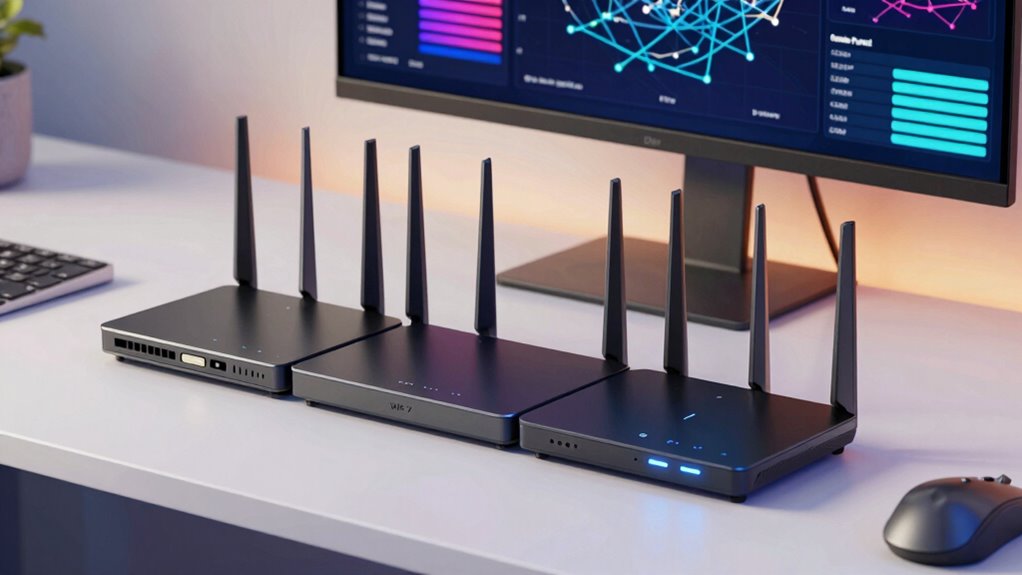

For multi-gig internet, I’d start with the TP-Link Archer BE600 as the best overall balance of tri-band Wi-Fi 7 and multi-gig connectivity. The NETGEAR Nighthawk RS700S is the premium choice for buyers prioritizing higher-end hardware, while the TP-Link Archer BE550 offers a more approachable tri-band alternative. The key tradeoffs are whether you need a multi-gig wired connection for several devices, the extra 6 GHz band, or simpler dual-band hardware. Your internet plan alone does not determine router speed: ports, client devices, home layout, and wired backhaul all matter. Read on for the full comparison and advice on matching a router to your actual network.

Get home appliances delivered free with Prime
- Fast, free delivery on millions of items
- Prime Video, Amazon Music and more included
- Member-only deals all year
Complete the kit


Key Takeaways
- Tri-band models lead this lineup for flexibility: the Archer BE600, Nighthawk RS300 and RS500, and Archer BE550 add a 6 GHz band alongside 2.4 and 5 GHz, which can help compatible devices find more wireless capacity.
- Multi-gig ports deserve as much attention as Wi-Fi claims: check the WAN and LAN port speeds against your modem, switch, and wired devices before choosing; a fast wireless radio cannot make a 1 GbE connection carry a multi-gig wired transfer.
- Dual-band routers can still fit a multi-gig household: the RS90, RS100, RS140, Archer BE230, and Archer BE400 may suit simpler networks, but buyers should weigh their band configuration and port layout against the demands of many active devices.
- The RS700S is the premium-oriented pick, not an automatic fit: its higher-end positioning makes sense for buyers seeking a flagship class router, while a smaller home or modest client mix may get more practical value from the BE600 or BE550.
- The refurbished RS300 shares the same model name as the new RS300: buyers should compare warranty, return terms, and included accessories, since condition and seller coverage affect the ownership tradeoff.
| TP-Link Archer BE600 Tri-Band Wi-Fi 7 Router |  | Best Overall | Wi-Fi standard: Wi-Fi 7 | Bands: Tri-band: 6 GHz, 5 GHz, and 2.4 GHz | Combined wireless speed: Up to 9.7 Gbps | VIEW ON AMAZON | See Our Full Breakdown |
| NETGEAR Nighthawk RS300 Tri-Band WiFi 7 Router |  | Best for Straightforward Tri-Band Setup | Wi-Fi generation: WiFi 7 | Frequency bands: Tri-band: 2.4 GHz, 5 GHz, and 6 GHz | Maximum data transfer rate: Up to 9.3 Gbps | VIEW ON AMAZON | See Our Full Breakdown |
| NETGEAR Nighthawk RS500 Tri-Band WiFi 7 Router |  | Best for Larger Homes | Wi-Fi standard: WiFi 7 | Bands: Tri-band: 2.4 GHz, 5 GHz, and 6 GHz | Maximum combined speed: Up to 12 Gbps | VIEW ON AMAZON | See Our Full Breakdown |
| NETGEAR Nighthawk RS90 WiFi 7 Dual-Band Router |  | Best for Basic Multi-Gig Entry | Wi-Fi standard: WiFi 7 | Bands: Dual-band: 2.4 GHz and 5 GHz | Maximum speed: Up to 3.6 Gbps | VIEW ON AMAZON | See Our Full Breakdown |
| TP-Link Archer BE550 Tri-Band Wi-Fi 7 Router (BE9300) |  | Best for Multi-Gig Wired Devices | Wi-Fi standard: Wi-Fi 7 | Bands: Tri-band: 2.4 GHz, 5 GHz, and 6 GHz | Maximum combined speed: Up to 9.2 Gbps | VIEW ON AMAZON | See Our Full Breakdown |
| NETGEAR Nighthawk RS100 WiFi 7 Router |  | Best for Basic Multi-Gig Upgrades | WiFi standard: WiFi 7 | Bands: Dual-band: 2.4 GHz and 5 GHz | Maximum advertised speed: Up to 3.6 Gbps | VIEW ON AMAZON | See Our Full Breakdown |
| NETGEAR Nighthawk BE9300 Tri-Band WiFi 7 Router | | Best Midrange Tri-Band Pick | WiFi standard: WiFi 7 | Bands: Tri-band: 2.4 GHz, 5 GHz, and 6 GHz | Maximum advertised speed: Up to 9.3 Gbps | VIEW ON AMAZON | See Our Full Breakdown |
| NETGEAR Nighthawk RS700S Tri-Band WiFi 7 Router | 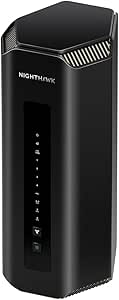 | Best for 10 Gig Home Networks | WiFi standard: WiFi 7 | Bands: Tri-band: 2.4 GHz, 5 GHz, and 6 GHz | Maximum advertised speed: Up to 19 Gbps | VIEW ON AMAZON | See Our Full Breakdown |
| NETGEAR Nighthawk RS140 Dual-Band WiFi 7 Router |  | Best Dual-Band Step-Up | WiFi standard: WiFi 7 | Bands: Dual-band: 2.4 GHz and 5 GHz | Maximum advertised speed: Up to 5 Gbps | VIEW ON AMAZON | See Our Full Breakdown |
| TP-Link Archer BE230 BE3600 Dual-Band Wi-Fi 7 Router |  | Best for Wired 2.5 Gig Flexibility | Wi-Fi standard: Wi-Fi 7 | Wireless bands: Dual-band: 2.4 GHz and 5 GHz; no 6 GHz | Maximum advertised speed: Up to 2882 Mbps on 5 GHz and 688 Mbps on 2.4 GHz | VIEW ON AMAZON | See Our Full Breakdown |
| TP-Link Archer BE400 BE6500 Dual-Band Wi-Fi 7 Router |  | Best Value for Wired Multi-Gig | Wi-Fi standard: Wi-Fi 7 | Bands: Dual-band: 2.4 GHz and 5 GHz | Streams: 6 | VIEW ON AMAZON | See Our Full Breakdown |
| NETGEAR Nighthawk RS300 Tri-Band WiFi 7 Router, Certified Refurbished | 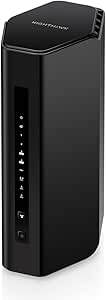 | Best for 6 GHz Wi-Fi | Model: RS300-100NAR | Wireless standard: Wi-Fi 7 | Frequency bands: Tri-band, including 6 GHz | VIEW ON AMAZON | See Our Full Breakdown |
| wifi 7 router for multi gig internet | Coverage | Bands | Device capacity | Wi-Fi standard |
|---|---|---|---|---|
| TP-Link Archer BE600 Tri-Band | Up to 2,600 sq. ft. | Tri-band: 6 GHz, 5 GHz, and 2.4 GHz | Up to 120 devices | Wi-Fi 7 |
| NETGEAR Nighthawk RS300 Tri-Ba | Up to 2,500 sq. ft. | — | Up to 100 devices | — |
| NETGEAR Nighthawk RS500 Tri-Ba | Up to 3,000 sq. ft. | Tri-band: 2.4 GHz, 5 GHz, and 6 GHz | Up to 120 devices | WiFi 7 |
| NETGEAR Nighthawk RS90 WiFi 7 | Up to 2,000 sq. ft. | Dual-band: 2.4 GHz and 5 GHz | Up to 50 devices | WiFi 7 |
| TP-Link Archer BE550 Tri-Band | — | Tri-band: 2.4 GHz, 5 GHz, and 6 GHz | — | Wi-Fi 7 |
| NETGEAR Nighthawk RS100 WiFi 7 | Up to 2,000 sq. ft. | Dual-band: 2.4 GHz and 5 GHz | Up to 50 devices | — |
| NETGEAR Nighthawk BE9300 Tri-B | Up to 2,500 sq. ft. | Tri-band: 2.4 GHz, 5 GHz, and 6 GHz | Up to 100 devices | — |
| NETGEAR Nighthawk RS700S Tri-B | Up to 3,500 sq. ft. | Tri-band: 2.4 GHz, 5 GHz, and 6 GHz | Up to 200 devices | — |
| NETGEAR Nighthawk RS140 Dual-B | Up to 2,250 sq. ft. | Dual-band: 2.4 GHz and 5 GHz | Up to 80 devices | — |
| TP-Link Archer BE230 BE3600 Du | Up to 2,000 sq. ft. | — | Up to 60 devices | Wi-Fi 7 |
| TP-Link Archer BE400 BE6500 Du | — | Dual-band: 2.4 GHz and 5 GHz | — | Wi-Fi 7 |
| NETGEAR Nighthawk RS300 Tri-Ba | Up to 2,500 sq. ft. | — | — | — |
More Details on Our Top Picks
TP-Link Archer BE600 Tri-Band Wi-Fi 7 Router
The Archer BE600 is my strongest all-around fit for multi-gig internet because its port mix can serve both a fast incoming connection and several wired devices: it has a 10 Gbps WAN/LAN port plus four 2.5 Gbps ports. Its tri-band Wi-Fi 7 supports up to 9.7 Gbps combined, giving compatible devices access to 6 GHz while older clients can use 5 GHz or 2.4 GHz. Compared with the Archer BE550, the BE600 adds a 10 Gbps port and a higher stated combined wireless rate, though the BE550 offers five 2.5 Gbps ports and EasyMesh support. The BE600’s coverage claim of up to 2,600 sq. ft. suits many homes, but actual reach depends on walls and placement. Some HomeShield features may require a subscription, and Wi-Fi 7 gains depend on compatible clients.
Pros:- 10 Gbps WAN/LAN port accommodates a very fast internet handoff or wired connection
- Four 2.5 Gbps ports provide multi-gig wired capacity for local devices
- Tri-band Wi-Fi 7 supports up to 9.7 Gbps combined across three frequency bands
- VPN support and HomeShield add network management and security options
Cons:- Some HomeShield features may require a subscription
- Wi-Fi 7 benefits depend on compatible client devices
- Coverage can fall short of the stated maximum in homes with walls or interference
Best for: Households with multi-gig service, several wired devices, and a mix of newer and older Wi-Fi clients
Not ideal for: Buyers who need mesh expansion as a central feature or whose devices cannot use Wi-Fi 7 and 6 GHz
- Wi-Fi standard:Wi-Fi 7
- Bands:Tri-band: 6 GHz, 5 GHz, and 2.4 GHz
- Combined wireless speed:Up to 9.7 Gbps
- Coverage:Up to 2,600 sq. ft.
- Device capacity:Up to 120 devices
- Ethernet ports:1 × 10 Gbps WAN/LAN; 1 × 2.5 Gbps WAN/LAN; 3 × 2.5 Gbps LAN
- USB:1 × USB 3.0
- Processor:Quad-core CPU
Our verdict“Choose the Archer BE600 for a flexible multi-gig home network that needs both a 10 Gbps connection and several 2.5 Gbps wired ports.”
NETGEAR Nighthawk RS300 Tri-Band WiFi 7 Router
The Nighthawk RS300 gives multi-gig households tri-band Wi-Fi 7 without the larger coverage and capacity claims of the RS500. Its 2.5 Gig WAN and two 2.5 Gig LAN ports can connect a multi-gig service and a pair of faster wired devices, while two additional Gigabit LAN ports cover standard equipment. The stated wireless ceiling is 9.3 Gbps, just below the Archer BE550’s 9.2 Gbps and below the RS500’s 12 Gbps; those figures describe combined wireless capacity, not a single device’s internet speed. This makes the RS300 a sensible middle ground for homes that want 6 GHz but do not need a 10 Gbps port. It requires a separate modem or gateway, and NETGEAR Armor continues only with a subscription after its trial.
Pros:- Tri-band Wi-Fi 7 includes the 6 GHz band for compatible clients
- 2.5 Gig WAN and two 2.5 Gig LAN ports support multi-gig wired links
- App-based setup and automatic firmware updates simplify ongoing management
- WPA3 and Advanced Router Protection are included
Cons:- Requires a separate modem or gateway with an RJ45 Ethernet port
- No 10 Gbps Ethernet port for faster service handoffs
- Continued NETGEAR Armor service requires a subscription after the trial
Best for: Multi-gig subscribers who want a standalone tri-band router, a simple app setup, and a few multi-gig wired connections
Not ideal for: Homes needing a 10 Gbps Ethernet port, broad multi-gig LAN expansion, or an all-in-one modem-router
- Wi-Fi generation:WiFi 7
- Frequency bands:Tri-band: 2.4 GHz, 5 GHz, and 6 GHz
- Maximum data transfer rate:Up to 9.3 Gbps
- Coverage:Up to 2,500 sq. ft.
- Device capacity:Up to 100 devices
- Processor:Quad-core 2.0 GHz
- Ethernet ports:1 × 2.5 Gig WAN; 2 × 2.5 Gig LAN; 2 × 1 Gig LAN
- USB:1 × USB 3.0
Our verdict“Pick the RS300 if you want tri-band Wi-Fi 7 and a few 2.5 Gig ports without stepping up to the RS500’s larger coverage claim.”
NETGEAR Nighthawk RS500 Tri-Band WiFi 7 Router
For a larger home with many active devices, the Nighthawk RS500 pairs tri-band Wi-Fi 7 with the lineup’s strongest stated reach and wireless capacity in this batch: up to 3,000 sq. ft. and 12 Gbps. That makes it a stronger fit than the RS300 for buyers who expect more coverage and support for up to 120 devices. The wired side is less ambitious than the Archer BE600, however: the RS500 has a 2.5 Gig WAN port and only one 2.5 Gig LAN port, with three Gigabit LAN ports. So it can take a multi-gig connection, but offers fewer fast wired links and no 10 Gbps port. It also needs an existing modem or gateway. NETGEAR’s Armor trial does not remove the ongoing subscription cost for continued service.
Pros:- Tri-band Wi-Fi 7 with a stated combined speed up to 12 Gbps
- Coverage claim of up to 3,000 sq. ft. and support for up to 120 devices
- Includes both a 2.5 Gig WAN port and a 2.5 Gig LAN port
- Nighthawk app offers guided setup and network management
Cons:- Requires an existing modem or gateway
- Only one 2.5 Gig LAN port; three other LAN ports are Gigabit
- Continued NETGEAR Armor service requires a subscription after its trial
Best for: Households with a larger floor plan, many connected devices, and a multi-gig service that enters through Ethernet
Not ideal for: Users who need several multi-gig wired LAN connections or a 10 Gbps port for faster service
- Wi-Fi standard:WiFi 7
- Bands:Tri-band: 2.4 GHz, 5 GHz, and 6 GHz
- Maximum combined speed:Up to 12 Gbps
- Coverage:Up to 3,000 sq. ft.
- Device capacity:Up to 120 devices
- Antennas:6
- Ethernet ports:1 × 2.5 Gig WAN; 1 × 2.5 Gig LAN; 3 × 1 Gig LAN
- Modem requirement:Existing modem or gateway required
Our verdict“Choose the RS500 when coverage and wireless capacity matter more than having multiple multi-gig wired LAN ports.”
NETGEAR Nighthawk RS90 WiFi 7 Dual-Band Router
The Nighthawk RS90 is the simplest fit here for buyers who want a Wi-Fi 7 router with a multi-gig internet port but do not need tri-band capacity. Its 2.5 Gig WAN port can connect to a multi-gig modem or gateway, while four Gigabit LAN ports serve wired devices that do not need faster-than-Gigabit links. Compared with the Nighthawk RS300, the RS90 gives up the 6 GHz band and has a much lower stated wireless ceiling, so it is less suited to a busy network with many newer clients. Its 2,000 sq. ft. coverage and 50-device capacity also place it below the tri-band options. The tradeoff can make sense for a smaller household, but this router cannot pass multi-gig speeds through its wired LAN ports.
Pros:- 2.5 Gig WAN port accepts a multi-gig internet connection
- Wi-Fi 7 supports compatible newer wireless devices
- Four Gigabit LAN ports provide wired connections for standard devices
- App management and automatic firmware updates are included
Cons:- Dual-band design lacks 6 GHz and the extra capacity of tri-band models
- Gigabit LAN ports cannot deliver multi-gig wired speeds to local devices
- Coverage and device capacity are lower than those of the RS300 and RS500
Best for: Smaller households with multi-gig internet service, mostly Wi-Fi clients, and modest wired networking needs
Not ideal for: Homes that need 6 GHz, high device capacity, or multi-gig speeds on wired LAN connections
- Wi-Fi standard:WiFi 7
- Bands:Dual-band: 2.4 GHz and 5 GHz
- Maximum speed:Up to 3.6 Gbps
- Coverage:Up to 2,000 sq. ft.
- Device capacity:Up to 50 devices
- WAN port:1 × 2.5 Gigabit Ethernet
- LAN ports:4 × 1 Gigabit Ethernet
- Management:NETGEAR Nighthawk app for iOS and Android
Our verdict“The RS90 suits a smaller, mostly wireless home that wants a 2.5 Gig internet input and can accept Gigabit-only wired LAN.”
TP-Link Archer BE550 Tri-Band Wi-Fi 7 Router (BE9300)
The Archer BE550 puts its emphasis on wired flexibility: all five Ethernet ports support 2.5 Gbps, so several computers, storage devices, or access points can use faster-than-Gigabit links at once. That is a useful distinction from the Nighthawk RS500, which has only one 2.5 Gig LAN port, and the BE600, which adds a 10 Gbps port but has fewer 2.5 Gbps ports. Its tri-band Wi-Fi 7 reaches a stated combined 9.2 Gbps and includes 320 MHz channels, Multi-Link Operation, and 4K-QAM for compatible clients. EasyMesh can help extend coverage with compatible gear. The tradeoff is that its WAN tops out at 2.5 Gbps, so it is not the pick for faster incoming service, and most providers require a separate modem.
Pros:- All five Ethernet ports support 2.5 Gbps, including four LAN ports
- Tri-band Wi-Fi 7 includes 320 MHz channels, Multi-Link Operation, and 4K-QAM
- EasyMesh support allows compatible devices to extend coverage
- VPN client and server support plus HomeShield security features
Cons:- 2.5 Gbps WAN port limits the incoming wired connection
- A separate modem is required for most internet providers
- Wireless performance depends on network conditions and compatible client devices
Best for: Multi-gig households connecting several wired computers, storage devices, or access points at speeds above 1 Gbps
Not ideal for: Subscribers with internet service above 2.5 Gbps or buyers seeking a built-in modem
- Wi-Fi standard:Wi-Fi 7
- Bands:Tri-band: 2.4 GHz, 5 GHz, and 6 GHz
- Maximum combined speed:Up to 9.2 Gbps
- Band speeds:6 GHz: 5,760 Mbps; 5 GHz: 2,880 Mbps; 2.4 GHz: 574 Mbps
- Ethernet ports:1 × 2.5 Gbps WAN; 4 × 2.5 Gbps LAN
- Antennas:6
- Mesh compatibility:EasyMesh
- VPN support:VPN client and server
Our verdict“Choose the BE550 if several wired devices need multi-gig links and your internet handoff fits within its 2.5 Gbps WAN limit.”
NETGEAR Nighthawk RS100 WiFi 7 Router
The RS100 is a straightforward way to add WiFi 7 to a home with a multi-gig internet plan, provided you mainly need a faster wireless connection and modest wired capacity. Its 2.5 Gig WAN port can take an internet connection above 1 Gbps, while four 1 Gig LAN ports give wired devices standard gigabit links. Compared with the RS140, it has lower advertised WiFi speed, less listed coverage, and a smaller device limit; the RS100 makes more sense when those limits fit the household and its setup is simpler. It is dual-band, so it lacks the RS9300’s 6 GHz band and greater capacity. Coverage claims can also shrink behind walls, and a separate modem or gateway is required. Armor protection moves to a subscription after its trial.
Pros:- 2.5 Gig WAN port supports an internet connection faster than 1 Gbps
- Four 1 Gig LAN ports for wired devices
- Advertised capacity of up to 50 devices
- Can be managed through the Nighthawk app or a web browser
Cons:- Dual-band design has no 6 GHz band
- All LAN ports are limited to 1 Gigabit
- Requires a separate modem or gateway, and Armor requires a subscription after its trial
Best for: Households moving to a multi-gig plan that need WiFi 7, a 2.5 Gig WAN port, and mostly gigabit wired connections.
Not ideal for: Homes with many busy devices, a need for 6 GHz WiFi, or wired clients that need multi-gig LAN speeds.
- WiFi standard:WiFi 7
- Bands:Dual-band: 2.4 GHz and 5 GHz
- Maximum advertised speed:Up to 3.6 Gbps
- Coverage:Up to 2,000 sq. ft.
- Device capacity:Up to 50 devices
- WAN port:1 × 2.5 Gig Ethernet
- LAN ports:4 × 1 Gig Ethernet
- Setup and management:Nighthawk app or web browser
Our verdict“Choose the RS100 for a modest WiFi 7 upgrade with multi-gig WAN and gigabit wired ports, but look to the RS140 or a tri-band model for more headroom.”
NETGEAR Nighthawk BE9300 Tri-Band WiFi 7 Router
The BE9300 suits multi-gig households that want a 6 GHz band and more wired flexibility without stepping up to the RS700S’s 10 Gig ports. Its 2.5 Gig WAN port accepts a multi-gig internet connection, and two 2.5 Gig LAN ports can serve compatible wired devices; two additional gigabit ports cover standard gear. Three bands and a listed capacity of up to 100 devices give it more room for varied traffic than the dual-band RS140. The tradeoff is that its 9.3 Gbps headline speed is shared across bands, not a promise of that speed for one device or from an internet plan. Coverage is listed at 2,500 sq. ft., below the RS700S, and a separate modem or gateway is needed. Armor requires a subscription after its trial.
Pros:- Tri-band WiFi 7 includes 2.4 GHz, 5 GHz, and 6 GHz
- Two 2.5 Gig LAN ports complement its 2.5 Gig WAN
- Listed for up to 100 devices and 2,500 sq. ft. of coverage
- Includes a USB 3.0 port and app-based management
Cons:- No 10 Gig Ethernet ports for faster wired internet or local networking
- Requires a separate modem or gateway
- Armor requires a subscription after its 30-day trial
Best for: Homes with a multi-gig internet plan, WiFi 7 devices, and a few wired clients with 2.5 Gig Ethernet.
Not ideal for: Buyers who need 10 Gig WAN or LAN, or households whose priority is the broader listed coverage and capacity of the RS700S.
- WiFi standard:WiFi 7
- Bands:Tri-band: 2.4 GHz, 5 GHz, and 6 GHz
- Maximum advertised speed:Up to 9.3 Gbps
- Coverage:Up to 2,500 sq. ft.
- Device capacity:Up to 100 devices
- WAN port:1 × 2.5 Gig Ethernet
- LAN ports:2 × 2.5 Gig Ethernet; 2 × 1 Gig Ethernet
- USB port:USB 3.0
- Processor:Quad-core 2.0 GHz
Our verdict“Pick the BE9300 when you want 6 GHz WiFi and several 2.5 Gig connections without needing the RS700S’s 10 Gig ports.”
NETGEAR Nighthawk RS700S Tri-Band WiFi 7 Router
For a multi-gig connection that may reach 10 Gbps, the RS700S is the clear step up in this group: it pairs a 10 Gig WAN with a 10 Gig LAN port, so a fast internet service and a compatible wired device can both connect beyond 2.5 Gbps. Its tri-band WiFi 7, listed coverage of 3,500 sq. ft., and capacity for up to 200 devices also give it more stated headroom than the BE9300. That headroom only pays off when the plan, client hardware, and home layout can use it; the 19 Gbps figure is a combined advertised wireless rate, not a single-device guarantee. The RS700S still needs an existing modem or gateway, and walls can reduce coverage. It is more router than a smaller household needs.
Pros:- 10 Gig WAN and 10 Gig LAN support very fast internet and wired clients
- Tri-band WiFi 7 includes the 6 GHz band
- Listed coverage of up to 3,500 sq. ft. and capacity for 200 devices
- App-based setup and management
Cons:- Needs compatible internet service and wired devices to make full use of its 10 Gig ports
- Requires an existing modem or gateway
- Armor requires a subscription after its 30-day trial
Best for: Large, device-heavy homes with internet service approaching 10 Gbps and wired equipment that can use 10 Gig Ethernet.
Not ideal for: Households with internet below multi-gig speeds or only gigabit wired devices; the RS140 or BE9300 may fit their needs better.
- WiFi standard:WiFi 7
- Bands:Tri-band: 2.4 GHz, 5 GHz, and 6 GHz
- Maximum advertised speed:Up to 19 Gbps
- Coverage:Up to 3,500 sq. ft.
- Device capacity:Up to 200 devices
- Design:12-stream
- WAN port:1 × 10 Gig Ethernet
- LAN ports:1 × 10 Gig Ethernet; 4 × 1 Gig Ethernet
- Management:NETGEAR Nighthawk app for iOS and Android
Our verdict“Choose the RS700S when your multi-gig plan and wired network can use 10 Gig Ethernet and you need its broader listed capacity.”
NETGEAR Nighthawk RS140 Dual-Band WiFi 7 Router
The RS140 is a stronger dual-band choice than the RS100 for buyers who want higher advertised WiFi speed and a larger device allowance without moving to tri-band. Its 2.5 Gig WAN matches the BE9300’s WAN link rate, but its three LAN ports are gigabit only, so multi-gig wired devices cannot take advantage of a faster local connection through those ports. The BE9300 adds 6 GHz and two 2.5 Gig LAN ports; the RS140 instead keeps the setup focused on 2.4 GHz and 5 GHz. That makes it a fit for homes whose multi-gig use is mainly wireless or internet-facing, not for a 10 Gig network. The listed coverage reaches 2,250 sq. ft., though walls and interference can cut into it.
Pros:- Up to 5 Gbps advertised WiFi speed across two bands
- 2.5 Gig WAN supports multi-gig internet service
- Listed for up to 80 devices and 2,250 sq. ft. of coverage
- Nighthawk app supports setup, speed tests, device pausing, and guest networks
Cons:- No 6 GHz band
- Three LAN ports are limited to 1 Gigabit each
- Requires an existing modem or gateway; Armor subscription follows its trial
Best for: Small and medium homes upgrading to multi-gig internet where most high-speed use is over WiFi and wired devices need only gigabit.
Not ideal for: Buyers who need 6 GHz WiFi, multi-gig LAN ports, or the 10 Gig connections offered by the RS700S.
- WiFi standard:WiFi 7
- Bands:Dual-band: 2.4 GHz and 5 GHz
- Maximum advertised speed:Up to 5 Gbps
- Coverage:Up to 2,250 sq. ft.
- Device capacity:Up to 80 devices
- WAN port:1 × 2.5 Gigabit Ethernet
- LAN ports:3 × Gigabit Ethernet
- Management:NETGEAR Nighthawk app for iOS and Android
- Security:Built-in security features, automatic firmware updates, and 30-day Armor trial
Our verdict“Choose the RS140 for a dual-band multi-gig upgrade with more capacity than the RS100, as long as gigabit LAN ports are enough.”
TP-Link Archer BE230 BE3600 Dual-Band Wi-Fi 7 Router
The Archer BE230 has a practical advantage for homes building a modest multi-gig wired setup: it provides two 2.5 Gbps ports, one configurable as WAN/LAN and one LAN. That gives it more 2.5 Gig wired flexibility than the RS140, although its advertised wireless rate is lower and it has no 6 GHz band. Its dual-band WiFi 7 may suit homes where newer devices use 2.4 GHz or 5 GHz and a few wired devices need faster-than-gigabit links. EasyMesh also offers a path to expand coverage with compatible equipment. The tradeoff is limited future headroom compared with the tri-band BE9300, whose 6 GHz band and 2.5 Gig LAN ports are better suited to heavier wireless use. A separate modem is required.
Pros:- Two 2.5 Gbps ports allow a multi-gig WAN connection and a 2.5 Gig LAN link
- Three additional 1 Gbps LAN ports
- EasyMesh support can extend coverage with compatible equipment
- Tether app, HomeShield security, and parental controls
Cons:- No 6 GHz band
- Advertised wireless speed is lower than the NETGEAR BE9300
- Requires a separate modem
Best for: Households seeking a WiFi 7 router with two 2.5 Gbps ports for a multi-gig WAN connection and one faster wired LAN device.
Not ideal for: Homes that need 6 GHz WiFi, higher listed device capacity, or 10 Gig Ethernet for a faster internet plan.
- Wi-Fi standard:Wi-Fi 7
- Wireless bands:Dual-band: 2.4 GHz and 5 GHz; no 6 GHz
- Maximum advertised speed:Up to 2882 Mbps on 5 GHz and 688 Mbps on 2.4 GHz
- Ports:1 × 2.5 Gbps WAN/LAN; 1 × 2.5 Gbps LAN; 3 × 1 Gbps LAN
- Processor:2.0 GHz quad-core
- Coverage:Up to 2,000 sq. ft.
- Device capacity:Up to 60 devices
- Mesh compatibility:EasyMesh
- Management:TP-Link Tether app
Our verdict“Pick the Archer BE230 when two 2.5 Gbps ports and EasyMesh matter more than 6 GHz WiFi or the greater wireless capacity of the BE9300.”
TP-Link Archer BE400 BE6500 Dual-Band Wi-Fi 7 Router
The Archer BE400 makes sense for a multi-gig plan when wired connections matter more than having a third Wi-Fi band. Its two 2.5 Gbps ports can serve a multi-gig internet connection and a wired device, while three additional gigabit LAN ports cover everyday gear. Wi-Fi 7 features such as MLO and 4K-QAM support newer devices, but its dual-band design lacks the 6 GHz band available on the NETGEAR Nighthawk RS300. That makes the BE400 a more restrained choice for wireless capacity, especially in busy homes with many demanding clients. TP-Link lists coverage up to 2,400 square feet and support for up to 90 devices, though actual performance depends on the home and connection. It requires a separate modem and works with EasyMesh, but not Deco mesh systems.
Pros:- Two 2.5 Gbps ports support a multi-gig WAN connection and a multi-gig wired device
- Wi-Fi 7 features include MLO, Multi-RUs, and 4K-QAM
- Three 1 Gbps LAN ports provide connections for additional wired devices
- EasyMesh compatibility supports expansion with compatible devices
Cons:- Dual-band design omits the 6 GHz band found on the tri-band NETGEAR Nighthawk RS300
- Requires a separate modem
- Not compatible with TP-Link Deco mesh systems
Best for: Households with a multi-gig internet plan, a wired multi-gig device, and mostly moderate Wi-Fi demands
Not ideal for: Homes seeking 6 GHz Wi-Fi or expansion specifically through TP-Link Deco mesh systems
- Wi-Fi standard:Wi-Fi 7
- Bands:Dual-band: 2.4 GHz and 5 GHz
- Streams:6
- Maximum combined bandwidth:6.5 Gbps
- Maximum 5 GHz speed:5,764 Mbps
- Ethernet ports:1 × 2.5 Gbps WAN/LAN, 1 × 2.5 Gbps LAN, 3 × 1 Gbps LAN
- Coverage and device capacity:Up to 2,400 sq. ft.; up to 90 devices
- Mesh compatibility:EasyMesh; not compatible with Deco mesh systems
- Modem:Separate modem required
Our verdict“Choose the Archer BE400 if you want two 2.5 Gbps wired connections and can accept dual-band Wi-Fi and a separate modem.”
NETGEAR Nighthawk RS300 Tri-Band WiFi 7 Router, Certified Refurbished
The tri-band RS300 suits multi-gig households that want a 6 GHz band alongside multi-gig wired connections. It has a 2.5 Gig internet port and two 2.5 Gig LAN ports, so a fast incoming connection can coexist with wired links to compatible devices. Its stated wireless speed reaches 9.3 Gbps, and its listed coverage is up to 2,500 square feet for as many as 100 devices. Compared with the dual-band TP-Link Archer BE400, the RS300 adds 6 GHz, which can give compatible devices another band to use; that advantage depends on device support and signal reach. This listing is certified refurbished, a meaningful condition difference from a new router. It remains router-only, so a separate modem is required, and some plans need a 2.5 Gbps-capable modem.
Pros:- Tri-band Wi-Fi 7 includes 6 GHz
- Two 2.5 Gig LAN ports accommodate wired multi-gig devices
- A 2.5 Gig internet port supports multi-gig service when paired with suitable equipment
- Supports up to 100 devices and lists coverage up to 2,500 sq. ft.
Cons:- Certified refurbished condition may not suit buyers seeking a new router
- Router only; a separate modem is required
- Some cable or fiber plans may require a separate 2.5 Gbps-capable modem
Best for: Multi-gig households with Wi-Fi 7 devices that can use 6 GHz and several wired multi-gig clients
Not ideal for: Buyers who want a new unit or whose internet service requires a modem they do not already have
- Model:RS300-100NAR
- Wireless standard:Wi-Fi 7
- Frequency bands:Tri-band, including 6 GHz
- Maximum wireless speed:Up to 9.3 Gbps
- Ethernet ports:1 × 2.5 Gig internet, 2 × 2.5 Gig LAN, 2 × 1 Gig LAN
- Coverage:Up to 2,500 sq. ft.
- Maximum device capacity:Up to 100 devices
- Security:WPA3, automatic firmware updates, NETGEAR Armor subscription
- Condition and modem:Certified refurbished; separate modem required
Our verdict“Pick the refurbished RS300 if 6 GHz Wi-Fi and multiple multi-gig wired connections matter more than getting a new unit.”

How We Picked
I ranked these routers around the needs behind a multi-gig internet plan: useful WAN and LAN connectivity, Wi-Fi band options, and the ability to serve a mix of newer and older devices. I gave tri-band models an advantage for households with compatible 6 GHz clients or busy networks, while considering dual-band options for buyers who value a simpler setup or have fewer wireless demands. Model names and advertised Wi-Fi class alone do not establish how many multi-gig ports a particular configuration has, so buyers should verify the exact hardware before purchase.
The order reflects versatility first, then the fit between capability and likely household needs. The Archer BE600 leads as a balanced tri-band option; the RS700S is positioned for premium needs, while the BE550 and RS300 offer other tri-band paths. Dual-band routers rank lower for this use case when a buyer needs more wireless capacity, though they can be sensible fits for less demanding setups. I treated the refurbished RS300 as a separate choice because condition, warranty, and seller support change the buying decision.
| wifi 7 router for multi gig internet | Wi-Fi standard | Bands | Coverage | Device capacity |
|---|---|---|---|---|
| TP-Link Archer BE600 Tri-Band | Wi-Fi 7 | Tri-band: 6 GHz, 5 GHz, and 2.4 GHz | Up to 2,600 sq. ft. | Up to 120 devices |
| NETGEAR Nighthawk RS300 Tri-Ba | — | — | Up to 2,500 sq. ft. | Up to 100 devices |
| NETGEAR Nighthawk RS500 Tri-Ba | WiFi 7 | Tri-band: 2.4 GHz, 5 GHz, and 6 GHz | Up to 3,000 sq. ft. | Up to 120 devices |
| NETGEAR Nighthawk RS90 WiFi 7 | WiFi 7 | Dual-band: 2.4 GHz and 5 GHz | Up to 2,000 sq. ft. | Up to 50 devices |
| TP-Link Archer BE550 Tri-Band | Wi-Fi 7 | Tri-band: 2.4 GHz, 5 GHz, and 6 GHz | — | — |
| NETGEAR Nighthawk RS100 WiFi 7 | — | Dual-band: 2.4 GHz and 5 GHz | Up to 2,000 sq. ft. | Up to 50 devices |
| NETGEAR Nighthawk BE9300 Tri-B | — | Tri-band: 2.4 GHz, 5 GHz, and 6 GHz | Up to 2,500 sq. ft. | Up to 100 devices |
| NETGEAR Nighthawk RS700S Tri-B | — | Tri-band: 2.4 GHz, 5 GHz, and 6 GHz | Up to 3,500 sq. ft. | Up to 200 devices |
| NETGEAR Nighthawk RS140 Dual-B | — | Dual-band: 2.4 GHz and 5 GHz | Up to 2,250 sq. ft. | Up to 80 devices |
| TP-Link Archer BE230 BE3600 Du | Wi-Fi 7 | — | Up to 2,000 sq. ft. | Up to 60 devices |
| TP-Link Archer BE400 BE6500 Du | Wi-Fi 7 | Dual-band: 2.4 GHz and 5 GHz | — | — |
| NETGEAR Nighthawk RS300 Tri-Ba | — | — | Up to 2,500 sq. ft. | — |
Factors to Consider When Choosing Wifi 7 Router For Multi Gig Internet
Router selection for multi-gig service starts with your whole network, not the speed printed on the plan. I would map the modem connection, wired devices, busiest Wi-Fi clients, and home layout before choosing a model. These checks help avoid paying for capacity your devices cannot use—or buying a router that bottlenecks the connections you rely on.
Match Every Port to the Job
A multi-gig WAN port lets the router accept a faster-than-gigabit connection from a compatible modem or gateway. That does not mean every LAN port also runs above 1 GbE, so check the port speeds and count before buying. If a desktop, NAS, or switch needs multi-gig access, confirm that the router has a suitable LAN port or plan for a multi-gig switch. A single fast WAN port can feed the household, but several wired devices may still share a slower uplink. Think through the path from modem to router to each device, since the slowest link sets the wired ceiling. This simple diagram often reveals whether you need a router with multiple fast LAN ports or only one fast internet handoff.
Choose Bands for Your Devices and Rooms
Wi-Fi 7 includes support for 2.4, 5, and 6 GHz operation, but not every router in this roundup offers all three bands. The 6 GHz band can provide a less congested route for compatible devices, though its signal generally has a harder time passing through walls than lower-frequency bands. A tri-band router gives you more options for distributing traffic; it does not guarantee that every client will connect faster. Check which of your phones, laptops, and other high-use devices support 6 GHz before treating tri-band as a must-have. In a small home with few clients, a capable dual-band model may be enough. In a busy home, band flexibility can matter more than a headline speed figure.
Separate Internet Speed From Local Wi-Fi Speed
Your internet plan measures the link to your provider, while local transfers measure traffic between devices in your home. A fast router can help with both, but only when the client device, port, and connection path support the same capabilities. Many phones and laptops will not reach the theoretical maximum advertised for a router. A wired multi-gig desktop may benefit from a fast LAN port even if its Wi-Fi performance is irrelevant. If your main goal is smoother streaming or video calls, stable coverage and congestion handling may matter more than peak throughput. Decide which real task you want to improve before comparing speed classes.
Plan for Coverage Before Buying More Speed
Router placement can shape performance as much as the model choice. A router tucked in a cabinet or at one edge of a large home may leave distant rooms with weak signal, especially on 6 GHz. Place it in an open, central location when possible, then check coverage in the rooms where people work or stream. For a long or multi-story home, wired access points or a mesh system may solve dead zones better than moving to a more powerful single router. Mesh nodes connected by Ethernet usually preserve more usable capacity than nodes relying on a weak wireless link. Avoid buying for a large coverage claim without considering walls, floors, and backhaul.
Decide Whether You Need Premium Hardware
Paying for a higher-end router makes sense when its ports, radio options, or capacity solve a problem you already have. It is harder to justify a premium tier when your devices are mostly older, your home is compact, or your internet connection remains below gigabit speeds. Count the devices that are active at the same time, especially televisions, consoles, work computers, and smart home gear. Also check how the router is managed: app-based setup may be convenient, while advanced controls can matter to buyers who segment devices or tune a network. Firmware support and security update practices affect the useful life of the hardware. Match the purchase to the network you expect to run, not just the fastest plan you might eventually order.
Check Compatibility and Ownership Terms
Before replacing your router, confirm whether your provider requires a specific modem, gateway, or configuration. A router does not replace a modem unless the product explicitly combines those functions. For refurbished units, inspect the seller’s warranty, return window, included power supply, and reset condition before committing. Verify the exact model variant and hardware revision, since similar names can hide different port arrangements. Keep the router’s firmware current and use a strong administrator password after setup. These checks reduce setup surprises and help you compare the actual ownership package rather than the model name alone.
Frequently Asked Questions
Do I need a router with a 2.5 GbE WAN port for a multi-gig internet plan?
You need a WAN connection capable of matching the service tier you want to use; a 1 GbE WAN port will cap the internet handoff below many multi-gig plans. Check the router’s exact WAN specification and confirm that your modem or provider gateway offers a matching Ethernet port. Also inspect LAN ports if you want wired devices to receive multi-gig service. A router with a fast WAN but only gigabit LAN can still deliver faster internet over Wi-Fi, but it may limit wired transfers. Confirm the full modem-to-device path before purchasing.
Will a tri-band Wi-Fi 7 router make my older devices faster?
Older devices connect using the Wi-Fi features and bands they support, so they will not gain Wi-Fi 7 capabilities just by joining a newer router. A tri-band model may still help by giving compatible newer clients a 6 GHz option and reducing competition on other bands. The improvement depends on the number and mix of active devices, nearby network congestion, and signal conditions. If most of your clients are older and your home network is not crowded, a dual-band router may be a better fit. Check device compatibility before paying for capabilities your clients cannot use.
Can one Wi-Fi 7 router cover a large or multi-story home?
It depends on the floor plan, building materials, placement, and the rooms where you need reliable service. A single router may work well in an open home, but dense walls and multiple floors can weaken connections, especially on 6 GHz. Start with central, open placement and test the rooms that matter most. If the signal remains weak, wired access points or a mesh setup can extend coverage more reliably than buying a router with a bigger speed claim. Plan for Ethernet backhaul where practical to keep the link between nodes strong.
Should I choose a dual-band Wi-Fi 7 model or a tri-band one for multi-gig service?
Choose based on your clients and network load, not the internet plan alone. Tri-band models add a 6 GHz band that can serve compatible devices and give a busy household more room to distribute traffic. Dual-band models can make sense when the home is smaller, the device mix is less demanding, or the budget is better spent on wired infrastructure. Either type still needs suitable port speeds if your goal includes multi-gig wired connections. Compare your busiest devices and their band support before deciding.
Is a refurbished NETGEAR Nighthawk RS300 a sensible alternative to a new RS300?
It can be a sensible option if the condition and seller coverage meet your expectations. Compare the refurbished unit’s warranty, return policy, included accessories, and whether it has been reset before setup. Those terms matter because they shape support and replacement options if the router arrives with a fault. The model name alone does not tell you whether the refurbished package offers equivalent ownership protection. If dependable coverage is your priority, compare those terms directly with the new RS300 listing before choosing.
Conclusion
For most households seeking a balanced tri-band router, I would choose the TP-Link Archer BE600 as the best overall starting point. Buyers looking for a premium class option should compare the NETGEAR Nighthawk RS700S, while the Archer BE550 is a strong value-minded tri-band candidate when its exact port layout fits the network. For beginners, the NETGEAR Nighthawk RS90 or TP-Link Archer BE230 may suit a simpler setup, provided their dual-band design and ports match the household’s needs. Choose the Archer BE400, RS100, or RS140 when their particular connectivity and band configuration align with your devices, and compare the RS500 with the RS300 for alternative tri-band fits. The refurbished RS300 suits buyers comfortable checking condition and warranty terms. Before deciding, verify port speeds, home coverage, and client compatibility; those details determine which router can actually serve your multi-gig setup.
Fall Picks
fall essentials
As an affiliate, we earn on qualifying purchases.