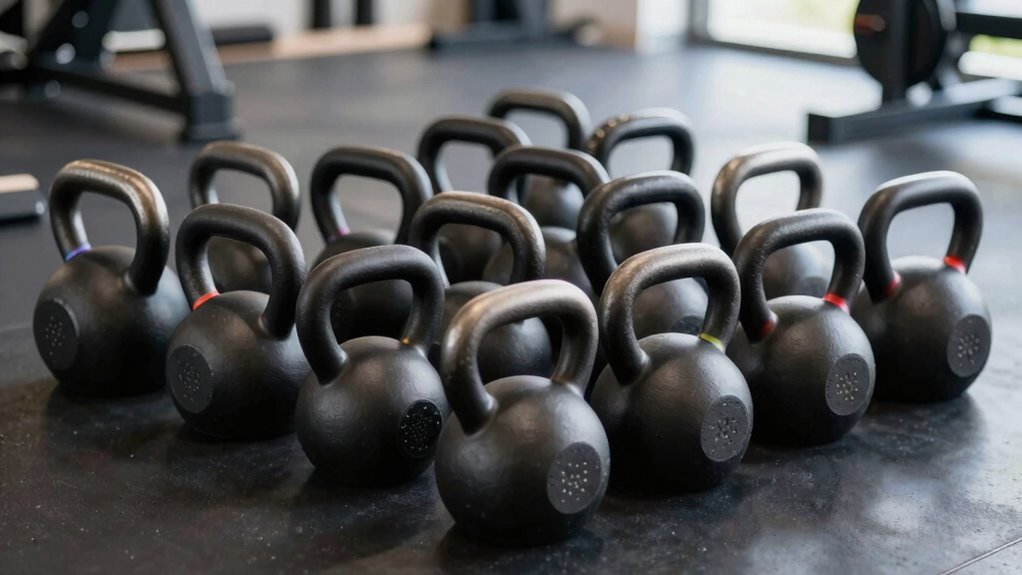

An adjustable kettlebell set can replace several fixed weights, but models differ in load range, adjustment speed, and how naturally they handle during swings. I rank the Rep Fitness Adjustable Kettlebell as the best overall choice for buyers seeking a versatile training tool, while the BowFlex SelectTech 840 stands out for quick weight changes and the Apex plate-compatible handle for people who already own standard plates. The tradeoff is straightforward: compact selector designs save space and time, while plate-based and modular sets can offer a different feel or broader loading options. Weight increments and handle shape also affect whether one set can support both lighter technique work and heavier strength sessions. Read on for the full comparison and guidance on choosing the right setup.

Get home appliances delivered free with Prime
- Fast, free delivery on millions of items
- Prime Video, Amazon Music and more included
- Member-only deals all year
Complete the kit


Key Takeaways
- The Rep Fitness model leads the roundup for buyers who want a well-rounded adjustable option rather than a specialty pick.
- BowFlex prioritizes fast changes, which can make it a better fit for workouts that alternate loads often than plate-based systems.
- The Apex handle depends on standard 1-inch plates, making it most compelling for someone who already owns compatible weights.
- Several compact models share a 6.5–40 lb range; handle comfort, adjustment mechanism, and increment sizes become key differentiators.
- Beginners and experienced lifters may need different ranges: lighter options suit technique and conditioning, while the 44–50 lb choices leave more room to progress.
| Rep Fitness Adjustable Kettlebell | 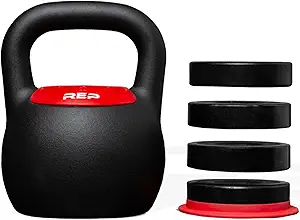 | Best for Quick Adjustments | Weight settings: 5 | Adjustment method: Press down and twist | Surface: Matte powder-coated | VIEW ON AMAZON | See Our Full Breakdown |
| Yes4All Adjustable Kettlebell Set, 40 lb |  | Best Plate-Based Value | Maximum weight: 40 lb | Weight settings: 6 | Plates: 6 cast iron plates | VIEW ON AMAZON | See Our Full Breakdown |
| FitNexus 6-in-1 Adjustable Kettlebell, 6.5–40 lb |  | Best for Two-Handed Moves | Weight range: 6.5–40 lb | Weight options: 6 | Handle width: 8.46 in | VIEW ON AMAZON | See Our Full Breakdown |
| BowFlex SelectTech 840 Adjustable Kettlebell |  | Best for Clearly Defined Weight Jumps | Weight range: 8–40 lb | Available weights: 8, 12, 20, 25, 35, and 40 lb | Weight options: 6 | VIEW ON AMAZON | See Our Full Breakdown |
| Lifepro Powerflow Plus 7-in-1 Adjustable Kettlebell, 3.5–22.5 lb | 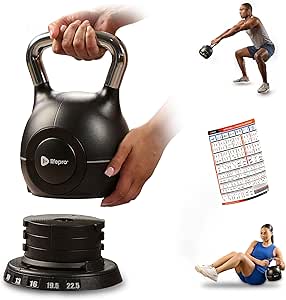 | Best for Lighter Training | Weight settings: 3.5, 7, 10, 13, 16, 19.5, and 22.5 lb | Number of settings: 7 | Dimensions: 8.23 × 12.56 in | VIEW ON AMAZON | See Our Full Breakdown |
| VEVOR Adjustable Kettlebell, 7 Weight Levels |  | Best for Broad Weight Progression | Weight settings: 7 | Weight range: 5–44 lb | Available weights: 5, 11.5, 18, 24.5, 31, 37.5, and 44 lb | VIEW ON AMAZON | See Our Full Breakdown |
| Yagud Adjustable Kettlebell, 2.5–22.5 lb |  | Best for Light Training | Weight range: 2.5–22.5 lb (1.5–10 kg) | Weight settings: 7 | Weight increments: 3.5, 7, 10, 13, 16, 19.5, and 22.5 lb | VIEW ON AMAZON | See Our Full Breakdown |
| Apex Adjustable Kettlebell Handle, 20 lb, Compatible with 1-Inch Weight Plates, Adjustable up to 50 lb |  | Best for Existing Plate Owners | Starting weight: 20 lb | Maximum weight: 50 lb | Included components: 15 lb handle, four spacer disks, 5 lb bottom plate, and center pin | VIEW ON AMAZON | See Our Full Breakdown |
| HXD-ERGO Adjustable Kettlebell, 6-in-1, 6.5–40 lb |  | Best for Two-Handed Home Workouts | Weight range: 6.5–40 lb | Weight settings: 6 | Dimensions: 8.46 in W × 12.99 in H | VIEW ON AMAZON | See Our Full Breakdown |
| Yagud Adjustable Kettlebell, 5–44 lb with 7 Weight Settings |  | Best for Fast, Wide-Range Adjustments | Weight range: 5–44 lb (2–20 kg) | Weight settings: 7 | Available weights: 5, 11.5, 18, 24.5, 31, 37.5, and 44 lb | VIEW ON AMAZON | See Our Full Breakdown |
| kettlebell set adjustable | Weight settings | Weight range |
|---|---|---|
| Rep Fitness Adjustable Kettleb | 5 | Not specified |
| Yes4All Adjustable Kettlebell | 6 | — |
| FitNexus 6-in-1 Adjustable Ket | — | 6.5–40 lb |
| BowFlex SelectTech 840 Adjusta | — | 8–40 lb |
| Lifepro Powerflow Plus 7-in-1 | 3.5, 7, 10, 13, 16, 19.5, and 22.5 lb | — |
| VEVOR Adjustable Kettlebell | 7 | 5–44 lb |
| Yagud Adjustable Kettlebell | 7 | 2.5–22.5 lb (1.5–10 kg) |
| Apex Adjustable Kettlebell Han | — | — |
| HXD-ERGO Adjustable Kettlebell | 6 | 6.5–40 lb |
| Yagud Adjustable Kettlebell | 7 | 5–44 lb (2–20 kg) |
More Details on Our Top Picks
Rep Fitness Adjustable Kettlebell
The press-and-twist handle makes this a strong choice for home workouts where I want to change resistance between movements without handling separate plates. Five settings cover several training loads in one kettlebell, while the secured internal plates and rubber base give it a more contained design than the plate-changing Yes4All Adjustable Kettlebell Set. The matte powder-coated surface is intended to support grip, and the rubber base helps protect floors when I set it down. Its main limitation is that the listing does not give the weight range or increments, so I cannot tell whether its settings match a particular strength plan. I would choose BowFlex SelectTech 840 when clearly listed weights matter more; Rep makes more sense when the adjustment method is the priority.
Pros:- Five weight settings consolidate several kettlebell loads
- Press-and-twist adjustment avoids manually changing plates
- Matte powder-coated surface is designed for grip
- Rubber base helps protect floors
Cons:- Weight range and increments are not specified
- Five settings offer fewer listed options than the six settings on the Yes4All set
Best for: Home exercisers who value quick handle-based changes and do not need to confirm exact weight increments before buying
Not ideal for: Buyers following a plan that requires known weights or specific jumps, since the listed data omits the range and increments
- Weight settings:5
- Adjustment method:Press down and twist
- Surface:Matte powder-coated
- Weight plate retainers:Nylon thermoplastic
- Base:Rubber
- Weight range:Not specified
Our verdict“Choose the Rep Fitness model if fast handle-based adjustment matters more than having a published weight range.”
Yes4All Adjustable Kettlebell Set, 40 lb
The six cast iron plates and 40 lb maximum make this a practical pick for buyers who want a clearly stated ceiling and are comfortable adjusting resistance by hand. Its lock-and-slide mechanism changes the plates, which is a more involved process than the handle adjustments on the Rep Fitness Adjustable Kettlebell or BowFlex SelectTech 840. That tradeoff may suit a workout built around longer blocks at one weight, while the textured wide grip and flat base support everyday handling and upright storage. Six settings give room to progress, though 40 lb may be limiting for stronger lifters or heavy lower-body work. I would pick FitNexus for a twist-lock design with a stated 6.5–40 lb range; Yes4All is better for buyers who prefer a plate-based system and want the total capacity clearly listed.
Pros:- Six weight settings in one kettlebell
- Maximum weight is specified as 40 lb
- Textured, wide handle is designed for a secure grip
- Flat base supports upright storage
Cons:- Adjusting weight requires changing plates
- 40 lb maximum may not cover heavier training needs
Best for: Home lifters who want up to 40 lb in one set, store the kettlebell upright, and do not mind changing plates between exercises
Not ideal for: Lifters who need resistance above 40 lb or frequent, rapid changes without handling plates
- Maximum weight:40 lb
- Weight settings:6
- Plates:6 cast iron plates
- Handle:Textured, non-slip wide grip
- Base:Flat, round protective base
- Adjustment mechanism:Lock and slide
Our verdict“Choose Yes4All if you want a plate-based adjustable set with a stated 40 lb maximum and can accept slower changes.”
FitNexus 6-in-1 Adjustable Kettlebell, 6.5–40 lb
FitNexus pairs a 6.5–40 lb range with a wide, textured handle measuring 8.46 inches, making it the clearest fit here for people who want one kettlebell for both single- and two-handed movements. Its bidirectional twist lock changes resistance without the plate handling required by the Yes4All Adjustable Kettlebell Set. The steel construction and protective rubber base also suit home training where floor contact and compact storage matter. The 40 lb ceiling is shared with Yes4All and BowFlex, so it does not solve the needs of lifters who want heavier loads. Compared with BowFlex’s dial, FitNexus uses a twist lock; buyers should choose based on which adjustment style fits their routine. The listing gives fewer details about the individual weight options than BowFlex does.
Pros:- Six weight options span 6.5–40 lb
- 8.46-inch wide, textured handle accommodates two-handed exercises
- Bidirectional twist lock supports quick weight changes
- Steel construction and rubber base suit home workouts
Cons:- Maximum weight is 40 lb
- Individual weight increments are not listed
Best for: Home exercisers who alternate between one- and two-handed kettlebell movements and want a stated 6.5–40 lb range
Not ideal for: Lifters who need loads above 40 lb or require a fully specified list of each weight option
- Weight range:6.5–40 lb
- Weight options:6
- Handle width:8.46 in
- Adjustment mechanism:Bidirectional twist lock
- Material:Heavy-duty steel
- Base:Protective rubber
- Part number:KB-01
Our verdict“Choose FitNexus for a wide handle and twist-lock adjustment across a stated 6.5–40 lb range.”
BowFlex SelectTech 840 Adjustable Kettlebell
The BowFlex dial selects from six published weights between 8 and 40 lb, which makes workout planning more straightforward than with the Rep Fitness model, whose range and increments are not specified. Dial adjustment also avoids the manual plate changes required by the Yes4All set, making BowFlex a better fit for sessions that alternate loads. Its space-saving design replaces six kettlebells, a useful advantage in a home workout area with limited storage. The sequence has large jumps from 12 to 20 lb and 25 to 35 lb, though, so it may not provide the gradual progression some beginners or technique-focused lifters want. FitNexus offers a lower listed starting weight at 6.5 lb, while BowFlex provides a specific weight lineup and dial selection. The included JRNY trial is time-limited, so I would base the choice on the kettlebell itself.
Pros:- Dial adjustment changes weights without manually swapping plates
- Six specific weight options are listed
- Replaces six kettlebells in a space-saving design
- Supports swings, rows, squats, and twists
Cons:- Large gaps separate some weight options
- The JRNY membership offer lasts only two months
Best for: Home exercisers who want dial-based changes and a clearly listed set of weights for general strength workouts
Not ideal for: Beginners who need small progression steps between 12 and 20 lb or between 25 and 35 lb
- Weight range:8–40 lb
- Available weights:8, 12, 20, 25, 35, and 40 lb
- Weight options:6
- Adjustment:Dial
- Membership offer:Two-month free trial of JRNY All-Access Membership
Our verdict“Choose BowFlex for convenient dial changes and a published weight lineup, provided its larger jumps suit your training.”
Lifepro Powerflow Plus 7-in-1 Adjustable Kettlebell, 3.5–22.5 lb
Lifepro is the light-load specialist in this group: its seven settings from 3.5 to 22.5 lb start well below the 8 lb minimum on BowFlex SelectTech 840 and offer more listed steps than the five-setting Rep Fitness model. A twist of the handle changes the load, while the compact base stores unused plates and the enclosed body keeps plate edges covered. Those details make it appealing for smaller spaces, controlled strength work, or someone building confidence with lighter resistance. The tradeoff is a firm 22.5 lb ceiling; FitNexus, Yes4All, and BowFlex all reach 40 lb, making them more suitable as strength demands rise. I would treat the guided workout videos as a bonus rather than the main reason to buy, since the lighter capacity is the deciding factor.
Pros:- Seven settings start at 3.5 lb and reach 22.5 lb
- Twist-handle adjustment simplifies weight changes
- Compact base stores unused plates
- Enclosed body covers plate edges
Cons:- 22.5 lb maximum is below the 40 lb capacity of BowFlex and FitNexus
- The listed data provides no further customer feedback to clarify long-term use
Best for: Beginners and lighter-load exercisers who want small, listed weight steps and a compact adjustable kettlebell
Not ideal for: Experienced lifters or anyone planning to progress past 22.5 lb, since several alternatives in this roundup reach 40 lb
- Weight settings:3.5, 7, 10, 13, 16, 19.5, and 22.5 lb
- Number of settings:7
- Dimensions:8.23 × 12.56 in
- Adjustment:Twist handle
- Handle material:Die-cast aluminum
- Plate material:Steel
- Body:Fully enclosed, PP-reinforced
Our verdict“Choose Lifepro for compact, lighter-load training with seven settings, but pick a 40 lb alternative if you expect to need heavier resistance.”
VEVOR Adjustable Kettlebell, 7 Weight Levels
The VEVOR spans seven settings from 5 to 44 lb, making it a flexible pick for someone who wants one kettlebell to cover light work and progressively heavier training. Its steps are mostly 6.5 lb, so changes are broad enough to make progression simple, though less fine-grained than a set with smaller jumps. Compared with the Yagud 2.5–22.5 lb, it reaches much heavier loads; the tradeoff is a higher starting weight that may be less useful for very light rehabilitation or beginner exercises. The aluminum alloy handle and shock-absorbing ABS body keep the design distinct from cast-iron plate systems such as the Apex, while the flat base helps with storage. Its 44 lb ceiling still limits lifters who need heavier swings or squats.
Pros:- Seven settings cover a useful range from 5 to 44 lb.
- Flat base supports stable storage between sessions.
- Space-saving format replaces several separate kettlebells.
- Shock-absorbing ABS body pairs with an electroplated aluminum alloy handle.
Cons:- The 44 lb maximum may be limiting for stronger lifters.
- Weight steps are relatively large for users who prefer smaller increases.
Best for: Home exercisers who want one adjustable kettlebell for workouts that progress from moderate to relatively heavy loads.
Not ideal for: Beginners who need very light starting resistance or experienced lifters whose kettlebell work regularly exceeds 44 lb.
- Weight settings:7
- Weight range:5–44 lb
- Available weights:5, 11.5, 18, 24.5, 31, 37.5, and 44 lb
- Handle material:Electroplated aluminum alloy
- Body material:ABS
- Base:Flat
Our verdict“Choose the VEVOR if you want broad weight coverage in one compact unit and do not need loads above 44 lb.”
Yagud Adjustable Kettlebell, 2.5–22.5 lb
With a 2.5 lb starting point and seven settings topping out at 22.5 lb, this Yagud is aimed at beginners, lighter accessory work, and moves where control matters more than heavy loading. That low end gives it a clearer role than the VEVOR 5–44 lb, which reaches much heavier but cannot start as light. The wide aluminum handle is described as suitable for one- and two-handed movements, while internal fasteners are intended to limit rattling as the weight changes. Its steel plate core adds substance inside the ABS shell, though the product remains a single adjustable unit rather than a traditional cast-iron bell. The main compromise is its 22.5 lb ceiling; and at 12.6 inches tall, it may feel bulky compared with fixed kettlebells.
Pros:- Seven settings begin at a light 2.5 lb.
- Wide ergonomic aluminum handle supports one- and two-handed exercises.
- Steel plate core provides adjustable resistance inside the shell.
- Internal fasteners are designed to reduce rattling.
Cons:- Maximum resistance is limited to 22.5 lb.
- Its 12.6-inch height is larger than a traditional kettlebell.
Best for: New kettlebell users and home exercisers focused on light strength work, controlled movements, or gradual early progression.
Not ideal for: Intermediate and advanced trainees who need heavier resistance for swings, squats, or loaded carries.
- Weight range:2.5–22.5 lb (1.5–10 kg)
- Weight settings:7
- Weight increments:3.5, 7, 10, 13, 16, 19.5, and 22.5 lb
- Dimensions:8.3 in diameter × 12.6 in height
- Handle material:Aluminum
- Core material:Steel plates
- Shell material:ABS
Our verdict“Pick this Yagud for light, beginner-friendly training if its 22.5 lb maximum will cover your workouts.”
Apex Adjustable Kettlebell Handle, 20 lb, Compatible with 1-Inch Weight Plates, Adjustable up to 50 lb
The Apex works differently from selector-style kettlebells: it starts at 20 lb and accepts standard 1-inch plates to reach 50 lb. That makes it the most compelling choice here for someone who already owns compatible plates and wants heavier training without buying a separate full set. In contrast, the HXD-ERGO 6-in-1 adjusts within its included system and is more self-contained, while Apex adjustments beyond 20 lb depend on plates you supply. Its cast-iron construction and powder-coated finish give it a more traditional material profile than the ABS-bodied VEVOR and Yagud models. The included handle, spacer disks, bottom plate, and center pin establish the starting setup, but loading and changing plates is less convenient than a quick-adjust mechanism. Buyers without 1-inch plates should factor in that limitation.
Pros:- Adjusts from a 20 lb starting setup up to 50 lb.
- Works with standard 1-inch weight plates.
- Cast-iron construction has a powder-coated finish.
- Included components provide the handle, spacers, bottom plate, and center pin.
Cons:- Adjustments above the included 20 lb setup require compatible plates.
- Plate changes take more handling than selector-style adjustment.
Best for: Home gym owners with standard 1-inch plates who want a kettlebell setup that can reach 50 lb.
Not ideal for: Buyers seeking a self-contained adjustable kettlebell with quick changes and no extra plates to source.
- Starting weight:20 lb
- Maximum weight:50 lb
- Included components:15 lb handle, four spacer disks, 5 lb bottom plate, and center pin
- Plate compatibility:Standard 1-inch plates
- Material:Cast iron
- Finish:Powder-coated
- Handle style:U-shaped
Our verdict“Choose the Apex if you already own 1-inch plates and want a plate-loaded kettlebell that reaches 50 lb.”
HXD-ERGO Adjustable Kettlebell, 6-in-1, 6.5–40 lb
The HXD-ERGO combines six weight settings from 6.5 to 40 lb with a wide ergonomic handle meant to accommodate two-handed exercises. That handle focus gives it a distinct use case beside the Yagud 2.5–22.5 lb, which starts lighter, and the VEVOR, which offers seven settings and a 44 lb maximum. HXD-ERGO’s twist adjustment in either direction is designed for quick changes, so it suits home sessions that move between exercises without plate swapping. Rust-proof steel construction also sets it apart from the ABS shells used by those alternatives. The included lid, base, and five weights make the system self-contained, but the listing specifies one kettlebell, not a pair. Its 40 lb ceiling and six settings leave fewer options for heavy or finely stepped training.
Pros:- Six settings replace several individual kettlebells.
- Two-way twist adjustment is designed for quick changes.
- Wide handle accommodates two-handed exercises.
- Rust-proof steel construction is specified.
Cons:- Package includes one kettlebell, so paired exercises need another unit.
- The 6.5–40 lb range may not suit very light or heavy training needs.
Best for: Home trainees who prioritize two-handed kettlebell movements and want quick weight changes in a single unit.
Not ideal for: People who need a pair of matching kettlebells, lighter-than-6.5 lb settings, or loads above 40 lb.
- Weight range:6.5–40 lb
- Weight settings:6
- Dimensions:8.46 in W × 12.99 in H
- Construction:Rust-proof steel
- Included:Kettlebell lid, base, and 5 weights
Our verdict“Choose the HXD-ERGO for quick-adjust home workouts with two-handed movements if one kettlebell and a 40 lb limit are enough.”
Yagud Adjustable Kettlebell, 5–44 lb with 7 Weight Settings
This Yagud pairs seven settings from 5 to 44 lb with quick adjustment and internally secured steel plates, giving it a broad range without manual plate changes. It overlaps with the VEVOR’s 5–44 lb span, but Yagud specifies an aluminum handle and steel plates designed to minimize rattling; VEVOR instead describes an electroplated aluminum alloy handle and shock-absorbing ABS body. Compared with the Apex, Yagud is more convenient to adjust, while Apex reaches 50 lb and uses standard plates. The ABS shell helps keep the design compact relative to a plate-loaded setup, though the stated 14.1-inch height and 10-inch diameter still make it larger than a traditional bell. Its 44 lb cap may also fall short for lifters who need heavier resistance.
Pros:- Seven settings cover 5–44 lb in one kettlebell.
- Quick adjustment avoids manual plate changes.
- Aluminum handle supports one- and two-handed use.
- Steel plates are internally secured to limit rattling.
Cons:- The 44 lb maximum may not be enough for heavier training.
- Its listed dimensions are larger than a traditional kettlebell.
Best for: Home exercisers who want seven quick-adjust settings across a 5–44 lb range without handling separate plates.
Not ideal for: Lifters who need more than 44 lb or buyers with limited storage space for a 14.1-inch-tall unit.
- Weight range:5–44 lb (2–20 kg)
- Weight settings:7
- Available weights:5, 11.5, 18, 24.5, 31, 37.5, and 44 lb
- Dimensions:10 in diameter × 14.1 in high
- Body diameter:8.6 in
- Handle material:Aluminum
- Shell material:ABS
- Weight plate material:Steel
Our verdict“Pick this Yagud for convenient adjustment across a broad home-training range if its size and 44 lb limit fit your space and workouts.”

How We Picked
I compared these ten adjustable kettlebells on the details that change day-to-day training: usable weight range, adjustment method, handling, and storage footprint. A broad range can cover more exercises, but it only helps if the increments suit the movements and the handle remains practical as the load changes. I also considered whether a set needs separate plates, how quickly a user can change weight, and whether its stated compatibility creates extra setup work.
The ranking favors options that balance versatility with a straightforward home workout experience. Models with a clear convenience or compatibility advantage earn a place for the right buyer, even when their range is narrower or their setup is more specialized. That is why a quick-change selector, a light beginner-friendly set, and a plate-compatible handle fill different roles instead of being judged as interchangeable products.
Factors to Consider When Choosing Kettlebell Set Adjustable
Before choosing a set, match its weight range and adjustment style to the workouts you actually plan to do. These factors can help you avoid paying for capacity you will not use or choosing a mechanism that interrupts your training.
Match the Range to Your Movements
A kettlebell used for presses and raises needs a different working load from one used for deadlifts or two-handed swings. Think through the lightest movement you expect to train and the heaviest one you want to progress, then check that the set spans both. A wide stated range can still feel limiting if its jumps are too large for controlled upper-body exercises. Beginners may benefit from lower starting weights for learning hinge and rack positions, while experienced lifters may outgrow a 22.5 lb ceiling quickly. Avoid choosing only by the maximum number: the useful range is the part you can train with safely and repeatedly.
Check the Weight Increments
Weight increments determine how precisely you can progress, especially on presses, cleans, and other movements where a small increase can change the difficulty noticeably. Compare the available settings with the loads you already use, if you have that information, and consider how often you will want to move up. Larger jumps may work well for lower-body exercises but can stall progress on smaller muscle groups. Selector systems and modular designs may present their settings differently, so read the actual adjustment steps rather than relying on the total range alone. Frequent, manageable increases tend to be more useful than a high maximum that comes with awkward gaps.
Choose Between Fast Changes and Flexible Loading
A selector mechanism can make it easier to alternate weights during circuits or shared workouts. Plate-based systems may suit people who already own compatible plates and do not mind a more hands-on change between exercises. Think about whether weight changes happen once per session or repeatedly; that pattern matters more than a mechanism’s headline convenience. With plate-compatible handles, verify the plate diameter and fit before assuming existing weights will work. Fast adjustment saves workout time, while compatibility with existing equipment can make a simpler setup more practical for some homes.
Consider Handle Feel and Clearance
Kettlebell shape affects how the weight sits in the hand and against the forearm during cleans, presses, and rack holds. Adjustable designs may have a different balance or bulk than a fixed bell, so check the handle opening and the overall form where product details provide them. A grip that suits two-handed swings may feel cramped for a one-handed rack position. Also think about clearance: a larger assembly can be less convenient near the floor or when moving between exercises. Fit matters across the movements you train, not just whether you can hold the handle while standing still.
Plan for Storage and Setup
One adjustable bell can take less room than a rack of fixed weights, but its base, plates, or adjustment parts still need a home. Check whether the complete set stays assembled between sessions or needs parts stored separately. If you train in a shared room, a compact footprint and quick setup can matter more than a larger range. Keep small components together so a missing part does not interrupt a workout. Measure the space where you will store and use it, including room to set the bell down safely.
Pay More for a Benefit You Will Use
A premium or more elaborate design makes sense when its adjustment speed, build details, or weight capacity solve a real training problem. For occasional sessions with one main load, a simpler design may be adequate even if it takes longer to adjust. If several people share the set, convenient changes and a broader useful range can have more value because different users can set their own loads. Check what is included and what must be supplied separately, particularly with plate-based options. Spend for repeated convenience or needed capacity, not for settings that will rarely enter your program.
Frequently Asked Questions
Can one adjustable kettlebell replace a set of fixed kettlebells?
It can cover several training loads in less storage space, which makes it useful for many home workouts. It may not feel or change as quickly as having several fixed bells ready, especially in fast circuits. Compare the adjustable model’s increments with the loads your routine requires. Also consider whether its balance and handle shape work for your preferred movements. If you train with a narrow range of weights and change loads often, fixed bells may still be more convenient.
Is a 22.5 lb maximum enough for a beginner?
It may be enough for learning technique, lighter presses, and conditioning, but it depends on the exercises and the trainee. Lower-body hinges and swings can outgrow that ceiling sooner than controlled upper-body movements. Think about how quickly you expect to progress and whether the set can support your next stage of training. A higher-capacity option can last longer, though a heavy starting load is not automatically useful for learning. Choose a range that includes manageable weights for your current skill level.
Should I choose a selector-style bell or a plate-compatible handle?
Choose based on how often you plan to change loads and what equipment you already own. Selector-style designs suit sessions that move between weights because they can reduce setup steps. A plate-compatible handle may make more sense if you already have matching 1-inch plates and accept manual changes. Confirm plate fit and the total loading limits before purchase. For a shared workout space, quick changes can be more valuable than reusing plates you rarely need elsewhere.
How much weight range should I leave room for as I get stronger?
There is no single useful ceiling for every trainee because strength gains vary by movement and training history. Estimate the loads you expect to use for swings, squats, presses, and carries separately rather than picking one target number. A broader range gives more room to progress, but only if the intermediate settings remain practical. If you are new to kettlebells, technique and controlled movement should guide early loading. For an experienced lifter, the maximum may be the deciding factor if current training loads already approach a set’s limit.
What should I check before buying an adjustable kettlebell for a small room?
Check the assembled footprint, where adjustment parts sit, and whether the bell needs a dedicated base or storage area. Leave enough clear floor to swing or set the weight down without striking furniture or walls. A compact unit can still require room for safe movement around it. If the design uses separate plates, account for storing them and changing them without blocking the workout area. A smaller training range may be a better fit if it lets you exercise safely and consistently.
Conclusion
For most buyers seeking one adaptable home training tool, I recommend the Rep Fitness Adjustable Kettlebell as the best overall pick. The BowFlex SelectTech 840 is the better choice for people who value quick changes, while the Apex handle suits buyers with compatible 1-inch plates who want to build around equipment they already own. Beginners focused on lighter practice can look to the Lifepro Powerflow Plus or the lower-range Yagud 2.5–22.5 lb; those expecting heavier work should favor options that reach 40 lb or more. For a value-minded comparison, consider the Yes4All 40 lb set alongside the other models with similar capacity, paying close attention to adjustment style and handling. Your best fit is the set whose weight steps, grip, and setup match the way you train.
NFL season / tailgating Picks
team gear
As an affiliate, we earn on qualifying purchases.