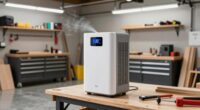
For most two-car garages, I’d start with the TEMPWARE 7,500W hardwired heater: it pairs substantial output with a remote, though it needs a suitable 240V circuit and professional installation may be appropriate. The Comfort Zone 10,000W suits buyers prioritizing higher output, while the InoKraft 7,500W plug-in model offers a different route if its NEMA 14-50 outlet matches the garage’s electrical setup. The main tradeoff is between high-output 240V units that need dedicated wiring and lower-powered 120V heaters that are easier to place but may warm only a limited area. I compared all 15 options by power, mounting and wiring needs, controls, and how well their format fits a two-car space. Read on for the full breakdown and guidance on matching a heater to your garage.
Complete the kit


Key Takeaways
7,500W models anchor this lineup. TEMPWARE, GASLAND, and several Comfort Zone picks combine high output with 240V operation, making them more plausible whole-space candidates than the 120V options.
Higher wattage does not remove circuit limits. The 10,000W Comfort Zone may suit a garage needing more output, but available electrical capacity and installation requirements should drive the decision.
Plug-in convenience depends on the outlet. InoKraft’s NEMA 14-50P avoids hardwiring only when the garage already has a compatible receptacle and circuit.
120V radiant and two-pack heaters serve localized needs. Shinic and BEYOND HEAT options can make sense for warming a workbench or occupied zone; they are not direct substitutes for higher-output 240V units across a two-car garage.
Controls and format distinguish close-output picks. Remote controls, timers, thermostats, and wall or ceiling mounting can improve daily use, but they do not compensate for a mismatch between heater capacity and garage conditions.
| TEMPWARE 240V Hardwired Electric Garage Heater 7500W with Remote Control |  | Best Overall for a Mid-Size Two-Car Garage | Power: 7,500W high / 6,250W low | Voltage: 240V hardwired | Heating capacity: 25,590 BTU | VIEW ON AMAZON | See Our Full Breakdown |
| Comfort Zone 10,000-Watt Hard-Wired Garage Heater |  | Best for Large or Hard-to-Heat Garages | Power: 10,000W | Voltage: 240V AC, single phase | Installation: Hardwired ceiling mount | VIEW ON AMAZON | See Our Full Breakdown |
| Comfort Zone 5000W Ceiling Mounted Garage Heater, 240V Electric Shop Heater with 3 Heat Settings |  | Best Simple Hardwired Pick | Power: 5,000W | Voltage: 240V | Heat settings: 3 | VIEW ON AMAZON | See Our Full Breakdown |
| Comfort Zone 7,500-Watt Hard-Wired Ceiling-Mount Garage Heater with Remote |  | Best for Remote-Controlled Ceiling Heat | Model: CZ230ERBK | Power: 7,500W | Voltage: 240V | VIEW ON AMAZON | See Our Full Breakdown |
| Shinic 120V Electric Garage Heater – Ceiling Mounted Radiant Quartz Heater |  | Best for Targeted, Plug-In Warmth | Voltage: 120V | Heating type: Quartz radiant | Power modes: 750W low / 1,500W high, with or without work light | VIEW ON AMAZON | See Our Full Breakdown |
| Comfort Zone 5,000-Watt Hard-Wired Ceiling-Mount Electric Garage Heater |  | Best for Permanent, Floor-Clear Installation | Power: 5,000 watts | Voltage: 240 volts | Heating type: Fan-forced | VIEW ON AMAZON | See Our Full Breakdown |
| Shinic Remote Control 120V Electric Ceiling-Mounted Garage Heater |  | Best for Spot Heating and Visibility | Voltage: 120V | Power: 750W / 1500W | Heating type: Radiant quartz, dual tubes | VIEW ON AMAZON | See Our Full Breakdown |
| Shinic 2-Pack 120V Ceiling-Mounted Electric Garage Heaters with Remote Control |  | Best for Two Separate Work Zones | Quantity: 2 heaters | Voltage: 120V | Power settings: 750W and 1500W per heater | VIEW ON AMAZON | See Our Full Breakdown |
| GASLAND 7,500W Electric Garage Heater with Remote, 240V |  | Best for High-Output Forced-Air Heating | Power: 7,500W | Voltage: 240V | Heat output: 25,500 BTU/hour | VIEW ON AMAZON | See Our Full Breakdown |
| InoKraft 7,500W Electric Garage Heater with NEMA 14-50P Plug |  | Best for Flexible Wall or Ceiling Mounting | Power: 7,500 watts | Voltage and amperage: 240 volts; 31.25 A | Heating method: Forced air | VIEW ON AMAZON | See Our Full Breakdown |
| Comfort Zone CZ230ER Hard-Wired Ceiling Mount Garage Space Heater |  | Best for Broad Two-Car Coverage | Model: CZ230ER | Power: 7,500 watts | Voltage: 240 volts | VIEW ON AMAZON | See Our Full Breakdown |
| VEVOR 5000W Electric Garage Heater |  | Best for Flexible Mounting | Power: 5,000 watts | Heat output: 17,064 BTU | Voltage: 240V | VIEW ON AMAZON | See Our Full Breakdown |
| Dr. Infrared Heater DR-988 240V Electric Industrial Garage Heater |  | Best for Portable High-Output Heat | Power: 5,600W at 240V; 4,200W at 208V | Heat output: About 18,500 BTU | Thermostat range: 37°F–113°F | VIEW ON AMAZON | See Our Full Breakdown |
| BEYOND HEAT 120V 1500W Electric Garage Heater, 2-Pack |  | Best for Spot Heating Without 240V | Quantity: 2 heaters | Voltage: 120V | Power: 1,500W per heater | VIEW ON AMAZON | See Our Full Breakdown |
| Shinic 2-Pack 120V Electric Garage Heater |  | Best for Adjustable Workbench Spot Heat | Quantity: 2 heaters | Voltage: 120V | Power settings: 750W / 1,500W per heater | VIEW ON AMAZON | See Our Full Breakdown |
| electric garage heater for 2 car garage | Voltage | Power | Mounting |
|---|---|---|---|
| TEMPWARE 240V Hardwired Electr | 240V hardwired | 7,500W high / 6,250W low | — |
| Comfort Zone 10,000-Watt Hard- | 240V AC, single phase | 10,000W | — |
| Comfort Zone 5000W Ceiling Mou | 240V | 5,000W | — |
| Comfort Zone 7,500-Watt Hard-W | 240V | 7,500W | — |
| Shinic 120V Electric Garage He | 120V | — | — |
| Comfort Zone 5,000-Watt Hard-W | 240 volts | 5,000 watts | Ceiling mount |
| Shinic Remote Control 120V Ele | 120V | 750W / 1500W | Ceiling-mounted |
| Shinic 2-Pack 120V Ceiling-Mou | 120V | — | Ceiling-mounted |
| GASLAND 7,500W Electric Garage | 240V | 7,500W | — |
| InoKraft 7,500W Electric Garag | — | 7,500 watts | Wall or ceiling |
| Comfort Zone CZ230ER Hard-Wire | 240 volts | 7,500 watts | Ceiling mount, hard-wired |
| VEVOR 5000W Electric Garage He | 240V | 5,000 watts | Wall or ceiling |
| Dr. Infrared Heater DR-988 240 | — | 5,600W at 240V; 4,200W at 208V | Portable floor unit, wall, or ceiling |
| BEYOND HEAT 120V 1500W Electri | 120V | 1,500W per heater | Ceiling-mounted |
| Shinic 2-Pack 120V Electric Ga | 120V | — | Ceiling-mounted with 90° adjustable bracket |
More Details on Our Top Picks
TEMPWARE 240V Hardwired Electric Garage Heater 7500W with Remote Control
The TEMPWARE pairs 7,500W output with a stated coverage area of up to 1,250 sq. ft., making it a strong fit when I want one ceiling-mounted style heater to handle a typical two-car garage. Its digital thermostat, remote, adjustable louvers, and programmable timer give me more control than the manual-knob Comfort Zone 5000W, while the lower 6,250W setting offers a way to temper output when full power is unnecessary. The tradeoff is installation: this unit is 240V hardwired, so it needs a suitable circuit and electrician, and it has no power cord. Coverage figures do not guarantee even warmth in every garage; insulation, ceiling height, and cold-weather conditions matter. I’d choose it for balanced output and controls, but the 10,000W Comfort Zone is the stronger candidate for a larger or harder-to-heat space.
Pros:- 7,500W high setting and stated coverage up to 1,250 sq. ft.
- Digital thermostat, remote, and 1–12 hour programmable timer
- Adjustable louvers and mounting angle help direct airflow
- ETL certified heavy-duty steel construction with overheat auto-shutoff
Cons:- Requires 240V hardwired installation by a qualified electrician
- No power cord is included
- Remote batteries are not included
Best for: Owners of a reasonably insulated two-car garage who want remote and thermostat control with substantial fan-forced heat.
Not ideal for: Renters or buyers without an available 240V circuit who need a plug-in heater or cannot arrange hardwired installation.
- Power:7,500W high / 6,250W low
- Voltage:240V hardwired
- Heating capacity:25,590 BTU
- Stated coverage:Up to 1,250 sq. ft.
- Thermostat range:45°F–95°F
- Timer:Programmable, 1–12 hours
- Controls:Digital thermostat and remote control
- Construction and certification:Heavy-duty steel; ETL certified
Our verdict“Choose the TEMPWARE for a two-car garage that needs substantial, adjustable heat and has the wiring for a hardwired 240V unit.”
Comfort Zone 10,000-Watt Hard-Wired Garage Heater
With 10,000 watts, this Comfort Zone has the highest stated output among these five picks, so it suits a large two-car garage or a workspace that loses heat quickly. Its fan-forced design and adjustable airflow vents are meant to spread warmth, while the digital thermostat, remote, and 12-hour timer make day-to-day adjustment easier than on the Comfort Zone 5000W with its manual knobs. That extra output comes with a real electrical and installation commitment: it needs a 240V single-phase hardwired connection and ceiling mounting. Its listed specs do not state a coverage area, so I would not assume it heats more square footage than the TEMPWARE’s stated 1,250 sq. ft. Choose this model when output is the priority and an electrician can confirm the circuit; skip it if you mainly need modest, targeted warmth.
Pros:- 10,000W output for demanding garage heating needs
- Fan-forced heat with adjustable airflow vents
- Digital thermostat, remote control, and 12-hour timer
- Steel housing, enclosed motor, sheathed elements, and overload protection
Cons:- Requires a 240V single-phase hardwired connection
- Ceiling mounting requires installation work and an appropriate mounting location
- No coverage area is specified in the product data
Best for: Owners of a large, drafty two-car garage or workshop who can support a 10,000W, 240V hardwired ceiling heater.
Not ideal for: Buyers with limited electrical capacity or a smaller garage who do not need the higher output and installation demands.
- Power:10,000W
- Voltage:240V AC, single phase
- Installation:Hardwired ceiling mount
- Heat settings:2
- Heating method:Fan-forced with adjustable airflow vents
- Controls:Digital thermostat and remote control
- Timer:12 hours
- Safety and construction:Overload switch; heavy-gauge steel body; enclosed motor and sheathed heating elements
Our verdict“Pick this Comfort Zone when your garage needs more output than the 7,500W options and its electrical requirements are a good fit.”
Comfort Zone 5000W Ceiling Mounted Garage Heater, 240V Electric Shop Heater with 3 Heat Settings
This 5,000W Comfort Zone keeps the controls straightforward: three heat settings, a dual-knob thermostat, and adjustable louvers let me aim warmth without adding a remote, timer, or digital interface. Ceiling mounting also keeps the floor clear for cars and tools, a practical advantage in a crowded garage. Compared with the 7,500W TEMPWARE, its lower output may be a better match for a smaller or better-insulated two-car garage, but it offers less headroom when the space is cold or leaky. The tradeoff is limited convenience: settings are manual, and installation requires a 240V hardwired connection. Overheat auto-shutoff and ETL listing provide useful safety details, but neither changes the need to match the heater to the room and electrical supply. I’d shortlist it for buyers who value simple operation over remote scheduling.
Pros:- Three heat settings provide more selection than a basic two-setting control
- Ceiling installation preserves floor and workbench space
- Adjustable louvers and mounting angle help direct airflow
- Heavy-gauge steel body with overheat auto-shutoff and ETL listing
Cons:- 5,000W output offers less heating headroom than the 7,500W TEMPWARE
- Requires hardwired 240V installation
- Manual knob controls have no remote or programmable timer
Best for: Garage owners who want a basic ceiling-mounted 240V heater for a smaller or well-insulated two-car space and prefer manual controls.
Not ideal for: People who want remote operation, a programmable timer, or more output for a large, drafty garage.
- Power:5,000W
- Voltage:240V
- Heat settings:3
- Installation:Hardwired ceiling mount
- Controls:Dual-knob thermostat
- Airflow:Adjustable louvers and mounting angle
- Safety:Overheat auto-shutoff and power indicator light
- Construction and certification:Heavy-gauge steel; ETL listed for indoor use
Our verdict“Choose this model for straightforward, manually controlled heat when a 5,000W ceiling unit suits your garage better than a higher-output heater.”
Comfort Zone 7,500-Watt Hard-Wired Ceiling-Mount Garage Heater with Remote
The CZ230ERBK brings 7,500W fan-forced heat and a stated coverage area up to 1,250 sq. ft., along with a digital thermostat and remote. That makes it a close alternative to the TEMPWARE, with the same stated power and coverage but a clearly listed 12-hour timer. Adjustable louvers and mounting angle let me direct airflow toward a work area or vehicle bay, while the ceiling mount leaves floor space open. The main limitation is that its convenience does not make installation simple: it still needs a 240V hardwired connection, and it cannot be used as a portable floor heater. Compared with the 10,000W Comfort Zone, this model has less output for a particularly cold or drafty garage, but it may be easier to match to a typical two-car space. I’d choose it for ceiling placement and remote adjustment.
Pros:- 7,500W output with stated coverage up to 1,250 sq. ft.
- Digital thermostat and remote control
- 12-hour timer supports scheduled operation
- Adjustable louvers, mounting angle, and automatic overheat shutoff
Cons:- Requires hardwired 240V installation
- Ceiling-only design cannot be used as a floor-standing heater
- Less output than the 10,000W Comfort Zone for demanding spaces
Best for: Owners of a typical two-car garage who want 7,500W fan-forced heat, remote adjustment, and clear floor space.
Not ideal for: Renters, buyers needing a plug-in option, or anyone who wants a portable heater that can sit on the floor.
- Model:CZ230ERBK
- Power:7,500W
- Voltage:240V
- Stated coverage:Up to 1,250 sq. ft.
- Heating method:Fan-forced
- Controls:Digital thermostat and remote control
- Timer:12 hours
- Installation and safety:Hardwired ceiling mount; automatic overheat shutoff
Our verdict“Pick the CZ230ERBK if you want remote-controlled 7,500W ceiling heat for a two-car garage and have the required wiring.”
Shinic 120V Electric Garage Heater – Ceiling Mounted Radiant Quartz Heater
The Shinic takes a different approach from the hardwired fan heaters: its dual quartz elements provide direct radiant warmth to people and objects in front of the unit, rather than aiming to warm the full garage. Its 120V, three-prong grounded plug avoids the 240V hardwiring required by the TEMPWARE, though the 1,500W high setting is a much smaller heating load. Five operating modes combine low or high heat with the halogen work light, and the 90° adjustment helps point warmth where a person is working. That makes it a useful task heater, not a like-for-like replacement for the 7,500W choices in a two-car space. The pull string can also be awkward when mounted high. I’d pick it for a bench or work area; anyone seeking broad garage warmth should look at a higher-output fan heater.
Pros:- Dual quartz radiant elements warm people and objects directly
- 120V three-prong grounded plug avoids 240V hardwiring
- Five modes combine two heat levels with halogen work-light options
- 90° adjustment, ETL listing, and overheat shutoff with alarm
Cons:- 1,500W maximum is far below the output of the 5,000W and 7,500W heaters
- Radiant heat does not warm the whole garage evenly
- Pull-string controls may be inconvenient when ceiling mounted
Best for: DIYers who need direct warmth and a work light at a garage bench, with standard 120V plug-in access.
Not ideal for: Buyers expecting one heater to warm an entire two-car garage; its 1,500W maximum and radiant direction are better suited to a focused area.
- Voltage:120V
- Heating type:Quartz radiant
- Power modes:750W low / 1,500W high, with or without work light
- Heating elements:2 quartz elements
- Adjustment:90° heating angle
- Mounting and control:Ceiling mounted; pull string
- Work light:Halogen
- Safety and certification:Overheat shutoff at 176°F with beeping alarm; ETL listed
Our verdict“Choose the Shinic for focused warmth and light at a work area, rather than as the main heater for a two-car garage.”
Comfort Zone 5,000-Watt Hard-Wired Ceiling-Mount Electric Garage Heater
The 5,000-watt fan-forced output makes this a practical fit for a two-car garage that needs steady, directed warmth while keeping floor and bench space open. Its ceiling mount and adjustable louvers let me aim airflow toward a work area, unlike the Shinic 120V radiant heater, which warms people and objects directly in front of it. The tradeoff is installation: this Comfort Zone is hard-wired for 240 volts, so it calls for a suitable circuit and more setup than plug-in options. The dual-knob thermostat is straightforward, while the heavy-gauge steel housing and automatic overheat shutoff add useful durability and protection. I would choose it for a dedicated garage setup, but buyers seeking remote controls or a stronger 7,500-watt option should compare it with the GASLAND.
Pros:- Ceiling mounting keeps floor and workbench space available.
- Adjustable louvers and mounting angle help direct forced air.
- Heavy-gauge steel body suits a permanent garage installation.
- Automatic overheat shutoff and power indicator light.
Cons:- Hard-wired 240V installation requires electrical work.
- At 5,000 watts, it has less output than the GASLAND and InoKraft 7,500-watt options.
- Ceiling mounting adds setup requirements.
Best for: Homeowners with a suitable 240V circuit who want a fixed ceiling heater that leaves garage floor space clear.
Not ideal for: Renters or anyone who needs a plug-in heater, remote operation, or a 7,500-watt model for a larger or colder garage.
- Power:5,000 watts
- Voltage:240 volts
- Heating type:Fan-forced
- Mounting:Ceiling mount
- Installation:Hard-wired
- Controls:Dual-knob thermostat
- Construction:Heavy-gauge steel
- Safety:Automatic overheat shutoff; power indicator light
- Compliance:ETL compliant
Our verdict“Choose this Comfort Zone for a permanent, floor-clear 240V setup when 5,000 watts is sufficient for your garage.”
Shinic Remote Control 120V Electric Ceiling-Mounted Garage Heater
This Shinic suits a garage routine centered on one bench or parking bay rather than warming the full two-car space. Its dual quartz tubes deliver radiant heat to people and objects in front of the unit, so it can make a stationary work area feel warmer without relying on forced air. The built-in halogen work light is a useful extra for evening jobs, and the remote lets me change among five heat and light modes from below. By comparison, the Comfort Zone 5,000-Watt heater pushes fan-forced warmth into the space, making it a more plausible choice when broader air heating matters. This Shinic is easier to plug in on 120V, but its 1,500-watt maximum and directional heat are limiting for a cold two-car garage. Remote batteries are not included.
Pros:- 120V, three-prong plug avoids hard-wiring.
- Radiant quartz heat warms people and objects in its path.
- Built-in halogen light helps illuminate a work area.
- Remote control, five modes, and 90° angle adjustment.
Cons:- 1,500-watt maximum is modest for heating a full two-car garage.
- Radiant heat is directional and does not broadly warm garage air.
- Remote batteries are not included.
Best for: Drivers or hobbyists who want plug-in radiant warmth and a work light over one garage bay or bench.
Not ideal for: Buyers expecting even, whole-garage warmth across a two-car space or needing a high-output 240V heater.
- Voltage:120V
- Power:750W / 1500W
- Heating type:Radiant quartz, dual tubes
- Modes:5 heating and light modes
- Angle adjustment:Up to 90°
- Mounting:Ceiling-mounted
- Work light:Built-in halogen
- Safety:Overheat auto-off; 3-prong grounded plug
- Certification:ETL Listed
Our verdict“Pick this Shinic for convenient radiant spot heat and task lighting, not as the primary heater for a large two-car garage.”
Shinic 2-Pack 120V Ceiling-Mounted Electric Garage Heaters with Remote Control
Two ceiling units give this Shinic bundle a distinct use case: I can direct radiant heat and light toward two separate work zones, or place one above a bench and one near a parking bay. Each heater offers dual quartz tubes, a halogen work light, remote control, and up to 90° of angle adjustment. That flexibility can serve a two-car garage better than the single Shinic 120V heater when people work in different spots, though neither option is designed to distribute warmth evenly through the whole garage. At 1,500 watts per unit, these are best treated as local comfort heaters; the GASLAND’s 7,500-watt fan-forced output is a stronger match when broader air heating is the priority. Ceiling mounting is required, and remote batteries are not included.
Pros:- Two heaters allow separate work areas to receive direct warmth.
- Each unit includes a halogen work light.
- Remote controls and five heat-and-light combinations add operating flexibility.
- Adjustable angle helps aim radiant heat toward the user.
Cons:- Each unit tops out at 1,500 watts and provides directional radiant heat.
- Both heaters require ceiling mounting.
- Remote batteries are not included.
Best for: Households that work in two distinct garage areas and want separate radiant heat and task lighting at each.
Not ideal for: Buyers seeking one powerful heater to warm the air throughout a cold two-car garage, or those unable to mount units overhead.
- Quantity:2 heaters
- Voltage:120V
- Power settings:750W and 1500W per heater
- Heating element:Dual quartz tubes
- Modes:5 heating and light combinations
- Angle adjustment:Up to 90°
- Mounting:Ceiling-mounted
- Work light:Halogen
- Safety and certification:Overheat auto-off; ETL Listed
Our verdict“Choose the two-pack for separate radiant work zones, while choosing the GASLAND if whole-garage forced-air heating matters more.”
GASLAND 7,500W Electric Garage Heater with Remote, 240V
For a two-car garage where warming the air matters more than spot heat, the GASLAND brings 7,500 watts and up to 25,500 BTU/hour of fan-forced output, with stated coverage up to 750 square feet. That puts it ahead of the 5,000-watt Comfort Zone when more capacity is needed, and its remote, adjustable thermostat, ECO mode, and timer add day-to-day control. ECO mode can reduce power use as the set temperature approaches, while the adjustable bracket helps aim airflow from a ceiling position. The key fit constraint is electrical: it needs 240V and a NEMA 10-50P connection, so buyers should check the garage outlet before choosing it. The 6.6-foot cord may also limit placement. It suits broad garage heating better than either Shinic radiant model, but asks more of the electrical setup.
Pros:- 7,500-watt fan-forced output targets broader air heating.
- Stated coverage is up to 750 square feet.
- Remote, thermostat, ECO mode, and timer provide useful controls.
- Adjustable bracket offers three mounting angles.
Cons:- Requires a 240V outlet with a NEMA 10-50P connection.
- 6.6-foot cord can constrain placement.
- Ceiling mounting can require additional installation work.
Best for: Owners of a two-car garage up to the stated coverage who already have a compatible 240V NEMA 10-50P connection.
Not ideal for: Anyone with only standard 120V service, no compatible receptacle, or a preference for low-output spot heating.
- Power:7,500W
- Voltage:240V
- Heat output:25,500 BTU/hour
- Stated coverage:Up to 750 sq. ft.
- Thermostat range:45°F–99°F
- Modes:High, Low, ECO
- Timer:1–9 hours
- Plug and cord:NEMA 10-50P; 6.6-foot cord
- Mounting and safety:Ceiling bracket with 45°, 67.5°, and 90° positions; ETL listed; overheat protection
Our verdict“Choose the GASLAND when you need stronger forced-air heating for a two-car garage and have the specified 240V connection.”
InoKraft 7,500W Electric Garage Heater with NEMA 14-50P Plug
The InoKraft matches the GASLAND’s 7,500-watt forced-air output and stated 750-square-foot coverage, but offers a different installation choice: it can mount on a wall or ceiling, which helps when a garage ceiling layout makes a single overhead position awkward. Its 40°F–99°F digital thermostat reaches a lower set point than the GASLAND’s, and the 1–24 hour timer allows longer scheduling. Adjustable louvers also help steer the airflow. Those controls make it appealing for a garage used on a regular schedule, though the 65 dB noise level may be noticeable during quiet work. Like the GASLAND, it requires 240V; its NEMA 14-50P plug is a different connection, so the existing outlet must match. Professional electrician installation is specified, making it less convenient than a plug-in radiant Shinic.
Pros:- 7,500-watt forced-air heating with stated coverage up to 750 sq. ft.
- Wall or ceiling mounting offers placement flexibility.
- Digital thermostat, ECO mode, and 1–24 hour timer support scheduled use.
- Adjustable louvers direct airflow; automatic shutoff provides overheat protection.
Cons:- Requires 240V and a compatible NEMA 14-50P connection.
- Professional electrician installation is specified.
- Listed noise level of 65 dB may be intrusive during quiet tasks.
Best for: Garage owners who want 7,500-watt forced air with a choice of wall or ceiling placement and extended timer settings.
Not ideal for: Buyers without a compatible 240V NEMA 14-50P supply, those avoiding electrician installation, or anyone sensitive to fan noise.
- Power:7,500 watts
- Voltage and amperage:240 volts; 31.25 A
- Heating method:Forced air
- Stated coverage:750 sq. ft.
- Temperature range:40°F–99°F
- Mounting:Wall or ceiling
- Plug and cord:NEMA 14-50P; 8.2 feet
- Timer:1–24 hours
- Noise and safety:65 dB; overheat protection and automatic shut-off
Our verdict“Pick the InoKraft if flexible mounting and a long timer matter and your garage has the required 240V connection.”
Comfort Zone CZ230ER Hard-Wired Ceiling Mount Garage Space Heater
For a two-car garage where ceiling placement and broad coverage matter, I’d put the Comfort Zone CZ230ER ahead of smaller units: its listed coverage reaches 1,250 sq. ft., and adjustable louvers help aim the fan-forced warmth toward work or parking areas. The remote, digital thermostat, and 12-hour timer make routine temperature adjustments easier from across the garage. Compared with the VEVOR 5000W, this model offers more stated coverage and a longer timer, while the VEVOR adds flexible wall mounting and ETL listing. The main tradeoff is installation: this is a hard-wired 240V heater, so it needs a suitable circuit and may call for an electrician. I’d skip it if you need a plug-in heater or have a compact, well-insulated garage.
Pros:- Listed coverage up to 1,250 sq. ft. suits broad garage areas.
- Ceiling mounting keeps the floor clear for cars and projects.
- Remote, digital thermostat, and 12-hour timer simplify routine control.
- Adjustable louvers direct airflow; steel housing and overheat shutoff add durability and protection.
Cons:- Requires hard-wired 240V installation rather than a standard outlet.
- The high listed coverage may be more than a small or well-insulated garage needs.
Best for: Owners of larger two-car garages who want ceiling-mounted forced air heat, remote control, and coverage beyond a typical single bay.
Not ideal for: Renters or homeowners without a suitable 240V circuit who need a plug-in unit or cannot arrange hard-wired installation.
- Model:CZ230ER
- Power:7,500 watts
- Voltage:240 volts
- Listed coverage:Up to 1,250 sq. ft.
- Mounting:Ceiling mount, hard-wired
- Thermostat:Digital
- Timer:12 hours
- Safety:Overheat protection with automatic shutoff
Our verdict“Choose the CZ230ER for a larger two-car garage that can support hard-wired 240V installation and benefits from broad forced-air coverage.”
VEVOR 5000W Electric Garage Heater
The VEVOR 5000W is a practical fit when a two-car garage needs directed forced-air heat but the mounting position is still up for debate: it supports wall or ceiling installation, with an adjustable angle and louvers to steer airflow. Its 5,000 watts and listed coverage of about 540 sq. ft. make it a more restrained choice than the Comfort Zone CZ230ER, whose stated coverage is substantially broader. That can suit a typical garage without buying into the CZ230ER’s larger footprint on paper, though insulation and ceiling height will affect results. The VEVOR also provides remote control, a nine-hour timer, and ETL listing. Its 65°F maximum setting may feel limiting if you want a warmer work area, and hard-wired 240V installation rules out a standard outlet.
Pros:- Wall or ceiling mounting gives more placement flexibility than ceiling-only options.
- Adjustable angle and louvers help direct warmth toward a work area.
- Remote, nine-hour timer, and two power levels offer convenient control.
- ETL listing and overheat auto shutoff provide specified safety features.
Cons:- Hard-wired 240V installation is required.
- The maximum temperature setting is 65°F.
- Listed coverage is about 540 sq. ft., less than the Comfort Zone CZ230ER’s stated 1,250 sq. ft.
Best for: Garage owners who want a 240V forced-air heater with a choice of wall or ceiling mounting and coverage suited to a typical two-car space.
Not ideal for: People who want temperatures above 65°F, need portable plug-in heat, or cannot arrange hard-wired 240V installation.
- Power:5,000 watts
- Heat output:17,064 BTU
- Voltage:240V
- Current:20.83 A
- Listed coverage:50 sq. m. (about 540 sq. ft.)
- Mounting:Wall or ceiling
- Temperature control:±2°F precision; maximum setting 65°F
- Timer:9 hours
- Certification:ETL listed
Our verdict“Pick the VEVOR if flexible mounting and directed heat matter more than a higher thermostat ceiling or the broader listed coverage of the Comfort Zone CZ230ER.”
Dr. Infrared Heater DR-988 240V Electric Industrial Garage Heater
The Dr. Infrared Heater DR-988 stands apart from fixed hard-wired picks like the Comfort Zone CZ230ER because it can work as a portable floor unit or be mounted to a wall or ceiling. Its 5,600W output at 240V and thermostat range from 37°F to 113°F give a two-car garage owner more freedom to move heat between a parking area and a workbench, or set a warmer target than the VEVOR’s listed 65°F ceiling. The tradeoff is electrical compatibility: this unit needs a dedicated 30A NEMA 6-30R outlet, which many homes do not have. Controls are also basic, with a manual ON/AUTO fan switch instead of a remote or programmable timer. I’d favor it when portability and thermostat range outweigh convenience features.
Pros:- Portable, wall, and ceiling mounting options support changing work layouts.
- 5,600W output at 240V is suited to substantial garage heating needs.
- Thermostat range from 37°F to 113°F offers broad setpoint choice.
- All-metal housing, overheat cutoff, and UL/C-UL listing are specified.
Cons:- Requires a dedicated 30A, 250V NEMA 6-30R outlet.
- Six-foot cord can restrict placement when used portably.
- Manual ON/AUTO fan control lacks a remote and programmable timer.
Best for: DIYers or workshop owners with a dedicated NEMA 6-30R circuit who want to move a high-output heater between garage work zones.
Not ideal for: Buyers without a 30A NEMA 6-30R outlet, or anyone who prefers remote operation and programmable timing.
- Power:5,600W at 240V; 4,200W at 208V
- Heat output:About 18,500 BTU
- Thermostat range:37°F–113°F
- Required outlet:NEMA 6-30R, 250V, 30A dedicated
- Plug:NEMA 6-30P
- Cord length:6 feet
- Mounting:Portable floor unit, wall, or ceiling
- Safety:Auto overheat cutoff; UL and C-UL listed
Our verdict“Choose the DR-988 if your garage has the required dedicated outlet and you value portable placement and a broad thermostat range over remote controls.”
BEYOND HEAT 120V 1500W Electric Garage Heater, 2-Pack
For a two-car garage without a 240V circuit, the BEYOND HEAT two-pack offers a different approach: two 120V radiant units warm people and nearby objects directly, rather than trying to heat the whole garage’s air. That makes them better suited to a pair of occupied work zones than to evenly warming both bays. Each unit has two heat settings and an adjustable halogen light that can run without heat, so they can serve as localized warmth and task lighting. Compared with the Shinic 2-Pack, the listed data here specifies two heat settings rather than 750W and 1,500W settings and five pull-string modes. Neither two-pack replaces a high-output 240V forced-air heater for broad coverage; the radiant beam and ceiling placement limit where the warmth reaches.
Pros:- Two units can serve separate work areas.
- 120V power avoids the 240V circuit required by the VEVOR 5000W.
- Adjustable halogen light can operate independently of heat.
- Two heat settings, a safety grille, grounded plug, and overheat protection are specified.
Cons:- At 1,500W per unit, it is a spot-heating choice rather than a high-output whole-garage solution.
- Radiant heat does not warm air evenly throughout both garage bays.
- Ceiling mounting limits placement flexibility.
Best for: Homeowners with standard 120V power who want localized warmth and adjustable lighting over two garage work areas.
Not ideal for: Anyone expecting whole-garage air heating across both parking bays or wanting to direct heat from a movable floor unit.
- Quantity:2 heaters
- Voltage:120V
- Power:1,500W per heater
- Heat settings:2
- Heating elements:Dual quartz tubes
- Mounting:Ceiling-mounted
- Lighting:Adjustable halogen light; may operate without heat
- Safety:Metal safety grille, grounded 3-prong plug, overheat protection
- Dimensions:24.0 × 12.2 × 3.3 inches
Our verdict“Buy this pair for two localized work zones on 120V power, but choose a 240V forced-air model if you need broader garage heating.”
Shinic 2-Pack 120V Electric Garage Heater
The Shinic 2-Pack is a localized-heating pick for garage owners who want to aim warmth at a bench or project area without adding a 240V circuit. Each 120V radiant quartz unit offers 750W and 1,500W settings, and its 90° adjustable bracket helps point heat toward a person or object. The built-in halogen work light is useful when a garage task needs illumination as well as warmth. Compared with the BEYOND HEAT two-pack, the Shinic’s listed 750W low setting provides a lower-power option and its bracket angle is specified; the BEYOND HEAT model instead calls out a light that can operate independently. Both are spot heaters, so neither is a substitute for the broad forced-air coverage of the Comfort Zone CZ230ER. Ceiling installation and directional heat define its limits.
Pros:- Two units can target separate work areas.
- 750W and 1,500W settings allow a lower or higher heat output per unit.
- 90° adjustable brackets help aim radiant warmth.
- Built-in halogen work lights, overheat auto-off, grounded plugs, and ETL listing are specified.
Cons:- Radiant heat warms only the area in front of each unit.
- Ceiling mounting is required and reduces placement flexibility.
- The 120V, 1,500W-per-unit design is not a broad whole-garage heating solution.
Best for: Garage hobbyists who want adjustable radiant warmth and a work light aimed at a fixed bench or project area.
Not ideal for: Buyers who need even heat across a two-car garage, portable placement, or a heater that warms garage air broadly.
- Quantity:2 heaters
- Voltage:120V
- Power settings:750W / 1,500W per heater
- Heater type:Radiant quartz
- Mounting:Ceiling-mounted with 90° adjustable bracket
- Modes:5 pull-string modes
- Light:Built-in halogen work light
- Safety:Overheat auto-off, grounded 3-prong plug, ETL listed
Our verdict“Choose the Shinic pair for adjustable, lit work zones on 120V power, and look to a 240V forced-air heater for whole-garage warmth.”

How We Picked
I ranked these heaters around the demands of a two-car garage: output potential, voltage and circuit demands, and whether the unit is positioned to distribute heat across a larger space or focus it on one area. I also weighed usability features such as remotes, thermostats, timers, and heat settings, plus mounting format and whether a model is hardwired, plug-in, or sold as a pair. Those details affect setup and everyday control, but they do not establish a guaranteed heated area; insulation, ceiling height, outdoor temperature, and air leakage all matter.
The ranking favors options that offer a plausible balance of substantial output and practical control for a larger garage, then distinguishes among them by power, wiring demands, and convenience. Lower-output 120V models rank as targeted or supplemental choices because their easier electrical requirements come with a narrower heating role. I treated wattage as a comparison point, not a promise of performance: buyers should check circuit compatibility and manufacturer guidance before choosing.
| electric garage heater for 2 car garage | Mounting |
|---|---|
| TEMPWARE 240V Hardwired Electr | — |
| Comfort Zone 10,000-Watt Hard- | — |
| Comfort Zone 5000W Ceiling Mou | — |
| Comfort Zone 7,500-Watt Hard-W | — |
| Shinic 120V Electric Garage He | — |
| Comfort Zone 5,000-Watt Hard-W | Ceiling mount |
| Shinic Remote Control 120V Ele | Ceiling-mounted |
| Shinic 2-Pack 120V Ceiling-Mou | Ceiling-mounted |
| GASLAND 7,500W Electric Garage | — |
| InoKraft 7,500W Electric Garag | Wall or ceiling |
| Comfort Zone CZ230ER Hard-Wire | Ceiling mount, hard-wired |
| VEVOR 5000W Electric Garage He | Wall or ceiling |
| Dr. Infrared Heater DR-988 240 | Portable floor unit, wall, or ceiling |
| BEYOND HEAT 120V 1500W Electri | Ceiling-mounted |
| Shinic 2-Pack 120V Electric Ga | Ceiling-mounted with 90° adjustable bracket |
Factors to Consider When Choosing Electric Garage Heater For 2 Car Garage
Choosing a heater for a two-car garage starts with the room and electrical system, then moves to how and where you work. These broader checks can prevent a common mismatch: buying for a wattage label alone when the garage’s insulation, layout, or circuit is the limiting factor.
Match heat output to the garage, not just its parking spaces
A two-car label says little about the air volume the heater must warm. Measure the floor area and ceiling height, then account for insulation, door seals, and how often the garage door opens. A tall, drafty workshop can lose heat much faster than a smaller insulated garage. Use manufacturer sizing guidance as a starting point and ask a qualified electrician or heating professional when the conditions fall outside it. Avoid assuming that two smaller heaters automatically equal one larger heater: placement and electrical capacity shape the result.
Check voltage, circuit capacity, and connection before ordering
Many high-output garage heaters use 240V and may require hardwiring or a dedicated circuit. A 120V outlet cannot power those models, and an existing 240V outlet still needs the correct circuit rating and connection. A plug-in unit with a NEMA 14-50P is useful only if the matching receptacle and circuit are already present and appropriate. Check the heater’s nameplate and installation manual against the garage’s electrical service before buying. If new wiring is needed, include that work in your decision rather than treating installation as a minor detail.
Choose heat distribution for how the garage is used
Fan-forced heaters move warm air, which can help spread heat through an open area, while radiant heaters focus warmth on people and objects in their line of sight. Radiant heat can suit a workbench where you spend time, even if the full garage remains cool. Ceiling mounting frees floor space and reduces interference with vehicles, but mounting height and obstructions affect where warmth reaches. Wall mounting may make aiming easier, provided clearances are respected. Pick the heating style around whether you need a more comfortable whole room or a warmer work zone.
Plan around warm-up time and door use
Electric heaters do not make insulation irrelevant: heat escapes through an uninsulated door, gaps, and a frequently opened entrance. If you only work in the garage occasionally, a timer or thermostat may help manage operation, while a radiant heater can warm a person without first bringing every surface to the same temperature. For regular occupancy, sealing drafts and insulating the garage may improve comfort more than adding wattage alone. Think about whether the heater will run continuously, on a schedule, or only while someone is present. Follow the manual’s clearance and supervision instructions for any operating pattern.
Treat mounting, clearance, and safety as part of the fit
Ceiling and wall heaters need a secure mounting surface, suitable height, and the clearances specified by the manufacturer. Check that vehicle doors, storage racks, and garage door tracks will not block airflow or enter required clearance zones. Overheat protection is a useful feature, but it does not replace correct installation or routine inspection. A portable industrial-style heater can be easier to reposition, yet it takes floor space and needs careful placement around traffic and stored materials. Confirm that the intended location and mounting method are allowed by the product instructions and local requirements.
Pay for controls and capacity only when they solve a real need
A remote, thermostat, multiple heat settings, or timer can make a fixed heater easier to manage, especially when its controls are out of reach. Those features are most useful when the heater’s capacity already suits the space; they cannot make an undersized model heat a larger garage. Higher output may be worthwhile for a large or poorly insulated room, but it can also demand a more substantial electrical setup. If only one part of the garage is occupied, localized radiant heat may fit better than heating the whole area. Compare the installation requirements and intended coverage alongside the feature list.
Frequently Asked Questions
Can a 120V heater warm an entire two-car garage?
It may add warmth in a small, insulated garage under mild conditions, but the 120V models in this roundup are better viewed as localized or supplemental heaters. Radiant options can make a workbench area more comfortable without warming all the garage air evenly. Large, tall, drafty spaces generally call for a higher-output solution, subject to the available circuit. Check the manufacturer’s guidance for the actual space and conditions rather than relying on the two-car label alone. If you need whole-room comfort, compare the electrical requirements of 240V models before deciding.
Is the 10,000W option automatically the right choice for a cold garage?
No. Higher wattage can provide more heating capacity, but it also places greater demands on the electrical system and does not prevent heat loss through drafts or an uninsulated door. Confirm that the circuit and installation meet the product specifications before selecting it. A lower-output heater in a better insulated garage can be a more sensible match than a larger unit in a space that cannot support it electrically. Consider room volume, air leakage, and the temperature you want to maintain along with wattage.
Should I choose a plug-in heater or a hardwired model?
Start by checking what power connection your garage already has. A plug-in heater is simpler to connect when you have the exact compatible receptacle and circuit, while hardwired models may be a better fit when the electrical setup is planned around a permanent installation. Do not use an adapter or extension cord to bridge a mismatch unless the manufacturer specifically permits that arrangement. Have a qualified electrician assess any new circuit or hardwiring work. The outlet type alone does not prove that the circuit can support the heater.
Would two smaller heaters work better than one large heater?
Two units can spread heat across separated work zones, but they also need suitable placement, clearances, and enough electrical capacity for their combined load. A pair of 120V radiant heaters may warm people or benches at two locations while leaving much of the garage cooler. One larger fan-forced model may move heat through an open layout more effectively, depending on ceiling height and airflow. Compare total wattage and circuit demands, not just the number of units. Follow each heater’s installation directions and avoid placing units where vehicles or storage obstruct them.
What should I improve before buying a more powerful heater?
Check for obvious air leaks around the garage door, side door, and windows, and assess whether the door and walls are insulated. Reducing heat loss can improve comfort and may change the capacity you need. Keep combustible materials clear of the intended heater location and confirm that the mounting surface and electrical circuit are suitable. A heater cannot compensate indefinitely for a door that is regularly open or poorly sealed. After addressing the room, use the manufacturer’s sizing information to select a model.
Conclusion
For a strong starting point among higher-output fixed heaters, I’d choose the TEMPWARE 7,500W as best overall because it combines substantial output with remote control, provided the 240V hardwired installation fits your garage. For buyers seeking a higher-output option, the Comfort Zone 10,000W is the premium pick when the circuit and installation can support it. The InoKraft 7,500W plug-in model is my value pick for someone who already has the correct NEMA 14-50 outlet; it is not a shortcut around electrical compatibility. For beginners, I’d start by checking whether a 120V Shinic or BEYOND HEAT radiant unit can serve a small work zone, since these options still require attention to placement and clearances. Choose the Shinic two-pack for warmth at separate work spots, and consider the Dr. Infrared Heater DR-988 when a portable industrial-style format suits the job. Match the connection, heating area, and garage conditions first, then decide which controls and mounting style make daily use easier.