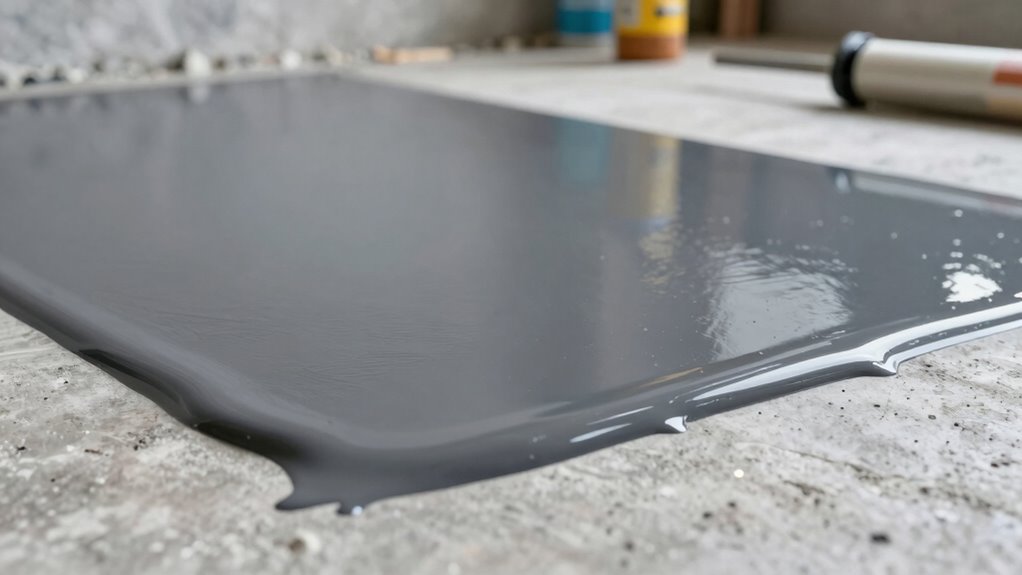

A concrete moisture barrier sealer can help limit moisture moving through a slab, but the right choice depends on how much moisture is present and what finish will go over it. My best overall pick is SIMIRON Moisture Vapor Barrier Epoxy Primer Kit for buyers seeking a dedicated epoxy vapor-barrier system. RadonSeal Plus stands out for penetrating treatment of basement floors and foundation walls, while Rust-Oleum Moisture Stop is a simpler one-gallon option for smaller projects. The main tradeoff is between penetrating sealers, which soak into concrete, and epoxy barriers, which form a surface layer and demand more careful preparation. Read on for the full comparison, selection criteria, and advice on matching a sealer to your slab.

Get home appliances delivered free with Prime
- Fast, free delivery on millions of items
- Prime Video, Amazon Music and more included
- Member-only deals all year
Complete the kit



Key Takeaways
- SIMIRON ranks first for a dedicated vapor-barrier role: its three-gallon epoxy primer kit is more directly aimed at moisture-vapor control than general-purpose penetrating sealers, but epoxy application calls for more planning.
- RadonSeal Plus is the standout for penetrating treatment: its stated uses include basement floors, foundation walls, and concrete block, making it the most versatile choice for those surfaces.
- Rust-Oleum and Hydro Prime offer one-gallon formats: these are easier to size for limited areas, though buyers should confirm coverage and moisture limits for their project before choosing by container size.
- The two RadonSeal products serve different buying needs: RadonSeal Plus names a wider range of basement and masonry applications, while the five-gallon RadonSeal suits buyers who need a larger quantity of the standard sealer.
- Bulletproof Resins MRAP is the specialist epoxy option: its 100% solids formulation and three-gallon kit suit buyers focused on a robust epoxy barrier, but that format may be more demanding than a penetrating treatment.
| Rust-Oleum Moisture Stop Concrete Fortifying Sealer, 1 Gallon |  | Best for Fortifying Bare Concrete | Product type: Concrete moisture barrier and fortifying sealer | Volume: 1 gallon | Coverage: Up to 200 sq. ft. per gallon | VIEW ON AMAZON | See Our Full Breakdown |
| SIMIRON Moisture Vapor Barrier Epoxy Primer Kit, Clear, 3 Gallons, 2:1 Ratio |  | Best for Coating-Ready Moisture Control | Type: Two-component epoxy primer | Solids and VOC: 100% solids; 0 g/L VOC | Mix ratio: 2:1 | VIEW ON AMAZON | See Our Full Breakdown |
| RadonSeal Plus Concrete Sealer – Deep Penetrating Waterproofing for Basement Floors, Foundation Walls & Concrete Block (2.5 Gal) |  | Best for Porous Concrete and Foundation Surfaces | Volume: 2.5 gallons | Coverage: Up to 500 sq. ft. per 2.5 gallons | Form: Liquid | VIEW ON AMAZON | See Our Full Breakdown |
| RadonSeal Concrete Sealer, 5 Gallon |  | Best for New, Dense Concrete | Volume: 5 gallons | Formula: Water-based, zero VOC | Form: Liquid | VIEW ON AMAZON | See Our Full Breakdown |
| Hydro Prime Moisture Barrier and Penetrating Sealer for Concrete & Masonry Floors – 1 Gallon |  | Best for Fast, Low-Odor Prep | Volume: 1 gallon | Application method: Spray-on with a low-pressure sprayer | Formulation: Water-based, low-VOC, low-odor | VIEW ON AMAZON | See Our Full Breakdown |
| Bulletproof Resins MRAP 100% Solids Epoxy Moisture Vapor Barrier 3-Gallon Kit |  | Best for Moisture-Challenged Slabs | Product type: Epoxy moisture vapor barrier | Kit volume: 3 gallons | Solids content: 100% | VIEW ON AMAZON | See Our Full Breakdown |
| concrete moisture barrier sealer | Volume | Coverage | Application | Use |
|---|---|---|---|---|
| Rust-Oleum Moisture Stop Concr | 1 gallon | Up to 200 sq. ft. per gallon | — | Interior or exterior |
| SIMIRON Moisture Vapor Barrier | — | About 100 sq. ft. per gallon; 300 sq. ft. per kit | One coat at 16 mils | Interior or exterior concrete |
| RadonSeal Plus Concrete Sealer | 2.5 gallons | Up to 500 sq. ft. per 2.5 gallons | Sprayer, roller, or brush | — |
| RadonSeal Concrete Sealer | 5 gallons | — | Sprayer or roller | — |
| Hydro Prime Moisture Barrier a | 1 gallon | — | — | Indoor and outdoor high-traffic areas |
| Bulletproof Resins MRAP 100% S | — | 80–160 sq ft per gallon at 10–20 mils | Base coat for moisture mitigation | — |
More Details on Our Top Picks
Rust-Oleum Moisture Stop Concrete Fortifying Sealer, 1 Gallon
Rust-Oleum Moisture Stop is a penetrating sealer for buyers who want to address moisture pathways within bare concrete without adding a visible coating. Its gel-forming action targets cracks, pores, and capillaries, while the clear finish leaves the floor’s appearance unchanged. Compared with SIMIRON Moisture Vapor Barrier Epoxy Primer, it does not create a thick, coat-ready epoxy layer; it is better suited to strengthening concrete itself than serving as a dedicated primer beneath a floor system. Interior and exterior use adds flexibility, but the 45-minute penetration period makes the job less immediate, and coverage tops out at 200 square feet per gallon. I’d choose it for a modest concrete floor where invisible treatment and fortification matter more than high coverage or a fast coating schedule.
Pros:- Penetrates concrete to form a gel in cracks, pores, and capillaries.
- Helps protect against moisture, salts, radon gas, and other contaminants.
- Fortifies concrete while leaving its appearance unchanged.
- Suitable for interior and exterior concrete floors.
Cons:- Requires a 45-minute penetration period before proceeding.
- Coverage is limited to up to 200 square feet per gallon.
- Its penetrating treatment is not the same as a thick epoxy moisture-barrier primer.
Best for: Owners of small interior or exterior concrete floors who want an invisible penetrating treatment to help block moisture and contaminants while fortifying the concrete.
Not ideal for: Buyers preparing a large floor for a coating system or needing a dedicated, thick moisture-vapor primer; its coverage is limited and it is not described as an epoxy coating primer.
- Product type:Concrete moisture barrier and fortifying sealer
- Volume:1 gallon
- Coverage:Up to 200 sq. ft. per gallon
- Application time:Allow to penetrate for 45 minutes
- Color and form:Clear liquid
- Recommended surface:Concrete floors
- Use:Interior or exterior
- Water resistance:Water resistant
Our verdict“Choose Rust-Oleum when you want an invisible, concrete-fortifying sealer for a smaller floor rather than a coating-ready epoxy barrier.”
SIMIRON Moisture Vapor Barrier Epoxy Primer Kit, Clear, 3 Gallons, 2:1 Ratio
For a floor that needs a defined barrier beneath a coating system, SIMIRON’s 100% solids epoxy primer is the most coating-focused option here. It is designed for moisture vapor transmission and applies as a single 16-mil coat, giving buyers a different approach from penetrating products such as RadonSeal Plus, which work within concrete and leave a natural finish. The three-gallon kit covers about 300 square feet, and its clear gloss finish suits use under decorative flooring. The tradeoff is preparation: the two components must be mixed at a 2:1 ratio, and this primer is limited to concrete rather than broader masonry applications. I’d favor it over Rust-Oleum Moisture Stop when the goal is an epoxy-based base layer, but not for someone seeking a simple penetrating treatment on exposed concrete.
Pros:- Designed to help block moisture vapor transmission through concrete floors.
- 100% solids formulation with 0 g/L VOC.
- One coat at 16 mils covers about 300 square feet per kit.
- Compatible with SIMIRON decorative floor coatings and U-Tint pigment packs.
Cons:- Requires accurate mixing of two components at a 2:1 ratio.
- Specified for concrete, limiting use on other materials.
- Its epoxy-primer approach forms a coating layer rather than leaving the natural concrete appearance of penetrating sealers.
Best for: Homeowners and contractors preparing concrete floors for decorative coatings or another flooring system who want a one-coat, high-solids epoxy moisture-vapor primer.
Not ideal for: DIY buyers who want a ready-to-apply penetrating sealer, do not want to mix components, or need a product for masonry materials beyond concrete.
- Type:Two-component epoxy primer
- Solids and VOC:100% solids; 0 g/L VOC
- Mix ratio:2:1
- Kit volume:3 gallons
- Coverage:About 100 sq. ft. per gallon; 300 sq. ft. per kit
- Application:One coat at 16 mils
- Finish:Clear, gloss
- Use:Interior or exterior concrete
Our verdict“Pick SIMIRON when you need an epoxy moisture-vapor primer beneath a floor coating and can handle its two-part mixing process.”
RadonSeal Plus Concrete Sealer – Deep Penetrating Waterproofing for Basement Floors, Foundation Walls & Concrete Block (2.5 Gal)
RadonSeal Plus is the versatile penetrating pick for porous concrete where water intrusion, dusting, and surface deterioration are concerns. Its blended-silicate formula reacts within the pore structure, hardening the concrete while reducing pathways for moisture vapor. Unlike SIMIRON Moisture Vapor Barrier Epoxy Primer, it leaves an invisible natural finish instead of creating a gloss coating layer, so it makes more sense for exposed basement floors, foundation walls, and concrete block. The water-based formula can be applied with a sprayer, roller, or brush, which gives DIY users more flexibility than Hydro Prime’s low-pressure-sprayer requirement. Coverage is listed at up to 500 square feet per 2.5 gallons, but actual results vary with porosity. I’d choose it over Rust-Oleum for broader wall-and-floor use, while buyers seeking a coating-specific primer should look to SIMIRON.
Pros:- Penetrates concrete capillaries to reduce water intrusion and moisture vapor transmission.
- Hardens porous concrete and helps prevent dusting.
- Can be applied with a sprayer, roller, or brush.
- Leaves a clear, natural, invisible finish.
Cons:- Coverage varies with the porosity of the concrete.
- Does not provide the gloss coating layer offered by an epoxy primer.
- The product is specified for concrete, so it is not a general-purpose sealer for unrelated surfaces.
Best for: DIYers treating porous basement floors, foundation walls, or concrete block who want a penetrating sealer that hardens concrete and preserves its natural appearance.
Not ideal for: Buyers needing a measured, coating-ready epoxy barrier or predictable coverage on highly variable concrete; its coverage depends on surface porosity.
- Volume:2.5 gallons
- Coverage:Up to 500 sq. ft. per 2.5 gallons
- Form:Liquid
- Material type:Blended silicate
- Compatible material:Concrete
- Recommended surfaces:Floors and walls
- Application:Sprayer, roller, or brush
- Finish:Clear, natural, invisible
Our verdict“Choose RadonSeal Plus for porous concrete floors, walls, or block that need penetrating moisture protection without a visible coating.”
RadonSeal Concrete Sealer, 5 Gallon
RadonSeal Concrete Sealer is aimed at newer, dense poured slabs and foundation walls, where its penetrating formula can harden concrete without forming a surface film. That distinction matters if a floor needs to remain compatible with paint, adhesives, overlays, or epoxy coatings: unlike SIMIRON Moisture Vapor Barrier Epoxy Primer, this product allows moisture vapor to escape rather than creating a dedicated coating layer. Its water-based, zero-VOC formula also suits indoor projects, and the five-gallon container is geared toward larger areas. The main limitation is material fit. RadonSeal Plus is the more appropriate RadonSeal choice for porous concrete or block, while this version is specified for newer, dense concrete. Application also calls for a sprayer or roller, so it is less flexible than a brush-compatible option.
Pros:- Penetrates and hardens concrete without forming a surface coating.
- Helps reduce water penetration, moisture vapor, efflorescence, and dusting.
- Allows moisture vapor to escape and can prepare the surface for coatings or adhesives.
- Water-based, zero-VOC formula is described as suitable for indoor use.
Cons:- Designed for newer, dense concrete; older, more porous concrete and block call for a different product.
- Application is specified for a sprayer or roller.
- The five-gallon container may be more than needed for a small repair or floor.
Best for: Owners or contractors treating newer, dense poured-concrete floors or foundation walls before applying paint, adhesive, overlays, or another coating.
Not ideal for: Buyers working with older, highly porous concrete or concrete block, or those who want a small container and a brush-friendly application method.
- Volume:5 gallons
- Formula:Water-based, zero VOC
- Form:Liquid
- Recommended surfaces:Newer, dense poured concrete slabs and foundation walls
- Application:Sprayer or roller
- Water resistance:Waterproof
- Weight:47.4 pounds
- Dimensions:13 x 13 x 16 inches
Our verdict“Choose this RadonSeal version for larger projects on newer, dense poured concrete that must stay compatible with later coatings.”
Hydro Prime Moisture Barrier and Penetrating Sealer for Concrete & Masonry Floors – 1 Gallon
Hydro Prime combines moisture-vapor blocking with a primer role, making it a practical choice when concrete or masonry needs to be prepared for paint or another coating on a same-day schedule. Its water-based, low-odor formula and spray-on application set it apart from Rust-Oleum Moisture Stop, which specifies a 45-minute penetration period and targets concrete fortification rather than coating adhesion. Hydro Prime also covers masonry floors, while SIMIRON’s epoxy primer is limited to concrete and requires two-part mixing. The tradeoff is the application equipment: Hydro Prime calls for a low-pressure sprayer, and its intended use is sealing and priming rather than decorative finishing. The supplied specifications do not give coverage or a precise drying interval beyond same-day drying, so I’d choose it for straightforward prep work, not when a project needs tightly quantified material planning.
Pros:- Designed to block moisture vapor and improve coating adhesion.
- Works on concrete and masonry surfaces.
- Water-based, low-VOC, low-odor formulation.
- Spray-on application and same-day drying support a relatively quick prep schedule.
Cons:- Requires a low-pressure sprayer for application.
- Primarily a sealer and primer, not a decorative concrete finish.
- Coverage and a precise drying interval are not provided in the product data.
Best for: DIYers and maintenance teams preparing indoor or outdoor concrete and masonry floors for paint or coatings who want low-odor, spray-applied moisture protection.
Not ideal for: Buyers without access to a low-pressure sprayer, those seeking a decorative finish, or contractors who need specified coverage and an exact drying time for scheduling.
- Volume:1 gallon
- Application method:Spray-on with a low-pressure sprayer
- Formulation:Water-based, low-VOC, low-odor
- Drying time:Same day
- Recommended surfaces:Concrete and masonry floors
- Use:Indoor and outdoor high-traffic areas
- Purpose:Moisture-vapor barrier and penetrating sealer
- Coating compatibility:Designed to improve adhesion of paints and coatings
Our verdict“Choose Hydro Prime for low-odor, spray-applied moisture and adhesion prep on concrete or masonry when same-day progress matters.”
Bulletproof Resins MRAP 100% Solids Epoxy Moisture Vapor Barrier 3-Gallon Kit
MRAP is the most specialized pick here: its 100% solids epoxy is designed as a moisture-mitigation base coat beneath resinous flooring, with vapor control rated up to 15 lb/1,000 sq ft/24 hr. Its listed 450 psi bond strength gives flooring installers a concrete adhesion figure to weigh against options such as SIMIRON Moisture Vapor Barrier Epoxy Primer Kit, which is also an epoxy barrier but lists a 2:1 mix ratio in its product name. Compared with penetrating sealers like RadonSeal Plus, MRAP is aimed at forming a coating system rather than treating concrete by penetration.
The tradeoff is a more demanding application: surface preparation matters, and coverage ranges from 80 to 160 sq ft per gallon depending on slab porosity and applied thickness. Zero VOC and solvent-free formulation may suit projects where minimizing solvent odor is a priority, but this is not a simple all-purpose sealer for casual use. I’d choose it when the job calls for a dedicated epoxy vapor barrier and skip it for routine concrete protection.
Pros:- 100% solids, solvent-free formulation with zero VOC content
- Designed for moisture vapor control up to 15 lb/1,000 sq ft/24 hr
- Listed bond strength of 450 psi to concrete
- Specified for interior and exterior use as a moisture-mitigation base coat
Cons:- Coverage varies widely with surface porosity and application thickness
- Requires thorough surface preparation to support adhesion
- A specialized epoxy base coat is less suited to buyers wanting a straightforward penetrating treatment
Best for: Flooring contractors and property owners preparing moisture-challenged concrete slabs for a resinous flooring system, especially when they want a solvent-free epoxy base coat.
Not ideal for: DIYers seeking a simple penetrating sealer for a basement floor, or anyone unwilling to prepare the concrete carefully and apply a coating at the required thickness.
- Product type:Epoxy moisture vapor barrier
- Kit volume:3 gallons
- Solids content:100%
- VOC content:Zero VOC
- Coverage:80–160 sq ft per gallon at 10–20 mils
- Bond strength:450 psi to concrete
- Moisture vapor control:Up to 15 lb/1,000 sq ft/24 hr
- Application:Base coat for moisture mitigation
- Use areas:Interior and exterior
Our verdict“Choose MRAP for a carefully prepared, moisture-challenged slab that needs an epoxy barrier beneath resinous flooring; choose a penetrating sealer for simpler concrete protection.”

How We Picked
I ranked these sealers by how clearly their stated product type and intended use match the job buyers usually mean by a moisture barrier. Dedicated epoxy vapor-barrier products received an advantage for that specific purpose, while penetrating sealers were judged for their fit on basement floors, foundations, and masonry rather than treated as interchangeable epoxy systems. I also weighed container size and formulation because they affect project scale, application planning, and the likelihood of buying more product than a small area needs.
The order reflects role and usability, not a claim that one chemistry suits every slab. I favored options with a clear use case, then considered whether the product’s format makes sense for that use. A penetrating product can be the better choice for masonry or a less involved application, while a purpose-built epoxy barrier may be more fitting beneath a finished floor. Since the supplied product details do not establish moisture limits, coverage, or compatibility with every floor system, buyers should confirm those points in the current technical data sheet before purchase.
| concrete moisture barrier sealer | Use | Application | Recommended surfaces |
|---|---|---|---|
| Rust-Oleum Moisture Stop Concr | Interior or exterior | — | — |
| SIMIRON Moisture Vapor Barrier | Interior or exterior concrete | One coat at 16 mils | — |
| RadonSeal Plus Concrete Sealer | — | Sprayer, roller, or brush | Floors and walls |
| RadonSeal Concrete Sealer | — | Sprayer or roller | Newer, dense poured concrete slabs and foundation walls |
| Hydro Prime Moisture Barrier a | Indoor and outdoor high-traffic areas | — | Concrete and masonry floors |
| Bulletproof Resins MRAP 100% S | — | Base coat for moisture mitigation | — |
Factors to Consider When Choosing Concrete Moisture Barrier Sealer
Choosing a sealer starts with diagnosing the moisture problem, not selecting a container. These factors help distinguish a penetrating treatment from a coating-style vapor barrier and prevent a mismatch between the slab, the product, and the planned floor.
Identify the Moisture Source Before Sealing
Moisture showing at a slab can come from vapor moving through the concrete, a plumbing leak, surface water, or water entering through a wall or joint. A sealer intended to limit vapor transmission is not a substitute for repairing a leak or correcting drainage around the building. Check for recurring wet spots, efflorescence, and damp perimeter areas, then address active water entry before covering the concrete. A moisture test can help establish whether the slab is suitable for a coating system. Skipping diagnosis can trap moisture or leave the underlying problem untouched. When the source is uncertain, getting a qualified assessment may save the cost of applying the wrong product.
Match the Barrier Type to the Planned Floor
Penetrating sealers soak into concrete, while epoxy moisture barriers create a bonded surface layer. That difference affects which products can go over the sealer and how the floor must be prepared. If you plan to install tile, vinyl, adhesive, or another coating, check written compatibility rather than assuming the next material will bond. A penetrating product may suit exposed masonry or a simpler treatment, while a dedicated epoxy system may better fit a floor assembly that calls for a surface vapor barrier. The stronger-sounding category label does not establish suitability for every flooring system. Confirm the full assembly with the flooring and sealer manufacturers before application.
Check Moisture Limits and Test Requirements
Products can differ in the amount of moisture they are designed to tolerate, so the word “barrier” alone is not enough to choose one. Look for the manufacturer’s stated vapor transmission or moisture test limits and compare them with results from your slab. Some systems require a specific test method or a certain level of surface dryness even when they are intended for damp concrete. Do not infer performance from the product name, gallon count, or epoxy type. If test results exceed the published limit, ask the manufacturer or a flooring professional about another system. This check matters most before installing a finish that is costly or difficult to remove.
Budget Time for Surface Preparation and Application
Epoxy barriers typically require close attention to concrete condition, mixing, application timing, and environmental conditions. A two-part kit also adds mixing steps that can be less forgiving than applying a ready-to-use penetrating sealer. Concrete may need mechanical preparation to remove coatings, curing compounds, or weak surface material, but the exact method depends on the product instructions. Plan the work so the prepared floor stays clean and the material can be applied within its working time. For a small or interrupted project, a simpler product format may be easier to manage than a large epoxy batch. Follow the technical data sheet for temperature, recoat, and cure requirements.
Size the Purchase to the Actual Area
Container size is useful only when it matches the surface area and the product’s coverage rate on your concrete. Rough, porous, or previously treated slabs can use more material than smooth test surfaces, so calculate from the manufacturer’s stated coverage and allow for the substrate condition. A one-gallon product may be easier to handle for a localized job, while three- or five-gallon formats can make more sense for larger continuous floors. Buying extra does not solve an application problem, and running short halfway through can complicate consistent coverage. Verify whether the listed quantity refers to combined kit volume or one component. Keep any leftover material only if the storage and shelf-life instructions permit it.
Check Compatibility, Warranty, and Long-Term Use
Before sealing, find out whether the concrete has an existing coating, adhesive residue, or prior treatment that could interfere with bonding or penetration. Ask whether the barrier is intended for interior or exterior use and whether it can be covered by the finish you have selected. Read warranty conditions carefully, since surface preparation, testing, and installation records may affect coverage. Also consider whether the treated area needs to remain breathable or will be exposed to abrasion and cleaning. A product suited to a basement wall may not be the right choice for a coated garage floor. These checks can narrow the options more effectively than choosing by the broad phrase “waterproof sealer.”
Frequently Asked Questions
Can I apply a moisture barrier sealer to a basement floor that already has a coating?
Not without checking the product’s requirements for existing coatings. A penetrating sealer may not reach the concrete through paint or a film-forming finish, while an epoxy barrier may fail to bond if the old coating is weak or incompatible. Identify the existing material and follow the sealer maker’s surface-preparation instructions, which may call for removal and a concrete test area. If the coating is peeling or moisture is trapped beneath it, sealing over it can hide rather than fix the problem. Confirm compatibility before buying enough material for the whole floor.
Should I choose an epoxy moisture barrier or a penetrating sealer?
Choose based on the slab’s measured moisture condition and the intended floor assembly, not on a general assumption that one type is always stronger. Epoxy barriers form a surface layer and can suit projects that call for a dedicated vapor-control system, but preparation and application are more demanding. Penetrating sealers soak into the concrete and may be a better fit for exposed masonry or buyers seeking a less coating-like treatment. Check the stated moisture limits and compatibility with any adhesive or floor finish. If the finished floor manufacturer specifies a system, follow that specification.
Do these products stop water coming through a basement wall or an active leak?
A concrete moisture barrier sealer should not be treated as a repair for an active leak, failed joint, or outside drainage problem. The products in this roundup include penetrating treatments intended for concrete and masonry as well as epoxy vapor-barrier systems, but those roles do not make them interchangeable with leak repair. First locate and address the source of liquid water, including plumbing, grading, and foundation entry points. Then determine whether residual moisture moving through the concrete is still a concern. For recurring water intrusion, consult a foundation or waterproofing professional before coating the surface.
How do I know whether a one-gallon product or a larger kit is the better fit?
Use the manufacturer’s coverage rate for your specific surface, then account for concrete texture and porosity rather than relying on a rough room-size estimate. Rust-Oleum Moisture Stop and Hydro Prime come in one-gallon formats, which may be easier to plan around for a smaller area. SIMIRON and Bulletproof Resins are listed as three-gallon kits, and the standard RadonSeal is offered in a five-gallon size for larger projects. Kit volume does not tell you how many square feet one purchase will cover. Confirm the mixing ratio, coverage, and whether multiple coats are required before ordering.
Can I install flooring as soon as the concrete sealer feels dry?
No; a dry-to-touch surface does not necessarily mean the product has cured enough for flooring or adhesive. Follow the product’s cure and recoat schedule, and check the flooring manufacturer’s requirements for moisture testing and substrate readiness. Epoxy systems may have specific cure windows and conditions that differ from penetrating sealers. Installing early can interfere with bonding or trap moisture beneath the finish. Keep the technical data sheets for both products available and resolve any conflicting instructions with their manufacturers before proceeding.
Conclusion
For the broadest match to a dedicated floor vapor-barrier job, I recommend SIMIRON Moisture Vapor Barrier Epoxy Primer Kit as the best overall pick, provided you are ready for epoxy preparation and application. Rust-Oleum Moisture Stop is my best value-style choice for buyers who want a one-gallon format for a smaller project, while Bulletproof Resins MRAP is the best premium specialist for buyers specifically seeking a 100% solids epoxy barrier. Beginners who prefer a penetrating treatment should compare RadonSeal Plus and Hydro Prime, then choose according to surface type, coverage, and instructions. For foundation walls, concrete block, or a wider range of basement surfaces, RadonSeal Plus is the most tailored option; for a larger area needing the standard RadonSeal product, consider its five-gallon format. Before committing, verify moisture limits, preparation steps, and compatibility with your planned floor finish.