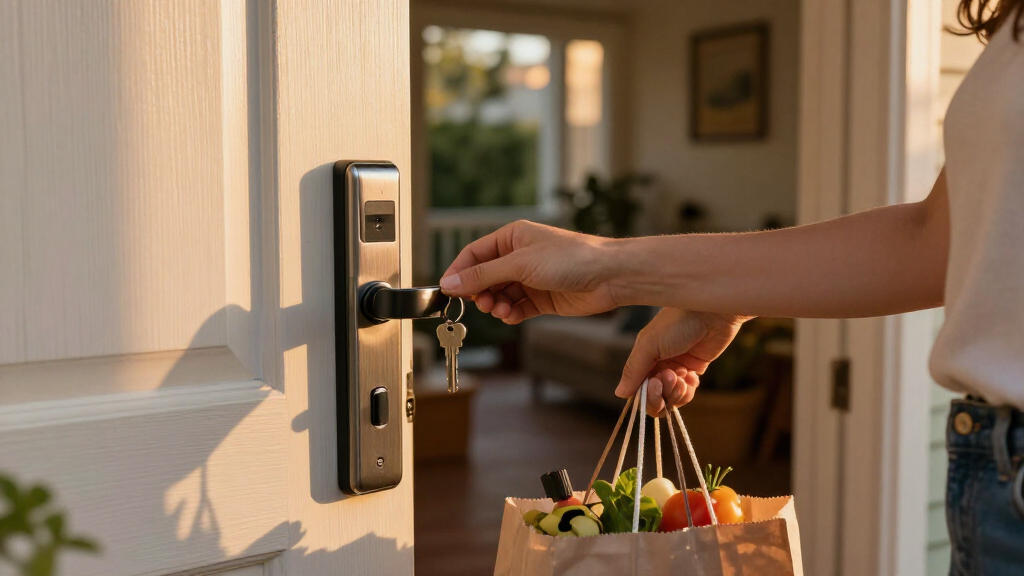
For the best smart locks with backup power, I’d start with the Yale WiFi Smart Lock Deadbolt as the best overall option for buyers who want keypad entry and a physical-key fallback. The Wyze Auto-Lock Bolt v2 stands out for its fingerprint access and backup keys, while the eufy Security Smart Lock C220 is a strong fit for shoppers who put biometric entry first. The main tradeoff is how each lock handles a dead battery or lost connection: backup keys, emergency power access, and app features are not interchangeable. I also weigh installation fit and day-to-day usability, since a capable lock is little help if it does not suit your door. Read on for the full breakdown and a guide to choosing the right kind of backup for your home.

Get home appliances delivered free with Prime
- Fast, free delivery on millions of items
- Prime Video, Amazon Music and more included
- Member-only deals all year
Complete the kit


Key Takeaways
- Backup methods differ: The Wyze Bolt v2 explicitly includes backup keys, while many picks lean on battery power and app or keypad access; check each model’s emergency-entry method rather than assuming all smart locks have a physical override.
- Fingerprint access divides the lineup: Wyze, eufy, and the Tapo DL110 add biometric entry, while keypad-focused models may suit households that prefer PINs or shared access codes.
- Built-in Wi-Fi favors remote control: Several Philips models and the Yale lock emphasize Wi-Fi access, but remote features depend on power and a working network; local entry options matter when either is unavailable.
- Handle sets change the installation decision: The Philips keypad handle models combine a deadbolt with a handle, unlike standalone deadbolts, so buyers need to check existing door hardware and fit before choosing.
- There is no single backup winner for every home: Physical keys, battery-dependent electronic entry, and emergency power provisions address different failure scenarios, so the best choice depends on which fallback a household will actually keep accessible.
| Yale WiFi Smart Lock Deadbolt with Keypad, Keyless Entry, Black Suede |  | Best for Scheduled Household Access | Model: YRD410-WF1-BSP | Brand: Yale Security | Connectivity: Wi-Fi smart module | VIEW LATEST PRICE | See Our Full Breakdown |
| Tapo Smart Wi-Fi Deadbolt Door Lock, Keyless Tactile Buttons, DL100 |  | Best for Documented Battery Life | Brand / model: Tapo DL100 | Power: Four AA batteries, included | Battery life: Up to 200 days in Wi-Fi mode; up to 300 days in Bluetooth mode | VIEW LATEST PRICE | See Our Full Breakdown |
| Philips Wi-Fi Smart Deadbolt Lock, Keyless Entry Door Lock for Front Door |  | Best for Fingerprint-First Entry | Model: DDL242X-1HW | Brand: Philips | Unlock methods: Fingerprint, passcode, physical key, voice commands, and remote app | VIEW LATEST PRICE | See Our Full Breakdown |
| Wyze Auto-Lock Bolt v2 Fingerprint Smart Lock with Wi-Fi, Keyless Entry, Auto-Lock, and Backup Keys |  | Best for Multiple Power Fallbacks | Model: WLCKB2 | Power: Eight AA batteries | Battery life: Up to 8 months | VIEW LATEST PRICE | See Our Full Breakdown |
| eufy Security Smart Lock C220, Fingerprint Keyless Entry Door Lock |  | Best for Feature-Rich Keyless Access | Model: T8506 | Power: Eight AA batteries | Battery life: Up to 8 months | VIEW LATEST PRICE | See Our Full Breakdown |
| Tapo Smart Wi-Fi Door Lock, Deadbolt, Fingerprint Recognition, DL110 |  | Best Rechargeable Backup | Access methods: Fingerprint, keypad passcodes, Wi-Fi, Bluetooth, voice assistants, backup keys | Battery type: Rechargeable | Battery life: Up to 1 year | VIEW LATEST PRICE | See Our Full Breakdown |
| Philips WiFi Keypad Door Lock with Handle, App Control Smart Deadbolt Lock |  | Best for Handle-and-Lock Replacement | Battery type: 8 AA batteries, not included | Battery life: Up to 6 months | Access methods: App, keys, passcodes, voice commands | VIEW LATEST PRICE | See Our Full Breakdown |
| Philips WiFi Keypad Door Lock with Handle, Built-in WiFi, APP Remote Control, Voice & Fingerprint Unlock, Satin Nickel |  | Best for Fingerprint Access with Handles | Battery type: 8 AA alkaline batteries, not included | Access methods: Fingerprint, keypad, app, voice commands | Connectivity: Built-in Wi-Fi | VIEW LATEST PRICE | See Our Full Breakdown |
| Philips Smart Lock, WiFi Keyless Deadbolt with App Control, Alexa & Google Support, IP54 Waterproof, Black |  | Best Weather-Ready Keypad Deadbolt | Battery type: 8 AA batteries, not included | Battery life: 6 months | Access methods: App, voice commands, keys, passcodes | VIEW LATEST PRICE | See Our Full Breakdown |
| smart locks with backup power | Connectivity | Battery life |
|---|---|---|
| Yale WiFi Smart Lock Deadbolt | Wi-Fi smart module | — |
| Tapo Smart Wi-Fi Deadbolt Door | Wi-Fi and Bluetooth | Up to 200 days in Wi-Fi mode; up to 300 days in Bluetooth mode |
| Philips Wi-Fi Smart Deadbolt L | Wi-Fi | — |
| Wyze Auto-Lock Bolt v2 Fingerp | Wi-Fi | Up to 8 months |
| eufy Security Smart Lock C220 | Built-in Wi-Fi; no bridge required | Up to 8 months |
| Tapo Smart Wi-Fi Door Lock | Wi-Fi and Bluetooth | Up to 1 year |
| Philips WiFi Keypad Door Lock | Wi-Fi | Up to 6 months |
| Philips WiFi Keypad Door Lock | Built-in Wi-Fi | — |
| Philips Smart Lock | Wi-Fi | 6 months |
More Details on Our Top Picks
Yale WiFi Smart Lock Deadbolt with Keypad, Keyless Entry, Black Suede
The Yale Assure Lock 2 suits households that need to issue and manage many entry codes: it supports unlimited user codes, schedules, alerts, and automatic locking. That flexibility can reduce the need to share a single code with family, visitors, or service providers. For this roundup’s backup-power focus, though, the available product details do not specify battery life, battery type, or an emergency power method, so I can’t rank it as confidently on power resilience as the Tapo DL100, which lists AA power and battery-life estimates. Yale’s keypad and app control provide convenient keyless access, while DoorSense adds information about whether the door is closed. The tradeoff is dependence on Wi-Fi for full remote features and no stated smart-home integration. I’d choose it for access management, not for buyers whose first priority is a clearly documented power fallback.
Pros:- Supports unlimited user codes and scheduling for flexible household access.
- Keypad and Yale Access app control offer keyless entry options.
- DoorSense and automatic locking add door-status awareness and convenience.
- Includes a Wi-Fi smart module for remote features.
Cons:- The supplied product details do not state battery life, battery type, or emergency power support.
- Full remote features require Wi-Fi.
- No integration with other smart-home systems is specified.
Best for: Households that need separate, schedulable access codes for family members and recurring visitors.
Not ideal for: Buyers who want clearly specified battery endurance or an emergency power option before choosing a lock.
- Model:YRD410-WF1-BSP
- Brand:Yale Security
- Connectivity:Wi-Fi smart module
- Entry:Keypad and smartphone app
- Access management:Unlimited user codes and schedules
- Door feature:DoorSense and automatic locking
- Included components:Lock, Wi-Fi smart module, deadbolt, latch plates, mounting hardware, DoorSense, and install manual
- Warranty:Lifetime limited warranty on finish and mechanical parts; one year on electronics
Our verdict“Choose the Yale for finely managed household access codes, but pick a model such as the Tapo DL100 if documented battery life and power details matter more.”
Tapo Smart Wi-Fi Deadbolt Door Lock, Keyless Tactile Buttons, DL100
The Tapo DL100 is the most clearly specified choice here for buyers comparing routine battery endurance: it runs on four included AA batteries and lists up to 200 days in Wi-Fi mode or 300 days in Bluetooth mode. Those figures give buyers a useful way to think about the tradeoff between remote connectivity and longer stated runtime. It also offers keypad, Bluetooth, and app access, plus Alexa, Google Home, and SmartThings compatibility. Compared with the Wyze Lock Bolt v2, Tapo provides a specific battery-life estimate and broader listed smart-home compatibility; Wyze instead calls out backup keys and emergency USB-C power. The Tapo’s emergency power option is mentioned in the product details but not described, so buyers should check how it works before relying on it. Its Grade 3 certification is another tradeoff for those prioritizing a higher security grade.
Pros:- Uses four included AA batteries and lists runtime estimates for Wi-Fi and Bluetooth modes.
- Offers keypad, Bluetooth, and remote app unlocking.
- Compatible with Alexa, Google Home, and Samsung SmartThings.
- Rated for a broad operating temperature range.
Cons:- BHMA Grade 3 certification may not suit buyers seeking a higher grade.
- Wi-Fi-mode battery life is shorter than the stated Bluetooth-mode estimate.
- Emergency power is mentioned but the supplied details do not explain the method.
Best for: Smart-home users who want an AA-powered Wi-Fi deadbolt with a stated runtime estimate and voice-platform compatibility.
Not ideal for: Buyers who require a higher than Grade 3 certification or a fully detailed emergency-power procedure.
- Brand / model:Tapo DL100
- Power:Four AA batteries, included
- Battery life:Up to 200 days in Wi-Fi mode; up to 300 days in Bluetooth mode
- Connectivity:Wi-Fi and Bluetooth
- Unlock methods:Keypad, Bluetooth, and remote app control
- Smart-home compatibility:Alexa, Google Home, and Samsung SmartThings
- Certification:BHMA Grade 3
- Temperature range:-22°F to 158°F
Our verdict“Pick the Tapo DL100 if clear AA battery-life estimates and smart-home compatibility matter more than a higher certification grade or a fully explained emergency-power method.”
Philips Wi-Fi Smart Deadbolt Lock, Keyless Entry Door Lock for Front Door
The Philips DDL242X-1HW makes the most sense for buyers who want several ways to get inside without carrying a key: the listed options include fingerprint, passcode, key, voice commands, and remote app control. Its stated fingerprint recognition time of 0.3 seconds puts biometric entry at the center of the proposition. That is a different priority from the Tapo DL100, whose appeal is a specified AA power setup and battery-life estimates. Philips lists real-time alerts and Alexa and Google Assistant compatibility, but the supplied product data gives no battery type, runtime, or emergency power method. That information gap matters in a roundup focused on backup power: the multiple access methods add convenience, but they do not establish how the lock behaves when its batteries run low. Setup may also take more effort than a basic keypad lock.
Pros:- Provides fingerprint, passcode, physical-key, voice, and app access methods.
- Lists fingerprint recognition in 0.3 seconds.
- Offers remote access and real-time alerts.
- Compatible with Alexa and Google Assistant.
Cons:- Battery type, runtime, and emergency power method are not specified in the supplied details.
- Remote features require Wi-Fi.
- Setup may be complex for buyers seeking a straightforward keypad installation.
Best for: Fingerprint-focused households that want app and voice access alongside passcodes and a physical key.
Not ideal for: Buyers who need confirmed battery endurance or a clearly specified emergency power fallback.
- Model:DDL242X-1HW
- Brand:Philips
- Unlock methods:Fingerprint, passcode, physical key, voice commands, and remote app
- Fingerprint recognition:0.3 seconds
- Connectivity:Wi-Fi
- Voice compatibility:Alexa and Google Assistant
- Alerts:Real-time alerts
- Included components:One door lock
Our verdict“Choose this Philips if fast fingerprint access and several entry methods lead your priorities, but favor the Tapo DL100 for better-documented battery planning.”
Wyze Auto-Lock Bolt v2 Fingerprint Smart Lock with Wi-Fi, Keyless Entry, Auto-Lock, and Backup Keys
The Wyze Lock Bolt v2 earns its place for buyers who want more than one way to deal with a depleted battery: the product details list backup keys and emergency USB-C power, alongside up to eight months of battery life from eight AA batteries. That makes its power-failure story more explicit than the Philips DDL242X-1HW, whose supplied details do not identify a runtime or emergency power method. Wyze also adds fingerprint entry, keypad codes, Wi-Fi app control, and auto-locking, so there are everyday alternatives to carrying a key. Its fingerprint scanner is described as learning over time and unlocking in under half a second. The compromises are its IP53 weather resistance, which is not full waterproofing, and battery life that can vary with use. Buyers should also distinguish emergency USB-C power from routine battery operation.
Pros:- Lists backup keys and emergency USB-C power as fallback options.
- Uses eight AA batteries and states up to eight months of battery life.
- Combines fingerprint, keypad, and Wi-Fi app control.
- Fingerprint entry is specified at under half a second.
Cons:- IP53 weather resistance is not a full waterproof rating.
- Actual battery life may vary with usage.
- Remote control features require Wi-Fi.
Best for: Homeowners who want AA battery operation with both physical-key access and an emergency USB-C power option.
Not ideal for: People installing a lock in a highly exposed location who need stronger weather protection than the listed IP53 rating.
- Model:WLCKB2
- Power:Eight AA batteries
- Battery life:Up to 8 months
- Power fallback:Backup keys and emergency USB-C power
- Connectivity:Wi-Fi
- Unlock methods:Fingerprint, keypad, and physical key
- Weather resistance:IP53
- Fingerprint recognition:Under 0.5 seconds
Our verdict“Choose the Wyze if physical keys and emergency USB-C power are your main safeguards against battery trouble, and its weather rating fits your door location.”
eufy Security Smart Lock C220, Fingerprint Keyless Entry Door Lock
The eufy Security Smart Lock C220 suits buyers who want a broad set of entry methods without adding a separate Wi-Fi bridge: it includes built-in Wi-Fi, fingerprint and keypad access, app control, voice support, and two physical keys. Its eight-AA setup is listed for up to eight months, giving it a defined routine battery plan. Compared with the Wyze Lock Bolt v2, eufy offers a similar stated battery duration and physical keys, while adding explicit Alexa and Google voice compatibility and BHMA Grade 3 certification. Wyze, by contrast, specifically lists emergency USB-C power; the eufy details do not name an equivalent emergency power input. Its battery estimate may vary with use, and buyers must check that their deadbolt and bore dimensions fit. Fingerprint recognition may also need time to improve.
Pros:- Offers fingerprint, keypad, app, voice, and physical-key entry.
- Built-in Wi-Fi supports remote access without a separate bridge.
- Lists up to eight months of battery life from eight AA batteries.
- Includes two keys and carries BHMA Grade 3 certification.
Cons:- An emergency power input is not specified in the supplied product details.
- Battery life may vary with usage.
- Compatibility depends on the existing deadbolt and bore size.
Best for: Households seeking fingerprint, keypad, app, voice, and physical-key access in a lock with built-in Wi-Fi.
Not ideal for: Buyers who need a stated emergency charging method or whose existing deadbolt falls outside the listed compatibility dimensions.
- Model:T8506
- Power:Eight AA batteries
- Battery life:Up to 8 months
- Connectivity:Built-in Wi-Fi; no bridge required
- Unlock methods:Fingerprint, keypad, app, voice, and physical key
- Voice compatibility:Alexa and Google
- Certification:BHMA Grade 3
- Operating temperature:-22°F to 158°F
- Included components:Two keys, eight AA batteries, assembly and mounting hardware
Our verdict“Pick the eufy C220 for varied everyday entry methods and built-in Wi-Fi, but choose the Wyze if a documented emergency USB-C option is a priority.”
Tapo Smart Wi-Fi Door Lock, Deadbolt, Fingerprint Recognition, DL110
The DL110 is the clearest fit here for buyers who want backup power without relying on disposable batteries: its rechargeable battery is rated for up to a year, and a physical backup key offers another way in if power runs out. The fast fingerprint reader, keypad, Bluetooth, and Wi-Fi give residents and guests several ways to unlock, while activity logs and alerts help track access. Compared with the Philips DDL242X-15HW-L, which uses eight AA batteries and lists a shorter battery-life estimate, the Tapo is the better match for someone comfortable keeping a rechargeable lock charged. The tradeoff is that battery life varies with use, and fingerprint performance can be affected by environmental conditions. It is also specified for external installation only, which limits placement choices.
Pros:- Rechargeable battery is rated for up to one year of use
- Physical backup keys provide access if electronic unlocking is unavailable
- Fingerprint, keypad, Bluetooth, and Wi-Fi offer varied entry methods
- Stores up to 100 fingerprints and supports activity logs and real-time alerts
Cons:- Actual battery life can vary with usage and environmental conditions
- Fingerprint recognition may be less reliable in some conditions
- External installation only limits where the lock can be used
Best for: Households that prefer a rechargeable lock, want fingerprint entry for frequent users, and value a physical key as a fallback.
Not ideal for: Buyers who want a lock for an interior-facing installation, or who prefer replaceable AA batteries over monitoring and recharging a built-in battery.
- Access methods:Fingerprint, keypad passcodes, Wi-Fi, Bluetooth, voice assistants, backup keys
- Battery type:Rechargeable
- Battery life:Up to 1 year
- Fingerprint recognition speed:0.42 seconds
- Fingerprint capacity:Up to 100 fingerprints
- Connectivity:Wi-Fi and Bluetooth
- Smart-home compatibility:Amazon Alexa, Google Home, Samsung SmartThings
- Security features:Auto-lock, activity logs, real-time alerts
Our verdict“Choose the Tapo DL110 if a rechargeable battery and several backup entry methods matter more than flexible installation placement.”
Philips WiFi Keypad Door Lock with Handle, App Control Smart Deadbolt Lock
This Philips model makes the most sense when you want a lock and two lever handles in one package rather than a deadbolt-only replacement. For backup power, it uses eight AA batteries with a stated life of up to six months; the included key option adds a separate fallback if the batteries are depleted. App control, passcodes, voice commands, and real-time notifications cover everyday access needs, while an IP54 rating and broad temperature range suit exposed entry points. Compared with the Philips DDL242X-15HW deadbolt, this version includes handles, but the shared AA battery approach means it does not match the Tapo DL110’s rechargeable design. The batteries are not included, and installation still depends on compatible door dimensions; remote access also relies on Wi-Fi.
Pros:- Includes two lever handles alongside the lock
- Key access provides a mechanical fallback to the eight AA batteries
- Supports app control, passcodes, voice commands, and real-time notifications
- IP54 rating and stated operating range suit varied weather conditions
Cons:- Eight AA batteries are not included and are rated for up to six months
- Remote control depends on a stable Wi-Fi connection
- Installation can be challenging despite compatibility with standard US deadbolts
Best for: Homeowners replacing both an entry lock and lever handles who want remote access, keypad codes, and a keyed fallback.
Not ideal for: Renters or buyers who only need a deadbolt, have a door outside the listed dimensions, or want batteries included or rechargeable.
- Battery type:8 AA batteries, not included
- Battery life:Up to 6 months
- Access methods:App, keys, passcodes, voice commands
- Included handles:2 lever handles
- Connectivity:Wi-Fi
- Door thickness compatibility:1-3/8 to 2 inches
- Cross-bore compatibility:1-1/2 or 2-1/8 inches
- Weather protection:IP54; -31°F to 150°F (-35°C to 66°C)
Our verdict“Pick this Philips model when replacing the handles as well as the lock matters more than rechargeable backup power.”
Philips WiFi Keypad Door Lock with Handle, Built-in WiFi, APP Remote Control, Voice & Fingerprint Unlock, Satin Nickel
This Philips set combines fingerprint entry and lever handles, making it a distinctive choice for households that want quick access without codes for daily users. Its built-in Wi-Fi supports app-based remote management, auto-lock, and access monitoring. For backup power, the lock takes eight AA alkaline batteries, which are not included; the provided details do not state a battery-life estimate, so I would not rank it ahead of the Tapo DL110 for buyers prioritizing battery endurance. Compared with the DDL242X-15HW-L, this version adds fingerprint unlocking, but its listed door-thickness range is narrower and its product information gives fewer installation and weather details. Check your door measurements before buying, and keep a physical key plan in mind because the provided specifications do not identify a backup key.
Pros:- Fingerprint and keypad entry suit both frequent residents and occasional guests
- Includes two lever handles and installation hardware
- Built-in Wi-Fi enables app-based remote management
- Auto-lock and access monitoring support everyday security routines
Cons:- Eight AA alkaline batteries are not included
- No battery-life estimate is provided in the supplied product details
- Listed door-thickness compatibility is limited to 1-3/8 to 1-3/4 inches
Best for: Households seeking fingerprint unlocking, app access, and included lever handles for a door within the stated thickness range.
Not ideal for: Buyers who need a published battery-life estimate, a confirmed physical-key backup, or compatibility with doors thicker than 1-3/4 inches.
- Battery type:8 AA alkaline batteries, not included
- Access methods:Fingerprint, keypad, app, voice commands
- Connectivity:Built-in Wi-Fi
- Door thickness compatibility:1-3/8 to 1-3/4 inches (38 to 50 mm)
- Included components:Two door levers, latch assembly, mounting screws, installation hardware, user manual
- Security features:Auto-lock and access monitoring
- Model number:DDL242X-1HW
Our verdict“Choose this Philips set for fingerprint convenience and included handles, but select the Tapo DL110 if documented battery endurance is your priority.”
Philips Smart Lock, WiFi Keyless Deadbolt with App Control, Alexa & Google Support, IP54 Waterproof, Black
This Philips deadbolt is the practical pick for an exposed home entry where weather resistance and familiar backup options matter. It runs on eight AA batteries, with a stated life of six months, and supports keys alongside app control, passcodes, and Alexa or Google voice commands. Its IP54 rating and listed operating range make it better suited to varied outdoor conditions than the Philips DDL242X-1HW, whose supplied details do not list a weather rating. The tradeoff is battery upkeep: unlike the rechargeable Tapo DL110, this model needs periodic AA replacement, and batteries are not included. Remote features depend on Wi-Fi, and the product details identify it as a deadbolt without the extra lever handles supplied with some Philips alternatives.
Pros:- Physical keys provide a fallback alongside battery-powered access methods
- IP54 protection and a stated wide operating temperature range suit outdoor placement
- Supports app control, passcodes, Alexa, Google Assistant, and real-time alerts
- Auto-lock and customizable passwords help manage routine entry
Cons:- Eight AA batteries are not included and have a stated life of six months
- Remote control and notifications depend on Wi-Fi availability
- Setup or app configuration may take extra effort for some buyers
Best for: Homeowners fitting a weather-exposed deadbolt who want app notifications, voice control, passcodes, and a keyed fallback.
Not ideal for: Buyers who want rechargeable backup power, included batteries or handles, or remote functions that do not depend on Wi-Fi.
- Battery type:8 AA batteries, not included
- Battery life:6 months
- Access methods:App, voice commands, keys, passcodes
- Connectivity:Wi-Fi
- Voice assistant support:Amazon Alexa and Google Assistant
- Weather protection:IP54
- Operating temperature:-31°F to 150°F (-35°C to 66°C)
- Security features:Auto-lock, customizable passwords, real-time notifications and alerts
Our verdict“Choose this Philips deadbolt for a weather-ready, keyed entry setup, but favor the Tapo DL110 if rechargeable power is the deciding factor.”
How We Picked
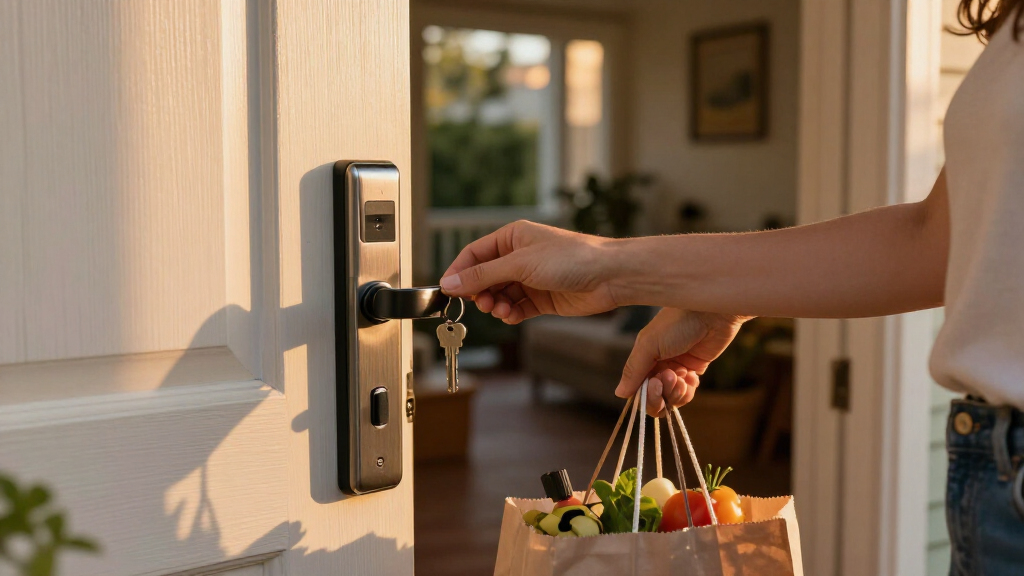
I ranked these locks around the promise of backup power and dependable entry, not just app features. I looked at the fallback options identified for each model, including physical keys where specified, battery-powered keypad or fingerprint access, and whether the lock offers connected features that may stop working during an outage. I also weighed everyday usability: access methods, keypad design, fingerprint availability, and whether a model is a deadbolt alone or part of a handle set. Because product names and feature listings do not establish every emergency-power detail, I avoid treating an unspecified feature as a confirmed backup method.
The order favors options with a clearer mix of practical entry methods and broad household usability, then distinguishes picks by their strongest use case. The Yale leads as a balanced keypad-and-key choice; Wyze earns a distinct place for fingerprint access paired with backup keys. Models with similar Wi-Fi and keypad claims rank lower when their differentiator is narrower or when buyers must pay closer attention to door hardware and fallback details. Before buying, confirm the exact model’s battery type, emergency-power procedure, and key override in its current specifications.
| smart locks with backup power | Connectivity |
|---|---|
| Yale WiFi Smart Lock Deadbolt | Wi-Fi smart module |
| Tapo Smart Wi-Fi Deadbolt Door | Wi-Fi and Bluetooth |
| Philips Wi-Fi Smart Deadbolt L | Wi-Fi |
| Wyze Auto-Lock Bolt v2 Fingerp | Wi-Fi |
| eufy Security Smart Lock C220 | Built-in Wi-Fi; no bridge required |
| Tapo Smart Wi-Fi Door Lock | Wi-Fi and Bluetooth |
| Philips WiFi Keypad Door Lock | Wi-Fi |
| Philips WiFi Keypad Door Lock | Built-in Wi-Fi |
| Philips Smart Lock | Wi-Fi |
Factors to Consider When Choosing Best Smart Locks With Backup Power
Backup power is not one feature with one meaning. I’d separate keeping the lock energized from getting inside when electronics fail: a fresh battery may preserve electronic entry, while a physical key or external emergency-power method can address a depleted battery. These checks help prevent a common mismatch between what a buyer expects and what a lock actually provides.
Separate battery backup from emergency entry
A lock with batteries still depends on those batteries being charged and making good contact. A physical key is a different fallback because it can let you enter when electronic features are unavailable, while an external power connection, if the model supports one, may only restore electronic operation temporarily. Do not infer an emergency-power port from a keypad or Wi-Fi label. Find the manufacturer’s instructions for a low-battery warning and a fully depleted battery before ordering. If you choose a key override, decide where a spare key will live without leaving it in an obvious or insecure spot. Buyers who cannot keep a spare nearby should give extra weight to a documented emergency-power method.
Plan for internet and power outages separately
A home internet outage and a dead lock battery are different failures, even if both interrupt remote access. Wi-Fi connectivity can support remote control and alerts, but it does not automatically mean the lock needs household electricity or that it will stop accepting a local PIN when the router is offline. Confirm which actions work at the keypad, fingerprint reader, or keyway without an internet connection. Consider whether your household needs remote guest access or simply reliable entry at the door. If local entry is the priority, do not pay extra for connected features that will not change that experience. Keep a manual entry method available for situations where both the network and electronic access are unavailable.
Check the door before choosing a lock format
Deadbolts and handle-set products are not always direct substitutes. A standalone deadbolt may fit above existing hardware, while a lock with an included handle can require changes to the door’s handle opening and spacing. Measure the door thickness, backset, and bore holes, then compare those measurements with the installation requirements for the exact model. Also check whether the door closes and latches smoothly; a misaligned deadbolt can drain batteries faster and frustrate daily use. Buyers replacing only a deadbolt should not assume a handle-set lock will be a simple swap. Good fit is part of dependable backup planning because a jammed bolt can defeat every entry method.
Choose access methods around the people who use the door
Keypads work well for shared codes and visitors who do not want to install an app, while fingerprint readers can speed up entry for household members who use them regularly. Biometric access is less useful if users have trouble enrolling or if the lock does not reliably read their fingerprints; keep another access route available. For children, caregivers, or guests, think through how codes are created, changed, and removed. A physical key may be easier for some users, though it brings the burden of key control. Match the entry method to your household’s habits rather than selecting the longest feature list. Simpler access can be a better fit than extra connectivity for a household that mainly wants dependable local entry.
Treat low-battery warnings as maintenance, not a rescue plan
Warnings are useful only if someone sees and acts on them. App alerts may rely on connectivity and a phone account, so learn whether the lock also gives a local warning at the door. Set a recurring battery check and use the battery type specified by the manufacturer; mixing old and new cells or using unsuitable rechargeable cells may cause problems. Consider who will handle maintenance if you travel often or manage a rental. A lock with multiple access methods can reduce the consequences of a missed warning, but it does not remove the need to replace batteries. Keep the lock’s emergency instructions somewhere accessible outside the locked home.
Pay for the fallback you will actually use
Higher feature counts do not automatically create better resilience. Remote access, voice control, fingerprints, and activity alerts add convenience, but each can depend on batteries, network access, account setup, or compatible devices. Paying more makes sense when a specific feature solves a recurring need, such as managing access remotely or avoiding keys for a household that prefers biometrics. If your main concern is getting in after a battery failure, verify the physical or emergency-power fallback first. Compare the full installation requirements too, since a handle set may involve more work than a deadbolt replacement. A modest feature set with a clear recovery plan can be a stronger choice than a connected model whose fallback is unclear.
Frequently Asked Questions
What should I do if a smart lock’s batteries die while I’m outside?
Use the recovery method documented for your exact model: that may be a physical key or an emergency external power procedure if the lock supports one. Do not assume every keypad lock accepts a key or has an emergency power contact. Before installation, read the maker’s instructions and practice the procedure while the door is open. Keep any needed key or power source somewhere you can reach without relying on the locked home. If the model’s backup method is unclear, choose a lock with a clearly documented fallback instead.
Will a Wi-Fi smart lock still work if my internet goes down?
Often, local access methods such as a keypad or key can remain usable during an internet outage, but remote app control and alerts may not. The exact behavior depends on the model, its power state, and how the feature is implemented. Check the manufacturer’s offline-access guidance rather than treating Wi-Fi as either a guarantee or a failure point for every function. If you need to let someone in while away, an internet outage may prevent that even when someone standing at the door can still enter. Keep a local access method available for household members.
Is a physical key better backup than emergency external power?
Neither is universally better because they solve different problems. A physical key can offer a direct mechanical way in if the electronics or battery fail, while external power may let an electronic lock operate long enough to unlock. A key requires secure storage and can be lost; an external power option requires you to know the procedure and have the needed equipment or access to it. Some buyers may prefer having more than one fallback, but they should verify which methods the specific lock supports. Choose based on what you can keep accessible and use under stress.
Should I choose a fingerprint lock or a keypad lock for a household?
A keypad is often easier to share among household members and visitors because people can use a code without enrolling a fingerprint or installing an app. Fingerprint access can be convenient for regular users, but it adds setup and may not suit every person’s hands or comfort level. Either electronic method still needs power, so it should not replace a separate recovery plan. Think about who needs access, how often codes or users change, and whether guests need temporary entry. If several people will use the door, prioritize the method they can use consistently and keep an alternate route available.
How can I tell whether a smart lock will fit my existing door?
Check the product’s installation guide for door thickness, backset, bore-hole size, and any spacing requirements, then measure your door rather than relying on the lock’s product name. Confirm whether you are buying a deadbolt replacement or a combined deadbolt-and-handle set, since the latter may not match existing hardware openings. Look for a clear door handing or latch adjustment process if your door’s orientation differs from the default. A door that is warped or poorly aligned can also make locking harder and put extra strain on the mechanism. If the measurements or hardware layout do not match, choose another model or ask a qualified installer before buying.
Conclusion
My best overall pick is the Yale WiFi Smart Lock Deadbolt for shoppers seeking keypad access alongside a physical-key fallback. For best value, I’d look first at the Tapo DL100 if tactile keypad entry and Wi-Fi cover the household’s needs, while checking its specific emergency-entry details before purchase. The best premium fit is the Philips WiFi keypad handle model with fingerprint access for buyers who want an all-in-one hardware setup and biometric entry. For beginners, a straightforward keypad model such as the Philips WiFi Smart Deadbolt may be easier to understand than a lock chosen mainly for extra connected features. If fingerprints and backup keys are the priority, the Wyze Auto-Lock Bolt v2 is the more targeted choice; if you prefer a biometric-focused option, compare it with the eufy C220 and Tapo DL110. Whichever you choose, confirm the exact backup procedure and door fit before making the lock your only way in.
Halloween Picks
halloween
As an affiliate, we earn on qualifying purchases.