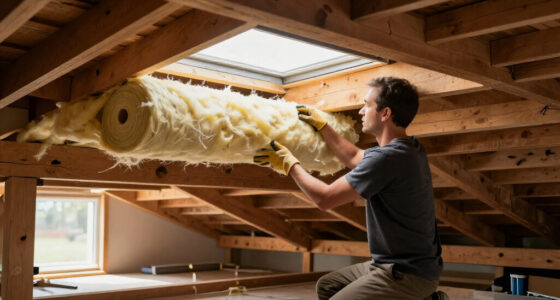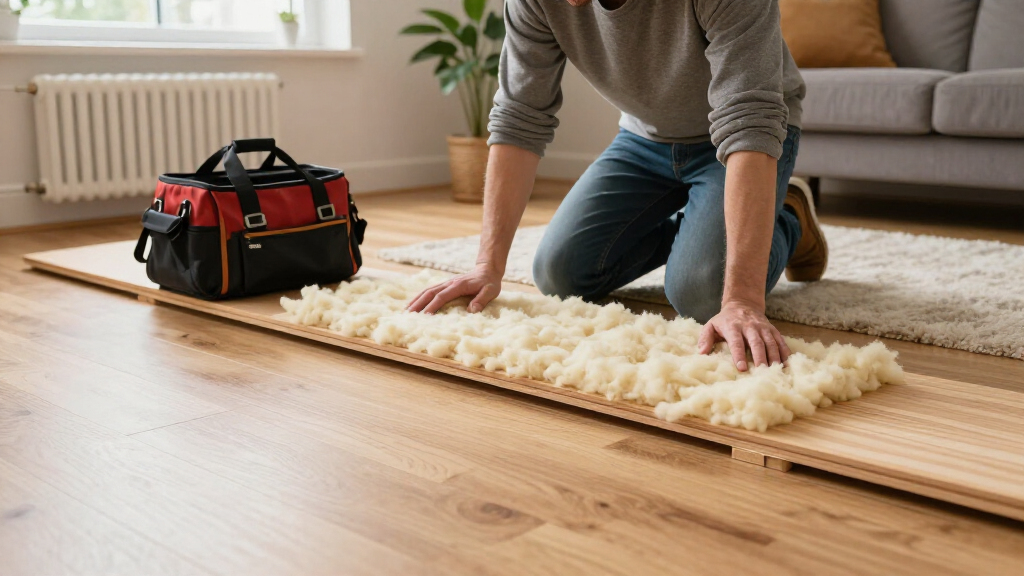
The best floor insulation products depend on whether you need to reduce heat loss, soften footfall noise, or manage moisture beneath a finished floor. I rank Owens Corning R-19 Fiberglass Batts as the best overall choice for insulating an accessible floor cavity, while QuietWalk stands out for laminate and hardwood underlayment and STEICO Wood Fiber offers a thicker, denser option beneath compatible flooring. The key tradeoff is that cavity insulation and thin underlayments solve different problems, so one product rarely does both well. Floor type, available installation space, moisture exposure, and manufacturer requirements should guide the choice. Read on for the full comparison and a buying guide to help match the product to your floor.

Get home appliances delivered free with Prime
- Fast, free delivery on millions of items
- Prime Video, Amazon Music and more included
- Member-only deals all year
Complete the kit



Key Takeaways
- Floor location determines the category: Owens Corning R-19 is made for an accessible joist cavity, while the thinner rolls and boards in this roundup sit beneath a finished floor.
- QuietWalk is the most clearly targeted finished-floor pick: its stated compatibility with laminate and hardwood makes it easier to match than multipurpose reflective rolls.
- STEICO is the thicker underlayment option: its 6 mm wood-fiber board offers a different feel and build from the 3 mm rolls, but flooring height and installation compatibility need checking.
- Moisture-barrier claims do not replace moisture planning: several rolls include a barrier, yet subfloor condition, water source, and flooring instructions still determine whether that layer is appropriate.
- Multipurpose products involve more compromises: cotton, foam, and reflective insulation can suit specific retrofit or cavity needs, but their fit and performance depend more on the exact floor assembly.
| QuietWalk Underlayment Roll, 200 sq ft, 3 mm, for Laminate and Hardwood Floors |  | Best for Certified Recycled-Fiber Coverage | Coverage: 200 sq ft | Thickness: 3 mm | Material: Recycled synthetic fiber | VIEW LATEST PRICE | See Our Full Breakdown |
| Owens Corning R-19 Unfaced Fiberglass Insulation Batts, 15 x 93 in, 77.5 sq ft |  | Best for Thermal Insulation Between Joists | R-value: R-19 | Material: Fiberglass | Thickness: 6.5 in | VIEW LATEST PRICE | See Our Full Breakdown |
| Floorlot Gold Premium Silent Floor Underlayment, 200 sq. ft., 3 mm Thick |  | Best for Straightforward Floating-Floor Installation | Coverage: 200 sq ft | Thickness: 3 mm | Material: IXPE | VIEW LATEST PRICE | See Our Full Breakdown |
| Frost King CF1 Natural Cotton Multi-Purpose Insulation, 16 x 1 x 48 Inches |  | Best for Small, Custom-Fit Insulation Jobs | Material: 100% recycled denim | Dimensions: 48 in L x 16 in W x 1 in thick | Weight: 9.6 oz | VIEW LATEST PRICE | See Our Full Breakdown |
| PolyFoam Multipurpose Foam Underlayment, 100 sq ft |  | Best Lightweight Option for Floating Floors | Material: Polyethylene foam | Coverage: 100 sq ft | Roll dimensions: 30 ft x 3 ft 4 in | VIEW LATEST PRICE | See Our Full Breakdown |
| HOLNURY 3-in-1 Acoustic Floor Underlayment, 200 sq ft Roll, 3 mm EPE with Silver Foil Vapor Barrier |  | Best for All-in-One Floating-Floor Protection | Material: EPE | Thickness: 3 mm | Coverage: 200 sq ft per roll | VIEW LATEST PRICE | See Our Full Breakdown |
| Shop Square Floor Underlayment with Moisture Barrier, 200 sq ft, 3 mm, Gold |  | Best for Straightforward, Measured Installation | Brand: Shop Square | Material: IXPE | Thickness: 3 mm | VIEW LATEST PRICE | See Our Full Breakdown |
| STEICO Wood Fiber Flooring Underlayment, 6 mm (1/4 in), 90 sq ft |  | Best for Thicker, Breathable Floor Support | Material: Wood fiber | Thickness: 6 mm (1/4 in) | Coverage: 90 sq ft | VIEW LATEST PRICE | See Our Full Breakdown |
| SmartSHIELD 5 mm Reflective Insulation Roll, 24 in x 50 ft, Foil/Foil |  | Best for Reflective Retrofit Applications | Brand: INSULATION MARKETPLACE | Model: SmartSHIELD -5 | Material: Foam core with foil on both sides | VIEW LATEST PRICE | See Our Full Breakdown |
| floor insulation product | Material | Coverage | Thickness | Compatible flooring |
|---|---|---|---|---|
| QuietWalk Underlayment Roll | Recycled synthetic fiber | 200 sq ft | 3 mm | Laminate and hardwood |
| Owens Corning R-19 Unfaced Fib | Fiberglass | 77.5 sq ft per bag | 6.5 in | — |
| Floorlot Gold Premium Silent F | IXPE | 200 sq ft | 3 mm | Laminate, engineered wood, solid hardwood, and most floating floors |
| Frost King CF1 Natural Cotton | 100% recycled denim | — | — | — |
| PolyFoam Multipurpose Foam Und | Polyethylene foam | 100 sq ft | — | Floating laminate and engineered wood |
| HOLNURY 3-in-1 Acoustic Floor | EPE | 200 sq ft per roll | 3 mm | — |
| Shop Square Floor Underlayment | IXPE | 200 sq ft | 3 mm | Floating laminate and engineered wood; some hardwood and vinyl floors subject to manufacturer requirements |
| STEICO Wood Fiber Flooring Und | Wood fiber | 90 sq ft | 6 mm (1/4 in) | Laminate, vinyl, LVT, LVP, and hardwood |
| SmartSHIELD 5 mm Reflective In | Foam core with foil on both sides | — | 5 mm | — |
More Details on Our Top Picks
QuietWalk Underlayment Roll, 200 sq ft, 3 mm, for Laminate and Hardwood Floors
For floating laminate or hardwood, QuietWalk pairs a built-in moisture barrier with compression-resistant recycled fiber, making it a practical choice when you want a cushioning layer that also helps limit sound. Its 200-square-foot coverage matches Floorlot Gold, but QuietWalk’s stated compatibility with floors that already have attached pads gives it a useful edge for buyers checking that specific installation detail. It is also compatible with QuietWarmth radiant heating systems and carries GREENGUARD Gold and NALFA Quality certifications. The tradeoffs are a limited flooring range—it is not intended for luxury vinyl—and a 28-pound roll that may be awkward to position. I’d choose it over lightweight PolyFoam when certification and recycled-fiber construction matter more than easy handling.
Pros:- Built-in moisture barrier
- Approved for floors with pre-attached pads
- Compression-resistant recycled-fiber construction
- GREENGUARD Gold and NALFA Quality certified
Cons:- Not intended for luxury vinyl flooring
- The 28-pound roll may be cumbersome to handle
Best for: Homeowners installing floating laminate or hardwood who want a moisture barrier, recycled-fiber construction, and compatibility with QuietWarmth systems.
Not ideal for: DIYers installing luxury vinyl or anyone who needs a particularly light, easy-to-carry roll.
- Coverage:200 sq ft
- Thickness:3 mm
- Material:Recycled synthetic fiber
- Weight:28 lb
- Compatible flooring:Laminate and hardwood
- Installation type:Floating floors
- Radiant heating compatibility:QuietWarmth systems
- Certifications:GREENGUARD Gold; NALFA Quality Certified
Our verdict“Choose QuietWalk for certified recycled-fiber underlayment under floating laminate or hardwood, but skip it for luxury vinyl or when handling weight is a concern.”
Owens Corning R-19 Unfaced Fiberglass Insulation Batts, 15 x 93 in, 77.5 sq ft
Unlike the thin floating-floor layers in this roundup, these 6.5-inch fiberglass batts are designed to fit 2×6 framing and provide R-19 thermal resistance. That makes them the more direct choice for insulating a floor cavity over an unheated space, rather than adding a layer beneath laminate for cushioning or noise control. Each bag covers 77.5 square feet, and the batts can be cut to fit framing. Compared with the 3 mm Floorlot Gold underlayment, this is a substantial thermal-insulation option, but it does not provide a finished-floor underlayment system. The unfaced design has no vapor barrier, so buyers need to plan moisture control separately and confirm the assembly suits their floor conditions.
Pros:- R-19 thermal resistance for 2×6 framing
- Suitable for floors, walls, and attics
- Batts can be cut to fit framing
- Can help reduce sound transmission
Cons:- Unfaced batts include no vapor barrier
- Moisture control must be handled separately
- Not a thin underlayment for installation directly beneath finished flooring
Best for: Renovators insulating framed floors above unheated basements or crawlspaces who need R-19 batts sized for 2×6 framing.
Not ideal for: Buyers seeking a roll to install directly beneath floating flooring, or anyone whose floor assembly requires a vapor barrier built into the insulation.
- R-value:R-19
- Material:Fiberglass
- Thickness:6.5 in
- Batt dimensions:93 x 15 in
- Coverage:77.5 sq ft per bag
- Batts per bag:8
- Vapor barrier:Unfaced; none
- Brand:Owens Corning
Our verdict“Choose these batts for thermal insulation in a framed floor cavity, not as a substitute for a floating-floor underlayment.”
Floorlot Gold Premium Silent Floor Underlayment, 200 sq. ft., 3 mm Thick
Floorlot Gold is the practical pick when a floating-floor project calls for a moisture-resistant, sound-absorbing layer with installation cues built in. Its self-sealing lip and tape system help join runs, while printed grid lines make measuring and cutting more manageable. The 3 mm IXPE roll covers 200 square feet and suits laminate, engineered wood, solid hardwood, and most floating-floor systems. Compared with QuietWalk, Floorlot offers broader stated flooring compatibility and installation aids; QuietWalk, by contrast, has recycled-fiber construction and named certifications. Floorlot is still only for floating installations, so it is not a general-purpose insulation product for joist cavities or fixed flooring. Its 200-square-foot roll also means smaller projects may leave unused material.
Pros:- Built-in moisture barrier
- Self-sealing lip and tape support joining runs
- Printed grid lines aid measuring and cutting
- Compatible with several floating laminate and wood floor types
Cons:- Intended for floating-floor systems only
- The 200-square-foot roll may exceed the needs of smaller projects
Best for: DIY installers laying floating laminate or wood flooring who want grid markings and a self-sealing joining system.
Not ideal for: Buyers insulating between floor joists or installing flooring that is not a floating system.
- Coverage:200 sq ft
- Thickness:3 mm
- Material:IXPE
- Moisture barrier:Built-in
- Compatible flooring:Laminate, engineered wood, solid hardwood, and most floating floors
- Installation features:Self-sealing lip and tape system; printed grid lines
- Applications:Residential and commercial
Our verdict“Choose Floorlot Gold for a floating-floor installation where easy alignment and broad laminate-and-wood compatibility matter more than cavity insulation.”
Frost King CF1 Natural Cotton Multi-Purpose Insulation, 16 x 1 x 48 Inches
Frost King CF1 is a small-format material for targeted jobs, not a substitute for full-room floor underlayment. Made from 100% recycled denim, the 16-by-48-inch piece can be cut or torn to fit spaces and also serves as cushioning or noise dampening. Its nonirritating handling is a practical distinction from fiberglass batts such as Owens Corning R-19, which are designed for covering larger framed areas. The modest dimensions and 1-inch thickness suit patching or small, irregular spaces, but limit its reach as a floor-insulation solution. Buyers planning to insulate a whole floor will need far more material and a product intended for that assembly; this is best treated as a handy supplementary piece.
Pros:- Made from 100% recycled denim
- Nonirritating and does not require protective gear for handling
- Can be cut or torn to fit small spaces
- Can serve as insulation, cushioning, and noise dampening
Cons:- Single piece measures only 16 x 48 in
- One-inch thickness may be inadequate for many floor assemblies
- Not packaged as a broad-coverage floor insulation system
Best for: DIYers filling a small, irregular gap or adding a cut-to-fit layer for insulation, cushioning, or noise dampening.
Not ideal for: Homeowners insulating a full floor area or seeking a thick, high-coverage layer between floor joists.
- Material:100% recycled denim
- Dimensions:48 in L x 16 in W x 1 in thick
- Weight:9.6 oz
- Uses:Insulation, cushioning, and noise dampening
- Unit count:1
- Model:CF1
Our verdict“Choose Frost King CF1 for small, custom-fit tasks, not for insulating an entire floor.”
PolyFoam Multipurpose Foam Underlayment, 100 sq ft
PolyFoam offers a simple, easy-to-handle layer for floating laminate and engineered wood over wood or concrete subfloors. The polyethylene foam provides cushioning, sound reduction, and some thermal insulation, while its ability to bridge minor imperfections can help smooth small surface variations. At 100 square feet, the roll covers half as much as QuietWalk or Floorlot Gold, which may suit a smaller room but means more rolls for a large project. Its reported one-pound weight and cuttable format favor DIY handling over the heavier QuietWalk roll. The main caution is moisture management: it helps resist moisture, but below-grade installations may need a separate moisture barrier. It is not the pick for buyers wanting a built-in, broadly specified moisture solution.
Pros:- Lightweight and easy to cut and install
- Provides cushioning, sound reduction, and thermal insulation
- Can bridge minor subfloor imperfections
- Compatible with wood and concrete subfloors
Cons:- Below-grade installations may require a separate moisture barrier
- 100-square-foot coverage is less than the 200-square-foot rolls in this lineup
- Compatible flooring is limited to floating laminate and engineered wood
Best for: DIYers installing floating laminate or engineered wood in a smaller room who value lightweight handling and easy cutting.
Not ideal for: Buyers insulating beneath flooring other than floating laminate or engineered wood, or planning a below-grade installation without a separate moisture-barrier plan.
- Material:Polyethylene foam
- Coverage:100 sq ft
- Roll dimensions:30 ft x 3 ft 4 in
- Product dimensions:42 x 6 x 6 in
- Weight:1 lb
- Compatible flooring:Floating laminate and engineered wood
- Compatible subfloors:Wood and concrete
- Warranty:10-year limited warranty
Our verdict“Choose PolyFoam for a manageable, lightweight underlayment in a smaller floating-floor project, provided moisture protection is suitable for the site.”
HOLNURY 3-in-1 Acoustic Floor Underlayment, 200 sq ft Roll, 3 mm EPE with Silver Foil Vapor Barrier
HOLNURY combines sound dampening, moisture protection, and thermal insulation in one 3 mm layer, making it a practical match for floating hardwood or laminate over concrete or plywood. Its 200 sq ft roll and pre-attached lip tape can simplify coverage and joining seams compared with STEICO’s smaller 90 sq ft sheet package. The silver foil barrier also gives it a clearer moisture-control role than a breathable wood-fiber layer, though the flooring manufacturer’s installation rules still need to guide whether a vapor barrier is suitable.
The tradeoff is that this is a thin underlayment, not a substitute for substantial floor insulation or leveling. Unlike STEICO’s 6 mm boards, HOLNURY offers less thickness for addressing unevenness, and the supplied details give no measured sound or thermal values. I’d choose it for combined basic functions, not for a project that needs quantified performance.
Pros:- Combines sound dampening, moisture protection, and thermal insulation
- 200 sq ft roll covers more area than STEICO’s 90 sq ft package
- Pre-attached lip tape is designed to simplify joining sections
- Compatible with hardwood, laminate, and other floating floors
Cons:- At 3 mm, it may not suit floors that need thicker underlayment
- No quantified sound or thermal performance is provided
- The vapor barrier may not fit every flooring system’s installation requirements
Best for: Homeowners installing floating laminate or hardwood who want one thin layer with a vapor barrier and taped seams across a medium-size floor.
Not ideal for: Buyers who need thicker cushioning, meaningful leveling, or published acoustic and thermal performance figures.
- Material:EPE
- Thickness:3 mm
- Coverage:200 sq ft per roll
- Vapor barrier:Silver foil
- Installation feature:Pre-attached lip tape
- Flooring compatibility:Hardwood, laminate, and other floating floors
- Recommended uses:Sound insulation, moisture protection, and thermal insulation
- Model:EPE Silver Protect
Our verdict“Choose HOLNURY for broad, basic protection beneath floating floors in a single 200 sq ft roll, but look elsewhere if you need thicker support or performance data.”
Shop Square Floor Underlayment with Moisture Barrier, 200 sq ft, 3 mm, Gold
Printed grid lines and pre-attached tape give Shop Square a practical installation advantage for buyers laying underlayment themselves: the marks help guide cuts and placement, while the tape supports joining the roll. Like HOLNURY, it pairs a 3 mm profile with an integrated moisture barrier and 200 sq ft coverage, but its specified IXPE material and grid lines make it the more clearly measurement-oriented option. It is designed to reduce foot-traffic and hollow sounds beneath floating laminate and engineered wood.
Its flooring compatibility needs careful checking. Vinyl is limited to floating floors at least 7 mm thick, and solid hardwood use depends on the floor maker’s instructions. The description also gives no quantified noise or insulation results, so I wouldn’t select it for a project that demands verified thermal performance. Compared with STEICO, it offers a roll and moisture film rather than thicker, breathable wood-fiber sheets.
Pros:- Printed grid lines support measuring and cutting
- Pre-attached tape helps join sections during installation
- Integrated moisture barrier helps protect the subfloor
- 200 sq ft coverage suits larger installations better than STEICO’s 90 sq ft pack
Cons:- Vinyl compatibility is limited to floating floors at least 7 mm thick
- Solid hardwood use depends on the flooring manufacturer’s requirements
- No measured sound or thermal performance figures are supplied
Best for: DIY installers laying floating laminate or engineered wood who value visible measuring guides and an integrated moisture barrier.
Not ideal for: Buyers installing thin floating vinyl or solid hardwood without confirming that the flooring manufacturer permits this underlayment.
- Brand:Shop Square
- Material:IXPE
- Thickness:3 mm
- Coverage:200 sq ft
- Moisture barrier:Integrated
- Installation features:Pre-attached tape and printed grid lines
- Compatible flooring:Floating laminate and engineered wood; some hardwood and vinyl floors subject to manufacturer requirements
- Form and color:Roll, gold
Our verdict“Pick Shop Square for a taped, grid-marked roll beneath compatible floating floors, provided your flooring instructions allow its moisture barrier.”
STEICO Wood Fiber Flooring Underlayment, 6 mm (1/4 in), 90 sq ft
STEICO’s 6 mm wood-fiber sheets offer more thickness than the 3 mm HOLNURY and Shop Square rolls, making this the stronger fit when a floor needs added acoustic support or help smoothing minor variations. The glue-free, breathable material is designed for click-lock flooring and can be laid in multiple layers for leveling, while its listed compatibility spans laminate, vinyl, LVT, LVP, and hardwood. Its 15 separate sheets may also be easier to position around a room than a continuous roll.
That thicker, breathable construction comes with a moisture tradeoff: STEICO absorbs water, so it is a poor choice where leaks or substantial moisture are possible. It also covers only 90 sq ft, less than HOLNURY’s 200 sq ft roll, and may require additional packages on larger floors. I’d favor it for acoustic support and a more forgiving feel, not for moisture control or broad coverage per pack.
Pros:- 6 mm thickness offers more support than the 3 mm HOLNURY and Shop Square rolls
- Designed to reduce squeaks and springy floor feel
- Glue-free wood fiber is described as having no VOC or other emissions
- Multiple layers can be used for leveling
Cons:- Absorbs water and may not suit areas exposed to substantial leaks
- 90 sq ft coverage is less than the 200 sq ft rolls in this group
- Multiple layers may add installation steps and floor height
Best for: Installers of click-lock floors who want a thicker, breathable wood-fiber layer and may need to build up support in multiple layers.
Not ideal for: Rooms at risk of leaks or substantial moisture, or large projects where a 90 sq ft package means frequent replenishment.
- Material:Wood fiber
- Thickness:6 mm (1/4 in)
- Coverage:90 sq ft
- Package contents:15 sheets, 2 ft × 3 ft each
- Item weight:22 lb
- Compatible flooring:Laminate, vinyl, LVT, LVP, and hardwood
- Manufacturing and certification:PEFC-certified wood; made in the EU at ISO-certified facilities
- Installation:Glue-free; multiple layers can be used for leveling
Our verdict“Choose STEICO when added thickness and breathable acoustic support matter more than moisture resistance or coverage per package.”
SmartSHIELD 5 mm Reflective Insulation Roll, 24 in x 50 ft, Foil/Foil
SmartSHIELD is the standout reflective insulation option here: its 5 mm foam core has foil on both sides and is described as reflecting up to 95% of radiant energy. Unlike HOLNURY and Shop Square, which are specifically described as floor underlayments for floating floors, this roll is intended for a broader set of indoor and commercial applications, including crawl spaces, attics, walls, and ducts. Its vapor-barrier role may appeal to buyers planning a floor-related retrofit where reflective material suits the assembly.
That broader use does not make it a direct replacement for a floor underlayment. The supplied product details do not list flooring compatibility, acoustic performance, or floor-specific installation instructions, and the claimed energy savings are not quantified. I’d choose STEICO instead when the priority is click-lock floor support and sound control; SmartSHIELD makes more sense when reflective insulation is the central requirement and the installer can confirm the assembly is appropriate.
Pros:- Foil-faced foam core is described as reflecting up to 95% of radiant energy
- Acts as a vapor barrier and is described as unaffected by humidity and moisture
- Tear- and puncture-resistant material can be cut with utility scissors
- 50 ft roll offers a continuous format for cutting to fit
Cons:- Supplied details do not specify flooring compatibility or floor installation instructions
- Energy savings are claimed but not quantified
- No sound-control performance is provided
Best for: Renovators seeking a cut-to-fit reflective insulation roll for a suitable crawl-space or other floor-adjacent application, with installation details confirmed separately.
Not ideal for: Buyers who need a specified underlayment for laminate, vinyl, or hardwood, or who need documented floor-specific acoustic and thermal ratings.
- Brand:INSULATION MARKETPLACE
- Model:SmartSHIELD -5
- Material:Foam core with foil on both sides
- Thickness:5 mm
- Roll dimensions:600 in L × 24 in W
- Roll length:50 ft
- Reflectivity:Up to 95% of radiant energy
- Manufacturer:Insulation Market Place LLC
Our verdict“Consider SmartSHIELD for a suitable reflective floor-adjacent retrofit, but choose a floor-specific underlayment when direct flooring compatibility matters.”
How We Picked
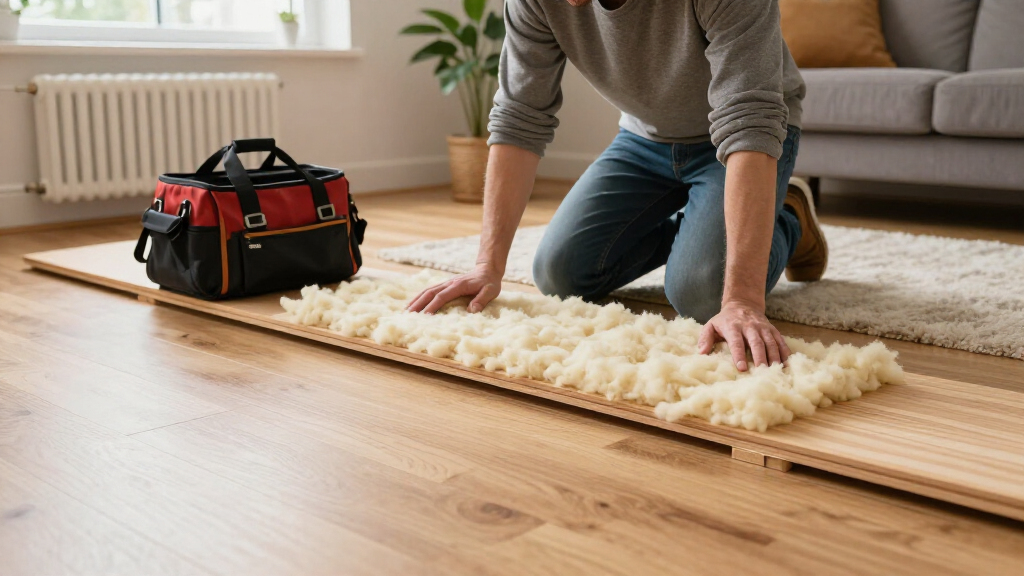
I compared these products by the job they are designed to do: insulating an open floor cavity, adding a layer beneath finished flooring, or serving a broader insulation role. I gave more weight to a clear fit with a stated floor type, useful construction details, and practical coverage than to broad claims that do not explain the intended assembly. I also looked at thickness, material, moisture-barrier details where supplied, and the amount of adaptation a buyer may need during installation.
The ranking favors products with a more defined role and fewer mismatches for common floor projects. That puts Owens Corning R-19 first for accessible cavity insulation, not as a universal underlayment; QuietWalk leads among the listed finished-floor options because its intended surfaces are named. The other rolls and boards rank by how specifically their format and features address a real installation need. Product details alone cannot confirm compatibility with every subfloor or flooring warranty, so I treat those checks as part of the buying decision.
| floor insulation product | Compatible flooring |
|---|---|
| QuietWalk Underlayment Roll | Laminate and hardwood |
| Owens Corning R-19 Unfaced Fib | — |
| Floorlot Gold Premium Silent F | Laminate, engineered wood, solid hardwood, and most floating floors |
| Frost King CF1 Natural Cotton | — |
| PolyFoam Multipurpose Foam Und | Floating laminate and engineered wood |
| HOLNURY 3-in-1 Acoustic Floor | — |
| Shop Square Floor Underlayment | Floating laminate and engineered wood; some hardwood and vinyl floors subject to manufacturer requirements |
| STEICO Wood Fiber Flooring Und | Laminate, vinyl, LVT, LVP, and hardwood |
| SmartSHIELD 5 mm Reflective In | — |
Factors to Consider When Choosing Best Floor Insulation Products
Before choosing a roll or batt, identify where the insulation will sit and what problem you want it to solve. A product suited to a joist cavity is not automatically appropriate directly beneath flooring, and an acoustic underlayment is not a substitute for substantial thermal insulation.
1. Identify the layer you are insulating
Start by deciding whether the work is happening between floor joists or immediately below the finished surface. Cavity insulation such as fiberglass batts is selected for the space, support, and conditions under the floor; underlayment is selected to work with the flooring installed above it. Mixing up these roles can lead to a product that adds little thermal benefit or creates an unsuitable base. Check whether the underside is open, enclosed, or exposed to outdoor air before buying. If access is only from above, the project may call for a different approach than a crawlspace or basement retrofit. Choose by installation layer first, then compare materials within that group.
2. Match thickness and compression to the floor system
Underlayment thickness affects floor height, transitions, door clearance, and how the installed surface feels. A thicker layer is not automatically better: flooring systems have limits on compressibility, and excess movement beneath a floating floor can stress joints. Check the flooring maker’s approved underlayment thickness and whether an attached pad is already present. For insulation placed in a cavity, measure the available depth and avoid compressing batts to force a fit, since the installed assembly may not perform as intended. Include trim, thresholds, and adjacent rooms in your height calculations. A small measurement before ordering can prevent a much larger fit problem after installation.
3. Treat moisture control as an assembly decision
A foil layer or moisture barrier can help manage vapor in some floor assemblies, but it cannot fix leaks, standing water, or damp materials. Before installing a barrier, find out where moisture is coming from and which side of the floor assembly needs vapor control. Local climate, crawlspace conditions, and the materials above and below the insulation can change the right approach. Follow the flooring and insulation instructions together rather than assuming that adding more layers improves protection. Sealing seams and edges may also matter, depending on the product and installation plan. When moisture is persistent or the floor is already damaged, address that condition before covering it.
4. Separate thermal comfort from sound reduction
Buyers often use “insulation” to mean both warmth and quieter rooms, but products built for one goal may do little for the other. Underlayment can reduce certain kinds of impact noise or change footfall feel, while cavity insulation targets heat flow through the floor assembly. Neither description alone tells you how much improvement a particular room will get. For sound, consider whether the issue is footsteps, airborne noise, or vibration traveling through the structure; the remedy can differ. For thermal comfort, focus on the floor cavity, air leakage, and the conditions below it. Set one primary goal before comparing product claims so you do not pay for features that do not address your problem.
5. Check coverage, cuts, and installation access
Calculate the floor area and allow for cuts around joists, pipes, corners, and irregular room shapes. A roll’s stated coverage is a planning figure, not a guarantee that every square foot will be usable after trimming. Batt dimensions need to suit joist spacing and cavity depth, while board and roll formats differ in how easily they handle small or uneven areas. Consider whether you can carry and position the material through the access route and whether the job requires protective equipment or a helper. Read installation instructions before purchase, especially when the product needs a particular subfloor or seam treatment. A product that fits the room and access constraints can be a better choice than one with more headline features.
6. Pay more only for a useful difference
Higher-cost or more specialized materials make sense when their stated construction solves a problem the basic option does not, such as a needed thickness, a specific compatible flooring surface, or a convenient format for the installation area. They are less compelling when the added feature duplicates an existing layer or conflicts with the flooring instructions. Compare the full assembly rather than judging a material by its name or reflective finish alone. Also account for accessories, waste, and any preparation needed for the subfloor or cavity. For a small repair, a multipurpose product may be practical; for a larger project, a clearly specified system can reduce uncertainty. Spend on fit and verified compatibility, not on a feature that does not change the finished result.
Frequently Asked Questions
Can I use floor underlayment instead of insulation between the joists?
Usually, these products serve different positions and jobs. Thin underlayment is installed close to the finished floor, while batts such as Owens Corning R-19 are intended for a floor cavity when the dimensions and assembly suit them. An underlayment may help with footfall sound or provide a layer beneath flooring, but that does not make it a substitute for cavity insulation. Check the product instructions and the construction of your floor before choosing. If the room is cold because air is moving through gaps, sealing those leaks may also be part of the solution.
Should I choose an underlayment with a moisture barrier for a concrete subfloor?
It depends on the moisture condition of the slab and the flooring system, not simply on the fact that the subfloor is concrete. A barrier layer may be appropriate in some installations, but trapped moisture can damage flooring or create other problems if the assembly is not suited to it. Check the flooring manufacturer’s moisture limits and installation requirements, and test the slab using the method specified for the project. Do not treat a barrier as a fix for active water intrusion or a persistently damp surface. When the requirements conflict, get guidance from the flooring maker or a qualified installer before covering the slab.
Will a thicker underlayment make my floor warmer?
Not necessarily. Thickness alone does not establish how much thermal insulation a product provides, and a layer designed for acoustics may not deliver the warmth you expect. A thicker underlayment can also raise the floor and affect transitions, doors, or the stability of floating flooring. For heat loss through an exposed floor, the cavity and air leakage below it may matter more than the thin layer under the finish. Compare the product’s stated purpose and technical data, then confirm that its thickness is allowed by the flooring manufacturer.
Which option makes sense if I want both quieter and warmer floors?
First identify which issue is more pronounced and where the project allows work. A compatible underlayment such as QuietWalk is the more direct kind of choice for a finished-floor installation, while cavity batts target heat loss through an accessible floor structure. A two-layer solution may address both goals, but the materials must work together and fit the flooring instructions. Adding layers without checking thickness, moisture behavior, or support can create new problems. When both comfort and noise matter, plan the entire floor assembly rather than buying two products based on their names alone.
How do I choose between fiberglass batts and a reflective insulation roll?
Start with the available space and the installation conditions. Fiberglass batts are shaped for cavity installation, while a reflective roll such as SmartSHIELD is a different material and format whose performance depends on how it is installed within the assembly. Reflective insulation generally needs the conditions specified by its manufacturer; the foil surface by itself does not tell you how it will perform in a closed floor cavity. Compare installation requirements, depth, support, and moisture considerations before choosing. If the product instructions do not clearly match your floor setup, select a material with a more explicit fit or ask a building professional.
Conclusion
For the broadest cavity-insulation role in this lineup, I recommend Owens Corning R-19 as best overall, provided your floor structure and available depth suit fiberglass batts. QuietWalk is my best pick for beginners installing compatible laminate or hardwood, since its intended flooring use is clearly stated. For a more substantial board-style layer beneath approved flooring, STEICO Wood Fiber is the premium-style choice, with floor height and compatibility checks taking priority. Shoppers seeking a straightforward 3 mm roll can compare Floorlot Gold and Shop Square as value-oriented underlayment options, while HOLNURY is worth a look when its combined acoustic and barrier format matches the assembly. Choose Frost King cotton or PolyFoam for specific multipurpose needs, and consider SmartSHIELD only when its reflective-roll installation requirements fit the project. The right pick is the one suited to your floor layer and primary goal, not simply the product with the most features.
Cold & flu season Picks
humidifiers
As an affiliate, we earn on qualifying purchases.