
Choosing the best attic insulation materials requires balancing thermal performance with installation effort and budget. The Owens Corning R-19 Unfaced Fiberglass Insulation Batts stand out as the best overall choice for traditional thermal resistance, offering consistent R-value coverage that radiant barriers cannot match alone. For those prioritizing heat rejection in hot climates, the Houseables Radiant Barrier Insulation Roll provides a lightweight, reflective alternative that complements existing insulation. The main tradeoff lies between high R-value bulk insulation and low-profile reflective barriers, with the former blocking conductive heat and the latter reflecting radiant heat. Readers should continue reading for a detailed breakdown of how these materials perform under different attic conditions and climate zones.

Get home appliances delivered free with Prime
- Fast, free delivery on millions of items
- Prime Video, Amazon Music and more included
- Member-only deals all year
Complete the kit



Key Takeaways
- Fiberglass batts like Owens Corning R-19 remain the standard for achieving high R-values, while radiant barriers only block radiant heat and require air gaps to work effectively.
- Reflective bubble products vary widely in durability; thicker foil layers resist tearing during installation better than thin plastic-backed variants.
- Natural cotton insulation offers a safer handling profile but requires more thickness to match the thermal performance of fiberglass or mineral wool.
- Radiant barriers are most effective in hot climates where solar gain drives cooling costs, making them less valuable in cold northern regions.
- Installation complexity increases with rigid or reflective materials due to the need for precise spacing and stapling, unlike the simple friction-fit of batts.


| attic insulation material | Brand | Material | Dimensions | Coverage |
|---|---|---|---|---|
| Houseables Radiant Barrier Ins | Houseables | Reflective aluminum foil | — | 1,000 sq ft |
| US Energy Products Radiant Bar | — | — | — | 1,000 sq ft |
| UBmove Reflective Bubble Insul | UBMOVE | Polyethylene | 48 in wide x 125 ft long | — |
| Frost King CF1 Natural Cotton | Frost King | 100% recycled denim | 48 x 16 x 1 in | — |
| Reflectix BP24025 Reflective B | Reflectix | Aluminum foil, polyethylene, and insulating bubbles | 300 in long x 24 in wide | 7,200 sq in |
| Owens Corning R-19 Unfaced Fib | Owens Corning | Fiberglass | 15 x 93 in | 77.5 sq ft |
| VIVOSUN Double-Bubble Reflecti | VIVOSUN | Aluminum foil and polymer core | 300 in L x 6 in W | — |
| AGHITG Reflective Bubble Insul | AGHITG | Aluminum foil and air-bubble layer | 120 in L x 48 in W | 5,760 sq in |
More Details on Our Top Picks
Houseables Radiant Barrier Insulation Roll, 250 ft x 4 ft, 1,000 sq ft
For a large attic where the goal is to reflect radiant heat across a broad area, I’d shortlist the Houseables Radiant Barrier. Its 250-foot roll covers 1,000 square feet, so it can reduce the number of seams compared with smaller rolls such as Reflectix BP24025. The double-sided reflective aluminum is lightweight and designed to resist tearing and humidity, which helps when cutting and fitting material around attic framing. This is a radiant barrier, not a replacement for bulk insulation such as Owens Corning R-19 batts; buyers should compare the products by function rather than assume they provide equivalent insulation. The main tradeoff is that the stated reflective performance does not guarantee lower energy use: results depend on climate, installation, and the building. I’d choose it for broad coverage, not as a standalone fix for heat loss.
Pros:- Covers 1,000 square feet per roll
- Double-sided reflective aluminum
- Lightweight material is easy to cut and install
- Described as tear-resistant and resistant to humidity
Cons:- Radiant-barrier performance depends on climate and installation conditions
- Does not provide a stated R-value or replace bulk insulation
Best for: Homeowners covering a large attic area who want a lightweight, cut-to-fit radiant barrier roll.
Not ideal for: Buyers seeking thick, conventional insulation with a clearly specified R-value, or anyone expecting the barrier alone to solve all attic heat transfer.
- Brand:Houseables
- Material:Reflective aluminum foil
- Roll dimensions:250 ft x 4 ft
- Coverage:1,000 sq ft
- Reflective value:>97%
- Reflective sides:Double-sided
- Model:RaBa
Our verdict“Choose Houseables when broad attic coverage and a simple-to-cut reflective roll matter more than a specified bulk-insulation R-value.”
US Energy Products Radiant Barrier Insulation, 1,000 sq. ft., 4 ft. Wide
I’d favor the US Energy Products Radiant Barrier when airflow through the barrier is a priority. Its perforated, five-layer construction is designed to let air pass while reflecting radiant heat, unlike the non-perforation detail provided for the Houseables roll. The 4-foot-by-250-foot format still covers 1,000 square feet, making it practical for large attic runs. Its metalized aluminum, Mylar, and nylon scrim construction is also described as tear-resistant. The product listing gives both a 99.7% reflective value and a separate 97% radiant-heat-blocking figure, so I would not treat those figures as directly interchangeable. Like other radiant barriers, including Reflectix BP24025, it is not a substitute for conventional insulation with a clearly stated R-value. Installation requirements and savings depend on the attic and local requirements.
Pros:- Covers 1,000 square feet in a 4-foot-wide roll
- Perforated construction is designed to allow airflow
- Five-layer material includes metalized aluminum, Mylar, and nylon scrim
- Lightweight and described as tear-resistant
Cons:- Listing states different reflective-performance figures
- Installation needs may vary by application and local building codes
- Energy savings depend on climate and installation conditions
Best for: Attic renovators who want broad radiant-barrier coverage with a perforated material designed to allow airflow.
Not ideal for: Buyers who need a clearly defined R-value, or those who prefer product specifications with one unambiguous reflective-performance figure.
- Manufacturer:AES
- Coverage:1,000 sq ft
- Roll dimensions:4 ft wide x 250 ft long
- Construction:Five-layer metalized aluminum, Mylar, and nylon scrim
- Reflective value:99.7% listed in item details; description states 97% radiant heat blocking
- Design:Perforated and double-sided
- Tear resistance:Described as tear-resistant
Our verdict“Pick this roll over Houseables when a perforated radiant barrier is the deciding feature, while treating its performance figures cautiously.”
UBmove Reflective Bubble Insulation Roll, 48 in x 125 ft
The UBmove Reflective Bubble Insulation Roll combines a foil exterior with a 3/16-inch polyethylene bubble layer, giving it a different construction from the thin reflective barriers in this roundup. At 48 inches wide and 125 feet long, it offers substantial material for cutting to fit attic sections or other spaces. Compared with the Houseables and US Energy Products rolls, however, its listing does not state coverage in square feet or a consistent application-specific performance figure. Its stated R-value range of 4.9 to 14.1 is broad, and the product information does not explain which installation corresponds to each value. That uncertainty makes it harder to compare directly with Owens Corning R-19 batts. I’d treat this as a flexible, multipurpose material rather than assume it delivers a particular attic R-value.
Pros:- Long 125-foot roll can be cut to fit different areas
- Combines a foil outer layer with a polyethylene bubble layer
- Listed for attic and several non-attic applications
- Lightweight at 5 pounds
Cons:- Only one foil outer layer is specified
- The stated R-value range is not tied to particular installations
- No square-foot coverage figure is provided
Best for: DIY buyers who need a bubble-and-foil roll they can cut for varied attic, garage, or greenhouse applications.
Not ideal for: Homeowners choosing insulation by a verified, application-specific R-value or planning a standard batt installation.
- Brand:UBMOVE
- Material:Polyethylene
- Dimensions:48 in wide x 125 ft long
- Bubble layer thickness:3/16 in
- Item thickness:0.19 in
- Listed R-value:4.9 to 14.1
- Weight:5 lb
Our verdict“Choose UBmove for adaptable cut-to-fit bubble insulation, not when a clear, installation-specific R-value is your main requirement.”
Frost King CF1 Natural Cotton Denim Multi-Purpose Insulation, 16 x 1 x 48 Inches
I’d choose Frost King CF1 for small attic jobs where handling comfort and noise dampening matter more than covering a broad area. Made from 100% recycled denim, this 1-inch-thick piece can be cut or torn to fit around pipes, ducts, and other awkward spaces. Its nonirritating handling is a practical contrast with fiberglass batts such as Owens Corning R-19, which some DIYers may find less comfortable to work with. But this is a single 48-by-16-inch piece, not a full-attic insulation package, and the listing supplies no R-value. That makes it a poor choice for buyers trying to meet a specific thermal target across a large attic. I see its strongest role as supplementary material for modest gaps, cushioning, or sound control—not as a direct substitute for batts or radiant barriers.
Pros:- Made from 100% recycled denim
- Can be cut or torn to fit small or irregular spaces
- Described as nonirritating and not requiring protective gear for handling
- Can serve insulation, cushioning, and noise-dampening purposes
Cons:- Only 1 inch thick
- Single piece is not suited to broad attic coverage
- No R-value is specified
Best for: DIYers filling a small space around attic ducts or pipes who want recycled-fiber material that is described as nonirritating and can also dampen sound.
Not ideal for: Homeowners insulating a whole attic or comparing products against a required R-value; this piece is only 1 inch thick and has no stated R-value.
- Brand:Frost King
- Model:CF1
- Material:100% recycled denim
- Dimensions:48 x 16 x 1 in
- Weight:9.6 oz
- Package quantity:1
- Listed uses:Insulation, cushioning, and noise dampening
Our verdict“Use Frost King CF1 for small, sound-sensitive attic details, but choose full-size batts for whole-attic thermal insulation.”
Reflectix BP24025 Reflective Bubble Pack Insulation, 24 in. x 25 ft.
For smaller projects or narrow attic sections, Reflectix BP24025 is easier to manage than the 1,000-square-foot Houseables and US Energy Products rolls. This 24-inch-wide, 25-foot roll has a seven-layer construction combining aluminum foil, polyethylene, and insulating bubbles; the manufacturer states 97% radiant-heat reflectance. Its bubble layers are intended to resist conductive heat flow, so it differs from a simple reflective barrier, though the listing does not provide an R-value for comparing that effect with Owens Corning R-19 batts. The compact dimensions limit its reach: coverage is 7,200 square inches, far less than the two full-size barrier rolls. I’d pick it for targeted work where a narrower roll is convenient, not for insulating a large attic in one purchase. It is lightweight and fiber-free, but installation still affects results.
Pros:- Seven-layer construction combines foil, polyethylene, and insulating bubbles
- Manufacturer states 97% radiant-heat reflectance
- Lightweight and fiber-free for easier handling
- Suitable for several construction applications
Cons:- 24-inch width and 25-foot length provide limited coverage compared with full-size rolls
- No R-value is provided for comparison with conventional attic insulation
- Warranty support is requested through customer service
Best for: DIYers handling a small attic section, crawl space, or other project who prefer a lightweight, narrow roll.
Not ideal for: Buyers covering a large attic or needing a stated R-value to compare with conventional insulation.
- Brand:Reflectix
- Model:BP24025
- Dimensions:300 in long x 24 in wide
- Thickness:5/16 in (0.31 in)
- Coverage:7,200 sq in
- Material:Aluminum foil, polyethylene, and insulating bubbles
- Construction:Seven layers
- Radiant heat reflectance:97%
- Weight:16 oz
Our verdict“Choose Reflectix BP24025 for targeted projects and easy handling, but select a larger roll for broad attic coverage.”
Owens Corning R-19 Unfaced Fiberglass Insulation Batts, 15 x 93 in, 77.5 sq ft
For buyers insulating between framing members, these R-19 fiberglass batts offer a more conventional thermal-insulation approach than the reflective bubble rolls from VIVOSUN and AGHITG. Each bag covers 77.5 square feet, and the 15-by-93-inch batts are sized for fitting into compatible cavities across attics, floors, or walls. The unfaced construction leaves moisture control to a separate layer or assembly, which can suit projects where that detail is already planned. It also means this is not a self-contained choice for buyers who need a facing included. Compared with the lightweight foil products, fiberglass batts are intended for cavity installation rather than wrapping surfaces or cutting quick window covers. Check framing dimensions and moisture requirements before buying; this pick is less flexible for irregular or exposed areas.
Pros:- R-19 thermal resistance for cavity insulation
- 77.5 square feet of coverage per bag
- Can be used in attics, floors, and walls
- Fiberglass material can help reduce sound transmission
Cons:- Unfaced design provides no vapor barrier
- Requires compatible framing cavities for a neat fit
- Less adaptable to surface wrapping than the VIVOSUN and AGHITG rolls
Best for: Homeowners filling compatible attic floor or ceiling cavities who need R-19 batts and already have a plan for moisture control
Not ideal for: DIYers seeking a reflective surface wrap, insulation for irregular spaces, or a product with an integrated vapor barrier
- Brand:Owens Corning
- Material:Fiberglass
- R-value:R-19
- Dimensions:15 x 93 in
- Thickness:6.5 in
- Coverage:77.5 sq ft
- Quantity:8 batts
- Facing:Unfaced
Our verdict“Choose these batts for framed attic cavities when R-19 fiberglass and separate moisture control fit your project.”
VIVOSUN Double-Bubble Reflective Foil Insulation Roll, 6 in. x 25 ft.
The VIVOSUN roll is a targeted option for pipes, ducts, and narrow surfaces, not a like-for-like replacement for the Owens Corning R-19 cavity batts. Its 6-inch width and flexible double-bubble core make it easier to cut and wrap around smaller runs, while reflective foil on both sides provides a vapor-barrier layer. That combination can suit attic projects where the goal is to cover ductwork or another surface rather than fill a framed cavity. The tradeoff is the non-adhesive installation: overlapping material is needed to secure a continuous fit, and the product data gives no R-value for direct comparison with the Owens Corning batts. Its narrow format also means it is a poor pick for covering broad attic areas efficiently.
Pros:- Narrow 6-inch width suits pipe and duct wrapping
- Flexible, lightweight material can be cut to size
- Reflective foil on both sides with a double-bubble core
- Moisture- and odor-resistant vapor barrier
Cons:- Non-adhesive construction requires overlaps for a secure fit
- The 25-foot roll provides limited coverage for broad attic surfaces
- No R-value is supplied for comparison with fiberglass batts
Best for: DIYers wrapping attic pipes or ducts who want flexible reflective material with a moisture-resistant barrier
Not ideal for: Homeowners insulating large attic floor areas or seeking a stated R-value for cavity insulation
- Brand:VIVOSUN
- Dimensions:300 in L x 6 in W
- Item thickness:3.3 mm
- Bubble layer thickness:10 mm
- Material:Aluminum foil and polymer core
- Pack quantity:1 roll
- Installation:Non-adhesive; cut to size and overlap layers
Our verdict“Pick VIVOSUN for narrow attic runs such as ducts and pipes, rather than broad cavity or floor insulation.”
AGHITG Reflective Bubble Insulation Roll, 48 in x 10 ft
AGHITG’s 48-inch-wide roll offers a broader sheet format than VIVOSUN’s 6-inch strip, making it more practical for cutting pieces to fit windows or other wide surfaces. Its double-sided foil and bubble layer are intended to help limit heat transfer, and the material is described for use in places such as RVs, garages, and attics. That versatility is useful for small DIY jobs, but the product data provides no insulation performance measurements, so it cannot be ranked against the Owens Corning R-19 batts on thermal resistance. Attachment details are also unspecified, leaving buyers to work out how to hold the cut pieces in place. Compared with VIVOSUN, it covers wider sections per pass, but its 10-foot length still makes it a limited choice for insulating an entire attic.
Pros:- 48-inch width suits cutting broad panels
- Double-sided aluminum foil with an air-bubble layer
- Lightweight material is described as sturdy
- Can be cut for windows, RVs, garages, and other areas
Cons:- No R-value or other insulation performance measurement is provided
- Attachment method is not specified
- A 10-foot roll is limited for large attic projects
Best for: DIYers cutting reflective panels for windows, RVs, or small garage and attic sections
Not ideal for: Homeowners insulating a full attic who need quantified thermal performance or a specified attachment method
- Brand:AGHITG
- Dimensions:120 in L x 48 in W
- Coverage:5,760 sq in
- Thickness:0.12 in
- Material:Aluminum foil and air-bubble layer
- Items included:1 roll
Our verdict“Choose AGHITG for small, cut-to-fit reflective projects, but use a measured-performance insulation product for a full attic.”
How We Picked
I evaluated these products based on their ability to reduce thermal transfer, ease of installation for DIY homeowners, and material durability over time. For traditional insulation, I focused on R-value consistency and coverage area per roll. For reflective products, I assessed the quality of the foil layer and the effectiveness of the air-gap design. I also considered how each material handles moisture resistance and long-term settling, which are common failure points in attic applications.
The ranking logic prioritizes versatility and proven performance. Products that offer clear thermal benefits without specialized installation requirements were ranked higher. I penalized options with vague performance claims or materials that degrade quickly under UV exposure or physical stress. This approach ensures the recommendations reflect real-world utility rather than just marketing specifications.
Factors to Consider When Choosing Best Attic Insulation Materials
Selecting the right insulation involves more than just picking the thickest material. Climate, attic structure, and existing insulation all play roles in determining which product will deliver the best return on investment.Understanding R-Value vs. Radiant Barriers
Most homeowners confuse R-value with radiant reflection, leading to ineffective upgrades. R-value measures resistance to conductive heat flow, which is critical in cold climates where heat escapes through the roof deck. Radiant barriers reflect radiant heat, making them powerful in hot climates where the sun heats the roof surface. You cannot compare an R-19 fiberglass batt directly to a radiant barrier because they fight different types of heat transfer. If you live in a hot region, a radiant barrier may lower cooling loads more effectively than adding inches of fiberglass. In cold regions, fiberglass or cellulose is the only way to stop heat loss. Mixing both can be ideal, but only if the radiant barrier is installed with proper air gaps.
Installation Complexity and DIY Feasibility
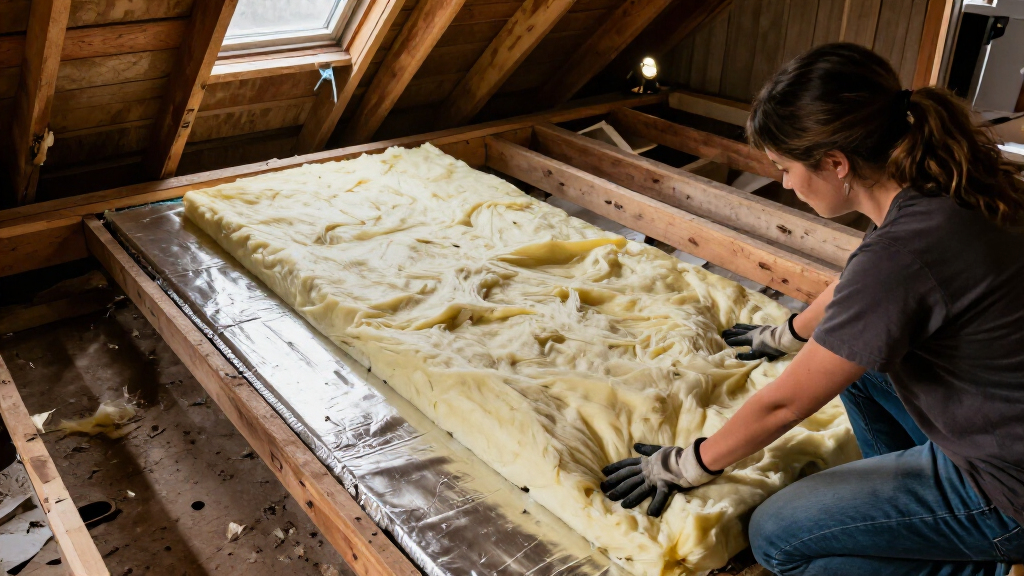
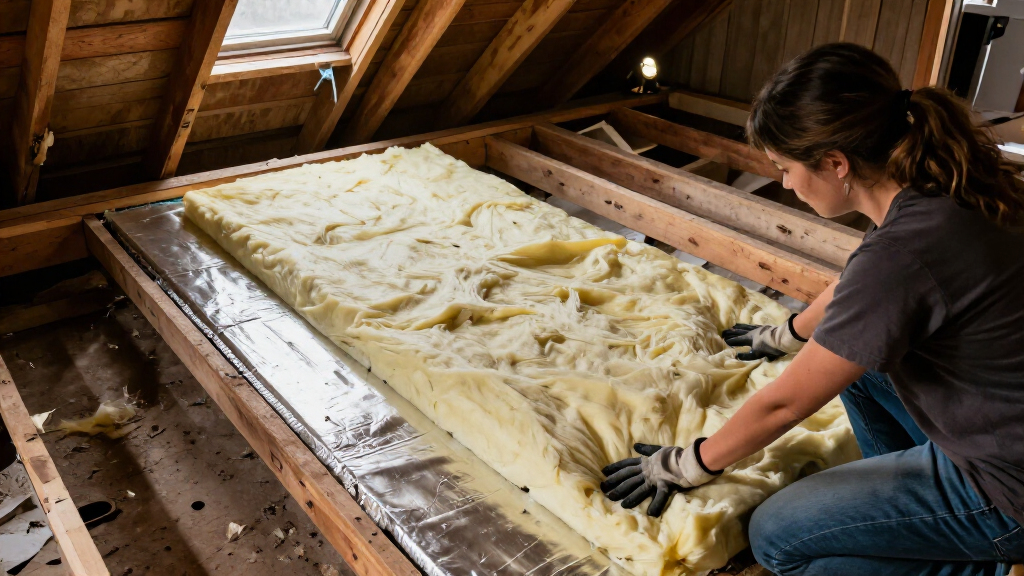
Not all insulation is created equal when it comes to installation labor. Fiberglass batts are forgiving; they fit between joists with minimal cutting and require no special tools beyond gloves and a mask. Reflective bubble and foil products demand precision. They must be stapled tightly to rafters or joists, and any sagging creates air pockets that reduce effectiveness. Mistakes in stapling can tear the foil, requiring immediate repair to maintain the reflective surface. For beginners, the friction-fit nature of batts is far more manageable than the tension-based installation of radiant barriers. If you lack experience with stapling guns or working overhead, stick to roll-based batts to avoid frustration and poor results.
Durability and Material Longevity
Attic environments are harsh, with extreme temperature swings and potential moisture intrusion. Fiberglass does not rot or mold if kept dry, but it can settle over decades, reducing R-value. Radiant barriers with thin plastic backing may degrade or delaminate if exposed to high humidity or sharp attic debris. Thicker aluminum foil layers resist tearing and maintain reflectivity longer than metallicized films. Cotton denim insulation is naturally resistant to pests but can absorb moisture if the attic leaks, potentially leading to mold growth. Choosing a material with a proven track record in your specific climate zone prevents premature failure and the need for early replacement.
Health and Safety Considerations
Handling insulation requires attention to respiratory and skin safety. Fiberglass particles can irritate skin, eyes, and lungs, necessitating full protective gear including a respirator and long sleeves. Cotton denim insulation is often marketed as ‘itch-free’ and safer for DIYers, though it still contains binders that should not be inhaled. Radiant barriers are generally inert and safe to handle, posing fewer health risks during installation. If you have sensitivities to fiberglass or are working in a tight space with poor ventilation, cotton or foil-based options offer a more comfortable installation experience. Always verify that the product does not contain harmful formaldehyde binders, which were common in older fiberglass products but are largely phased out in modern high-quality brands.
Cost Efficiency and Coverage Area
Calculating cost per square foot is misleading without considering coverage efficiency. Radiant barriers often cover large areas quickly because they are thin and lightweight, but they do not add R-value to existing insulation. Fiberglass batts are bulkier and heavier, requiring more time to install, but they provide measurable thermal resistance. A cheap roll of thin reflective foil may seem cost-effective but often requires multiple layers or precise spacing to work, negating the initial savings. Compare the total labor time and material volume needed to achieve your target energy savings. Sometimes paying more for a higher-density batt or a durable radiant barrier saves money on labor and future energy bills.
Frequently Asked Questions
Can I install radiant barrier insulation over existing fiberglass batts?
Yes, but you must create an air gap between the radiant barrier and the existing insulation. Radiant barriers work by reflecting heat, which requires a space for the radiant energy to travel. If you lay the barrier directly on top of fiberglass, it acts as a vapor barrier and can trap moisture, leading to mold. The best method is to staple the radiant barrier to the underside of the rafters or roof deck, leaving the existing batts on the floor. This configuration allows the barrier to reflect solar heat before it reaches the insulation layer.Is cotton denim insulation as effective as fiberglass for attic temperatures?
Cotton denim insulation typically has a similar R-value per inch to fiberglass, roughly R-3.0 to R-3.7 depending on density. However, it is often sold in thinner batts, meaning you need more thickness to reach the same total R-value as a standard R-19 or R-30 fiberglass roll. While it is safer to handle and resistant to pests, it can be heavier and harder to cut. For most attics, fiberglass remains more cost-effective for achieving high R-values, but cotton is a strong alternative for those prioritizing ease of handling and indoor air quality.Do reflective bubble insulation products work in cold climates?
Reflective bubble products are primarily designed to reflect radiant heat, which is most beneficial in hot climates where solar gain is the main cooling load. In cold climates, the primary goal is to reduce conductive heat loss through the roof. While bubble insulation has a low R-value, it does not stop cold air from penetrating the attic effectively on its own. It can be used as a supplementary layer to reduce moisture condensation, but it should never replace bulk insulation like fiberglass or cellulose in northern regions.How do I know if my attic needs more insulation or a radiant barrier?
Check your current insulation depth and type. If your fiberglass batts are compressed or less than 10 inches thick, you likely need more bulk insulation to meet modern energy codes. If your insulation depth is adequate but your upper floors are still hot in summer, a radiant barrier may help by reducing the heat load from the roof deck. A thermal camera or professional energy audit can reveal if heat is entering through radiation (hot roof surface) or conduction (cold attic air leaking into living spaces).Are there any fire safety concerns with reflective foil insulation?
Most reflective foil and bubble insulation products are manufactured with fire-retardant additives, but they are not fireproof. They can melt or burn if exposed to direct flame, such as from a furnace or electrical fault. Always check the product’s fire rating (Class A, B, or C) and installation instructions. In some jurisdictions, building codes require a thermal barrier, such as drywall, over exposed foam or foil insulation. Never install reflective materials near heat-producing appliances without verifying local code compliance and manufacturer clearance requirements.Conclusion
Choosing the best attic insulation materials depends on your specific climate and project goals. For best overall performance and traditional thermal resistance, the Owens Corning R-19 Unfaced Fiberglass Insulation Batts remain the reliable standard for most homeowners. If you live in a hot climate and want to reduce cooling costs, the Houseables Radiant Barrier Insulation Roll offers a highly effective, lightweight solution when installed with proper air gaps. For DIY beginners concerned about skin irritation and ease of handling, the Frost King CF1 Natural Cotton Denim Insulation provides a safer, itch-free alternative, though it requires more thickness for equivalent R-value. The VIVOSUN Double-Bubble Reflective Foil Insulation Roll serves as a budget-friendly supplemental layer for small areas or garages where space is limited. Ultimately, match the material to your primary heat transfer problem: conductive loss in winter or radiant gain in summer, and always prioritize proper installation over brand marketing claims.
NFL season / tailgating Picks
team gear
As an affiliate, we earn on qualifying purchases.