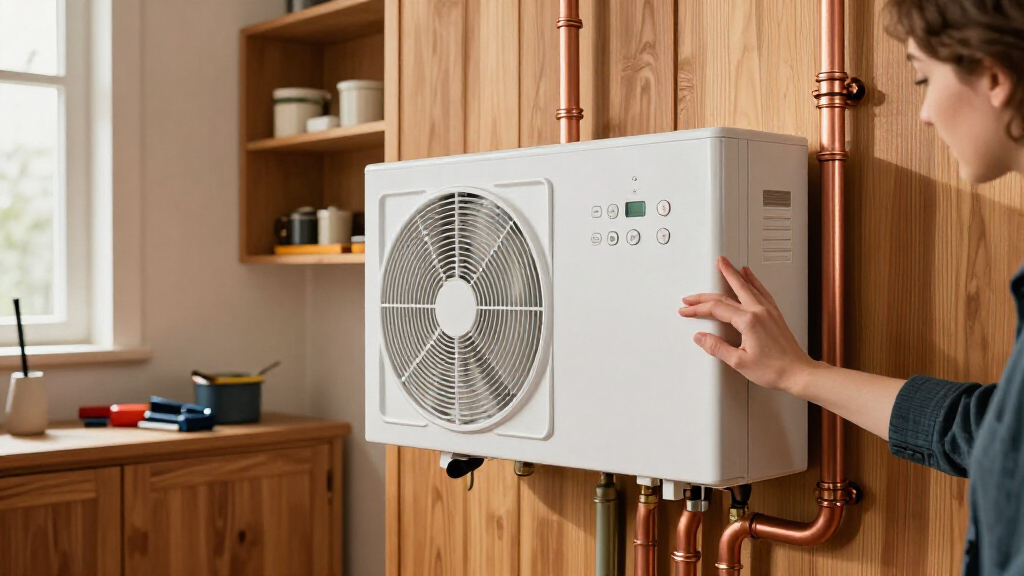

Choosing a high temperature heat pump starts with separating products that are easy to confuse: central space-heating systems, a packaged unit, a ductless mini split, and a heat-pump water heater do different jobs. My strongest fit for buyers who need a central system with published low-temperature heating data is the ACiQ Essentials 3-Ton, which lists heat pump operation down to 5°F and includes a 10 kW backup heat kit. For a more conventional split-system package, I’d compare the Goodman 3-Ton 15 SEER2 with its multi-position air handler. The Senville 50-Gallon Hybrid is the standout for efficient household hot water, not for heating a home.

Get home appliances delivered free with Prime
- Fast, free delivery on millions of items
- Prime Video, Amazon Music and more included
- Member-only deals all year
The main tradeoff is that none of these listings establishes a high leaving-water temperature or a full performance curve at low outdoor temperatures. The central and ductless options are air-source space-heating products, while Senville heats water in a tank. I’ve ranked them by fit for the stated high-temperature search, usefulness of the supplied specifications, and how clearly each product’s limitations can be identified. Buyers should match the system to the job before comparing capacities or efficiency figures.
Complete the kit


Key Takeaways
- ACiQ is the clearest central-heating pick here for cold-weather screening because its stated heat-pump heating range reaches 5°F and it includes a 10 kW backup heat kit; that range does not establish output or efficiency at that temperature.
- Goodman’s 3-ton split set includes both an outdoor heat pump and a multi-position air handler, but a separate heat kit may be needed in cold climates.
- Senville is the only listed product designed to heat domestic water. Its 50-gallon tank and 69-gallon first-hour rating do not make it a space-heating heat pump.
- COSTWAY suits a single room or smaller zone, but the listing gives no outdoor-temperature heating range, so it is a weaker match for buyers prioritizing cold-weather performance.
- Goodman’s packaged unit includes a thermostat and installation accessories, while its 14 SEER rating and unspecified heating range make it less compelling for high-temperature or cold-climate selection.
| ACiQ Essentials 3-Ton 17 SEER2 Central AC and Heat Pump System with 10 kW Backup Heat Kit |  | Best Overall for Central Heating with a Stated 5°F Operating Limit | Capacity: 3 tons | Cooling efficiency: 17 SEER2 | Backup heat: 10 kW | VIEW LATEST PRICE | See Our Full Breakdown |
| Goodman 3-Ton 15 SEER2 Heat Pump and Multi-Position Air Handler |  | Best Conventional Split-System Package | System capacity: 3 tons | Cooling capacity: 36,000 BTU | Efficiency: 15 SEER2 | VIEW LATEST PRICE | See Our Full Breakdown |
| Senville SENWH-HP50US 50-Gallon Hybrid Heat Pump Water Heater |  | Best for Efficient Household Hot Water | Tank capacity: 50 gallons | Uniform Energy Factor: 3.75 | Power: 4.5 kW | VIEW LATEST PRICE | See Our Full Breakdown |
| COSTWAY 12,000 BTU Mini Split Air Conditioner and Heater, 20 SEER2, 115V | 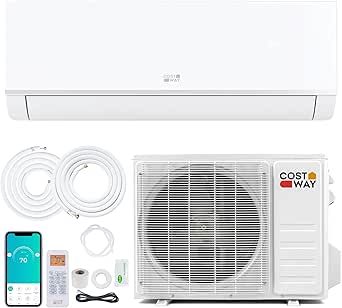 | Best for a Small Room or Independent Zone | Cooling capacity: 12,000 BTU | Heating capacity: 12,000 BTU | Coverage: Up to 750 sq. ft. | VIEW LATEST PRICE | See Our Full Breakdown |
| Goodman 3-Ton 14 SEER Packaged Heat Pump Unit with Accessories |  | Best Packaged Format with Basic Accessories Included | Model: GPH1436H41 | Capacity: 3 tons | Efficiency: 14 SEER | VIEW LATEST PRICE | See Our Full Breakdown |
| high temperature heat pump | Refrigerant | Warranty | Efficiency |
|---|---|---|---|
| ACiQ Essentials 3-Ton 17 SEER2 | R32 | 4 years parts and 6 years compressor with online registration | — |
| Goodman 3-Ton 15 SEER2 Heat Pu | R-32 | 10-year parts warranty with qualifying installation and registration within 60 days | 15 SEER2 |
| Senville SENWH-HP50US 50-Gallo | — | 7 years parts; 10 years compressor | — |
| COSTWAY 12,000 BTU Mini Split | R-32 | — | 20 SEER2 |
| Goodman 3-Ton 14 SEER Packaged | — | — | 14 SEER |
More Details on Our Top Picks
ACiQ Essentials 3-Ton 17 SEER2 Central AC and Heat Pump System with 10 kW Backup Heat Kit
For a buyer comparing central heat pumps around cold-weather operation, ACiQ Essentials is the most informative space-heating listing in this group. It states a heat-pump heating operating range of 5°F–75°F and includes a 10 kW backup heat kit. Those details help frame system planning: the heat pump is not listed as operating below 5°F, and the backup heater gives the system another heating source. The listing does not say how much heat the unit delivers at 5°F, how efficiently it operates there, or when the backup element engages, so I would not treat the range as proof of full-capacity performance in severe cold.
Its inverter operation is a useful distinction from Goodman’s single-stage split system. Demand-based output can modulate with heating or cooling needs rather than relying on a simple full-on/full-off pattern, which may suit changing loads and can support quieter operation. The 17 SEER2 figure is a cooling-efficiency measure; it should not be read as a heating-performance rating. ACiQ also includes the thermostat and heat kit, giving the buyer a more complete stated package than Goodman’s split set, which may require a separately sourced heat kit.
The tradeoff is the warranty and installation conditions. The supplied warranty is 4 years for parts and 6 years for the compressor with online registration, and installation by a technician is required. Buyers should also confirm that the system’s air handler, controls, electrical service, and backup heat configuration match the home. Compared with COSTWAY, ACiQ is designed for central distribution rather than one zone; compared with Goodman’s 3-ton split set, it provides a specific low-temperature operating boundary and included backup heat. It is my first choice here for central heating research, but the missing capacity curve means a contractor must confirm whether it can meet the home’s load at local design temperatures.
Pros:- Lists a heat-pump heating operating range down to 5°F.
- Includes a 10 kW backup heat kit and thermostat.
- Inverter operation adjusts output to demand.
- Combines central cooling and heat-pump heating in a 3-ton split system.
Cons:- The listing gives no heating capacity or efficiency at 5°F.
- Heat-pump operation is listed only through 75°F for heating.
- Warranty requires technician installation and online registration.
Best for: Homeowners replacing a central split system who want a stated heat-pump heating range and included electric backup heat.
Not ideal for: Buyers seeking a documented high water-supply temperature, a detailed low-temperature capacity curve, or a long warranty without registration requirements.
- Capacity:3 tons
- Cooling efficiency:17 SEER2
- Backup heat:10 kW
- Heating operating range:5°F–75°F
- Cooling operating range:5°F–125°F
- Refrigerant:R32
- Included components:Indoor and outdoor units, thermostat, backup heat kit
- Warranty:4 years parts and 6 years compressor with online registration
Our verdict“I rank ACiQ first for central-heating buyers because it pairs a stated 5°F heating boundary with included backup heat, while leaving output at that temperature for professional verification.”
Goodman 3-Ton 15 SEER2 Heat Pump and Multi-Position Air Handler
This Goodman set is the more conventional central option for buyers who want an outdoor heat pump paired with an indoor air handler. The 3-ton capacity and multi-position air handler give it a familiar role in a ducted residential system, with upflow, horizontal-right, and horizontal-left configurations. That flexibility can make the equipment easier to match to some existing mechanical spaces than a product that supports only one orientation. Its direct-drive, nine-speed ECM blower is designed to provide adjustable airflow, while the aluminum coil completes the included indoor assembly.
Compared with ACiQ, Goodman supplies fewer clues about cold-weather heating: the listing gives no outdoor-temperature operating range or low-temperature output, and a separate heat kit may be needed in cold climates. ACiQ includes a 10 kW backup kit and gives a 5°F heating boundary; Goodman asks the buyer to plan that backup arrangement separately. In return, Goodman specifies a 10-year parts warranty when a qualified installer completes the installation and the system is registered within 60 days. Buyers should check the exact warranty terms and required registration steps before ordering.
The package is not ready to install simply because both major units are included. A thermostat and other accessories are sold separately, and downflow mounting requires an optional kit. Its 75 dB noise specification is also worth checking against the installation location and manufacturer’s measurement conditions. This is a better fit than the packaged Goodman for homes already built around a split system, but the single-stage design offers less modulation than ACiQ’s inverter approach. I would shortlist it when the air-handler orientation and service setup fit the home, then have a contractor verify capacity, heat-kit requirements, and cold-weather performance.
Pros:- Includes both the heat pump and air handler.
- Air handler supports upflow and two horizontal positions.
- Nine-speed ECM blower supports adjustable airflow.
- A 10-year parts warranty is available with qualifying installation and registration.
Cons:- A heat kit may be needed in cold climates and is sold separately.
- Thermostat and other accessories are not included.
- Downflow installation requires an optional kit.
Best for: Homeowners replacing a ducted split system who need a 3-ton set with several air-handler installation orientations.
Not ideal for: Buyers who need published low-temperature heating performance, a heat kit in the box, or a complete controls package.
- System capacity:3 tons
- Cooling capacity:36,000 BTU
- Efficiency:15 SEER2
- Refrigerant:R-32
- Voltage:240 volts
- Air-handler positions:Upflow, horizontal right, horizontal left
- Blower:Direct-drive, 9-speed ECM
- Warranty:10-year parts warranty with qualifying installation and registration within 60 days
Our verdict“I’d choose this Goodman over the packaged unit for a standard ducted split-system replacement, provided a contractor confirms the heat kit and cold-weather design.”
Senville SENWH-HP50US 50-Gallon Hybrid Heat Pump Water Heater
Senville earns a place in this roundup because its heat pump serves a different, useful purpose: it heats domestic water rather than room air. The 50-gallon tank, 3.75 UEF, and 69-gallon first-hour rating give buyers concrete measures for household hot-water planning. Its listing also states potential electricity-use reductions of up to 70% compared with standard electric water heaters. That is a stated comparison, not a guaranteed household saving; actual use depends on operating conditions, settings, and hot-water demand.
For a buyer looking for a high-temperature heat pump to serve radiators or a central air system, this is the wrong category. Its UEF and first-hour rating describe water-heater efficiency and delivery, not space-heating capacity or radiator supply temperature. Compared with ACiQ and Goodman, Senville does not heat the home through ducts; compared with COSTWAY, it does not provide room heating or cooling. Its value is specifically in the hot-water system, especially where the installation area has suitable surrounding air for the heat pump to draw from.
The practical constraints matter: the tank weighs 218 pounds, stands 66.5 inches high, and needs space and appropriate air conditions. I would check access routes, floor support, clearance, condensate handling, and electrical requirements with the installer. Its ENERGY STAR, UL, and AHRI certifications and stated 7-year parts and 10-year compressor warranties are useful decision details, though installation and warranty conditions should still be confirmed. Compared with the central-system picks, Senville is the clearest choice for buyers replacing an electric tank water heater—but it should not be ranked as a substitute for a home-heating heat pump.
Pros:- 50-gallon tank with a 69-gallon first-hour rating.
- 3.75 UEF and stated potential electricity-use reduction versus standard electric models.
- ENERGY STAR, UL, and AHRI certifications are listed.
- Includes 7-year parts and 10-year compressor warranty terms.
Cons:- Does not provide space heating or cooling.
- Requires suitable surrounding air for heat-pump operation.
- The 218-pound, 66.5-inch-tall tank needs careful delivery and installation planning.
Best for: Households replacing a conventional electric water heater and looking for a heat-pump model with a 50-gallon tank.
Not ideal for: Anyone seeking a heat pump for space heating, radiator water, or central heating and cooling.
- Tank capacity:50 gallons
- Uniform Energy Factor:3.75
- Power:4.5 kW
- Certifications:ENERGY STAR, UL, AHRI
- Dimensions:21.4 in W × 66.5 in H
- Weight:218 lb
- Warranty:7 years parts; 10 years compressor
Our verdict“I recommend Senville only for household hot water: its efficiency and delivery figures are relevant to a water heater, not to high-temperature space heating.”
COSTWAY 12,000 BTU Mini Split Air Conditioner and Heater, 20 SEER2, 115V
COSTWAY is the compact, ductless choice in this set. Its 12,000 BTU, 1-ton capacity is specified for spaces up to 750 square feet, making it more relevant to a room, addition, or separately controlled zone than to a whole-home central replacement. The indoor and outdoor units connect through the included 16.4-foot copper pipe, while Wi-Fi, app, and voice controls offer convenient adjustment. An advertised noise level as low as 28 dB may appeal in a bedroom or living area, though the actual sound depends on operating mode and installation.
Its key limitation for this roundup is missing cold-weather data. The listing provides heating capacity but no outdoor-temperature heating range or performance figures at low temperatures. That makes it harder to judge against ACiQ, which at least states a 5°F heating operating limit, or Goodman, where a cold-climate heat kit may be needed. Do not treat the 20 SEER2 figure as evidence of cold-weather heating ability; it is not a low-temperature heating capacity chart. For a mild-climate room addition or a space that needs its own heating and cooling, the product’s size and controls may matter more than high-temperature performance.
Installation is another dividing line. COSTWAY recommends professional installation and requires a new outdoor unit, so it is not a simple appliance swap or a direct fit to existing ductwork. Its 115V specification can distinguish it from the 240-volt Goodman split set, but an electrician or HVAC professional still needs to confirm the circuit and installation requirements. Compared with the central systems, COSTWAY avoids ducted distribution and targets one zone; compared with Senville, it heats room air rather than stored water. I would choose it for a modest, independent space only after confirming its heating suitability for local winter conditions.
Pros:- 12,000 BTU capacity is intended for spaces up to 750 square feet.
- Provides both heating and cooling in a ductless format.
- Wi-Fi app and voice-assistant controls are listed.
- Includes washable filters and a self-clean function.
Cons:- No outdoor-temperature heating range is supplied.
- Professional installation is recommended and a new outdoor unit is required.
- A 1-ton unit is not a direct substitute for a 3-ton central system.
Best for: Owners of a smaller room, addition, or detached space who want ductless heating and cooling with app controls.
Not ideal for: Buyers needing whole-home central heating, a published low-temperature heating range, or radiator-water output.
- Cooling capacity:12,000 BTU
- Heating capacity:12,000 BTU
- Coverage:Up to 750 sq. ft.
- Voltage:115V
- Efficiency:20 SEER2
- Refrigerant:R-32
- Noise level:As low as 28 dB
- Controls:Wi-Fi app, Alexa, Google Assistant, remote
Our verdict“I’d pick COSTWAY for a small, separately controlled zone, but not as a high-temperature or proven cold-climate heating solution.”
Goodman 3-Ton 14 SEER Packaged Heat Pump Unit with Accessories
Goodman’s packaged unit combines the main heating and cooling equipment in one outdoor cabinet, unlike the split systems from ACiQ and the other Goodman entry. That format can suit a home designed for packaged equipment or a replacement where the existing duct and equipment arrangement already supports it. The listing adds a programmable thermostat, square-to-round adapters, plastic equipment pad, and a heater option, which may reduce the number of separate accessories a buyer needs to source. It is still essential to verify compatibility and installation details before treating the package as complete.
The included heat strip is listed as 5 kW unless another size is requested, and the heater is described without a breaker. That leaves an electrical and sizing question for the installer. More importantly for this article, the listing provides no outdoor-temperature heating range, low-temperature capacity, or high-temperature water output. Compared with ACiQ, it gives less information about cold-weather limits and comes with a smaller stated backup heat strip by default; compared with Goodman’s 3-ton split set, it includes accessories but uses a packaged layout rather than a separate indoor air handler. The format is its main advantage, not evidence of superior high-temperature performance.
The 14 SEER efficiency figure is also not a measure of heating output in cold conditions. Buyers should confirm the applicable efficiency label and system match, along with the requested heat-strip size, breaker requirements, duct connection, and thermostat compatibility. Since this is a packaged system, it may be a poor fit for a home laid out around a conventional split system unless the installation plan accounts for the change. I rank it below the split Goodman for general central replacement because its listing offers fewer installation-position details and no stated cold-weather operating boundary. It makes sense when the packaged configuration itself is the buyer’s priority.
Pros:- Packaged format combines the main heat-pump equipment in one unit.
- Listing includes a programmable thermostat and installation accessories.
- Designed to provide year-round heating and cooling.
- A 5 kW heat strip is listed unless another size is specified.
Cons:- No heating operating range or low-temperature performance data is supplied.
- The heater is listed without a breaker.
- The default 5 kW heat strip may not match the home’s heating load.
Best for: Homeowners replacing an existing packaged heat pump who want a single-cabinet format with a thermostat and listed installation accessories.
Not ideal for: Buyers who need a documented low-temperature heating range, a specified high-capacity backup heater, or a split-system configuration.
- Model:GPH1436H41
- Capacity:3 tons
- Efficiency:14 SEER
- System type:Packaged heat pump
- Included accessories:Programmable thermostat, square-to-round adapters, plastic equipment pad
- Included heater:5 kW heat strip unless another size is specified
Our verdict“I’d choose this Goodman when a packaged replacement is specifically needed, but ACiQ is the stronger central-heating comparison because its listing gives a clearer heating range and backup-heat specification.”

How We Picked
I ranked these five products around the phrase high temperature heat pumps, but the supplied listings span different uses and do not all provide data that would support a like-for-like comparison. I looked first at the job each unit performs: central space heating, ductless room heating, packaged heating and cooling, or domestic hot water. I then weighed the available heating-range information, included components, installation format, and disclosed limitations. That approach rewards a listing that makes a useful heating boundary visible without pretending that one kind of equipment can replace another.
For a high-temperature retrofit, buyers often need information such as maximum water-supply temperature, output at specified outdoor temperatures, and whether the unit is designed for radiators or another hydronic circuit. None of those details is supplied for these five products. The ACiQ listing gives a 5°F–75°F operating range for heat-pump heating, but that is an operating range, not a capacity or efficiency chart. The Senville listing gives UEF and first-hour hot-water figures, which are relevant to a water heater but not to radiator temperatures. I treat these distinctions as ranking factors, not as gaps I can fill with assumptions.
That means this is a fit-and-disclosure ranking, not a claim that every product is a high-temperature hydronic heat pump. ACiQ ranks first for central heating because its listing includes a defined low outdoor-temperature boundary and a backup heat kit. Goodman’s split system follows as a more conventional central option with a flexible air handler, though its cold-weather backup needs extra planning. Senville earns a separate role for domestic hot water. COSTWAY is a small-space alternative, and the packaged Goodman is a straightforward all-in-one format with fewer relevant heating details. I would ask a qualified HVAC professional to verify sizing, electrical requirements, local code, refrigerant handling, and actual performance for the intended climate before purchase.
| high temperature heat pump | Refrigerant |
|---|---|
| ACiQ Essentials 3-Ton 17 SEER2 | R32 |
| Goodman 3-Ton 15 SEER2 Heat Pu | R-32 |
| Senville SENWH-HP50US 50-Gallo | — |
| COSTWAY 12,000 BTU Mini Split | R-32 |
| Goodman 3-Ton 14 SEER Packaged | — |
Factors to Consider When Choosing Best High Temperature Heat Pumps
I would start by identifying what the heat pump needs to heat, then check the performance data that corresponds to that job. The phrase “high temperature” can refer to high water-supply temperatures for radiators, operation in cold outdoor weather, or simply a heat pump that provides reliable space heating. These are not interchangeable. The products here cover central air heating, a ductless room system, a packaged unit, and a domestic water heater, so a useful comparison depends on the intended application.Separate space heating from domestic hot water
A central heat pump or mini split heats indoor air; a heat-pump water heater heats stored domestic water. Senville’s 50-gallon tank, 3.75 UEF, and 69-gallon first-hour rating help a household assess hot-water use, but they do not indicate whether it can serve radiators or a duct system. By contrast, Goodman, ACiQ, and COSTWAY are described as space-heating and cooling equipment. Start with the load, not the product label: if you need showers and taps supplied, compare water heaters; if you need rooms heated, compare space-heating systems. A hydronic radiator retrofit calls for specific water-temperature and output data not provided in these listings.
Ask for low-temperature output, not only an operating range
An operating range tells you where a manufacturer lists the equipment as able to run, but it does not show how much useful heat the system can deliver at each outdoor temperature. ACiQ lists heat-pump heating operation from 5°F to 75°F, giving it a more useful boundary than the other space-heating listings here. However, the supplied details do not include its heating capacity or efficiency at 5°F. Before choosing any unit for a cold climate, ask the contractor for performance data at local winter design conditions and a load calculation for the building. Do not assume the lowest stated operating temperature equals full output or that a backup heat strip will be sufficient without sizing work.
Check backup heat and electrical requirements
Backup heat can cover demand when the heat pump cannot meet the building load, but its size and controls matter. ACiQ includes a 10 kW heat kit, while the packaged Goodman listing specifies a 5 kW strip unless another size is requested. The split-system Goodman says a heat kit may be needed in cold climates and sells it separately. Those differences affect system completeness, electrical demand, and installation planning. Ask what backup capacity is included, what circuit and breaker are required, and when the backup heat engages. The packaged Goodman’s heater is listed without a breaker, so the electrical scope needs direct confirmation rather than guesswork.
Match capacity and system format to the home
Three-ton central systems and a one-ton mini split are not interchangeable options. The Goodman and ACiQ products are 3-ton central systems; COSTWAY is a 12,000 BTU ductless unit intended for a space up to 750 square feet. That coverage figure is a starting point, not a substitute for a room-by-room load calculation. A packaged heat pump may fit a home already designed for that format, while a split system uses an outdoor unit and indoor air handler. Choose the distribution method that fits the building, then have a professional size the equipment. Oversizing or undersizing can undermine comfort, cycling behavior, and performance.
Treat efficiency figures as product-specific
SEER2 describes cooling efficiency, while UEF applies to water heaters. Neither figure alone tells a buyer how much heat a space-heating heat pump supplies during a cold spell or at what cost. ACiQ’s 17 SEER2 and COSTWAY’s 20 SEER2 relate to cooling, whereas Senville’s 3.75 UEF relates to hot-water use. The two Goodman listings have different system formats and stated efficiency figures, but the listings do not give matching heating performance curves. Compare like with like: use heating performance data for space heat, cooling data for cooling, and water-heater metrics for hot water.
Confirm installation, warranty, and product scope
These products require professional planning, and warranty coverage can depend on installation and registration. Goodman’s split system offers a 10-year parts warranty with qualified installation and registration within 60 days; ACiQ lists 4 years for parts and 6 years for the compressor with online registration and technician installation. Senville lists separate parts and compressor terms, while the supplied COSTWAY information recommends professional installation. Buyers should verify the exact warranty documents, installer qualifications, included controls, accessories, electrical work, refrigerant piping, and any permits. Read the full scope before ordering, especially when a heat kit, thermostat, breaker, mounting kit, or outdoor unit may be separate or require a particular configuration.
Frequently Asked Questions
Which product in this roundup is best suited to cold-weather central heating?
I rank the ACiQ Essentials first for central heating because its listing states a heat-pump heating operating range down to 5°F and includes a 10 kW backup heat kit. That does not show its heating capacity or efficiency at 5°F, so I would ask an HVAC professional to compare manufacturer performance data with the home’s heat loss and local winter design temperature. Goodman’s split system may also be suitable, but its listing says a heat kit may be needed and does not publish an outdoor-temperature heating range.
Does a high-temperature heat pump mean a heat pump for radiators?
Not necessarily. “High temperature” is often used for heat pumps that can supply hotter water for hydronic systems, but none of these listings gives a maximum water-supply temperature or confirms radiator compatibility. ACiQ, Goodman, and COSTWAY are presented as air-heating systems, while Senville is a domestic water heater. If you are replacing a boiler or serving radiators, ask for the unit’s water-temperature specifications, output at those temperatures, and confirmation that it is designed for your circuit.
Can the Senville water heater replace a central heat pump?
No. The Senville SENWH-HP50US heats water stored in a 50-gallon tank; its UEF and first-hour rating describe hot-water performance. It does not provide central heating or cool rooms. It may be relevant if you are replacing an electric water heater, while the ACiQ and Goodman central systems or the COSTWAY mini split address space heating and cooling. Treating a water heater as a home-heating unit would be a category mistake.
Is the COSTWAY mini split suitable for a cold climate?
The listing does not provide an outdoor-temperature heating range or low-temperature output figures, so I cannot establish its cold-climate suitability from the supplied information. Its 12,000 BTU capacity and coverage estimate make it a possible option for a smaller zone, but they do not answer how much heat it provides in freezing weather. Compare its manufacturer performance data at local winter temperatures with your room’s heat loss before choosing it for primary heating.
What should I confirm before buying one of these systems?
I would confirm the required capacity, installation format, electrical supply, backup-heat size, included accessories, and performance at the local design temperature. For a hydronic application, I would also require published water-supply temperature and output information, since this roundup’s listings do not provide those details. Ask an appropriately qualified installer to review duct or piping compatibility, controls, permits, refrigerant work, warranty conditions, and the full equipment scope. A product listing alone cannot establish that a system suits a particular home.
Conclusion
My recommendation depends on the heating job. For a central system where cold-weather details matter, start with ACiQ because it lists a 5°F heating operating limit and includes 10 kW of backup heat, then verify output at that temperature with a contractor. For a ducted split-system replacement with flexible air-handler placement, Goodman’s 3-ton 15 SEER2 set is the more direct fit, provided the heat-kit and accessory requirements are planned. Choose the packaged Goodman when your home specifically calls for packaged equipment and you have confirmed the heat-strip and breaker details.
For a single room or small independent zone, COSTWAY offers a ductless approach, but I would want its low-temperature performance data before relying on it through a cold winter. For household hot water, Senville is the relevant option; it should not be compared with the space-heating systems as though they perform the same task. If your project requires high-temperature water for radiators, none of these listings provides enough evidence to make a confident selection. In that case, I would request hydronic temperature and capacity specifications before buying.
Fall yard work Picks
leaf blowers
As an affiliate, we earn on qualifying purchases.