The best smart thermostat for most homes is the ecobee Smart Thermostat Enhanced, which balances polished app control, flexible scheduling, and broad HVAC compatibility at a mid-range price. If you want the richest feature set, the ecobee Smart Thermostat Premium adds built-in Alexa and Siri plus a remote sensor for evening out room-to-room temperatures, while the Amazon Smart Thermostat is the value standout for Alexa households on a budget. The main tradeoff in this category is between price and intelligence: cheaper models handle schedules and app control well but lack remote sensors, learning algorithms, and voice assistant hardware built into the wall. Compatibility is the other big fork in the road — several popular models require a C-wire, which can rule out older heating systems before you even compare features. Keep reading for the full breakdown of all 15 models and which one fits your system, budget, and smart home ecosystem.
Complete the kit


Key Takeaways
- The ecobee lineup claimed the top spots because remote room sensors — a feature most budget models skip entirely — solve the most common complaint in this category: uneven temperatures between rooms.
- Every thermostat in this roundup except the value-tier options requires a C-wire, so checking your wiring before buying matters more than comparing feature lists.
- amazon.com/dp/B08HRPDBFF?tag=whilehome-20&ascsubtag=dc-1116586″ target=”_blank” rel=”nofollow sponsored noopener”>Google‘s Nest models are the only ones that learn your schedule automatically, but they lock you out of the detailed 7-day programming that Honeywell, Sensi, and amazon.com/dp/B0FFBC4MV4?tag=whilehome-20&ascsubtag=dc-1116586″ target=”_blank” rel=”nofollow sponsored noopener”>Vine buyers may prefer.
- The Amazon Smart Thermostat and Sensi Lite deliver nearly the same core experience (app control, scheduling, Alexa) as mid-tier models — you mainly give up color touchscreens and remote sensors.
- Buying a 2-pack like the Amazon Smart Thermostat duo is the smartest route for multi-zone homes, since buying two premium units for separate floors rarely pays off.
| Vine Smart Thermostat for Home, WiFi, Alexa & Google Assistant Compatible, 7-Day x 8-Period Programmable |  | Best Value Pick | Connectivity: Wi-Fi | Compatibility: Alexa, Google Assistant | Programming: 7-Day x 8-Period Programmable | VIEW LATEST PRICE | See Our Full Breakdown |
| Amazon Smart Thermostat with Alexa and Ring Compatibility, 2-Pack |  | Best for Alexa Households and Multi-Zone Setups | Pack Size: 2 thermostats | Compatibility: Alexa and select Alexa devices, Ring | Wiring Requirement: C-wire required | VIEW LATEST PRICE | See Our Full Breakdown |
| Google Nest Smart Thermostat, Charcoal |  | Best Overall | Color: Charcoal | Connectivity: Wi-Fi 2.4 GHz / 5 GHz, Bluetooth Low Energy | C-Wire: Not required in most homes; some systems need one or a power accessory | VIEW LATEST PRICE | See Our Full Breakdown |
| Honeywell Home X2S Smart Wi-Fi Thermostat, White |  | Best for Multi-Platform Smart Homes | Connectivity: Wi-Fi 2.4/5 GHz, Matter | Compatibility: Amazon Alexa, Google Assistant, Apple HomeKit, Matter | System Support: Up to 2H/2C conventional, 2H/1C heat pump, hot water, forced air | VIEW LATEST PRICE | See Our Full Breakdown |
| Sensi Lite Smart Wi-Fi Thermostat | 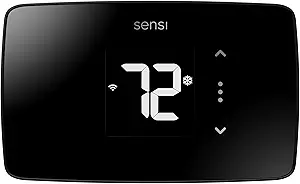 | Best for DIY Beginners | Connectivity: Wi-Fi, 2.4 GHz | Voice Assistants: Amazon Alexa, Google Assistant | Smart Home Compatibility: Alexa, Google Assistant, SmartThings | VIEW LATEST PRICE | See Our Full Breakdown |
| Smart WiFi Thermostat for Single-Stage 1 Heat/1 Cool Systems with App Remote Control and 7-Day Programmable Scheduling |  | Best Budget Pick | Compatibility: Single-stage 1 Heat/1 Cool conventional systems (gas, oil, electric) with AC | C-Wire: Required (24V AC, no battery operation) | WiFi: 2.4GHz only | VIEW LATEST PRICE | See Our Full Breakdown |
| Sensi Wi-Fi Smart Thermostat, DIY Installation, Alexa Compatible, ENERGY STAR Certified, ST55 |  | Best for Easy DIY Installation | Model: ST55 | Connectivity: Wi-Fi | Voice Assistant Compatibility: Alexa | VIEW LATEST PRICE | See Our Full Breakdown |
| Honeywell Home T5 Smart Wi-Fi Thermostat |  | Best for Geofencing Automation | Connectivity: Wi-Fi | Scheduling: 7-day flexible scheduling | Temperature Control: Location-based geofencing with auto home and away mode | VIEW LATEST PRICE | See Our Full Breakdown |
| Amazon Smart Thermostat with Alexa and Ring Compatibility |  | Best for Alexa Households | Ecosystem Compatibility: Alexa and Ring | Wiring Requirement: C-wire required | Control Methods: Alexa app, schedules, compatible Alexa devices | VIEW LATEST PRICE | See Our Full Breakdown |
| ecobee Smart Thermostat Essential Wi-Fi Thermostat |  | Best for Whole-Home Smart Integration | Connectivity: Wi-Fi | Display: Color touchscreen | Certification: ENERGY STAR | VIEW LATEST PRICE | See Our Full Breakdown |
| ecobee Smart Thermostat Enhanced with Wi-Fi |  | Best Value Smart Features | HVAC compatibility: Compatible with 90% of HVAC systems | Installation: DIY; Power Extender Kit and Trim Kit included for homes without a C-wire | Smart home compatibility: Amazon Alexa, Google Assistant, Apple HomeKit, SmartThings | VIEW LATEST PRICE | See Our Full Breakdown |
| ecobee Smart Thermostat Premium – WiFi, Siri & Alexa Built-In, Smart Sensor |  | Best Premium Pick | HVAC compatibility: Compatible with 95% of 24VAC systems including furnaces, AC, heat pumps, boilers, PTACs, and fan coils | Included components: Thermostat, SmartSensor, backplate, Power Extender Kit, trim plate, and installation hardware | Smart home compatibility: Amazon Alexa, Apple HomeKit/Siri, Google Assistant | VIEW LATEST PRICE | See Our Full Breakdown |
| Honeywell Home RTH9585WF Wi-Fi Smart Color Programmable Thermostat |  | Best for Custom Scheduling | Model: RTH9585WF | Connectivity: Wi-Fi | Display: Customizable color touchscreen | VIEW LATEST PRICE | See Our Full Breakdown |
| Google Nest Thermostat, Programmable Wi-Fi Smart Thermostat, Snow |  | Best for Google Homes | Connectivity: Wi-Fi | Color: Snow | Energy certification: ENERGY STAR | VIEW LATEST PRICE | See Our Full Breakdown |
| Honeywell Home RTH9600WF Smart Color Thermostat, Wi-Fi Programmable Touchscreen, ENERGY STAR Certified, Alexa Compatible |  | Best for Energy Reports and Rebates | Model: RTH9600WF | Connectivity: Wi-Fi | Display: Customizable HD color touchscreen | VIEW LATEST PRICE | See Our Full Breakdown |
| smart thermostats for home | Certification | Connectivity |
|---|---|---|
| Vine Smart Thermostat for Home | Energy Star | Wi-Fi |
| Amazon Smart Thermostat with A | ENERGY STAR | — |
| Google Nest Smart Thermostat | ENERGY STAR | Wi-Fi 2.4 GHz / 5 GHz, Bluetooth Low Energy |
| Honeywell Home X2S Smart Wi-Fi | ENERGY STAR | Wi-Fi 2.4/5 GHz, Matter |
| Sensi Lite Smart Wi-Fi Thermos | ENERGY STAR | Wi-Fi, 2.4 GHz |
| Smart WiFi Thermostat for Sing | — | — |
| Sensi Wi-Fi Smart Thermostat | ENERGY STAR | Wi-Fi |
| Honeywell Home T5 Smart Wi-Fi | ENERGY STAR | Wi-Fi |
| Amazon Smart Thermostat with A | ENERGY STAR | — |
| ecobee Smart Thermostat Essent | ENERGY STAR | Wi-Fi |
| ecobee Smart Thermostat Enhanc | — | — |
| ecobee Smart Thermostat Premiu | — | — |
| Honeywell Home RTH9585WF Wi-Fi | ENERGY STAR | Wi-Fi |
| Google Nest Thermostat | — | Wi-Fi |
| Honeywell Home RTH9600WF Smart | ENERGY STAR | Wi-Fi |
More Details on Our Top Picks
Vine Smart Thermostat for Home, WiFi, Alexa & Google Assistant Compatible, 7-Day x 8-Period Programmable
This option earns the value slot by covering the fundamentals most buyers actually use — Wi-Fi control, Alexa and Google Assistant support, and an Auto Home/Away mode — without premium-tier pricing. The 7-day x 8-period scheduling is actually more granular than what the Google Nest Thermostat offers out of the box, which matters if I want tight temperature control around a shifting household routine. It fits roughly 90% of 24V AC systems, including heat pumps, so compatibility anxiety stays low.
The tradeoff is plainness: the LCD display and app feel budget-grade compared with the Nest’s polished interface, and there’s no Matter support like the Honeywell X2S provides. It also requires a C-wire with no battery fallback like the Sensi Lite offers.
Pros:- 8 daily programming periods give unusually fine-grained schedule control for the price
- Broad 24V AC compatibility covers conventional, boiler, and heat pump systems
- Auto Home/Away mode plus temperature alerts and filter reminders trim HVAC costs
- Installation typically takes under 20 minutes with online guides
Cons:- C-wire is mandatory with no battery-powered alternative
- LCD display and app experience feel dated next to Nest or Sensi
- No Matter certification limits future smart-home flexibility
Best for: Budget-minded homeowners with a C-wire who want flexible multi-period scheduling and voice control without paying for premium extras
Not ideal for: Homes without a C-wire or with high-voltage systems — it’s strictly 24V AC and corded, so it won’t power up in older wiring setups
- Connectivity:Wi-Fi
- Compatibility:Alexa, Google Assistant
- Programming:7-Day x 8-Period Programmable
- System Compatibility:24V AC systems (conventional 2H/2C, heat pump, heat/cool only)
- C-Wire:Required
- Display:LCD
- Control Method:App, touch, voice
- Certification:Energy Star
Our verdict“A sensible pick for buyers who prioritize scheduling depth and system compatibility over design polish.”
Amazon Smart Thermostat with Alexa and Ring Compatibility, 2-Pack
Sold as a pair, this bundle makes the most sense for zoned HVAC systems or two-location homes, where buying a single premium unit like the ecobee Premium twice gets expensive fast. Built on Honeywell Home technology, it delivers reliable scheduling, remote control through the Alexa app, and genuine smart features — presence-based temperature adjustments when paired with compatible Alexa devices. That ecosystem depth is something neither the Vine nor the Sensi Lite can match, since both treat voice assistants as an add-on rather than the brain.
The catch is ecosystem lock-in. Outside the Alexa app, integration options are thin — no Matter certification like the Honeywell X2S, no Google Assistant support. The C-wire requirement is also non-negotiable, unlike the battery-backed Sensi Lite.
Pros:- Two thermostats in one box makes multi-zone coverage far more affordable
- Presence detection with compatible Alexa devices enables true automatic adjustments
- Alexa app walks DIY installers through wiring step by step
- Honeywell Home technology underneath adds proven reliability
Cons:- Automatic temperature adjustments require buying compatible Alexa devices
- Locked to the Alexa ecosystem with no Matter or Google Assistant support
- C-wire required with no battery option
Best for: Alexa-centric households, especially those with zoned systems or a second property needing two thermostats on one app
Not ideal for: Google Home or Apple Home users — control and automation features are built around Alexa devices and won’t carry over
- Pack Size:2 thermostats
- Compatibility:Alexa and select Alexa devices, Ring
- Wiring Requirement:C-wire required
- Controls:Alexa app, schedules, Alexa voice features
- Technology:Honeywell Home thermostat technology
- Certification:ENERGY STAR
Our verdict“The obvious choice for Alexa households outfitting two zones at once, and a pass for anyone outside that ecosystem.”
Google Nest Smart Thermostat, Charcoal
This is the pick I’d point most homeowners toward, because it removes the two biggest friction points in a thermostat upgrade. First, most homes don’t need a C-wire — a real advantage over the Vine and both Amazon options, which hard-require one. Second, its automation is passive: it adjusts itself when I leave, sends HVAC monitoring alerts, and handles scheduling with minimal input, where the Vine demands I build an 8-period program manually.
The Google Home app is the most refined control experience in this lineup, and Matter support keeps it future-proofed alongside the Honeywell X2S. The tradeoff: its learning-based approach suits steady routines, and households wanting pixel-level schedule control will find the Vine’s programming more explicit. Voice control also assumes a compatible speaker, and a few HVAC systems still need a power accessory.
Pros:- C-wire not required in most homes, simplifying installation
- Automatic away adjustments and HVAC monitoring cut wasted energy without manual programming
- Works with Google Assistant and all Matter-certified voice assistants
- Dual-band Wi-Fi plus Bluetooth Low Energy gives flexible, reliable connectivity
Cons:- Some HVAC systems still require a C-wire or a compatible power accessory
- Voice control depends on owning a compatible smart speaker or display
- Less manual scheduling granularity than programmable-first rivals like the Vine
Best for: Most homeowners who want set-and-forget automation, clean app design, and the easiest possible installation path
Not ideal for: Heavy Google-averse or Alexa-first households, and anyone whose HVAC system needs a power accessory they’d rather not buy
- Color:Charcoal
- Connectivity:Wi-Fi 2.4 GHz / 5 GHz, Bluetooth Low Energy
- C-Wire:Not required in most homes; some systems need one or a power accessory
- Smart Home Compatibility:Google Assistant, Matter-certified voice assistants
- Certification:ENERGY STAR
- Control Method:App, voice, on-device
Our verdict“The safest all-around choice — easiest to live with, easiest to install, and least likely to surprise you later.”
Honeywell Home X2S Smart Wi-Fi Thermostat, White
The X2S stands out as the only option in this batch with Matter certification plus native Alexa, Google Assistant, and Apple HomeKit support. If my smart home mixes platforms — an Apple phone with Google speakers, say — this is the thermostat that won’t fight me, whereas the Amazon 2-Pack locks me into Alexa and the Nest leans Google. Its flexible scheduling options (7-day, 5-1-1, 5-2, or single-week) rival the Vine’s programming depth while adding humidity monitoring and filter reminders.
Practical perks like interchangeable accent trim and utility demand-response rebate eligibility give it real homeowner value. The tradeoffs: it needs a C-wire like most Honeywell units, it won’t work with 120-240V electric baseboard heat, and the button-based control feels less modern than the Sensi Lite’s touch interface.
Pros:- Matter certified with Alexa, Google Assistant, and Apple HomeKit support for true platform flexibility
- Four scheduling formats plus a non-programmable mode suit any routine
- Indoor humidity monitoring and filter reminders add maintenance value
- Utility demand-response compatibility opens rebate and energy-program savings
Cons:- C-wire required with no battery alternative
- Incompatible with electric baseboard (120-240V) heating
- Button controls feel less contemporary than touchscreen rivals
Best for: Smart-home enthusiasts with mixed ecosystems and conventional or heat pump systems who want one thermostat that works everywhere
Not ideal for: Homes with electric baseboard heating (120-240V) or no C-wire — this model supports neither scenario
- Connectivity:Wi-Fi 2.4/5 GHz, Matter
- Compatibility:Amazon Alexa, Google Assistant, Apple HomeKit, Matter
- System Support:Up to 2H/2C conventional, 2H/1C heat pump, hot water, forced air
- C-Wire:Required (24 VAC)
- Scheduling:7-day, 5-1-1, 5-2, 1-week, or non-programmable
- Certification:ENERGY STAR
- Warranty:2 years
Our verdict“The most platform-agnostic choice here — buy it if your smart home spans ecosystems, skip it if you have baseboard heat.”
Sensi Lite Smart Wi-Fi Thermostat
Where the Nest wins on automation, the Sensi Lite wins on first-time installation confidence. A built-in level, step-by-step in-app instructions, and battery power on most systems mean a nervous first-timer can swap an old thermostat without an electrician — something the C-wire-dependent Vine and Amazon units can’t claim. The geofencing feature is a genuine surprise at this tier, adjusting temperature based on my phone’s location rather than relying on the presence-sensing hardware the Amazon thermostat needs.
Compared with its sibling, the Sensi ST55, the Lite trims a few features to hit a friendlier entry point, and that’s the honest tradeoff here: usage reports and scheduling are solid but basic, the black LCD looks utilitarian next to the Nest’s display, and it’s stuck on 2.4 GHz Wi-Fi only.
Pros:- Battery power on most systems eliminates the C-wire requirement for typical installs
- Built-in level and guided app instructions make DIY installation approachable
- Geofencing and usage reports deliver smart features beyond basic scheduling
- Works with Alexa, Google Assistant, and SmartThings
Cons:- C-wire still required for heat pump and heat/cool-only systems
- 2.4 GHz Wi-Fi only, which can mean weaker connectivity in crowded networks
- Feature set is trimmed compared with the full Sensi ST55
Best for: First-time smart thermostat buyers who want a guided DIY install and battery power without a C-wire
Not ideal for: Heat pump or heat/cool-only system owners — those configurations do require a C-wire, negating the easy-install advantage
- Connectivity:Wi-Fi, 2.4 GHz
- Voice Assistants:Amazon Alexa, Google Assistant
- Smart Home Compatibility:Alexa, Google Assistant, SmartThings
- C-Wire:Not required for most systems; required for heat pump and heat/cool-only
- Power Source:2 AAA batteries or C-wire
- Controls:App, touch, voice
- Certification:ENERGY STAR
Our verdict“The least intimidating entry point into smart climate control — ideal for a straightforward DIY swap on a conventional system.”
Smart WiFi Thermostat for Single-Stage 1 Heat/1 Cool Systems with App Remote Control and 7-Day Programmable Scheduling
For buyers who just want app control and scheduling without paying for ecosystem extras, this option covers the basics. Compared with the Sensi ST55, it trades brand polish and flexible scheduling for a lower cost of entry, while still delivering remote temperature changes, HVAC monitoring, and a 7-day programmable schedule that can trim energy waste during work hours. Temperature accuracy within 2°F keeps rooms from swinging between too hot and too cold, and the backlit LCD makes nighttime adjustments painless. The tradeoffs are real: it only speaks to single-stage 1 Heat/1 Cool conventional systems, so heat pump owners and anyone with multi-stage equipment should look at the ecobee Smart Thermostat Essential instead. The 2.4GHz-only WiFi also means buyers with mesh networks set to 5GHz will need to check their router settings.
Pros:- Remote temperature control and real-time HVAC monitoring from a phone app
- 7-day programmable scheduling to cut heating and cooling during empty hours
- Temperature accuracy within 2°F for stable comfort
- Backlit LCD screen readable in dark rooms without waking the whole display
Cons:- C-wire is mandatory with no battery backup option — homes without one are out of luck
- No support for heat pumps, multi-stage, mini split, line voltage, or RV systems
- 2.4GHz-only WiFi can complicate setup on 5GHz-only networks
Best for: Renters and budget-conscious homeowners with simple single-stage gas, oil, or electric systems who want app control and scheduling at minimal cost
Not ideal for: Owners of heat pumps, multi-stage systems, mini splits, or line voltage heating — this unit is strictly for single-stage conventional setups
- Compatibility:Single-stage 1 Heat/1 Cool conventional systems (gas, oil, electric) with AC
- C-Wire:Required (24V AC, no battery operation)
- WiFi:2.4GHz only
- Scheduling:7-day programmable
- Display:Backlit LCD
- Temperature Accuracy:Within 2°F
- Compatible Terminals:RH, RC, W, Y, G, C
Our verdict“A sensible low-cost entry point for single-stage systems, provided your wiring already includes a C-wire.”
Sensi Wi-Fi Smart Thermostat, DIY Installation, Alexa Compatible, ENERGY STAR Certified, ST55
What sets the Sensi ST55 apart in this lineup is how low the installation barrier is: app-guided wiring instructions and a built-in level mean most homeowners can swap out an old thermostat in under an hour without an electrician. Unlike the Amazon Smart Thermostat, which hard-requires a C-wire, the Sensi works without one in most applications, which alone makes it the safer bet for older homes with uncertain wiring. The payoff after installation is practical rather than flashy — flexible scheduling, remote access, usage reports, equipment alerts, and maintenance reminders — everything most households actually use, and an ENERGY STAR certification backs up the efficiency story. The main caveat is compatibility: it fits the HVAC equipment found in most homes, but buyers with unusual setups (heating-only oil furnaces, for example) should verify before ordering, and a small share of installations will still need a C-wire.
Pros:- App-guided installation with built-in level makes DIY setup genuinely approachable
- Works without a C-wire in most installations
- Usage reports, equipment alerts, and maintenance reminders add long-term value
- Fits the footprint of a traditional thermostat with no repainting needed
Cons:- C-wire may still be required for some systems
- No color touchscreen or advanced features like geofencing found on the Honeywell T5
Best for: First-time smart thermostat buyers in older homes who want a guided DIY install and no C-wire guesswork
Not ideal for: Buyers with uncommon HVAC configurations — compatibility is not universal and should be verified before purchase
- Model:ST55
- Connectivity:Wi-Fi
- Voice Assistant Compatibility:Alexa
- Certification:ENERGY STAR
- C-Wire:Not required in most applications
- Installation:DIY with app instructions and built-in level
- Features:Flexible scheduling, remote access, usage reports, equipment alerts, maintenance reminders
Our verdict“The most forgiving choice for DIYers and uncertain wiring, as long as your HVAC setup falls within its compatibility range.”
Honeywell Home T5 Smart Wi-Fi Thermostat
The Honeywell Home T5 earns its spot with location-based geofencing — a feature the Sensi ST55 and the budget single-stage unit above lack entirely. Instead of trusting a fixed schedule, the T5 detects when phones leave and return, switching to auto away and home modes so you never cool an empty house or walk into a cold one. On top of that sit 7-day flexible scheduling, monthly energy reports, and personalized saving tips, with ENERGY STAR certification supporting the efficiency claims. Compared with the Amazon Smart Thermostat, the T5 is less dependent on a specific voice ecosystem — a better fit for mixed-device households. The wiring situation splits the difference in this lineup: a C-wire is recommended, and heating-only oil furnace systems absolutely require one, so buyers with that configuration should either confirm their wiring or plan on a power adapter.
Pros:- Geofencing auto home/away modes eliminate wasted heating and cooling
- 7-day flexible scheduling plus monthly energy reports and saving tips
- ENERGY STAR certified with remote control from any phone or tablet
- Works reliably across ecosystems rather than tying you to one assistant
Cons:- C-wire or a compatible power adapter may be needed
- No heating-only oil furnace support without a C-wire
- Lacks the color touchscreen of the ecobee Smart Thermostat Essential
Best for: Commuters and households with irregular schedules who want the thermostat to react to presence automatically
Not ideal for: Owners of heating-only oil furnace systems without a C-wire — this model will not support that setup without extra hardware
- Connectivity:Wi-Fi
- Scheduling:7-day flexible scheduling
- Temperature Control:Location-based geofencing with auto home and away mode
- Certification:ENERGY STAR
- Remote Control:Smartphone or tablet
- Power Requirement:C-wire or compatible power adapter may be required
Our verdict“The pick for buyers who want presence-based automation without committing to the Alexa ecosystem.”
Amazon Smart Thermostat with Alexa and Ring Compatibility
If your home already runs on Echo speakers and Ring cameras, this thermostat is the path of least resistance. Control lives in the Alexa app, schedules are simple to build, and Ring compatibility means your security setup and climate control share one ecosystem — something no other product in this batch can claim. Under the hood it uses Honeywell Home technology, so the reliability fundamentals are sound, and DIY installation comes with step-by-step app guidance. Compared with the Honeywell Home T5, you give up geofencing but gain deeper voice integration; compared with the budget single-stage unit, setup is friendlier and the ecosystem richer. The hard requirement for a C-wire is the sticking point, and the automatic temperature adjustments based on presence or sensor readings generally need compatible Alexa devices in the home — so non-Alexa households get far less value here. ENERGY STAR certification and possible utility rebates soften the cost story.
Pros:- Deep Alexa and Ring integration keeps everything in one app
- Honeywell Home technology provides trusted underlying performance
- Guided DIY installation with app-based wiring help
- ENERGY STAR certified and may qualify for local utility rebates
Cons:- C-wire required with no workaround included
- Presence-based and sensor-driven adjustments depend on owning compatible Alexa devices
- Geofencing and cross-platform support lag behind the Honeywell T5
Best for: Alexa- and Ring-heavy households that want climate control folded into their existing smart home setup
Not ideal for: Google- or Apple-centric homes, or houses without a C-wire — the experience and installation both depend on them
- Ecosystem Compatibility:Alexa and Ring
- Wiring Requirement:C-wire required
- Control Methods:Alexa app, schedules, compatible Alexa devices
- Installation:DIY with app guidance
- Technology:Honeywell Home
- Certification:ENERGY STAR
Our verdict“The obvious choice for committed Alexa households, provided the C-wire requirement checks out.”
ecobee Smart Thermostat Essential Wi-Fi Thermostat
The ecobee Smart Thermostat Essential is the widest-reaching option in this batch. Its compatibility list covers gas, oil, electric, dual fuel, forced air, heat pumps, and boilers — dramatically broader than the single-stage-only budget unit — and it plays nicely with Apple HomeKit, Google Assistant, and Alexa simultaneously, unlike the Amazon thermostat’s Alexa-first design. A color touchscreen, indoor humidity detection, schedule assistant, and time-of-use optimization push it closer to a premium experience, with a claimed up to 23% annual savings on heating and cooling versus holding 72°F. The catch is the add-on structure: the Power Extender Kit for C-wire-less homes, trim kit, and SmartSensor are all sold separately, so buyers without a common wire or wanting room-specific readings will pay more than the sticker suggests. Compared with the Sensi ST55, you get far richer features but a less certain all-included install.
Pros:- Broadest HVAC compatibility in this batch, including heat pumps, dual fuel, and boilers
- Works with Apple HomeKit, Google Assistant, and Alexa at once
- Color touchscreen plus humidity detection and time-of-use energy optimization
- Schedule assistant automates setbacks without manual programming
Cons:- Power Extender Kit, trim kit, and SmartSensor sold separately
- Compatibility still needs verifying for specific HVAC configurations
- Higher effective cost once required accessories are added
Best for: Buyers with heat pumps, dual fuel, or boiler systems who want cross-platform smart home support and rich energy features
Not ideal for: Buyers hoping for an all-in-one package — the C-wire kit, trim kit, and room sensors cost extra and add up
- Connectivity:Wi-Fi
- Display:Color touchscreen
- Certification:ENERGY STAR
- System Compatibility:Most 24 VAC HVAC equipment including gas, oil, electric, dual fuel, forced air, heat pumps, boilers
- Smart Home Compatibility:Apple HomeKit, Google Assistant, Alexa
- Energy Savings Claim:Up to 23% annually vs. holding 72°F
- Installation:DIY; Power Extender Kit sold separately for homes without a C-wire
- Additional Features:Indoor humidity detection, schedule assistant, time-of-use optimization
Our verdict“The most versatile pick for complex HVAC systems and multi-assistant homes, if you accept the à la carte accessory costs.”
ecobee Smart Thermostat Enhanced with Wi-Fi
The ecobee Smart Thermostat Enhanced hits a sweet spot that few competitors manage: it bundles occupancy-based automation, multi-platform support, and the Power Extender Kit for homes without a C-wire, all at a mid-tier position. Compared with the Google Nest Thermostat, it works with four ecosystems instead of leaning on Google Home, and unlike the Honeywell Home RTH9585WF, it skips the C-wire requirement entirely. The tradeoff is that room-level comfort costs extra — SmartSensors are sold separately, so buyers hoping to fix hot and cold spots should either budget for them or step up to the ecobee Smart Thermostat Premium, which includes one in the box. HVAC compatibility covers about 90% of systems, slightly narrower than ecobee’s flagship.
Pros:- Occupancy and schedule-based adjustments reduce energy use without manual programming
- Works with Alexa, Google Assistant, HomeKit, and SmartThings
- Power Extender Kit and Trim Kit included for C-wire-free DIY installation
- 3-year warranty is longer than most rivals offer
Cons:- SmartSensors for room-by-room comfort are sold separately
- 90% HVAC compatibility is slightly narrower than the Premium model’s 95%
Best for: Homeowners who want occupancy-aware automation and C-wire-free installation without paying flagship prices
Not ideal for: Buyers with uneven room temperatures — the sensors that fix hot and cold spots are a separate purchase
- HVAC compatibility:Compatible with 90% of HVAC systems
- Installation:DIY; Power Extender Kit and Trim Kit included for homes without a C-wire
- Smart home compatibility:Amazon Alexa, Google Assistant, Apple HomeKit, SmartThings
- Remote control:ecobee app for smartphone, tablet, and Apple Watch
- Additional sensors:Compatible with ecobee SmartSensors (sold separately)
- Warranty:3 years
Our verdict“This is the pick for buyers who want ecobee’s core intelligence and flexible installation at the most sensible price point.”
ecobee Smart Thermostat Premium – WiFi, Siri & Alexa Built-In, Smart Sensor
If the roundup had a flagship slot, the ecobee Smart Thermostat Premium fills it by doing things no rival attempts. A built-in smart speaker with Siri or Alexa, an air quality monitor, smoke-alarm detection, and doorbell camera streaming from the display make this more than a thermostat. Unlike the ecobee Smart Thermostat Enhanced, the Premium includes a SmartSensor in the box, so whole-room comfort works out of the package, and its radar-based occupancy sensing pre-heats or pre-cools before you walk in. The catches are real: several headline features — Siri voice, remote doorbell alerts, smoke-alarm listening — sit behind subscriptions or extra hardware, and the feature density may overwhelm buyers who just want reliable temperature control.
Pros:- Includes a SmartSensor for room-focused temperature control out of the box
- Built-in air quality monitoring with filter-change reminders
- Voice control with built-in Siri or Alexa and audio streaming
- Radar occupancy sensing enables pre-heating and pre-cooling before arrival
Cons:- Siri, smoke-alarm listening, and doorbell features require subscriptions, an Apple home hub, or additional ecobee hardware
- Feature-rich interface may feel excessive for simple heating and cooling needs
Best for: Tech-forward homeowners building an ecobee ecosystem who want air quality, security, and voice features in one wall unit
Not ideal for: Buyers who only need scheduling and app control — most extras will go unused, and the Enhanced model delivers the core for less
- HVAC compatibility:Compatible with 95% of 24VAC systems including furnaces, AC, heat pumps, boilers, PTACs, and fan coils
- Included components:Thermostat, SmartSensor, backplate, Power Extender Kit, trim plate, and installation hardware
- Smart home compatibility:Amazon Alexa, Apple HomeKit/Siri, Google Assistant
- Built-in features:Smart speaker, air quality monitor, radar occupancy sensor, smoke-alarm sound detection
- Video feature:Live doorbell view with two-way talk (requires ecobee Smart Doorbell Camera)
- Warranty:3 years
Our verdict“This model makes sense for buyers who want their thermostat to double as an air quality monitor and smart speaker — everyone else can save money elsewhere.”
Honeywell Home RTH9585WF Wi-Fi Smart Color Programmable Thermostat
The Honeywell Home RTH9585WF stands out for buyers who like explicit control over their comfort rather than handing decisions to learning algorithms. Its flexible programmable schedules and customizable color touchscreen contrast with the Google Nest Thermostat’s automation-first approach — here, you set the plan, and it follows it. Practical extras like energy reports, weather forecasts, and maintenance alerts give homeowners ongoing visibility that the Amazon Smart Thermostat doesn’t match. The restrictions matter, though: a C-wire is mandatory, which may force professional wiring work in older homes, and 120–240V electric baseboard systems are off the table. Alexa and Google Home support covers the two biggest voice platforms, but Apple households should look to ecobee instead.
Pros:- Highly flexible programmable schedules put the user in control
- Customizable color touchscreen suits different decor styles
- Energy reports, weather forecasts, and maintenance alerts add long-term value
- ENERGY STAR certified with energy-saving tips
Cons:- C-wire required, potentially adding installation cost
- No electric baseboard heat support (120–240V)
- No Apple HomeKit support
Best for: Homeowners who want detailed, self-directed schedules and diagnostics rather than algorithm-driven learning
Not ideal for: Older homes without a C-wire and anyone with electric baseboard heat — compatibility gaps rule it out
- Model:RTH9585WF
- Connectivity:Wi-Fi
- Display:Customizable color touchscreen
- Scheduling:Flexible programmable schedules
- Smart home compatibility:Amazon Alexa, Google Home
- Supported systems:Forced air (gas, oil, electric), hot water, steam, heat pumps with electric backup
- Power requirement:C-wire required
- Certification:ENERGY STAR
Our verdict“A strong choice for hands-on schedulers with a C-wire who want diagnostics alongside their temperature control.”
Google Nest Thermostat, Programmable Wi-Fi Smart Thermostat, Snow
The Google Nest Thermostat is the natural center of a Google-centric household. Deep Google Home app integration, Assistant voice control, and Matter support make setup and daily use smoother than cross-platform rivals like the Honeywell Home RTH9585WF, which demands its own app experience. Its ENERGY STAR certified scheduling and HVAC monitoring with maintenance reminders handle the fundamentals well, and it frequently works without a C-wire — an advantage over both Honeywell models in this lineup. That flexibility isn’t guaranteed, though: certain heat pump, zone-controlled, and heating-only systems still need a C-wire or a power accessory, so confirmation before purchase is wise. Voice control also assumes you already own a compatible smart speaker or display.
Pros:- Tight Google Home integration with clean remote control on Android and iPhone
- Works without a C-wire in most homes
- HVAC monitoring sends alerts and maintenance reminders
- Supports Google Assistant, Alexa, and Matter-certified voice assistants
Cons:- Some heating, cooling, zone-controlled, and heat pump systems still require a C-wire or power accessory
- No Apple HomeKit support
- Voice control requires a separate compatible smart device
Best for: Households already running Google Home who want seamless app, voice, and Matter integration
Not ideal for: HomeKit households and owners of certain heat pump or zone systems that require a C-wire despite the general exemption
- Connectivity:Wi-Fi
- Color:Snow
- Energy certification:ENERGY STAR
- C-wire:Not required in most homes; some systems need one or a compatible power accessory
- App control:Google Home app on Android and iPhone
- Voice assistant compatibility:Google Assistant, Alexa, and Matter-certified voice assistants
- Smart home platforms:Google Home and other compatible platforms
Our verdict“The easiest recommendation for Google households — a polished, low-friction thermostat that may not even need new wiring.”
Honeywell Home RTH9600WF Smart Color Thermostat, Wi-Fi Programmable Touchscreen, ENERGY STAR Certified, Alexa Compatible
The Honeywell Home RTH9600WF refines the formula of its sibling, the RTH9585WF, adding Smart Response learning that adjusts to your schedule over time while keeping the high-definition customizable touchscreen. Where it earns its slot is the energy insight angle: personalized saving tips, filter reminders, and eligibility for utility rebates make it appealing for cost-conscious buyers, and its HD display outclasses the plainer screens of the Amazon Smart Thermostat. The same hard limits apply as the rest of Honeywell’s lineup — a C-wire is required, sometimes meaning professional installation, and electric baseboard plus heating-only oil furnaces without a C-wire are incompatible. Voice support spans Alexa, Google Assistant, and even Cortana, but there’s no HomeKit path here either.
Pros:- Personalized energy-saving tips with utility rebate eligibility
- HD customizable touchscreen that matches home decor
- Smart Response technology learns and adapts to your schedule
- Smart alerts including filter change reminders and weather forecasts
Cons:- C-wire required, which may mean professional installation in older homes
- Incompatible with 120–240V electric baseboard heat
- Heating-only oil furnaces unsupported without a C-wire
Best for: Cost-conscious buyers tracking energy usage and utility rebates who want a polished touchscreen experience
Not ideal for: Baseboard-heat homes and pre-wiring-free installations — the C-wire requirement and system exclusions are dealbreakers
- Model:RTH9600WF
- Connectivity:Wi-Fi
- Display:Customizable HD color touchscreen
- Certification:ENERGY STAR
- Voice assistant compatibility:Amazon Alexa, Google Assistant, Microsoft Cortana
- Power requirement:C-wire required
- Compatible systems:Forced air (gas, oil, electric), hot water, steam, heat pumps with electric backup
- Incompatible systems:Electric baseboard heat (120–240V); heating-only oil furnaces without a C-wire
Our verdict“A smart buy for rebate-hunting homeowners with compatible systems who value detailed energy feedback over ecosystem flexibility.”
How We Picked
I evaluated these 15 thermostats on HVAC compatibility first, because a brilliant thermostat is worthless if it cannot run your system — multi-stage heating, heat pumps, and C-wire requirements eliminated more mismatches than any feature difference. From there, I compared ease of setup and daily use: app design, scheduling flexibility (7-day programmable versus learning algorithms), and whether voice assistants are built in or require a separate speaker. Energy savings potential was the next filter, with Energy Star certification, geofencing, and remote sensor support weighted heavily since those features drive real month-to-month savings.
Finally, I judged value relative to the competition rather than in isolation. The ranking favors thermostats that justify their price gap: the ecobee Premium earns its premium with sensors and built-in voice, while the Amazon and Sensi models rank high in the value tier because they deliver 80% of the experience for noticeably less. Models with overlapping features from the same brand were differentiated by which buyer each one actually serves best.
| smart thermostats for home | Connectivity |
|---|---|
| Vine Smart Thermostat for Home | Wi-Fi |
| Amazon Smart Thermostat with A | — |
| Google Nest Smart Thermostat | Wi-Fi 2.4 GHz / 5 GHz, Bluetooth Low Energy |
| Honeywell Home X2S Smart Wi-Fi | Wi-Fi 2.4/5 GHz, Matter |
| Sensi Lite Smart Wi-Fi Thermos | Wi-Fi, 2.4 GHz |
| Smart WiFi Thermostat for Sing | — |
| Sensi Wi-Fi Smart Thermostat | Wi-Fi |
| Honeywell Home T5 Smart Wi-Fi | Wi-Fi |
| Amazon Smart Thermostat with A | — |
| ecobee Smart Thermostat Essent | Wi-Fi |
| ecobee Smart Thermostat Enhanc | — |
| ecobee Smart Thermostat Premiu | — |
| Honeywell Home RTH9585WF Wi-Fi | Wi-Fi |
| Google Nest Thermostat | Wi-Fi |
| Honeywell Home RTH9600WF Smart | Wi-Fi |
Factors to Consider When Choosing Smart Thermostats For Home
Before settling on a model, it helps to understand the bigger picture — how smart thermostats differ from programmable ones, where the money actually goes, and which mistakes send buyers back to the store.Check Your Wiring Before Anything Else
The single most common smart thermostat mistake is buying before looking behind the wall plate. Most modern models need a C-wire (common wire) to power their WiFi radios and touchscreens constantly, and many homes built before the mid-2000s simply do not have one. Some thermostats, including certain Sensi models, can run without a C-wire on conventional systems, but performance becomes less reliable on heat pumps and multi-stage equipment. If your home lacks a C-wire, you either need a model that includes a power-extender kit — ecobee ships one — or you are looking at an electrician visit that adds to the true cost. Pull the faceplate off your current thermostat, photograph the wires, and match them against the compatibility checker on the manufacturer’s site before you order anything.
Learning Thermostat vs. Programmable: Know Your Style
Buyers tend to assume learning thermostats are strictly better, but that depends on how you actually live. Learning models like the Nest thermostat build a schedule by observing when you adjust the temperature, which works well for households with unpredictable routines. The catch: if your schedule is irregular in ways you do not want the thermostat copying — shift work, work-from-home days, frequent travel — the learned behavior can fight you. 7-day programmable models from Honeywell, Sensi, and Vine give you explicit control over every day of the week, which suits people who want predictable, hands-off operation they set once. There is no wrong answer here, but mismatched expectations are the top reason buyers return smart thermostats.
Remote Sensors: The Feature Most Buyers Undervalue
A thermostat only knows the temperature in the room where it hangs — usually a hallway nobody sits in. Remote sensors let the system average readings across the rooms you actually occupy, or prioritize the bedroom at night and the living room during the day. This is the feature that separates the premium ecobee models from the budget tier, and it is often what fixes chronic complaints like a freezing bedroom or an overheated office. If your home has noticeable hot and cold spots, spending more on a sensor-equipped model will do more for comfort than any scheduling feature. If you live in a small apartment with even temperatures, skip it and put the savings elsewhere.
Ecosystem Lock-In Is Real
The thermostat you choose quietly commits you to an app, and in some cases a voice assistant, for years. Amazon and Google models integrate most smoothly with their own ecosystems — the Amazon Smart Thermostat even ties into Ring security setups — while ecobee plays the most neutral field with Alexa, Siri, and Google support. If your household mixes ecosystems or you plan to switch later, favor thermostats with multi-assistant support. Also check whether the model works with Matter or HomeKit if whole-home automation is part of your plan, because a thermostat that cannot join your routines becomes just another app icon.
Where Spending More Actually Pays Off
Price in this category does not scale linearly with satisfaction. The jump from a basic programmable thermostat to any WiFi smart model delivers the biggest gains: remote control, scheduling from your phone, and energy reporting. The jump from a budget smart model to a mid-tier one buys nicer screens and better apps. The jump to premium models buys remote sensors, built-in speakers and voice assistants, and air quality monitoring — valuable only if you will use those things. Multi-zone households should also consider buying two cheaper units instead of one flagship, which often produces better comfort per dollar than a single premium thermostat controlling the whole house.
Installation Difficulty and When to Call a Pro
Most thermostats in this roundup are marketed as DIY, and for conventional single-stage systems that claim holds up — expect a 30-minute job involving a screwdriver and a phone app. The friction points are heat pumps, multi-stage systems, and homes without a C-wire, where wire labeling gets confusing and mistakes can blow a fuse on your control board. If your current thermostat has more than five wires going into it, or if anything behind the plate looks unfamiliar, budget for professional installation. Some manufacturers offer rebate programs that partially cover pro installs, and utility companies frequently run smart thermostat rebates that can offset a meaningful chunk of the purchase price — check before you buy at full price.
Frequently Asked Questions
Do I really need a C-wire, or can I skip it?
For most models in this roundup, yes — a C-wire provides the steady power that WiFi radios and touchscreens need, and without one you risk Wi-Fi dropouts, random reboots, or even damage to HVAC control boards. A few options, most notably some Sensi models, are engineered to work without a C-wire on conventional heating and cooling systems, though reliability suffers on heat pumps. If you want a premium model like an ecobee but lack the wire, check the box for a power-extender kit, which ecobee includes specifically to solve this problem. If none of those paths work, a pro can run a C-wire or install an add-a-wire adapter, typically a one-hour job.
Is a learning thermostat better than a 7-day programmable one?
It depends entirely on your routine, not on the price tag. Learning models like the Google Nest Thermostat build their schedule by watching your adjustments, which is ideal if your week varies and you do not want to program anything. But learning algorithms assume your behavior is worth copying — shift workers, frequent travelers, and work-from-home households often find the thermostat making odd choices they then have to override. A 7-day programmable model from Honeywell, Sensi, or Vine gives you exact control over every day, which many buyers find more predictable and easier to trust. Neither approach saves more energy on paper; the best one is whichever you will actually leave alone.
Will a smart thermostat actually lower my energy bill?
It can, but the savings come from behavior changes, not magic. Independent estimates generally put savings around 8–15% on heating and cooling when homeowners use scheduling, eco modes, and geofencing consistently. The features that matter most are automatic away detection, which stops conditioning an empty house, and remote sensors, which stop overheating one room to warm another. If you install a smart thermostat and then hold a constant temperature the way you did before, your bill will barely move. Energy Star-certified models in this roundup — including the Vine, Sensi ST55, and Honeywell RTH9600WF — are designed around these behaviors, which is why that certification is worth checking.
Can one smart thermostat control a two-story or multi-zone home?
A single thermostat controls one zone, full stop — so a two-zone HVAC system needs two thermostats, and a two-story home with one system needs a strategy. For zoned systems, buying two of an affordable model like the Amazon Smart Thermostat 2-pack usually beats buying one flagship unit and one cheap unit. For single-system, two-story homes, a thermostat with remote sensors — the ecobee Premium and Enhanced both support them — can average or prioritize rooms by time of day, which softens the upstairs-hot, downstairs-cold problem without new equipment. If temperature imbalance is your main complaint, prioritize sensors over screen quality or voice features.
What happens to my thermostat if the Wi-Fi or the company’s servers go down?
Every thermostat in this roundup continues to heat and cool locally if Wi-Fi drops — you just lose remote control, app scheduling, and voice commands until it reconnects. The bigger long-term question is cloud dependency: if a manufacturer shuts down its servers, app features can stop working permanently, which has happened with other smart home brands. Established players like Google, Amazon, Honeywell, and ecobee carry less of this risk simply because their thermostat businesses are not going away soon. Buying from a major brand also means better firmware support years down the road, which matters for a device you will likely keep for a decade.
Conclusion
For best overall, the ecobee Smart Thermostat Enhanced hits the sweet spot of app quality, remote sensor support, and broad compatibility — it is the model I would put in most homes without hesitation. The Amazon Smart Thermostat takes best value, especially the 2-pack for multi-zone households, while the Sensi Lite is a close runner-up for non-Alexa homes. At the top end, the ecobee Smart Thermostat Premium earns the best premium slot with built-in Alexa and Siri, a remote sensor, and air quality monitoring that no other model here matches. For beginners and renters with simple single-stage systems, the generic single-stage WiFi thermostat and the Sensi ST55 keep installation painless and scheduling straightforward. Alexa and Ring households should lean Amazon; Google Home users get the smoothest experience from the Nest Thermostat; and Honeywell’s T5, X2S, and color touchscreen models suit buyers who want detailed 7-day programming with a familiar interface. Match the pick to your wiring first, your ecosystem second, and your budget last — in that order — and you will not go wrong.