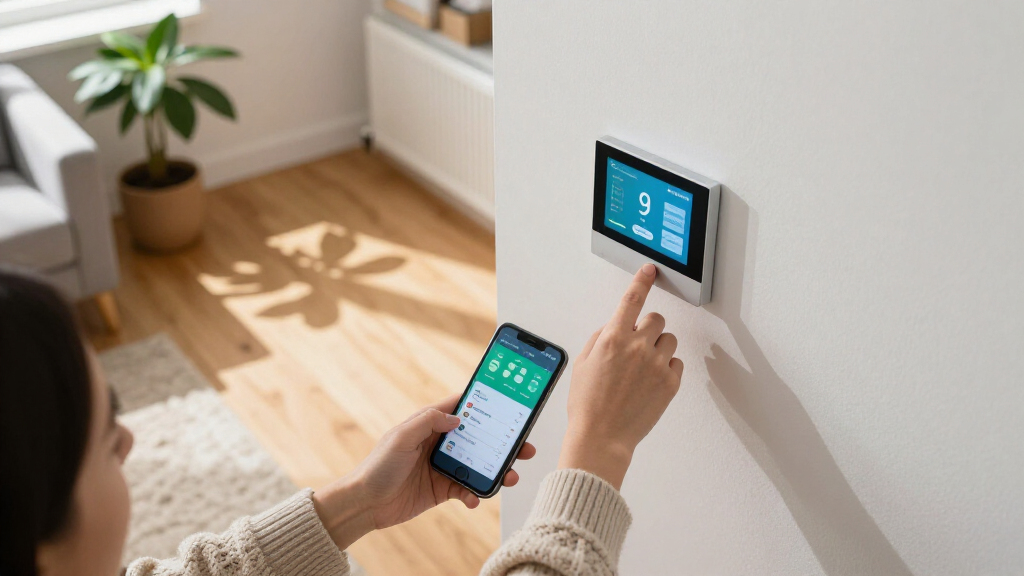

Smart thermostats for energy savings work by cutting heating and cooling waste — through scheduling, occupancy detection, and remote control — and the differences between models decide how much you actually save. The Google Nest Learning Thermostat (4th Gen) stands out as the best overall pick because it programs itself, includes a remote temperature sensor, and adapts to your habits without any setup effort. The ecobee Smart Thermostat Premium is the strongest alternative for homes with uneven room temperatures, while the Amazon Smart Thermostat delivers genuine smart-scheduling savings at the lowest cost of entry. The main tradeoff in this category: learning thermostats and multi-room sensors save more energy but cost more upfront, while budget models rely on you to set (and actually follow) a schedule. C-wire requirements also split the lineup — several solid options won’t work in older homes without extra wiring. Keep reading for the full breakdown of all 15 models and which one fits your HVAC setup and budget.

Get home appliances delivered free with Prime
- Fast, free delivery on millions of items
- Prime Video, Amazon Music and more included
- Member-only deals all year
Complete the kit


Key Takeaways
- Learning capability was the biggest differentiator: the Nest Learning Thermostat (4th Gen) and ecobee models that use occupancy sensors consistently outperform manually scheduled budget models because they cut conditioning when nobody is home.
- The C-wire requirement splits this lineup almost in half — amazon.com/dp/B08J4C8871?tag=whilehome-20&ascsubtag=dc-1088565″ target=”_blank” rel=”nofollow sponsored noopener”>Amazon, Honeywell, Vine, and Sensi Touch models all need one, so older homes should check wiring before choosing on features alone.
- Remote temperature sensors (bundled with the Nest 4th Gen and ecobee Premium) matter more than app polish for real savings, because most thermostats sit in hallways that don’t reflect where you actually live.
- Budget Wi-Fi thermostats like the Amazon Smart Thermostat and meross Matter model can match premium models on scheduling savings, but give up zoning accuracy, learning algorithms, and HVAC monitoring.
- The ecobee lineup’s three-tier structure (Essential, Enhanced, Premium) shows exactly what extra money buys: better sensors, air quality monitoring, and smarter occupancy detection — not just a nicer screen.
| Sensi Lite Smart Thermostat ST25 | 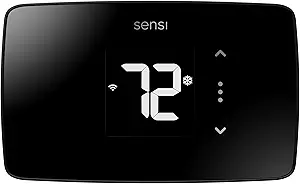 | Best Value for No-C-Wire Homes | Model: ST25 | Connectivity: Wi-Fi (2.4GHz) | Works With: Amazon Alexa, Google Assistant, SmartThings | VIEW LATEST PRICE | See Our Full Breakdown |
| meross Matter Smart Programmable WiFi Thermostat |  | Best for Multi-Platform Smart Homes | Connectivity: Matter, Wi-Fi | Works With: Apple HomeKit, Amazon Alexa, Google Assistant, SmartThings, Home Assistant | Power: Corded electric, 24V low voltage | VIEW LATEST PRICE | See Our Full Breakdown |
| Amazon Smart Thermostat |  | Best Budget Pick for Alexa Households | Brand: Amazon | Works With: Alexa, Ring | Certification: ENERGY STAR | VIEW LATEST PRICE | See Our Full Breakdown |
| Amazon Smart Thermostat (Like-New, Refurbished) | | Best Ultra-Budget Entry Point | Condition: Like-New (Certified Refurbished) | Works With: Alexa, Ring | Technology: Honeywell Home Thermostat Technology | VIEW LATEST PRICE | See Our Full Breakdown |
| Sensi Smart Thermostat ST55 |  | Best for Low-Maintenance Reliability | Model: ST55 | Connectivity: Wi-Fi | Works With: Amazon Alexa, most home HVAC equipment | VIEW LATEST PRICE | See Our Full Breakdown |
| Emerson Sensi Touch Smart Thermostat, Black (ST75) |  | Best Touchscreen for Multi-Assistant Homes | Model: ST75 | Display: Color touchscreen | Connectivity: Wi-Fi | VIEW LATEST PRICE | See Our Full Breakdown |
| Honeywell Home T5 Smart Wi-Fi Thermostat |  | Best for Hands-Off Geofencing Savings | Connectivity: Wi-Fi | Certification: ENERGY STAR | Scheduling: 7-day flexible scheduling | VIEW LATEST PRICE | See Our Full Breakdown |
| Vine Smart Thermostat for Home, WiFi Programmable, 7-Day x 8-Period, Energy Star Certified |  | Best Budget Value Pick | Connectivity: Wi-Fi | Control: App, touch, voice (Alexa, Google Assistant) | Display: LCD | VIEW LATEST PRICE | See Our Full Breakdown |
| Honeywell Home RTH9600WF Smart Color Thermostat |  | Best for Radiator and Steam Heat Homes | Model: RTH9600WF | Connectivity: Wi-Fi | Certification: ENERGY STAR | VIEW LATEST PRICE | See Our Full Breakdown |
| Google Nest Learning Thermostat (4th Gen, 2024) with Nest Temperature Sensor, Polished Gold |  | Best Premium Self-Programming Pick | Generation: 4th gen (2024) | Included Sensor: Nest Temperature Sensor (2nd gen) | System Compatibility: Most 24V systems including gas, electric, oil, forced air, heat pump, radiant | VIEW LATEST PRICE | See Our Full Breakdown |
| Google Nest Thermostat, Programmable Wi-Fi Smart Thermostat, Snow |  | Best for Google Homes | Connectivity: Wi-Fi | Color: Snow | Energy certification: ENERGY STAR | VIEW LATEST PRICE | See Our Full Breakdown |
| Sensi Touch 2 Smart Thermostat with Wi-Fi and Alexa Compatibility (ST76) |  | Best Value for Measured Savings | Model: ST76 | Connectivity: Wi-Fi | Voice assistant compatibility: Alexa | VIEW LATEST PRICE | See Our Full Breakdown |
| ecobee Smart Thermostat Essential, Wi-Fi, ENERGY STAR Certified |  | Best for Ecosystem Flexibility | Connectivity: Wi-Fi | Certification: ENERGY STAR | System compatibility: 85% of systems; many 24 VAC HVAC systems | VIEW LATEST PRICE | See Our Full Breakdown |
| ecobee Smart Thermostat Premium with Smart Sensor |  | Best Premium | Connectivity: Wi-Fi | Voice assistants: Siri and Alexa built-in | Included: SmartSensor, Power Extender Kit, Trim Kit | VIEW LATEST PRICE | See Our Full Breakdown |
| ecobee Smart Thermostat Enhanced – Programmable Wi-Fi Thermostat |  | Best Overall Value | Connectivity: Wi-Fi | HVAC compatibility: 90% of HVAC systems | Included accessories: Power Extender Kit (PEK), Trim Kit | VIEW LATEST PRICE | See Our Full Breakdown |
| smart thermostats for energy saving | Connectivity | Certification |
|---|---|---|
| Sensi Lite Smart Thermostat ST | Wi-Fi (2.4GHz) | ENERGY STAR |
| meross Matter Smart Programmab | Matter, Wi-Fi | — |
| Amazon Smart Thermostat | — | ENERGY STAR |
| Amazon Smart Thermostat | — | ENERGY STAR |
| Sensi Smart Thermostat ST55 | Wi-Fi | ENERGY STAR |
| Emerson Sensi Touch Smart Ther | Wi-Fi | ENERGY STAR |
| Honeywell Home T5 Smart Wi-Fi | Wi-Fi | ENERGY STAR |
| Vine Smart Thermostat for Home | Wi-Fi | Energy Star Certified |
| Honeywell Home RTH9600WF Smart | Wi-Fi | ENERGY STAR |
| Google Nest Learning Thermosta | — | — |
| Google Nest Thermostat | Wi-Fi | — |
| Sensi Touch 2 Smart Thermostat | Wi-Fi | — |
| ecobee Smart Thermostat Essent | Wi-Fi | ENERGY STAR |
| ecobee Smart Thermostat Premiu | Wi-Fi | — |
| ecobee Smart Thermostat Enhanc | Wi-Fi | — |
More Details on Our Top Picks
Sensi Lite Smart Thermostat ST25
This option stands out for solving the single biggest installation headache: no C-wire needed on most systems, which matters because running new wiring can cost more than the thermostat itself. Compared with the Amazon Smart Thermostat, which strictly requires a C-wire, the Sensi Lite is dramatically easier to retrofit into older homes. The geofencing and flexible scheduling do the real energy-saving work here, cutting roughly 23% off HVAC costs without demanding daily input. The privacy stance — Sensi does not sell personal data — also differentiates it from ecosystem-driven rivals like the Google Nest Thermostat, which feeds broader data collection. Tradeoffs are real, though: heat pump owners may still need that C-wire, and the LCD display feels utilitarian next to the glass-fronted meross Matter. This pick makes the most sense for practical buyers who value savings over style.
Pros:- Works without a C-wire on most conventional systems, avoiding installation costs
- Geofencing plus flexible scheduling delivers roughly 23% HVAC energy savings
- Strong privacy policy with no selling of personal data to third parties
- Built-in level and guided app setup make true DIY installation realistic
Cons:- C-wire still required for heat pumps and heat-only or cool-only systems
- 2.4GHz Wi-Fi only, with no 5GHz band support
- Plain LCD display lacks the polish of touchscreen rivals like the Sensi Touch ST75
Best for: Owners of older furnaces and AC systems without a C-wire who want energy savings without paying an electrician
Not ideal for: Heat pump households — the C-wire exemption often doesn’t apply, erasing its main advantage
- Model:ST25
- Connectivity:Wi-Fi (2.4GHz)
- Works With:Amazon Alexa, Google Assistant, SmartThings
- Power Source:Battery (2 AAA) or C-wire, 24V
- Display:LCD
- Compatible Systems:Air conditioner, boiler, furnace, heat pump
- Certification:ENERGY STAR
Our verdict“A sensible choice for buyers without a C-wire who want straightforward scheduling savings and data privacy over flashy hardware.”
meross Matter Smart Programmable WiFi Thermostat
What separates this model from nearly everything else in this lineup is native Matter support, meaning it talks locally to Apple Home, Alexa, Google Home, SmartThings, and Home Assistant without cloud dependency games. The Amazon Smart Thermostat locks you into Alexa; the Sensi Lite ST25 stops at voice assistants. This model is better suited to households where an Apple TV or Home Assistant hub runs the show. Its 95% HVAC compatibility covers heat pumps, boilers, furnaces, and even dehumidifiers, which is broader than most budget entries. The 24/7 scheduling and filter-life alerts translate into savings you can actually track. The main tradeoff is wiring: unlike the Sensi Lite, this unit demands a C-wire in some configurations, and high-voltage baseboard and millivolt systems are flatly excluded. Compared with the ecobee Smart Thermostat Essential, it gives up remote sensors but gains platform freedom.
Pros:- Native Matter integration across Apple Home, Alexa, Google Home, SmartThings, and Home Assistant
- Works with roughly 95% of HVAC systems including heat pumps, boilers, and dehumidifiers
- Smart alerts for filter life and system malfunctions prevent efficiency drift
- Sleek glass panel with lockable controls and always-on temperature display
Cons:- C-wire required for some wiring configurations
- No compatibility with 110V/120V/240V baseboard heaters or two-wire systems
- No remote temperature sensors, unlike the ecobee lineup
Best for: Smart home enthusiasts running Apple HomeKit, Home Assistant, or mixed platforms who want one thermostat that works everywhere
Not ideal for: Owners of electric baseboard, line-voltage, or millivolt heating systems — these are explicitly incompatible
- Connectivity:Matter, Wi-Fi
- Works With:Apple HomeKit, Amazon Alexa, Google Assistant, SmartThings, Home Assistant
- Power:Corded electric, 24V low voltage
- Display:LED
- Compatible Systems:Air conditioner, boiler, dehumidifier, furnace, heat pump
- Control Methods:App, voice
- Special Features:Lockable, programmable, 24/7 scheduling
Our verdict“The clear pick for multi-platform smart homes that want local Matter control and broad HVAC compatibility without paying premium prices.”
Amazon Smart Thermostat
This model is the value play of the roundup for anyone already living inside the Alexa ecosystem. Built on Honeywell Home Thermostat Technology, it delivers ENERGY STAR-certified savings — the EPA estimates roughly $90 per year off energy bills — through simple home, away, and sleep schedules. Compared with the Sensi Lite ST25, the tradeoff is inverted: you save money on hardware but give up the no-C-wire flexibility, since this unit requires that wire to run. Against the Google Nest Thermostat, it matches core scheduling capability but lacks Nest’s learning automation and remote sensors. Setup is genuinely approachable, with the Alexa app walking you through wiring step by step. The catch is ecosystem dependency: features like comfort zoning and smart away detection lean on Echo devices and Alexa+, so non-Alexa households should look at the meross Matter instead.
Pros:- ENERGY STAR certified with EPA-estimated yearly savings of about $90
- Honeywell Home technology backing from a long-established thermostat maker
- Guided DIY installation through the Alexa app with live customer support
- Automatic home, away, and sleep temperature schedules
Cons:- C-wire required, which older homes may lack
- Advanced features depend entirely on Alexa ecosystem devices
- No remote room sensors or geofencing like the Sensi or ecobee options
Best for: Alexa-equipped households with an existing C-wire who want reliable energy savings at the lowest entry cost
Not ideal for: Apple Home or Google Home users — its smartest features only activate inside the Alexa ecosystem
- Brand:Amazon
- Works With:Alexa, Ring
- Certification:ENERGY STAR
- Technology:Honeywell Home Thermostat Technology
- C-Wire:Required
- Installation:DIY, guided via Alexa app
- Estimated Yearly Savings:$90 (EPA estimate)
Our verdict“The smart buy for Alexa-centric homes with a C-wire who want dependable savings without premium hardware prices.”
Amazon Smart Thermostat (Like-New, Refurbished)
Functionally, this is the same Honeywell-powered, ENERGY STAR-certified device as the new Amazon Smart Thermostat — the difference is condition and packaging, not capability. For buyers whose priority is purely lowering the cost of entry into energy-saving automation, a certified refurbished unit carrying the same limited warranty is a defensible way to stretch a budget. Compared with its new counterpart, you give up retail packaging and slightly less headline savings (around $50 per year per EPA estimates versus $90), but the core scheduling and remote control via the Alexa app are identical. Stacked against the Sensi ST55, it again depends on wiring: this unit needs a C-wire, while the Sensi usually doesn’t. The comfort-zoning features also assume you own compatible Echo devices or the Amazon Smart Air Quality Monitor, so budget for those if you want full functionality.
Pros:- Same Honeywell Home technology and ENERGY STAR certification as the new unit
- Certified tested and backed by the same limited warranty as a new device
- Remote and voice control through the Alexa app and Echo devices
- Comfort zoning support when paired with compatible Echo hardware
Cons:- C-wire required, potentially needing professional installation
- Ships in generic Amazon packaging rather than original retail box
- Best features require extra Echo devices or the Smart Air Quality Monitor
Best for: Budget-conscious Alexa households with a C-wire who want certified-refurbished savings and a matching warranty
Not ideal for: Buyers wanting a gift-ready retail experience or homes without a C-wire — the generic packaging and wiring requirement both bite
- Condition:Like-New (Certified Refurbished)
- Works With:Alexa, Ring
- Technology:Honeywell Home Thermostat Technology
- Certification:ENERGY STAR
- C-Wire:Required
- Warranty:Same limited warranty as new device
- Estimated Annual Savings:$50 (EPA estimate)
Our verdict“A pragmatic way into Alexa-driven energy savings for under-budget buyers who accept refurbished hardware with full warranty coverage.”
Sensi Smart Thermostat ST55
The ST55 occupies a quietly confident middle ground in this lineup: more mature and better-supported than the Sensi Lite ST25, yet far less demanding than a Google Nest Learning Thermostat that wants to study your habits. Its strongest case is uptime without babysitting — usage reports, filter reminders, and equipment alerts keep an HVAC system running efficiently long after installation day. The roughly 23% HVAC energy savings claim is backed by ENERGY STAR certification and flexible scheduling rather than learning algorithms, which some buyers will actually prefer for predictability. As with the Lite model, Sensi doesn’t sell personal data, a privacy posture that distinguishes it from ad-ecosystem alternatives. The honest drawback is ambition: there’s no touchscreen like the Sensi Touch ST75, no remote sensors like the ecobee Premium, and Google Assistant integration trails Alexa support. Some HVAC configurations will still demand a C-wire despite the marketing.
Pros:- ENERGY STAR certified with approximately 23% HVAC energy savings through scheduling
- Maintenance alerts and filter reminders protect long-term system efficiency
- No selling of personal information to third parties
- DIY installation with built-in level, typically no C-wire needed
Cons:- Limited smart home integration beyond Alexa — no native Google Home or HomeKit depth
- May still require a C-wire in certain HVAC setups
- Basic display and design lack the touchscreen polish of the Sensi Touch ST75
Best for: Homeowners who want set-and-forget scheduling, maintenance alerts, and privacy without a learning algorithm second-guessing them
Not ideal for: Smart home tinkerers wanting deep multi-platform automation or remote room sensors — this stays deliberately basic
- Model:ST55
- Connectivity:Wi-Fi
- Works With:Amazon Alexa, most home HVAC equipment
- Certification:ENERGY STAR
- C-Wire:Not required in most applications
- Installation:DIY with built-in level and app guidance
- Key Features:Scheduling, usage reports, equipment alerts, filter reminders
Our verdict“The right pick for buyers who prioritize reliable scheduling, maintenance alerts, and data privacy over ecosystem tricks.”
Emerson Sensi Touch Smart Thermostat, Black (ST75)
This option stands out for broad smart home compatibility — it works with Alexa, Google Assistant, Apple HomeKit, SmartThings, and Vera, a wider assistant lineup than the Honeywell Home T5 offers. The color touchscreen makes schedule adjustments faster than app-only rivals like the Amazon Smart Thermostat, and the usage reports and maintenance alerts translate directly into catching energy waste early. Compared with the Vine Smart Thermostat, the Sensi Touch trades granular 8-period programming for a cleaner interface and deeper ecosystem integration. The main tradeoff is the C-wire requirement — older homes without one will need extra work before installation. HVAC compatibility also varies, so checking your system before buying is non-negotiable.
Pros:- Works with Alexa, Google Assistant, HomeKit, SmartThings, and Vera
- Color touchscreen with intuitive menus beats app-only rivals for quick changes
- Usage reports and maintenance alerts help catch energy waste
- Designed for straightforward DIY installation
Cons:- C-wire required, which many older homes lack
- Compatibility depends heavily on the home’s HVAC equipment
Best for: Smart home enthusiasts with mixed ecosystems (especially Apple HomeKit users) who want on-wall touchscreen control
Not ideal for: Owners of older homes without a C-wire who want a plug-and-play swap of a basic thermostat
- Model:ST75
- Display:Color touchscreen
- Connectivity:Wi-Fi
- Control:Mobile app; Alexa, Google Assistant, HomeKit, SmartThings, Vera
- Power Requirement:C-wire required
- Certification:ENERGY STAR
- Features:Auto changeover, scheduling, remote access, usage reports, maintenance reminders
Our verdict“This pick makes the most sense for buyers who want touchscreen convenience and the widest voice-assistant support in a mid-range smart thermostat.”
Honeywell Home T5 Smart Wi-Fi Thermostat
Where the Sensi Touch ST75 leans on manual scheduling, the T5’s standout strength is geofence-based auto home/away control — it adjusts temperature based on your phone’s location, so savings happen even if you never touch a schedule. Honeywell reports 8-16% savings on heating and cooling bills when the scheduling feature is used, and the monthly energy reports with personalized tips give you a feedback loop most budget models skip. Utility rebate eligibility adds another savings avenue the Vine thermostat can’t match. The tradeoff: it’s aimed squarely at forced-air oil furnace systems, and heating-only setups need a C-wire adapter, which complicates installation compared with the Nest Learning Thermostat, which usually doesn’t need one.
Pros:- Geofencing automates savings without any schedule setup
- ENERGY STAR certified with reported 8-16% bill reductions
- Monthly energy reports with personalized saving tips
- Eligible for utility rebates and demand response rewards
Cons:- C-wire adapter may be needed, adding installation complexity
- Limited compatibility with heating-only oil furnace systems
Best for: Homeowners with irregular schedules who want automatic away-mode savings without managing a program
Not ideal for: Buyers with heating-only oil furnace systems lacking a C-wire, since a power adapter becomes mandatory
- Connectivity:Wi-Fi
- Certification:ENERGY STAR
- Scheduling:7-day flexible scheduling
- Geofencing:Yes, with Auto Home and Away mode
- Remote Control:Smartphone or tablet
- Energy Reports:Monthly heating and cooling reports
- Reported Savings:8-16% on heating and cooling bills
Our verdict“Choose this model if your schedule varies and you want the thermostat to handle energy savings automatically through location tracking.”
Vine Smart Thermostat for Home, WiFi Programmable, 7-Day x 8-Period, Energy Star Certified
For shoppers who find the Nest Learning Thermostat overkill, the Vine delivers the core energy-saving toolkit at a lower tier. Its 7-day x 8-period programming is actually more granular than the Honeywell T5’s scheduling, letting fine-tuners carve a day into eight temperature blocks. It covers 90% of 24V AC systems, including heat pumps and boilers, and adds geofencing and auto-away modes usually reserved for pricier models. The LCD display is basic compared with the Sensi Touch ST75’s color screen, and the Smart Life app ecosystem feels less polished than Google’s or Honeywell’s. Installation runs about 20 minutes when a C-wire exists — but there’s no workaround for line-voltage systems, which are excluded outright.
Pros:- 7-day x 8-period programming offers finer control than most rivals
- Compatible with 90% of 24V AC systems including heat pumps and boilers
- Geofencing and auto-away features at an entry-level tier
- Quick 20-minute DIY installation with online guides
Cons:- C-wire required, a common gap in older homes
- Only works with 24V AC systems, not line voltage
- Basic LCD display and less polished app experience
Best for: Budget-conscious buyers with conventional, heat pump, or boiler systems who want detailed scheduling control
Not ideal for: Owners of line-voltage electric baseboard systems, which are incompatible regardless of wiring
- Connectivity:Wi-Fi
- Control:App, touch, voice (Alexa, Google Assistant)
- Display:LCD
- Power Source:Corded electric (C-wire required)
- Programmability:7-day x 8-period
- Features:Auto-away, geofence, vacation mode, lockable
- Compatible Systems:Conventional 2H/2C, heat pump, heat or cool only (24V AC)
- Certification:Energy Star Certified
Our verdict“This model is better suited to value-focused buyers who prioritize granular programming and broad HVAC compatibility over premium displays.”
Honeywell Home RTH9600WF Smart Color Thermostat
Most smart thermostats quietly assume you have forced air — this one doesn’t. The RTH9600WF supports hot water, steam, and radiant systems alongside forced air and heat pumps, making it a rarity compared with the Honeywell T5’s narrower furnace focus. Its Smart Response learning figures out how long your home takes to reach temperature, so radiators start heating at the right moment instead of overshooting. The customizable HD color touchscreen adds a design element the Vine’s plain LCD can’t match, and the weather, humidity, and filter-change displays keep efficiency visible. Tradeoffs mirror the rest of this lineup: a C-wire is mandatory, and electric baseboard heat (120-240V) is excluded, so verify wiring before committing.
Pros:- Rare compatibility with hot water, steam, and radiant systems
- Smart Response learns cycle times to prevent temperature overshoot
- Customizable HD touchscreen with weather and humidity display
- Filter change reminders protect HVAC efficiency long-term
Cons:- C-wire power adapter required and not present in all homes
- Not compatible with 120-240V electric baseboard heat
Best for: Owners of hot water, steam, or radiant heating systems who’ve struggled to find a compatible smart thermostat
Not ideal for: Homes with electric baseboard heating, which this model explicitly does not support
- Model:RTH9600WF
- Connectivity:Wi-Fi
- Certification:ENERGY STAR
- Display:Customizable high-definition color touchscreen
- Voice Assistants:Alexa, Google Assistant, Microsoft Cortana
- Power Requirement:C-wire required
- Compatibility:Forced air (gas, oil, electric), hot water, steam, heat pumps with electric backup
- Smart Feature:Smart Response learning technology
Our verdict“This pick makes the most sense for boiler and steam-heat households that most smart thermostats leave behind.”
Google Nest Learning Thermostat (4th Gen, 2024) with Nest Temperature Sensor, Polished Gold
Every other thermostat here asks you to build a schedule; the Nest Learning Thermostat builds one for you. It learns your routines and adapts to outdoor weather, which is why it earns the premium slot over the capable Honeywell T5. The bundled Nest Temperature Sensor (2nd gen) solves a real energy problem — hot and cold spots — by letting the system prioritize the room that matters, something only the ecobee Premium matches in this lineup. Its 60% larger display with Dynamic Farsight shows info at a glance, and a C-wire usually isn’t required, simplifying installs that would stall the Sensi Touch or Vine. The catch: deeper features depend on the Google Home app, and Google-ecosystem outsiders may find the ecosystem lock-in limiting versus Matter-friendly rivals.
Pros:- Self-learning schedules eliminate manual programming
- Included temperature sensor fixes hot and cold room imbalances
- C-wire not required in most homes, easing installation
- Supports Google Home, Alexa, Siri, and Matter
Cons:- C-wire may still be needed in some wiring configurations
- Core features are tied to the Google Home app and compatible devices
Best for: Buyers who want a set-and-forget thermostat that learns habits automatically and manages whole-home temperature imbalances
Not ideal for: Households avoiding the Google ecosystem, since key features depend on the Google Home app
- Generation:4th gen (2024)
- Included Sensor:Nest Temperature Sensor (2nd gen)
- System Compatibility:Most 24V systems including gas, electric, oil, forced air, heat pump, radiant
- C-Wire:Not required in most homes
- Smart Home Compatibility:Google Home, Alexa, Siri, Matter
- Display:60% larger display with Dynamic Farsight
Our verdict“If you’d rather never program a schedule and want room-by-room temperature control, this is the premium pick that justifies its price.”
Google Nest Thermostat, Programmable Wi-Fi Smart Thermostat, Snow
This pick makes the most sense for anyone already living inside the Google ecosystem. The Google Home app ties scheduling, remote control, and HVAC health alerts into one interface, and the Home & Away automation trims heating and cooling the moment you leave — the single biggest energy lever for households with unpredictable routines. Compared with the Sensi Touch 2, which requires a C wire outright, the Nest works without one in most homes, though heat pump and zone-controlled systems may still need a power accessory. It also undercuts the ecobee Smart Thermostat Premium on complexity: no built-in speaker or air quality hardware to pay for. The tradeoff is geofencing-dependent savings rather than occupancy sensing, and voice control assumes you already own a compatible smart speaker.
Pros:- Adjusts temperature automatically when you leave home to cut energy waste
- Works without a C wire in most homes, simplifying installation
- HVAC monitoring with alerts and maintenance reminders catches problems early
- Broad voice compatibility including Google Assistant, Alexa, and Matter
Cons:- Some heating, cooling, and heat pump systems still require a C wire or power accessory
- Voice control depends on owning a separate compatible smart device
Best for: Android and Google Home households who want set-and-forget away-mode savings without extra hardware
Not ideal for: Heat pump or zone-system owners — they may need a C wire or power accessory, eroding the easy-install advantage
- Connectivity:Wi-Fi
- Color:Snow
- Energy certification:ENERGY STAR
- C-wire requirement:Not required in most homes; some systems need a C wire or power accessory
- Remote control:Google Home app on Android and iPhone
- Voice assistant compatibility:Google Assistant, Alexa, Matter-certified assistants
- Smart features:Scheduling, HVAC monitoring, Nest Renew support
Our verdict“A strong choice for Google-centric households who want effortless away-mode savings without buying sensors or speakers.”
Sensi Touch 2 Smart Thermostat with Wi-Fi and Alexa Compatibility (ST76)
What separates the Sensi Touch 2 from budget rivals like the Amazon Smart Thermostat is transparency about results: flexible scheduling, remote access, and usage reports combine for roughly 23% HVAC energy savings, and the app shows you where those savings come from. Installation is a genuine DIY job thanks to Bluetooth-guided setup, which puts it ahead of the ecobee Smart Thermostat Essential, where the Power Extender Kit is sold separately — here, the C wire requirement is the hurdle instead. The optional Room Sensors let you balance hot and cold zones the way ecobee’s SmartSensor does, but you pay extra. Maintenance reminders for filters and equipment round out a package focused on efficiency rather than flashy extras.
Pros:- ENERGY STAR certified with potential savings of about 23% on HVAC energy
- App-guided Bluetooth DIY installation that most homeowners can handle alone
- Usage reports, equipment alerts, and filter reminders keep efficiency visible
- Optional Room Sensors extend comfort balancing to uneven rooms
Cons:- C wire required, which may complicate or block installation in older homes
- Room sensors sold separately, adding cost for whole-home comfort
Best for: Budget-conscious homeowners with an existing C wire who want app-guided DIY installation and clear usage reporting
Not ideal for: Homes without a C wire — the hard requirement makes installation harder than C-wire-flexible rivals
- Model:ST76
- Connectivity:Wi-Fi
- Voice assistant compatibility:Alexa
- C-wire required:Yes
- Room sensor compatible:Yes, sold separately
- Energy certification:ENERGY STAR
Our verdict“The smart buy for C-wire-equipped homes that want documented energy savings and DIY simplicity at a sensible price.”
ecobee Smart Thermostat Essential, Wi-Fi, ENERGY STAR Certified
This model stands out for playing nicely with everything: Apple HomeKit, Google Assistant, and Alexa all work out of the box, which the Alexa-only Sensi Touch 2 can’t match. Compatibility with roughly 85% of HVAC systems — including heat pumps, boilers, and dual fuel setups — covers homes that budget thermostats often skip. Two features translate directly into savings: the schedule assistant builds routines automatically, and time-of-use preheating and precooling shifts energy consumption to cheaper off-peak hours, a real advantage on time-of-use utility plans. Compared with the ecobee Enhanced, you gain the color touchscreen and humidity detection but lose built-in occupancy sensing, meaning away-detection depends on your phone or a separately purchased SmartSensor. The Power Extender Kit for C-wire-free homes is also a separate purchase here.
Pros:- Works with Apple HomeKit, Google Assistant, and Alexa for true ecosystem neutrality
- Time-of-use preheating and precooling shift usage to cheaper off-peak hours
- Supports gas, oil, electric, dual fuel, heat pump, and boiler systems
- Color touchscreen plus indoor humidity detection for finer comfort control
Cons:- Power Extender Kit and SmartSensor both sold separately
- Compatibility should be verified for your specific HVAC system before buying
Best for: Households on time-of-use electricity plans with mixed-device smart homes spanning Apple, Google, and Amazon
Not ideal for: Buyers who want automatic occupancy-based savings in the box — the SmartSensor costs extra, and there’s no built-in occupancy detection
- Connectivity:Wi-Fi
- Certification:ENERGY STAR
- System compatibility:85% of systems; many 24 VAC HVAC systems
- Smart home compatibility:Apple HomeKit, Google Assistant, Alexa
- Controls:Color touchscreen and ecobee app
- C-wire:Power Extender Kit sold separately if no C wire
- Additional features:Humidity detection, schedule assistant, time-of-use preheating/precooling
Our verdict“The best pick for multi-ecosystem households, especially those on time-of-use billing who can exploit off-peak preheating and precooling.”
ecobee Smart Thermostat Premium with Smart Sensor
This is the ceiling of the category. The bundled SmartSensor with radar occupancy detection is the standout for energy savings: it heats and cools occupied rooms only, pushing potential bill reductions to up to 26% — smarter than the phone-location geofencing the Google Nest Thermostat relies on. Unlike every other pick here, Siri and Alexa are built into the thermostat itself, along with a speaker and an air quality monitor with furnace filter reminders. Compatibility with 95% of HVAC systems beats the Essential’s 85%, and the included Power Extender Kit and trim kit remove the add-on costs that nickel-and-dime cheaper models. The catch: some features sit behind a Smart Security subscription, Siri requires an Apple home hub, and you’re paying premium money for air quality and speaker features that have nothing to do with energy savings.
Pros:- Included SmartSensor with radar occupancy detection enables room-by-room comfort and savings up to 26%
- Built-in Siri and Alexa speaker eliminates the need for a separate smart speaker
- Air quality monitor with alerts and filter reminders protects HVAC efficiency
- Power Extender Kit, trim kit, and SmartSensor all included — no hidden add-ons
Cons:- Smart Security subscription required to unlock some features
- Siri requires an Apple home hub, and doorbell features need a separate wired camera
Best for: Owners of larger or multi-story homes who want occupancy-based, room-by-room comfort and don’t mind paying for a full smart-home command center
Not ideal for: Budget-focused buyers who only want energy savings — the speaker, air quality monitor, and metal finish add cost without cutting bills
- Connectivity:Wi-Fi
- Voice assistants:Siri and Alexa built-in
- Included:SmartSensor, Power Extender Kit, Trim Kit
- HVAC compatibility:95% of HVAC systems
- Energy savings:Up to 26% on energy bills
- Energy certification:ENERGY STAR
- Air quality monitor:Built-in
- Warranty:3 years
Our verdict“Worth the premium only if you’ll use the occupancy sensing, speaker, and air quality features — pure energy savers should step down to the Enhanced.”
ecobee Smart Thermostat Enhanced – Programmable Wi-Fi Thermostat
This option nails the balance the Premium overshoots and the Essential misses. You get up to 26% annual savings — the same ceiling as the flagship — through built-in occupancy sensing that automatically eases off when you’re away or asleep, no extra sensor purchase required. That’s a sharper savings engine than the Google Nest Thermostat’s location-based away mode, because it reacts to actual presence in the house rather than phone GPS. The Power Extender Kit and trim kit are in the box, avoiding the add-on costs that follow the Essential, and it works with Alexa, Google Assistant, HomeKit, and SmartThings. It also learns your preferences and adjusts for humidity. Compared with the Premium, you give up the speaker, air quality monitoring, and the bundled room sensor — which is exactly why it costs less while saving the same energy.
Pros:- Up to 26% annual savings on heating and cooling with built-in occupancy sensing
- Power Extender Kit included for homes without a C wire
- Works with Alexa, Google Assistant, Apple HomeKit, and SmartThings
- Learns your schedule and temperature preferences and adjusts for humidity
Cons:- SmartSensors for room-by-room comfort sold separately
- Compatibility check required before purchase
Best for: Homeowners who want maximum documented energy savings and occupancy automation without paying for speaker or air quality extras
Not ideal for: Homes with badly uneven room temperatures — room-by-room comfort requires SmartSensors sold separately, so the Premium bundle is the better deal there
- Connectivity:Wi-Fi
- HVAC compatibility:90% of HVAC systems
- Included accessories:Power Extender Kit (PEK), Trim Kit
- Smart home compatibility:Alexa, Google Assistant, Apple HomeKit, SmartThings
- Sensors:Built-in occupancy sensing
- App control:iOS, Android, Apple Watch
- Warranty:3 years
Our verdict“The best all-around pick for energy savings — flagship-level efficiency and occupancy automation without the flagship price.”
How We Picked
I judged every thermostat here against one question: how much energy will this actually save, and how reliably? That meant prioritizing models with ENERGY STAR certification, then weighing how each one reduces runtime — self-learning algorithms, occupancy and motion sensing, geofencing, flexible scheduling, and remote temperature sensors that fix hot and cold spots. A thermostat that only saves money if you diligently program it scored lower than one that adapts automatically, because real-world savings depend on behavior, not spec sheets.
Beyond savings potential, I weighed installation friction (C-wire requirements, DIY complexity), ecosystem compatibility (Alexa, Google Home, Apple Home, Matter), and value retention — whether the extra cost of a premium model translates into meaningful savings features or just cosmetic upgrades. Models that duplicated each other closely, like the three Sensi variants and the three ecobee tiers, were separated by whether their extra features justify the price jump. The result is a ranking ordered by savings capability per dollar, adjusted for how easy each model is to live with day to day.
| smart thermostats for energy saving | Connectivity | Certification |
|---|---|---|
| Sensi Lite Smart Thermostat ST | Wi-Fi (2.4GHz) | ENERGY STAR |
| meross Matter Smart Programmab | Matter, Wi-Fi | — |
| Amazon Smart Thermostat | — | ENERGY STAR |
| Amazon Smart Thermostat | — | ENERGY STAR |
| Sensi Smart Thermostat ST55 | Wi-Fi | ENERGY STAR |
| Emerson Sensi Touch Smart Ther | Wi-Fi | ENERGY STAR |
| Honeywell Home T5 Smart Wi-Fi | Wi-Fi | ENERGY STAR |
| Vine Smart Thermostat for Home | Wi-Fi | Energy Star Certified |
| Honeywell Home RTH9600WF Smart | Wi-Fi | ENERGY STAR |
| Google Nest Learning Thermosta | — | — |
| Google Nest Thermostat | Wi-Fi | — |
| Sensi Touch 2 Smart Thermostat | Wi-Fi | — |
| ecobee Smart Thermostat Essent | Wi-Fi | ENERGY STAR |
| ecobee Smart Thermostat Premiu | Wi-Fi | — |
| ecobee Smart Thermostat Enhanc | Wi-Fi | — |
Factors to Consider When Choosing Smart Thermostats For Energy Savings
Choosing a smart thermostat for energy savings is less about finding the most features and more about matching the thermostat’s strengths to how your home and household actually behave. These are the factors that most often make or break real savings.Learning vs. Manual Scheduling: Who’s Doing the Work?
The single biggest fork in this category is whether the thermostat programs itself or waits for you. Learning models like the Nest Learning Thermostat build a schedule from your adjustments over the first week or two, which means the savings keep working even if you never open the app again. Manual-schedule models — most of the budget tier — only save money if you actually set a schedule and stick to it, and plenty of buyers never get past the default settings. That gap is why I ranked learning models higher despite their cost. Be honest with yourself here: if you’re the type who will fine-tune a 7-day, 8-period schedule like the Vine offers, a cheap programmable model can match a learning thermostat. If you won’t, pay for the automation.
The C-Wire Question Nobody Checks First
More smart thermostat returns happen over wiring than over features. Many models in this lineup — including the Amazon Smart Thermostat, Honeywell T5, Honeywell RTH9600WF, and Sensi Touch — require a C-wire (common wire) to power their Wi-Fi radios continuously. Homes built before roughly 2004 often lack one, and running a thermostat on stolen power without it causes dropped connections, short-cycling, and even dead HVAC batteries. Some packages include a power-extender kit; the Sensi lineup is notable for its app-based installer tool that walks you through wire diagnosis before you buy. Check your existing wiring or your furnace control board before ordering anything, because the best energy-saver in the world is worthless if it won’t power on.
Remote Sensors: The Feature That Actually Moves the Needle
A thermostat only senses temperature where it’s mounted — usually a hallway, the least-lived-in spot in the house. That means a single-sensor thermostat can call for heat long after the living room is comfortable, or shut off cooling while your west-facing bedroom is still baking. Remote sensors, included with the Nest 4th Gen and ecobee Premium and supported across the ecobee line, let the thermostat average readings or prioritize occupied rooms. This is where zoned comfort and real savings intersect: ecobee’s occupancy-based logic follows you through the house instead of conditioning empty space. If your home has temperature swings between floors or rooms, one remote sensor often saves more energy than any app feature — and it’s the strongest argument for the premium tier.
Ecosystem Lock-In and Matter Support
A smart thermostat lives inside your voice assistant and app ecosystem for years, so compatibility matters more than it first appears. Amazon’s thermostat is designed around Alexa and Ring; the Nest models integrate deepest with Google Home; the meross Matter thermostat stands out for cross-platform flexibility, working natively across Alexa, Google, and Apple Home through the Matter standard. If your household mixes ecosystems, or you plan to switch assistants later, Matter support protects your investment. Also check whether the thermostat supports Apple HomeKit or SmartThings if you use them — the ecobee line supports both, while several budget models don’t. Routine-based automation (like “goodnight” scenes that set back the temperature) is one of the easiest savings habits, and it only works if the thermostat plays well with the rest of your setup.
HVAC System Compatibility and Staging
Not every thermostat works with every system, and this is the second-most-common buying mistake after the C-wire. If you have a heat pump, multi-stage furnace, dual-fuel system, or zoned HVAC, you need a thermostat that supports it explicitly — the ecobee models and Nest 4th Gen handle most configurations including heat pump aux heat, while basic two-wire budget models may not. Conventional single-stage gas furnaces and AC are compatible with virtually everything here. Wrong staging support doesn’t just cause discomfort; it can force expensive auxiliary heat to run unnecessarily, wiping out your savings. Match the thermostat to your equipment first, then compare features — the ecobee and Nest compatibility checkers online take two minutes and prevent a guaranteed return.
When Paying More Actually Pays Back
Premium thermostats cost two to four times what budget models do, so the math has to work. The honest answer: extra money pays back when it buys sensors, learning, or zoning — not screens and speakers. A color touchscreen or built-in Alexa voice control is nice but saves you nothing; occupancy sensing and remote room sensors do. Households with variable schedules, multiple occupants, or uneven heating can see the price difference recovered through energy bills in a couple of heating seasons. Households with rigid, predictable routines may find a mid-tier scheduled model like the Sensi ST55 or ecobee Essential saves nearly as much. Don’t pay premium prices for premium aesthetics — pay them for premium sensing.
Frequently Asked Questions
Do smart thermostats really save money if I already program my old thermostat?
If you already maintain a strict setback schedule, a smart thermostat’s savings come from different sources: remote access for mid-day adjustments, geofencing that catches forgotten departures, and occupancy detection that conditions rooms only when people are in them. Independent estimates put typical savings around 8–15% on heating and cooling, but that range shrinks toward zero for already-disciplined schedulers. Where the gains are largest is households with unpredictable routines, since learning models like the Nest 4th Gen adapt automatically instead of relying on a fixed schedule. If your current programmable unit runs a schedule you actually follow, a budget smart model gives you app control and energy reports without needing premium features to justify itself.
What happens if my home doesn’t have a C-wire?
You have three realistic paths. First, some thermostats in this lineup run without a C-wire on battery or power-stealing designs — the Sensi ST55 and Sensi Lite are known for this flexibility, though Wi-Fi performance can be less stable. Second, many models include or sell a power-extender kit that repurposes an existing wire, which works for most conventional furnaces but not all heat pumps. Third, you can pay an electrician to run a new wire, typically a one-hour job. Whatever you do, don’t ignore the requirement — a thermostat starved of power will drop off Wi-Fi, restart randomly, and can even short-cycle your HVAC equipment, which wastes the very energy you bought it to save.
Is the Nest Learning Thermostat worth the premium over the regular Nest Thermostat?
The difference comes down to who builds the schedule. The standard Nest Thermostat relies on you to set a basic schedule in the app, with only mild automation like Home/Away assist on phones. The Learning model observes your manual adjustments, builds its own schedule, works with the bundled remote temperature sensor, and supports more complex HVAC systems including dual-fuel. If your schedule varies day to day, the learning algorithm will likely capture savings a manual schedule misses. If your routine is fixed — out at 8, home at 6 — the cheaper model captures most of the same benefit, and the money is better spent on a temperature sensor or left in your pocket.
Which ecobee model should I choose — Essential, Enhanced, or Premium?
Think of the tiers as sensor levels, not quality levels. The Essential covers the fundamentals: scheduling, app control, ENERGY STAR certification, and smart home integration. The Enhanced adds better occupancy handling and smarter setbacks for a modest step up. The Premium bundles a Smart Sensor with occupancy and temperature detection, plus air quality monitoring and built-in voice control — that sensor is the real prize, because it lets the thermostat condition the rooms you actually use. For single-zone homes where the thermostat location reads fairly, the Essential or Enhanced captures most of the savings. For multi-story homes or households with irregular occupancy, the Premium’s sensor bundle earns its price.
Are refurbished smart thermostats like the Amazon Smart Thermostat (Like-New) a smart buy?
Refurbished units can be a legitimate way into smart climate control at a lower entry cost, provided the listing specifies testing, a return window, and functional condition — cosmetics matter far less than a thermostat that’s hidden on a wall. Check two things before buying: that the warranty or guarantee period is stated, and that the model hasn’t been superseded by a version with different features. The functional savings come from the same scheduling and remote control as the new unit, so energy performance is identical. The risk is mainly support longevity rather than performance, so if the price gap versus new is small, the new unit’s fuller protection usually wins. For a low-cost model like this one, a refurb makes the most sense when the discount is meaningful.
Conclusion
For most households serious about energy savings, the Google Nest Learning Thermostat (4th Gen) is the best overall choice — it removes human laziness from the savings equation and its bundled sensor fixes the hallway-temperature problem that undermines cheaper units. The ecobee Smart Thermostat Premium is the best alternative and my pick for uneven, multi-room homes, thanks to occupancy-aware sensing that follows you through the house.
On value, the Amazon Smart Thermostat is hard to beat for disciplined schedulers on a budget, while the ecobee Enhanced is the smarter value pick if you want automation without the premium price. For beginners and renters, the Sensi Lite and Sensi ST55 offer the gentlest installation experience with strong wiring guidance. Choose the meross Matter model for multi-ecosystem households, the ecobee Essential for a clean mid-tier balance, and the Sensi Touch ST75/ST76 or Honeywell RTH9600WF if you want a color touchscreen experience without Nest or ecobee pricing. Whatever you pick, verify your C-wire and HVAC compatibility first — the best energy-saving thermostat is the one that actually turns on in your home.
Halloween Picks
halloween
As an affiliate, we earn on qualifying purchases.