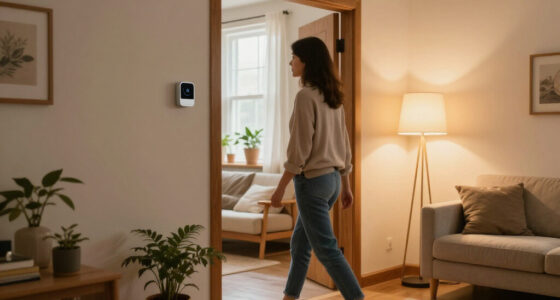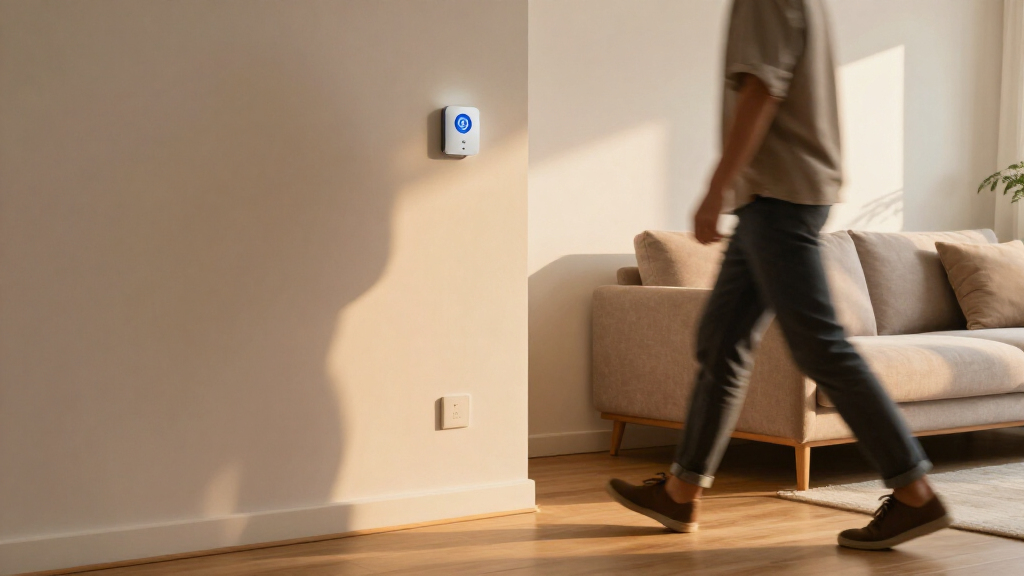
The Aqara FP300 is my best overall pick among the best mmWave motion sensors because its presence detection sits alongside PIR, light, temperature, and humidity sensing. For zone-based room automations, the SwitchBot model with Zone Positioning offers a more targeted approach, while the SONOFF SNZB-06P is a straightforward Zigbee option for compatible setups. The main tradeoffs are ecosystem compatibility, power and installation needs, and whether you want a ready-made smart-home device or a sensor module that calls for hands-on configuration. Read on for how all 15 options compare and which one best fits your setup.

Get home appliances delivered free with Prime
- Fast, free delivery on millions of items
- Prime Video, Amazon Music and more included
- Member-only deals all year
Complete the kit



Key Takeaways
- The Aqara FP300 stands out for all-in-one sensing: it combines mmWave presence detection with PIR, light, temperature, and humidity readings, though its extra capabilities matter most if your platform can use them.
- Zone Positioning is a distinct reason to choose SwitchBot: it suits automations based on where someone is in a room, while simpler presence sensors focus on occupied versus vacant.
- Zigbee and app-connected sensors serve different setups: SONOFF and Besisglas are candidates for Zigbee-based systems, while ecosystem and hub compatibility need checking before purchase.
- DIY modules trade convenience for control: the Fermion C4002, LD2410C kits, LD2450, and UeeKKoo are better suited to builders comfortable with wiring, firmware, or platform configuration.
- More sensors in a pack do not automatically mean better coverage: the multi-unit Beuiouer, Wuden, and generic 3-pack modules make sense for several rooms or projects, but each still needs appropriate placement and setup.
| Aqara FP300 Wireless 5-in-1 Presence Sensor with mmWave, PIR, Light, Temperature and Humidity Detection |  | Best Overall | Sensors: 60 GHz mmWave, PIR, light, temperature, and humidity | Connectivity: Matter over Thread and Zigbee | Maximum detection range: 6 m (20 ft) | VIEW LATEST PRICE | See Our Full Breakdown |
| SwitchBot Smart mmWave Radar Presence Sensor |  | Best for Flexible Placement | Detection technology: 60 GHz mmWave radar, light sensor, and PIR | Detection angle: 120° | Detection range: Up to 8 m for moving people; 5 m for stationary people | VIEW LATEST PRICE | See Our Full Breakdown |
| Akamatis LITOS v3 mmWave Presence and Light Sensor with Home Assistant, White |  | Best for Home Assistant | Radar: HLK-LD2401, 24 GHz mmWave | Maximum detection range: 20 ft (6 m) indoors | Light sensor: VEML7700 | VIEW LATEST PRICE | See Our Full Breakdown |
| Yechiry Human Presence Sensor with MmWave Detection and Ambient Light Sensor |  | Best for Adjustable Detection Modes | Detection technology: Temperature-compensated mmWave | Detection modes: Motion detection, presence monitoring, or combined | Motion range: Up to 6 m | VIEW LATEST PRICE | See Our Full Breakdown |
| SONOFF SNZB-06P24 Zigbee Presence Sensor with 24 GHz mmWave and Light Sensing |  | Best for Zigbee Zone Control | Radar frequency: 24 GHz mmWave | Maximum range: 4 m | Field of view: 110° | VIEW LATEST PRICE | See Our Full Breakdown |
| SwitchBot Smart mmWave Radar Presence Sensor with Zone Positioning |  | Best for Flexible, Hub-Based Smart Homes | Detection technology: mmWave radar, PIR, and light sensing | Moving-person range: Up to 8 m | Stationary-person range: Up to 5 m | VIEW LATEST PRICE | See Our Full Breakdown |
| Fermion C4002 mmWave Human Presence Sensor for ESPHome and Home Assistant |  | Best for DIY Home Assistant Builds | Frequency: 24 GHz | Motion range: Up to 11 m | Stationary or micro-motion range: Up to 10 m | VIEW LATEST PRICE | See Our Full Breakdown |
| GoveeLife Human Presence Sensor with mmWave Radar and PIR |  | Best for App-Based Alexa Automations | Model: H5127 | Detection technology: mmWave radar and PIR infrared | Maximum range: 26 ft | VIEW LATEST PRICE | See Our Full Breakdown |
| Beuiouer LD2410C 24GHz mmWave Human Presence Radar Sensor Modules, 5-Pack |  | Best Value for Multi-Room DIY Projects | Quantity: 5 modules | Model: LD2410C | Radar frequency: 24 GHz | VIEW LATEST PRICE | See Our Full Breakdown |
| Wuden 2-Pack HLK-LD2410C 24 GHz Human Presence Radar Sensor Modules |  | Best for Small DIY Builds | Quantity: 2 modules | Model: HLK-LD2410C | Frequency: 24 GHz ISM band | VIEW LATEST PRICE | See Our Full Breakdown |
| Besisglas Zigbee Human Presence Sensor with 24 GHz Millimeter Wave Radar |  | Best Battery-Powered Zigbee Pick | Radar technology: 24 GHz millimeter-wave radar | Connectivity: Zigbee | Maximum range: 7 meters (20 feet) | VIEW LATEST PRICE | See Our Full Breakdown |
| ZORZA LD2450 24 GHz 5 V Millimeter-Wave Tracking Radar Sensor |  | Best for Target Tracking | Model: LD2450 | Frequency: 24 GHz | Power: 5 V corded electric | VIEW LATEST PRICE | See Our Full Breakdown |
| WALFRONT 24 GHz MmWave Presence Sensor |  | Best for Wide-Angle Indoor Coverage | Detection technology: 24 GHz millimeter wave | Detection range: Up to 6 meters | Detection angle: 120° | VIEW LATEST PRICE | See Our Full Breakdown |
| UeeKKoo 24 GHz Human Micro-Motion mmWave Sensor for Raspberry Pi, Jetson Nano, and ESP32 |  | Best Compact Developer Module | Frequency: 24 GHz | Radar technology: FMCW | Sensor SoC: S3KM1110 | VIEW LATEST PRICE | See Our Full Breakdown |
| 3-Pack 24GHz mmWave Human Presence Sensor Modules |  | Best Multi-Zone DIY Kit | Quantity: 3 modules | Radar technology: 24 GHz FMCW mmWave | Detection range: 0.75–6 meters | VIEW LATEST PRICE | See Our Full Breakdown |
| mmWave motion sensor | Dimensions |
|---|---|
| Aqara FP300 Wireless 5-in-1 Pr | 1.65 × 1.65 × 1.97 in |
| SwitchBot Smart mmWave Radar P | 2.1 × 1.2 × 2.1 in |
| Akamatis LITOS v3 mmWave Prese | — |
| Yechiry Human Presence Sensor | — |
| SONOFF SNZB-06P24 Zigbee Prese | 1.74 × 1.74 × 2.32 in |
| SwitchBot Smart mmWave Radar P | 2.1 × 1.2 × 2.1 in |
| Fermion C4002 mmWave Human Pre | 22 × 26 mm |
| GoveeLife Human Presence Senso | 1.49 × 1.65 × 2.53 in |
| Beuiouer LD2410C 24GHz mmWave | — |
| Wuden 2-Pack HLK-LD2410C 24 GH | 16 × 22 mm |
| Besisglas Zigbee Human Presenc | 0.79 × 0.98 × 2.76 inches |
| ZORZA LD2450 24 GHz 5 V Millim | — |
| WALFRONT 24 GHz MmWave Presenc | 8.6 × 8.6 × 2.85 cm |
| UeeKKoo 24 GHz Human Micro-Mot | 0.79 × 0.79 × 0.79 inches |
| 3-Pack 24GHz mmWave Human Pres | — |
More Details on Our Top Picks
Aqara FP300 Wireless 5-in-1 Presence Sensor with mmWave, PIR, Light, Temperature and Humidity Detection
The Aqara FP300 is the most versatile choice here if you want presence detection without committing to a power cable. Its 60 GHz radar can keep detecting someone who is sitting still, while PIR adds motion sensing; light, temperature, and humidity readings also give automations more context than the SwitchBot Smart mmWave Radar Presence Sensor, which lacks temperature and humidity sensing. The adjustable mount opens up wall, ceiling, or corner placement, and replaceable batteries reduce the need for frequent attention. The tradeoff is ecosystem setup: Matter use needs a Thread border router and Matter controller, while Aqara setups need a compatible hub. Its stationary-presence range is not specified in the supplied data, so buyers planning a precise room layout should check placement carefully.
Pros:- 60 GHz mmWave and PIR combine still-person and motion detection.
- Adds light, temperature, and humidity sensing in one compact unit.
- Adjustable mount supports wall, ceiling, and corner placement.
- Replaceable batteries are rated for up to 3 years in Zigbee mode.
Cons:- A compatible hub is required for Aqara setups; third-party Matter use needs a Thread border router and Matter controller.
- Battery life is shorter in Thread mode than in Zigbee mode.
- The supplied specifications do not state a separate stationary-presence range.
Best for: Smart-home owners who want wireless still-person detection, environmental readings, and flexible mounting in one sensor.
Not ideal for: Buyers who want a simple hub-free setup or need a clearly specified stationary-detection range before choosing placement.
- Sensors:60 GHz mmWave, PIR, light, temperature, and humidity
- Connectivity:Matter over Thread and Zigbee
- Maximum detection range:6 m (20 ft)
- Field of view:120°
- Power:2 replaceable CR2450 lithium metal batteries
- Battery life:Up to 3 years in Zigbee mode; up to 2 years in Thread mode
- Mounting:Multi-axis adjustable wall, ceiling, or corner mount
- Dimensions:1.65 × 1.65 × 1.97 in
Our verdict“Choose the FP300 if you want a flexible wireless sensor with presence and environmental sensing, and are comfortable using a compatible hub or Thread setup.”
SwitchBot Smart mmWave Radar Presence Sensor
The SwitchBot Smart mmWave Radar Presence Sensor suits rooms where sensor position may need tweaking: its magnetic base allows flat placement or wall mounting, with adjustable detection angles. It pairs 60 GHz mmWave, PIR, and light sensing, and AI self-learning is intended to filter interference from fans and air conditioners—useful in rooms where moving air can trigger unwanted events. Compared with the Aqara FP300, it has a longer stated range for moving people, reaching 8 m, but its stationary-person range is 5 m and it does not add temperature or humidity sensing. Apple Home also requires a SwitchBot Matter Hub. Battery-life information varies between the supplied description and specifications, so I would not choose it on the expectation of a fixed multi-year interval.
Pros:- Magnetic base supports flat placement and wall mounting.
- Adjustable detection angle helps adapt coverage to the room.
- AI self-learning is designed to filter interference from fans and air conditioners.
- Specifies separate ranges for moving and stationary people.
Cons:- Apple Home support requires a SwitchBot Matter Hub.
- Stationary-person range is shorter than the stated moving-person range.
- Supplied battery-life claims differ, so expected runtime is unclear.
Best for: People who want to try different sensor positions or angles and need presence sensing with interference filtering.
Not ideal for: Apple Home users without a SwitchBot Matter Hub, or buyers who need temperature and humidity readings from the same device.
- Detection technology:60 GHz mmWave radar, light sensor, and PIR
- Detection angle:120°
- Detection range:Up to 8 m for moving people; 5 m for stationary people
- Power:2 included AAA batteries
- Battery life:Description states up to 2 years; specifications state 3 years average
- Mounting:Wall mount or flat placement with magnetic base
- Compatibility:SwitchBot Hub, Home Assistant, Alexa, and Google Home; Apple Home via SwitchBot Matter Hub
- Dimensions:2.1 × 1.2 × 2.1 in
Our verdict“Pick the SwitchBot if mounting flexibility and interference filtering matter more than environmental sensing or a clearly consistent battery-life estimate.”
Akamatis LITOS v3 mmWave Presence and Light Sensor with Home Assistant, White
The Akamatis LITOS v3 is the clearest fit for a Home Assistant setup: it arrives with ESPHome pre-flashed, so the core appeal is local integration without building a sensor from a bare radar module. Its 24 GHz radar detects moving and stationary presence up to 20 ft indoors, while the VEML7700 light sensor can help keep lighting automations from turning on when a room is already bright. Compared with the wireless Aqara FP300, the LITOS trades battery-powered placement and broader ecosystem options for a corded, Wi-Fi-based design aimed specifically at Home Assistant. That makes it less convenient to relocate and unsuitable for buyers without an existing Home Assistant installation. The external antenna is intended to support Wi-Fi range and stability, but the stated detection distance is for indoor use.
Pros:- Pre-flashed ESPHome reduces firmware setup work.
- Detects moving and stationary presence up to 20 ft indoors.
- Ambient-light sensor supports brightness-aware automations.
- External Wi-Fi antenna is designed to improve connection range and stability.
Cons:- Requires an existing Home Assistant installation.
- Corded power restricts placement compared with the battery-powered Aqara FP300.
- The specified detection range applies to indoor use.
Best for: Home Assistant users who want an ESPHome-ready mmWave sensor with presence and ambient-light data.
Not ideal for: Smart-home beginners without Home Assistant, or anyone who needs a battery-powered sensor that can be placed away from an outlet.
- Radar:HLK-LD2401, 24 GHz mmWave
- Maximum detection range:20 ft (6 m) indoors
- Light sensor:VEML7700
- Controller:Seeed XIAO ESP32-C3
- Connectivity:2.4 GHz Wi-Fi with external antenna
- Power:Corded electric
- Compatible platform:Home Assistant
- Firmware and mounting:ESPHome, pre-flashed; wall mount
Our verdict“Choose the LITOS v3 if you already run Home Assistant and prefer an ESPHome-ready, corded sensor over a hub-based wireless option.”
Yechiry Human Presence Sensor with MmWave Detection and Ambient Light Sensor
The Yechiry Human Presence Sensor is aimed at buyers who want to tune how the sensor responds, rather than rely on a single detection behavior. Its three modes—motion, presence, or combined—can help match alerts and automations to different rooms, while adjustable sensitivity, range, and timeout offer more control than the fixed placement options described for the Akamatis LITOS v3. The built-in light sensor also supports occupancy-based lighting routines. The key limit is range: it detects stationary occupants up to 3.5 m, shorter than the SwitchBot Smart mmWave Radar Presence Sensor’s stated 5 m stationary range. It is also wall-mounted and includes a power cable, so it is a less flexible choice than a battery-powered model. This is a better fit for a defined, nearby coverage area than a large room.
Pros:- Three detection modes let users choose motion, presence, or combined operation.
- Adjustable range, sensitivity, and timeout allow room-specific tuning.
- Ambient-light sensing can support occupancy-based lighting automations.
- Compact wall-mounted form includes a power cable.
Cons:- Stationary presence range is limited to 3.5 m.
- Wall mounting limits placement flexibility compared with the SwitchBot magnetic base.
- The supplied data does not identify a smart-home platform or connectivity protocol.
Best for: Buyers setting up a small or medium room who want to select among motion, presence, and combined modes and tune sensitivity.
Not ideal for: People covering larger rooms or seeking flexible battery-powered placement; stationary presence is specified only up to 3.5 m and the sensor requires wall mounting.
- Detection technology:Temperature-compensated mmWave
- Detection modes:Motion detection, presence monitoring, or combined
- Motion range:Up to 6 m
- Stationary presence range:Up to 3.5 m
- Coverage angle:120°
- Adjustments:Presence range, sensitivity, and 30–60 second timeout
- Light sensor:Built-in ambient light sensor
- Mounting and dimensions:Wall mount; 2.36 × 2.36 × 1.97 in
Our verdict“Choose Yechiry for a nearby wall-mounted zone where configurable detection modes matter more than long stationary-presence range or placement freedom.”
SONOFF SNZB-06P24 Zigbee Presence Sensor with 24 GHz mmWave and Light Sensing
The SONOFF SNZB-06P24 stands out for buyers who want to limit detection to selected parts of a room: it supports up to seven configurable zones within a 4 m range. That can help reduce unwanted triggers beyond the area an automation should cover, while calibration is designed to address interference. Its 24 GHz radar detects subtle movement, and ambient-light sensing adds a useful input for occupancy-based lighting. Compared with the Yechiry Human Presence Sensor, SONOFF offers explicit zone configuration, but Yechiry provides a longer stated motion range and adjustable timeout. SONOFF’s shorter 4 m range and 110° field of view suit more focused coverage than broad-room sensing. It also requires a Zigbee hub and corded power, which narrows placement and adds setup requirements.
Pros:- Supports up to seven configurable detection zones.
- Calibration is designed to reduce interference.
- Ambient-light sensing supports context-aware lighting routines.
- Compatible with Home Assistant, SmartThings, and Alexa through Zigbee setups.
Cons:- Requires a Zigbee hub.
- Corded electric power can restrict placement.
- 4 m range and 110° field of view offer less coverage than the longer-range options in this batch.
Best for: Zigbee users who want to define detection zones for targeted lighting or occupancy automations in a limited area.
Not ideal for: Buyers without a Zigbee hub, those needing wider coverage than 4 m, or anyone who needs battery-powered placement.
- Radar frequency:24 GHz mmWave
- Maximum range:4 m
- Field of view:110°
- Detection zones:Up to 7 configurable zones
- Sensing:Presence detection and ambient-light sensing
- Connectivity:Zigbee; requires a Zigbee hub
- Power and mounting:Corded electric; ceiling mount
- Dimensions:1.74 × 1.74 × 2.32 in
Our verdict“Choose the SNZB-06P24 if you already have Zigbee and value configurable detection zones over longer range or wireless placement.”
SwitchBot Smart mmWave Radar Presence Sensor with Zone Positioning
This SwitchBot is the most ready-to-place option in this group: mmWave, PIR, and light sensing work together to detect subtle presence, while adjustable zones can help limit triggers from areas you do not want monitored. Its magnetic base supports flat placement or wall mounting, giving it more positioning flexibility than the wired GoveeLife H5127. AI self-learning is intended to filter interference from sources such as fans and air conditioners, which may help in rooms where simpler radar modules need more manual tuning.
The tradeoff is ecosystem dependence. Apple Home support requires a SwitchBot Matter Hub, and this sensor is less suited to DIY builds than the UART-based Fermion C4002. Battery-life information also conflicts: the description says up to two years, while the specifications list three. I would choose it for a multi-platform home that values flexible placement, but verify hub needs and plan around the shorter battery estimate.
Pros:- Combines mmWave, PIR, and light sensing for movement and stationary presence
- Magnetic base supports flat placement and wall mounting
- Adjustable detection zones and AI self-learning can help limit unwanted triggers
- Supports several smart-home platforms, with the required hub for Apple Home
Cons:- Apple Home compatibility requires a separate SwitchBot Matter Hub
- Battery-life claims conflict between the description and specifications
- Moving-person range is shorter than the Fermion C4002’s listed 11 m
Best for: Smart-home owners who want a battery-powered sensor with flexible placement and use Alexa, Google Home, Home Assistant, or Apple Home through a SwitchBot Matter Hub
Not ideal for: Apple Home users who do not want to add a SwitchBot Matter Hub, or buyers who need a clearly specified battery-life estimate
- Detection technology:mmWave radar, PIR, and light sensing
- Moving-person range:Up to 8 m
- Stationary-person range:Up to 5 m
- Detection angle:120°
- Power:Battery powered; 2 AAA batteries required
- Battery life:Up to 2 years in the description; 3 years in the specifications
- Mounting:Wall mount or flat placement with magnetic base
- Smart-home compatibility:Alexa, Google Home, and Home Assistant; Apple Home via SwitchBot Matter Hub
- Dimensions:2.1 × 1.2 × 2.1 in
Our verdict“Choose this SwitchBot for flexible battery-powered placement and broad platform support if its hub requirement and uncertain battery-life figure suit your setup.”
Fermion C4002 mmWave Human Presence Sensor for ESPHome and Home Assistant
The Fermion C4002 is the strongest fit here for builders who want to integrate radar directly into a custom system. It offers up to 10 m stationary or micro-motion detection and motion detection up to 11 m, exceeding the stated 6 m range of both the Beuiouer and Wuden LD2410C modules. Configurable zones and background-noise filtering give DIY users control over where presence counts, while the UART interface and ESPHome files provide a more direct route into Home Assistant automations than the app-focused GoveeLife H5127.
That reach and flexibility come with setup work: this is a small module, not a finished wireless sensor, and it needs a compatible host such as an ESP32, Arduino, or Raspberry Pi. Its light sensor tops out at 50 lux, limiting its usefulness for automations that need brighter ambient readings. I would pick it for a hands-on project, not for someone seeking a ready-to-mount consumer device.
Pros:- Detects stationary and micro-motion presence up to 10 m
- Motion range reaches up to 11 m, beyond the listed range of the LD2410C modules here
- Configurable zones and background-noise filtering support tailored installations
- UART connection and provided ESPHome files suit DIY integration
Cons:- Requires a compatible host and UART setup rather than working as a standalone sensor
- Ambient light sensing is limited to 0–50 lux
- Requires an external power source; no battery operation is listed
Best for: Home Assistant and ESPHome users building custom presence sensing around an ESP32, Arduino, or Raspberry Pi
Not ideal for: Buyers who want a finished wireless sensor, app-based setup, or a device that works without a separate host
- Frequency:24 GHz
- Motion range:Up to 11 m
- Stationary or micro-motion range:Up to 10 m
- Detection types:Motion, micro-motion, and stationary presence
- Operating voltage:3.6–5.5 V
- Interfaces:Configurable OUT and UART
- Ambient light range:0–50 lux
- Compatible hosts:Arduino, ESP32, and Raspberry Pi
- Dimensions:22 × 26 mm
Our verdict“Pick the Fermion C4002 if you want long-range presence sensing for a DIY ESPHome or Home Assistant build and are comfortable handling the hardware setup.”
GoveeLife Human Presence Sensor with mmWave Radar and PIR
The GoveeLife H5127 makes more sense for buyers who want a ready-made indoor sensor than for people assembling radar hardware. Its mmWave and PIR combination detects both movement and still presence, and its automations can respond to presence, duration, and distance. That gives it more automation detail than the compact Beuiouer LD2410C modules, which require separate configuration and a 5–12 V supply. The folding magnetic base also makes wall or ceiling positioning easier to adjust without building a mount.
The compromises are practical and clear: it needs constant wired power and 2.4 GHz Wi-Fi, so it cannot be placed as freely as the battery-powered SwitchBot. It supports Alexa, IFTTT, and Google Assistant but not Home Assistant, ruling it out for some local smart-home setups. I would choose it for straightforward cloud-connected routines, not for a wireless or Home Assistant-centered installation.
Pros:- Combines mmWave radar and PIR for movement and still-presence detection
- Automations can use presence, duration, and distance
- Folding magnetic base supports flexible wall or ceiling positioning
- Works with Alexa, IFTTT, and Google Assistant
Cons:- Requires constant wired power, unlike the battery-powered SwitchBot
- Needs a 2.4 GHz Wi-Fi connection
- Does not support Home Assistant
Best for: Alexa, IFTTT, or Google Assistant users who want configurable indoor presence automations without assembling a sensor module
Not ideal for: Home Assistant users or anyone who needs battery operation, wired-network alternatives, or placement away from an outlet
- Model:H5127
- Detection technology:mmWave radar and PIR infrared
- Maximum range:26 ft
- Power:Corded electric
- Wi-Fi:2.4 GHz
- Compatible platforms:Alexa, IFTTT, and Google Assistant
- Mounting:Wall or ceiling mount; magnetic base folds 120° and rotates 360°
- Dimensions:1.49 × 1.65 × 2.53 in
Our verdict“Choose the GoveeLife H5127 for ready-to-use Alexa or Google Assistant routines if constant power and the lack of Home Assistant support are acceptable.”
Beuiouer LD2410C 24GHz mmWave Human Presence Radar Sensor Modules, 5-Pack
For a project that needs radar coverage in several locations, this five-module pack offers a practical advantage over the two-module Wuden HLK-LD2410C: more sensors in one purchase for prototyping or a multi-room build. Each compact 24 GHz module detects both moving and stationary people, including subtle movement, and its adjustable distance and sensitivity let a builder tune coverage instead of relying on a fixed detection zone. Bluetooth or serial configuration also gives DIY users two ways to set it up.
The tradeoff is that these are components, not finished smart-home sensors. Each needs a 5–12 V power supply and a suitable host or project integration; no consumer platform compatibility is listed. Its maximum sensing distance is 6 m, matching the Wuden pair but falling short of the Fermion C4002’s listed range. I would choose the Beuiouer pack for repeated compact installations, but skip it if you need an out-of-box room sensor.
Pros:- Five modules suit multi-location builds better than the two-module Wuden pack
- Detects moving and stationary presence, including subtle movement
- Adjustable sensing distance and sensitivity allow installation-specific tuning
- Compact modules can be concealed behind a suitable enclosure
Cons:- Requires a separate 5–12 V power supply and project integration
- Maximum sensing distance is 6 m, shorter than the Fermion C4002’s listed range
- No consumer smart-home platform compatibility is specified
Best for: DIY builders equipping several rooms or prototypes with compact radar modules and able to provide power and integration
Not ideal for: Shoppers seeking a standalone sensor with a ready-made app, smart-home integrations, or longer reach than 6 m
- Quantity:5 modules
- Model:LD2410C
- Radar frequency:24 GHz
- Maximum sensing distance:6 m
- Detection angle:±60°
- Power supply:5–12 V
- Configuration:Bluetooth or serial port
- Module dimensions:16 × 22 mm
Our verdict“Choose this five-pack for multiple compact DIY installations if you can supply power and integrate each module into your own system.”
Wuden 2-Pack HLK-LD2410C 24 GHz Human Presence Radar Sensor Modules
The Wuden pair is a straightforward pick for a small project that needs just one or two presence-sensing points. Its two compact HLK-LD2410C modules detect moving and stationary people, including those sitting or lying down, and allow detection distance and sensitivity adjustments over Bluetooth or serial. Like the five-module Beuiouer pack, it is designed for custom installations rather than serving as a finished smart-home product; its small 16 × 22 mm footprint makes it easier to conceal inside a suitable enclosure.
Its chief advantage over Beuiouer is a smaller bundle for a limited build, not a stronger sensing specification: both list up to 6 m range and ±60° coverage. The Wuden modules still need a 5–12 V supply and host integration, and the listing says appearance can vary between batches. I would pick this pair for a compact prototype, but choose the Beuiouer five-pack when several installations are planned or the Fermion C4002 when longer listed range matters.
Pros:- Two modules suit small builds without requiring a five-unit pack
- Detects both moving and stationary presence, including seated or lying people
- Bluetooth or serial configuration allows sensitivity and distance adjustment
- Compact size supports concealed installation in a suitable enclosure
Cons:- Requires a separate 5–12 V power supply and system integration
- Listed detection distance is limited to 6 m
- Appearance may vary between product batches
Best for: DIY makers building a small prototype or integrating presence sensing into one or two custom devices
Not ideal for: Buyers who want a ready-to-use smart-home sensor, need more than two modules, or require a listed detection range beyond 6 m
- Quantity:2 modules
- Model:HLK-LD2410C
- Frequency:24 GHz ISM band
- Detection distance:Up to 6 m
- Detection angle:Up to ±60°
- Power supply:5–12 V
- Configuration:Bluetooth or serial port
- Dimensions:16 × 22 mm
Our verdict“Choose the Wuden pair for a small custom build that needs two adjustable presence modules and does not require a standalone smart-home device.”
Besisglas Zigbee Human Presence Sensor with 24 GHz Millimeter Wave Radar
The Besisglas MOTION-1 stands out among these options for bringing still-person detection to a compact, battery-powered Zigbee sensor. Its radar can detect someone sitting or sleeping, which makes it more suitable for occupancy routines than motion-only triggers that may switch lights off while a room is still occupied. The stated battery life of up to two years also avoids running a power cable, unlike the corded ZORZA LD2450. Its 7-meter range is useful for a room-scale setup, though shorter than ZORZA’s 8 meters and not a substitute for sensors designed to cover larger areas. The tradeoff is hub dependence: buyers need a compatible Zigbee hub, and the sensor offers less target-position data than the ZORZA. I’d choose it for straightforward presence automation, not tracking experiments.
Pros:- Detects still human presence for occupancy-based routines.
- Runs on two included AAA batteries, with a stated typical life of up to two years.
- Compact wall-mount design.
- Compatible with several Zigbee platforms, including Home Assistant and SmartThings.
Cons:- Requires a compatible Zigbee hub.
- Maximum stated range is 7 meters.
- Does not provide the distance, angle, and velocity tracking data offered by the ZORZA LD2450.
Best for: Zigbee smart-home owners who want to trigger routines when someone is quietly reading, sitting, or sleeping without routing power to the sensor.
Not ideal for: Buyers without a compatible Zigbee hub, or DIY users who need target distance, angle, and velocity data.
- Radar technology:24 GHz millimeter-wave radar
- Connectivity:Zigbee
- Maximum range:7 meters (20 feet)
- Power:Two AAA alkaline batteries, included
- Stated typical battery life:Up to 2 years
- Mounting:Wall mount
- Dimensions:0.79 × 0.98 × 2.76 inches
- Hub requirement:Compatible Zigbee hub required
Our verdict“Choose the Besisglas if you want battery-powered still-presence detection in a Zigbee setup and do not need radar target tracking.”
ZORZA LD2450 24 GHz 5 V Millimeter-Wave Tracking Radar Sensor
For projects where knowing where a moving target is matters more than simple occupied-or-empty detection, the ZORZA LD2450 is the most data-focused option in this group. It reports distance, angle, and velocity over serial ASCII, giving a compatible controller more to work with than the Besisglas Zigbee sensor’s presence-oriented approach. Its stated 8-meter range and ±60° azimuth coverage can suit a carefully positioned indoor monitoring area. That flexibility comes with a higher integration burden: this is a 5 V corded sensor, not a ready-to-use Zigbee device, and the receiving system must handle serial ASCII. Stable, unobstructed mounting also matters, while nearby 24 GHz radars can interfere if aimed toward one another. Compared with the UeeKKoo module, ZORZA supplies explicit target tracking fields, but is less suited to buyers seeking a small board-level integration.
Pros:- Outputs distance, angle, and velocity for moving targets.
- Stated detection range reaches 8 meters.
- Covers ±60° azimuth and ±35° elevation.
- Detection is designed to resist changes in brightness, temperature, and humidity.
Cons:- Requires a system that can process serial ASCII data.
- Needs a stable, unobstructed installation for reliable detection.
- Nearby 24 GHz radar sensors may interfere when pointed toward each other.
Best for: Makers and automation developers with a serial-capable controller who want indoor moving-target distance, angle, and velocity data.
Not ideal for: Smart-home buyers seeking a hub-ready presence sensor, or anyone unable to provide stable 5 V power and serial data processing.
- Model:LD2450
- Frequency:24 GHz
- Power:5 V corded electric
- Maximum range:8 meters
- Coverage:±60° azimuth; ±35° elevation
- Angle precision:2°–20°
- Output:Serial ASCII
- Mounting:Wall mount
Our verdict“Pick the ZORZA LD2450 for serial-based indoor target tracking, but skip it if you need a simple smart-home presence sensor.”
WALFRONT 24 GHz MmWave Presence Sensor
The WALFRONT’s clearest advantage is its 120° field of view, which can cover a broad section of a room from one mounting point. Its 6-meter detection range is shorter than the ZORZA LD2450’s stated 8 meters, but WALFRONT is presented as a presence sensor rather than a target-tracking module, so it suits buyers focused on occupancy and motion rather than distance-and-angle data. The 2.4 GHz wireless connection has a stated range of up to 50 meters, and an LED gives a visible status cue. Unlike the battery-powered Besisglas, WALFRONT needs AC power across a 95–250 V supply range, so placement depends on access to mains wiring. The product data also does not specify a named smart-home platform, making protocol compatibility worth checking before purchase.
Pros:- 120° detection angle covers a broad area.
- Detects within a stated range of up to 6 meters.
- 2.4 GHz wireless connection has a stated range of up to 50 meters.
- LED indicator provides a visible status cue.
Cons:- Requires AC 95–250 V power, limiting placement flexibility.
- Designed for indoor use.
- Product data does not identify a named smart-home platform.
Best for: Homeowners who need broad indoor presence coverage from a fixed location and can install the sensor near an AC power source.
Not ideal for: Renters or DIY installers who need battery operation, a documented hub ecosystem, or target-position tracking.
- Detection technology:24 GHz millimeter wave
- Detection range:Up to 6 meters
- Detection angle:120°
- Wireless frequency:2.4 GHz
- Wireless protocol:3.0
- Wireless distance:Up to 50 meters
- Power supply:AC 95–250 V, 50/60 Hz
- Dimensions:8.6 × 8.6 × 2.85 cm
Our verdict“Choose WALFRONT for broad-angle indoor coverage near mains power, and choose Besisglas instead if battery placement and Zigbee compatibility matter more.”
UeeKKoo 24 GHz Human Micro-Motion mmWave Sensor for Raspberry Pi, Jetson Nano, and ESP32
At just 0.79 inches per side, the UeeKKoo is the compact integration pick for developers adding human-presence sensing to a board-based project. Its 24 GHz FMCW radar is described as detecting moving, standing, and motionless people, while configurable range, sensitivity, and absence-report delay give builders control over how the sensor behaves. UART and GPIO outputs suit projects using Raspberry Pi, ESP32, Jetson Nano, and other listed platforms. That makes it more adaptable for embedded builds than the mains-powered WALFRONT, but it also demands more work: there is no plug-and-play smart-home connectivity, and the controller must handle UART or GPIO integration. Compared with the three-module kit, this is a single tiny module rather than a multi-room supply. It is intended for human detection, not general object sensing.
Pros:- Detects moving, standing, and motionless human presence.
- Range and sensitivity can be configured.
- UART and GPIO outputs support embedded integrations.
- Very compact dimensions suit space-constrained builds.
Cons:- Requires a compatible controller and UART or GPIO integration.
- Designed for human detection rather than general-purpose object sensing.
Best for: Embedded developers building compact human-presence features into Raspberry Pi, ESP32, Jetson Nano, or Arduino projects.
Not ideal for: Buyers who want a ready-to-pair home sensor, a complete multi-room kit, or detection of general objects rather than people.
- Frequency:24 GHz
- Radar technology:FMCW
- Sensor SoC:S3KM1110
- Communication:UART
- Outputs:UART port and GPIO header
- Supported platforms:Raspberry Pi, Pi Pico, Jetson Nano, ESP32, Arduino
- Detection modes:Moving, micro-motion, and standing human detection
- Dimensions:0.79 × 0.79 × 0.79 inches
Our verdict“Choose the UeeKKoo for a small, configurable embedded human-presence project; skip it if you want a ready-to-use home automation sensor.”
3-Pack 24GHz mmWave Human Presence Sensor Modules
This three-module set is the strongest fit for DIY builders who want to equip several rooms or experiment with adjustable detection zones. Each 24 GHz FMCW module detects moving, slightly moving, and stationary people within a configurable 0.75–6-meter range, with ±60° detection angle. Wireless setup through HLKRadarTools or PC software lets users tune zones, sensitivity, and occupancy delay without relying only on fixed defaults. UART and 3.3 V GPIO outputs support custom automation, a more hands-on path than the Besisglas Zigbee sensor, which is better suited to buyers seeking a hub-based setup. The tradeoff is that these are modules, not finished smart-home sensors: each needs 5 V power and integration work. Their 6-meter maximum range also falls short of the ZORZA LD2450’s stated 8 meters.
Pros:- Three modules support multi-room projects or development testing.
- Detects moving, slightly moving, and stationary people.
- Adjustable range, zones, sensitivity, and occupancy delay.
- Wireless configuration plus UART and 3.3 V GPIO connections.
Cons:- Requires a 5 V power supply for each module.
- Needs DIY integration through UART or GPIO.
- Maximum detection range is 6 meters, shorter than the ZORZA LD2450’s stated range.
Best for: DIY automation builders who want several configurable radar modules for separate rooms or custom occupancy projects.
Not ideal for: Buyers seeking a ready-made wireless home sensor, battery operation, or coverage beyond 6 meters.
- Quantity:3 modules
- Radar technology:24 GHz FMCW mmWave
- Detection range:0.75–6 meters
- Detection angle:±60°
- Power supply:5 V DC
- Current:Approximately 79 mA
- Outputs:UART and 3.3 V GPIO
- Configuration:Wireless via HLKRadarTools app or PC software
Our verdict“Choose this kit for multi-zone DIY projects that benefit from three configurable modules, not for a plug-and-play smart-home installation.”
How We Picked
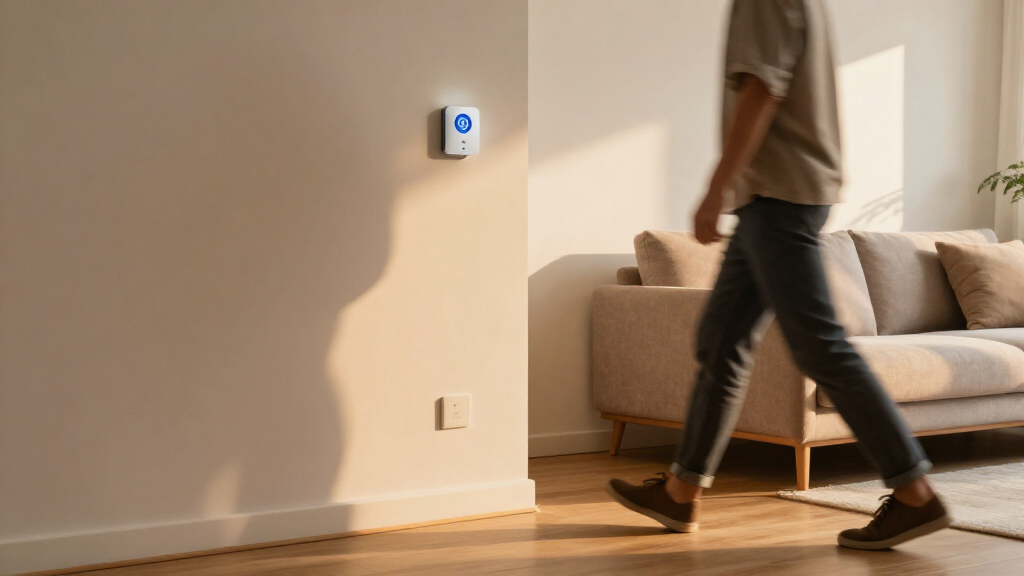
I compared these 15 products by how well they fit the different ways people buy mmWave sensors: ready-to-use smart-home devices, ecosystem-specific sensors, zone-aware options, and modules for custom projects. I gave more weight to clear buyer benefits such as presence detection that can support occupancy automations, useful companion sensing, stated platform or connection fit, and a setup path suited to the intended user. I also treated physical installation, power requirements, and the likelihood of extra configuration as practical parts of the buying decision—not minor details.
The order favors products with a clear, broad use case and a more approachable path to everyday use, then distinguishes specialized options by what they do better. The Aqara FP300 leads for its mix of sensing functions; SwitchBot Zone Positioning earns a distinct place for room-level targeting; and simpler Zigbee picks suit buyers already using compatible systems. DIY radar modules rank lower for general shoppers because their flexibility comes with wiring, integration, or tuning work. Product names and listed capabilities provide the basis for comparison; I do not claim hands-on testing or assume compatibility beyond what a buyer should verify for their own hub and software.
Factors to Consider When Choosing Best MmWave Motion Sensors
Choosing an mmWave sensor is less about finding the longest feature list and more about matching the sensing method to your room, automation platform, and tolerance for setup. These factors help separate ready-made devices from radar modules and prevent common compatibility and placement surprises.
Decide Whether You Need Presence, Motion, or Location
Traditional motion sensors are built to react when movement occurs, while mmWave devices can detect subtle movement that may indicate someone remains in a room. That distinction can help with lighting that should not switch off while a person sits still, but it does not mean every sensor can identify exactly where a person is. Zone positioning, like the feature named on one SwitchBot option, serves a different purpose from simple occupied-or-empty detection. Before buying, write down the automation you want and check that the sensor exposes the needed events or zones to your controller. Avoid paying for tracking features if all you need is a room-level occupancy signal. Also plan for false triggers from moving objects or adjacent areas, since sensor placement and sensitivity settings can affect what the device reports.
Check Platform, Hub, and Protocol Fit Before Ordering
A sensor can have the right radar technology and still be a poor fit if its data does not reach the system that runs your automations. Zigbee models generally call for a compatible coordinator or hub, while app-based products may rely on a vendor ecosystem and DIY boards may require custom integration. A product name mentioning Home Assistant or ESPHome is a useful clue, not a guarantee that every feature will work without configuration. Check whether your preferred platform supports the specific model and whether it exposes light, zone, or occupancy data—not just basic detection. If a household uses multiple platforms, consider which one will own the automation and whether bridges or extra setup are acceptable. This compatibility check often matters more than small differences in sensor specifications.
Treat Installation and Power as Part of the Purchase
Wireless ready-made sensors can be easier to place without running a power lead, while many radar modules are designed to be wired into a project or powered separately. A convenient mounting spot is not always a useful sensing position: walls, furniture, doorways, and the direction of the sensor can change which areas it monitors. For a ceiling or wall installation, consider whether you can reach the device later to adjust settings or replace batteries. For modules, confirm voltage, connector, and board requirements against your controller before connecting anything. Avoid assuming that a compact sensor will fit neatly into a finished enclosure or that a DIY kit includes every cable and mounting part. A little planning can prevent buying a sensor that is difficult to power or position in the intended room.
Choose Coverage and Zones for the Room, Not the Spec Sheet
Open-plan rooms, narrow hallways, and small bedrooms create different detection problems, so a single coverage claim does not settle the choice. In an open space, you may want zone controls or careful sensitivity adjustment to avoid detecting activity in a neighboring area. A compact room may need a simple occupancy signal, but reflections and nearby movement can still affect results. Think about where people sit still, where pets move, and whether a door or corridor sits within the sensor’s field. Multi-unit module packs can support coverage across several rooms, though they also multiply installation and tuning work. If the product gives limited detail about usable range or adjustment, plan to verify placement in your own layout rather than expecting a number to predict every result.
Decide How Much Setup Work You Want to Own
Ready-made smart-home sensors are usually the more sensible route for buyers who want a device to join an existing app or hub with limited tinkering. DIY boards can be attractive when you want local control, custom firmware, or a tailored enclosure, but those benefits depend on comfort with wiring and configuration. Modules such as LD2410C and LD2450-based options should be treated as components, not automatically as finished consumer sensors. Check whether documentation, software support, mounting hardware, and a suitable power supply are available for your project. A low-complexity product can be the better value if it saves hours of troubleshooting, while a more configurable module may be worthwhile when customization is the point. Be honest about whether you want to maintain the integration after installation.
Compare the Whole Setup, Not Just the Sensor
The sensor itself may be only one part of a working automation: a hub, controller, power supply, mounting materials, or compatible software can also be needed. That is especially relevant when comparing single smart-home devices with multi-pack radar modules, since a pack count does not tell you what else the project requires. Extra sensing such as light, temperature, or humidity can reduce the need for separate devices, but only if your platform can use those readings. Consider maintenance too, including battery access, firmware updates, and whether settings can be changed without removing a mounted unit. Buyers should pay more for features they will use repeatedly, such as position zones or useful environmental readings, rather than for a longer feature list alone. A simpler device may be the smarter choice when it covers the intended room and integrates cleanly.
Frequently Asked Questions
Will an mmWave sensor keep my lights on while I sit still?
That is one of the main reasons buyers choose mmWave presence detection over motion-only sensing: it can respond to subtle movement that a conventional motion sensor may miss. Performance still depends on the specific model, placement, and sensitivity settings, so no sensor should be assumed to work perfectly in every room. Check whether your automation platform receives a persistent occupancy state and whether it lets you set a vacancy delay. For a room where someone sits nearly motionless, a combined sensing approach such as mmWave plus PIR may be useful, but test the automation before relying on it. The goal is to tune the system around real use, not simply install the sensor and leave default settings untouched.
Can I use a Zigbee mmWave sensor without the manufacturer’s hub?
Sometimes, but the answer depends on the exact sensor, Zigbee coordinator, and software integration. A compatible third-party hub may pair with a device yet expose fewer readings or controls than the manufacturer’s own setup. Before buying, search for support for the exact model identifier in the documentation for your coordinator or smart-home platform. Confirm whether presence, light readings, and configuration options are available, rather than relying only on a generic claim that the device uses Zigbee. If you want a low-effort setup, a known compatible hub path may be worth more than avoiding one additional hub.
Should I choose zone tracking or a basic presence sensor?
Choose zone tracking when the location of a person inside a room changes what your automation should do—for example, treating a desk area differently from a doorway. A basic presence sensor is usually enough when the only question is whether a room is occupied. Zone features may need more careful placement and platform support, and they can add setup work that provides little benefit for simple lighting. Also check how zones are configured and what the system reports to your controller. If the automation cannot use location data, the extra feature may not improve the result.
Are bare mmWave radar modules a good choice for a first smart-home sensor?
They can be a good first project for someone comfortable with wiring, power requirements, firmware, and troubleshooting, but they are less suitable as a plug-and-play purchase. A module may need a separate controller or software integration before it can trigger a smart-home automation. Confirm the supply voltage, connection method, and platform support before ordering, and check whether mounting or enclosure parts are included. If your priority is getting a room sensor running with minimal setup, a complete smart-home device is a safer starting point. Choose a module when the customization itself is part of what you want to do.
What should I do if an mmWave sensor detects activity in the next room?
First, adjust the sensor’s position and direction so its detection area points into the intended room rather than through a doorway or thin partition. If the model offers sensitivity controls or zones, use them to narrow the area that can trigger the automation. You can also add a delay or require a second condition, such as a door state or another sensor, before switching lights on. Avoid installing the sensor near moving objects or locations where activity outside the room is likely to affect detection. If the product provides limited controls, placement may be the main remedy, so consider that constraint before buying for a room with adjacent spaces.
Conclusion
For most buyers, I would start with the Aqara FP300 as the best overall: its mix of presence detection and environmental sensing gives it the broadest role in this lineup, provided the platform fit works for you. The best value for a compatible Zigbee setup is the SONOFF SNZB-06P, while buyers who want room-level targeting should choose the SwitchBot Zone Positioning model. For a beginner, I would favor a complete smart-home sensor over a bare radar board; DIY-capable buyers can look to the Fermion C4002, LD2410C packs, or LD2450 for project flexibility. There is no clear premium pick based on the listed features alone, so I would choose the Aqara for its broader sensing capabilities rather than pay extra for a label. Match the sensor to your hub, installation plans, and automation needs, and skip features your system cannot use.