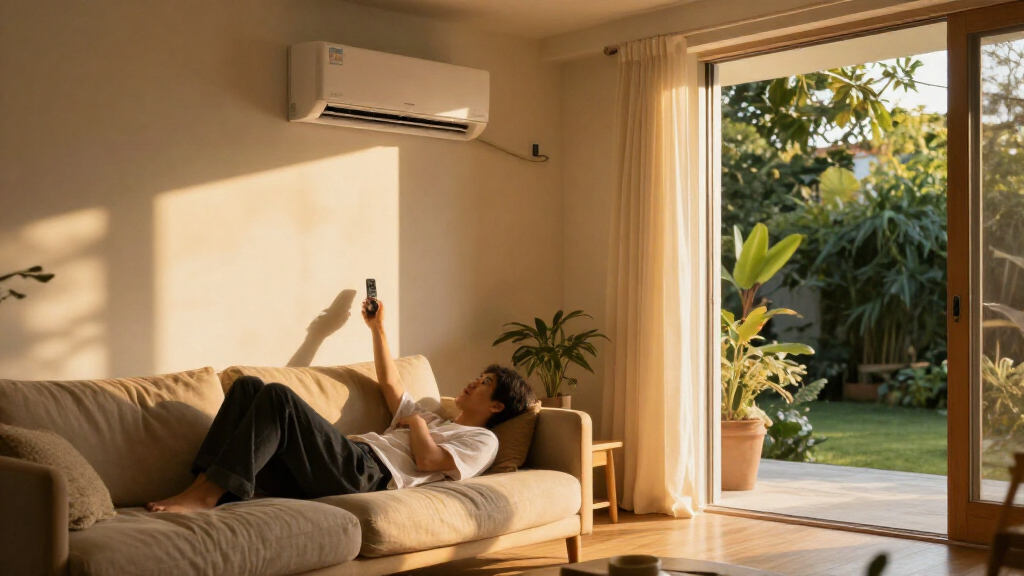

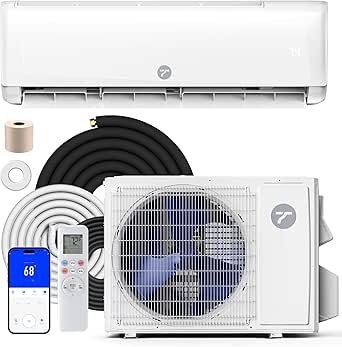
The best mini split air conditioners balance room-appropriate capacity, efficient heating and cooling, manageable installation, and useful controls. My best overall pick is the Rellytech 12,000 BTU system, which pairs a listed 20 SEER2 rating with Wi-Fi in a common 115V format. The Senville LETO 9,000 BTU stands out for smaller spaces, while the Upstreman 12,000 BTU offers a higher-efficiency feature set for buyers prepared for 230V wiring. The main tradeoffs are capacity versus room size, 115V convenience versus electrical requirements, and DIY-friendly installation claims versus the work and rules involved. Read on for the full comparison and guidance on choosing a system that fits your space.

Get home appliances delivered free with Prime
- Fast, free delivery on millions of items
- Prime Video, Amazon Music and more included
- Member-only deals all year
Complete the kit


Key Takeaways
- The Rellytech 12,000 BTU system leads this comparison on its listed combination of 20 SEER2, Wi-Fi, and 115V; check its installation requirements and certifications before buying.
- Capacity is not a simple bigger-is-better choice: the 9,000 BTU Senville and ROVSUN models give small-room shoppers alternatives to the many 12,000 BTU units.
- Voltage changes the purchase plan. Most listed 12,000 BTU options are 115V, while the YITAHOME and Upstreman models are 220V/230V and call for a compatible electrical setup.
- Several products claim 19–20 SEER2, but a high efficiency figure alone does not settle comfort, cold-weather performance, certification, or installation quality.
- Wi-Fi and DIY labels are not interchangeable with easy installation: the Garvee, ROVSUN 9,000 BTU, GrowthWing, and Rellytech advertise Wi-Fi, while the Albott DIY listing still merits a careful check of included components and local requirements.




| mini split air conditioner | Cooling capacity | Voltage | Noise level | Refrigerant |
|---|---|---|---|---|
| Senville LETO 9,000 BTU Mini-S | 9,000 BTU | 110 volts | 22 dB | R-454B |
| Tehanld 12,000 BTU Mini-Split | 12,000 BTU | 115 V | 41 dB | R-32 |
| COSTWAY 12,000 BTU Mini-Split | 12,000 BTU | 115 V | 23 dB | R-32 |
| Manastin 12,000 BTU Mini Split | 12,000 BTU | 115 V | 41 dB | R-32 |
| Temprium 12,000 BTU 115V Mini- | 12,000 BTU | 115 V | As low as 23 dB | — |
| ROVSUN 11,500 BTU Mini Split A | 11,500 BTU | 115V | 29 dB on low speed | R-32 |
| YITAHOME 12,000 BTU Ductless M | 12,000 BTU | 220V | 41 dB | R-32 |
| Garvee 9,000 BTU Wi-Fi Mini-Sp | 9,000 BTU | 230V | Conflicting listing: 28 dB in Mute mode and 23 dB in product information | R454B |
| Albott 12,000 BTU 115V DIY Min | 12,000 BTU | 115V | Under 29 dB | R32 |
| 12,000 BTU Mini Split Air Cond | 12,000 BTU | 115V | 41 dB | R-32 |
| Rellytech 12000 BTU Mini Split | 12,000 BTU | 115V | 28 dB | R454B |
| ROVSUN 9000 BTU Wi-Fi Mini Spl | 9,000 BTU | 115V | 28 dB in mute mode | R-32 |
| GrowthWing 12,000 BTU Mini-Spl | 12,000 BTU | 115V | 28 dB | R-32, pre-charged |
| Albott 12,000 BTU Mini-Split A | 12,000 BTU | 115V | Below 29 dB | R32 |
| Upstreman 12,000 BTU 20 SEER2 | 12,000 BTU | 230V | As low as 25 dB | R32 |
More Details on Our Top Picks
Senville LETO 9,000 BTU Mini-Split Air Conditioner and Heat Pump
The Senville LETO stands apart from the 12,000 BTU models here by targeting a smaller space, with 9,000 BTU of cooling and a lower 110-volt electrical requirement. Its 22 dB noise rating and DC inverter operation suit bedrooms or other rooms where quiet, steady temperature control matters. It also covers the basics year-round—cooling, heating, dehumidifying, and fan operation—with app and Alexa control for added convenience. Compared with the COSTWAY 12,000 BTU system, the LETO has less capacity but may be a better fit when a larger system would be more than the room needs. The tradeoff is a professional-installation requirement, and its five-year parts and compressor warranty excludes labor. Its stated low-temperature heating operation reaches 5°F, but buyers should still match system capacity to the room and local conditions.
Pros:- 9,000 BTU capacity and 110-volt operation suit smaller rooms and compatible electrical setups.
- 22 dB listed noise level is a useful fit for quiet spaces.
- App, Alexa, and remote controls provide several ways to adjust settings.
- Includes indoor and outdoor units plus a 16-foot line set.
Cons:- Professional installation is required, so it is not a DIY system.
- Warranty covers parts and the compressor but excludes labor.
- Lower capacity than the 12,000 BTU options limits its fit for larger rooms.
Best for: Homeowners outfitting a smaller bedroom or office who want quiet operation, smart controls, and both heating and cooling.
Not ideal for: Buyers heating or cooling spaces near 750 square feet, or anyone seeking a DIY installation or labor coverage under warranty.
- Cooling capacity:9,000 BTU
- Heating operation:Functional down to 5°F (-15°C)
- Voltage:110 volts
- Noise level:22 dB
- Refrigerant:R-454B
- Controls:App, Alexa, and remote
- Included line set:16 feet
- Warranty:5 years on parts and compressor; labor excluded
Our verdict“Choose the Senville LETO for a smaller room where quiet operation and smart controls matter more than the higher capacity offered by 12,000 BTU systems.”
Tehanld 12,000 BTU Mini-Split Air Conditioner and Heat Pump, 17 SEER2, 115V
The Tehanld 12,000 BTU system is a practical choice for buyers who want standard heating and cooling with familiar remote-based controls rather than a long list of connected features. Its five operating modes, four fan speeds, 24-hour timer, and sleep, quiet, turbo, and ECO settings cover common comfort needs in a space listed for up to 750 square feet. Compared with the Manastin, the Tehanld has a lower stated efficiency rating, but it offers a similar capacity and voltage with a clear set of everyday adjustments. The included 9.8-foot copper line set is shorter than the Senville LETO’s 16-foot set, so installation layout deserves attention before purchase. This is still a professional-installation system, and the listing says its packages may arrive separately. It also requires a new outdoor unit, a point to confirm when planning the installation.
Pros:- Heating and cooling capacity are paired with five operating modes.
- Four fan speeds and sleep, quiet, turbo, and ECO settings offer useful control.
- Includes a remote and 9.8-foot copper line set.
- DOE and ETL certifications are listed.
Cons:- Requires installation by a licensed HVAC professional.
- The 9.8-foot line set may constrain placement compared with the Senville LETO’s 16-foot set.
- The two packages may arrive at different times, and a new outdoor unit is required.
Best for: Homeowners seeking a 12,000 BTU, 115-volt heat pump with timer and comfort modes for a room or open area listed up to 750 square feet.
Not ideal for: Buyers who need a longer included line set, app or voice control, or an installation option that avoids a licensed HVAC professional.
- Cooling capacity:12,000 BTU
- Coverage area:Up to 750 sq. ft.
- Efficiency:17 SEER2
- Voltage:115 V
- Refrigerant:R-32
- Noise level:41 dB
- Modes:Cool, Heat, Auto, Fan, Dry
- Included copper line set:9.8 feet
Our verdict“Pick the Tehanld if you want a conventional 12,000 BTU system with a timer and multiple comfort modes, and its shorter line set fits your installation plan.”
COSTWAY 12,000 BTU Mini-Split Air Conditioner and Heat Pump
The COSTWAY 12,000 BTU makes a strong case for buyers who care about quiet indoor operation and routine maintenance. Its listed 23 dB noise level is much lower than the 41 dB figures supplied for the Tehanld and Manastin, while a washable filter, self-cleaning function, and outdoor-unit auto-defrost can make ongoing care more manageable. The inverter system offers five modes and useful settings such as ECO, sleep, iFEEL, and turbo. Compared with the Temprium, COSTWAY shares a 12,000 BTU cooling capacity and a low listed noise level, but the Temprium adds app and voice controls that COSTWAY’s listed feature set does not include. COSTWAY’s five-year parts and eight-year compressor warranty is a notable stated coverage term, though installation still calls for a licensed installer and a compatible outdoor unit. Check dimensions as well: its indoor unit is 44.5 inches wide.
Pros:- Listed 23 dB noise level is lower than the Tehanld and Manastin figures.
- Washable filter and self-cleaning function simplify routine maintenance.
- Outdoor-unit auto-defrost is included.
- Warranty lists five years for parts and eight years for the compressor.
Cons:- Licensed HVAC installation is required.
- Requires a compatible outdoor unit.
- The 44.5-inch indoor-unit width may not suit limited wall space.
Best for: Buyers prioritizing quiet operation, washable-filter upkeep, and a longer stated compressor warranty for a space up to 750 square feet.
Not ideal for: Shoppers who want app or voice control, need a narrower indoor unit, or expect to install a mini-split without a licensed professional.
- Cooling capacity:12,000 BTU
- Heating capacity:12,300 BTU
- Coverage area:Up to 750 sq. ft.
- Voltage:115 V
- Noise level:23 dB
- Refrigerant:R-32
- Indoor unit dimensions:9 in. D × 44.5 in. W × 13 in. H
- Warranty:5 years parts; 8 years compressor
Our verdict“Choose COSTWAY over the Tehanld or Manastin when quiet operation and built-in upkeep features matter more than app control.”
Manastin 12,000 BTU Mini Split Air Conditioner and Heat Pump, 19 SEER2, 115V
The Manastin is the efficiency-focused choice among these 12,000 BTU, 115-volt systems: its listed 19 SEER is higher than the Tehanld’s 17 SEER2 figure and ahead of COSTWAY’s supplied specifications, which do not include an efficiency rating. The 750-square-foot coverage claim and heating and cooling modes position it for year-round use in a medium-sized area. It also includes automatic defrost, washable filters, a 24-hour timer, and sleep, ECO, and turbo settings, so its appeal is not limited to the efficiency figure. Compared with the quieter COSTWAY, however, Manastin’s 41 dB noise rating is less suited to buyers especially sensitive to indoor sound. Professional installation is required, and the system ships in two packages that may arrive separately. Its 1,500-watt listed draw is also higher than the Tehanld’s stated 1,260 watts, so buyers should compare full system requirements rather than relying on the efficiency label alone.
Pros:- Lists 19 SEER efficiency for a 12,000 BTU system.
- Provides heating and cooling for areas listed up to 750 square feet.
- Washable filters and automatic defrost support routine maintenance.
- Includes a 24-hour timer plus sleep, ECO, and turbo modes.
Cons:- The listed 41 dB noise level is higher than COSTWAY’s 23 dB figure.
- Professional installation is required.
- Ships in two packages that may arrive at different times.
Best for: Homeowners comparing 12,000 BTU systems who prioritize a higher listed efficiency figure and want washable filters and automatic defrost.
Not ideal for: Buyers who need especially quiet operation, want a single-package delivery, or are looking for a DIY mini-split.
- Cooling capacity:12,000 BTU
- Heating capacity:12,500 BTU
- Coverage area:Up to 750 sq. ft.
- Efficiency:19 SEER
- Voltage:115 V
- Wattage:1,500 W
- Noise level:41 dB
- Refrigerant:R-32
Our verdict“Choose the Manastin if its higher listed efficiency figure is your priority and you can accept more noise than the COSTWAY.”
Temprium 12,000 BTU 115V Mini-Split Air Conditioner and Heat Pump
The Temprium is the most connected pick in this group, pairing app, remote, and voice controls with stated Alexa and Google Assistant compatibility. Its 22 SEER2 rating is higher than the efficiency figures supplied for the Tehanld and Manastin, while inverter operation, seven fan speeds, and seven operating modes give buyers plenty of ways to adjust comfort. It also lists noise as low as 23 dB, matching COSTWAY’s supplied figure and making it a better fit for quiet spaces than the Tehanld or Manastin on paper. The tradeoff is a one-year warranty, shorter than COSTWAY’s stated parts and compressor coverage. Temprium is rated for up to 750 square feet, so it is not the small-room alternative to the 9,000 BTU Senville LETO. Installation requires a new outdoor unit, and buyers should confirm the full system arrangement before committing.
Pros:- App, remote, and voice controls support Alexa and Google Assistant.
- Lists 22 SEER2 efficiency and inverter operation.
- Noise is listed as low as 23 dB.
- Seven fan speeds and washable-filter maintenance offer flexible everyday use.
Cons:- The one-year warranty is shorter than COSTWAY’s stated parts and compressor coverage.
- Requires a new outdoor unit for installation.
- Coverage is specified only for spaces up to 750 square feet.
Best for: Smart-home users who want app and voice control, multiple fan speeds, and a 12,000 BTU system for an area up to 750 square feet.
Not ideal for: Buyers who prioritize longer stated warranty coverage, need a system for a smaller room, or do not have a plan for the required outdoor unit.
- Cooling capacity:12,000 BTU
- Heating capacity:12,300 BTU
- Coverage area:Up to 750 sq. ft.
- Efficiency:22 SEER2
- Voltage:115 V
- Noise level:As low as 23 dB
- Controls:App, remote, and voice; Alexa and Google Assistant compatible
- Warranty:1 year
Our verdict“Choose the Temprium over COSTWAY if app and voice control are priorities, but favor COSTWAY if longer stated warranty coverage matters more.”
ROVSUN 11,500 BTU Mini Split Air Conditioner and Heater, 17 SEER2 Inverter Heat Pump, 115V
The ROVSUN is a practical fit for a room that needs year-round temperature control without the higher-capacity focus of several 12,000 BTU picks here. It covers up to 550 sq. ft. and runs at a listed 29 dB on low, while app and voice controls make routine adjustments easier than relying on a remote alone. Its 115V supply may also suit buyers who prefer not to plan around a 220V system like the YITAHOME. The tradeoff is that the YITAHOME lists broader coverage, while this ROVSUN’s 17 SEER2 efficiency is less compelling on paper than the 19 SEER2 12,000 BTU model in this batch. Professional installation is required, and the outdoor unit must be newly installed, so it is not a simple replacement appliance.
Pros:- Cooling, heat-pump heating, dehumidifying, and fan modes cover multiple seasonal needs.
- Listed 29 dB low-speed operation suits quieter rooms.
- App, remote, and Alexa or Google Assistant voice control offer flexible operation.
- Automatic defrost, sleep mode, ECO mode, and a timer add useful daily controls.
Cons:- Professional installation is required.
- A new outdoor unit is required, adding work for replacement projects.
- 17 SEER2 is lower than the 19 SEER2 rating listed for the 12,000 BTU model in this batch.
Best for: Buyers outfitting a bedroom, office, or other space up to 550 sq. ft. who want 115V power and app or voice control.
Not ideal for: People who need coverage near 750 sq. ft., want a DIY installation, or are replacing only an indoor unit.
- Cooling capacity:11,500 BTU
- Heating capacity:11,500 BTU
- Coverage:Up to 550 sq. ft.
- Efficiency:17 SEER2
- Voltage:115V
- Noise level:29 dB on low speed
- Refrigerant:R-32
- Controls:App, remote, and voice control
Our verdict“Choose the ROVSUN for a quieter, connected 115V system in a medium-sized room, but look to a higher-capacity option for spaces approaching 750 sq. ft.”
YITAHOME 12,000 BTU Ductless Mini Split Air Conditioner and Heat Pump, 220V, 17.5 SEER2
Among these five, the YITAHOME pairs a 12,000 BTU capacity with stated coverage up to 750 sq. ft., making it a stronger candidate for a larger open room than the 9,000 BTU Garvee. Its 17.5 SEER2 rating, inverter compressor, and five modes support everyday heating, cooling, drying, and fan use, while a washable filter gives owners a straightforward maintenance task. Wi-Fi control is included, though the listing gives a 41 dB noise level, so it is less compelling for noise-sensitive bedrooms than the Garvee’s listed quiet-mode figures. The 220V requirement calls for electrical compatibility, and installation requires a licensed HVAC professional. I’d also plan around the two-carton shipment: both packages are needed before installation can proceed.
Pros:- 12,000 BTU capacity and stated coverage up to 750 sq. ft. suit larger spaces than the Garvee.
- Five modes include heating, cooling, drying, fan, and auto operation.
- Wi-Fi control, remote, timer, and sleep mode provide flexible scheduling and operation.
- Removable washable filter supports routine maintenance.
Cons:- Requires 220V power and licensed professional installation.
- Listed 41 dB noise level is higher than the quiet-mode figures given for the ROVSUN and Garvee.
- Ships in two cartons, and the installation kit omits a shut-off valve housing and side protection grille.
Best for: Homeowners with a compatible 220V circuit who want one mini split for a larger room or open area up to 750 sq. ft.
Not ideal for: Buyers seeking a quiet bedroom unit, a 115V setup, or an installation that can be completed without a licensed HVAC professional.
- Cooling capacity:12,000 BTU
- Coverage:Up to 750 sq. ft.
- Efficiency:17.5 SEER2
- Voltage:220V
- Noise level:41 dB
- Refrigerant:R-32
- Operating temperature range:5°F to 118°F
- Modes:Auto, cooling, drying, heating, and fan
Our verdict“Pick the YITAHOME when 750 sq. ft. coverage and 220V compatibility matter more than low listed noise or a simpler installation process.”
Garvee 9,000 BTU Wi-Fi Mini-Split Air Conditioner and Heat Pump
The Garvee is the small-room choice in this group: its 9,000 BTU capacity is rated for up to 450 sq. ft., below the ROVSUN’s 550 sq. ft. and well below the 12,000 BTU systems’ stated reach. That lower capacity makes it a more natural match for a bedroom, office, or compact living area than an oversized open-plan space. It still offers heating and cooling, Wi-Fi app control, and five operating modes, plus a removable filter and self-cleaning function for routine upkeep. Its listed 230V supply narrows compatibility compared with the 115V ROVSUN. I would also treat its efficiency and noise figures cautiously: the supplied product information gives conflicting noise values and an efficiency-rating discrepancy, making direct comparisons harder.
Pros:- 9,000 BTU capacity is suited to smaller rooms than the 12,000 BTU YITAHOME.
- Provides heating, cooling, dehumidification, fan, and auto modes.
- App and remote controls make adjustments convenient.
- Removable dust filter and self-cleaning function support upkeep.
Cons:- Requires 230V power and a compatible outdoor unit.
- Provided product information gives conflicting noise figures.
- The listed efficiency rating differs between the title and description.
Best for: Owners of a room up to 450 sq. ft. who have 230V power and want app control in a lower-capacity mini split.
Not ideal for: People cooling larger rooms, those limited to 115V power, or buyers who need consistent published efficiency and noise figures before choosing.
- Cooling capacity:9,000 BTU
- Coverage:Up to 450 sq. ft.
- Voltage:230V
- Refrigerant:R454B
- Noise level:Conflicting listing: 28 dB in Mute mode and 23 dB in product information
- Modes:Cooling, heating, dehumidification, fan, and auto
- Controls:App and remote
- Weight:90.4 lb
Our verdict“Choose the Garvee for a smaller 230V room where its lower capacity fits, but compare published specifications carefully before buying.”
Albott 12,000 BTU 115V DIY Mini Split Air Conditioner and Heater
The Albott’s main distinction is its DIY-oriented design, including a pre-wired indoor unit, rather than a clearly stated requirement for licensed installation like the YITAHOME. It combines 12,000 BTU capacity with stated coverage up to 750 sq. ft., an 18 SEER2 rating, and 115V power, a useful mix for buyers who want broad coverage without the 220V circuit required by the YITAHOME. Wi-Fi control, washable mesh filters, and self-cleaning features add convenience, while operation under 29 dB is a favorable listed figure for quieter spaces. Still, “DIY” does not remove the need to confirm installation requirements for the full split system. The power cord is not included, and a new outdoor unit is required, so its setup is not plug-and-play.
Pros:- 12,000 BTU capacity and stated coverage up to 750 sq. ft. suit larger rooms.
- 115V supply offers an alternative to the 220V YITAHOME.
- Pre-wired indoor unit and DIY-oriented system design may reduce some installation steps.
- Wi-Fi, washable mesh filters, self-cleaning, and operation under 29 dB add practical convenience.
Cons:- Power cord is not included.
- Requires a new outdoor unit, so it is not a simple indoor-unit replacement.
- DIY positioning should not be taken as a substitute for checking applicable installation requirements.
Best for: Hands-on homeowners seeking a 115V, 12,000 BTU system for a space up to 750 sq. ft. who are prepared to verify installation requirements.
Not ideal for: Buyers who expect a complete plug-in kit, need an included power cord, or want to avoid installation planning and outdoor-unit work.
- Cooling capacity:12,000 BTU
- Coverage:Up to 750 sq. ft.
- Efficiency:18 SEER2
- Voltage:115V
- Wattage:980W
- Noise level:Under 29 dB
- Refrigerant:R32
- Temperature setting range:61°F–90°F
- Power cord:Not included
Our verdict“The Albott is a strong fit for a capable homeowner seeking 115V power and broad coverage, provided the missing cord and full installation needs are accounted for.”
12,000 BTU Mini Split Air Conditioner and Heat Pump, 19 SEER2, 115V
This 12,000 BTU model is the efficiency-focused choice among the five: its listed 19 SEER2 rating exceeds the ROVSUN’s 17 SEER2 and the Albott’s 18 SEER2. It also combines 115V power with stated coverage up to 750 sq. ft., so buyers can compare it with the Albott without moving to the YITAHOME’s 220V requirement. Five modes, four fan speeds, Turbo, Sleep, ECO, and a timer offer more operating adjustments than the simpler ROVSUN feature set. The tradeoff is that its listed 41 dB noise level is not as appealing for a quiet bedroom as the lower figures supplied for the Albott or Garvee. Professional installation is recommended, and the new outdoor unit requirement means the included installation kit does not make it a ready-to-run replacement.
Pros:- 19 SEER2 is the highest listed efficiency rating among these five products.
- 12,000 BTU capacity and stated coverage up to 750 sq. ft. target larger spaces.
- 115V power provides an alternative to the 220V YITAHOME.
- Five modes, four fan speeds, Turbo, Sleep, ECO, and timer support varied operating preferences.
Cons:- Professional installation is recommended.
- Listed 41 dB noise level is higher than the Albott’s stated under-29 dB figure.
- A new outdoor unit is required, despite the included installation kit.
Best for: Buyers seeking a 115V mini split for up to 750 sq. ft. who prioritize the listed efficiency rating and a broad set of operating controls.
Not ideal for: Noise-sensitive sleepers, DIY buyers who want a clearly self-installable system, or anyone replacing only an indoor unit.
- Cooling capacity:12,000 BTU
- Coverage:Up to 750 sq. ft.
- Efficiency:19 SEER2
- Voltage:115V
- Wattage:1,500W
- Noise level:41 dB
- Refrigerant:R-32
- Modes:Cool, heat, dry, fan, and auto
- Included:Installation kit
Our verdict“Choose this model if you want a high listed efficiency rating, 115V power, and broad room coverage, and are comfortable arranging professional installation.”
Rellytech 12000 BTU Mini Split AC/Heat Pump System, 20 SEER2, 115V, Wi-Fi Enabled
The Rellytech stands out among these 12,000 BTU systems for its stated ability to operate down to -13°F, giving it a wider low-temperature range than the GrowthWing and Albott, both rated to 5°F. That may make it a better fit for buyers who want a single ductless system to contribute heat through colder spells, though operating range alone does not establish heating output at the lowest temperatures. Its 20 SEER2 rating, 115V power, and Wi-Fi control add everyday efficiency and convenience without requiring the 230V supply used by the Upstreman. The tradeoffs are practical: professional installation is required, the power cord is not included, and delivery may arrive in two boxes on different days. I’d shortlist it for cold-climate flexibility, not assume its range replaces a separate heating-capacity check.
Pros:- Rated for operation from -13°F to 122°F, a broader low-temperature range than the GrowthWing and Albott.
- 20 SEER2 efficiency rating paired with inverter operation.
- 115V supply avoids the 230V requirement of the Upstreman.
- Wi-Fi app and voice control, plus a remote and pre-charged installation lines.
Cons:- Licensed HVAC installation is required.
- Power cord is not included.
- The system ships in two boxes that may arrive separately.
Best for: Homeowners with a room or addition up to 750 sq. ft. who want app control and a mini split rated to operate in colder outdoor temperatures.
Not ideal for: Buyers seeking a plug-in installation or a complete ready-to-power package, since it requires licensed HVAC installation and does not include a power cord.
- Cooling capacity:12,000 BTU
- Heating capacity:12,500 BTU
- Efficiency:20 SEER2
- Voltage:115V
- Coverage:Up to 750 sq. ft.
- Operating temperature range:-13°F to 122°F
- Refrigerant:R454B
- Noise level:28 dB
Our verdict“Choose the Rellytech if cold-weather operating range matters more to you than a fully ready-to-power package.”
ROVSUN 9000 BTU Wi-Fi Mini Split Air Conditioner and Heat Pump
For bedrooms, offices, and other spaces up to 400 sq. ft., this 9,000 BTU ROVSUN is the most room-specific choice in this group. Its smaller stated coverage is an advantage when a 12,000 BTU system such as the Rellytech or GrowthWing would be more capacity than the target space calls for; sizing still depends on the room and installation conditions. Inverter operation supports variable output, while app, remote, Alexa, and Google Assistant controls offer more control options than the app-and-remote-only Albott. A 28 dB mute mode also suits quiet rooms. The compromises are worth checking before ordering: the supplied efficiency information conflicts between 20 SEER2 and 19 SEER, professional installation is recommended, and a separate power cord is required. I’d favor it for a modestly sized room, not for open-plan areas approaching 750 sq. ft.
Pros:- 9,000 BTU capacity and stated coverage up to 400 sq. ft. suit smaller rooms.
- Inverter operation supports variable compressor output.
- App, remote, Alexa, and Google Assistant controls.
- Cooling, heating, and dehumidification, with a 28 dB mute mode.
Cons:- Efficiency is listed inconsistently as 20 SEER2 in the title and 19 SEER in the description.
- A separate power cord is required.
- Professional HVAC installation is recommended, and the two boxes may arrive separately.
Best for: People cooling or heating a bedroom, office, or other enclosed space up to 400 sq. ft. who want app or voice control.
Not ideal for: Buyers with large or open spaces near 750 sq. ft., or anyone expecting the kit to include a power cord.
- Cooling capacity:9,000 BTU
- Coverage:Up to 400 sq. ft.
- Voltage:115V
- Efficiency:20 SEER2 in title; 19 SEER in description
- Refrigerant:R-32
- Noise level:28 dB in mute mode
- Functions:Cooling, heating, and dehumidification
- Included installation kit:16.4 ft copper lines and signal cord
Our verdict“Pick this ROVSUN for a smaller enclosed room where its 9,000 BTU capacity and voice controls fit better than a 12,000 BTU system.”
GrowthWing 12,000 BTU Mini-Split Air Conditioner and Heat Pump, 20 SEER2, 115V, Wi-Fi
The GrowthWing earns its place through a balanced mix of 20 SEER2 efficiency, 12,000 BTU capacity, and maintenance-friendly details. Its washable filter and AutoClean feature give owners a clearer routine for keeping the indoor unit tidy than the Rellytech listing, which emphasizes cold-weather range instead. It also adds 4D airflow and app, remote, and Alexa control, helping direct air around a room without relying on one fixed outlet direction. For heating, its stated operating floor is 5°F—far warmer than the Rellytech’s -13°F rating—so I would not rank it as the better cold-climate pick. The 115V supply is less demanding than the Upstreman’s 230V requirement, but professional installation is recommended, and the warranty excludes damage from improper installation. That makes installer choice part of the buying decision.
Pros:- 20 SEER2 rating with inverter operation.
- Washable filter and AutoClean feature support routine maintenance.
- 4D airflow and app, remote, and Alexa controls.
- 115V power and stated coverage up to 750 sq. ft.
Cons:- Operating range starts at 5°F, less cold-capable on paper than the Rellytech.
- Professional HVAC installation is recommended.
- Damage from improper installation is not covered under the warranty.
Best for: Homeowners fitting a room or addition up to 750 sq. ft. who want washable-filter maintenance, directional airflow, and app or Alexa control.
Not ideal for: Buyers in areas with sustained sub-5°F conditions who need a stated operating range lower than this model’s 5°F limit.
- Cooling capacity:12,000 BTU
- Coverage:Up to 750 sq. ft.
- Efficiency:20 SEER2
- Heating efficiency:HSPF2 10
- Voltage:115V
- Operating temperature range:5°F to 122°F
- Refrigerant:R-32, pre-charged
- Noise level:28 dB
- Airflow and filter:4D multi-direction airflow; washable filter
Our verdict“Choose the GrowthWing if easy filter care and flexible airflow matter more than the Rellytech’s lower stated heating-temperature limit.”
Albott 12,000 BTU Mini-Split Air Conditioner and Heater, 115V, SEER2 18
The Albott is a practical choice for buyers who want the standard 12,000 BTU room-size class with everyday modes and a longer listed parts warranty. Its cooling, heating, dehumidifying, and fan modes, plus a timer and sleep setting, cover common bedroom use without the added airflow and voice-control feature set of the GrowthWing. The listed 980-watt draw is lower than the GrowthWing’s 1,240 watts, but those figures alone do not establish which unit will use less electricity in a given home; the Albott also has a lower 18 SEER2 rating than the 20 SEER2 models here. Its 5°F operating floor is less suited to colder conditions than the Rellytech’s -13°F rating. App and remote controls, removable mesh filters, and self-cleaning add convenience, while professional installation and the need for a new outdoor unit limit its appeal to replacement setups.
Pros:- Cooling, heating, dehumidifying, and fan modes cover a range of room needs.
- App and remote controls, sleep mode, timer, and child lock.
- Self-cleaning function and removable mesh filters simplify routine care.
- Listed 5-year compressor and 7-year parts warranty.
Cons:- 18 SEER2 is below the 20 SEER2 rating listed for the Rellytech and GrowthWing.
- Rated to operate down to 5°F, not as low as the Rellytech’s -13°F.
- Professional HVAC installation is required, and a new outdoor unit is needed.
Best for: Bedroom owners replacing or adding a split system who want common comfort modes, app control, and a stated 7-year parts warranty.
Not ideal for: Buyers prioritizing higher stated efficiency, colder-weather operating range, or a system that avoids the need for a new outdoor unit.
- Cooling capacity:12,000 BTU
- Coverage:Up to 750 sq. ft.
- Efficiency:18 SEER2
- Voltage:115V
- Operating temperature range:5°F to 122°F
- Noise level:Below 29 dB
- Refrigerant:R32
- Modes:Cooling, heating, dehumidifying, and fan
- Warranty:5-year compressor; 7-year parts
Our verdict“Choose the Albott for routine bedroom comfort and its listed warranty if higher efficiency and colder-weather range are not your main priorities.”
Upstreman 12,000 BTU 20 SEER2 Ductless Mini Split Air Conditioner and Heat Pump, 230V, WiFi, Silver
The Upstreman’s standout distinction is a stated noise level as low as 25 dB, lower than the 28 dB figures listed for the Rellytech and GrowthWing. That makes it a natural contender for buyers placing the indoor unit near a bedroom or other quiet space, although room acoustics and installation can affect what owners hear. It matches those two models at 12,000 BTU and 20 SEER2, and adds seven operating modes, six fan speeds, 4D airflow, and Smart Life app control. The main buying hurdle is electrical: it runs on 230V, unlike the 115V Rellytech, GrowthWing, and Albott, so buyers need compatible power and may need electrical work. Its listed outdoor operating range begins at -4°F, better than the GrowthWing and Albott on paper, but not as low as the Rellytech.
Pros:- Noise level rated as low as 25 dB, below the 28 dB figures for the Rellytech and GrowthWing.
- 20 SEER2 rating and 12,000 BTU capacity.
- Seven modes, six fan speeds, and 4D up-down and left-right airflow.
- Wi-Fi Smart Life app control, washable filter, and included waterproof mounting bracket.
Cons:- Requires 230V power, unlike the 115V Rellytech, GrowthWing, and Albott.
- Outdoor operating range starts at -4°F, higher than the Rellytech’s -13°F limit.
- Coverage is stated for spaces up to 750 sq. ft., so larger areas fall outside its listed scope.
Best for: Homeowners with compatible 230V power who want a quiet-rated 12,000 BTU system with multiple modes and adjustable airflow.
Not ideal for: Buyers limited to 115V power or those seeking the lowest stated cold-weather operating limit in this group.
- Cooling capacity:12,000 BTU
- Efficiency:20 SEER2
- Voltage:230V
- Coverage:Up to 750 sq. ft.
- Outdoor operating temperature:-4°F to 122°F
- Noise level:As low as 25 dB
- Refrigerant:R32
- Operating modes:Auto, Cool, Heat, Dry, Fan, Sleep, and Eco
- Controls and airflow:Smart Life Wi-Fi app; 4D up-down and left-right airflow
Our verdict“Pick the Upstreman for a quiet-rated, feature-rich room system if your home has compatible 230V power.”
How We Picked
I compared the listed models around the decisions that most affect ownership: capacity, voltage, stated efficiency, control options, and installation demands. I gave greater weight to clearly specified configurations that can suit common room needs, while treating advertised efficiency and coverage as starting points rather than guarantees; actual performance depends on climate, insulation, room layout, and installation.
The order reflects how useful each product looks for a broad set of buyers, then how well specialized options serve narrower needs. The Rellytech ranks first for its stated 20 SEER2 and Wi-Fi in a 115V configuration; smaller-capacity picks place ahead for compact spaces, while 220V/230V options suit buyers whose electrical setup supports them. I also account for gaps in the provided product details: verify included line sets, certifications, warranty terms, low-temperature heating performance, and installer requirements before treating any listing as a complete system.
| mini split air conditioner | Refrigerant | Coverage |
|---|---|---|
| Senville LETO 9,000 BTU Mini-S | R-454B | — |
| Tehanld 12,000 BTU Mini-Split | R-32 | — |
| COSTWAY 12,000 BTU Mini-Split | R-32 | — |
| Manastin 12,000 BTU Mini Split | R-32 | — |
| Temprium 12,000 BTU 115V Mini- | — | — |
| ROVSUN 11,500 BTU Mini Split A | R-32 | Up to 550 sq. ft. |
| YITAHOME 12,000 BTU Ductless M | R-32 | Up to 750 sq. ft. |
| Garvee 9,000 BTU Wi-Fi Mini-Sp | R454B | Up to 450 sq. ft. |
| Albott 12,000 BTU 115V DIY Min | R32 | Up to 750 sq. ft. |
| 12,000 BTU Mini Split Air Cond | R-32 | Up to 750 sq. ft. |
| Rellytech 12000 BTU Mini Split | R454B | Up to 750 sq. ft. |
| ROVSUN 9000 BTU Wi-Fi Mini Spl | R-32 | Up to 400 sq. ft. |
| GrowthWing 12,000 BTU Mini-Spl | R-32, pre-charged | Up to 750 sq. ft. |
| Albott 12,000 BTU Mini-Split A | R32 | Up to 750 sq. ft. |
| Upstreman 12,000 BTU 20 SEER2 | R32 | Up to 750 sq. ft. |
Factors to Consider When Choosing Best Mini Split Air Conditioners
Before choosing from this lineup, I would match the system to the building and installation plan, not just compare headline BTU or SEER2 numbers. These broader checks can prevent an undersized or oversized purchase and help reveal when a seemingly convenient model may require extra electrical or contractor work.
Match Capacity to the Room and Its Conditions
Start with a room-by-room heating and cooling load calculation rather than using floor area alone. Ceiling height, window exposure, insulation, air leakage, occupancy, and local climate can all shift the required capacity. A unit that is too small may run hard without holding the set temperature, while an oversized system can cycle frequently and leave humidity control weaker. The 9,000 BTU models in this roundup may suit some smaller, well-insulated spaces, but their capacity is not a universal room-size guarantee. For open plans or multiple rooms, ask an HVAC professional whether one head can distribute air evenly or whether a multi-zone design is a better fit.
Check Voltage and Electrical Work Before Ordering
Voltage can rule a model in or out before efficiency or app features matter. The listed options include many 115V systems as well as 220V and 230V models, and the correct choice depends on the unit’s nameplate requirements and the home’s circuit capacity. Do not assume a nearby outlet is suitable: mini splits commonly need a dedicated circuit and a correctly sized disconnect. Have an electrician verify the service, breaker, wire, and installation location against the manufacturer’s specifications. A higher-voltage unit may fit a home with appropriate wiring, but retrofitting a circuit adds labor and can change the project’s total cost.
Treat SEER2 as One Part of Efficiency
SEER2 describes seasonal cooling efficiency under defined test conditions, so it helps compare models but does not predict every household’s energy use. This lineup includes products advertising figures from 17 to 20 SEER2; the gap matters less if the unit is poorly sized, badly installed, or used in a climate unlike the test conditions. Check heating performance separately, especially if the mini split will serve as a primary heat source in cold weather. Look for published low-ambient heating data and operating limits rather than inferring winter capability from a heat-pump label. Also compare the exact model documentation, since listing titles may omit details needed to verify a configuration.
Plan the Installation, Even for a DIY-Labelled System
A “DIY” label does not mean every part of the installation is simple or permitted for an unlicensed homeowner. Confirm whether the refrigerant lines are precharged, what tools or electrical work are required, and whether the warranty depends on professional installation. Wall placement, condensate drainage, outdoor-unit clearance, line-set length, and weather exposure affect both operation and service access. Some jurisdictions restrict refrigerant work or require permits, so check local rules before ordering. If a contractor will install the unit, ask about labor, commissioning, and warranty documentation in advance rather than choosing based only on the product listing.
Compare Comfort Features and Ownership Support
Wi-Fi can make scheduling and remote changes easier, but app compatibility is useful only if the system remains straightforward to control without a phone. Check whether the remote, timer, sleep settings, and temperature display cover the routines in your household. Before committing, locate the warranty terms, service contacts, replacement-filter information, and parts availability for the exact model. A mini split is a long-term appliance, so a clear service path may matter more than a small difference in advertised efficiency. Ask how often filters need cleaning and whether the outdoor coil can be reached safely for seasonal maintenance.
Frequently Asked Questions
Should I choose a 9,000 BTU or 12,000 BTU mini split for one room?
Choose based on a load calculation, not a rough room-size rule. The Senville and ROVSUN 9,000 BTU models are the smaller-capacity choices in this roundup, while most alternatives provide 12,000 BTU. A sunny top-floor room, high ceilings, weak insulation, or a connected open area may need more capacity than its floor area suggests. Oversizing can also reduce comfort, so stepping up automatically is not a safe shortcut. Ask an HVAC professional to account for the room’s construction and local climate before selecting a size.
Is a 115V model better than a 220V or 230V model?
Neither voltage is inherently better; the right one is the voltage specified for the system and supported by your electrical setup. Many products here are listed as 115V, while the YITAHOME is 220V and the Upstreman is 230V. A higher-voltage option may require a new dedicated circuit if one is not already available, adding electrical work to the project. Do not use voltage alone as a proxy for performance or efficiency. Have an electrician check the nameplate and home circuit before ordering.
Can I install one of these mini splits myself?
Possibly, but the answer depends on the exact system, your skills, local rules, and warranty conditions. The Albott 12,000 BTU DIY listing signals a do-it-yourself orientation, but that does not by itself confirm that every installation step is suitable for a homeowner. Electrical work, refrigerant handling, condensate routing, mounting, and commissioning can involve safety risks or permit requirements. Confirm what parts and tools are included and whether professional installation is required to preserve coverage. If any requirement is unclear, get an installer’s quote before purchase.
Does a 20 SEER2 mini split always use less electricity than a 17 SEER2 model?
A higher SEER2 figure indicates better seasonal cooling efficiency under the rating test, but it does not guarantee lower bills in every home. Actual use depends on sizing, installation quality, climate, thermostat settings, and how often the system runs. The 20 SEER2 listings here may appeal to buyers focused on rated efficiency, yet their specifications should be verified for the exact model. Heating efficiency and low-temperature performance are separate questions that matter if you plan to use the unit in winter. Compare full technical documentation rather than choosing from the SEER2 figure alone.
What should I verify before buying a Wi-Fi mini split?
Confirm that the exact model includes the Wi-Fi hardware, identify the compatible app, and check whether setup requires a particular home network band. The Garvee 9,000 BTU, ROVSUN 9,000 BTU, GrowthWing, and Rellytech listings advertise Wi-Fi, but app features and support can differ. Decide whether remote control is a daily need or just a convenience, since a reliable remote and schedule may be enough for some households. Check whether the system still works normally if the app or internet connection is unavailable. Also verify warranty support and software requirements before relying on connected controls.
Conclusion
For the broadest mix of listed efficiency and connected controls in a 115V configuration, I would start with the Rellytech 12,000 BTU as the best overall pick, subject to checking its full specifications and installation terms. The best value depends on your electrical setup and room load; among this lineup, the Tehanld 12,000 BTU is a straightforward 115V option with a stated 17 SEER2, while the best premium efficiency fit is the Upstreman 12,000 BTU for buyers who can support 230V and want its listed 20 SEER2 and Wi-Fi. For beginners, I would favor a clearly documented system installed by a qualified professional over relying on a DIY label alone. For a smaller space, compare the Senville LETO 9,000 BTU and ROVSUN 9,000 BTU Wi-Fi, then confirm capacity with a load calculation. The right choice is the one that fits the room, wiring, climate, and installation plan—not simply the one with the biggest number on its listing.