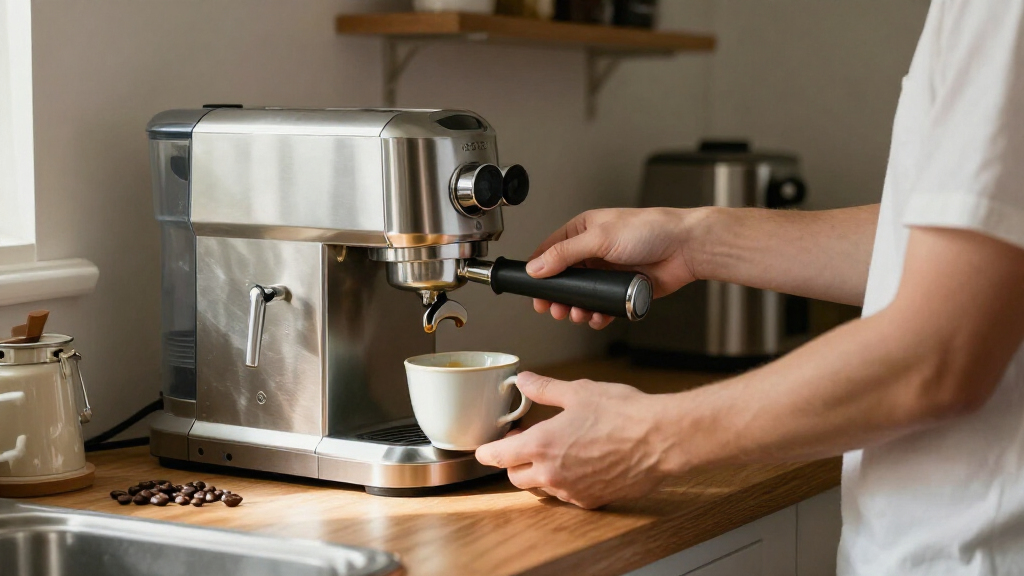
For most home coffee drinkers, I’d start with the Breville Barista Express: its built-in grinder and manual controls make it a strong all-around choice for learning espresso without adding a separate grinder. The Breville Bambino Plus is a better fit for a faster, smaller setup, while the Ninja Luxe Café Premier stands out if you want espresso alongside drip coffee and cold brew. The main tradeoffs are hands-on control versus convenience, countertop space versus an integrated setup, and espresso focus versus drink variety. I compare all 15 espresso machines for home by workflow, milk options, flexibility, and upkeep below. Continue reading for the full breakdown and a recommendation matched to your routine.

Get home appliances delivered free with Prime
- Fast, free delivery on millions of items
- Prime Video, Amazon Music and more included
- Member-only deals all year
Complete the kit


Key Takeaways
The Barista Express is the most balanced manual pick because its grinder and espresso controls form one home setup; buyers who value speed over dialing in may prefer the Bambino Plus.
The Ninja Luxe Café Premier is the versatility outlier, combining espresso with drip coffee and cold brew, but it is a broader beverage station rather than a dedicated espresso-first choice.
Automatic convenience comes with a different kind of tradeoff: the De’Longhi Magnifica Duo reduces hands-on preparation, while semi-automatic models ask for more involvement and cleanup.
Several compact, entry-level machines share similar priorities, including the CASABREWS models, De’Longhi Stilosa, Atatix, and compact 20-bar options; differences in workflow and features matter more than headline pressure claims.
A built-in grinder changes the buying decision: the Barista Express and AMZCHEF grinder model reduce the need for a separate grinder, but buyers should compare grind adjustment and daily workflow before choosing an all-in-one.


| espresso machines for home | Dimensions | Power | Coffee input | Weight |
|---|---|---|---|---|
| CASABREWS CM5418 Compact Espre | — | 1350 W | — | — |
| CASABREWS 3700 Essential Stain | — | 1350 watts | Ground coffee | — |
| 20 Bar Compact Espresso Machin | 12.2 × 5.32 × 11.5 inches | 1450 watts | — | — |
| Breville BES500DBL Bambino Plu | 14.25 × 7.5 × 12 inches | 1560 watts | Ground coffee | 11 pounds |
| Breville BES870XL Barista Expr | 13.8 × 12.5 × 15.9 inches | 1600 watts | — | 22.1 pounds |
| De’Longhi Stilosa Compact Manu | 12.13 × 9.45 × 14.17 inches (D × W × H) | 1100 watts | Ground coffee | 8.6 pounds |
| CASABREWS CM5418 Espresso Mach | — | 1350 watts | — | — |
| AMZCHEF Espresso Machine with | 12.5 × 10.82 × 13.38 inches (D × W × H) | 1500 watts | Whole beans | — |
| Chefman CraftBrew Digital Espr | 10.8 × 8.9 × 11.9 inches (D × W × H) | 1350 watts | Ground coffee | — |
| AMZCHEF Espresso Machine with | 12.1 × 13 × 6.5 inches (D × W × H) | 1350 watts | — | 8.5 pounds |
| De’Longhi Magnifica Duo Automa | 19.69" D x 12.2" W x 16.14" H | — | — | 20.8 pounds |
| De’Longhi Classic Signature Es | 11.22" D x 13.98" W x 15.94" H | — | Ground coffee | 9.3 pounds |
| Ninja Luxe Café Premier 3-in-1 | 12.95" D x 13.99" W x 14.57" H | — | — | 25.7 pounds |
| De’Longhi Classic Matte Black | 11.22" D x 13.98" W x 15.94" H | — | Ground coffee | 9.3 pounds |
| Atatix EM31112 Semi-Automatic | 12.24" D x 7.5" W x 11.18" H | — | Ground coffee | — |
More Details on Our Top Picks
CASABREWS CM5418 Compact Espresso Machine with Milk Frothing Wand
The CM5418 suits home brewers who want espresso and milk drinks without giving much counter space to the machine. Its 34-ounce removable tank and pressure gauge make basic refilling and brew adjustments straightforward, while the steam wand gives you a hands-on route to textured milk. Compared with the CASABREWS 3700 Essential, it has a smaller reservoir, so it needs more frequent refills, but its compact setup is a practical fit for a tight kitchen or office. The tradeoff is that it asks for some patience: after steaming, the machine needs to cool before brewing, and dialing in the shot may require changes to grind, dose, or tamp. I’d choose it for occasional, manual drink-making rather than a fast sequence of espresso and milk drinks.
Pros:- Compact design fits home or office counters with limited space.
- Pressure gauge gives a visible reference when adjusting a shot.
- Removable 34-ounce tank is convenient to refill.
- Steam wand supports hands-on milk texturing.
Cons:- Needs a cooling period between steaming milk and brewing.
- Shot preparation may take experimentation with grind, dose, and tamp.
- Smaller water capacity means more refills than the CASABREWS 3700 Essential.
Best for: Apartment dwellers or office users who want a compact semi-automatic machine and are comfortable frothing milk by hand.
Not ideal for: Households making several milk drinks back-to-back, since the machine needs to cool after steaming and the tank is smaller than the CASABREWS 3700 Essential’s.
- Model:CM5418
- Machine type:Semi-automatic espresso machine
- Pump pressure:20 bar
- Power:1350 W
- Water tank capacity:34 oz
- Milk frothing:Steam wand
- Finish:Brushed stainless steel
- Included filters:One-cup and two-cup filters
Our verdict“Choose the CM5418 if counter space matters more than quick back-to-back brewing and you want manual control over milk texture.”
CASABREWS 3700 Essential Stainless Steel Espresso Machine with Steam Wand
The CASABREWS 3700 Essential keeps the approachable, manual format of the CM5418 but adds a 43.9-ounce water tank, which means fewer refills for a household making drinks throughout the day. Its one- and two-cup filters, portafilter, and steam wand cover the core steps for espresso and milk drinks without adding a grinder or automatic frothing. Against the Breville Bambino Plus, it gives you a larger tank, but it lacks that model’s automatic milk texturing and rapid three-second heat-up. The 3700 also uses ground coffee, so you’ll need to supply and prepare your own grounds. Expect a first-use cycle and hands-on steaming; this is a better match for buyers who value a simple manual routine than those seeking push-button convenience.
Pros:- 43.9-ounce removable tank reduces refill frequency compared with the CM5418.
- Includes one-cup and two-cup filters for different serving sizes.
- Removable drip tray and water tank simplify routine cleanup and refilling.
- Steam wand allows hands-on milk frothing.
Cons:- Uses ground coffee and has no built-in grinder.
- Milk frothing requires manual technique.
- A first-use cycle is required before brewing.
Best for: Home coffee drinkers who want a basic manual espresso setup, make multiple drinks between refills, and are willing to froth milk themselves.
Not ideal for: Beginners who want automatic milk texturing or a fast, low-effort routine like the Breville Bambino Plus offers.
- Operation mode:Semi-automatic
- Pump pressure:20 bar
- Power:1350 watts
- Voltage:120 volts
- Water tank capacity:43.9 fluid ounces
- Coffee input:Ground coffee
- Milk frothing:Steam wand
- Included filters:One-cup and two-cup filters
Our verdict“Pick the 3700 Essential if you want a straightforward manual machine with more water capacity than the CM5418 and don’t need automatic milk frothing.”
20 Bar Compact Espresso Machine with Milk Frother, Stainless Steel, 34 oz Removable Water Tank – Silver
This compact semi-automatic machine is aimed at buyers who want a short wait before brewing: its 1450-watt heating system is listed as reaching brew temperature in about 20 seconds. The pressure gauge, steam wand, and hot-water dispenser provide more visible control and drink options than the simpler CASABREWS CM5418, while the listed 12.2-by-5.32-inch footprint suits narrow counters. That speed comes with workflow limits, though: the machine needs to cool between brewing and steaming, and its one-liter tank can call for frequent refills during heavier use. There’s also no built-in grinder, so espresso preparation starts with pre-ground coffee. I’d favor this pick over the CM5418 when rapid warm-up and added functions matter more than tank capacity or a seamless brew-and-steam routine.
Pros:- Listed heat-up time of about 20 seconds reduces waiting before brewing.
- Compact dimensions suit narrow countertop spaces.
- Pressure gauge offers a visible guide to brewing adjustments.
- Includes a steam wand, cup warmer, and hot-water dispenser.
Cons:- Requires cooling between brewing and steaming to avoid overheat protection.
- One-liter tank may need frequent refills during heavy use.
- No built-in grinder; uses pre-ground coffee.
Best for: People with narrow counters who use pre-ground coffee and want a quick warm-up plus a pressure gauge and hot-water function.
Not ideal for: Frequent milk-drink makers who want to brew and steam in succession, or households that prefer a larger reservoir and an integrated grinder.
- Type:Semi-automatic espresso machine
- Power:1450 watts
- Output pressure:20 bar
- Water tank capacity:1 liter (34 oz)
- Dimensions:12.2 × 5.32 × 11.5 inches
- Milk frother:Steam wand
- Auto shut-off:Yes
- Hot-water dispenser:Yes
Our verdict“Choose this machine if a fast warm-up and narrow footprint matter more than a large tank or uninterrupted milk-drink preparation.”
Breville BES500DBL Bambino Plus Espresso Machine, Damson Blue
The Bambino Plus makes milk-based drinks more approachable by automating much of the steaming: its wand offers adjustable temperature and texture, so you can focus less on learning manual frothing than with the CASABREWS 3700 Essential. The ThermoJet system reaches brewing temperature in three seconds, and digital PID temperature control supports consistent extraction. At just 7.5 inches wide, it is also easier to place on a crowded counter than the wider, grinder-equipped Breville Barista Express. The compromise is that the Bambino Plus takes ground coffee and has no integrated grinder, so you’ll need a separate way to grind beans or buy grounds. Its 64-ounce tank is generous on paper, but heavy use can still mean refills. This is the pick for convenience in milk preparation, not an all-in-one coffee station.
Pros:- Automatic steam wand offers adjustable milk temperature and texture.
- ThermoJet heating system reaches brewing temperature in three seconds.
- Narrow 7.5-inch width fits crowded countertops.
- Digital PID temperature control supports consistent extraction.
Cons:- No built-in grinder; requires ground coffee or a separate grinder.
- Automatic steaming gives less hands-on control than a manual wand.
- Water tank may need refilling during heavy use.
Best for: New home baristas who regularly make lattes or cappuccinos and want automatic milk texturing in a narrow machine.
Not ideal for: Buyers who want an integrated grinder or extensive manual control over every milk-steaming step; the Barista Express includes a grinder but occupies more counter space.
- Power:1560 watts
- Voltage:120 volts
- Dimensions:14.25 × 7.5 × 12 inches
- Weight:11 pounds
- Water tank capacity:64 fluid ounces
- Coffee input:Ground coffee
- Milk wand:Automatic steam wand
- Extraction mode:Semi-automatic
Our verdict“Choose the Bambino Plus if you want quick startup and easier milk drinks, and are comfortable sourcing ground coffee separately.”
Breville BES870XL Barista Express Espresso Machine, Brushed Stainless Steel
The Barista Express is the most involved option here, but it also removes a separate grinder from your setup: its integrated conical burr grinder doses beans into the portafilter, while PID temperature control and low-pressure pre-infusion give you tools to refine extraction. Compared with the Breville Bambino Plus, it takes up more counter space and asks you to manage milk steaming yourself, but it offers a more joined-up bean-to-espresso workflow. The manual controls can help you adjust grind size and brewing to suit different beans; they also create a steeper learning curve than the Bambino Plus’s automatic milk wand. At 22.1 pounds and nearly 16 inches tall, it’s not the right fit for every kitchen. I’d choose it for a buyer who wants to learn the process and keep grinder and espresso machine together.
Pros:- Integrated conical burr grinder sends freshly ground coffee to the portafilter.
- PID temperature control supports consistent extraction.
- Low-pressure pre-infusion adds control over the brewing process.
- 67-ounce water tank supports multiple drinks between refills.
Cons:- Large, heavy design takes more counter space than the Bambino Plus.
- Manual operation has a learning curve for grinding, dosing, and brewing.
- Manual steam wand requires practice to texture milk.
Best for: Home baristas who want an integrated grinder, adjustable brewing, and room to develop hands-on espresso skills.
Not ideal for: Beginners seeking automatic milk frothing or people with limited counter space; the narrower Bambino Plus is easier to place and simpler to operate.
- Power:1600 watts
- Voltage:120 V
- Dimensions:13.8 × 12.5 × 15.9 inches
- Weight:22.1 pounds
- Bean hopper capacity:½ lb
- Water tank capacity:67 oz
- Grinder:Integrated conical burr grinder
- Steam wand:Manual hand-textured microfoam wand
Our verdict“Pick the Barista Express if you want an integrated grinder and hands-on control, and have the counter space and patience to learn its workflow.”
De’Longhi Stilosa Compact Manual Espresso Machine with Manual Milk Frother
The De’Longhi Stilosa suits home baristas who want a straightforward, compact machine and are comfortable managing the steps themselves. Its manual controls and ground-coffee setup leave room to adjust a shot, while the manual milk frother gives you control over foam for cappuccinos and lattes. At 9.45 inches wide, it takes up less counter space than the AMZCHEF machine with a built-in grinder, though that convenience is missing here: you’ll need a separate grinder or ground coffee. The 1-liter tank is also smaller than the Chefman CraftBrew’s 1.5-liter reservoir, so it calls for more frequent refills when making drinks for several people. This is a lean, hands-on choice rather than a one-touch setup.
Pros:- Compact 9.45-inch width suits counters with limited space.
- Manual frother lets you control milk texture for different drinks.
- Removable 1-liter water tank is easy to refill.
- Includes single- and double-shot brewing capability.
Cons:- Manual preparation takes more effort than the touch-controlled Chefman CraftBrew.
- Small water tank means more refills during multi-drink sessions.
- No built-in grinder, so whole-bean users need separate equipment.
Best for: Apartment dwellers and hands-on beginners who want a compact machine for occasional espresso and milk drinks.
Not ideal for: Households making several drinks back-to-back or buyers who want a grinder and less manual preparation built into the machine.
- Operation:Manual
- Pump pressure:15 bar
- Power:1100 watts
- Coffee input:Ground coffee
- Water capacity:1000 ml
- Milk frother:Manual
- Dimensions:12.13 × 9.45 × 14.17 inches (D × W × H)
- Weight:8.6 pounds
Our verdict“Choose the Stilosa if compact size and hands-on control matter more to you than built-in grinding or a large reservoir.”
CASABREWS CM5418 Espresso Machine with Milk Frother
The CASABREWS CM5418 is a better fit for curious home brewers than for anyone seeking automatic simplicity. Its built-in pressure gauge gives you feedback as you adjust grind size, dose, or tamping, making it easier to see how preparation affects extraction. That added guidance sets it apart from the simpler De’Longhi Stilosa, which has manual operation but no listed gauge. The removable 34-ounce tank also holds more than the Stilosa’s 1-liter reservoir, useful when you’re making a few drinks in a row. Still, the gauge does not remove the need for practice: this semi-automatic machine asks you to prepare the coffee and tune your technique. Its steam wand adds milk-drink flexibility, but buyers wanting a built-in grinder should look instead at the AMZCHEF CM1626.
Pros:- Built-in pressure gauge provides feedback while adjusting extraction.
- Removable 34-ounce tank supports several drinks between refills.
- Steam wand can texture milk for cappuccinos and lattes.
- Includes one-cup and two-cup filters plus a tamper and spoon.
Cons:- Requires manual coffee preparation and technique adjustments.
- No built-in grinder, unlike the AMZCHEF CM1626.
- The pressure gauge requires interpretation and does not make dialing in automatic.
Best for: Espresso hobbyists who want visible extraction feedback and are willing to adjust grind, dose, and tamping.
Not ideal for: Beginners seeking guided, low-effort drinks or buyers who want the grinder included in the machine.
- Model:CM5418
- Operation:Semi-automatic
- Pump pressure:20 bar
- Power:1350 watts
- Water tank:34 oz, removable
- Milk frothing:Steam wand
- Pressure gauge:Built in
- Included filters:One-cup and two-cup
Our verdict“Pick the CM5418 if you want a compact semi-automatic machine that makes extraction adjustments visible rather than automatic.”
AMZCHEF Espresso Machine with Grinder, Temp Control, 44 Grind Settings
For buyers who want to work with whole beans without adding a separate grinder, the AMZCHEF CM1626 brings grinding and espresso brewing into one compact appliance. Its 44 grind settings offer more scope to adjust than the ground-coffee-only Chefman CraftBrew, while temperature selection from 190°F to 201°F adds another variable for hands-on brewing. The 60-ounce tank also outlasts the CASABREWS CM5418’s 34-ounce reservoir, making it better suited to a busy household. The tradeoff is that this is not a set-and-forget machine: broad adjustment options reward experimentation, and the 6-ounce hopper may need replenishing if you brew frequently. Its screen and one-touch modes simplify controls, but the machine still asks more of the owner than a basic ground-coffee model.
Pros:- Built-in grinder offers 44 settings for different coffee preparations.
- Temperature control ranges from 190°F to 201°F.
- 60-ounce tank reduces refill frequency compared with the CASABREWS CM5418.
- Steam wand and touchscreen support espresso and milk drinks.
Cons:- The 6-ounce bean hopper is small for frequent or high-volume brewing.
- Grind and temperature adjustments add setup decisions for beginners.
- No separate milk frother; milk drinks rely on the steam wand.
Best for: Whole-bean drinkers who want grinder and espresso functions together, plus room to experiment with grind and brewing temperature.
Not ideal for: Buyers with very limited counter space, those who prefer simple ground-coffee brewing, or households that want a large bean hopper.
- Model:CM1626
- Operation:Semi-automatic
- Power:1500 watts
- Coffee input:Whole beans
- Bean hopper:6 oz
- Water tank:60 oz
- Grind settings:44
- Temperature range:190°F–201°F
- Dimensions:12.5 × 10.82 × 13.38 inches (D × W × H)
Our verdict“Choose the CM1626 if you want an integrated grinder and broad brewing adjustments, and can accept a small hopper and a more involved routine.”
Chefman CraftBrew Digital Espresso Machine with Steam Wand, 1.5 L Reservoir
The Chefman CraftBrew makes sense for households that want to set shot volume with touch controls rather than rely entirely on manual timing. Its programmable brew settings and timer give it a more guided daily routine than the De’Longhi Stilosa, while the 1.5-liter removable reservoir holds more water than the Stilosa’s 1-liter tank. A steam wand and single- and double-shot baskets cover the usual home espresso and milk drinks. The main limitation is its reliance on ground coffee: unlike the AMZCHEF CM1626, it cannot grind whole beans for you, so buyers will need pre-ground coffee or a separate grinder. Its compact listed dimensions help it fit many counters, but the digital features are most useful to people who value repeatable shot volume, not those seeking extensive control over every brewing variable.
Pros:- Programmable shot volume and timer simplify repeatable brewing.
- Removable 1.5-liter reservoir holds more than the De’Longhi Stilosa tank.
- Steam wand supports milk drinks.
- Automatic descale alert helps prompt routine maintenance.
Cons:- Uses ground coffee and has no built-in grinder.
- Semi-automatic operation still requires manual preparation.
- Listed power supply is 120 volts, so it is intended for compatible outlets.
Best for: Busy home coffee drinkers who use ground coffee and want programmable shot volume, touch controls, and a larger reservoir.
Not ideal for: Whole-bean buyers who want an integrated grinder or espresso hobbyists seeking a wide range of manual brewing adjustments.
- Model:CraftBrew RJ54-SS-15-D-BLK
- Operation:Semi-automatic
- Pump pressure:15 bar
- Power:1350 watts
- Coffee input:Ground coffee
- Water tank:1.5 liters, removable
- Dimensions:10.8 × 8.9 × 11.9 inches (D × W × H)
- Warranty:1 year
Our verdict“Choose the CraftBrew if repeatable, adjustable shot volumes and a larger water tank matter more than an integrated grinder.”
AMZCHEF Espresso Machine with Self-Cleaning, 20 Bar Coffee Maker, Platinum
The AMZCHEF EM1507 is aimed at home users who want a quick warm-up and fewer routine cleaning steps without giving up manual milk frothing. Its thermoblock is described as reaching brewing temperature in under three minutes, and the self-cleaning cycle helps reduce maintenance after regular use. Compared with the Chefman CraftBrew, it offers a larger 44-ounce tank but lacks programmable shot-volume controls; compared with the AMZCHEF CM1626, it skips the built-in grinder and its extensive grind adjustments. That makes the EM1507 a simpler match for pre-ground coffee, not an all-in-one bean-to-cup setup. The 360-degree swivel wand allows flexible positioning for milk steaming, though buyers new to frothing will still need to learn the manual technique.
Pros:- Thermoblock is described as reaching brewing temperature in under three minutes.
- 44-ounce water tank supports multiple drinks between refills.
- Self-cleaning cycle reduces some routine maintenance.
- 360-degree swivel steam wand gives room to position milk pitchers.
Cons:- No built-in grinder, unlike the AMZCHEF CM1626.
- Manual steam wand requires practice to texture milk.
- Larger tank and machine footprint may not suit very small counters.
Best for: People who use pre-ground coffee and want a fast-heating home machine with a larger tank and a self-cleaning function.
Not ideal for: Whole-bean drinkers who want an integrated grinder, or beginners who prefer automatic milk frothing and minimal technique practice.
- Model:EM1507
- Power:1350 watts
- Voltage:120 volts
- Pump pressure:20 bar
- Water tank:44 oz
- Steam wand:360-degree swivel, manual
- Display:LED touchscreen
- Dimensions:12.1 × 13 × 6.5 inches (D × W × H)
- Weight:8.5 pounds
Our verdict“Pick the EM1507 if quick warm-up and easier routine cleaning matter more than built-in grinding or automated milk preparation.”
De’Longhi Magnifica Duo Automatic Espresso Machine with Milk Frother – Silver
I’d choose the Magnifica Duo for a home where different people want different drinks without learning espresso technique. Its 20 one-touch recipes, including hot and iced options, cover more styles than the De’Longhi Classic Signature, which focuses on single and double espresso shots. The integrated conical burr grinder also means fresh beans go straight into the brewing process, while hot and cold LatteCrema frothing adds hands-off milk drinks. That convenience takes up room: at nearly 20 inches deep and 20.8 pounds, it is much less suited to a tight counter than the compact, ground-coffee De’Longhi Classic Matte Black. The exterior also combines plastic and stainless steel, rather than offering an all-metal feel. I’d favor this machine for households that value menu breadth and automation over a small footprint or manual control.
Pros:- Twenty one-touch recipes cover a wider range of hot and iced drinks than the shot-focused Classic Signature.
- Integrated conical burr grinder prepares each drink from whole beans without a separate grinder.
- Automatic hot and cold milk frothing supports both warm café drinks and cold-foam beverages.
- Touchscreen controls, auto-clean, and auto shut-off reduce routine effort.
Cons:- Its nearly 20-inch depth and 20.8-pound weight can make counter placement and moving it difficult.
- Plastic exterior components may feel less substantial than a stainless-steel-focused machine.
- The extensive automation offers less hands-on brewing control than a semi-automatic machine such as the Atatix EM31112.
Best for: Households with varied coffee preferences that want bean-to-cup brewing, one-touch recipes, and automatic hot or cold milk foam.
Not ideal for: Small kitchens or espresso drinkers who want a compact machine, hands-on shot control, or a more metal-forward exterior.
- Drink recipes:20 one-touch hot and iced options
- Grinder:Integrated conical burr
- Milk frother:LatteCrema hot and cold
- Controls:Touchscreen
- Wattage:1450 watts
- Dimensions:19.69″ D x 12.2″ W x 16.14″ H
- Weight:20.8 pounds
- Materials:Plastic and stainless steel
Our verdict“Choose the Magnifica Duo if your household wants varied bean-to-cup drinks at the touch of a button and has room for a large machine.”
De’Longhi Classic Signature Espresso Machine, Adjustable Milk Frother
The Classic Signature suits home espresso drinkers who want straightforward shot-making and milk drinks without adding a grinder to the machine. Its single- and double-shot presets and quick-heating Thermoblock system keep the routine simpler than the Atatix EM31112, which adds a manual extraction mode for people who want more control. The adjustable dual-mode frother works with dairy and plant-based milk, and the removable tank makes refilling easier. The tradeoff is that this machine takes ground coffee only, so buyers must grind separately or use pre-ground beans; the Magnifica Duo is a better fit for anyone who wants an integrated bean-to-cup setup. Despite its relatively light 9.3-pound build, it is not designed as a frequent carry-around appliance. I’d pick it for a home or office where uncomplicated espresso matters more than grinder integration.
Pros:- One-touch single and double espresso presets make everyday shot preparation simple.
- Dual-mode adjustable frother accommodates dairy and plant-based milk.
- Thermoblock heating helps the machine reach brewing temperature quickly.
- Removable water tank and adjustable drip tray support easier refilling and varied cup sizes.
Cons:- Ground coffee input means whole-bean users need a separate grinder or must buy pre-ground coffee.
- It offers less recipe automation and no built-in grinder compared with the Magnifica Duo.
- At 9.3 pounds, it is not especially convenient for frequent countertop moves.
Best for: Home or office drinkers who want preset espresso shots and adjustable dairy or plant-milk frothing, and already have ground coffee available.
Not ideal for: Buyers seeking a built-in grinder, bean-to-cup automation, or manual control over extraction time.
- Coffee input:Ground coffee
- Output pressure:15 bar
- Wattage:1350 watts
- Milk frother:Dual-mode for dairy and plant-based milk
- Controls:Buttons and dial
- Water tank:Removable
- Dimensions:11.22″ D x 13.98″ W x 15.94″ H
- Weight:9.3 pounds
Our verdict“Choose the Classic Signature for uncomplicated preset espresso and flexible milk frothing when you do not need an integrated grinder.”
Ninja Luxe Café Premier 3-in-1 Espresso Machine, Drip Coffee & Cold Brew
I’d put the Ninja Luxe Café Premier on the shortlist for homes that want espresso alongside drip coffee and cold brew, not just a dedicated espresso setup. Its 3-in-1 format, built-in conical burr grinder, and Barista Assist guidance make it broader and more instructional than the De’Longhi Classic Signature, which is centered on ground-coffee espresso. Weight-based dosing and 25 grind settings help guide preparation, while the 70-ounce reservoir means fewer refills during busy mornings. Automatic frothing adds convenience, and the self-cleaning steam wand cuts down on one routine chore. In exchange, the Ninja is a large, 25.7-pound machine, heavier than the Magnifica Duo, and it does not accept pods. I’d choose it for variety and guided brewing, not for a minimal counter or a compact espresso-only routine.
Pros:- Three brewing styles—espresso, drip coffee, and cold brew—provide more variety than the espresso-focused De’Longhi Classic Signature.
- Integrated conical burr grinder offers 25 settings for whole-bean brewing.
- Barista Assist guidance and weight-based dosing help structure the brewing process.
- A removable 70-ounce reservoir reduces how often it needs refilling.
Cons:- At 25.7 pounds, it is heavier than the Magnifica Duo and challenging to move regularly.
- Its relatively broad footprint may be difficult to accommodate on a small countertop.
- It does not support pods, so buyers need whole beans or ground coffee.
Best for: Households that want one machine for espresso, drip coffee, and cold brew, with guided bean grinding and a large reservoir.
Not ideal for: Small kitchens, pod users, or buyers who want a lightweight machine dedicated to espresso alone.
- Brewing styles:Espresso, drip coffee, and cold brew
- Grinder:Integrated conical burr with 25 settings
- Water reservoir:70 fluid ounces, removable
- Milk frother:Dual system with magnetic whisk and automatic steamer
- Wattage:1650 watts
- Dimensions:12.95″ D x 13.99″ W x 14.57″ H
- Weight:25.7 pounds
- Material:Stainless steel
Our verdict“Choose the Ninja Luxe Café Premier if you want a guided, whole-bean system that makes more than espresso and can spare the counter space.”
De’Longhi Classic Matte Black Espresso Machine with Easy-to-Use Milk Frother
The Classic Matte Black makes sense for a home espresso corner where counter space matters more than automated drink menus. Its 9-bar pump, Thermoblock heating, and preset single and double shots keep the core routine direct, while the integrated frother handles dairy or plant-based milk. Compared with the De’Longhi Classic Signature, it shares a similar compact footprint and ground-coffee approach, but the Signature specifies an adjustable dual-mode frother and 15-bar pump. The Matte Black’s 9-bar extraction pressure is a clear part of its positioning, though the listed data does not provide the Signature’s extra frother detail. Neither model includes a grinder, unlike the Magnifica Duo. This one also mixes plastic and stainless steel, so its matte finish does not mean an all-metal build. I’d select it for a tidy espresso setup with simple shot options, not for bean-to-cup convenience.
Pros:- Compact dimensions suit a smaller home coffee station better than the larger Magnifica Duo.
- Preset single and double shots simplify the basic espresso routine.
- A 9-bar pump is specified for extraction, alongside fast Thermoblock heating.
- The milk frother supports dairy and plant-based milk.
Cons:- Ground-coffee input means whole-bean users need a separate grinder.
- The plastic and stainless-steel construction may not feel as premium as a more metal-forward design.
- It offers a narrower espresso-focused setup than the Ninja Luxe Café Premier’s three brewing styles.
Best for: Espresso drinkers with limited counter space who prefer simple preset shots and already use ground coffee.
Not ideal for: Whole-bean buyers who want an integrated grinder, or users who want more automation and a broader one-touch menu.
- Coffee input:Ground coffee
- Output pressure:9 bar
- Wattage:1350 watts
- Milk frother:Integrated, for dairy and plant-based milk
- Dimensions:11.22″ D x 13.98″ W x 15.94″ H
- Weight:9.3 pounds
- Materials:Plastic and stainless steel
- Finish:Matte black
Our verdict“Choose the Classic Matte Black for compact, preset espresso and milk drinks if you are comfortable supplying ground coffee.”
Atatix EM31112 Semi-Automatic Espresso Machine with Milk Frother
The Atatix EM31112 is the most hands-on pick in this group: one-touch single and double shots are available, but a manual extraction mode lets the brewer extend a shot for up to 102 seconds. Its stated 198°F temperature control and steam wand suit people who want to shape their espresso and milk drinks rather than rely on a fully automatic menu. That makes it a different proposition from the Magnifica Duo, which grinds beans and prepares a broad set of drinks at the touch of a screen. The tradeoff is that the Atatix uses ground coffee and has no built-in grinder; its 44-ounce tank may also call for refills in a busy household. At 7.5 inches wide, it is notably narrow next to the 13.99-inch-wide Ninja Luxe Café Premier, though it still needs depth on the counter.
Pros:- Manual extraction mode provides more shot-time control than the preset-focused De’Longhi Classic Matte Black.
- NTC and PID controls are specified to maintain a 198°F brewing temperature.
- Steam wand supports microfoam for cappuccinos, lattes, and flat whites.
- Narrow 7.5-inch width and removable 44-ounce tank suit a compact setup.
Cons:- Ground-coffee input means there is no integrated grinder for whole-bean brewing.
- The 44-ounce reservoir may need frequent refills in a high-use household.
- Manual brewing and milk steaming require more involvement than the automatic Magnifica Duo.
Best for: Home brewers who want to adjust extraction time, steam milk manually, and keep a compact machine on the counter.
Not ideal for: People seeking bean-to-cup convenience, automatic drink variety, or a large reservoir for frequent back-to-back drinks.
- Operation mode:Semi-automatic
- Coffee input:Ground coffee
- Extraction pressure:9 bar
- Temperature:198°F (92°C), NTC and PID control
- Water tank:44 fluid ounces, removable
- Manual extraction:Up to 102 seconds
- Dimensions:12.24″ D x 7.5″ W x 11.18″ H
- Included components:Portafilter, single and double cup filters, coffee spoon, and user manual
Our verdict“Choose the Atatix EM31112 if you want a narrow semi-automatic machine with manual shot control and are willing to handle ground coffee and steaming yourself.”
How We Picked
I ranked these machines around the parts of home espresso that shape daily use: how much control the brewer gives you, whether grinding is built in, how milk is prepared, and how much work the setup asks of you. I also weighed countertop footprint, water capacity, drink range, cleaning needs, and the value of having a single machine handle multiple tasks. The goal is not to reward a long feature list; it is to judge which features make a meaningful difference for a particular household.
The Barista Express ranks first for its balanced combination of grinder and hands-on espresso workflow. The Bambino Plus follows for buyers prioritizing a compact, quicker routine, while the Ninja earns a distinct place for drink variety. Automatic and entry-level models rank according to convenience, flexibility, and the compromises buyers accept. Because some product names refer to closely related versions, I distinguish them by their stated configurations rather than assuming unlisted performance differences.
| espresso machines for home | Coffee input |
|---|---|
| CASABREWS CM5418 Compact Espre | — |
| CASABREWS 3700 Essential Stain | Ground coffee |
| 20 Bar Compact Espresso Machin | — |
| Breville BES500DBL Bambino Plu | Ground coffee |
| Breville BES870XL Barista Expr | — |
| De’Longhi Stilosa Compact Manu | Ground coffee |
| CASABREWS CM5418 Espresso Mach | — |
| AMZCHEF Espresso Machine with | Whole beans |
| Chefman CraftBrew Digital Espr | Ground coffee |
| AMZCHEF Espresso Machine with | — |
| De’Longhi Magnifica Duo Automa | — |
| De’Longhi Classic Signature Es | Ground coffee |
| Ninja Luxe Café Premier 3-in-1 | — |
| De’Longhi Classic Matte Black | Ground coffee |
| Atatix EM31112 Semi-Automatic | Ground coffee |
Factors to Consider When Choosing Espresso Machines For Home
Before choosing a machine, I’d match its workflow to the coffee you actually make. These broader points can prevent a common mismatch: buying a machine for its feature count when what matters most is the time, skill, and counter space you can give it.
Choose Your Workflow Before Your Feature List
Home espresso machines generally ask you to do more or less of the work yourself. A semi-automatic setup gives you control over grinding, dosing, and shot timing, while a fully automatic model handles more steps at the press of a button. That convenience can make weekday drinks easier, but it limits how much you adjust the process. A manual machine may suit someone who enjoys learning, yet become a chore if several people need coffee quickly. Think about who will make drinks and how often before paying for controls you may rarely use. A reliable routine is often more useful than maximum customization.
Treat the Grinder as Part of the Espresso Machine
Espresso depends on a fine, consistent grind, so a machine without a grinder may need a separate grinder capable of that job. An integrated grinder saves counter space and simplifies setup, but it also ties two pieces of equipment together: if one part stops meeting your needs, replacing or upgrading it can be less flexible. A separate grinder usually costs more space and adds another step, while giving you more freedom to change either component. Avoid assuming that a high number of grind settings alone guarantees better results; adjustment range, consistency, and ease of dialing in matter too. If you already own a capable grinder, a machine without one may be the more sensible purchase.
Decide How Much Milk Work You Want to Do
A steam wand offers control over milk texture and temperature, but it requires practice and usually calls for a separate pitcher and cleaning after each use. Some wands are manually operated, while other machines automate more of the milk routine; those approaches suit different preferences, not simply different skill levels. If you make mostly straight espresso or americanos, a sophisticated milk system may add cost and cleaning without much benefit. For frequent cappuccinos, think about whether you want to learn steaming or prefer a more guided routine. Remember that wand cleanup is part of every milk drink, not an occasional maintenance task.
Measure Counter Space and Everyday Access
Measure the available counter depth and the clearance above the machine, including room to open lids or remove a water tank. A compact body can still feel awkward if the portafilter handle, drip tray, or milk pitcher needs extra working space. Integrated grinders and multi-drink systems may reduce the number of appliances but take up more room than a simple espresso machine. Also check whether the tank and grounds container can be removed without shifting the unit. A machine that fits neatly into your routine is more likely to be used than one that requires rearranging the kitchen for every drink. Consider where you will store beans, cups, and cleaning supplies as part of the footprint.
Match Versatility to What Your Household Drinks
A dedicated espresso machine makes the most sense when espresso-based drinks are the main goal. If different people want drip coffee, cold brew, or espresso, a multi-function machine can replace several appliances and simplify shared mornings. That breadth can bring a larger interface and more components to clean, and it may not offer the same espresso-focused workflow as a dedicated model. Write down the drinks your household makes in a typical week rather than choosing based on occasional experiments. If versatility is a priority, check how each drink mode is prepared and cleaned. If nearly every drink starts with espresso, a focused machine may be easier to live with.
Plan for Cleaning and Long-Term Upkeep
Daily rinsing and wiping are part of owning an espresso machine, especially when milk or ground coffee is involved. Removable drip trays and water tanks can make routine care less awkward, while automatic cleaning features may handle only certain parts of the process. Check the manufacturer’s instructions for descaling, filter replacement, and milk-system cleaning before buying. A machine with more drink paths or an integrated grinder can bring additional areas that need attention. Skipping upkeep can affect performance, so pick a maintenance routine you can realistically follow. Ease of cleaning may matter more over months of use than an extra setting you seldom touch.
Frequently Asked Questions
Should I choose a machine with a built-in grinder or buy the grinder separately?
I’d choose an integrated grinder if saving counter space and keeping the workflow in one appliance matter most. The Barista Express and the AMZCHEF grinder model are examples in this lineup, though their overall approaches differ. A separate grinder gives you more freedom to upgrade or replace one part without changing the whole setup. If you already own a grinder that can produce a suitable espresso grind, paying for another one may not make sense. Before deciding, compare the grinder’s adjustment and the counter space available for both pieces.
Is a semi-automatic machine a good choice if I am new to espresso?
It can be, provided you are willing to learn a repeatable routine for grinding, dosing, and pulling shots. A machine such as the Bambino Plus offers a more compact path into hands-on espresso than an all-in-one setup, while the Barista Express includes a grinder in the same appliance. If you want fewer manual steps, an automatic model such as the Magnifica Duo may fit better. Beginners often benefit from keeping the first setup simple rather than buying extra accessories before they know what they need. Choose based on how much practice you want to put into each drink.
Does a machine labeled 20 bar or 20 bar pressure make better espresso?
That label alone is not a dependable way to compare home machines. Espresso quality also depends on the coffee, grind consistency, dose, temperature management, and the machine’s overall brewing design. Several compact models in this roundup use high-pressure figures in their names or descriptions, but that does not make them interchangeable with more feature-rich setups. I would compare workflow, grinder needs, milk options, and cleaning before treating a pressure number as a deciding factor. Look for a machine that suits your routine rather than selecting by one headline specification.
Is an automatic machine worth choosing over a manual espresso machine?
An automatic machine makes the most sense when reducing hands-on preparation is more valuable than adjusting every stage yourself. The De’Longhi Magnifica Duo is the automatic option here, while the Barista Express and other semi-automatic models ask you to take a more active role. Automation can make drinks easier to repeat, but it may offer less control over the process and still needs regular cleaning. If you enjoy dialing in coffee, a manual workflow may be more satisfying. If speed and convenience matter most, automation may be worth the tradeoff.
Should I buy a multi-function coffee system if espresso is my main drink?
Usually, a dedicated espresso machine is the clearer fit if nearly every drink you make starts with espresso. The Ninja Luxe Café Premier has a strong case when the household also wants drip coffee and cold brew from one machine. That range can reduce appliance clutter, but it also adds functions and cleaning needs that an espresso-focused buyer may not use. Consider how often other household members will use those modes, not just whether they sound appealing. If those drinks are occasional, a simpler machine may suit your daily routine better.
Conclusion
For the best overall balance, I recommend the Breville Barista Express to buyers who want a built-in grinder and hands-on control in one setup. For a compact, quicker manual routine, choose the Breville Bambino Plus; for beginners who would rather reduce manual steps, the De’Longhi Magnifica Duo is the automatic alternative. For broad drink variety, the Ninja Luxe Café Premier is the standout, while the best value depends on how simply you want to brew: the De’Longhi Stilosa keeps the setup focused, and the compact CASABREWS options add a different entry-level format. If you want a grinder integrated into a more configurable setup, compare the AMZCHEF grinder model with the Barista Express before deciding. In short, match the machine to your daily drinks and desired effort: choose espresso control, convenience, or versatility rather than trying to maximize all three at once.