For most attic floors, I’d choose Owens Corning R-49 Kraft-Faced Fiberglass Insulation as the best overall option in this lineup because its higher R-value suits buyers aiming for substantial thermal resistance in one product. Owens Corning R-38 Unfaced Fiberglass Batts are a strong alternative where a higher-performing unfaced batt fits the existing assembly, while AtticFoil Double-Sided Perforated Radiant Barrier stands out for reducing radiant heat in suitable hot-climate attics. The main tradeoff is that fiberglass batts add thermal resistance, while radiant barriers reflect radiant heat and are not a substitute for bulk insulation; spray foam also brings different installation and safety demands. Compare coverage, facing, fit, and installation needs before choosing. Read on for the full breakdown of all 13 options and who each one suits.

Get home appliances delivered free with Prime
- Fast, free delivery on millions of items
- Prime Video, Amazon Music and more included
- Member-only deals all year
Complete the kit


Key Takeaways
- R-49 Kraft-Faced fiberglass is the roundup’s best overall fit for buyers prioritizing a high labeled R-value in a batt product, but kraft facing must be used in an assembly that meets local moisture and fire-safety requirements.
- R-38 and R-30 batts offer different depth tradeoffs: the R-38 unfaced option targets higher thermal resistance, while R-30 can suit shallower spaces or projects where the lower thickness fits better.
- Radiant barriers are a different tool, not a batt replacement. The perforated rolls from AtticFoil, Margar, Houseables, and US Energy Products are aimed at radiant-heat control, especially in hot climates, and need an adjacent air space to work as intended.
- Roll size and width affect installation as much as material type. Large 1,000-square-foot radiant barrier rolls suit broad, continuous surfaces, while Reflectix’s smaller bubble-pack roll is easier to handle for limited areas but covers less.
- The batt options vary by facing, dimensions, and listed coverage. Compare the actual attic joist spacing, depth, and square footage rather than choosing by the Owens Corning name or R-value alone; the 15-by-93-inch R-19 batts and 16-by-48-inch R-49 batts serve different layouts.


| attic insulation | Material | Coverage | Brand | R-value |
|---|---|---|---|---|
| Owens Corning R-38 Unfaced Fib | Fiberglass | 512 sq ft | Owens Corning | R-38 |
| Owens Corning EcoTouch PINK Fi | Fiberglass | 469.36 sq ft | — | R-30 |
| BEEST FullStop Spray Foam Insu | Moisture-cured polyurethane foam | Up to 240 board feet | BEEST | 8.24 at 2-inch thickness |
| Margar Perforated Radiant Barr | Double-sided perforated reflective foil | 1,000 sq ft | — | — |
| Owens Corning R-19 Unfaced Fib | Fiberglass | 128 sq ft; 5 batts per pack | Owens Corning | R-19 |
| Houseables Radiant Barrier Ins | Aluminum foil | 1,000 sq ft | Houseables | — |
| Owens Corning R-30 Unfaced Fib | Fiberglass | 513.36 sq ft | Owens Corning | R-30 |
| Reflectix BP24025 24-Inch by 2 | Aluminum foil, polyethylene, and insulating bubbles | 7,200 sq in | Reflectix | — |
| AtticFoil Double-Sided Perfora | Double-sided pure aluminum foil with internal tear-resistant fabric | 1,000 sq ft | AtticFoil | — |
| US Energy Products Radiant Bar | Five-layer aluminum foil, Mylar, and nylon scrim | — | US Energy Products | — |
| RadiantGUARD Xtreme Radiant Ba | Reinforced aluminum | 542 sq. ft. | — | — |
| Owens Corning R-49 Kraft-Faced | Fiberglass | 320 sq. ft. | — | R-49 |
| Owens Corning R-19 Unfaced Fib | Fiberglass | 77.5 sq. ft. per bag | — | R-19 |
More Details on Our Top Picks
Owens Corning R-38 Unfaced Fiberglass Batt Insulation, 24 x 48 in, 8 Bags
For buyers who want a substantial layer of attic insulation in a familiar batt format, this R-38, 12-inch fiberglass pack offers 512 square feet across eight bags. Its higher R-value makes it a stronger choice for adding thermal resistance than the Owens Corning R-30 EcoTouch, though the R-30’s kraft facing may suit buyers who specifically need a faced product. These batts are unfaced, so they leave vapor-control decisions to the installer and need careful placement around ventilation paths. The specified 2 inches of air space also means they cannot simply be packed tight against every roof surface. I’d choose this for a broad attic project with suitable framing and clearance; it is less suitable when a thinner batt or a built-in facing is the priority.
Pros:- R-38 rating provides more stated thermal resistance than the R-30 EcoTouch batt in this lineup.
- Eight-bag pack covers 512 square feet for a large attic project.
- Unfaced construction allows the installer to plan vapor control separately.
- Can also be used in interior walls, floors, ceilings, and for soundproofing.
Cons:- The 12-inch thickness needs substantial cavity depth and careful fitting.
- Attic installation requires proper ventilation and at least 2 inches of air space.
- Unfaced batts do not provide a built-in vapor retarder.
Best for: Homeowners insulating a large attic who have room for 12-inch batts, can preserve ventilation clearance, and want R-38 coverage in a bulk pack.
Not ideal for: Installers with shallow cavities, blocked ventilation paths, or a need for faced insulation; the 12-inch thickness and required air space may not fit their attic layout.
- Brand:Owens Corning
- Material:Fiberglass
- Insulation type:Unfaced batt
- R-value:R-38
- Batt dimensions:24 x 48 in
- Thickness:12 in
- Coverage:512 sq ft
- Pack:8 bags; 8 batts per bag
Our verdict“Choose this R-38 pack for a spacious, ventilated attic where higher batt resistance and broad coverage matter more than a facing or a thinner profile.”
Owens Corning EcoTouch PINK Fiberglass Insulation, R-30, Kraft Faced, 16 x 48 x 9.5 in, 8 Bags
This R-30 kraft-faced batt is a practical fit for buyers working with standard 2×10 attic trusses who want a facing integrated into the insulation. Its 9.5-inch thickness is less demanding on cavity depth than the Owens Corning R-38 unfaced batt, but it also carries a lower stated R-value. The kraft backing acts as a moisture barrier and vapor retarder, which can simplify planning when that facing suits the assembly; it must not be left exposed because it is flammable. The product data also calls for at least 3 inches of clearance from recessed lights unless they are IC-rated. I’d favor this over unfaced options when the framing and facing requirements line up, but skip it if exposed batts, unusual cavity spacing, or a more flexible vapor-control plan is needed.
Pros:- R-30 rating and 9.5-inch thickness are specified for standard 2×10 attic trusses.
- Kraft facing provides a built-in moisture barrier and vapor retarder.
- Bulk package includes 80 batts and covers 469.36 square feet.
- Compression packaging is described as easier to handle on job sites.
Cons:- Kraft facing is flammable and must be covered rather than left exposed.
- Requires at least 3 inches of clearance from recessed lights unless they are IC-rated.
- Provides less stated R-value per batt than the R-38 Owens Corning unfaced pack.
Best for: Homeowners with standard 2×10 attic framing who want R-30 batts with a kraft facing and can cover the facing with finish materials.
Not ideal for: Buyers with nonstandard framing, exposed insulation, or recessed fixtures that lack the required clearance or IC rating.
- Brand and line:Owens Corning EcoTouch PINK
- Material:Fiberglass
- R-value:R-30
- Facing:Kraft
- Batt dimensions:16 x 48 x 9.5 in
- Coverage:469.36 sq ft
- Pack quantity:8 bags; 80 total batts
- Recommended framing:Standard 2×10 attic trusses
Our verdict“Pick the EcoTouch when standard 2×10 framing and a covered kraft facing suit your attic better than the thicker, higher-R-value R-38 alternative.”
BEEST FullStop Spray Foam Insulation Kit, 240 Board Feet
This kit fills a different role from the batt products: its strongest attic use is sealing gaps and hard-to-reach spots, not covering a broad floor area with thick insulation. The 12 cans, applicator gun, cleaner, and protective gear make it a more complete package than buying foam cans alone. At 2 inches, the stated R-value is 8.24, so I would treat it as targeted air-leak control rather than a substitute for the Owens Corning R-38 batts across a large attic. It bonds to common surfaces including wood, metal, drywall, concrete, and brick. The tradeoffs are a narrow recommended application-temperature range of 68–77°F and moisture curing; application conditions and handling need attention. It suits detail work, but the listed coverage is measured in board feet, not a direct square-foot attic area.
Pros:- Kit includes 12 cans, a foam gun, cleaner, gloves, goggles, and a coverall.
- Foam bonds to wood, metal, drywall, concrete, and brick.
- Provides a stated R-value of 8.24 at 2-inch thickness.
- Designed to reduce air leaks as well as heat transfer.
Cons:- Recommended application temperature is limited to 68–77°F.
- Requires moisture curing, adding a condition to application and cure planning.
- Board-foot coverage is not directly comparable with the square-foot coverage of batt and foil rolls.
Best for: DIYers or contractors sealing irregular attic penetrations, joints, and hard-to-reach gaps who can work within the stated application temperature range.
Not ideal for: Buyers seeking a simple, broad attic-floor insulation layer or anyone unable to manage foam application, curing conditions, and protective equipment.
- Brand:BEEST
- Manufacturer:Petra
- Material:Moisture-cured polyurethane foam
- Coverage:Up to 240 board feet
- R-value:8.24 at 2-inch thickness
- Can count:12
- Application temperature:68–77°F
- Compatible surfaces:Wood, metal, drywall, concrete, and brick
Our verdict“Choose this kit for targeted attic air sealing, not as the primary insulation layer for a large attic.”
Margar Perforated Radiant Barrier Insulation Roll, 1,000 Sq Ft
With 1,000 square feet of perforated reflective foil, this roll is aimed at buyers who want to cover a large attic roof or rafter area with a radiant barrier. The perforations allow airflow through the material, and the roll can be cut with household scissors and fastened with staples or nails. That makes it a different kind of project from laying Owens Corning R-38 fiberglass batts: this foil is installed on rafters, walls, or roofs and the product data gives no R-value. I would not count it as a direct replacement for bulk thermal insulation where a stated R-value is the goal. Its fiber-free material and stated Class A fire rating may appeal to buyers avoiding loose fibers, but installation involves fastening a large roll and planning around the attic’s ventilation.
Pros:- Large 1,000-square-foot roll can cover a broad attic area.
- Perforations allow airflow through the material.
- Can be cut with household scissors and attached with staples or nails.
- Described as fiber-free and Class A fire-rated.
Cons:- No thermal resistance or R-value is provided in the product data.
- Must be fastened to rafters, walls, or roofs rather than laid like attic-floor batts.
- A large-area installation requires planning for coverage and airflow.
Best for: Homeowners covering a broad attic rafter or roof area who specifically want a perforated radiant barrier and understand it is not an R-value-rated batt.
Not ideal for: Buyers who need a specified R-value, a simple loose-lay attic-floor product, or insulation that does not require fastening to a surface.
- Manufacturer:MARGAR
- Material:Double-sided perforated reflective foil
- Coverage:1,000 sq ft
- Roll dimensions:4 ft x 250 ft
- Weight:28.3 lb
- Color:Silver
- Standards:ASTM E84 and E96
- Installation:Fasten to rafters, walls, or roofs with staples or nails
Our verdict“Choose this roll when a perforated radiant barrier is the goal, but pair your decision with a separate plan for any required R-value insulation.”
Owens Corning R-19 Unfaced Fiberglass Insulation, 128 sq ft
This R-19, 6.5-inch unfaced batt is sized for 2×6 framing, making it a more natural fit for shallow cavities than the 12-inch Owens Corning R-38 attic batt. That fit is useful for appropriate attic framing, floors, and crawlspaces, but the product data presents it primarily for those cavities rather than as a high-R-value blanket for an open attic floor. Its unfaced construction gives buyers flexibility in how vapor control is handled, while also meaning no facing is included. The pack covers 128 square feet, so it suits a smaller, defined job better than the large-area batt and foil rolls in this lineup. I’d choose it when cavity depth dictates the format; skip it if the main goal is maximizing attic-floor resistance in a single layer.
Pros:- R-19 rating and 6.5-inch thickness are matched to standard 2×6 framing.
- Unfaced format leaves vapor-control choices to the installer.
- Batts are described as easy to cut and fit between framing members.
- Sound attenuation can help reduce noise transmission.
Cons:- R-19 provides less stated thermal resistance than the R-30 and R-38 batt options.
- The 128-square-foot pack is less suited to large attic coverage.
- No built-in vapor barrier is included.
Best for: Homeowners insulating 2×6 attic framing, floors, or crawlspaces who need a 6.5-inch unfaced batt for a defined area.
Not ideal for: Buyers insulating a broad, open attic floor or seeking a high-R-value single layer; its R-19 rating and 128-square-foot coverage are more limited than the R-38 pack.
- Brand:Owens Corning
- Model:M50A
- Material:Fiberglass
- R-value:R-19
- Facing:Unfaced
- Batt dimensions:24 x 96 in
- Thickness:6.5 in
- Coverage:128 sq ft; 5 batts per pack
- Recommended framing:2×6
Our verdict“Choose this pack for 2×6 cavities and smaller defined jobs, not as the main high-R-value layer for a large attic floor.”
Houseables Radiant Barrier Insulation Roll, 250 ft x 4 ft, 1000 Sq Ft
I’d choose the Houseables roll when the main attic problem is radiant heat and the job calls for covering a broad area with one continuous roll. Its 250-foot length and 1,000-square-foot coverage can reduce the number of seams compared with shorter-format options such as Reflectix BP24025. The double-sided foil reflects more than 97% of radiant heat, but that figure does not make it a substitute for the R-30 Owens Corning fiberglass batts: this thin barrier reflects radiant energy rather than providing comparable resistance to conductive heat flow. Cutting and fitting are simple, and the described Class A fire rating and humidity resistance add useful installation context. The tradeoff is that a long, thin sheet can wrinkle during a large installation, so careful handling and suitable air space matter.
Pros:- 1,000 square feet of coverage on a 250-foot roll can limit seams across broad areas.
- Double-sided aluminum foil reflects more than 97% of radiant heat.
- Lightweight material can be cut with standard scissors without special tools.
- Description lists ASTM compliance, a Class A fire rating, and non-toxic material.
Cons:- Provides radiant-heat reflection rather than a stated high R-value for conductive heat flow.
- Thin foil can wrinkle or be damaged if handled roughly during a large installation.
- Requires appropriate installation conditions, including air space, to function as a radiant barrier.
Best for: Homeowners covering a large, open attic area who want a long, cut-to-fit radiant barrier and already have or plan separate bulk insulation.
Not ideal for: Buyers who need a standalone thermal layer for cold-weather heat retention or want insulation with a stated R-value; this foil barrier is not a replacement for fiberglass batts.
- Brand:Houseables
- Roll dimensions:250 ft x 4 ft
- Coverage:1,000 sq ft
- Reflectivity:More than 97%
- Material:Aluminum foil
- Compliance:ASTM E-84 and ASTM 96-00
- Weight:Lightweight
- Maintenance:Non-toxic and humidity resistant
Our verdict“Choose Houseables for broad, uncomplicated radiant-barrier coverage, but pair it with bulk insulation when you need meaningful R-value.”
Owens Corning R-30 Unfaced Fiberglass Batt Insulation, 19 x 48 in, 8 Bags
For buyers who need actual thermal resistance between attic floor joists, I’d favor these R-30 fiberglass batts over the radiant-barrier rolls in this roundup. They are sized for 2×10 cavities, making them a more direct fit for that framing than the Houseables or AtticFoil foil products, which address radiant heat rather than filling a cavity with bulk insulation. The unfaced construction suits applications where a facing is not wanted, but it also means there is no moisture barrier; installation should match the assembly and local building guidance. Eight bags cover 513.36 square feet, a substantial area for a planned attic-floor project. Compared with the higher-R R-38 and R-49 Owens Corning options elsewhere in the roundup, this is a more moderate insulation level, so it may not suit buyers targeting greater cavity performance.
Pros:- R-30 provides a stated thermal-resistance rating for bulk insulation.
- Designed for 2×10 floor or attic cavities.
- Unfaced construction suits applications where a facing is not required.
- Eight bags cover 513.36 square feet.
Cons:- No moisture barrier is included.
- R-30 is below the R-38 and R-49 Owens Corning options in the roundup.
- The 19-by-48-inch batt format is suited to specified cavities and may need careful fitting around obstructions.
Best for: Homeowners insulating attic floors with 2×10 cavities who want unfaced fiberglass batts and have a compatible moisture-control plan.
Not ideal for: Buyers with shallower or nonstandard cavities, those who need faced insulation, or anyone seeking a higher stated R-value than R-30.
- Brand:Owens Corning
- Material:Fiberglass
- R-value:R-30
- Batt dimensions:48 in L x 19 in W
- Thickness:10 in
- Coverage:513.36 sq ft
- Quantity:8 bags
- Moisture barrier:None
Our verdict“Pick these R-30 batts for compatible 2×10 attic-floor cavities when bulk insulation matters more than radiant-heat reflection.”
Reflectix BP24025 24-Inch by 25-Foot Reflective Bubble Pack Insulation
The Reflectix BP24025 is the compact-format choice here: its 24-inch width and 25-foot length are easier to handle in smaller sections than the 250-foot Houseables or US Energy Products rolls. Its seven-layer construction combines reflective foil faces with bubble and polyethylene layers, so it offers more than a bare foil sheet, while still measuring just 5/16 inch thick. That makes it a lightweight material for suitable attic applications, not an equivalent to the R-30 Owens Corning batts when the goal is cavity insulation with a stated R-value. The small roll can be practical for limited areas, patchwork, or installations where a narrower width fits better, but its 7,200-square-inch coverage is far less than the 1,000-square-foot rolls. I’d also check the construction-specific installation requirements before buying, since performance depends on the application.
Pros:- Narrow 24-inch roll is more manageable in confined or segmented spaces than 4-foot-wide rolls.
- Seven-layer build combines reflective foil, bubble layers, and polyethylene.
- Lightweight, fiber-free material is easy to cut and position.
- Listed for use in attics as well as several other construction applications.
Cons:- Coverage is only 7,200 square inches, far below the 1,000-square-foot radiant-barrier rolls.
- At 5/16 inch thick, it is not a substitute for bulk insulation with a stated R-value.
- Suitability and performance depend on installing it for the intended construction application.
Best for: DIYers treating a small or segmented attic area who prefer a lightweight, narrow roll that is easier to cut and position.
Not ideal for: Buyers covering a large attic or looking for a bulk insulation product with a stated R-value; its coverage is limited and installation must suit the assembly.
- Brand:Reflectix
- Model:BP24025
- Dimensions:300 in L x 24 in W
- Thickness:0.31 in
- Coverage:7,200 sq in
- Weight:16 oz
- Material:Aluminum foil, polyethylene, and insulating bubbles
- Layers:7
- Pack count:1
Our verdict“Choose Reflectix for a smaller, narrow-format reflective insulation job, not for insulating a whole attic with bulk thermal resistance.”
AtticFoil Double-Sided Perforated Aluminum Radiant Barrier, 48 in x 1,000 sq ft, with Seam Tape
I’d put the AtticFoil perforated barrier on the shortlist when attic moisture management is part of the installation plan. Unlike a solid foil sheet, its perforations allow moisture to pass through, and the included seam tape saves a separate materials step when joining runs. The 48-inch width and 1,000-square-foot coverage match the broad-roll format of Houseables, while its tear-resistant fabric support is intended to make handling more robust. That construction gives it a different role from the Reflectix BP24025, which is a compact, multi-layer bubble product rather than a full-size perforated barrier. Still, perforation does not make this a vapor barrier, and the product is described as best suited to standard open-frame attics. If the framing or installation surface differs, the 48-inch format may be less convenient.
Pros:- Perforations allow moisture to pass through rather than forming a vapor barrier.
- Double-sided pure aluminum foil reflects radiant heat.
- Internal tear-resistant fabric supports the foil during handling.
- Seam tape is included for joining sections.
Cons:- The product is not a vapor barrier, so it does not serve that function in an assembly.
- Its 48-inch width is described as best for standard open-frame attics.
- Radiant-barrier material does not replace bulk insulation with a stated R-value.
Best for: Homeowners with standard open-frame attics seeking a broad radiant barrier that permits moisture passage and includes seam tape.
Not ideal for: Buyers who need a vapor barrier, have an unusual framing layout that does not suit 48-inch material, or want bulk insulation with a stated R-value.
- Brand:AtticFoil
- Coverage:1,000 sq ft
- Width:48 in
- Material:Double-sided pure aluminum foil with internal tear-resistant fabric
- Perforated:Yes; allows moisture to pass through
- Included components:AtticFoil insulation and foil tape
- Product dimensions:48 x 6 x 6 in
- Model:1000AK2FT1
Our verdict“Choose AtticFoil when you want a full-size perforated radiant barrier with seam tape for a standard open-frame attic.”
US Energy Products Radiant Barrier Insulation – 1000 sq ft, 4 ft Wide, Commercial Grade Perforated Reflective Foil
Among the full-size radiant barriers, the US Energy Products roll stands out for its specified five-layer construction: double-sided metalized aluminum bonded to Mylar and nylon scrim. That backing is a useful distinction from the thinner Houseables foil, which may need more careful handling to avoid wrinkling. The product is listed as reflecting 97% of radiant heat, with 99.7% reflectivity also specified; those figures describe radiant performance, not a bulk-insulation R-value. Like the AtticFoil perforated barrier, it is breathable and intended to let moisture pass, but this option emphasizes its commercial-grade, tear-resistant build. The 4-foot width and 1,000-square-foot coverage suit large areas, though proper air gaps are needed for radiant barriers to work. That installation detail can make it less forgiving for DIYers than fiberglass batts.
Pros:- Five-layer construction with Mylar and nylon scrim is designed to resist tearing.
- Double-sided reflective material is specified at 99.7% reflectivity and 97% heat blocking.
- Perforated construction is described as breathable and compliant with building-material standards.
- A 4-foot-wide, 1,000-square-foot roll covers broad attic areas.
Cons:- Radiant reflection does not provide the same function as bulk insulation with a stated R-value.
- The required air gap can make layout and installation more demanding for DIYers.
- The supplied data gives both reflectivity and heat-blocking figures, which describe different performance measures.
Best for: Homeowners or installers covering a large attic who want a reinforced, perforated radiant barrier and can maintain the required air gap.
Not ideal for: DIYers unable to plan for air gaps, or buyers who need standalone bulk insulation with a stated R-value for conductive heat loss.
- Brand:US Energy Products
- Coverage area:1,000 sq ft
- Dimensions:4 ft wide x 250 ft long
- Reflectivity:99.7%
- Heat blocking:97%
- Material:Five-layer aluminum foil, Mylar, and nylon scrim
- Weight:70 grams
- Origin:Made in the USA
Our verdict“Choose this reinforced roll for large radiant-barrier installations where durability and correct air-gap placement are priorities.”
RadiantGUARD Xtreme Radiant Barrier Attic Insulation, 542 sq. ft., 26 in. × 250 ft.
RadiantGUARD Xtreme is the pick for attic projects where reducing radiant heat from the roof is the priority, rather than adding a stated R-value. The manufacturer says its reinforced aluminum blocks up to 95% of radiant heat transfer; unlike the Owens Corning R-49 batts, it does not provide a listed R-value or replace thermal insulation. The 26-inch-wide roll can be cut with utility scissors or a hacksaw and stapled beneath rafters, making it adaptable to a roof structure, but installation requires attic access and a staple gun. Its fiber-free construction avoids handling fiberglass, though the work still involves reaching across rafters. Coverage is 542 square feet, and the manufacturer recommends covering vertical exterior attic walls for complete coverage, so plan the layout before starting.
Pros:- Manufacturer states it blocks up to 95% of radiant heat transfer.
- Reinforced material is described as tear- and puncture-resistant.
- Can be cut with utility scissors or a hacksaw.
- Fiber-free installation does not require special clothing or a breathing mask, according to the manufacturer.
Cons:- No R-value is listed, so it should not be treated as a direct substitute for R-49 fiberglass batts.
- Installation requires a staple gun and access to the underside of the rafters.
- The manufacturer recommends covering vertical exterior attic walls for complete coverage.
Best for: Homeowners with accessible attic rafters who want a fiber-free radiant barrier to supplement existing insulation.
Not ideal for: Buyers seeking a standalone, specified-R-value insulation layer or anyone unable to reach and staple the attic rafters.
- Material:Reinforced aluminum
- Coverage:542 sq. ft.
- Roll dimensions:26 in. × 250 ft.
- Radiant heat transfer blocked:Up to 95%, per manufacturer
- Installation:Staple to the underside of attic roof rafters
- Certification:Meets and exceeds ASTM C1313, per manufacturer
- Recommended uses:Attic, roof, window, RV, and metal building insulation
Our verdict“Choose RadiantGUARD when you want a cut-to-fit radiant barrier for accessible rafters, not a replacement for rated batt insulation.”
Owens Corning R-49 Kraft-Faced Fiberglass Insulation, 16 × 48 in, 10 Bags
For buyers who need a substantial R-49 thermal layer, these Owens Corning batts offer a stronger stated insulation value than the R-19 unfaced batts elsewhere in this lineup. Their roughly 14-inch thickness is sized for 2×12 framing, so check the available cavity depth before ordering; they are not a fit for shallower framing. Ten bags cover 320 square feet, a larger project quantity than the 77.5-square-foot R-19 package, but the shipment calls for delivery coordination and a reachable phone number. Kraft facing provides a facing layer, while attic installation still needs two inches of properly vented air space to help limit moisture buildup. The facing must also stay covered and away from open flames and heat sources, adding installation constraints absent from unfaced options.
Pros:- Provides a stated R-49 thermal resistance.
- Batts are sized for 2×12 framing.
- Ten bags cover 320 square feet.
- Designed for thermal and acoustical control.
Cons:- Attic use requires two inches of properly vented air space.
- Kraft facing must be covered and kept away from open flames and heat sources.
- Delivery requires coordination and a reachable phone number.
Best for: Homeowners insulating deep 2×12 attic framing who want batts with a listed R-49 value and have room for a 320-square-foot project quantity.
Not ideal for: Owners of shallow attic framing, buyers who cannot maintain the required vented air space, or anyone who needs a small package for spot repairs.
- Material:Fiberglass
- R-value:R-49
- Facing:Kraft
- Batt dimensions:16 in. wide × 48 in. long × approximately 14 in. thick
- Coverage:320 sq. ft.
- Package quantity:10 bags
- Batts per bag:6
- Fits framing:2×12
- Unit weight:33.6 lb
Our verdict“Choose these batts for deep framing and a high stated R-value, provided your attic can meet the ventilation and facing requirements.”
Owens Corning R-19 Unfaced Fiberglass Insulation Batts, 15 x 93 Inches, 77.5 Sq. Ft.
This R-19 unfaced batt pack suits a limited repair or a project using 2×6-depth framing, rather than a whole-attic upgrade. Each 6.5-inch-thick batt is designed for deeper framing, while the single bag covers just 77.5 square feet—far less area than the R-49 Owens Corning package’s 320 square feet. That smaller quantity can help avoid ordering a large batch for a patch, but the R-19 rating is also well below the R-49 option for buyers building a higher-resistance layer. The unfaced construction means there is no vapor barrier included, so the assembly may need a separately planned vapor-control approach. Batts can be cut to fit and are intended for walls, floors, and attics; that versatility is useful, though not a reason to use them in cavities they do not fit.
Pros:- R-19 resistance is suited to compatible 2×6 framing.
- Unfaced batts can be cut to fit.
- Designed for use in walls, floors, and attics.
- Helps reduce sound transmission.
Cons:- Unfaced design does not include a vapor barrier.
- The 6.5-inch thickness is intended for deeper framing, not shallow cavities.
- One bag covers only 77.5 square feet, limiting its usefulness for large attic projects.
Best for: DIYers patching a modest attic area or insulating compatible 2×6 framing who want a small, multipurpose batt package.
Not ideal for: Homeowners insulating a large attic or seeking a high-R-value layer; the package covers 77.5 square feet and is rated R-19.
- Material:Fiberglass
- R-value:R-19
- Thickness:6.5 in.
- Batt dimensions:15 in. wide × 93 in. long
- Coverage:77.5 sq. ft. per bag
- Quantity:8 batts
- Facing:Unfaced; no vapor barrier
- Recommended uses:Thermal insulation for walls, floors, and attics
Our verdict“Choose this package for a small repair in compatible deep framing, but pick the R-49 batts for a larger project that needs a higher stated R-value.”
How We Picked
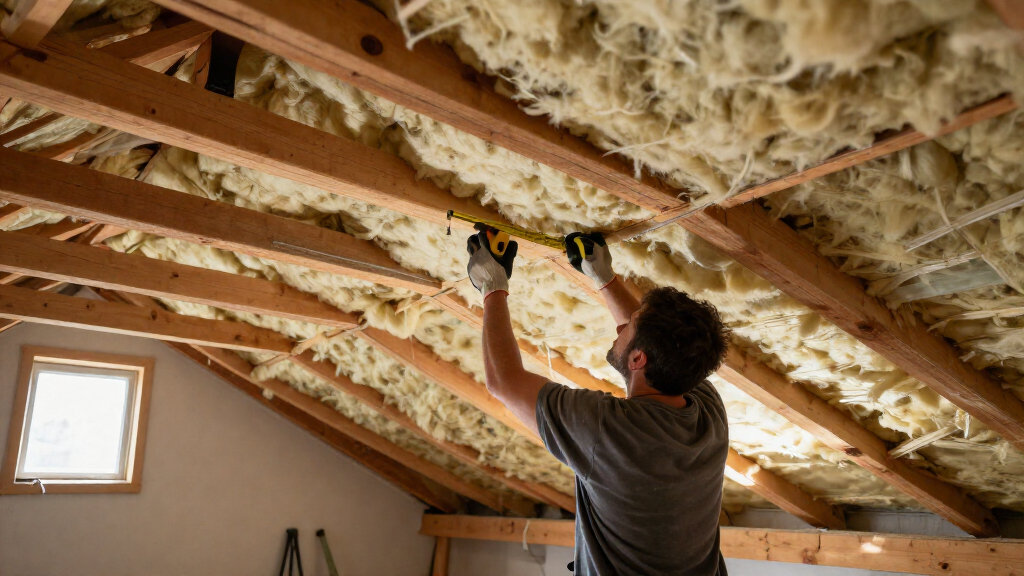
I compared these 13 products by the job they are designed to do: add thermal resistance with fiberglass batts, limit radiant heat with reflective barriers, or seal and insulate with a spray foam kit. I weighed each product’s labeled R-value where supplied, coverage, dimensions, facing or perforation, and how clearly its form factor matches common attic projects. I also considered the practical demands that affect a purchase, such as fitting joist bays, handling large rolls, and the need to follow product and building-code instructions.
The order gives priority to products with a clear role for common attic-floor insulation projects, then distinguishes alternatives by fit and specialized use. That places the R-49 batt first for its high stated R-value, with R-38 and R-30 options behind it for buyers whose available depth or assembly calls for less. Radiant barriers rank as targeted choices rather than universal substitutes for insulation, and the spray foam kit is best treated as a specialized air-sealing option because application, protective equipment, and installation conditions matter. I did not treat unlike materials as direct R-value equivalents; buyers should confirm product documentation and local code requirements before installation.
| attic insulation | Brand |
|---|---|
| Owens Corning R-38 Unfaced Fib | Owens Corning |
| Owens Corning EcoTouch PINK Fi | — |
| BEEST FullStop Spray Foam Insu | BEEST |
| Margar Perforated Radiant Barr | — |
| Owens Corning R-19 Unfaced Fib | Owens Corning |
| Houseables Radiant Barrier Ins | Houseables |
| Owens Corning R-30 Unfaced Fib | Owens Corning |
| Reflectix BP24025 24-Inch by 2 | Reflectix |
| AtticFoil Double-Sided Perfora | AtticFoil |
| US Energy Products Radiant Bar | US Energy Products |
| RadiantGUARD Xtreme Radiant Ba | — |
| Owens Corning R-49 Kraft-Faced | — |
| Owens Corning R-19 Unfaced Fib | — |
Factors to Consider When Choosing Best Attic Insulation
Choosing attic insulation starts with the attic assembly, not the product label. I’d check what is already installed, where the thermal boundary belongs, and whether the project is about adding R-value, limiting radiant heat, sealing leaks, or addressing more than one of those problems. These checks can prevent an expensive mismatch between material and building conditions.
Match the insulation type to the problem
Fiberglass batts primarily add thermal resistance between or over framing; radiant barriers reflect radiant heat and perform differently. A reflective barrier does not provide the same function as a thick layer of batt insulation, so replacing missing or thin attic-floor insulation with foil alone can leave the home under-insulated. Spray foam can combine air sealing and insulation, but a kit is not simply a drop-in equivalent to batts or foil. Identify whether heat gain, heat loss, drafts, or existing insulation gaps are the main issue before comparing products. In hot climates, radiant control may add value when installed with the required air space, while cold-climate upgrades often call for more bulk insulation. For mixed problems, plan a compatible assembly rather than assuming one product solves every source of energy loss.
Check the target R-value and available depth
R-value indicates resistance to heat flow, but the amount you need depends on climate, existing insulation, and local energy-code guidance. Measure the depth of the attic-floor cavities and note whether insulation can be added above the joists without blocking ventilation or access. A higher-R batt may need more depth, and compressing a batt to force it into a shallow cavity can reduce its performance. When topping up existing material, avoid leaving gaps or creating uneven coverage around framing and obstructions. The product’s stated R-value is not the whole assembly’s performance if air leaks, thermal bridges, or poor fit remain. Use local recommendations to set a target before buying enough material to cover the whole area.
Choose faced or unfaced with the assembly in mind
Kraft facing can serve as a vapor retarder in some approved wall or ceiling assemblies, while unfaced batts are often used for adding insulation over an existing layer. Facing rules depend on climate, location within the assembly, and local code, so the wrong orientation or an added vapor-retarding layer can trap moisture. Do not assume faced insulation is automatically better or that unfaced material is suitable for every cavity. Check whether the attic already has a vapor-control layer and follow the manufacturer’s facing instructions. If you are unsure about condensation risk, ask a qualified building professional before layering materials. Moisture management matters because damp insulation can lose effectiveness and contribute to building damage.
Treat air sealing and ventilation as separate tasks
Insulation slows heat flow, but it does not automatically seal cracks around wiring, plumbing, chimneys, or attic hatches. Air leaks can carry heat and moisture into the attic, so locate and seal appropriate penetrations before covering them with insulation. Keep soffit vents and other required ventilation paths clear; blocking them can create moisture and roof problems. Use approved clearances around chimneys, flues, recessed fixtures, and other heat sources rather than packing insulation tightly against them. Spray foam may help with certain air-sealing jobs, but it requires careful application and must not obstruct ventilation or violate clearance rules. A complete plan accounts for air movement and ventilation as well as insulation coverage.
Plan coverage, access, and installation effort
Measure the attic area and compare it with the product’s listed coverage, allowing for irregular bays, framing, and waste. Batt width and length should match joist spacing and layout; a product with more total square footage may still be awkward if its dimensions do not fit the project. Large radiant-barrier rolls can cover broad surfaces efficiently, but handling and fastening them overhead may call for help. Smaller rolls are easier to control in limited areas, though they may involve more seams. Spray foam kits require attention to temperature, ventilation, protective equipment, and the manufacturer’s application limits. If safe access is difficult or the attic contains old wiring, pests, or moisture damage, resolve those conditions before installation.
Spend more only when the added performance fits
Paying for a higher-R product makes sense when it helps meet a climate-based target and the attic has enough room for correct installation. A premium reflective barrier may be useful for a suitable hot-climate application, but its large roll size is wasted if the project only needs a small patch or cannot maintain an air gap. A spray foam kit may appeal where targeted sealing is needed, yet its specialized application can make professional work a better choice for large or complex areas. Value also depends on how much usable coverage a package provides and whether its dimensions minimize offcuts. Compare the full assembly and project needs, not just a product’s headline feature. When a product solves a problem your attic does not have, the added material is not a useful upgrade.
Frequently Asked Questions
Can I install a radiant barrier instead of fiberglass attic insulation?
Usually not if the attic is missing adequate thermal insulation. A radiant barrier is designed to reduce radiant heat transfer, while fiberglass batts add resistance to heat flow through the attic floor. The two address different parts of attic performance, and a barrier generally needs an adjacent air space to function as intended. In a hot climate, a radiant barrier may complement existing insulation when the attic layout supports it. Check local guidance and the product instructions before treating it as part of a complete insulation plan.
Should I choose R-49, R-38, or R-30 batts for my attic?
Start with the R-value recommended for your climate and the insulation already present, then check whether your attic has enough depth for the selected batt. R-49 offers a higher labeled R-value than R-38 or R-30, but it only makes sense if it can be installed without compression and without blocking ventilation or access. R-38 or R-30 may fit a shallower assembly or a project that is adding to existing insulation. Compare dimensions and facing as well as the R-value, since they affect fit and moisture control. Local energy guidance or a qualified installer can help set a target for your house.
Can I lay new fiberglass batts over the insulation already in my attic?
It may be possible, but first check that the existing material is dry, clean, and free of signs of pests or roof leaks. Unfaced batts are commonly used for topping up an existing layer, but adding faced material can create a moisture-trapping assembly if the facing is placed incorrectly. Lay new insulation without compressing the layer below it, and keep vents, electrical access, and heat-source clearances unobstructed. Seal suitable air leaks before covering them, since insulation alone will not stop air movement. If you find dampness, damaged wiring, or uncertain vapor layers, resolve those issues before adding material.
Is a spray foam kit a good choice for a first attic insulation project?
A spray foam kit can suit targeted jobs when the user can follow its application limits and safety instructions, but it is less forgiving than placing batts. Conditions such as surface temperature, ventilation, protective equipment, and clearance from heat sources can affect safe application. It also does not automatically solve broader attic ventilation or insulation-depth needs. For a large attic, complex roof geometry, or uncertain wiring and moisture conditions, professional assessment may be a safer path. A beginner seeking straightforward coverage will often find batts easier to plan and handle.
How do I know whether a large radiant barrier roll is better than a small one?
Match roll size to the area you can install correctly, not just the largest coverage figure. A broad roll can reduce seams and suit a continuous attic surface, but it may be cumbersome to handle alone and can produce waste on a small or irregular project. A compact roll is easier to maneuver for limited areas, though multiple seams may take more time. Check the product’s width, perforation, fastening method, and air-space requirements before buying. If you cannot create the installation conditions the manufacturer specifies, a larger roll will not deliver its intended benefit.
Conclusion
For the broadest range of buyers seeking batt insulation, I’d start with Owens Corning R-49 Kraft-Faced Fiberglass Insulation as the best overall pick, provided its facing and depth suit the attic assembly. Best value depends on the required R-value and coverage: the R-30 and R-38 unfaced batts offer simpler alternatives when the attic does not call for R-49. For best premium radiant-heat control, I’d shortlist AtticFoil’s double-sided perforated barrier for a hot-climate project with a suitable air gap. Beginners may prefer a batt product with dimensions that match their joist bays over the more specialized spray foam kit. For specific needs, choose the smaller Reflectix roll for limited reflective applications, a large barrier roll for broad coverage, or BEEST spray foam for targeted sealing only when its application requirements fit the job. The right choice is the one that matches the attic’s climate, assembly, available depth, and installation conditions—not simply the highest labeled number.