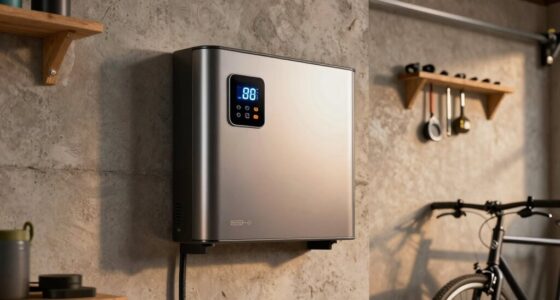
Smart home energy monitors clamp onto your electrical panel and show exactly where every kilowatt-hour goes, and the differences between models come down to circuit-level detail, local control, and ecosystem compatibility. The Emporia Vue 3 earns my best overall pick for combining real-time whole-home tracking, per-circuit sensors, solar monitoring, and polished app automation in one package. The Refoss 16-circuit monitor is the stronger value if you want branch-level detail without the Emporia price, while the Refoss Open API model stands out for Home Assistant users who refuse to depend on a cloud service. The main tradeoff in this category is granularity versus simplicity: 16-sensor units demand more panel work but reveal which appliance is wasting power, while dual-channel units install in minutes but only show totals. Keep reading for the full breakdown, including a premium Siemens pick and the monitors I’d skip for certain buyers.
Prime for Young Adults — start your free trial
Fast free delivery, streaming and member deals for eligible 18–24 year olds.
Try it freeAs an affiliate, we earn on qualifying purchases.
Complete the kit


Key Takeaways
- The Emporia Vue 3 appeared three times in this comparison in different bundles, and the solar-monitoring version is the one to buy — the others duplicate features you can get cheaper from Refoss or Meross.
- Circuit-level monitors (16-sensor models) cost only slightly more than whole-home-only units, making per-circuit granularity the best value upgrade in the entire category.
- Local-control support separates the serious picks from the casual ones: only the Refoss Open API model and the Home Assistant-compatible 16-sensor unit work reliably without a cloud connection.
- The Siemens Inhab is the only monitor here built to professional-installation standards, but its price only makes sense for new construction or panel upgrades — retrofit buyers get similar data for a third of the cost.
- Solar and net-metering support is rare in this price range: the Eyedro and the Emporia solar bundle are the only picks that handle bidirectional metering properly.
| Emporia Vue 3 Home Energy Monitor |  | Best Overall | Certification: UL Listed, CE Listed | Installation: Circuit panel; single-phase, split-phase, 3-wire, 3-phase with additional sensor | Connectivity: 2.4 GHz Wi-Fi, internet required | VIEW LATEST PRICE | See Our Full Breakdown |
| Refoss Smart Home Energy Monitor with 16 Circuit Sensors |  | Best Value for Whole-Home Detail | Circuit sensors: 16 (up to 60A) | Main sensors: 2 (up to 200A) | Supported systems: Single-phase, split-phase, 3-phase 4-wire Wye | VIEW LATEST PRICE | See Our Full Breakdown |
| Meross Smart Home Energy Monitor |  | Best for Home Assistant Users | Certification: ETL, UL 61010 | Compatible systems: Single-phase 2-wire, single-split phase 3-wire, 3-phase 4-wire Wye | Max current: 200A main / 60A branch circuits | VIEW LATEST PRICE | See Our Full Breakdown |
| SIEMENS Inhab Smart Home Energy Monitor |  | Best Premium Brand Pick | Circuit level sensors: 16 circuits, 16-50 Amp | Main sensors: 2, up to 200 Amp | Compatibility: USA and Canada | VIEW LATEST PRICE | See Our Full Breakdown |
| Smart Home Energy Monitor 2×80A, Dual-Channel WiFi Tracker |  | Best Budget Pick for Appliance Monitoring | Channels: 2 (dual-channel) | Sensor rating: 80A per channel, clamp-on CTs | Minimum operating voltage: 110 volts | VIEW LATEST PRICE | See Our Full Breakdown |
| Eyedro Smart Home Energy Monitor 200A 2.4GHz WiFi/Ethernet |  | Best for Solar Net Metering | Current Rating: 200A | Sensors Included: Two 200A sensors | Connectivity: WiFi 2.4 GHz, Ethernet | VIEW LATEST PRICE | See Our Full Breakdown |
| WiFi Home Energy Monitor with 3 80A CT Clamps |  | Best Budget Circuit Tracker | CT Clamps: 3 × 80A | Input Voltage: AC 100–240V | Connectivity: WiFi 2.4GHz | VIEW LATEST PRICE | See Our Full Breakdown |
| Refoss Smart Home Energy Monitor with Open API, Home Assistant, No Cloud |  | Best for Smart Home Tinkerers | Model: EM16P | Control: Local Web UI, Open API, MQTT | Compatibility: Home Assistant, OpenClaw AI | VIEW LATEST PRICE | See Our Full Breakdown |
| Emporia Vue 3 Home Energy Monitor – Smart Home Automation Module |  | Best Overall Ecosystem | Sensors: 16 circuit sensors, 50A each | Certification: UL, CE | Connectivity: 2.4 GHz Wi-Fi | VIEW LATEST PRICE | See Our Full Breakdown |
| WiFi Home Energy Energy Monitor with 2 x 120A CTs and Power Tracking |  | Best for Simple Solar Tracking | Current Transformers: 2 × 120A CTs | Accuracy: Class 1 | Connectivity: WiFi | VIEW LATEST PRICE | See Our Full Breakdown |
| Emporia Vue 3 Home Energy Monitor – Real-Time Electricity Usage and Solar Monitoring |  | Best for Solar Homes | Certification: UL Listed | Sensor Type: Clamp-on CT sensors | Solar Support: Yes, with net metering | VIEW LATEST PRICE | See Our Full Breakdown |
| Smart Home Energy Monitor with 16 50A Circuit Sensors, Real-Time Power & Cost Tracking, Compatible with Home Assistant |  | Best for Home Assistant Users | Sensors: 16 x 50A circuit sensors | Supported Voltages: Single-phase up to 240VAC, split-phase 120/240VAC, three-phase up to 415Y/240VAC | Connectivity: WiFi 2.4GHz with MQTT support | VIEW LATEST PRICE | See Our Full Breakdown |
| smart home energy monitor | Connectivity | Warranty | Certification |
|---|---|---|---|
| Emporia Vue 3 Home Energy Moni | 2.4 GHz Wi-Fi, internet required | 1 year | UL Listed, CE Listed |
| Refoss Smart Home Energy Monit | Wi-Fi, Open API, MQTT, WebSocket | 2 years | ETL |
| Meross Smart Home Energy Monit | Wi-Fi, Open API, Web Control | 2 years | ETL, UL 61010 |
| SIEMENS Inhab Smart Home Energ | — | — | — |
| Smart Home Energy Monitor 2×80 | Wi-Fi with Tuya / Smart Life apps | — | — |
| Eyedro Smart Home Energy Monit | WiFi 2.4 GHz, Ethernet | — | — |
| WiFi Home Energy Monitor with | WiFi 2.4GHz | — | — |
| Refoss Smart Home Energy Monit | — | 2 years | ETL, UL 61010 |
| Emporia Vue 3 Home Energy Moni | 2.4 GHz Wi-Fi | 1 year | UL, CE |
| WiFi Home Energy Energy Monito | WiFi | — | — |
| Emporia Vue 3 Home Energy Moni | 2.4 GHz Wi-Fi | 1 year | UL Listed |
| Smart Home Energy Monitor with | WiFi 2.4GHz with MQTT support | 1 year | — |
More Details on Our Top Picks
Emporia Vue 3 Home Energy Monitor
The Emporia Vue 3 earns the top spot because it balances polished app experience with serious monitoring capability. Compared with the Refoss monitor, the Vue 3 is friendlier out of the box — the app walks you through setup, and solar and net-metering support work without any configuration fiddling. That said, it punishes you for ambition: the base unit supports up to 16 branch sensors, but those sensors are sold separately, so whole-home circuit-level detail costs noticeably more than the Refoss bundle. The tradeoff is real, but the Vue 3’s UL certification and reliable cloud dashboard make it the safest bet for buyers who want answers, not a project. Data retention when the app is idle is limited, which matters if you want long-term historical analysis without checking in regularly.
Pros:- UL and CE certified for safe panel installation
- Real-time monitoring with solar and net-metering support
- Most polished app experience in this lineup
- Compatible with single-phase, split-phase, and 3-phase systems
Cons:- Branch sensors sold separately, adding hidden cost
- Installation requires comfort with opening your electrical panel
- Limited data retention when the app isn’t active
Best for: Homeowners who want a reliable, app-driven whole-home monitor with solar support and minimal tinkering
Not ideal for: Budget-conscious buyers wanting full circuit-level detail — the 16 branch sensors cost extra, inflating the total price
- Certification:UL Listed, CE Listed
- Installation:Circuit panel; single-phase, split-phase, 3-wire, 3-phase with additional sensor
- Connectivity:2.4 GHz Wi-Fi, internet required
- Sensors:Up to 16 branch sensors (sold separately)
- Dimensions:10 x 5 x 5 inches
- Warranty:1 year
Our verdict“The Vue 3 is the pick for most homeowners who want dependable whole-home insight without the DIY overhead of open-source alternatives.”
Refoss Smart Home Energy Monitor with 16 Circuit Sensors
While the Emporia Vue 3 charges extra for branch sensors, the Refoss arrives with 16 60A circuit sensors plus two 200A mains sensors in the box — making it the best per-circuit value here by a wide margin. This option stands out for privacy-minded tinkerers: a built-in web UI, open API, MQTT, and WebSocket support mean your data stays local, with no cloud dependency or subscription. That local-first design cuts both ways — buyers who expect the remote access and turnkey polish of the Emporia app will find cloud-free operation limiting when away from home. Setup also assumes you understand your panel layout, more so than plug-and-play rivals like the dual-channel Tuya tracker. For the price, though, the included hardware and 5 years of local data storage are hard to beat.
Pros:- 16 circuit sensors and 2 main sensors included in the box
- Local web UI, open API, MQTT, and WebSocket for full data privacy
- 5 years of local data storage with no subscription
- Smart appliance fault alerts and solar optimization support
Cons:- Setup demands real understanding of home electrical systems
- No cloud storage, limiting easy remote access when away
Best for: DIY-oriented homeowners and Home Assistant users who want full circuit-level monitoring at a bundle price
Not ideal for: Casual users who want cloud access and a guided app experience — local-only storage and technical setup will frustrate them
- Circuit sensors:16 (up to 60A)
- Main sensors:2 (up to 200A)
- Supported systems:Single-phase, split-phase, 3-phase 4-wire Wye
- Data storage:5 years, local
- Connectivity:Wi-Fi, Open API, MQTT, WebSocket
- Certification:ETL
- Warranty:2 years
Our verdict“If you want every circuit monitored without paying Emporia’s per-sensor premium and you’re comfortable going cloud-free, this is the bundle to buy.”
Meross Smart Home Energy Monitor
The Meross carves out a distinct niche from the Refoss and Emporia options by leaning hard into Home Assistant integration — if your smart home already runs on that platform, this model slots in with minimal friction and unlocks automation and solar management routines the Vue 3’s app can’t match. Compared with the Refoss bundle, Meross matches the 5-year local storage and open API approach but adds broad compatibility across single-phase, split-phase, and 3-phase 4-wire Wye systems, all in a compact 4.5-inch housing. The tradeoffs: there’s no built-in display, so everything runs through the app, and integration requires genuine technical setup rather than a guided wizard. It’s also limited to US electrical systems, so international buyers should pass. For automation enthusiasts, the flexibility justifies the effort.
Pros:- Deep Home Assistant integration for automation and solar management
- Tracks power, voltage, current, and cost in real time
- 5 years of local data storage with no subscription
- Supports single-phase, split-phase, and 3-phase Wye systems
Cons:- Integration setup requires technical know-how
- No built-in display — entirely app-dependent
- Limited to US home electrical systems
Best for: Smart home hobbyists running Home Assistant who want energy data feeding their automations locally
Not ideal for: Buyers wanting a zero-setup, display-based monitor — this is app-dependent and demands technical configuration
- Certification:ETL, UL 61010
- Compatible systems:Single-phase 2-wire, single-split phase 3-wire, 3-phase 4-wire Wye
- Max current:200A main / 60A branch circuits
- Data storage:Up to 5 years, local
- Connectivity:Wi-Fi, Open API, Web Control
- Dimensions:4.5 x 3.48 x 1.1 inches
- Warranty:2 years
Our verdict“For Home Assistant devotees, the Meross turns raw energy data into automation fuel better than anything else in this lineup.”
SIEMENS Inhab Smart Home Energy Monitor
The SIEMENS Inhab plays a different game than the Emporia or Refoss units: it brings an established electrical manufacturer’s engineering pedigree to the category, with UL listing and CE marking that comfort-warrant buyers and electricians alike will appreciate. Where the Emporia Vue 3 emphasizes app polish and the Refoss emphasizes openness, the Inhab focuses on personalized alerts — flagging abnormal activity and energy anomalies at both the mains and circuit level, up to 16 circuits at 50A alongside 200A mains. Installation in existing panels is straightforward by panel-monitor standards, though professional help is realistic for most homeowners. The real drawbacks are scope and transparency: it’s US and Canada only, and pricing is less transparent than competitors. This pick makes the most sense for buyers who prioritize brand trust over hobbyist flexibility.
Pros:- Backed by SIEMENS engineering with UL listing and CE marking
- Personalized alerts for abnormal energy activity and savings opportunities
- Monitors both mains (200A) and up to 16 branch circuits (16-50A)
- Straightforward installation in existing electrical panels
Cons:- Limited to USA and Canada
- Panel installation realistically requires a professional electrician
- Pricing less transparent than competing models
Best for: Buyers who value a trusted electrical brand and proactive anomaly alerts over open-source flexibility
Not ideal for: Tinkerers and Home Assistant users — the Inhab’s closed ecosystem offers no open API like the Refoss or Meross
- Circuit level sensors:16 circuits, 16-50 Amp
- Main sensors:2, up to 200 Amp
- Compatibility:USA and Canada
- Standards:CE marked, UL Listed
- Installation:Electrical panel, mains and circuit level
- App:Mobile app with real-time tracking and personalized alerts
Our verdict“Choose the Inhab if brand reliability and anomaly alerts matter more to you than open APIs and bundle pricing.”
Smart Home Energy Monitor 2×80A, Dual-Channel WiFi Tracker
Not everyone needs 16 circuits tracked — and that’s exactly where this dual-channel tracker fits. Instead of the whole-panel ambition of the Emporia Vue 3 or Refoss, it clamps onto two circuits or major appliances, making it the cheapest way to answer questions like “how much is my water heater actually costing me?” The clamp-on sensors install without panel rewiring, and Tuya/Smart Life app support plus Alexa and Google Home voice integration keep it accessible for non-technical buyers. Its standout trick is bi-directional power tracking, useful for solar or battery backup setups on a budget. The limitations are real, though: it’s restricted to 110V systems, the 80A ceiling rules out whole-home mains monitoring, and app setup can be fussy. As a low-commitment entry point, it’s hard to argue with the price.
Pros:- Affordable entry point for appliance-level energy tracking
- Bi-directional tracking supports solar and backup power systems
- Works with Tuya, Smart Life, Alexa, and Google Home
- Simple clamp-on installation without professional help
Cons:- Only two channels at 80A — no whole-home coverage
- Limited to 110V electrical systems
- App and Wi-Fi setup can be confusing for less technical users
Best for: Renters and budget buyers who want to track one or two specific appliances or a solar feed
Not ideal for: Homeowners wanting whole-home circuit-level insight — two channels and 80A max can’t cover a full panel
- Channels:2 (dual-channel)
- Sensor rating:80A per channel, clamp-on CTs
- Minimum operating voltage:110 volts
- Power tracking:Bi-directional (solar/backup compatible)
- Connectivity:Wi-Fi with Tuya / Smart Life apps
- Voice control:Amazon Alexa, Google Home
Our verdict“This is the low-risk starter monitor for tracking a couple of specific loads — skip it if you need full-panel visibility like the Emporia or Refoss provide.”
Eyedro Smart Home Energy Monitor 200A 2.4GHz WiFi/Ethernet
Among the whole-home options in this lineup, the Eyedro stands out for one thing most rivals don’t handle well: bi-directional net metering. If your solar panels feed power back to the grid, this monitor tracks both consumption and production in plain dollars, not just raw watts — a practical touch the Emporia Vue 3 only matches with extra configuration. The choice of Ethernet or 2.4GHz WiFi also gives it an installation flexibility the WiFi-only Refoss and generic Tuya-based monitors lack, especially when your panel sits somewhere with weak wireless coverage. MyEyedro cloud access is free with no subscription, which keeps long-term costs predictable. The tradeoff is granularity: unlike the Vue 3 or Refoss EM16P, you get whole-home totals rather than circuit-level breakdowns, so you’ll know your bill but not which appliance caused it. Setup with two sensors for net metering also assumes some comfort with electrical basics.
Pros:- Native solar and net metering support with consumption shown in dollars
- Dual connectivity options — Ethernet or 2.4GHz WiFi — for reliable data delivery
- Free MyEyedro cloud access with no subscription fees
- Two 200A sensors cover whole-home monitoring out of the box
Cons:- No circuit-level breakdown, unlike 16-sensor systems like the Emporia Vue 3
- Net metering setup requires both sensors and some technical comfort
Best for: Solar homeowners who want to track production, consumption, and net metering without subscription fees
Not ideal for: Buyers who want circuit-level detail to identify which specific appliances are driving up their bill
- Current Rating:200A
- Sensors Included:Two 200A sensors
- Connectivity:WiFi 2.4 GHz, Ethernet
- Solar Compatibility:Solar, grid, net metering
- Data Access:MyEyedro cloud (no subscription)
- Standards:North American safety standards
Our verdict“This pick makes the most sense for solar households that want whole-home production and consumption tracking with zero ongoing fees, and less sense for anyone chasing appliance-level detail.”
WiFi Home Energy Monitor with 3 80A CT Clamps
Not everyone needs sixteen sensors. This three-clamp monitor takes the opposite approach from the Emporia Vue 3: instead of blanketing the whole panel, it targets three specific circuits — say, your HVAC, water heater, and EV charger — the appliances that actually move the needle on your bill. Working within the Smart Life/Tuya ecosystem is a genuine advantage if you already run Tuya devices, since everything lands in one app. The bonus temperature monitoring with alerts and a 15A relay for remote control go beyond what the Eyedro or the 120A dual-CT monitor offer at this level. The tradeoffs are real, though: wiring three circuits is more invasive than a clamp-on whole-home unit, some users report app connectivity frustrations, and there’s no whole-home picture at all.
Pros:- Targeted monitoring of three high-power circuits at a budget price point
- Temperature alerts and remote relay control add safety features rivals lack
- Integrates with the widely used Smart Life and Tuya app ecosystem
- 80A clamps handle heavy-draw appliances without extra hardware
Cons:- Only three circuits — no whole-home view like the Eyedro or Vue 3
- Direct wiring installation typically requires an electrician
- User reports of setup and app connectivity issues
Best for: Budget-conscious homeowners who want to monitor two or three high-draw circuits like HVAC, water heating, or an EV charger
Not ideal for: Homeowners wanting whole-home totals or reliable polished software — the three-circuit limit and occasional app issues will frustrate them
- CT Clamps:3 × 80A
- Input Voltage:AC 100–240V
- Connectivity:WiFi 2.4GHz
- App Compatibility:Smart Life, Tuya
- Temperature Monitoring:Yes, with alerts
- Max Relay Current:15A
- Dimensions:4.2 x 2.5 x 1.2 inches
Our verdict“A sensible low-cost entry point for monitoring a few specific power-hungry circuits, provided you accept its three-circuit ceiling and spottier software experience.”
Refoss Smart Home Energy Monitor with Open API, Home Assistant, No Cloud
The Refoss EM16P is built for a different buyer than everything else here: the person who wants their energy data to live on their own network. With local control via web UI, MQTT, and an open API, it feeds Home Assistant directly — no cloud dependency, no account required, no data leaving the house. Compared with the Emporia Vue 3, which covers a similar 16-circuit span but routes everything through Emporia’s cloud, the Refoss trades convenience for privacy and automation freedom. The ±1% accuracy rating and up to five years of onboard storage make it credible for serious solar optimization and peak shaving, and the ETL/UL 61010 certification puts it on par with Emporia for safety. The cost of that openness is a steeper setup curve — API integration assumes technical skill — and no built-in remote access when you’re away from home.
Pros:- Fully local control with open API, MQTT, and web UI — no cloud account needed
- Seamless Home Assistant integration for advanced solar and peak-shaving automations
- Covers 2 main circuits plus 16 branch sensors with ±1% accuracy
- Stores up to 5 years of data locally with ETL and UL 61010 certification
Cons:- API and MQTT setup demands real technical skill
- No cloud storage or remote access away from the home network
Best for: Home Assistant users and privacy-focused tinkerers who want local, cloud-free circuit-level data for solar automation
Not ideal for: Casual users who want a polished app and remote phone access out of the box — the API-first design assumes technical effort
- Model:EM16P
- Control:Local Web UI, Open API, MQTT
- Compatibility:Home Assistant, OpenClaw AI
- Accuracy:±1%
- Current Range:200A (main), 1-60A (branch)
- Circuits:2 main + 16 branch sensors
- Data Storage:Up to 5 years local
- Certification:ETL, UL 61010
- Warranty:2 years
Our verdict“If you run Home Assistant and want your energy data under your own roof, this is the clear pick; everyone else should look at the Emporia Vue 3 for an easier path.”
Emporia Vue 3 Home Energy Monitor – Smart Home Automation Module
When I weigh the whole lineup, the Emporia Vue 3 earns the top spot because it solves the most problems for the most households. Sixteen 50A circuit sensors deliver whole-home plus appliance-level data in one package — the Eyedro gives you the totals without the detail, and the three-clamp Tuya monitor gives you detail without the totals. Where the Vue 3 pulls ahead is its ecosystem reach: native integration with Emporia smart plugs, EV chargers, and home batteries means the monitor doesn’t just report — it can act, trimming costs through automation. UL and CE certifications and broad panel compatibility (split phase through 3-phase with an added sensor) round out a genuinely complete package. The tradeoffs: it’s cloud-dependent, so no internet means degraded function, and it lacks the local-control privacy the Refoss EM16P offers tinkerers.
Pros:- 16 circuit sensors provide whole-home totals plus per-appliance breakdown
- Extends into smart plugs, EV chargers, thermostats, and home battery systems for automated savings
- UL and CE certified with support for split-phase and 3-phase panels
- Polished mobile app with real-time data and detailed historical reporting
Cons:- Requires constant WiFi and internet — cloud dependency limits offline use
- 3-phase systems need an additional sensor
- Panel installation is complex enough that many will need an electrician
Best for: Homeowners who want whole-home and circuit-level monitoring plus automation in one connected ecosystem
Not ideal for: Privacy-focused users or those with unreliable internet — the cloud dependency is a dealbreaker the local Refoss EM16P solves
- Sensors:16 circuit sensors, 50A each
- Certification:UL, CE
- Connectivity:2.4 GHz Wi-Fi
- Ecosystem:Smart plugs, EV chargers, home batteries, 3rd-party thermostats
- Supported Systems:Single phase, split phase, 2-wire, 3-phase/4-wire Wye (added sensor)
- Warranty:1 year
Our verdict“The most complete package for typical homeowners who want insight and automation in one system — as long as cloud dependence doesn’t bother you.”
WiFi Home Energy Energy Monitor with 2 x 120A CTs and Power Tracking
Sometimes you just need two clamps and a straight answer. This monitor’s appeal is simplicity: two split-core 120A CTs snap onto your mains, pluggable terminals make wiring painless, and the bi-directional measurement handles both grid draw and solar export — the same core capability as the Eyedro, but with a lighter footprint and a friendlier install. Its Class 1 accuracy puts measurement precision on par with monitors costing considerably more, and configurable reporting plus home automation support give it more flexibility than its generic appearance suggests. The honest tradeoff is scope and support: no circuit-level detail like the Vue 3 or Refoss, thinner documentation on third-party smart home compatibility, and a brand with less established support infrastructure than Emporia or Eyedro if something goes wrong.
Pros:- Class 1 accuracy with bi-directional power monitoring for solar and grid
- Genuinely easy install — split-core CTs and pluggable terminals
- Configurable reporting and smart home automation support
- 120A clamps comfortably cover typical whole-home service
Cons:- Whole-home only — no circuit-level breakdown
- Vague third-party smart home compatibility documentation
- Less established brand support compared with Emporia or Eyedro
Best for: Solar homeowners who want accurate whole-home, bi-directional power tracking with a quick DIY install
Not ideal for: Buyers who want per-circuit data or a mature, well-supported app ecosystem from an established brand
- Current Transformers:2 × 120A CTs
- Accuracy:Class 1
- Connectivity:WiFi
- Power Monitoring:Bi-directional (solar and grid)
- Installation:Split-core CTs, pluggable terminals
- Features:Configurable reporting, smart app, home automation support
Our verdict“A solid, accurate pick for straightforward bi-directional whole-home monitoring — just don’t expect circuit-level detail or deep ecosystem support.”
Emporia Vue 3 Home Energy Monitor – Real-Time Electricity Usage and Solar Monitoring
Among every monitor in this lineup, the Emporia Vue 3 is the only one built with solar and net metering as a first-class feature rather than an afterthought. For homeowners producing their own power, that distinction matters: the app shows production, consumption, and net flow side by side, so you can actually see whether your panels are covering your load or feeding the grid. It also carries a UL listing, which the generic WiFi monitors with 16-circuit bundles in this roundup cannot claim — a meaningful point when a device lives inside your breaker panel. Compared with the Eyedro 200A monitor, the Vue 3 offers faster one-second data resolution, though only for three hours at a time before it compresses into cloud storage. The tradeoff is a closed ecosystem: unlike the Refoss with Open API, this option pushes you toward Emporia’s own app and cloud rather than local control.
Pros:- Native solar and net metering support with production vs. consumption views
- UL Listed for safety — rare among panel-mounted monitors in this category
- One-second real-time data resolution, faster than most competitors
- Broad electrical system support including three-phase Wye configurations
Cons:- Requires a 2.4 GHz Wi-Fi connection; real-time data stops without it
- One-second data is only retained for three hours, then compressed to minute-level cloud storage
- Additional sensor required for certain three-phase installations
Best for: Solar homeowners who want to track production, consumption, and net metering in one polished app
Not ideal for: Smart-home tinkerers who want fully local, API-driven control — the Vue 3 leans on Emporia’s cloud and app ecosystem
- Certification:UL Listed
- Sensor Type:Clamp-on CT sensors
- Solar Support:Yes, with net metering
- Supported Systems:Single phase, single-split phase, 2-wire, 3-wire, 3-phase, 4-wire Wye
- Connectivity:2.4 GHz Wi-Fi
- Data Resolution:1 second (active), 3 hours (app), 7 days minute data (cloud), indefinite hour data
- Warranty:1 year
Our verdict“If you have panels on your roof and want the clearest picture of self-consumption without DIY setup, this is the monitor to buy.”
Smart Home Energy Monitor with 16 50A Circuit Sensors, Real-Time Power & Cost Tracking, Compatible with Home Assistant
This 16-sensor monitor occupies a different niche than the Emporia Vue 3: instead of a polished closed app, it hands raw data to Home Assistant over MQTT and runs entirely locally — no cloud account, no subscription, no vendor deciding to shut down servers. For renters and shared households, the per-circuit granularity plus customizable cost tracking means you can generate fair electricity splits for roommates or tenants without guessing. Compared with the Refoss 16 60A monitor, the sensor rating is lower (50A vs. 60A), which is fine for branch circuits but limits headroom on heavy loads. The price of local control is setup effort: you will need to configure MQTT and Home Assistant yourself, where the Meross monitor works out of the box with a simple app. Sixteen circuits also caps coverage in larger homes with crowded panels.
Pros:- 16 individual 50A circuit sensors for per-appliance breakdown
- Fully local operation with MQTT support — no cloud or internet dependency
- Customizable cost tracking for splitting bills in rentals and shared apartments
- Handles single-phase, split-phase, and three-phase electrical systems
Cons:- Requires MQTT server and Home Assistant setup for full functionality
- Panel installation demands real electrical knowledge
- Capped at 16 circuits, which large or complex homes may exceed
Best for: DIY smart-home enthusiasts in rentals or shared homes who already run Home Assistant and want local, cloud-free per-circuit billing data
Not ideal for: Plug-and-play buyers without technical electrical or smart-home setup skills — MQTT and Home Assistant configuration are prerequisites, not options
- Sensors:16 x 50A circuit sensors
- Supported Voltages:Single-phase up to 240VAC, split-phase 120/240VAC, three-phase up to 415Y/240VAC
- Connectivity:WiFi 2.4GHz with MQTT support
- Local Control:Yes — runs without cloud or internet
- Home Assistant Compatible:Yes
- Dimensions:3.1 x 1.2 x 4.18 inches
- Weight:4.05 pounds
- Warranty:1 year
Our verdict“The right pick for hands-on users who want private, hackable circuit-level energy data — everyone else should choose an app-driven option like the Emporia Vue 3.”

How We Picked
I evaluated these monitors on four factors that actually change the ownership experience: data granularity (whole-home totals versus 16-circuit branch tracking), connectivity and control (cloud-dependent apps versus local API and Home Assistant support), installation complexity (two clamps in minutes versus sixteen sensors requiring panel work), and ongoing cost and reliability (subscription-free history, WiFi versus Ethernet, and platform stability). Solar and net-metering capability was treated as a differentiator rather than a baseline requirement, since most buyers don’t have panels yet.
The ranking logic favors usefulness per dollar at the panel. Monitors that offer circuit-level insight for close to whole-home pricing ranked higher, because the entire point of monitoring is finding the specific load that wastes money. Products that lock data behind a mandatory cloud ranked below those with local access, and duplicate bundles of the same hardware (like the three Emporia Vue 3 variants) were ranked against each other rather than treated as separate picks, with the most capable bundle taking the top spot.
| smart home energy monitor | Certification |
|---|---|
| Emporia Vue 3 Home Energy Moni | UL Listed, CE Listed |
| Refoss Smart Home Energy Monit | ETL |
| Meross Smart Home Energy Monit | ETL, UL 61010 |
| SIEMENS Inhab Smart Home Energ | — |
| Smart Home Energy Monitor 2×80 | — |
| Eyedro Smart Home Energy Monit | — |
| WiFi Home Energy Monitor with | — |
| Refoss Smart Home Energy Monit | ETL, UL 61010 |
| Emporia Vue 3 Home Energy Moni | UL, CE |
| WiFi Home Energy Energy Monito | — |
| Emporia Vue 3 Home Energy Moni | UL Listed |
| Smart Home Energy Monitor with | — |
Factors to Consider When Choosing Smart Home Energy Monitors
Before picking a monitor, it helps to understand what actually drives satisfaction in this category — and where buyers most often regret their choice. These are the factors I weighed, plus the mistakes I’d avoid.Whole-Home Versus Circuit-Level Monitoring
The single biggest decision is whether you monitor just the mains or individual circuits. A two-channel unit clamps onto your main feeds and tells you total consumption — useful for spotting trends, but useless for answering “why did my bill jump?” A 16-sensor monitor shows you that the basement freezer or the always-on home theater gear is the culprit. The catch: circuit sensors occupy breaker slots or share them, and installation inside a live panel is genuinely hazardous if you’ve never worked in one. My advice is to buy more channels than you think you need, since retrofits cost more than the initial purchase difference — but only if you’re comfortable with (or willing to hire someone for) panel work.
Cloud Dependence and Local Control
Many budget monitors route every reading through a manufacturer’s cloud, which means no internet, no data — and if the company shuts its servers down, you own a brick. Monitors with a local API or native Home Assistant integration keep everything on your network, respond faster, and survive a vendor bankruptcy. The tradeoff is that local-first options usually demand more setup effort and a spare device to run the dashboard. If you’re a tinkerer, prioritize local control; if you just want an app that works, a reputable cloud platform like Emporia’s is a reasonable compromise — but check the company’s track record for app support before committing.
Sensor Amperage and Panel Compatibility
CT clamps come in different ratings — 50A, 60A, 80A, 120A, 200A — and the rating must match or exceed the circuit you’re measuring. A common mistake is buying a 50A sensor kit and discovering it can’t safely monitor a 100A main feed or an EV charger circuit. Split-phase North American panels typically need 200A-rated clamps on the mains, which is why dual-channel 120A and 200A models exist. Also check physical clamp jaw size: some panels have cramped conductor routing where fat CTs won’t fit around parallel runs. Mismatched sensors don’t just give bad data — they can be a safety issue.
Solar, Net Metering, and Directional Power
If you have or plan to add solar, this changes everything. Standard monitors only measure power flowing in one direction, and a naive clamp on a net-metered feed will read near-zero on a sunny day while hiding both your production and your consumption. You need a monitor with bidirectional measurement or dedicated solar channels, like the Eyedro net-metering model or the Emporia solar bundle. Buyers frequently make the mistake of buying a basic monitor first, then replacing it entirely after going solar. Given how cheap solar-capable models have become, buying solar-ready hardware now is cheap insurance against a full replacement later.
Data Resolution and Historical Access
Second-by-second data is what lets you see a fridge compressor kick on; one-minute averages flatten those spikes into noise. Resolution matters less for billing and more for identifying specific appliances, so check the sampling rate before buying if device-level detective work is your goal. Also look at whether historical data is stored locally on the device, in the cloud for free, or behind a subscription — some brands hold long-term history ransom after the first year. Finally, check export options: CSV export or API access means your data stays useful even if you switch platforms.
Installation: DIY Versus Electrician
Every monitor here attaches inside your electrical panel, and in most jurisdictions that means either flipping the main breaker yourself (still with live service lines present) or paying an electrician $100–$300 for a safe install. The realistic mistake is budgeting for the device and forgetting the labor — a 16-sensor install can take a professional two hours. Some homeowners’ insurance also frowns on unpermitted panel modifications, which is worth a call before DIY. If the total installed cost of a circuit-level monitor exceeds what you’d plausibly save from finding waste (often $10–$40 a month), a simpler dual-channel unit plus smart plugs for suspicious devices is the smarter path.
Frequently Asked Questions
Can I install a smart energy monitor myself, or do I need an electrician?
Technically, a confident DIYer can install most CT-clamp monitors by killing the main breaker and following the wiring guide, but the service lines entering your panel remain live even with the main off, which is where serious injuries happen. A dual-channel install on the mains takes most people under an hour; a 16-sensor install involves routing a harness across many breakers and can take considerably longer. An electrician typically charges $100–$300 depending on panel access and sensor count. My suggestion: DIY the simple two-clamp units if you have panel experience, and hire out anything with more than a handful of circuit sensors. Also verify local code, since some jurisdictions require a licensed electrician for any work inside a panel.
Do any of these monitors work without internet or a cloud subscription?
Yes, and this is where the lineup splits sharply. The Refoss Open API model and the Home Assistant-compatible 16-sensor unit stream data locally, so your readings and history survive an internet outage and never depend on a vendor’s servers. Emporia, Meross, and most dual-channel WiFi monitors route through their cloud platforms — they’re free today, but a server shutdown or a company pivot to subscriptions would cut off your history. A middle path is running Home Assistant with any monitor that exposes an API, which caches data locally even if the cloud is the primary interface. If long-term data ownership matters to you, treat local control as a hard requirement rather than a nice-to-have.
Is a 16-circuit monitor really worth it over a whole-home model?
For most homeowners, yes — the price gap between 2-channel and 16-sensor models has narrowed to the point where per-circuit data is the best value in the category. Whole-home monitoring tells you that Tuesday cost $4 more than Monday, but circuit-level data tells you it was the pool pump running an extra cycle. That actionable specificity is what actually changes behavior and lowers bills, typically by 5–15% once you find a phantom load or a failing appliance. The exceptions: renters who can’t modify the panel, and homeowners whose panels have no free slots for sensor wiring. In those cases, a whole-home monitor plus a few smart plugs on suspects gets you 80% of the insight for less hassle.
What’s the difference between the three Emporia Vue 3 versions in this roundup?
They’re the same core hub sold in different bundles, so don’t buy more than one. The base package covers whole-home real-time monitoring with Emporia’s automation module; the solar version adds bidirectional monitoring for solar production and net metering, which is the bundle that makes sense for anyone with panels or planning them. Unless the pricing on a bundle is dramatically lower, the solar-capable version is the safest buy because it can’t be outgrown. If you already own a Vue 3 from a previous purchase, adding sensors à la carte is cheaper than replacing the whole kit — Emporia sells additional circuit sensors separately, which is one of its structural advantages over closed ecosystems.
Will an energy monitor actually lower my electricity bill?
It lowers it indirectly — the monitor finds waste, but you still have to act on what it shows. The typical pattern is a quick win in the first month (a forgotten dehumidifier, an old fridge drawing double its rated power, vampire loads worth $10–$30 monthly), followed by diminishing returns. Studies and user reports generally land on 5–15% savings, which means a $100–$150 monitor pays for itself within a year for most households with bills over $100 monthly. The buyers who see no return are usually those who install it, glance at totals, and never investigate individual circuits — which is exactly why I rank circuit-level models higher than whole-home-only units.
Conclusion
For best overall, the Emporia Vue 3 solar bundle covers whole-home tracking, per-circuit detail, solar readiness, and a mature app ecosystem in one purchase — it’s the monitor hardest to outgrow. The best value is the Refoss 16-circuit monitor, which delivers the same branch-level insight for noticeably less money. For beginners, the Meross or the dual-channel WiFi trackers offer a five-minute install and an app anyone can read, without panel surgery. The premium pick is the Siemens Inhab, whose professional-grade hardware justifies itself mainly in new builds or panel upgrades. For specific needs: Home Assistant and privacy-focused buyers should go straight to the Refoss Open API model, solar owners need the Eyedro net-metering monitor or the Emporia solar version, and anyone suspecting one specific appliance can start with a cheap 2×80A or 2×120A whole-home unit before committing to a full sensor kit. Whatever you choose, buy one tier more capability than you think you need — the pattern across every product here is that owners regret insufficient channels, never excess ones.
NFL season / tailgating Picks
team gear
As an affiliate, we earn on qualifying purchases.