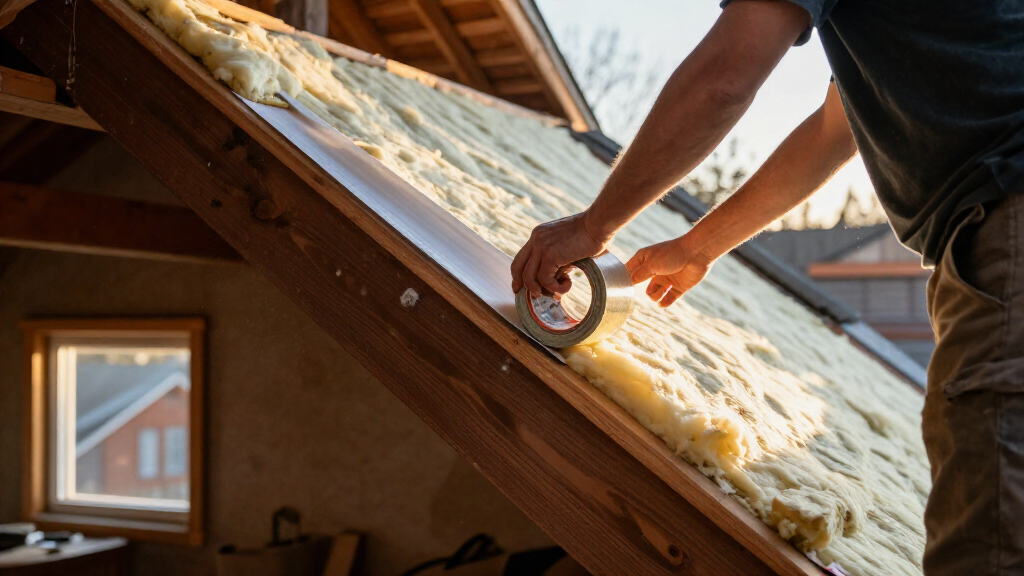

The best roof insulation and air sealing products depend on whether you need broad insulation coverage, targeted gap sealing, or a better fit around a metal roof. My best overall pick is the FROTH-PAK 630 with a 15-foot hose for larger closed-cell foam projects, while Loctite Tite Foam is a more approachable choice for small cracks and Sthovd closure strips address gaps beneath a classic-rib metal roof. The main tradeoff is project scale: two-part kits cover more area but call for careful setup and protective equipment, while cans and closure strips suit narrower jobs. Reflective roll insulation offers a different approach, but its performance depends on proper installation and the right roof assembly. Read on for the full breakdown and guidance on choosing for your roof.

Get home appliances delivered free with Prime
- Fast, free delivery on millions of items
- Prime Video, Amazon Music and more included
- Member-only deals all year
Complete the kit



Key Takeaways
- FROTH-PAK 630 with a 15-foot hose leads for larger jobs where closed-cell foam coverage matters; the 30-foot-hose version favors reach, while the 9-foot-hose FROTH-PAK 200 suits more limited work.
- Loctite Tite Foam and DAP Wall and Cavity Foam are better matched to localized gaps than whole-roof insulation, so small repairs do not require a larger two-part kit.
- Great Stuff Gaps & Cracks in a 12-can case supports repeated small sealing tasks, while buying multiple cans may be less practical for a single, isolated repair.
- Sthovd closure strips serve a specific purpose under classic-rib metal roofing; their profile fit is more important than choosing a general-purpose foam product.
- FONUNO reflective bubble insulation stands apart from the foam options, but it is not a direct substitute for every insulation assembly and calls for careful attention to installation conditions.
| FROTH-PAK 630 Closed-Cell Spray Foam Insulation Kit with 15-Foot Hose | 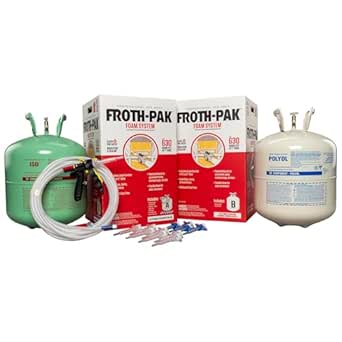 | Best for Large Roof Areas | Foam type: Closed-cell, two-component polyurethane | Coverage: Up to 630 sq ft at 1-inch thickness | R-value: 6.2 per inch; 12.2 at 2 inches | VIEW LATEST PRICE | See Our Full Breakdown |
| FONUNO Reflective Bubble Insulation Roll, 23.6 in x 10 ft |  | Best for Reflective Surface Coverage | Dimensions: 120 in L x 23.6 in W | Thickness: 3 mm | Coverage: 2,832 sq in | VIEW LATEST PRICE | See Our Full Breakdown |
| Loctite Tite Foam Gaps & Cracks Spray Foam Sealant, White, 12 oz |  | Best for Small Roof Leaks and Gaps | Material: Polyurethane | Can size: 12 oz | Maximum gap size: 1 inch | VIEW LATEST PRICE | See Our Full Breakdown |
| Magic Chems Closed-Cell Spray Foam Insulation Kit, 18-Pack, 25.4 oz |  | Best Complete Can-Based Kit | Foam type: Closed-cell polyurethane | Can volume: 25.4 fl oz (750 ml) each | Package quantity: 18 foam cans | VIEW LATEST PRICE | See Our Full Breakdown |
| DAP Wall and Cavity Foam with Wide Spray Applicator, 20 oz. |  | Best for Broad Cavity Application | Material: Polyurethane foam | Container size: 20 oz | R-value: 4.1 at 1 inch, aged | VIEW LATEST PRICE | See Our Full Breakdown |
| FROTH-PAK 200 Closed-Cell Spray Foam Insulation Kit with 9 ft Hose |  | Best for Targeted Roof Repairs | Foam type: Two-component closed-cell polyurethane | Coverage: Up to 200 sq ft at 1 in thick | R-value: 6.2 per inch; 12.2 at 2 in | VIEW LATEST PRICE | See Our Full Breakdown |
| Great Stuff Gaps & Cracks Insulating Foam Sealant – 12 oz (Case of 12) |  | Best for Small, Precise Draft Sealing | Pack quantity: 12 cans | Can size: 12 oz | Total unit count: 144 fluid oz | VIEW LATEST PRICE | See Our Full Breakdown |
| Sthovd 9-Inch Foam Closure Strips for Metal Roofs, Classic Rib Profile, 10 Pack |  | Best for Classic-Rib Metal Roof Edges | Quantity: 10 pieces | Total length: 3 ft | Dimensions: 9 in x 9 in | VIEW LATEST PRICE | See Our Full Breakdown |
| NKYJSJLY Closed-Cell Spray Foam Insulation Kit, 12 Cans with Applicator Gun |  | Best Multi-Can DIY Kit | Can count: 12 | Can size: 30.1 oz (850 ml) each | Coverage: Up to 240 board feet | VIEW LATEST PRICE | See Our Full Breakdown |
| Froth-Pak 630 Spray Foam Insulation Kit – 30 ft Hose, Closed Cell |  | Best for Large Roof and Attic Projects | Foam type: Two-component closed-cell polyurethane | Coverage: Up to 630 sq ft at 1 in thick | R-value: 6.2 per inch; 12.2 at 2 in | VIEW LATEST PRICE | See Our Full Breakdown |
| roof insulation and air sealing product | Coverage |
|---|---|
| FROTH-PAK 630 Closed-Cell Spra | Up to 630 sq ft at 1-inch thickness |
| FONUNO Reflective Bubble Insul | 2,832 sq in |
| Loctite Tite Foam Gaps & Crack | — |
| Magic Chems Closed-Cell Spray | Up to 360 sq ft |
| DAP Wall and Cavity Foam with | — |
| FROTH-PAK 200 Closed-Cell Spra | Up to 200 sq ft at 1 in thick |
| Great Stuff Gaps & Cracks Insu | — |
| Sthovd 9-Inch Foam Closure Str | — |
| NKYJSJLY Closed-Cell Spray Foa | Up to 240 board feet |
| Froth-Pak 630 Spray Foam Insul | Up to 630 sq ft at 1 in thick |
More Details on Our Top Picks
FROTH-PAK 630 Closed-Cell Spray Foam Insulation Kit with 15-Foot Hose
For buyers sealing and insulating a substantial roof or attic section, the FROTH-PAK 630 offers a more project-scale solution than the single-can options in this lineup. Its stated coverage reaches 630 square feet at 1-inch thickness, with an R-value of 6.2 per inch, so it pairs air sealing with meaningful insulation rather than just plugging individual cracks. The 15-foot hose and included fan and cone nozzles give you more reach and application choices than a small aerosol can.
The tradeoff is setup and safety: this two-component kit requires careful application, protective equipment sold separately, and ventilation before re-entry. Unlike the DAP Wall and Cavity Foam, it is not a ready-to-use one-component can. I’d choose it for broader work, not a handful of small leaks.
Pros:- Stated coverage of up to 630 square feet at 1-inch thickness
- Closed-cell foam provides an R-value of 6.2 per inch
- Includes a 15-foot hose and multiple spray nozzle types
- Fast cure time of about 30 seconds
Cons:- Protective equipment is required but not included
- Occupants must wait for proper ventilation before re-entry
- Two-component application is less straightforward than using a one-component can
Best for: Roof and attic renovators covering a broad area who can follow two-component application and ventilation requirements.
Not ideal for: Homeowners sealing only a few narrow gaps or anyone without the required protective equipment and ability to ventilate the work area.
- Foam type:Closed-cell, two-component polyurethane
- Coverage:Up to 630 sq ft at 1-inch thickness
- R-value:6.2 per inch; 12.2 at 2 inches
- Hose length:15 ft
- Cure time:About 30 seconds
- Occupant re-entry:1 hour with proper ventilation
- Compatible materials:Drywall, masonry, metal, rigid foam, and wood
- Included components:Part A and Part B tanks, applicator, hose, fan and cone nozzles, petroleum jelly packet, and instructions
Our verdict“Choose this kit for larger roof-insulation and air-sealing jobs where its coverage and R-value justify the extra setup and safety requirements.”
FONUNO Reflective Bubble Insulation Roll, 23.6 in x 10 ft
The FONUNO Reflective Bubble Insulation Roll takes a different approach from the spray foams here: it is a cut-to-fit reflective layer, not an expanding material for sealing roof gaps. Its aluminum-film faces and polyethylene bubble core can suit a roof, garage door, or RV surface where a lightweight, wipe-clean covering is useful. The included double-sided tape also makes it less involved to attach than a spray-foam kit, though the product data gives no quantified R-value or thermal performance.
That missing performance figure makes it harder to compare directly with the FROTH-PAK 630, which states an R-value and coverage at a defined thickness. At only 10 feet long, this roll is also better for smaller sections than a full roof. I’d treat it as a reflective surface layer, not a substitute for filling air leaks or adding rated cavity insulation.
Pros:- Reflective aluminum film with a polyethylene bubble layer
- Can be cut to fit and comes with double-sided tape
- Waterproof surface is easy to wipe clean
- Suitable for several uses, including roofs, windows, RVs, and garage doors
Cons:- No quantified R-value or insulation performance is provided
- The 10-foot roll may require multiple pieces for larger surfaces
- Does not expand to seal roof gaps like spray foam
Best for: RV owners and homeowners covering a small, accessible roof or garage-door surface who want a cut-to-size reflective layer.
Not ideal for: Buyers insulating a large roof area or sealing cracks, or anyone who needs a stated R-value to plan thermal performance.
- Dimensions:120 in L x 23.6 in W
- Thickness:3 mm
- Coverage:2,832 sq in
- Materials:Polyethylene and reflective aluminum film
- Installation:Cut to size; double-sided tape included
- Water resistance:Waterproof
- Recommended uses:Windows, RVs, roofs, garage doors, and outdoor use
Our verdict“Pick this roll for small reflective surface applications, but choose a rated spray foam when air sealing or specified insulation performance is the priority.”
Loctite Tite Foam Gaps & Cracks Spray Foam Sealant, White, 12 oz
When the job is a narrow opening rather than a whole roof section, Loctite Tite Foam Gaps & Cracks is a more focused choice than the FROTH-PAK 630. The single 12-ounce can expands into gaps up to 1 inch, forming a barrier against drafts, moisture, and pests on common materials such as wood, metal, masonry, and drywall. Its ability to be sanded and painted can also help when a visible repair needs finishing.
That convenience comes with a clear limit: this is a gap sealant, not a broad-area insulation system, and the maximum gap size is 1 inch. It provides no stated roof-area coverage or R-value in the supplied data, unlike the FROTH-PAK 630. I’d keep it for localized cracks and penetrations; buyers with larger cavities should use a product designed for wider coverage.
Pros:- Fills gaps and cracks up to 1 inch
- Creates a water-resistant barrier against drafts, moisture, and pests
- Adheres to wood, metal, concrete, masonry, PVC, and drywall
- Flexible, UV resistant, sandable, and paintable
Cons:- Limited to gaps no wider than 1 inch
- Single 12-ounce can is not suited to broad roof coverage
- Supplied product data gives no R-value or coverage figure
Best for: DIY homeowners sealing small roof-adjacent cracks, penetrations, and gaps up to 1 inch around compatible building materials.
Not ideal for: Anyone insulating broad roof or attic areas, filling openings wider than 1 inch, or planning around a specified R-value.
- Material:Polyurethane
- Can size:12 oz
- Maximum gap size:1 inch
- Color:White
- Water resistance:Water resistant
- Compatible materials:Wood, metal, concrete, masonry, PVC, and drywall
- Finish properties:Flexible, UV resistant, sandable, and paintable
Our verdict“Choose Loctite for isolated gaps up to 1 inch; use a larger insulation kit for extensive roof work or a project requiring stated thermal performance.”
Magic Chems Closed-Cell Spray Foam Insulation Kit, 18-Pack, 25.4 oz
The Magic Chems 18-pack bridges the gap between a single-can sealant and a two-component system like the FROTH-PAK 630. It includes 18 closed-cell foam cans plus a spray gun, cleaner, nozzle tips, and basic protective gear, giving buyers a ready-to-assemble kit for repeated sealing and insulation tasks. The product lists up to 360 square feet of coverage and says the foam can provide thermal and acoustic insulation, making it more suited to a series of jobs than the Loctite 12-ounce can.
Its main tradeoff is the 24-hour full cure time, which calls for patience before trimming or finishing. Coverage is stated without a thickness qualifier, so it is less directly comparable with FROTH-PAK 630’s figure at 1 inch. Application also depends on maintaining the recommended spraying distance. I’d favor it for multi-area work where included accessories matter more than fast turnaround.
Pros:- Includes 18 closed-cell foam cans
- Spray gun, cleaner, nozzle tips, and basic protective gear are included
- Listed for thermal and acoustic insulation as well as air sealing
- Compatible with a wide range of building materials
Cons:- Full cure takes up to 24 hours
- Coverage is not tied to a stated application thickness
- Application quality depends on maintaining the recommended spraying distance
Best for: DIY renovators sealing multiple roof, attic, or building gaps who want several cans, a gun, cleaner, and basic protective gear in one kit.
Not ideal for: Buyers who need a clearly thickness-qualified coverage estimate, a fast full cure, or a two-component system for a large, defined insulation area.
- Foam type:Closed-cell polyurethane
- Can volume:25.4 fl oz (750 ml) each
- Package quantity:18 foam cans
- Coverage:Up to 360 sq ft
- Full cure time:24 hours
- Water resistance:Water resistant
- Included accessories:Foam gun, gun cleaner, nozzle tips, coverall, goggles, nitrile gloves, safety mask, and user guide
- Compatible materials:Includes wood, metal, concrete, brick, PVC, OSB, drywall, and other listed surfaces
Our verdict“Choose this kit for repeated smaller applications when a supplied gun and accessories are useful, but favor FROTH-PAK 630 for more clearly specified large-area coverage.”
DAP Wall and Cavity Foam with Wide Spray Applicator, 20 oz.
The DAP Wall and Cavity Foam is the most approachable option here for filling and insulating a cavity with a single aerosol can. Its wide-spray applicator is intended for wall cavities, rim joists, attics, and crawlspaces, so it suits broader application than the Loctite Tite Foam, which is limited to gaps up to 1 inch. DAP also supplies an aged R-value of 4.1 at 1 inch and a Class A fire rating, giving buyers more defined performance information than the FONUNO reflective roll.
It remains a one-can product, not a large-area system: the supplied data lists one 20-ounce container and no coverage figure. Its roughly four-hour full cure is slower than the FROTH-PAK 630’s stated 30-second cure, although the DAP format avoids that kit’s two-component setup. I’d pick it for accessible cavities and modest repairs, not extensive roof coverage.
Pros:- Wide-spray applicator is designed for cavity work
- Aged R-value of 4.1 at 1 inch is specified
- Class A fire rated
- One-component aerosol format is simpler than a two-component kit
Cons:- Single 20-ounce can has no stated coverage figure
- Full cure takes about four hours
- R-value per inch is lower than the stated 6.2 for FROTH-PAK 630
Best for: Homeowners sealing accessible attic, rim-joist, or wall cavities who want a one-component foam with a wide spray applicator and stated aged R-value.
Not ideal for: Contractors or homeowners treating a large roof area, or buyers who need a listed coverage quantity or faster full cure.
- Material:Polyurethane foam
- Container size:20 oz
- R-value:4.1 at 1 inch, aged
- Applicator:Wide-spray applicator included
- Tack-free time:7–12 minutes
- Full cure time:About 4 hours
- Application temperature range:40°F to 120°F
Our verdict“Choose DAP for modest cavity jobs where a wide spray and stated aged R-value are useful, but use a larger kit for extensive roof insulation.”
FROTH-PAK 200 Closed-Cell Spray Foam Insulation Kit with 9 ft Hose
For sealing a handful of roof-to-wall junctions, rim areas, or utility penetrations, the FROTH-PAK 200 combines air sealing and insulation in one application. Its R-6.2 per inch closed-cell foam cures in about 30 seconds, so the treated area can move along quickly, while the 9-foot hose and several nozzle styles help reach different gaps. Compared with the larger Froth-Pak 630 with 30 ft Hose, this kit is easier to match to a limited repair without handling a larger system, but its coverage tops out at 200 square feet at one inch. The tradeoff is that rapid curing leaves little room to correct a misplaced bead, and PPE is not included. I’d choose it for contained jobs, not broad attic coverage.
Pros:- Combines air sealing with closed-cell insulation at R-6.2 per inch.
- Covers up to 200 square feet at one-inch thickness for defined repair areas.
- Fast, roughly 30-second cure helps keep small projects moving.
- Includes fan and cone nozzles for different application patterns.
Cons:- Required personal protective equipment is not included.
- Coverage is limited compared with the Froth-Pak 630 kit.
- Fast cure time makes careful setup and accurate application important.
Best for: Homeowners or contractors sealing a limited number of roof junctions, penetrations, or small insulation gaps who can prepare the work area and supply proper protective equipment.
Not ideal for: Buyers insulating a large roof or attic, or anyone who needs a slower, more forgiving sealant and does not already have required PPE.
- Foam type:Two-component closed-cell polyurethane
- Coverage:Up to 200 sq ft at 1 in thick
- R-value:6.2 per inch; 12.2 at 2 in
- Maximum thickness:2 in
- Cure time:About 30 seconds
- Hose length:9 ft
- Included components:Part A and B tanks, applicator, hose, 4 fan nozzles, 8 cone nozzles, petroleum jelly packet, instructions
- Certifications:Green Circle Certified, LEED v4 compliant, ICC listed
Our verdict“Choose this kit for targeted roof air-sealing and insulation work; select the Froth-Pak 630 when the job spans a much larger area.”
Great Stuff Gaps & Cracks Insulating Foam Sealant – 12 oz (Case of 12)
The Great Stuff Gaps & Cracks case is the practical choice for scattered, narrow gaps rather than insulating an entire roof plane. Its straw applicator lets a DIYer place foam around small penetrations and joints, and the water-resistant formula can be used indoors or outdoors on listed compatible surfaces. The foam expands to fill gaps up to one inch, so it can block drafts where a rigid closure strip or larger spray-foam kit would be awkward. Compared with the FROTH-PAK 200, these cans are simpler to deploy for isolated touch-ups, but they do not provide a stated per-inch R-value or the same coverage data for roof insulation. Expansion can also overfill a cavity if applied too heavily. I’d keep it for modest air leaks, not use it as a substitute for a planned insulation layer.
Pros:- Straw applicator suits small, localized gaps and penetrations.
- Water-resistant foam is described for interior and exterior use.
- Compatible with wood, metal, masonry, glass, and most plastics.
- Tack-free in about 6 minutes and trimmable in about 30 minutes.
Cons:- Expansion can be difficult to control and may leave excess foam.
- No roof-area coverage or per-inch R-value is specified in the supplied product data.
- Less suited to larger insulation jobs than the FROTH-PAK 200.
Best for: DIYers sealing a collection of small roof-adjacent gaps, pipe openings, or cracks who want individual cans and a straw applicator rather than a two-component kit.
Not ideal for: Buyers covering broad roof areas or needing a specified insulation R-value; the product is intended for gaps up to one inch, and expansion needs control.
- Pack quantity:12 cans
- Can size:12 oz
- Total unit count:144 fluid oz
- Gap size:Expands to fill gaps up to 1 in
- Water resistance:Water resistant
- Applicator:Straw applicator
- Tack-free time:About 6 minutes
- Trim time:About 30 minutes
- Compatible materials:Wood, metal, masonry, glass, and most plastics
Our verdict“Pick this case for small, scattered air leaks; choose a closed-cell kit when your roof project needs measured insulation coverage.”
Sthovd 9-Inch Foam Closure Strips for Metal Roofs, Classic Rib Profile, 10 Pack
Unlike spray foam, the Sthovd closure strips are shaped inserts for a specific roof detail: classic-rib metal roofing. Their profile-matched polyurethane foam is intended to close openings where panels meet, helping limit drafts and the entry of rain or snow without spraying foam onto the roof assembly. That makes them a more targeted fit than the Great Stuff Gaps & Cracks cans, which are better suited to irregular small cracks and penetrations. The limitation is substantial: the listed total length is only three feet, and compatibility is tied to the classic-rib profile. Buyers should verify the panel shape and dimensions before ordering; these strips are not a general-purpose roof insulation product. I’d use them as a detail component, not as a replacement for continuous insulation or air-barrier work.
Pros:- Profile-specific shape is intended to fit classic-rib metal roofing.
- Helps block drafts, rain, and snow at roof openings.
- Polyurethane foam can provide a modest insulating buffer.
- Solid closure-strip format avoids spraying foam around the panel detail.
Cons:- Listed total length is only 3 ft, limiting the size of a repair.
- Compatibility is specific to classic-rib roofing and requires a profile check.
- Does not provide a stated R-value or continuous roof-area coverage.
Best for: Metal-roof owners repairing a short section of classic-rib panel edges who have confirmed the closure profile matches their roofing.
Not ideal for: Owners of standing-seam, corrugated, or other unmatched roof profiles, and buyers seeking broad-area insulation rather than a short run of closures.
- Quantity:10 pieces
- Total length:3 ft
- Dimensions:9 in x 9 in
- Material:Polyurethane foam
- Roof profile:Classic rib
- Recommended use:Metal-roof insulation and weatherproofing
Our verdict“Choose these strips only when your metal roof has the matching classic-rib profile and the three-foot total run suits the repair.”
NKYJSJLY Closed-Cell Spray Foam Insulation Kit, 12 Cans with Applicator Gun
The NKYJSJLY 12-can kit takes a middle route between single-can gap filler and tank-based spray foam: it supplies multiple cans plus a gun, cleaner, goggles, and gloves. That bundle suits a DIYer sealing several separate roof gaps who wants more controlled placement than a basic straw can offers. The listed coverage is up to 240 board feet, while the stated R-8.24 applies at a two-inch layer; it should not be read as the R-value for every application thickness. Compared with the FROTH-PAK 200, this kit includes protective accessories and uses individual cans, but the supplied specifications do not give a per-inch R-value or the same coverage basis as square feet at a stated thickness. Application still needs care, and I’d verify the instructions and intended use before treating it as a roof-wide insulation system.
Pros:- Includes 12 cans and an applicator gun for repeated applications.
- Foam cleaner, goggles, and gloves are included.
- Closed-cell foam is intended to seal gaps and provide thermal and sound insulation.
- Listed coverage reaches up to 240 board feet.
Cons:- The R-8.24 figure is specified only for a two-inch layer.
- Coverage is stated in board feet, making direct comparison with square-foot figures harder.
- Application requires care, and the kit is less clearly specified for broad roof coverage than the Froth-Pak 630.
Best for: DIYers handling multiple small-to-medium sealing areas who want a foam gun and basic protective accessories included with the cans.
Not ideal for: Buyers needing clearly specified coverage at a defined roof-area thickness, or those planning a large, continuous roof insulation project better matched to a dedicated high-coverage kit.
- Can count:12
- Can size:30.1 oz (850 ml) each
- Coverage:Up to 240 board feet
- Approximate R-value:8.24 at a 2 in layer
- Included components:Applicator gun, foam cleaner, goggles, and gloves
- Item weight:26.6 lb
- Model number:B-12PK
Our verdict“Choose this kit for several DIY sealing jobs where the included gun and accessories matter more than a clearly stated square-foot coverage figure.”
Froth-Pak 630 Spray Foam Insulation Kit – 30 ft Hose, Closed Cell
When a roof or attic job spans a large area, the Froth-Pak 630 is the strongest fit in this group: it lists up to 630 square feet at one-inch thickness and pairs that scale with a 30-foot hose. Its two-component closed-cell foam provides R-6.2 per inch and cures in about 30 seconds, so it can cover more area per kit than the FROTH-PAK 200 without repeatedly repositioning a short hose. That reach and yield come with a skill requirement: fast cure leaves little time to adjust application, and the required PPE is not included. The stated one-hour re-entry time also depends on ventilation. I’d reserve this for a prepared, larger project; for a few isolated leaks, a can-based sealant is easier to control and less involved.
Pros:- Coverage is listed up to 630 sq ft at one-inch thickness.
- The 30-foot hose reaches farther across a roof or attic than the FROTH-PAK 200 hose.
- Closed-cell foam provides R-6.2 per inch and cures in about 30 seconds.
- Includes tanks, gun dispenser, hose, multiple nozzles, and instructions.
Cons:- Required personal protective equipment is not included.
- Rapid curing makes careful preparation and practiced application important.
- One-hour re-entry is specified with ventilation, so project access needs planning.
Best for: Experienced DIYers or contractors insulating or air-sealing a substantial roof, attic, wall, or penetration area who can prepare the site and supply required PPE.
Not ideal for: First-time users with only a few small gaps to seal, or buyers who need a slower application process or a kit with PPE included.
- Foam type:Two-component closed-cell polyurethane
- Coverage:Up to 630 sq ft at 1 in thick
- R-value:6.2 per inch; 12.2 at 2 in
- Cure time:About 30 seconds
- Re-entry time:1 hour with ventilation
- Hose length:30 ft
- Included components:A and B tanks, Insta-FLO gun, hose, 8 cone nozzles, 4 fan nozzles, petroleum jelly packet, manual
Our verdict“Choose the Froth-Pak 630 for a large, prepared roof or attic job where its coverage and hose reach justify the faster, more demanding application.”
How We Picked
I compared these products by the roof task they can reasonably address: insulating a broader area, sealing small penetrations and cracks, or closing profile-shaped gaps. I weighed the intended coverage and application format alongside hose or applicator reach, the amount of setup involved, and how specialized each product is. For roof work, a product that suits the actual gap or assembly matters more than a broad claim of versatility.
The ranking favors options with a clear role and useful scope for common roof projects. The FROTH-PAK 630 with a 15-foot hose ranks first for its balance of closed-cell kit capacity and manageable reach; the longer-hose 630 trades easier access for more hose length. Small-can sealants rank better for localized repairs and beginner-friendly tasks, while specialty closure strips and reflective roll insulation rank for narrower installation needs. Product descriptions do not establish that any one option is right for every roof, so I treat fit, coverage, and application demands as deciding factors rather than assuming equal performance across different formats.
Factors to Consider When Choosing Best Roof Insulation And Air Sealing Products
Before choosing a product, match it to the roof assembly and the size of the air leak or insulation area. A sealant can close a small opening, but it does not replace a planned insulation layer; likewise, an insulation product cannot correct every moisture or ventilation problem. These broader checks can help prevent buying a product that fits the label but not the job.
Separate Air Sealing From Insulation
Air leaks and heat flow are related problems, but they are not the same repair. A small crack around a pipe or framing joint may call for a bead or controlled application of sealant; an uninsulated roof area may require a continuous insulation strategy. Treating every opening with expanding foam can leave larger areas under-insulated, while adding insulation over active air leaks can hide the source rather than address it. Map the work first: mark penetrations, seams, and broad uninsulated surfaces separately. This distinction helps determine whether a small can, a two-part kit, a closure strip, or a different assembly is appropriate.
Check the Roof Assembly and Moisture Path
Roof insulation choices affect how heat and moisture move through the assembly, so the roof’s existing layers matter. Identify the roof deck, underlayment, ventilation path, and any signs of condensation or water entry before sealing cavities. Adding a low-permeance material in the wrong location can limit drying and contribute to moisture problems. Product labels alone cannot confirm that a proposed layer is suitable for a particular climate or assembly. When the existing construction is unclear, a building professional can help determine where insulation and air control belong before materials are installed.
Match Coverage to the Job, Not the Container Count
Foam kits and single-can sealants are designed for different work scales, and package size is not a reliable measure of useful coverage without checking application details. Estimate the length, width, and depth of the areas to be filled, then compare that scope with the manufacturer’s stated yield and conditions. A large two-part kit can be a poor fit for a few small gaps if setup and leftover material complicate the job. A multipack may make sense for several repairs or ongoing maintenance, but it can be wasteful for one isolated leak. Allow for irregular cavities and avoid filling spaces beyond the product’s instructions.
Plan for Application Skill and Protective Equipment
Application format affects how much control and preparation a job requires. One-component cans are generally more suited to targeted work, while two-part kits involve more setup and careful handling. Foam can expand beyond an opening, adhere to nearby surfaces, and be difficult to remove after curing, so masking and a practice plan can prevent damage. Follow the product label for ventilation, protective equipment, temperature limits, and cleanup; do not treat any foam product as harmless because it comes in a consumer package. If the job is overhead, extensive, or difficult to access, the labor and safety demands may favor a qualified installer.
Verify Profile Fit for Metal Roof Closures
Closure strips work only when their shape matches the metal panel profile and the location where they will be installed. A classic-rib strip may not seal correctly against a different rib spacing or panel shape, even if the length seems suitable. Measure the panel profile and check whether the product is intended for the eave, ridge, or another joint before ordering. Also inspect the roof for debris or uneven surfaces that could prevent a close fit. For this kind of detail, a well-matched strip may be more useful than applying general-purpose foam around the panel edges.
Treat Reflective Roll as a System, Not a Standalone Fix
Reflective bubble insulation differs from foam because its benefit depends on how it is installed within the roof assembly, including the adjacent air space and direction of heat transfer. Installing it tightly against another surface may not deliver the intended reflective effect. Check the manufacturer’s installation instructions and confirm how the material works with existing insulation, ventilation, and moisture control. It may suit a specific retrofit or supplemental layer, but it should not be assumed to replace a continuous insulation plan. Compare the complete assembly needs rather than choosing by the roll format alone.
Frequently Asked Questions
Should I use a two-part spray foam kit or a can of gap foam for roof leaks?
Choose by the size and shape of the air-sealing task, not just by the word “roof.” A can of gap foam is generally a better fit for a few small openings, while a two-part kit is intended for broader application and calls for more preparation. Neither product is a substitute for repairing a water leak or damaged roofing materials. Check the label for approved uses, surface conditions, and application limits before sealing. For a large or inaccessible area, professional assessment can help prevent a foam repair from concealing a larger problem.
Can I install closed-cell spray foam directly against my roof deck?
That depends on the roof design, climate, ventilation strategy, and the rest of the assembly. Closed-cell foam can alter how moisture moves and how the roof deck dries, so a general product recommendation cannot confirm that direct application is suitable for every home. Check applicable building requirements and the manufacturer’s instructions, and review the existing layers before proceeding. If the roof has a history of condensation or leaks, address those conditions first. A building professional can assess the assembly when its drying path is uncertain.
How do I decide between the FROTH-PAK 630 hose lengths?
Base the choice on the work area’s size and how far you need to reach, while following the kit’s stated coverage and handling instructions. The 15-foot hose is the balanced option in this roundup; the 30-foot hose offers more reach for locations farther from the kit, while the added length may be unnecessary for a compact work area. The FROTH-PAK 200 has a shorter 9-foot hose and is a better match when a smaller kit scope and limited reach fit the task. Hose length does not by itself determine whether the kit has enough material for the project. Measure the area and compare it with the manufacturer’s yield before choosing.
Is reflective bubble insulation enough to insulate an attic or roof?
It should not be assumed to provide a complete roof insulation solution on its own. Reflective materials work as part of an assembly, and performance depends on installation details such as an adjacent air space and how the material relates to other layers. They also do not seal every crack simply by covering a surface. Compare the product’s stated performance and installation requirements with the needs of your roof, including air sealing and moisture control. If you are replacing or adding a major insulation layer, evaluate the whole assembly rather than selecting a material in isolation.
Will classic-rib foam closure strips fit any metal roof?
No. Closure strips need to match the panel profile and the location of the joint, so a classic-rib shape may not fit another metal-roof design. Compare the strip dimensions and profile with the roof panel, and check whether it is intended for the eave, ridge, or another edge. A loose or mismatched strip can leave gaps that defeat its purpose. Measure before ordering, and use the panel maker’s guidance when available. General-purpose spray foam is not automatically a better replacement if the profile itself needs a formed closure.
Conclusion
For a larger closed-cell foam project, my best overall choice is the FROTH-PAK 630 with a 15-foot hose; choose the 30-foot version instead when reach is the priority. The best value for repeated small repairs is Great Stuff Gaps & Cracks in a 12-can case, while beginners handling a limited gap may prefer Loctite Tite Foam or DAP’s wide-applicator can over a two-part kit. For a premium, broader-coverage kit, compare the FROTH-PAK 630 options against the project’s area and access needs rather than buying extra hose by default. The best specific-use pick is Sthovd’s closure strips for a matching classic-rib metal roof; FONUNO’s reflective roll suits buyers whose roof assembly calls for that installation approach. Choose by roof fit and task scale first, then select the product format that matches the work you can safely complete.