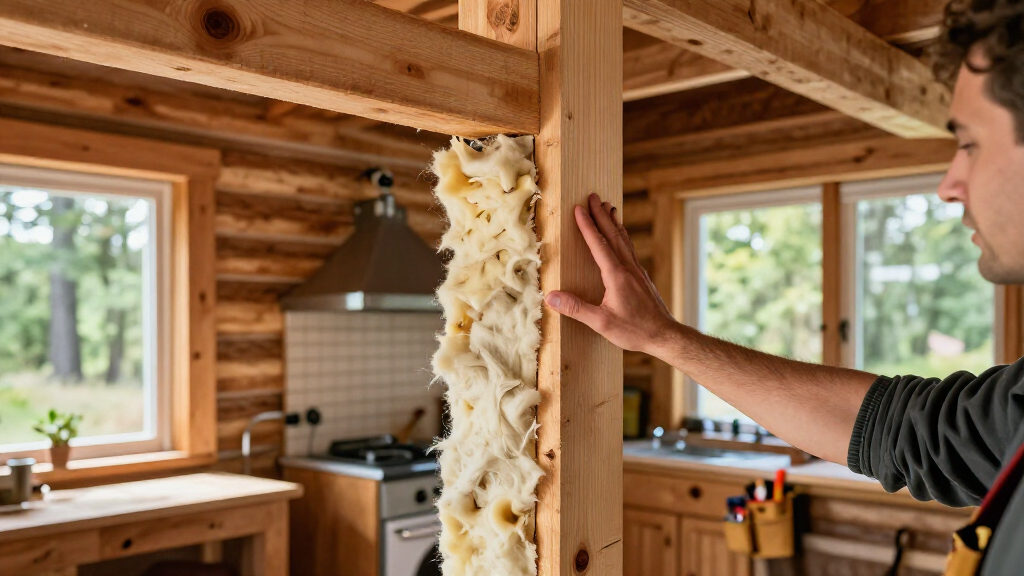

The best log cabin insulation depends on the wall cavity, climate, and how much installation work you can take on. I’d put Johns Manville R-19 Kraft-Faced Fiberglass Batt first for framed 2×6 walls, while Y’allCanDIY Spray Foam stands out for targeted air sealing and EcoFoil Double Bubble suits projects where a reflective layer is appropriate. The main tradeoff is between cavity-filling insulation, which slows heat transfer, and reflective products, which need the right air space and installation to perform as intended. Spray foam can seal gaps but calls for careful handling, while batts require accurate fitting and moisture-aware wall design. Read on for the full comparison and guidance on choosing insulation for your cabin’s actual construction.

Get home appliances delivered free with Prime
- Fast, free delivery on millions of items
- Prime Video, Amazon Music and more included
- Member-only deals all year
Complete the kit


Key Takeaways
- Johns Manville R-19 Kraft-Faced Batt is the clearest fit for standard 2×6 framed cavities; its listed R-value does not make it a direct substitute for insulation designed around solid log walls.
- Y’allCanDIY’s kit with gun, cleaner, and safety gear offers a more complete spray-foam setup than a basic can-based approach, but foam still requires careful application and protective practices.
- Reflective rolls are not interchangeable with cavity insulation: SmartSHIELD, EcoFoil, and Reflectix depend on installation details, including suitable air space, and their stated R-values should be checked against the assembly used.
- Owens Corning’s unfaced R-19 batt gives buyers a facing-free option, while kraft-faced batts may be more convenient where the wall design calls for a vapor retarder; neither should be selected without checking local moisture guidance.
- Coverage, cavity depth, and fit matter as much as product type: the small Frost King denim pieces and compact Reflectix roll suit limited areas better than whole-cabin projects, while the larger EcoFoil rolls cover more area per package.


| log cabin insulation | Material | Dimensions | Thickness | Facing |
|---|---|---|---|---|
| Y’allCanDIY 18-Can Spray Foam | Polyurethane foam | — | — | — |
| Owens Corning RU41 Pink Fiberg | Fiberglass | 93 × 23 inches | — | Unfaced |
| Johns Manville R-19 Kraft-Face | Fiberglass | 93 inches long × 15 inches wide | 6.25 inches | Kraft-faced moisture barrier |
| SmartSHIELD 5mm 16" x 50 ft R- | — | — | 5 mm | — |
| BEEST FullStop Spray Foam Insu | — | — | — | — |
| EcoFoil Double Bubble Reflecti | Polyethylene | 48 in. x 75 ft. | 0.25 in. (approximately 6.35 mm) | Foil/foil |
| EcoFoil Single Bubble Reflecti | Polyethylene | 48 in. x 125 ft. | 3.175 mm (approximately 1/8 in.) | White/foil |
| Frost King CF1 No-Itch Recycle | 100% recycled denim | 16 x 1 x 48 in. | — | — |
| Reflectix BP24025 24-Inch by 2 | Aluminum foil, polyethylene, and insulating bubbles | 300 in. L x 24 in. W | 0.31 in. (5/16 in.) | — |
| Owens Corning R-19 Unfaced Fib | Fiberglass | — | 6.5 in. | Unfaced; no vapor barrier |
More Details on Our Top Picks
Y’allCanDIY 18-Can Spray Foam Insulation Kit with Gun, Cleaner, and Safety Gear
Y’allCanDIY’s 18-can kit is best suited to the irregular seams, penetrations, and small cavities where batt insulation leaves gaps. Its foam expands to fill openings and can provide up to R-8 at a recommended 2-inch thickness, while the included gun, cleaner, and protective gear make it a more complete package than a foam-only purchase. Compared with the BEEST FullStop 12-can kit, it includes more cans and lists a broader set of accessories, but BEEST supplies a stated board-foot coverage figure and a specified R-value of 8.24 at two inches. Y’allCanDIY’s coverage is not quantified, so I would not choose it for estimating a large cabin project. It also needs clean, dry surfaces and application within its recommended temperature range; careful, controlled placement matters because foam can expand beyond the intended area.
Pros:- Includes 18 foam cans, applicator gun, cleaner, and protective accessories.
- Expanding foam can fill cracks and gaps that are awkward to address with batts.
- Adheres to many common cabin materials, including wood, OSB, masonry, and concrete.
- Suitable for varied sealing and insulation tasks in walls, attics, and crawl spaces.
Cons:- No total project coverage figure is provided, making material planning difficult.
- Performance and coverage vary with application depth and conditions.
- Requires surface preparation and controlled application to avoid excess foam.
Best for: Cabin owners sealing drafts around framing, utility openings, and other uneven gaps who want the gun, cleaner, and safety gear in one kit.
Not ideal for: Buyers insulating large, uniform wall areas or needing a dependable coverage estimate; the listing gives no total coverage figure and application results vary.
- Material:Polyurethane foam
- Container:18 aerosol cans
- Can volume:33.8 fl oz (1,000 ml) each
- Claimed insulation value:Up to R-8 at 2-inch thickness
- Recommended application temperature:60–90°F (15–32°C)
- Included accessories:Foam gun, gun cleaner, gloves, safety glasses, respirator mask, coverall, straws, spreaders, and nozzles
- Compatible materials:Wood, OSB, plywood, lumber, concrete, masonry, stone, and brick
Our verdict“Choose this kit for sealing scattered cabin gaps and penetrations, but favor the BEEST kit when a stated coverage estimate matters.”
Owens Corning RU41 Pink Fiberglass Insulation
Owens Corning RU41 is the straightforward choice in this group for buyers who want cut-to-fit fiberglass for thermal and sound control, rather than an expanding foam for cracks or a reflective layer for radiant heat. Its unfaced construction leaves the installer flexibility to add a separate vapor-control layer where the wall assembly calls for one. That makes it less self-contained than the Johns Manville R-19 Kraft-Faced Batt, which has a stated R-value and kraft facing for 2×6 framing; RU41’s listing does not provide an R-value, and its stated quarter-inch thickness does not describe a typical deep wall batt. I would verify that measurement and the intended application before buying for cabin walls. The material is described as easy to cut and install, but this is not a gap-filling solution and needs a suitable cavity fit.
Pros:- Designed to help control both heat transfer and sound.
- Unfaced format allows the installer to select a separate vapor-control approach.
- Described as easy to cut and install.
- Fiberglass can be fitted into appropriate cavities more readily than reflective rolls.
Cons:- The listing does not state an R-value, limiting performance comparisons.
- The listed 0.25-inch thickness is unusually thin for wall-cavity insulation and should be confirmed.
- Unfaced material does not include the kraft facing supplied with Johns Manville R-19.
Best for: Cabin owners looking for a cut-to-fit fiberglass product for thermal and acoustic control in applications where unfaced material is appropriate.
Not ideal for: Buyers who need a specified R-value, a built-in facing, or a clearly documented thickness for a 2×6 cabin wall.
- Brand:Owens Corning
- Model:RU41
- Material:Fiberglass
- Facing:Unfaced
- Listed thickness:0.25 inches
- Dimensions:93 × 23 inches
- Weight:18 pounds
- Recommended uses:Thermal insulation and acoustical control
Our verdict“Consider RU41 for sound and thermal control only after confirming its thickness and suitability for the cabin cavity.”
Johns Manville R-19 Kraft-Faced Fiberglass Batt Insulation, 2×6 Walls and Floors, 10 Bags
Johns Manville R-19 Kraft-Faced Batts make the clearest match here for standard 2×6 cabin cavities: the stated R-19 rating, 6.25-inch thickness, and 15-inch width give buyers more useful fit information than the Owens Corning RU41 listing, which provides no R-value and lists a much thinner profile. Kraft facing adds a moisture-control layer, but it does not replace sound moisture-management choices for the whole wall assembly. The listed pack includes ten bags and gives coverage as 871.8 square feet, though the title reportedly lists a different total of 775 square feet. I would confirm coverage before planning a full build. Unlike the spray-foam kits, these batts suit broad, regular cavities rather than odd cracks, and they need accurate cutting and snug placement to limit gaps.
Pros:- Specified R-19 rating for a clear performance reference.
- 6.25-inch thickness and 15-inch width are identified for 2×6 framing applications.
- Kraft facing provides a moisture-control layer.
- Suitable for walls, floors, and attics, with ten bags listed.
Cons:- Coverage conflicts between the listed 775-square-foot title figure and 871.8-square-foot description and specifications.
- Batts need accurate fitting and do not expand to seal framing gaps like spray foam.
- The listed 5-ounce item weight may not reflect the packaged insulation weight.
Best for: Cabin builders insulating conventional 2×6 exterior walls, floors, or attic areas who want a stated R-value and kraft-faced batts.
Not ideal for: Buyers insulating irregular framing or needing a confidently stated total coverage amount without resolving the listing’s conflicting figures.
- Brand:Johns Manville
- Material:Fiberglass
- R-value:R-19
- Facing:Kraft-faced moisture barrier
- Thickness:6.25 inches
- Dimensions:93 inches long × 15 inches wide
- Quantity:10 bags
- Listed coverage:871.8 square feet in description and specifications; title lists 775 square feet
Our verdict“Pick these for broad 2×6 cabin cavities when R-19 batts fit the assembly, but verify the package coverage before ordering.”
SmartSHIELD 5mm 16″ x 50 ft R-17 Reflective Insulation Roll, Foam Core Radiant Barrier
SmartSHIELD’s reflective foam-core roll serves a different role from the fiberglass batts: it is designed to reflect radiant heat and act as a vapor barrier, rather than fill a deep framed cavity like the Johns Manville R-19 batts. The listing claims R-17 and up to 95% radiant-heat reflection, but buyers should check how the stated R-value applies to their planned installation, since reflective products depend on assembly details and an adjacent air space may affect performance. Its 16-inch width and 50-foot length make it a narrow roll, so it may suit targeted areas better than large wall runs. The roll is described as tear- and puncture-resistant and Class A fire-rated, yet careful cutting is still needed to protect the reflective surface. Compared with the wider EcoFoil rolls in this roundup, SmartSHIELD covers less width per pass.
Pros:- Reflective surface is claimed to reflect up to 95% of radiant heat.
- Acts as a vapor barrier according to the product specifications.
- Foam core adds structure compared with a simple reflective sheet.
- Listed as tear- and puncture-resistant and meeting Class A fire standards.
Cons:- The 16-inch roll width covers less area per pass than the 48-inch EcoFoil rolls in the roundup.
- Reflective performance depends on the installed assembly, so the R-17 claim should be checked against the intended application.
- Cutting and installation require care to avoid damaging the reflective surface.
Best for: Cabin owners adding a reflective layer or radiant barrier in applications suited to a narrow, 5mm foam-core roll.
Not ideal for: Buyers seeking conventional cavity-fill insulation or a wide roll for covering large wall areas quickly.
- Thickness:5 mm
- Roll dimensions:16 inches × 50 feet
- Listed R-value:R-17
- Radiant heat reflectivity:Up to 95%
- Core material:Foam
- Vapor barrier:Yes
- Fire standard:Class A
- Corrosion resistance standard:D3310
Our verdict“Choose SmartSHIELD for a targeted reflective barrier installation, not as a direct substitute for R-19 cavity batts.”
BEEST FullStop Spray Foam Insulation Kit, 12 Cans, Up to 240 Board Feet
BEEST FullStop is the stronger pick for cabin owners who want a stated coverage ceiling for gap sealing: the kit lists up to 240 board feet and R-8.24 at two inches. That makes planning more concrete than with the Y’allCanDIY 18-can kit, which includes more cans but does not state total coverage. BEEST also bundles a gun, cleaner, gloves, goggles, and a coverall, and its foam bonds to materials such as wood, drywall, concrete, and brick. The tradeoff is a tighter recommended application range of 68–77°F, so timing and site conditions matter more than with Y’allCanDIY’s broader stated range. This is a gap-and-crack product, not a replacement for fitting fiberglass batts across a whole wall; foam application also calls for protective gear and steady control.
Pros:- Lists up to 240 board feet of coverage for project planning.
- Provides a stated R-8.24 at 2-inch thickness.
- Includes applicator gun, cleaner, gloves, goggles, and coverall.
- Tested to meet Class A surface-burning criteria and bonds to common building materials.
Cons:- Recommended application temperature range is narrower than Y’allCanDIY’s stated range.
- Coverage is an upper figure and actual results can vary with application conditions.
- Requires protective equipment and careful placement to control expanding foam.
Best for: Cabin renovators sealing cracks and awkward cavities who want a spray-foam kit with stated board-foot coverage and included protective equipment.
Not ideal for: Buyers working outside the 68–77°F recommended application range or insulating large, regular wall cavities better suited to batts.
- Brand and manufacturer:BEEST; Petra
- Can count:12
- Listed coverage:Up to 240 board feet
- R-value:R-8.24 at 2-inch thickness
- Recommended application temperature:68–77°F
- Flame spread index:0
- Smoke developed index:120
- Included components:12 foam cans, foam gun, foam cleaner, glasses, coverall, and gloves
Our verdict“Choose BEEST over Y’allCanDIY when stated coverage and an R-8.24 claim matter more than having six additional cans.”
EcoFoil Double Bubble Reflective Insulation Roll, 48 in. x 75 ft., 300 sq. ft.
I’d choose this double-bubble roll when a log cabin project needs a lightweight radiant barrier with a little more cushioning than a single-bubble sheet. Its 96% radiant heat reflection and taped-seam vapor-barrier capability suit installations where reducing radiant heat and managing moisture are both priorities. Compared with the thinner EcoFoil Single Bubble roll, this model has twice the listed thickness, though it covers 300 square feet rather than 500, so it is less suited to broad, uninterrupted coverage. Reflective insulation also depends on its installation assembly and an adjacent air space; the thin roll should not be treated as a substitute for deep cavity insulation. I’d skip it if the cabin needs a high-R-value wall fill, and plan carefully around seams, since they must be taped for vapor-barrier performance.
Pros:- Double-bubble construction is thicker than the listed EcoFoil Single Bubble roll.
- Reflects 96% of radiant heat.
- Lightweight polyethylene construction is easy to cut and handle.
- Taped seams allow it to serve as a vapor barrier.
Cons:- Provides only 300 square feet of coverage, less than the single-bubble EcoFoil roll.
- Seams must be taped for vapor-barrier performance.
- A thin reflective roll is not a replacement for deep cavity insulation.
Best for: Cabin owners lining moderate-sized areas such as crawl spaces or basement walls who want a lightweight reflective layer and can tape every seam.
Not ideal for: Buyers insulating large framed walls as their primary thermal layer, or anyone who wants vapor control without careful seam sealing.
- Dimensions:48 in. x 75 ft.
- Coverage:300 sq. ft.
- Thickness:0.25 in. (approximately 6.35 mm)
- Material:Polyethylene
- Facing:Foil/foil
- Radiant heat reflected:96%
- Emissivity:4%
- Item weight:22 lb
Our verdict“Choose this double-bubble EcoFoil for a manageable reflective-and-moisture-control layer, not as the sole insulation for framed cabin walls.”
EcoFoil Single Bubble Reflective Insulation Roll, 48 in x 125 ft, 500 sq ft, White/Foil
For buyers covering a larger run of cabin surfaces, I’d favor this 500-square-foot single-bubble roll over the double-bubble EcoFoil, which covers 300 square feet and is thicker. Both list 96% radiant heat reflectivity, but this one prioritizes coverage and a lighter, thinner profile over extra bubble depth. It can be cut with scissors or a utility knife, which makes fitting around framing less involved than handling bulky batts. The important limitation is that reflective insulation is not a stand-in for a conventional high-R-value cavity fill, and the product is described as better suited to warmer regions with minimal snow or ice. Sealed seams are also needed if you want a moisture barrier. I’d pass if your cabin faces severe winter conditions or you need substantial insulation in deep wall cavities.
Pros:- 500 square feet of coverage exceeds the 300-square-foot double-bubble EcoFoil roll.
- Reflects 96% of radiant heat.
- Thin, lightweight material is straightforward to cut and fit.
- Sealed seams can provide a vapor barrier.
Cons:- At approximately 1/8 inch thick, it offers little depth for filling wall cavities.
- Best suited to warmer regions with minimal snow or ice.
- Seams need to be sealed for moisture-barrier performance.
Best for: Cabin owners in relatively mild climates who need to cover broad areas with a lightweight reflective layer and can seal the seams.
Not ideal for: Builders in colder, snowy regions seeking a primary wall-insulation layer or a product with strong thermal resistance through a deep cavity.
- Dimensions:48 in. x 125 ft.
- Coverage:500 sq. ft.
- Thickness:3.175 mm (approximately 1/8 in.)
- Facing:White/foil
- Radiant heat reflectivity:96%
- Emissivity:4%
- Material:Polyethylene
- Item weight:21 lb
Our verdict“Pick this EcoFoil roll for high-coverage reflective applications in milder climates, but use another insulation strategy for cold-climate cabin walls.”
Frost King CF1 No-Itch Recycled Denim Multi-Purpose Insulation, 16 x 1 x 48 Inches
This Frost King piece has a different job from the reflective rolls: its recycled denim format is suited to small, irregular spaces where a soft material can also cushion or dampen noise. It can be cut or torn to fit around pipes, ducts, or compact cabin details, and its described nonirritating handling may appeal to DIYers who want to avoid the usual itchy-fiber experience. Compared with Owens Corning’s R-19 fiberglass batts, however, this is only one inch thick and covers a single 16-by-48-inch piece, so it cannot fill a standard 2×6 wall cavity or insulate a whole cabin efficiently. I’d treat it as a spot-use material, not a primary thermal layer. Its small package makes it easy to place precisely but limits its value for larger builds.
Pros:- Made from 100% recycled denim.
- Can be cut or torn to fit small or irregular spaces.
- Can provide cushioning and noise dampening as well as insulation.
- Described as nonirritating to handle.
Cons:- Only one inch thick, far less than Owens Corning R-19 batts.
- A single 16-by-48-inch piece is inadequate for broad cabin coverage.
- No R-value is provided in the supplied product data.
Best for: DIY cabin owners filling small gaps around ducts or pipes, or adding localized cushioning and noise dampening.
Not ideal for: Anyone insulating full walls, floors, or ceilings who needs substantial thickness, broad coverage, or a stated R-value.
- Material:100% recycled denim
- Dimensions:16 x 1 x 48 in.
- Weight:9.6 oz.
- Package quantity:1 piece
- Intended uses:Insulation, cushioning, and noise dampening
- Model:CF1
Our verdict“Choose Frost King for small cabin details where easy handling and sound dampening matter, not for insulating large framed areas.”
Reflectix BP24025 24-Inch by 25-Feet Reflective Bubble Pack Insulation
I’d shortlist Reflectix when a cabin layout calls for a 24-inch-wide roll that is easier to fit into narrow runs than the 48-inch EcoFoil rolls. Its seven-layer mix of foil, polyethylene, and bubbles is listed to reflect 97% of radiant heat, slightly above the EcoFoil products’ 96% figure. That difference does not make it a direct substitute for thick batt insulation: at 5/16 inch, it remains a thin reflective product whose performance depends on the surrounding installation. The 25-foot length and 7,200-square-inch coverage are useful for smaller jobs, but less generous than the EcoFoil Single Bubble roll’s 500 square feet. Its fiber-free construction is another practical distinction from Owens Corning fiberglass. I’d skip it for full-cabin wall coverage or if after-sale support is a priority, since the listed warranty-support window is limited.
Pros:- 24-inch width can suit narrow installation runs better than 48-inch rolls.
- Seven-layer construction combines foil, polyethylene, and insulating bubbles.
- Reflects 97% of radiant heat according to the supplied product data.
- Lightweight and fiber-free.
Cons:- Coverage is smaller than the 500-square-foot EcoFoil Single Bubble roll.
- Its 5/16-inch thickness is not comparable to deep cavity insulation such as R-19 batts.
- Manufacturer warranty support is limited to issues reported within 30 days of receipt.
Best for: Cabin DIYers insulating narrow runs or smaller sections who want a lightweight, fiber-free reflective material.
Not ideal for: Buyers covering extensive wall areas, seeking a deep-cavity thermal fill, or wanting broad warranty-support coverage.
- Dimensions:300 in. L x 24 in. W
- Coverage:7,200 sq. in.
- Thickness:0.31 in. (5/16 in.)
- Material:Aluminum foil, polyethylene, and insulating bubbles
- Layers:7
- Radiant heat reflected:97%
- Weight:16 oz.
- Model:BP24025
Our verdict“Choose Reflectix for narrow, smaller-scale reflective applications, but not as the main insulation for a whole log cabin.”
Owens Corning R-19 Unfaced Fiberglass Insulation, 15 x 93 in, 77.5 sq ft
Among these five products, this is the clearest choice for a framed cabin wall that needs a substantial cavity fill: the 6.5-inch fiberglass batts are rated R-19 and sized for 2×6 framing. That makes them a more direct fit for deep framed assemblies than either EcoFoil reflective roll or Reflectix, which are thin radiant-control layers rather than comparable batt fills. The bag covers 77.5 square feet, so a larger project will need careful quantity planning. This insulation is unfaced, meaning it supplies no vapor barrier; the wall assembly must address moisture control separately and suit local building requirements. It can also reduce sound transmission, but handling fiberglass is less convenient than the non-fibrous reflective and denim options. I’d skip it for shallow framing or log walls without a compatible cavity.
Pros:- R-19 rating is suited to 2×6 framing.
- 6.5-inch thickness provides more cavity fill than the reflective rolls.
- Each bag covers 77.5 square feet across eight batts.
- Helps reduce sound transmission.
Cons:- Unfaced batts do not include a vapor barrier.
- Designed for deeper 2×6 framing or retrofit cavities, not shallow spaces.
- Fiberglass handling is less convenient than the fiber-free reflective products.
Best for: Cabin builders with 2×6 framed walls, floors, or attic sections who need a specified R-19 batt and can manage vapor control separately.
Not ideal for: Owners insulating solid log walls or shallow cavities, and buyers who need a faced batt with an integrated vapor barrier.
- R-value:R-19
- Material:Fiberglass
- Thickness:6.5 in.
- Batt dimensions:93 x 15 in.
- Coverage:77.5 sq. ft.
- Quantity:8 batts
- Facing:Unfaced; no vapor barrier
- Model:E55
Our verdict“Choose Owens Corning R-19 when your cabin has compatible 2×6 cavities and you can provide separate moisture control.”
How We Picked
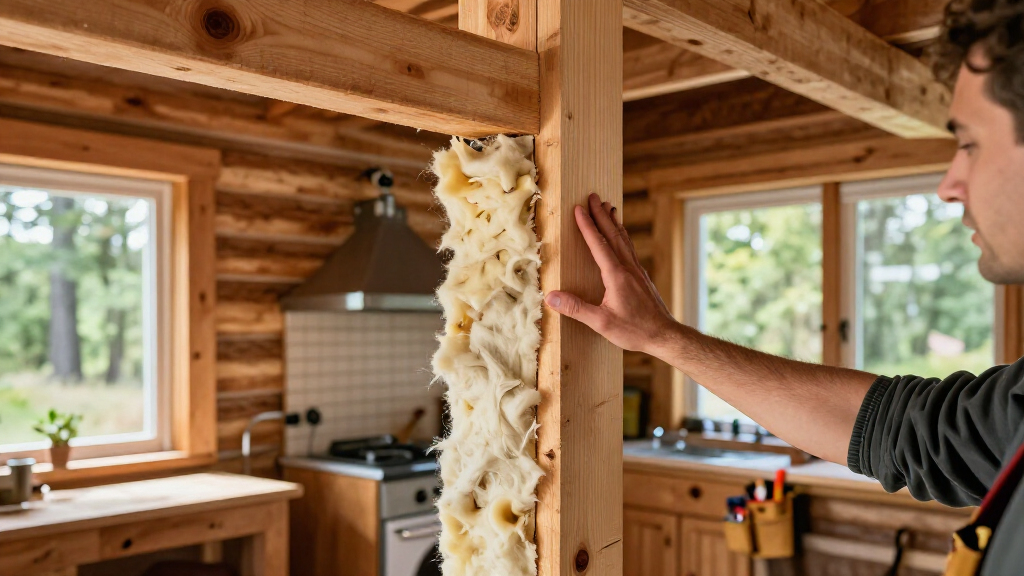
I ranked these products by how clearly their format and listed specifications match common cabin insulation jobs: filling framed cavities, sealing small gaps, or adding a reflective layer in a suitable assembly. I gave priority to products with a practical fit for a defined use, straightforward installation details, and enough information to compare coverage or stated R-value. Since a log cabin may have solid log walls rather than conventional stud cavities, I treated compatibility with the building assembly as a major factor rather than assuming every product works for every cabin.
The order also reflects tradeoffs in handling, coverage, and installation risk. A kit that includes an application gun and supporting gear has a different role from batt insulation, while reflective rolls need conditions that support their intended performance. I placed cavity-specific batts and more fully equipped spray foam higher for buyers with matching projects, and kept compact or more assembly-dependent options lower. Product names and listed specifications alone cannot establish suitability for a particular climate or wall; buyers should confirm assembly details, moisture control, local requirements, and manufacturer instructions.
| log cabin insulation | Facing |
|---|---|
| Y’allCanDIY 18-Can Spray Foam | — |
| Owens Corning RU41 Pink Fiberg | Unfaced |
| Johns Manville R-19 Kraft-Face | Kraft-faced moisture barrier |
| SmartSHIELD 5mm 16" x 50 ft R- | — |
| BEEST FullStop Spray Foam Insu | — |
| EcoFoil Double Bubble Reflecti | Foil/foil |
| EcoFoil Single Bubble Reflecti | White/foil |
| Frost King CF1 No-Itch Recycle | — |
| Reflectix BP24025 24-Inch by 2 | — |
| Owens Corning R-19 Unfaced Fib | Unfaced; no vapor barrier |
Factors to Consider When Choosing Best Log Cabin Insulation
Before choosing from this lineup, I’d identify what the cabin walls are made of and where heat is escaping. A product that fits a framed addition may be a poor match for a solid-log wall, and adding insulation without a moisture plan can create problems that insulation alone cannot solve.
Match the insulation to the wall assembly
Start by determining whether the cabin has solid logs, framed infill walls, or a mix of both. Fiberglass batts are sized for cavities, so they make sense only where a suitable framed space exists; forcing them against uneven logs can leave gaps and reduce their value. Spray foam can conform to irregular areas, but its use changes air and moisture movement and may complicate later repairs. Reflective products also depend on the surface and air space around them, rather than acting like a direct replacement for a cavity fill. Check the construction details before choosing by the product’s headline R-value. For older cabins or unusual assemblies, an insulation professional can help prevent a fix that traps moisture in the logs.
Read R-value in the context of the full assembly
A listed R-value describes a product under stated conditions; it does not automatically describe the performance of a complete cabin wall. Studs, log joints, gaps, compression, and thermal bridges all affect the finished result. Reflective products in this roundup may list high R-values, but reflective performance depends on installation details such as an adjacent air space and the direction of heat flow. Compare manufacturer instructions and test conditions, not just numbers printed in a product name. If you are weighing a reflective roll against a batt, ask whether the wall has the required space and whether the product is intended to supplement or replace another layer. This check often changes the shortlist more than a small difference in package coverage.
Plan for air sealing and moisture control together
Drafts can make a cabin feel cold even when the wall cavities contain insulation, so inspect joints, penetrations, window openings, and the roofline. Spray foam can address some small, irregular gaps, but it is not a universal answer for log movement, large openings, or areas needing future access. Sealing too aggressively without a ventilation plan can affect indoor air quality, while trapping moisture in a wall can damage wood. Decide where air control belongs in the assembly before applying foam or adding layers. Follow the product’s safety directions, curing guidance, and limits for gap size. For persistent leaks or dampness, identify the source before covering it with insulation.
Choose facing and vapor control for your climate
Kraft facing is not a decorative extra: it can serve as a vapor retarder when installed in the location prescribed for the wall assembly. Unfaced batts offer more flexibility where a separate vapor-control strategy is specified, but that flexibility means the rest of the assembly needs a plan. Climate, indoor humidity, exterior finishes, and seasonal use all affect how a cabin dries. Avoid placing vapor-resistant layers on both sides of a wall without confirming that the design allows moisture to escape. Local building guidance and manufacturer instructions are more reliable than copying a detail from a different region. If you are unsure, choose the assembly first and the batt facing second.
Estimate coverage, cutting waste, and access
Measure the area and cavity dimensions before buying, then allow for cuts, irregular framing, and damaged sections. A roll with a large stated coverage area may be awkward to handle in a cramped cabin, while small multipurpose pieces can be useful for patches but inefficient for whole walls. Batt dimensions need to match cavity depth and width; gaps and compression can undermine the intended fit. Spray-foam kits also have a stated yield that can vary with application conditions and user technique, so do not plan a project around the maximum figure alone. Consider whether you can reach the work area safely and carry the material through cabin doors or loft access. A modest coverage buffer is usually more practical than discovering a shortfall mid-installation.
Know when to pay for easier installation
Higher convenience can matter when the work involves awkward spaces, many small gaps, or limited access, but it does not erase the need for correct preparation. A spray-foam kit that includes an application gun and cleaner can reduce tool sourcing, though it still calls for protective equipment, controlled application, and cleanup. Batts may be simpler for a first-time installer working in open, regular cavities, provided they can cut and fit them without compression. Reflective rolls are lightweight, but fastening them correctly and preserving the required air space takes planning. Paying for a more complete kit makes the most sense when its included components fit your specific job. For a large or complex cabin, professional installation may be safer and produce a more reliable wall assembly than a bigger DIY package.
Frequently Asked Questions
Can I use these products to insulate solid log walls?
Not every product in this roundup is designed for direct use on solid logs. Fiberglass batts need a framed cavity, and reflective rolls depend on the installation assembly described by their manufacturer. Spray foam may be suitable for some gaps or planned assemblies, but applying it broadly can affect drying and make future log repairs harder. First identify the wall build-up, existing finish, and source of drafts. If insulation will cover the logs or change how the wall dries, get advice specific to the cabin’s climate and construction before starting.
Does a reflective roll with a high stated R-value replace fiberglass batts?
Not automatically. Reflective insulation performance depends on how it is installed, including whether the design provides the air space required by the manufacturer. A product’s listed value may represent a particular assembly rather than the roll alone, so compare the test conditions and installation diagram. Batts fill a cavity and work differently from a reflective surface. Before treating one as a substitute for the other, confirm the complete wall design and local requirements.
Should I choose kraft-faced or unfaced fiberglass for a cabin wall?
Choose based on the wall’s vapor-control design, not a general preference for one facing. Kraft-faced batts can provide a vapor-retarder layer when installed in the specified position, while unfaced batts leave that control to another part of the assembly. The right arrangement varies with climate, indoor humidity, exterior materials, and how the cabin is used through the year. Avoid adding a second vapor-resistant layer without checking how the wall can dry. If the wall assembly is unclear, get local building guidance before closing it up.
When is spray foam a better choice than batt insulation?
Spray foam can suit small, irregular gaps or locations where a conventional batt cannot make close contact, while batts are often easier to plan for regular, open stud cavities. Foam application requires careful handling, protective gear, and attention to product limits; it can also make later access and repair more difficult. It should not be used to hide a leak or damp area before the cause is fixed. For broad wall coverage, compare the required cavity depth, ventilation plan, and installation method before choosing. A trained installer may be the safer option for large or hard-to-reach areas.
How much extra insulation should I buy for a cabin project?
Base the quantity on measured coverage, then allow for cuts around framing, windows, doors, and irregular log or roof details. The amount of waste depends on the shape of the space and the product: batts need careful fitting, rolls need clean lengths, and foam yield can vary with application conditions. Do not rely solely on a maximum coverage claim when planning a spray-foam job. Measure each area separately and check package coverage and dimensions against the actual cavity. For a complex cabin, a small buffer is more useful than buying a large surplus of a product that may not suit the assembly.
Conclusion
For a conventional framed cabin wall with 2×6 cavities, I’d choose Johns Manville R-19 Kraft-Faced Batt as the best overall match in this group. The Owens Corning R-19 Unfaced Batt is my best-value-style pick for buyers whose wall design calls for unfaced material, while Y’allCanDIY’s spray-foam kit is the premium-style choice for targeted sealing where its tools and safety gear suit the task. Beginners working in clean, regular cavities may find fiberglass batts easier to plan than spray foam, but should still confirm fit and moisture control. For reflective-layer projects, compare EcoFoil Double Bubble with the other rolls only after checking the required air space; for small patch areas, Frost King denim or Reflectix BP24025 may be more manageable than a large roll. If your cabin has solid-log walls, choose by the wall assembly first rather than treating any one of these products as a universal solution.
NFL season / tailgating Picks
team gear
As an affiliate, we earn on qualifying purchases.