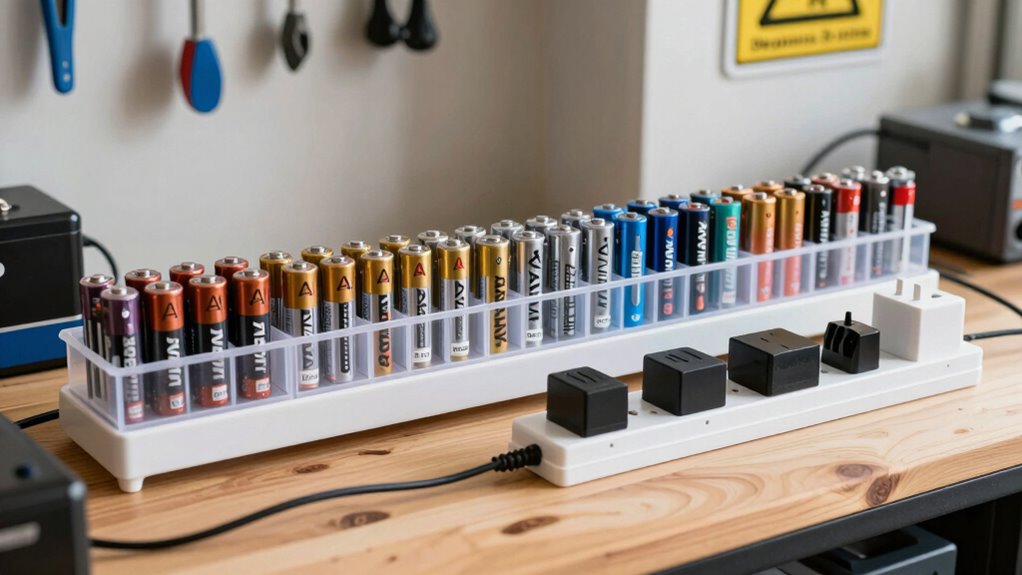

To store batteries and chargers safely in your garage, choose a cool, dry, well-ventilated area away from heat and sunlight. Keep batteries upright and separated on sturdy shelves or in non-conductive containers to prevent leaks and short circuits. Insulate terminals and organize cables to avoid damage. Always handle different battery types carefully, wear safety gear, and regularly inspect for damage. Proper organization and safety precautions are key—continue to explore how to optimize your garage storage safely.
Key Takeaways
- Store batteries upright in a cool, dry, well-ventilated area away from direct sunlight and heat sources.
- Keep batteries in non-conductive containers and separate to prevent leaks and short circuits.
- Insulate terminals with protective covers or tape, and avoid contact with metal objects.
- Regularly inspect batteries and chargers for damage, corrosion, or leaks, and dispose of damaged units properly.
- Ensure charging stations are secure, well-ventilated, and disconnected when not in use to prevent electrical hazards.

Dial Industries Battery Storage Organizer Case, 12 AA
Holds 12 AA batteries; perfect for garage utility room or kitchen
As an affiliate, we earn on qualifying purchases.
As an affiliate, we earn on qualifying purchases.
What Are the Risks of Improper Battery Storage in Your Garage?
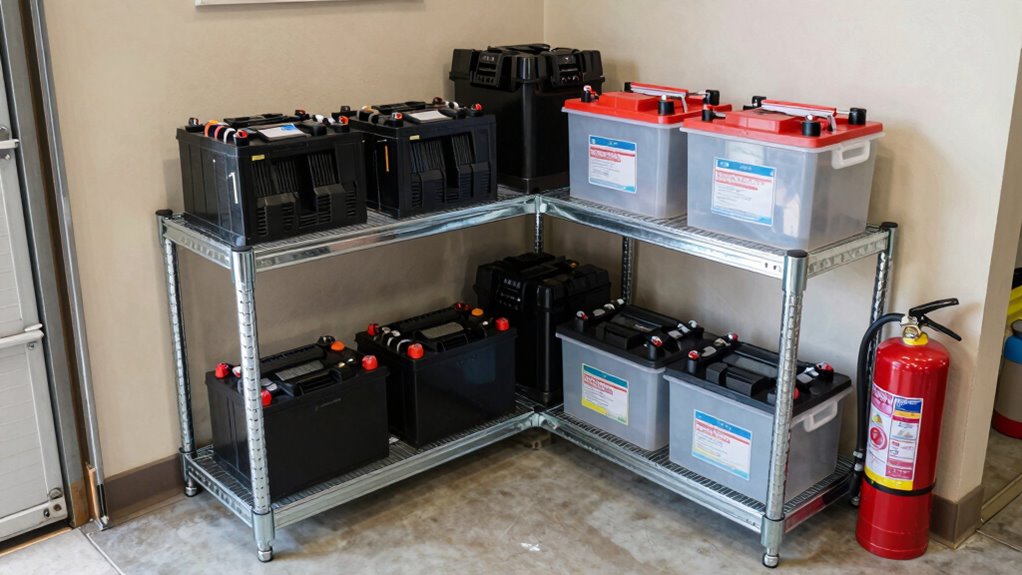
Have you ever considered what could happen if you don’t store your batteries and chargers properly in the garage? Improper storage can lead to leaks, corrosion, or even fires. Chemicals from damaged batteries can leak, contaminating your garage and posing health risks. If you ignore proper charging protocols, batteries might overheat or swell, increasing fire hazards. Additionally, neglecting battery recycling guidelines can cause environmental harm and waste valuable resources. Short-circuiting or accidental contact with metal objects can trigger sparks or explosions. Ensuring safe storage, following correct charging protocols, and recycling batteries responsibly minimizes these risks. Properly storing batteries protects your home and health while preventing costly damage or dangerous accidents. Always store batteries in a cool, dry place away from flammable materials. Proper storage practices can significantly reduce the risk of accidents and prolong the lifespan of your batteries. Regularly inspecting batteries for damage and understanding battery safety guidelines can further enhance safety in your garage. It’s also important to be aware of battery types to handle different batteries correctly and avoid mishandling.

POKIPO Large Power Tool Organizer Wall Mount,4 Layers Heavy Duty Metal Loads 400lbs,Power Tool Shelf Battery Storage with 8 Cordless Drill Holder,Utility Racks for Garage Workshop
High-Quality Metal Materials: Our tool holder is constructed from heavy industrial-grade steel. It is resistant to rust and…
As an affiliate, we earn on qualifying purchases.
As an affiliate, we earn on qualifying purchases.
How to Choose the Best Spot in Your Garage for Batteries
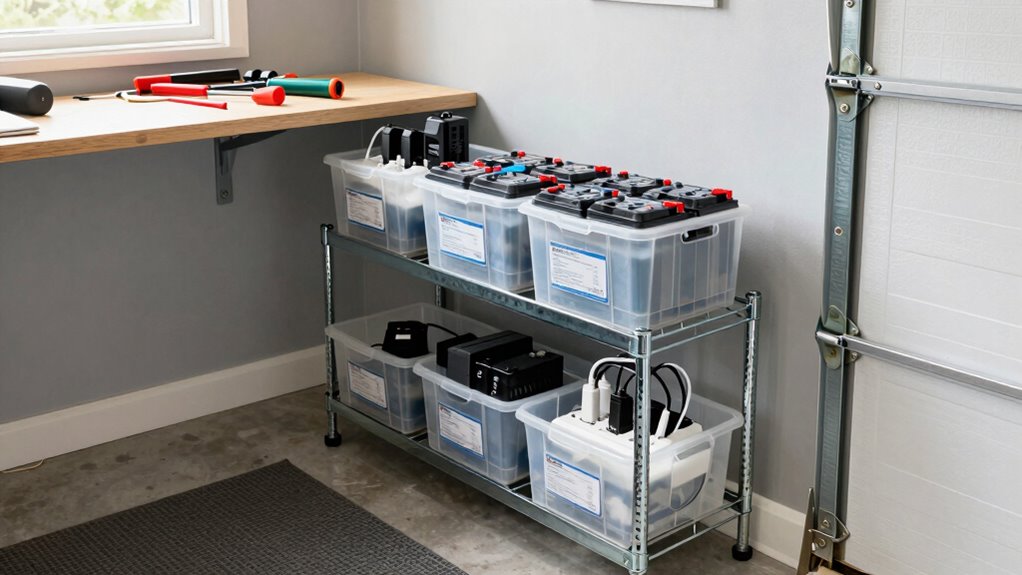
Choosing the right spot in your garage for batteries is essential to guarantee safety and longevity. You want an area that minimizes risks and simplifies maintenance. Select a well-ventilated, cool, and dry space away from direct sunlight and heat sources. Make sure it’s accessible for regular checks and safe for battery recycling when needed. Keep batteries away from charging stations unless specifically designed for such use to prevent accidental sparks or leaks. Use a sturdy shelf or container to prevent accidental tipping or contact. Label the spot clearly to remind everyone of safety precautions. Incorporating natural lighting can also help you easily monitor battery condition and spot potential issues early. Additionally, considering filter sizing/flow can help ensure proper ventilation and air quality in the storage area, reducing hazards related to battery gases. Proper ventilation is crucial to disperse any possibly harmful gases and prevent dangerous accumulations. Regularly checking the air exchange can further improve safety by ensuring gases are effectively removed from the storage space.

BetyBedy 10 Pack Silicone Battery Terminal Covers for 10-4AWG Wire, Insulated Battery Terminal Protectors for 1/4", 5/16", 3/8" Battery Post, Battery Stud and Power Junction Blocks Cover
10 Pack Silicone Battery Terminal Covers:Our battery terminal protector are designed for ultimate protection and insulation, featuring a…
As an affiliate, we earn on qualifying purchases.
As an affiliate, we earn on qualifying purchases.
Tips for Organizing Batteries to Keep Them Safe
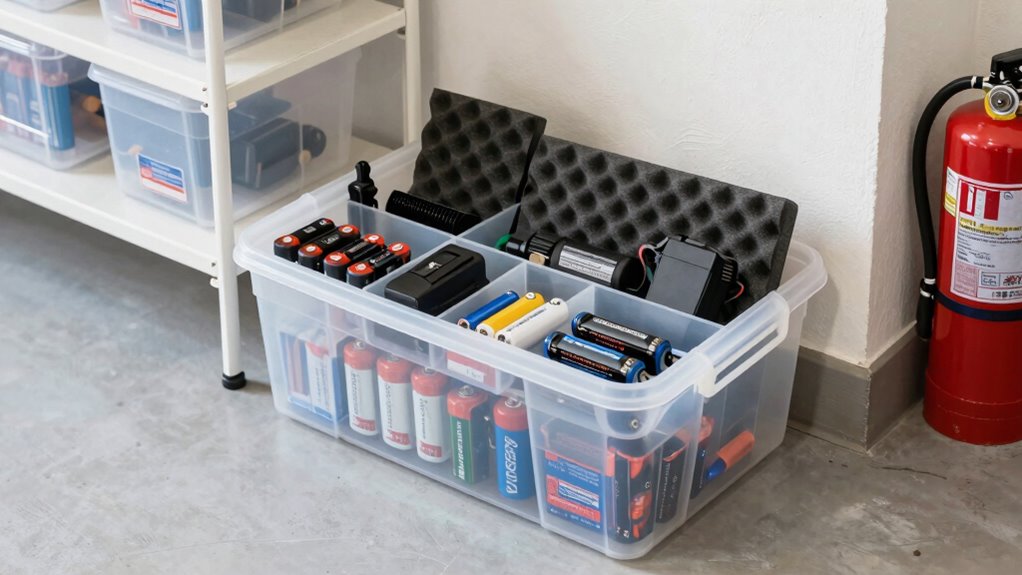
To keep your batteries safe, start by storing them in non-conductive containers to prevent any electrical hazards. Always keep batteries upright and separated to avoid leaks or short circuits, and regularly inspect them for any signs of damage. Following these simple tips helps prevent accidents and keeps your garage organized. Additionally, storing batteries away from extreme temperatures can help preserve their lifespan and safety. Properly managing battery storage conditions can also reduce the risk of thermal runaway or fire hazards. Ensuring proper ventilation in the storage area is also important for safe storage practices, and understanding halal cultural practices can promote safer handling and respectful storage solutions. Being aware of storage safety guidelines can further enhance your efforts to prevent accidents.
Use Non-Conductive Storage Containers
Using non-conductive storage containers is essential for safely organizing batteries in your garage. These containers prevent accidental sparks and minimize the risk of electrical shorts. When choosing a storage solution, look for materials like plastic or rubber that won’t transmit electricity. This is especially important when following proper charging protocols to avoid overheating or damage. Additionally, using non-conductive containers makes battery recycling easier by keeping terminals isolated. Keep in mind, always store batteries away from flammable materials and sources of heat. Regularly check for leaks or corrosion to maintain safety. Proper storage helps extend battery life and ensures safe handling during battery recycling or maintenance. Implementing electrical safety measures in your storage practices can further reduce potential hazards. Proper storage helps extend battery life and ensures safe handling during battery recycling or maintenance. Understanding battery safety protocols, such as those related to electric bike batteries, can help prevent accidents and ensure long-term storage stability. Prioritize non-conductive containers to keep your garage organized and safe, embracing calm and clarity in your organization approach. Using the right storage and backup gear can further enhance safety and efficiency in your setup.
Keep Batteries Upright and Separated
Keeping batteries upright and separated is essential for preventing leaks, spills, and accidental short circuits. Store each battery in labeled storage containers to easily identify their type and voltage, reducing handling errors. Maintaining batteries upright minimizes the risk of acid leaks, which can damage other batteries or create hazards. Use dividers or compartments within your storage containers to keep batteries apart, especially if they’re stored for long periods. Proper labeling helps you quickly locate the right battery without unnecessary handling, lowering the chance of damage. Make certain that batteries are stored in a cool, dry place and upright position; this preserves their integrity and prevents dangerous leaks. Additionally, understanding affiliate disclosure policies can help you make informed purchasing decisions when selecting storage solutions or replacement batteries. Proper storage conditions can significantly improve the longevity and safety of stored batteries, and being aware of battery maintenance tips can further enhance their lifespan. Implementing safe storage practices ensures batteries remain in optimal condition and reduces the risk of accidents. Organizing batteries with these simple practices not only enhances safety but also helps prevent battery deterioration, ultimately extending their lifespan.
Regularly Check for Damage
Regularly inspecting your batteries for damage is essential to ensuring safety and longevity. Look for cracks, leaks, or corrosion on the terminals and casing. Damaged batteries can leak hazardous fluids or even catch fire. If you notice any issues, consider proper battery recycling options and avoid reusing compromised units. Also, check your charging stations for loose connections or corrosion that could cause sparks. Proper storage and maintenance help prevent accidents. Keep batteries upright and separated, and guarantee your workspace is clear of clutter. Periodic checks help identify potential problems early, saving you from costly replacements or safety risks. Staying vigilant about damage not only protects you but also extends the life of your batteries and supports safe disposal practices. Additionally, understanding battery safety guidelines can help prevent accidents and ensure proper handling. Regularly following storage best practices can further reduce the risk of accidents and ensure your batteries remain in good condition. Incorporating proper ventilation in your storage area can also help dissipate any potentially harmful gases released from damaged batteries.

20FT/6M Power Adapter Kit for myQ Smart Garage Video Keypad,Weatherproof Charging Cable and Adjustable Swivel Mount,Continuous Charging Your myQ Video Keypad
【Unique Design】: This power adapter mount is specifically designed for myQ Smart Garage Video Keypad, Never needing to…
As an affiliate, we earn on qualifying purchases.
As an affiliate, we earn on qualifying purchases.
How to Store Chargers Properly to Avoid Damage and Hazards
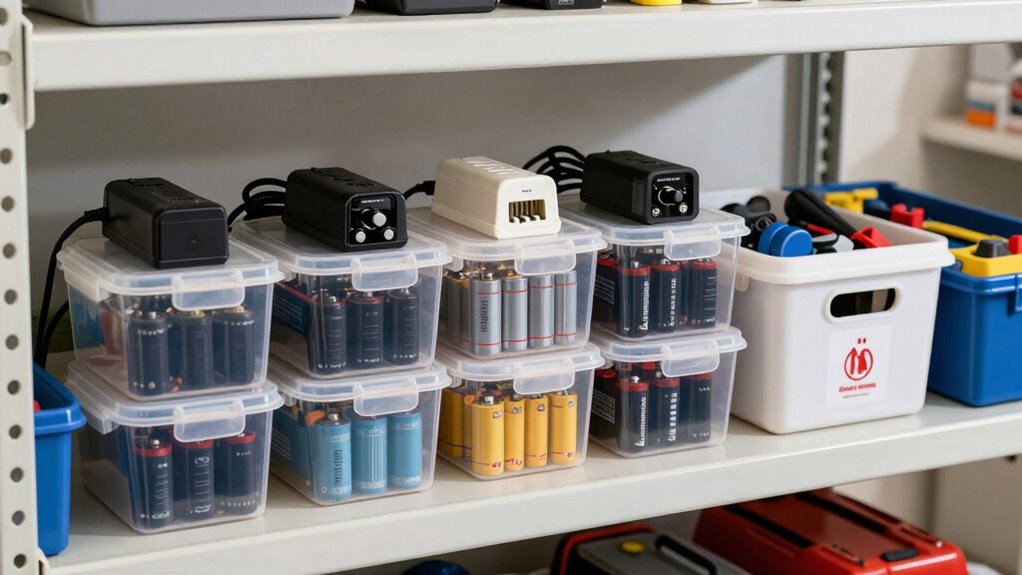
Properly storing chargers is essential to prevent damage and reduce safety risks in your garage. Keep chargers in a cool, dry place away from direct sunlight and moisture, which can cause corrosion or deterioration. Use designated compartments or containers to prevent tangling and protect the cables from unnecessary wear. Always disconnect chargers from power sources when not in use, especially if they are incompatible with your batteries, to avoid potential hazards. Proper storage also supports battery recycling efforts by ensuring chargers remain functional and undamaged. Check charger compatibility before storage to prevent damage to your batteries or chargers. Label cords and adapters for easy identification, reducing the risk of misuse. Following these steps helps extend your chargers’ lifespan and keeps your garage safe.
Handling Different Types of Batteries Safely (Li-Ion, Lead-Acid, Etc.)
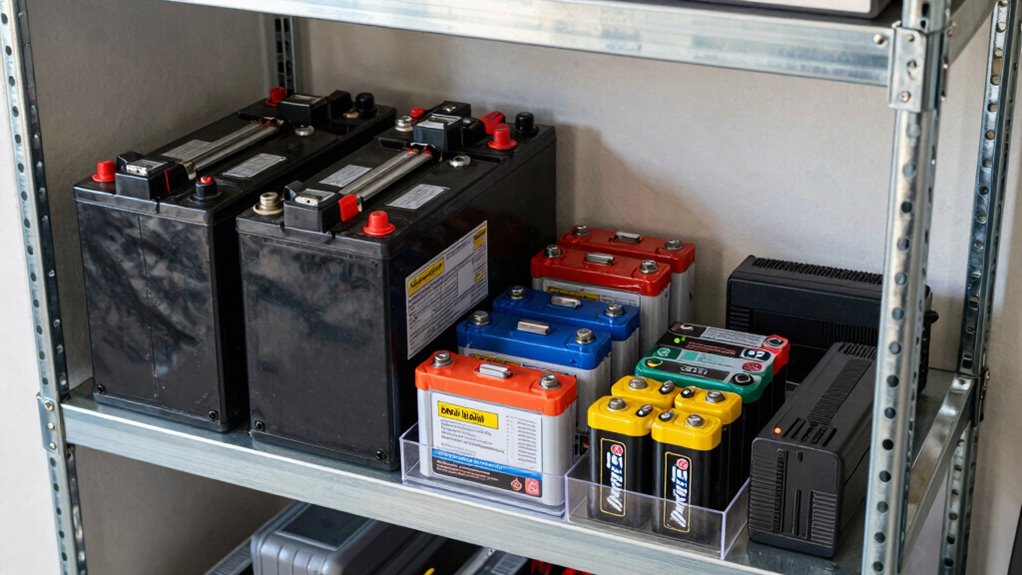
When handling different types of batteries, you need to follow proper storage techniques to prevent accidents. Always keep them in a cool, dry place and avoid placing metal objects nearby to prevent short circuits. Be prepared to manage spills or leaks safely, using appropriate protective gear and cleanup methods.
Proper Storage Techniques
Handling different types of batteries safely requires understanding their unique storage needs. Proper storage techniques help prevent leaks, fires, and environmental harm. For example, keep lead-acid batteries upright in a cool, dry place to avoid acid spills. Li-ion batteries should be stored at room temperature, away from direct sunlight, and in a well-ventilated area. Always follow manufacturer guidelines for storage temperature and consider recycling batteries when they’re no longer usable to prevent environmental damage. Remember to:
- Store batteries in a cool, dry environment, avoiding extreme temperatures
- Recycle old or damaged batteries responsibly
- Keep batteries away from metal objects that could cause short circuits
Preventing Short Circuits
Storing batteries correctly is just the first step; preventing short circuits is equally important to keep your batteries safe and functional. To avoid accidental contact between terminals, guarantee proper battery insulation by using protective covers or insulating tape. Keep batteries separated and organized to prevent terminals from touching metal objects, which could cause a short circuit. Always follow charging safety protocols, such as using compatible chargers and avoiding overcharging. Use this table to highlight key practices:
| Practice | Why it matters | Example |
|---|---|---|
| Insulate terminals | Prevents accidental contact | Cover with non-conductive tape |
| Store upright | Avoid leaks and shorts | Use dedicated containers |
| Check connections | Ensures safe charging | Regularly inspect cables |
Following these steps reduces risks and maintains battery health.
Handling Spills and Leaks
Dealing with spills and leaks from batteries requires prompt and careful action to prevent hazards and damage. When handling chemical spills or battery corrosion, always wear protective gloves and goggles. Different batteries, like Li-ion or lead-acid, pose unique risks, so knowing how to respond is vital.
- Contain the spill immediately to prevent spreading.
- Use baking soda for lead-acid leaks to neutralize acid, and appropriate absorbents for other chemicals.
- Ventilate the area well and clean the spill with water and a non-reactive cloth.
Never attempt to repair or handle leaks without proper gear. Properly dispose of contaminated materials and battery parts to avoid further chemical spills or damage.
Must-Have Safety Gear for Battery Storage in Your Garage

To keep yourself safe while storing batteries and chargers in your garage, having the right safety gear is essential. Protective equipment minimizes risks like acid spills and accidental sparks, ensuring your safety during battery recycling and charging safety. Equip yourself with gloves and goggles to prevent skin and eye contact with corrosive materials. A fire extinguisher nearby can quickly address any sparks or fires. Here’s a quick overview:
| Safety Gear | Purpose | Additional Tips |
|---|---|---|
| Rubber gloves | Protect skin from acid spills | Use when handling batteries |
| Safety goggles | Shield eyes from splashes | Always wear during charging |
| Fire extinguisher | Put out electrical fires | Keep accessible in garage |
This gear creates a safe environment for battery storage and charging safety.
Common Mistakes to Avoid When Storing Batteries and Chargers
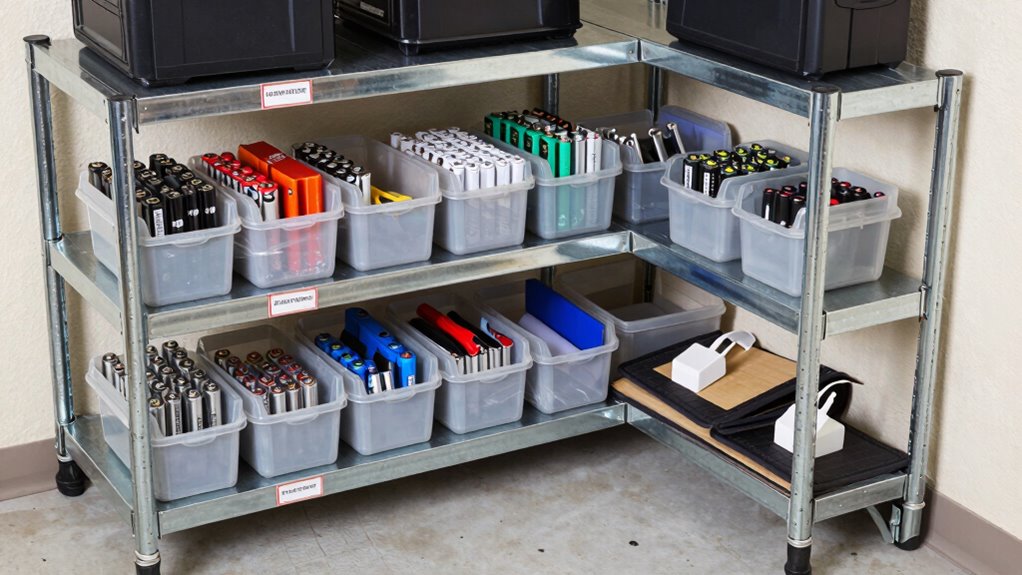
One of the most common mistakes people make when storing batteries and chargers is neglecting proper organization, which can lead to accidental damage or safety hazards. When items are scattered, you risk short circuits, leaks, or fires. Avoid these pitfalls by:
- Storing batteries in a cool, dry place away from flammable materials to guarantee charging safety.
- Keeping batteries separated by type and size to prevent accidental shorting and make battery recycling easier.
- Regularly inspecting and disposing of old or damaged batteries properly, rather than leaving them in storage.
Failing to follow these practices can compromise safety and hinder proper battery recycling. Proper organization not only protects your garage but also extends the lifespan of your batteries and chargers, making certain safe storage over time.
How to Keep Your Garage Storage System Safe and Effective Over Time
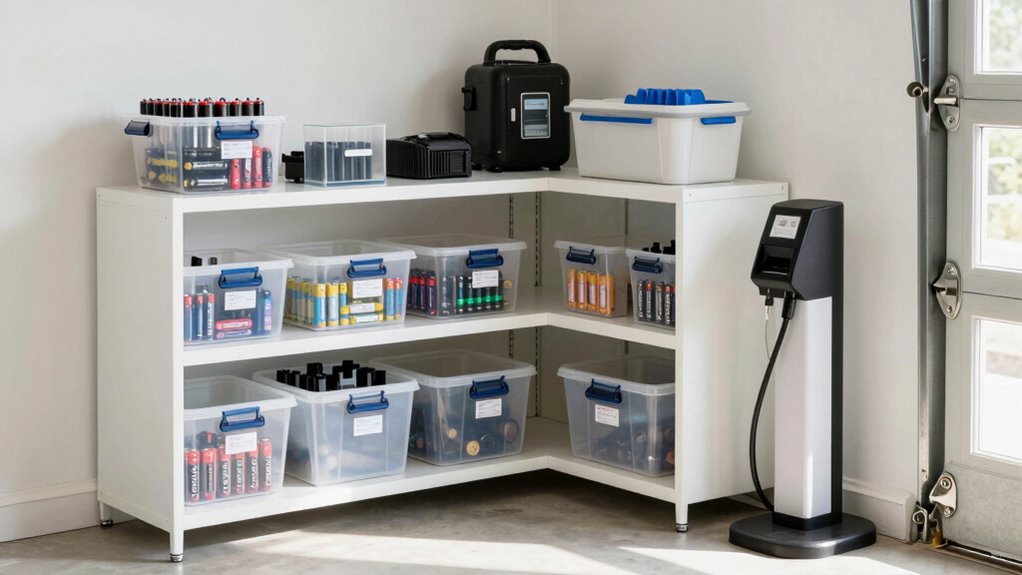
Maintaining a safe and effective garage storage system requires regular attention and proactive habits. You should organize batteries and chargers to prevent damage and guarantee quick access. Regularly check for corrosion or leaks, and dispose of old batteries through proper battery recycling programs. Incorporate dedicated charging stations to keep chargers organized and reduce clutter. Label storage areas clearly so you know where everything belongs, and avoid stacking batteries or chargers in unstable piles. Keep your storage area well-ventilated to prevent overheating and reduce fire risks. Periodically review your setup to identify areas for improvement. By staying organized and mindful of safety practices, you assure your garage remains a safe, efficient space for storing batteries and chargers over time.
Frequently Asked Questions
How Often Should I Inspect Stored Batteries for Safety?
You should inspect stored batteries for safety at least once every three to six months. During each check, look for signs of battery corrosion, leaks, or swelling. Make sure the storage temperature remains consistent and within the recommended range, as extreme temperatures can cause damage or safety hazards. Regular inspections help prevent accidents, extend battery life, and maintain safe storage conditions, giving you peace of mind.
Can Storing Batteries in a Cool Garage Extend Their Lifespan?
Storing batteries in a cool garage can definitely extend their lifespan, much like a vintage radio staying sharp in a cool attic. Keep batteries insulated properly to prevent temperature fluctuations, and regularly check charger maintenance to avoid overcharging. Cooler temperatures slow down chemical reactions inside batteries, reducing wear and tear. By maintaining insulation and charger upkeep in a cool space, you guarantee your batteries stay reliable longer, saving money and hassle.
Are There Specific Fire Safety Measures for Garage Battery Storage?
Yes, you should follow fire safety measures when storing batteries in your garage. Place a fire extinguisher nearby, ensuring it’s easily accessible in case of emergencies. Maintain proper ventilation to prevent the buildup of potentially hazardous fumes or gases. Regularly inspect batteries for leaks or damage, and store them away from flammable materials. Following these steps helps reduce fire risks and keeps your garage safer for everyone.
What Signs Indicate a Battery Is Deteriorating or Unsafe?
You’ll notice signs like battery corrosion, which appears as white, green, or blueish deposits on terminals, indicating deterioration. Swelling, leaks, or a foul smell also suggest the battery’s unsafe. If you see excessive corrosion or suspect damage, avoid charging right away, as it increases risks like overheating or sparks. Regularly inspect batteries for these signs to prevent charging risks and *guarantee* safe storage in your garage.
How Do I Safely Dispose of Old or Damaged Batteries From My Garage?
To safely dispose of old or damaged batteries, you should take them to a local battery recycling center, as they handle hazardous waste responsibly. Never throw batteries in the trash, as they can leak harmful chemicals. Contact your local waste management authority for specific disposal guidelines. Proper disposal prevents environmental contamination and guarantees your safety, giving you peace of mind knowing you’re following safe practices for hazardous waste.
Conclusion
So, you’ve mastered the art of safe battery storage—who knew it could be so easy? Just remember, even with all these tips, the real danger is forgetting to follow them. Ironically, a simple mistake could turn your organized garage into a hazardous mess. Stay vigilant, keep safety gear handy, and don’t let your well-planned storage become your next disaster. After all, safety’s no joke—unless you enjoy shocking surprises!