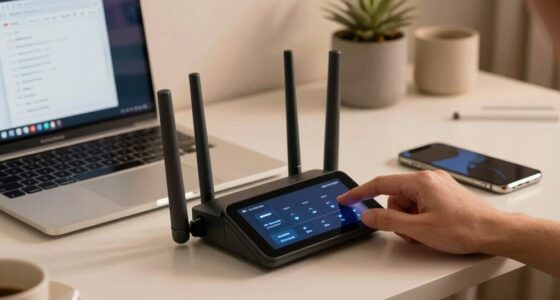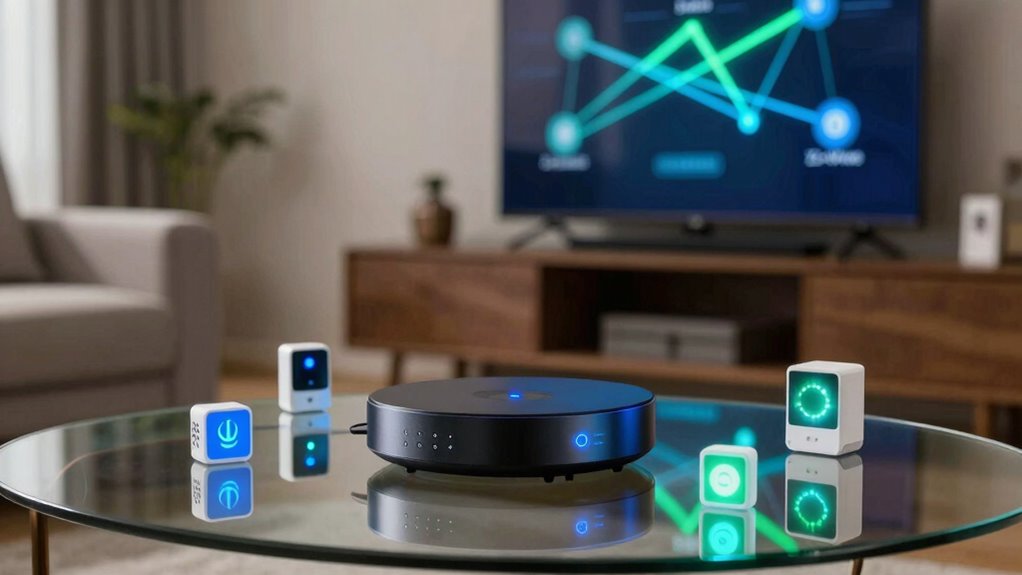

Zigbee and Z-Wave are two popular wireless protocols for smart home devices, each with its strengths. Zigbee offers a broader device selection and supports larger, more complex networks, but it can face interference issues. Z-Wave provides more reliable connections with a smaller, highly compatible ecosystem, and less interference due to its lower frequency. To find out which protocol fits your needs best, explore the details below for a complete comparison.

Get home appliances delivered free with Prime
- Fast, free delivery on millions of items
- Prime Video, Amazon Music and more included
- Member-only deals all year
Key Takeaways
- Zigbee supports a wider range of devices and ecosystems, while Z-Wave offers more reliable, certified interoperability with a smaller device selection.
- Zigbee operates mainly at 2.4 GHz, making it susceptible to interference; Z-Wave uses around 908 MHz, providing more stable connections.
- Both protocols use AES-128 encryption, but Zigbee emphasizes data privacy, whereas Z-Wave prioritizes reliability and ease of setup.
- Zigbee generally consumes less power, making it better suited for battery-operated devices, though both are energy-efficient.
- Zigbee is more widely adopted and scalable for larger networks, while Z-Wave is favored for smaller, secure, and straightforward smart home setups.
As an affiliate, we earn on qualifying purchases.
What Are Zigbee and Z-Wave?
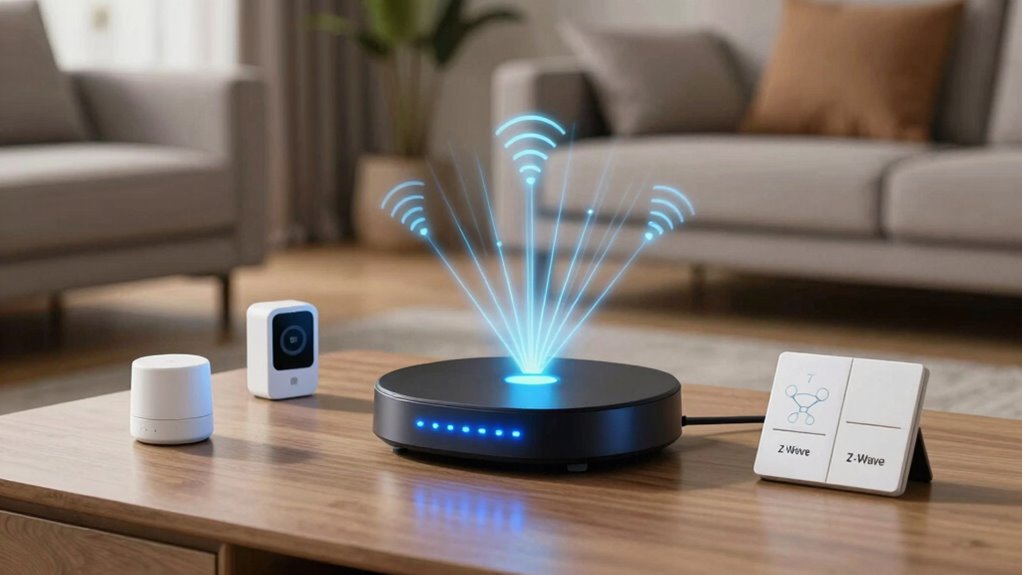
Zigbee and Z-Wave are both popular wireless communication protocols designed specifically for smart home devices. They help connect various gadgets seamlessly, but their device compatibility varies. Zigbee supports a broader range of devices from different brands, making it a flexible choice if you want variety. Z-Wave, on the other hand, tends to have a more limited but highly interoperable device selection, often tied to specific brands known for their reliability. Brand reputation matters because it influences device quality and support. If you prioritize a wide selection, Zigbee’s compatibility might suit you better. If you prefer proven reliability from established brands, Z-Wave’s reputation for stability could be your best bet. Understanding these differences helps you choose the protocol that fits your smart home needs. Additionally, considering device interoperability is crucial for ensuring all your gadgets work well together within your chosen protocol. Evaluating network compatibility can also impact how smoothly your devices communicate across different protocols. Knowing the long-term support for each protocol can ensure your smart home system remains functional and up-to-date over time. Moreover, understanding the technology standards behind each protocol can assist in planning for future device integration. Furthermore, the security features of each protocol play a vital role in protecting your smart home network from potential threats.
As an affiliate, we earn on qualifying purchases.
How Do Zigbee and Z-Wave Work?
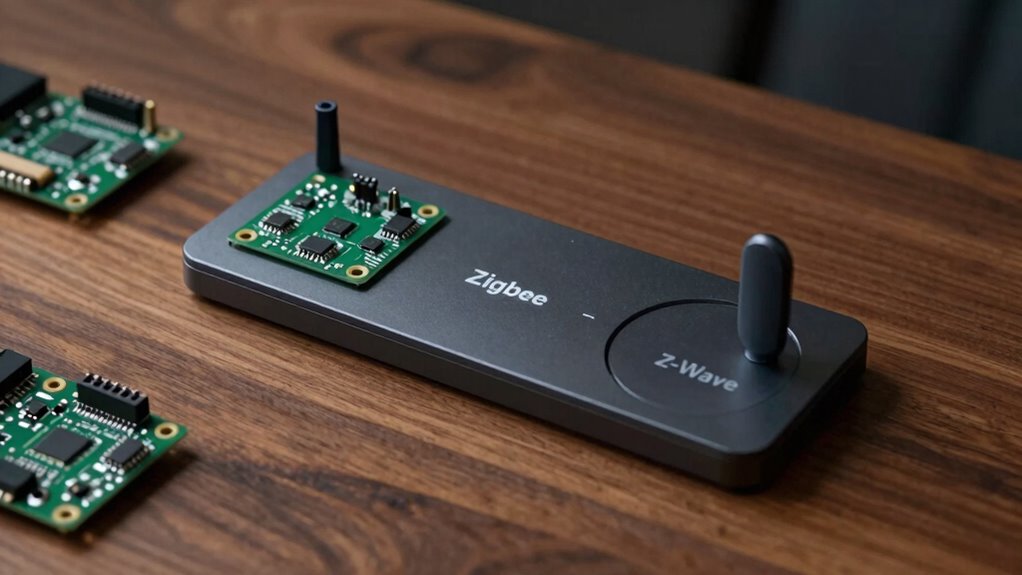
Zigbee and Z-Wave operate using different network topologies, with Zigbee favoring mesh networks and Z-Wave typically using a hub-and-spoke setup. They also use distinct communication protocols, which affect how devices exchange data and maintain connections. Additionally, their power consumption varies, influencing how long devices can run on batteries without needing frequent recharging. Understanding these differences is crucial for selecting the right protocol for your smart home setup, especially when considering network reliability and battery life. The robustness of a mesh network can enhance device communication over larger areas, whereas Z-Wave’s simpler topology may be easier to set up for smaller systems. Moreover, their interoperability capabilities can impact how seamlessly your devices work together within your smart home ecosystem. To ensure optimal performance, it’s important to evaluate how each protocol handles device compatibility and future scalability as your smart home expands. Recognizing the security features of each protocol can also help protect your smart home from potential vulnerabilities.
Network Topology Differences
Understanding how these protocols organize their networks is key to choosing the right one for your smart home. Zigbee uses a mesh topology, where devices connect directly and relay signals to each other, extending signal range and improving reliability. This setup supports device compatibility across many brands, but it can sometimes get complex as the network grows. Additionally, Zigbee’s data sharing capabilities facilitate efficient communication among devices, which can enhance network performance. Zigbee’s ability to handle deep network integration allows for more scalable and flexible smart home setups. Z-Wave, on the other hand, also employs a mesh network, but typically with a limited number of hops, which can restrict signal range slightly. Z-Wave devices are generally more interoperable within its ecosystem, but may have less device compatibility overall. So, if you want a network with broad device options and extensive signal coverage, Zigbee might be better. If you prefer a simpler setup with reliable performance within a smaller range, Z-Wave could suit your needs. Additionally, understanding the network topology differences helps determine which protocol aligns best with your smart home setup. Recognizing the signal relay mechanisms further clarifies how each protocol maintains network stability and performance. Knowing the device compatibility across different brands can also influence your choice depending on your existing or planned smart home devices.
Communication Protocols Used
Both Zigbee and Z-Wave rely on specific communication protocols that define how devices send and receive data within their networks. Zigbee uses the IEEE 802.15.4 standard, operating mainly on 2.4 GHz, with some versions on 868 MHz or 915 MHz, offering broad device compatibility. Z-Wave, on the other hand, operates primarily at a lower frequency of around 908.42 MHz in the US, and similar bands elsewhere, to guarantee interference. These protocols establish rules for secure, reliable communication, enabling devices to form mesh networks. The choice of frequency bands influences how well devices communicate and their compatibility with other smart home devices. Both protocols are designed to guarantee seamless data transfer, but their differences in frequency and standards impact device compatibility and network performance.
Power Consumption Variations
Although they are both designed for low power consumption, Zigbee and Z-Wave differ profoundly in how efficiently they use energy. Zigbee generally offers higher energy efficiency because it supports a variety of power-saving modes, making it ideal for battery-powered devices that need long-lasting operation. Z-Wave, on the other hand, tends to consume slightly more energy due to its simpler protocol and continuous communication requirements. Your choice impacts device compatibility as well—Zigbee’s robust energy-saving features work best with devices that can handle frequent sleep cycles, while Z-Wave’s consistent performance suits devices with steady power sources. Understanding these power consumption variations helps you optimize your smart home setup for both energy efficiency and reliable device operation. Power management techniques can further enhance how your devices conserve energy during operation, especially in battery-powered devices.
best Zigbee mesh network devices
As an affiliate, we earn on qualifying purchases.
As an affiliate, we earn on qualifying purchases.
Which Devices Support Zigbee and Z-Wave?
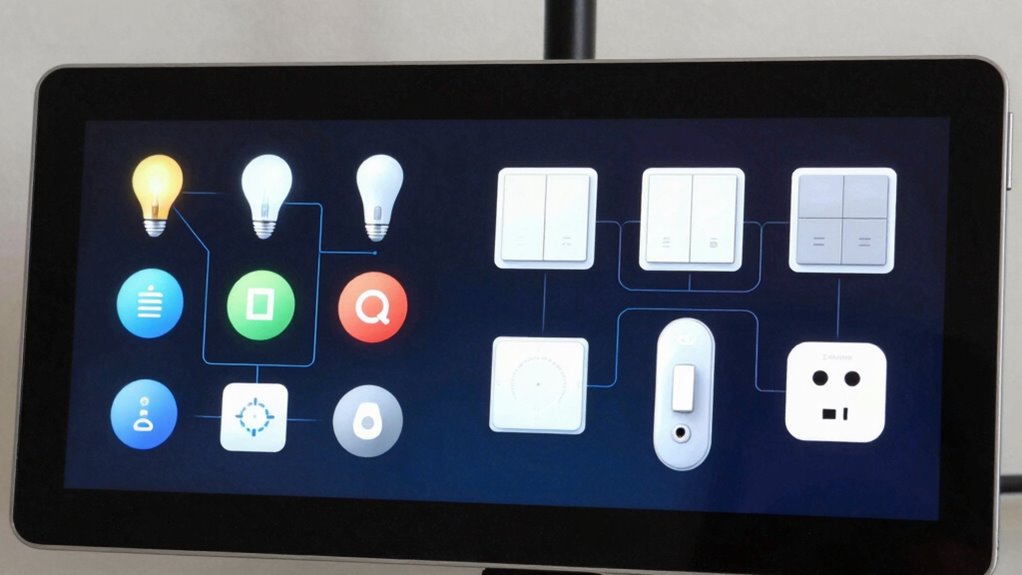
Are you curious about which devices are compatible with Zigbee and Z-Wave? Most smart home devices support either protocol to facilitate seamless ecosystem integration. Common Zigbee devices include smart bulbs, sensors, and plugs, while Z-Wave devices feature locks, thermostats, and security cameras. Compatibility often depends on the device’s ecosystem and hub support, making it essential to choose devices that work with your existing setup. Here’s a quick comparison: understanding the mechanics of how different protocols influence device performance. Additionally, protocol interoperability can impact how well devices communicate across different systems, which is an important consideration for optimal operation. In particular, understanding how device communication protocols function can help you select the right system for your needs. Considering the network range of each protocol can also influence your device placement and overall system reliability. Recognizing security features is also crucial, as different protocols offer varying levels of protection against cyber threats.
As an affiliate, we earn on qualifying purchases.
How Do Performance and Security Compare?
When comparing performance and security, you’ll notice differences in network reliability, encryption standards, and interoperability. Zigbee and Z-Wave each have unique strengths and challenges that impact how well they connect and stay secure. Understanding these variations helps you choose the best protocol for your smart home setup. Additionally, considering the molecular-scale challenges in fabrication can provide insights into the underlying technological limitations influencing device performance and security. Acknowledging these technological constraints is essential for understanding how device materials and manufacturing processes affect overall reliability and vulnerability.
Network Reliability Differences
Network reliability is a key factor to take into account when comparing Zigbee and Z-Wave, as it directly impacts the consistency and security of your smart home devices. You should consider how device compatibility and frequency differences influence network stability. Zigbee operates mainly at 2.4 GHz, which is more prone to interference but offers broader device compatibility. Z-Wave runs at lower frequencies (908.42 MHz in the US), reducing interference and enhancing reliability, especially in crowded environments.
Key points include:
- Zigbee’s higher frequency can lead to occasional disruptions.
- Z-Wave’s lower frequency offers more consistent connections.
- Device compatibility varies, affecting network robustness.
- Both protocols support mesh networks, but performance depends on device placement and network size.
Encryption Standards Variations
Encryption standards play a crucial role in determining both the security and performance of Zigbee and Z-Wave networks. Zigbee uses AES-128 encryption, which offers high security and robust data privacy, making it suitable for sensitive info. Z-Wave also employs AES-128 but emphasizes ease of setup and low power consumption, sometimes at the expense of slightly slower data privacy protections. Your choice impacts how well your network keeps data private and resists hacking attempts.
| Zigbee | Z-Wave |
|---|---|
| Strong AES-128 encryption | AES-128 encryption, optimized for low power |
| Prioritizes data privacy | Focuses on ease of use and reliability |
| High security, slightly complex | Slightly less complex, slightly lower security |
Interoperability Challenges
Have you ever wondered how well Zigbee and Z-Wave devices work together despite their differences? Interoperability remains a challenge because device compatibility varies across platforms. While both protocols aim for seamless integration, market adoption influences their success; Zigbee’s broader adoption offers more device options, but Z-Wave’s stricter certification ensures reliable performance. You might encounter issues like:
- Limited cross-platform device support
- Inconsistent performance due to protocol differences
- Security variations affecting device trustworthiness
- Fragmented ecosystems hindering seamless setup
These factors mean that even with similar goals, achieving perfect interoperability requires careful device selection and compatibility checks. Ultimately, understanding these challenges helps you make smarter choices for your smart home, ensuring your devices work together smoothly and securely.
Which Protocol Is Better for Your Smart Home Needs?
Choosing the right protocol for your smart home depends on understanding your specific needs and how each option performs. Historically, Zigbee developed earlier and gained significant traction, especially for broader automation and extensive device networks. Z-Wave’s market adoption grew steadily through a focus on security and simplicity, appealing to homeowners seeking reliable, easy-to-set-up systems. If you want a broader ecosystem with more device options and frequent updates, Zigbee might be better. Conversely, if you prioritize ease of use, low latency, and proven stability, Z-Wave could suit your needs better. Both protocols have strong community support, but your choice depends on factors like device compatibility, network size, and future expansion plans. Ultimately, understanding their market trends helps you decide which protocol aligns best with your smart home goals.
Factors to Consider When Choosing a Protocol
When selecting a protocol for your smart home, evaluating several key factors that can influence performance and compatibility is essential. Focus on aspects like energy efficiency, which impacts device longevity and power consumption, and device compatibility, ensuring your existing devices will work seamlessly. Consider the network range, as longer distances reduce the need for additional hubs. Security features are critical for protecting your data and privacy. Additionally, look at ease of integration with your preferred smart home ecosystem.
Choosing a smart home protocol requires considering energy efficiency, device compatibility, network range, security, and ecosystem integration.
- Energy efficiency of devices and protocols
- Compatibility with your existing smart devices
- Network range and reliability
- Security features to safeguard your data
Future Trends: Will Zigbee or Z-Wave Dominate?
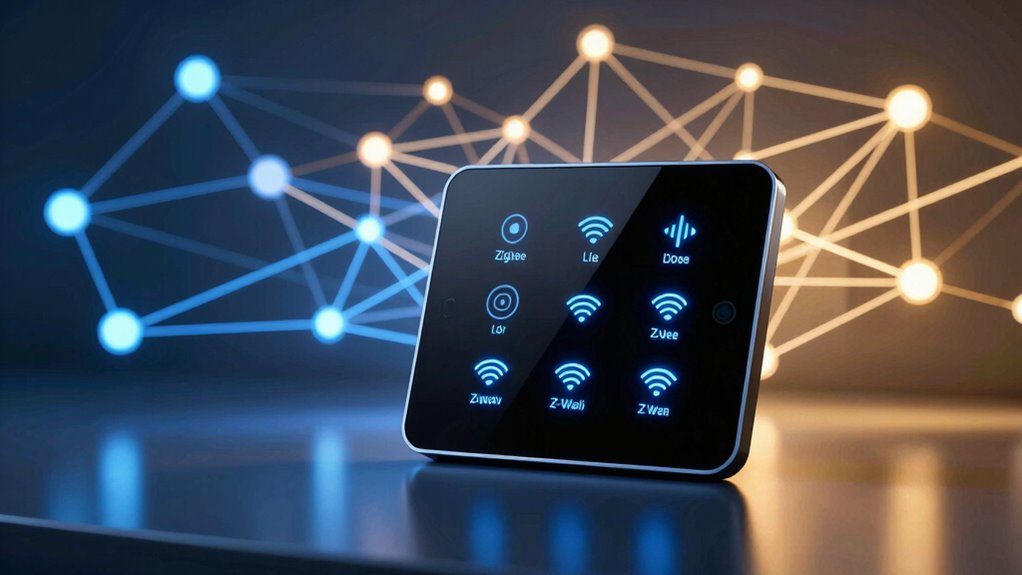
As smart home technology continues to evolve, the battle between Zigbee and Z-Wave for dominance is intensifying. Both protocols are investing heavily in improving smart home integration and expanding device compatibility. Zigbee’s open standards and widespread support give it an edge in future innovation, attracting manufacturers looking for flexible solutions. Z-Wave’s focus on reliability and a large existing ecosystem guarantee it remains a strong contender. The future may see a more unified smart home landscape, with devices supporting multiple protocols or new standards emerging. Your choice will likely depend on how these protocols adapt to evolving needs, such as seamless device compatibility and enhanced integration features. Ultimately, both Zigbee and Z-Wave are poised to shape the next wave of smart home technology.
Summary and Final Recommendations
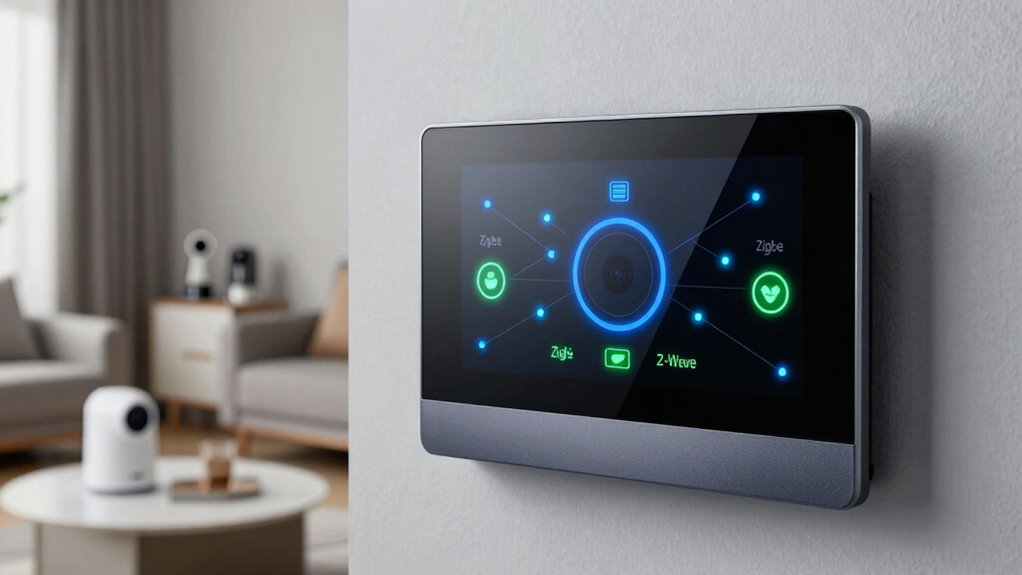
Both Zigbee and Z-Wave have strong qualities that make them leading choices for smart home connectivity. Your decision should consider device compatibility and market adoption. Zigbee often offers broader device options and integrates well with platforms like Amazon Alexa and Apple HomeKit. Z-Wave’s larger market share ensures better device compatibility and a more established ecosystem.
When choosing, consider:
- Compatibility with your existing devices
- Future scalability and support
- Ease of setup and use
- Ecosystem stability and updates
Ultimately, Zigbee benefits from a wider range of products, while Z-Wave’s market penetration guarantees longevity and reliability. Weigh these factors based on your specific needs to make an informed, future-proof choice for your smart home.
Frequently Asked Questions
Can Zigbee and Z-Wave Devices Interoperate?
Zigbee and Z-Wave devices generally don’t interoperate directly due to different protocols, but you can achieve compatibility through a smart home hub that supports both. This allows you to control devices across both standards seamlessly. Keep in mind, device compatibility can vary, and security features differ between the two, so choose a hub that offers robust security and supports your specific devices for a smooth, secure smart home experience.
What Is the Typical Range of Zigbee Vs Z-Wave?
Zigbee typically offers a range of about 10 to 20 meters indoors, while Z-Wave provides a slightly longer range of around 30 meters indoors. Both use wireless communication, but their protocol compatibility affects how they connect with other devices. You’ll find that Z-Wave’s longer range can be beneficial for larger homes, whereas Zigbee‘s shorter range supports dense device networks, making them suitable for different smart home setups.
Are There Cost Differences Between Zigbee and Z-Wave Devices?
You’ll find that Zigbee devices generally cost less than Z-Wave options, making them appealing for budget-conscious setups. Zigbee often offers broader device compatibility, especially with smart home ecosystems like Amazon Alexa and Apple HomeKit. Z-Wave devices tend to prioritize security features, which can influence price. So, if security is your priority, expect to pay a bit more. Ultimately, your choice depends on your device compatibility needs and security preferences.
How Do Zigbee and Z-Wave Handle Network Congestion?
Zigbee and Z-Wave handle network congestion through mesh networking, allowing devices to relay signals and reduce traffic on individual links. Zigbee operates on 2.4 GHz, which can be crowded but offers faster data rates, while Z-Wave uses a less congested 908.42 MHz band, minimizing interference. Both protocols efficiently manage congestion, but Zigbee’s higher frequency may lead to more interference in busy environments.
Which Protocol Offers Better Battery Life for Devices?
Imagine your device’s battery as a tiny, overworked superhero, constantly fighting off villains in the form of protocol security threats. Zigbee generally offers better battery life because it’s designed for low power consumption, making it compatible with a wide range of devices. Z-Wave, while slightly less efficient, still maintains decent battery life but emphasizes strong device compatibility and protocol security. Choose Zigbee if you want your devices to last longer in the fight!
Conclusion
Choosing between Zigbee and Z-Wave feels like deciding between two mighty giants vying for your smart home throne. Both promise to revolutionize your living space, but only one will truly dominate your world. Your choice impacts your security, device compatibility, and future upgrades—it’s a decision with the power to shape your entire smart home universe. So, pick wisely, because this isn’t just a protocol—it’s the key to opening an unstoppable, interconnected kingdom of innovation.
Columbus Day / Indigenous Peoples' Day Picks
long weekend sales
As an affiliate, we earn on qualifying purchases.