
To guarantee your smart thermostat works with your HVAC system, first check your system type and wiring setup, including if you have a C-wire for continuous power. Confirm compatibility with your voice assistants and smart home ecosystem for seamless control. Proper installation and future-proof features can prevent issues down the road. If you’re enthusiastic to learn more about ensuring compatibility and making a smart choice, this guide covers everything you need.
Key Takeaways
- Confirm your HVAC system type and wiring setup, including presence of a C-wire, for compatibility.
- Verify that the thermostat’s wiring labels match your existing wiring connections.
- Ensure the thermostat supports your preferred voice assistants and smart home ecosystem.
- Check for future-proof features like open APIs and broad smart home integration.
- Maintain updated firmware and proper wiring to ensure long-term performance and reliability.

Sensi Lite Smart Thermostat, Programmable, WiFi, Easy DIY, Works With Alexa, ENERGY STAR Certified, ST25, Most Systems C-Wire Not Required, C-Wire needed with Heat/Cool Only & Heat Pump System – Black
EASY DIY INSTALLATION: Do it yourself fast with a built-in level and simple step-by-step instructions. Works with the…
As an affiliate, we earn on qualifying purchases.
As an affiliate, we earn on qualifying purchases.
How to Check If Your HVAC System Is Compatible
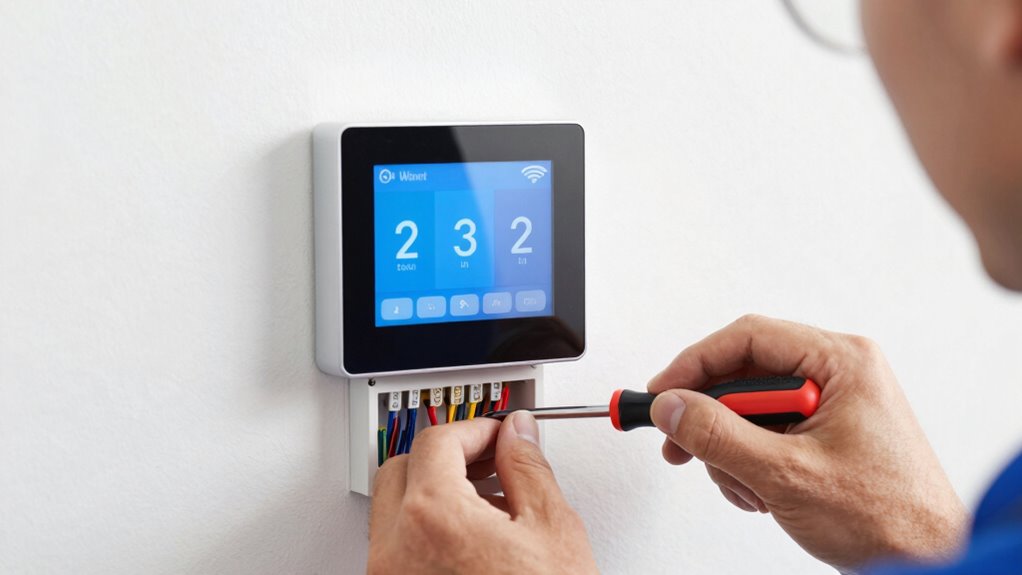
Before purchasing a smart thermostat, you need to determine if your HVAC system is compatible. Check your system’s type—most smart thermostats work with central air, heat pumps, or gas furnaces. Compatibility often depends on the wiring and control system, so review your current setup. Look at your existing thermostat to see if it has a C-wire, which many smart models require for continuous power. Research your HVAC brand and model to guarantee compatibility; manufacturers often provide compatibility lists. Once confirmed, consider the user interface of the thermostat—make sure it’s intuitive for you. An energy-efficient thermostat with an easy-to-navigate interface will help you optimize your home’s energy use and allow for seamless control, ultimately enhancing your comfort and savings. Additionally, understanding free floating systems can be beneficial, as they may require different considerations for compatibility. For instance, some hydronic systems may need special adapters or controls to work effectively with smart thermostats. Knowing the different types of HVAC controls can help you ensure that your chosen smart thermostat will integrate smoothly with your existing system. Being aware of these control system setups can further streamline your installation process. Incorporating knowledge about system wiring can also help prevent installation issues and ensure reliable operation.

Sensi Smart Thermostat, 100 Years Of Expertise, Wi-Fi, Data Privacy, Programmable, Easy DIY Install, Works With Alexa, Energy Star Certified, Mobile App, ST55
PRIVACY PROTECTION*: Sensi won’t sell your personal information to third parties
As an affiliate, we earn on qualifying purchases.
As an affiliate, we earn on qualifying purchases.
Assess Wiring and Power Requirements for Your Smart Thermostat
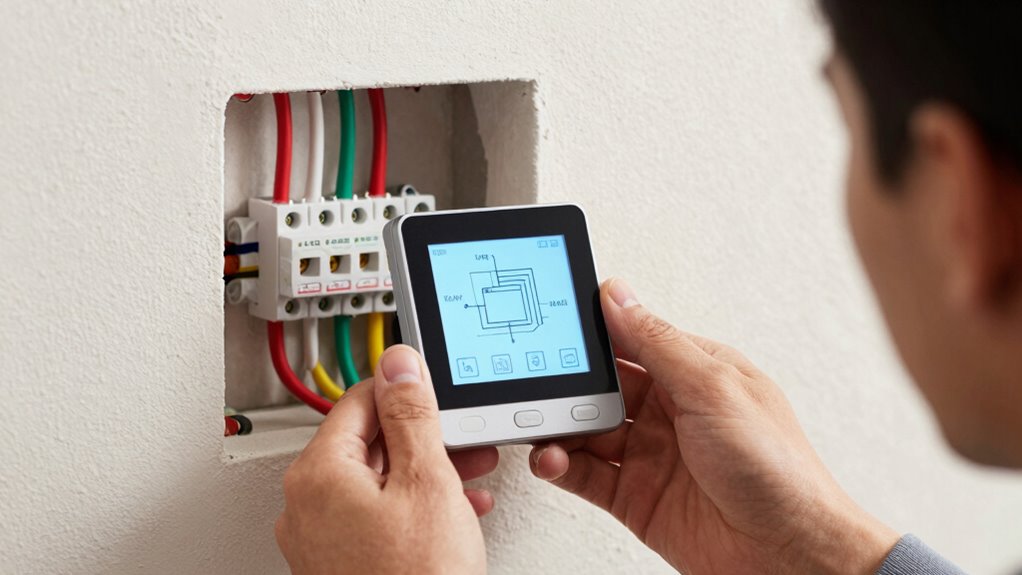
To verify your smart thermostat works smoothly, start by checking your current wiring setup and noting how your system is powered. Identify whether you have a common wire, a power-extender kit, or a different power source. Look for labels like R, Rc, Rh, or C on your wiring to confirm compatibility. Additionally, ensure that your system’s wiring includes early detection signs, which can help identify potential issues before installation. Recognizing system wiring labels can further assist in preventing installation challenges and ensuring optimal performance. Considering the evolving role of AI and society in managing smart home devices, understanding your wiring setup can also facilitate better integration with future automated systems. Paying attention to smart home wiring, including any safety considerations, can help you anticipate future upgrades and system enhancements.
Check Existing Wiring Setup
Examining your existing wiring setup is a vital first step in ensuring your smart thermostat will function correctly. Start by inspecting your current wiring and note whether you have:
- Compatible wiring terminals, such as R, C, W, and Y, which support features like wireless sensors and energy efficiency.
- A common wire (C-wire), necessary for powering advanced smart thermostats without batteries.
- Any additional wiring that could support smart features, like humidity sensors or extra zones. Proper wiring setup not only ensures reliable operation but also influences the compatibility of your smart thermostat with your existing system. Additionally, understanding the wire configurations can help identify potential limitations or the need for wiring upgrades. Recognizing whether your wiring includes a common wire can determine if your thermostat can operate without external power sources. Understanding your wiring helps determine if your thermostat can connect seamlessly and support energy-saving options. If wiring is incompatible or missing components, you might need to upgrade or add wiring. Proper wiring setup ensures reliable operation and unlocks smart features like wireless sensors for optimized energy efficiency. Additionally, smart thermostat compatibility depends heavily on your wiring configuration, making this initial assessment crucial. Plus, silly tantrums and pet antics in family photoshoots highlight the importance of flexible setups, similar to how adaptable wiring can support various smart features.
Determine Power Source Type
How do you determine whether your smart thermostat can draw power from your existing wiring? Start by inspecting your current wiring setup. Many smart thermostats rely on different power source types, such as common wires (C-wires) or power-sharing systems. If you see a dedicated C-wire, your thermostat can likely draw continuous power, supporting energy efficiency and stable operation. Without a C-wire, some models can still work using power-stealing technology, but it might impact energy efficiency or require a power extender kit. Check your system’s wiring and compatibility requirements carefully. Knowing your power source type helps ensure your smart thermostat functions reliably and efficiently, maximizing energy savings and avoiding power issues down the line. Additionally, understanding your wiring setup can prevent potential installation problems related to thermostat wiring compatibility. Being aware of power source types in your system can help you choose the most suitable thermostat model. Moreover, confirming whether your system supports butter in global cuisine can be an important step in comprehensive system assessment. It’s also helpful to identify whether your system includes a C-wire or relies on alternative power methods, as this can influence your thermostat choice.
Identify Common Wire Labels
Ever wonder what those wire labels mean on your thermostat? Understanding common wire labels helps you assess your wiring and power needs for a smart thermostat. Here are key labels to recognize:
- R or Rh: Provides power from the transformer, essential for wireless sensors and the user interface.
- C or Common: Completes the circuit, powering smart features and wireless sensors.
- W, Y, G: Control heating, cooling, and fans, respectively, indicating how your system communicates with the thermostat.
- Recognizing these labels ensures your system has the necessary security and compatibility features for seamless operation. Proper identification of these wires can also help prevent potential installation issues and ensure your smart thermostat functions correctly. Knowing these labels helps you determine compatibility and whether your existing wiring can support smart features. If your system has additional wires, check their labels to identify extra functionalities, which can influence the overall system performance. Being familiar with wire labels allows you to troubleshoot wiring problems more effectively, ensuring a smooth setup process and reliable operation of your smart thermostat. Additionally, understanding your wiring setup can assist in future upgrades, making maintenance and modifications easier.
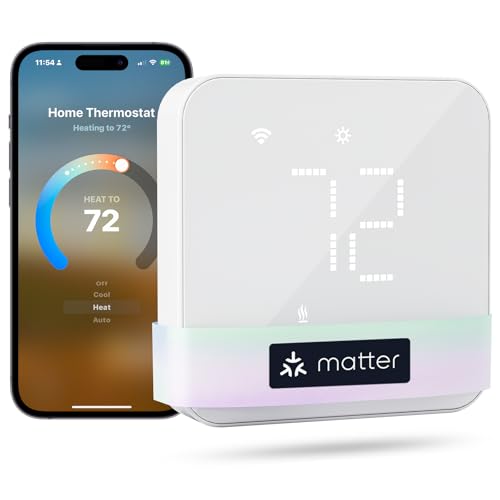
meross Smart Thermostat for Home, WiFi Thermostat Works with Matter, Alexa, Apple Home, Google Assistant, App & Voice Control, 7x24h Scheduling, Energy Saving, C-Wire Required
Before You Buy: Meross smart thermostat for home is suitable for 95% of HVAC systems, including heat pump,…
As an affiliate, we earn on qualifying purchases.
As an affiliate, we earn on qualifying purchases.
Match Your Thermostat Features to Your Heating and Cooling System
To guarantee your smart thermostat works seamlessly, you need to match its features with your heating and cooling system. Check if your system is compatible with the thermostat’s requirements and support for your specific heating or cooling type. Making the right match helps you maximize comfort and efficiency. Additionally, understanding off-road gear can inspire innovative solutions for maintaining system performance in challenging environments.
System Compatibility Requirements
Matching your thermostat features to your heating and cooling system is essential for proper operation. To guarantee compatibility, consider these key points:
- System Type: Confirm if your system is heat pump, conventional, or electric, as some smart thermostats only work with specific types.
- Wiring and Voltage: Check your current wiring and voltage requirements. Many smart thermostats require a C-wire for continuous power, impacting energy savings and user interface functionality.
- Compatibility Features: Look for features like Wi-Fi connectivity, which enhance user interface experiences, and compatibility with your system’s energy-saving modes.
Heating and Cooling Types
Are you aware of how your heating and cooling system type influences your choice of a smart thermostat? Different systems, like central HVAC, heat pumps, or mini-splits, require specific compatibility to operate efficiently. Matching your thermostat to your system enhances energy efficiency, saving you money and reducing environmental impact. For example, some thermostats are better suited for heat pumps, offering specialized features that optimize their performance. The user interface also matters—choose one that’s intuitive and easy to navigate, so you can quickly adjust settings or create schedules. Knowing your system type ensures the thermostat’s features align with your needs, allowing for better control and improved energy management. Proper matching guarantees smooth operation and maximizes the benefits of your smart home investment.

ecobee Smart Thermostat Essential – Energy Star Certified programmable Wi-Fi Thermostat – Works with Siri, Alexa, and Google Assistant
Save up to 23% every year on heating and cooling costs, adjusts to your set schedule to save…
As an affiliate, we earn on qualifying purchases.
As an affiliate, we earn on qualifying purchases.
Ensure Your Smart Thermostat Works With Your Voice Assistant and Ecosystem
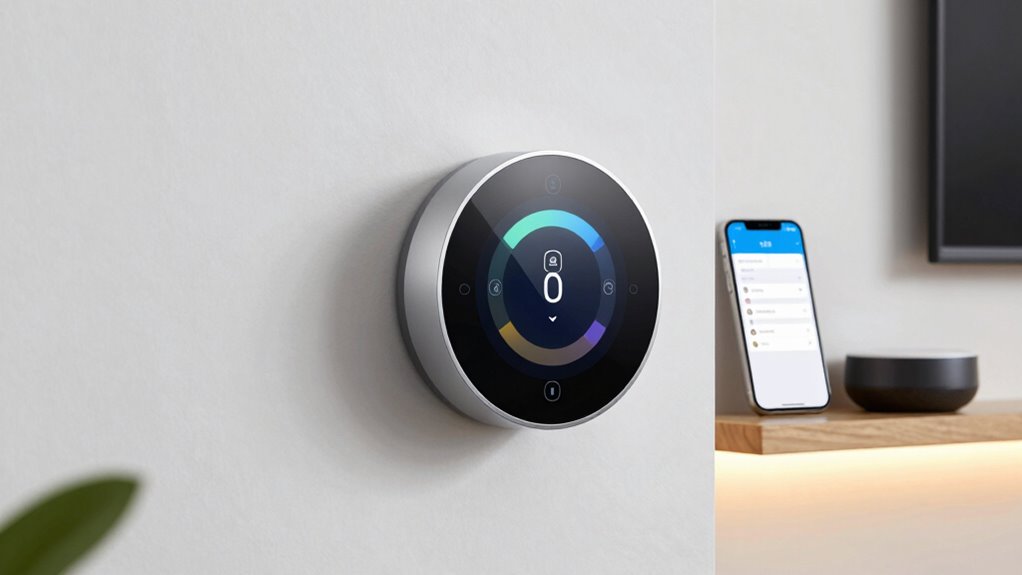
Ensuring your smart thermostat works seamlessly with your voice assistant and ecosystem can considerably enhance its convenience and functionality. To achieve this, focus on three key aspects:
- Voice command integration: Confirm your thermostat supports popular voice assistants like Alexa, Google Assistant, or Siri for hands-free control.
- Ecosystem connectivity: Make sure it connects smoothly with your existing smart home devices, such as smart lights or security systems, for unified control.
- Compatibility checks: Verify the thermostat’s compatibility with your preferred ecosystem before purchasing, ensuring all devices work harmoniously.
Troubleshoot Common Compatibility Problems
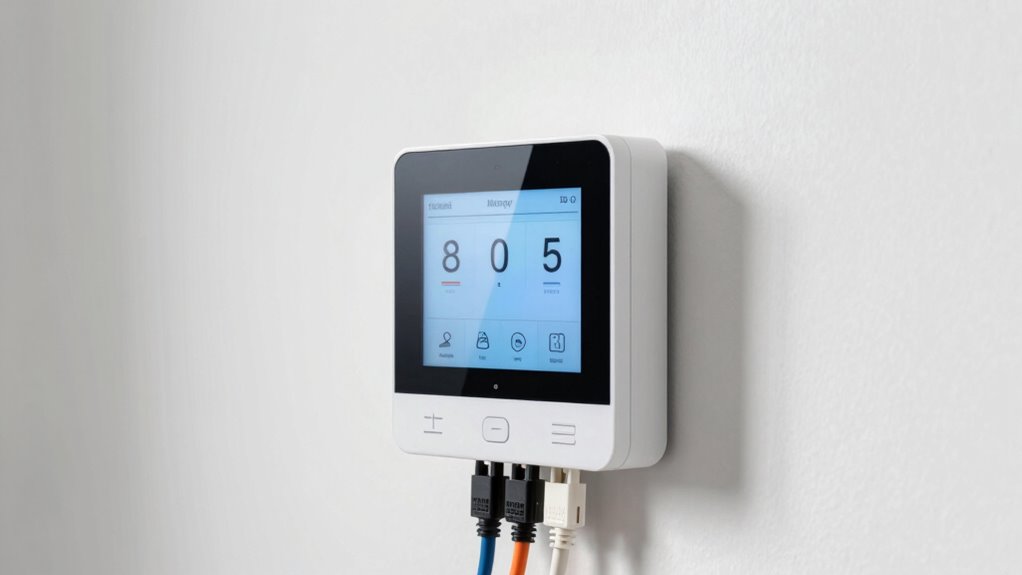
Compatibility issues with your smart thermostat can arise unexpectedly, but many are easily resolved with some troubleshooting. First, check that your system wiring matches the thermostat’s requirements—incorrect wiring can hinder energy efficiency and disrupt the user interface. Also, verify your Wi-Fi connection; a weak signal may prevent proper communication. Ensure your app and firmware are updated to avoid bugs. Sometimes, the thermostat’s settings need adjustment for compatibility with your HVAC system. Use the table below to identify common problems and solutions:
| Issue | Cause | Solution |
|---|---|---|
| Thermostat not powering on | Wiring mismatch | Double-check wiring connections |
| User interface unresponsive | Outdated firmware | Update firmware via app |
| Compatibility warning | System type mismatch | Confirm system compatibility |
| Energy efficiency issues | Incorrect scheduling or settings | Reset and optimize settings |
| Connectivity problems | Weak Wi-Fi signal | Improve Wi-Fi coverage |
Why Professional Installation Matters for Compatibility
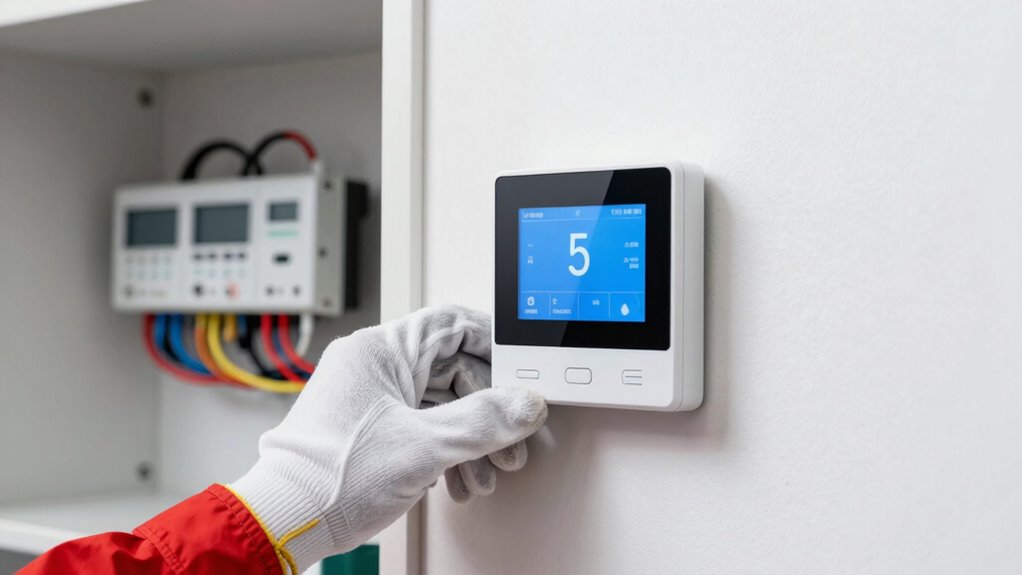
While DIY installation might seem straightforward, professional installers bring essential expertise that guarantees your smart thermostat works seamlessly with your HVAC system. They guarantee peak energy efficiency by configuring your device correctly, which reduces energy waste and lowers bills. Additionally, a professional setup enhances the user interface, making it easier to navigate and customize settings.
Here are three key benefits of professional installation:
- Accurate wiring and compatibility checks to prevent system malfunctions.
- Proper calibration for maximum energy savings.
- Expert advice on ideal placement for better usability.
Choosing a professional ensures your smart thermostat functions as intended, maximizing energy efficiency and providing a user-friendly experience right from the start.
How to Confirm Compatibility Before Buying
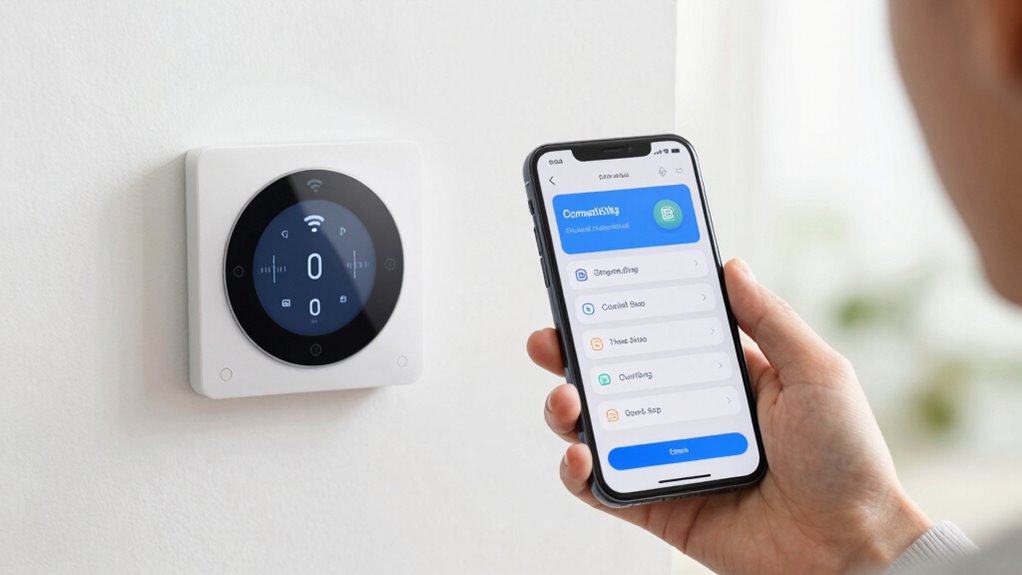
Before purchasing a smart thermostat, it’s important to verify that it will work smoothly with your existing HVAC system. Start by checking your system’s compatibility, such as whether it’s a heating, cooling, or combined setup. Review your user preferences—like preferred temperature control methods or scheduling features—and make certain the thermostat supports them. Look at the wiring and connection types, making sure they match the thermostat’s requirements. Confirm that the device is compatible with your Wi-Fi network for seamless control. Additionally, consider energy savings features; some thermostats offer advanced automation that adapts to your routines, optimizing energy use. Doing this research ensures your smart thermostat integrates well, aligns with your preferences, and maximizes energy savings from the start.
Future-Proof Your Smart Thermostat Setup for Upgrades
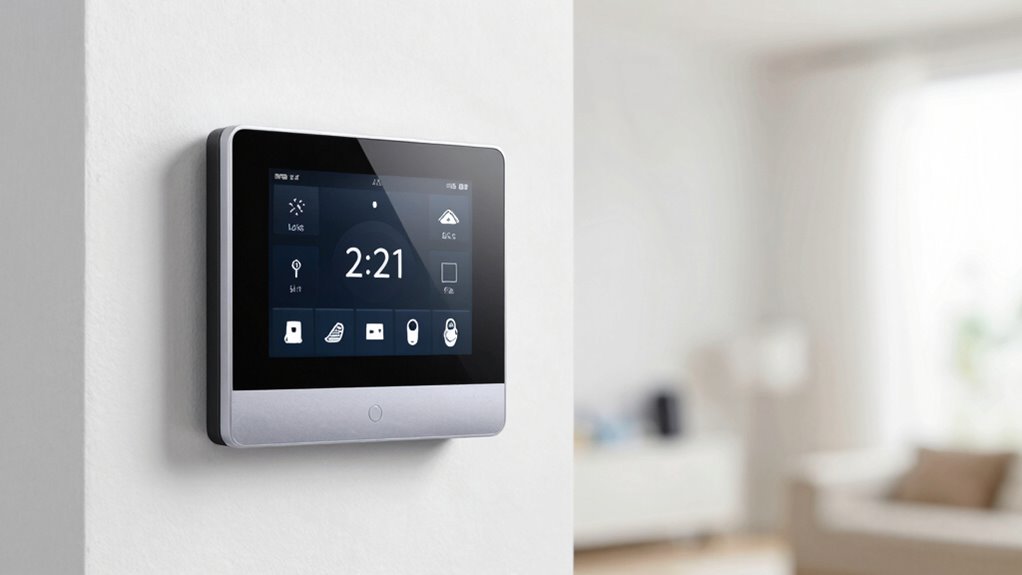
Planning your smart thermostat setup with future upgrades in mind guarantees it remains functional and efficient as technology advances. To guarantee longevity, focus on these key steps:
- Choose a thermostat that supports broad smart home integration, allowing seamless connection with future devices.
- Prioritize models with open APIs for easier updates and compatibility with new systems.
- Opt for energy-efficient features and firmware updates that improve performance over time.
Tips to Avoid Compatibility Issues in the Future
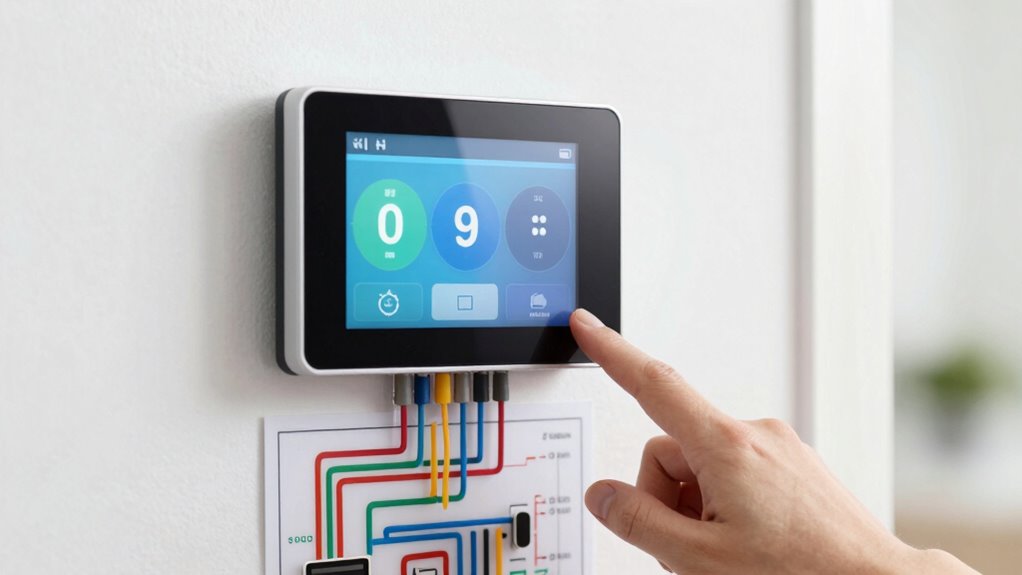
To avoid compatibility issues in the future, you need to be proactive about selecting the right smart thermostat and accessories. Start by researching models that prioritize energy efficiency, ensuring your system reduces energy waste and lowers bills. Check that the thermostat’s user interface is intuitive and easy to navigate, so you won’t struggle to control or customize settings later. Confirm compatibility with your existing HVAC system and smart home devices before purchasing. Keep firmware and app updates in mind, as they can improve functionality and fix bugs. Choosing a widely supported brand can also help, since many updates and integrations are more reliable over time. By making informed choices now, you’ll minimize future compatibility issues and optimize your smart thermostat’s performance.
Frequently Asked Questions
Can I Upgrade My Thermostat Without Replacing the Entire HVAC System?
Yes, you can upgrade your thermostat without replacing your entire HVAC system. Many smart thermostats are compatible with existing setups, allowing you to enjoy remote control and better energy savings. Just check your current wiring and system type to guarantee compatibility. Installing a smart thermostat is straightforward and helps you manage temperature remotely, leading to more efficient energy use and cost savings without the hassle of a full system replacement.
Do Smart Thermostats Work With Commercial Heating and Cooling Systems?
Yes, smart thermostats can work with many commercial heating and cooling systems, offering energy savings and user convenience. You might need a compatible HVAC setup or an adapter, depending on your system. These thermostats allow you to control temperature remotely, create schedules, and monitor energy use, helping you save money and improve comfort. Before installing, check your system’s specifications to verify compatibility for seamless integration.
Are There Specific Smart Thermostats Designed for Historic or Older Homes?
Think of your historic home as a delicate vintage clock—every gear matters. Yes, there are smart thermostats designed specifically for historic homes, addressing challenges like old wiring and preservation needs. These models often feature compatibility with low-voltage systems and minimal wiring requirements, making installation smoother. With the right choice, you can enjoy modern convenience without compromising your home’s charm, ensuring comfort while respecting its timeless character.
How Do I Ensure My Existing Wi-Fi Network Supports a New Smart Thermostat?
To guarantee your Wi-Fi network supports a new smart thermostat, start by checking its Wi-Fi security features and compatibility requirements. Make sure your network has sufficient bandwidth to handle the device’s data needs without slowing down your connection. Update your router firmware if necessary, and consider upgrading your router if your network struggles with multiple devices. A stable, secure Wi-Fi guarantees smooth operation and easy control of your smart thermostat.
What Are the Risks of Using Incompatible Smart Thermostats?
Using incompatible smart thermostats can lead to compatibility issues, causing your device to malfunction or not work at all. You might face installation challenges, which could damage your HVAC system or void warranties. There’s also a risk of data security breaches if the device isn’t properly supported or updated. To avoid these problems, double-check compatibility before purchasing and follow installation instructions carefully to guarantee smooth operation and safety.
Conclusion
As you stand at the crossroads of choice, envision your smart thermostat as the gateway to a more comfortable, energy-efficient home. By carefully managing compatibility checks, wiring, and ecosystem integration, you’re stitching together a seamless symphony of climate control. Think of it as planting a sturdy seed—when nurtured with knowledge and a watchful eye for future upgrades, it blossoms into a reliable, intelligent system that adapts effortlessly to your lifestyle’s evolving rhythm.