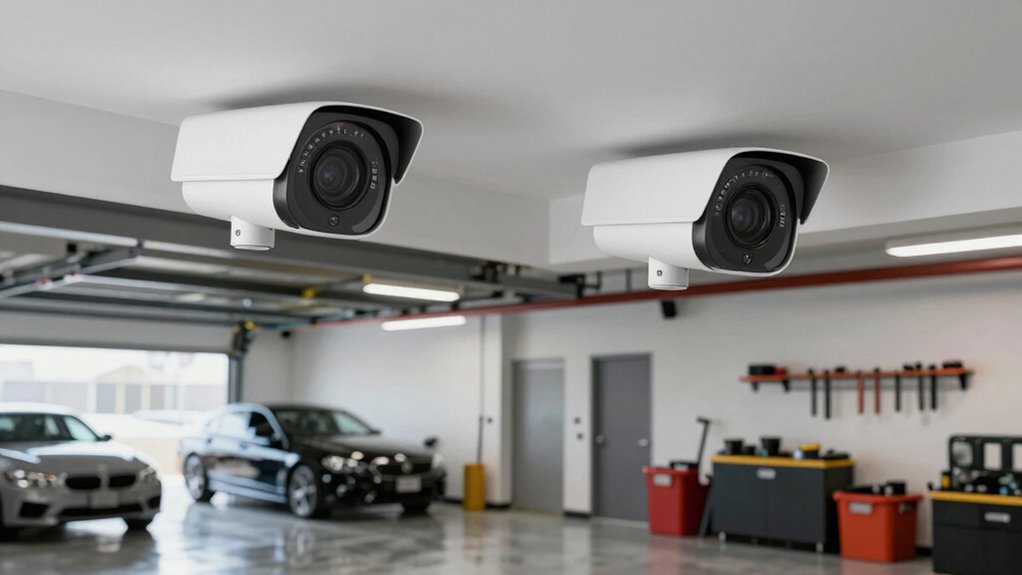
To achieve full coverage without blind spots, strategically place your garage cameras at high, angle-focused spots that cover entry points, corners, and high-traffic zones. Use multiple cameras from different angles to eliminate blind spots and guarantee seamless monitoring. Avoid obstructions and clutter that block views, and regularly adjust for layout changes. Choosing the right camera types and maintaining them keeps your system effective—if you want to know exactly how to do this, continue to find out more.
Key Takeaways
- Use multiple cameras at different angles and heights to cover all entry points and corners effectively.
- Mount cameras above clutter and obstructions to maintain clear sightlines and avoid blind spots.
- Focus on high-traffic zones and key entry points for comprehensive coverage.
- Regularly inspect and adjust camera angles to adapt to layout changes and lighting conditions.
- Select weatherproof and discreet mounts that blend with the garage environment for optimal surveillance.

myQ Smart Garage Security Camera – 1080p HD Video, Night Vision, Motion Detection, Magnetic, Wi-Fi, Two-Way Audio, Smartphone Control
Security for Garage: The ultimate smart camera designed for your garage, giving you the power to see and…
As an affiliate, we earn on qualifying purchases.
As an affiliate, we earn on qualifying purchases.
How to Identify the Best Spots for Garage Cameras
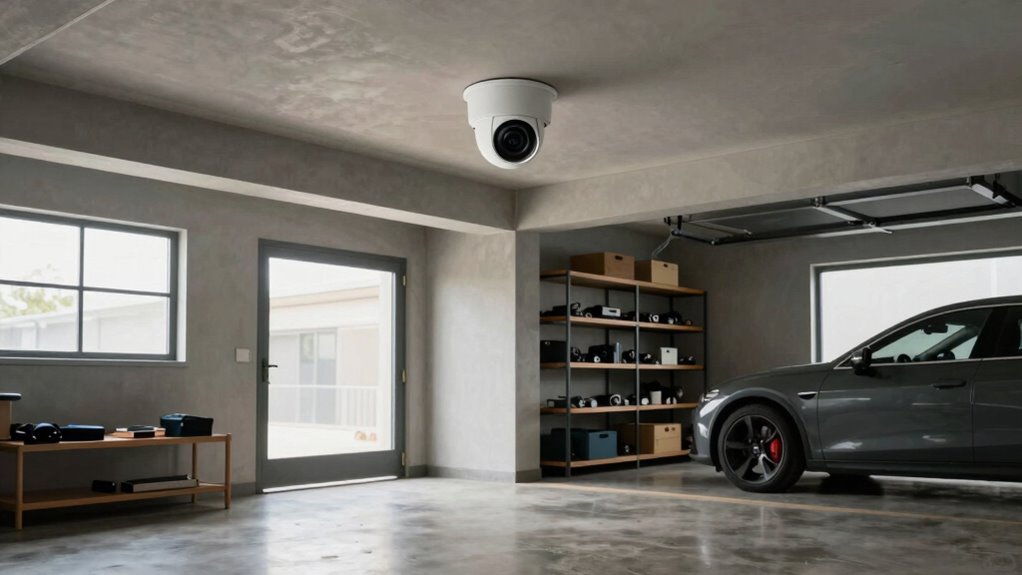
To guarantee your garage cameras provide the best coverage, you need to carefully choose their placement. Start by considering garage aesthetics, ensuring the cameras blend seamlessly with your space to avoid clutter or distraction. Position cameras where they won’t obstruct your storage solutions or block access to shelves and cabinets. Focus on high-traffic areas, entry points, and potential blind spots. Mount cameras at a height that captures clear views without being easily tampered with. Keep in mind, the right placement enhances security without compromising your garage’s organization or appearance. Avoid installing cameras in spots that might interfere with lighting or cause glare. Strategic positioning allows you to monitor effectively while maintaining a tidy, functional garage environment. Additionally, selecting the right camera placement can significantly improve your overall security and surveillance effectiveness. For pro users, investing in professional-grade equipment ensures durability and high-quality footage, making your surveillance more reliable. Proper surveillance setup also helps prevent blind spots and ensures comprehensive coverage. When planning your camera locations, consider the safety of the setup to prevent accidental damage or vandalism. Incorporating knowledge about system efficiency can further optimize your security setup by reducing maintenance and ensuring consistent performance.

Metal Wall Mount for myQ Smart Garage Security Camera, No Drill Weatherproof Mounting Bracket with Two Easy Installation Ways, Flexible Positing Your Camera for Better View Angle – White (1 Pack)
Designed for myQ Smart Garage Camera: This L shape mount is only compatible with myQ Smart Garage Security…
As an affiliate, we earn on qualifying purchases.
As an affiliate, we earn on qualifying purchases.
How to Recognize Key Coverage Areas in Your Garage
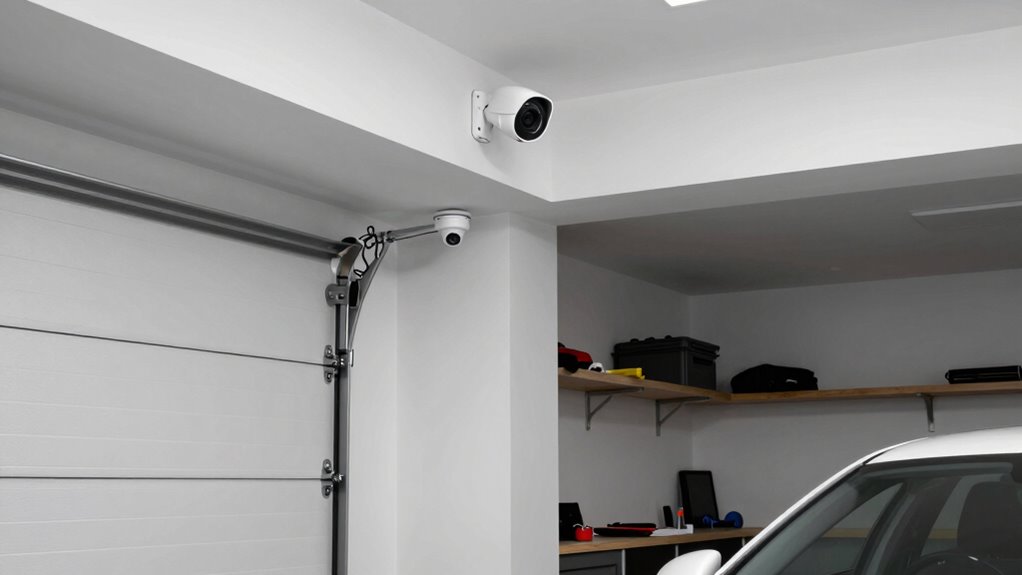
To guarantee your garage is well protected, start by identifying high-traffic zones where people frequently move. Make sure to cover all entry points, like doors and windows, to catch any unwanted activity. Don’t forget to check for hidden corners that could provide someone with a concealment spot. Additionally, be aware of early warning signs that might indicate suspicious activity or security breaches. Regularly inspecting your camera footage for blind spots can help you quickly spot any vulnerabilities or unusual behavior. Incorporating knowledge about security camera placement can further optimize coverage and reduce vulnerabilities. Proper positioning of your cameras can also help in avoiding obstructed views, ensuring comprehensive surveillance coverage. Being familiar with surveillance strategies can help you develop a more effective security plan for your garage.
Identify High-Traffic Zones
Identifying high-traffic zones in your garage is essential for effective camera placement. These areas see the most movement, like near garage decor or storage organization systems, where people frequently pass or gather. Focus on spots where you often access tools, shelves, or workbenches. Recognize patterns of activity, such as the main pathways connecting the garage door to storage zones. High-traffic zones help you determine ideal camera angles to monitor key activity without blind spots. Consider the flow of movement—entry points, work areas, and common routes—when choosing locations. By pinpointing these busy areas, you ensure your cameras cover the most important parts of your garage, making it easier to spot any suspicious activity or accidents before they escalate. Incorporating smart home gear like dual camera doorbells can further enhance your surveillance coverage. Understanding time zone differences can also assist in coordinating security system alerts or monitoring schedules, especially if you have a remote security service. Additionally, analyzing traffic patterns can help optimize camera placement for continuous, comprehensive coverage.
Cover Entry Points
Have you considered how crucial it is to cover your garage’s entry points with cameras? These areas are the most common access points for intruders or pests, so securing them is essential for effective surveillance. Position cameras near garage doors, side entrances, and windows where unwanted guests might try to sneak in. Proper garage organization makes it easier to identify these key spots, guaranteeing your cameras capture clear footage of anyone approaching. Covering entry points also helps prevent pests from entering unnoticed, protecting your belongings and maintaining a clean space. Use weatherproof cameras if your garage is exposed to the elements, and ensure they’re installed at angles that eliminate blind spots. This strategic placement boosts security and supports overall garage management. Ensuring your home safety involves using household products like security cameras to monitor all vulnerable areas effectively, while understanding cabling solutions can help maintain reliable camera operation over time. Additionally, considering professional installation can optimize camera positioning and coverage for maximum security. Taking the time to assess your garage layout can further enhance your surveillance strategy by highlighting additional vulnerable spots and understanding how proper maintenance ensures consistent performance of your cameras.
Detect Hidden Corners
Since hidden corners can easily become blind spots, it’s vital to identify these areas when planning your garage camera setup. Look for nooks behind storage units, beneath workbenches, or in tight corners that are often overlooked. Recognizing these spots guarantees full coverage without gaps. To maintain garage aesthetics, choose compact or discreet cameras that blend seamlessly with your decor. Consider your budget considerations by selecting versatile, cost-effective options like motion-activated or wide-angle cameras that cover larger areas. Proper placement in hidden corners prevents intruders from exploiting blind spots and helps you keep an eye on all angles. Regularly reassess your garage’s layout, especially after organizing or renovations, to guarantee your camera placement remains effective and unobtrusive. Incorporating Greek sceptic principles of questioning assumptions can help you critically evaluate which areas truly need coverage and which might be less vulnerable. Additionally, understanding common metabolic health risk factors can help you prioritize security measures in areas where you’re most vulnerable. Being aware of your garage layout can further enhance your ability to identify potential security gaps and optimize camera positioning. Conducting a thorough drone bees and hive health assessment can also serve as a metaphor for inspecting your garage’s security, ensuring every corner is checked for vulnerabilities.
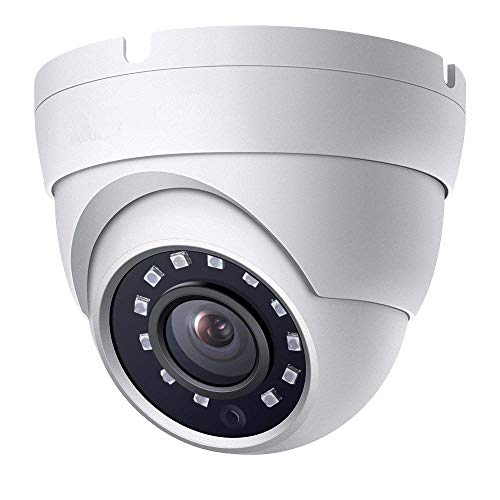
Real HD 2MP Dome TVI AHD CCTV Surveillance Security Camera, 2.8mm 100° Wide Viewing Angle, 1080P Dome Camera, 65ft Night Vision, Outdoor, Compatible with Analog TVI AHD CVI DVR, Full Metal Housing
This camera is 2 Megapixels high definition 1080p HD TVI/AHD/CVI/960H(1000 TVL), 65ft IR night vision range. It has…
As an affiliate, we earn on qualifying purchases.
As an affiliate, we earn on qualifying purchases.
Why Elevation and Angle Matter for Clear Footage
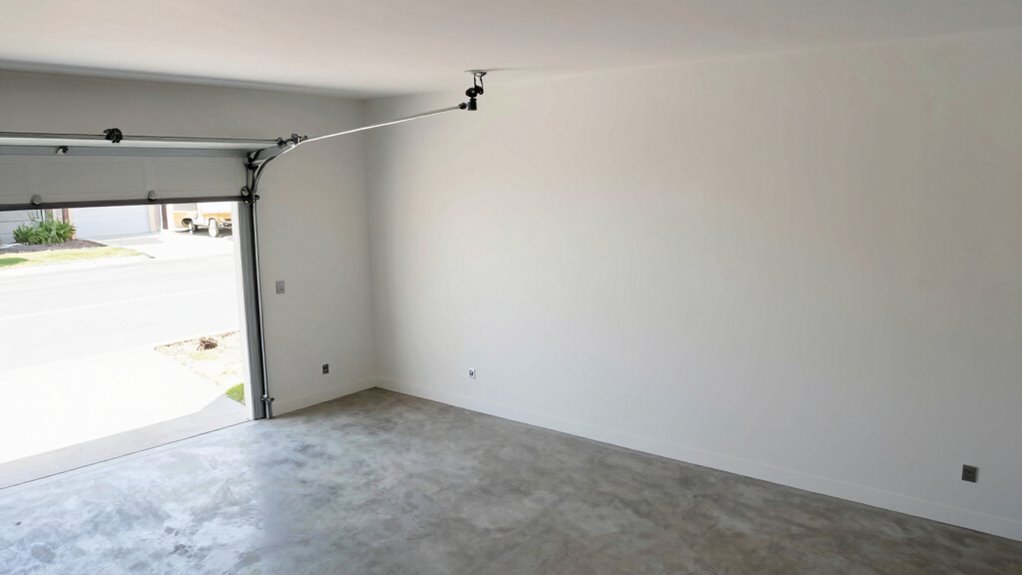
The placement of your garage camera considerably impacts the clarity of the footage it captures. Proper elevation and angle guarantee you get clear, detailed images while maintaining good camera ergonomics. If positioned too low, the camera may miss important details or be easily tampered with. Too high, and footage can become distorted or less useful. Consider these factors:
- Optimal elevation: Mount the camera at a height that balances visibility and privacy considerations, avoiding overly intrusive angles.
- Correct angle: Tilt the lens downward slightly to capture activity at eye level without creating blind spots.
- Privacy considerations: Position cameras thoughtfully to respect neighbors’ privacy and prevent unnecessary footage of private areas.
Getting these elements right guarantees clear footage and respects privacy boundaries.
myQ Smart Garage Security Camera – 1080p HD Video, Night Vision, Motion Detection, Magnetic, Wi-Fi, Two-Way Audio, Smartphone Control
Security for Garage: The ultimate smart camera designed for your garage, giving you the power to see and…
As an affiliate, we earn on qualifying purchases.
As an affiliate, we earn on qualifying purchases.
How to Avoid Blind Spots With Strategic Camera Placement
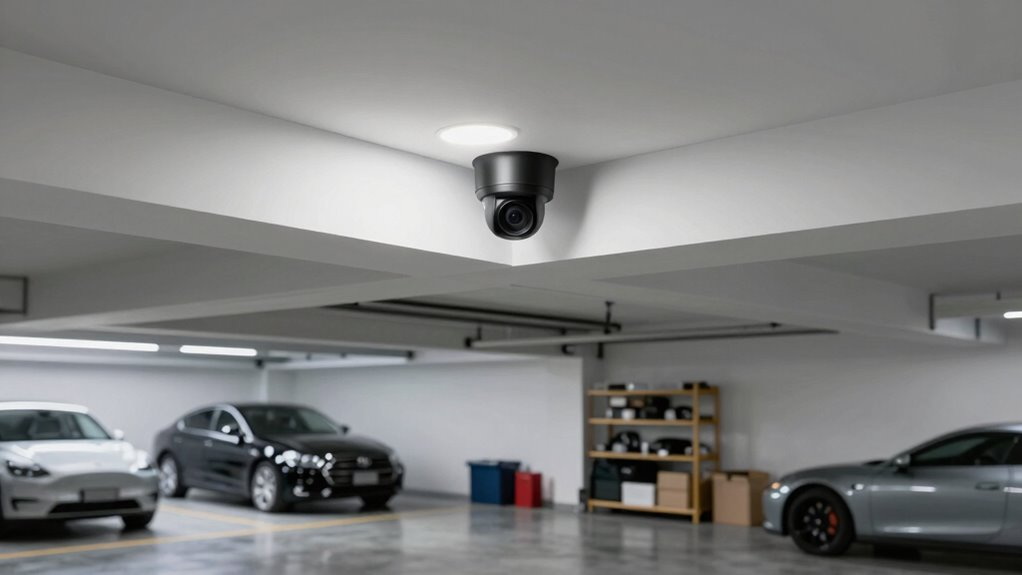
To prevent blind spots, you need to carefully map out the key areas of your garage that require surveillance. Using multiple camera angles guarantees you cover every corner without gaps, while avoiding obstructions like shelves or pipes keeps the footage clear. With strategic placement, you’ll maximize coverage and keep your garage secure. Incorporating insights from HRV recovery routines can help you stay alert to identify any overlooked blind spots during planning. Additionally, understanding tech clutter can assist you in choosing the most effective camera systems without unnecessary distractions.
Map Out Key Areas
Have you ever wondered how some garages seem fully covered while others miss essential spots? Mapping out key areas is important for effective camera placement. First, identify high-traffic zones like entry points, driveways, and storage areas. These spots are crucial for security and should be prioritized. Second, consider garage aesthetics; discreet camera locations maintain a clean look without cluttering the space. Finally, factor in your budget considerations—opt for versatile options that cover multiple angles without overspending. Planning your camera setup around these points ensures thorough coverage and minimizes blind spots. A strategic approach saves you money, preserves your garage’s appearance, and enhances security—making sure every important area is monitored efficiently.
Use Multiple Angles
Using multiple angles with your cameras is the best way to eliminate blind spots and guarantee extensive coverage. Position cameras to cover all entry points, corners, and high-traffic areas, ensuring no spot is overlooked. This strategic placement enhances garage aesthetics by creating a neat, organized look that blends with your design. Consider camera branding options that match your garage’s style, so the setup appears seamless. By covering different perspectives, you reduce the risk of missing vital activity, especially in shadowed or hard-to-see zones. Remember, a well-rounded camera system not only improves security but also maintains a clean, professional appearance. Using multiple angles is essential for thorough surveillance, making sure every inch of your garage remains protected without compromising its visual appeal.
Avoid Obstructions
Obstructions can quickly create blind spots in your garage security, so it’s essential to plan camera placement carefully. Clutter from poor garage organization or storage solutions can block camera views, reducing coverage. To avoid this, consider these strategies:
- Position cameras above clutter or storage areas to maintain clear sightlines.
- Clear pathways and keep key zones free of obstructions for unobstructed views.
- Use adjustable mounts to fine-tune angles and bypass objects that could block the camera lens.
What Are the Best Camera Types for Garage Security?
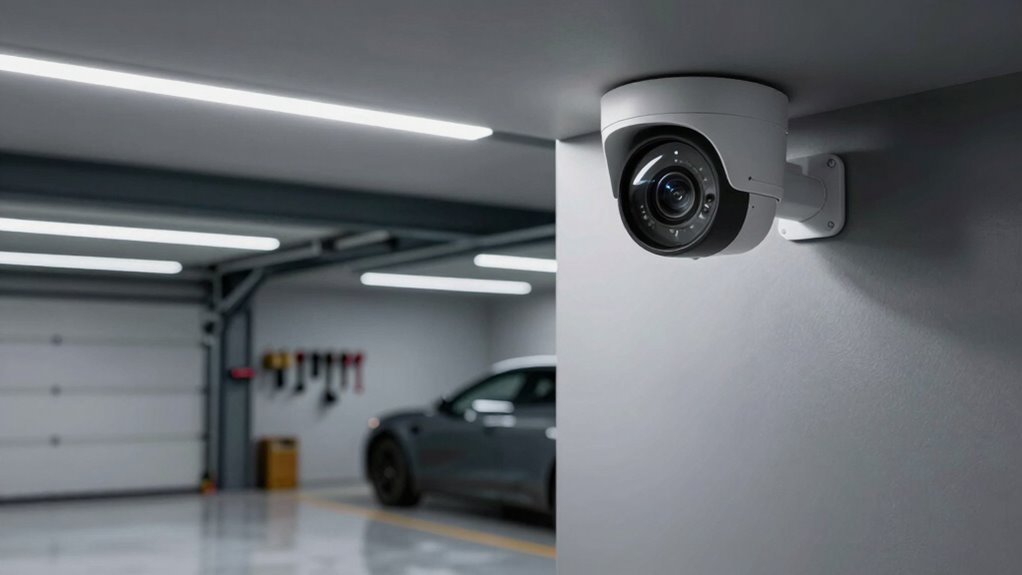
Choosing the right camera type is essential for effective garage security. You want options that blend seamlessly with your garage aesthetics while providing clear footage. The main types include dome cameras, bullet cameras, and PTZ (pan-tilt-zoom) cameras. Dome cameras are discreet and blend well, making them popular for subtle surveillance. Bullet cameras are visible and ideal for long-range viewing, deterring intruders. PTZ cameras offer flexible coverage, allowing you to control the view remotely. When considering camera branding, choose reputable brands known for durability and clarity. Here’s a quick comparison:
| Camera Type | Best For |
|---|---|
| Dome Cameras | Discreet, general surveillance |
| Bullet Cameras | Long-range, outdoor visibility |
| PTZ Cameras | Dynamic coverage, remote control |
How to Use Lighting to Improve Camera Effectiveness
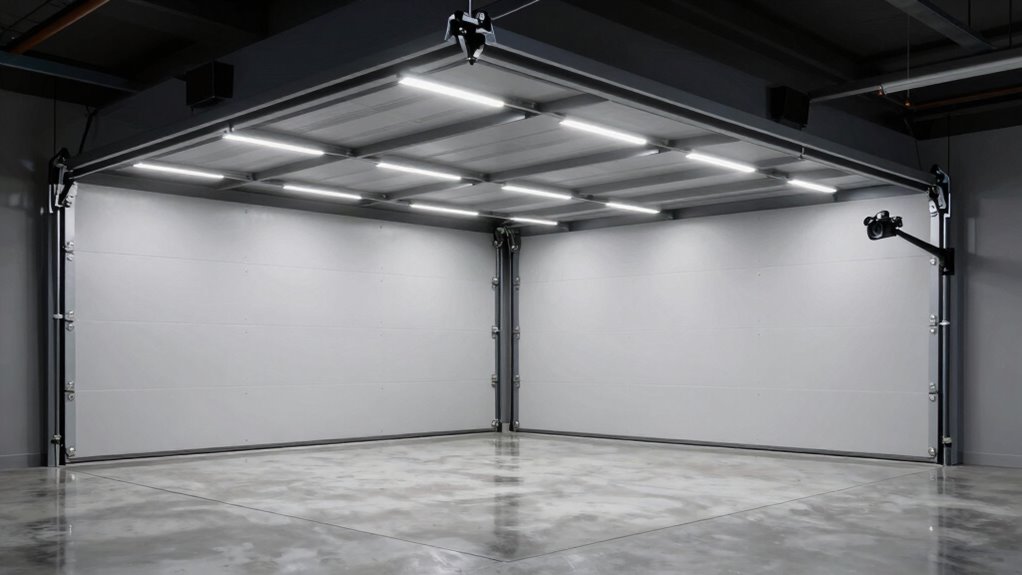
Proper lighting placement can make a big difference in your camera’s clarity and effectiveness. Using motion-activated lights highlights activity without wasting energy, while avoiding light pollution keeps your footage clear and focused. Adjusting these elements guarantees your garage is well-lit and secure, day or night.
Optimal Lighting Placement
Have you considered how strategic lighting can markedly boost your garage camera’s effectiveness? Proper lighting design enhances visibility and reduces shadows, making your footage clearer. To optimize, focus on bulb placement to eliminate dark spots.
- Position lights above or near the camera’s field of view to avoid glare and shadows.
- Use evenly spaced bulbs to create balanced illumination across the entire garage.
- Opt for motion-activated or adjustable lighting to adapt to different times and activities.
Use Motion-Activated Lights
Using motion-activated lights can markedly enhance your garage camera’s effectiveness by guaranteeing the area is well-lit only when needed. These lights rely on motion detection and light sensors to activate instantly when movement is detected, deterring intruders and providing clearer footage. Proper placement of motion-activated lights around your garage ensures the camera captures sharp images without shadows or dark spots. When you set up these lights strategically, they work in tandem with your camera, increasing visibility during nighttime or low-light conditions. This not only improves security but also helps you verify any activity caught on camera quickly. Remember to position lights where they cover blind spots and avoid areas with constant ambient light, which could interfere with motion detection accuracy.
Avoid Light Pollution
Ever wonder how excessive or poorly directed lighting can undermine your security efforts? Light pollution can create glare that blinds your camera’s lens, reducing image clarity and leaving blind spots. To avoid this, consider these tips:
- Position lights downward and away from the camera to minimize glare and prevent light pollution.
- Use shielded fixtures that direct light precisely where needed, reducing unnecessary brightness.
- Opt for motion-activated or dimmable lights to limit excess illumination during quiet periods.
Common Garage Camera Placement Mistakes to Avoid
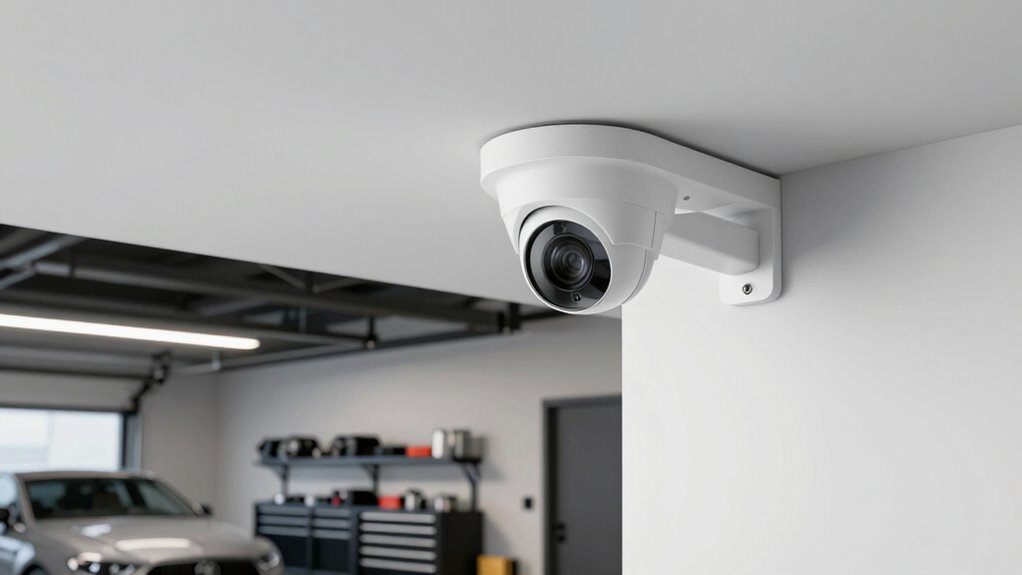
When placing your garage camera, it’s easy to make mistakes that compromise security and visibility. One common mistake is overlooking garage organization and storage optimization, which can block camera views or create blind spots. Avoid placing cameras where clutter, shelves, or stored items obscure the lens. Also, don’t position cameras too high or too low; the right height ensures clear footage of entrances, exits, and key areas. Another mistake is ignoring lighting conditions—make sure the camera has proper lighting or features like night vision. Finally, avoid placing cameras where they’ll be exposed to direct sunlight or harsh reflections, which can distort footage. Proper planning of camera placement, considering your garage’s layout and storage setup, helps you get the coverage you need without blind spots.
How to Position Cameras in Different Garage Layouts
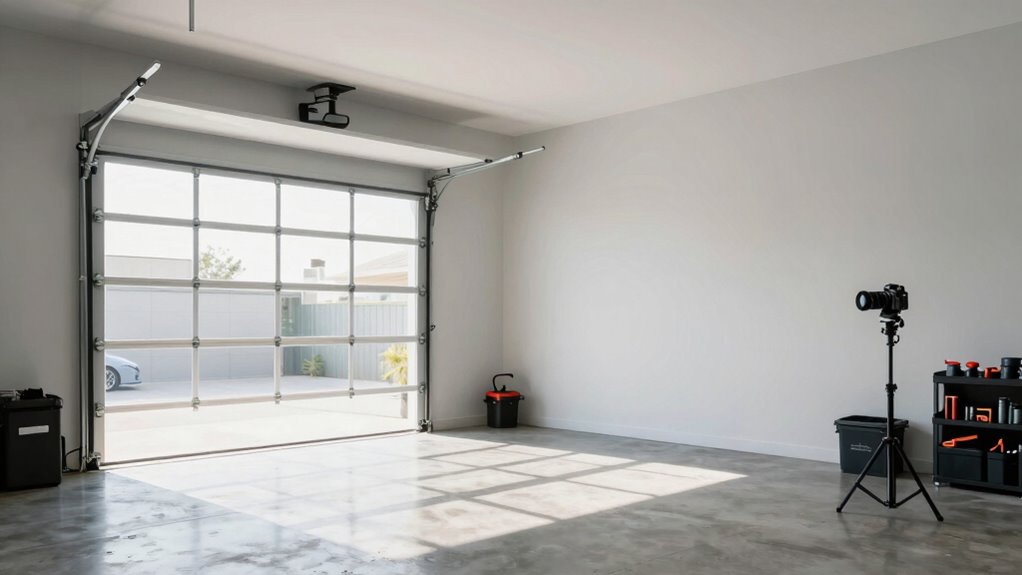
Different garage layouts require tailored camera placement to maximize coverage and security. Your goal is to guarantee effective surveillance with garage aesthetics and storage organization. For rectangular garages, position cameras at corners high on walls to cover wide areas. In L-shaped garages, focus on junction points and entryways to prevent blind spots. For garages with integrated storage, place cameras where they overlook key zones without disrupting organization. Consider 1) mounting cameras near garage doors for quick access, 2) avoiding obstructions like shelving that block views, and 3) blending cameras with the environment to maintain visual appeal. Proper placement ensures security while preserving your garage’s clean look and efficient storage setup.
How to Use Multiple Cameras for Complete Coverage
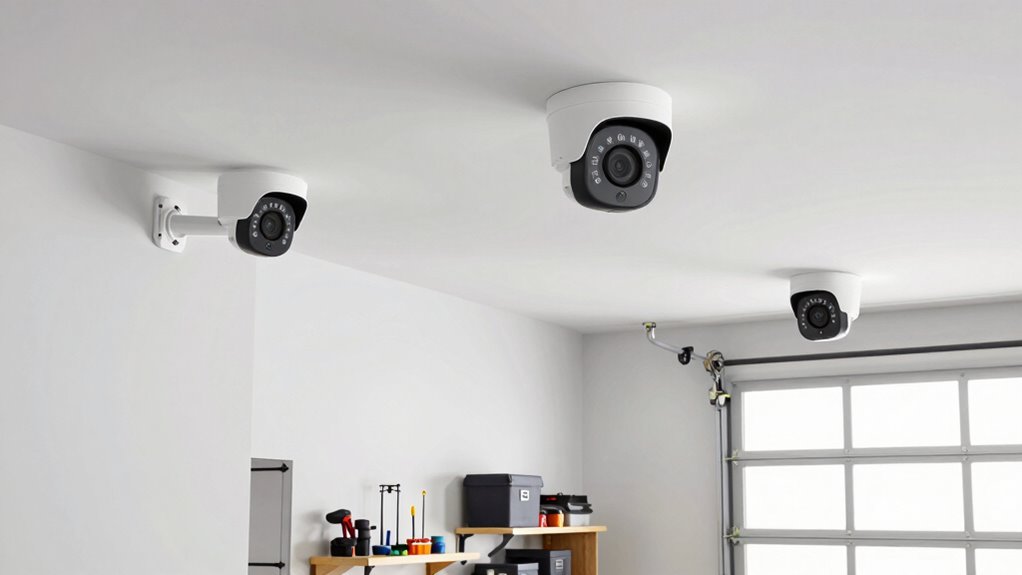
Using multiple cameras in your garage allows you to achieve thorough coverage and minimize blind spots. Position cameras at strategic points to cover entryways, corners, and high-traffic areas, making certain you’re capturing all activity. Consider garage aesthetics by choosing discreet mounts and matching camera styles to your space, so they don’t detract from the look. Climate considerations are vital; select weather-resistant cameras if your garage is exposed to temperature fluctuations or humidity. Placing cameras at different heights and angles helps eliminate blind spots and provides overlapping views for better security. Use a combination of wide-angle and zoom lenses to balance coverage and detail. Proper placement and camera types ensure you get comprehensive, reliable surveillance without compromising your garage’s appearance.
How to Maintain and Adjust Your Garage Cameras Over Time
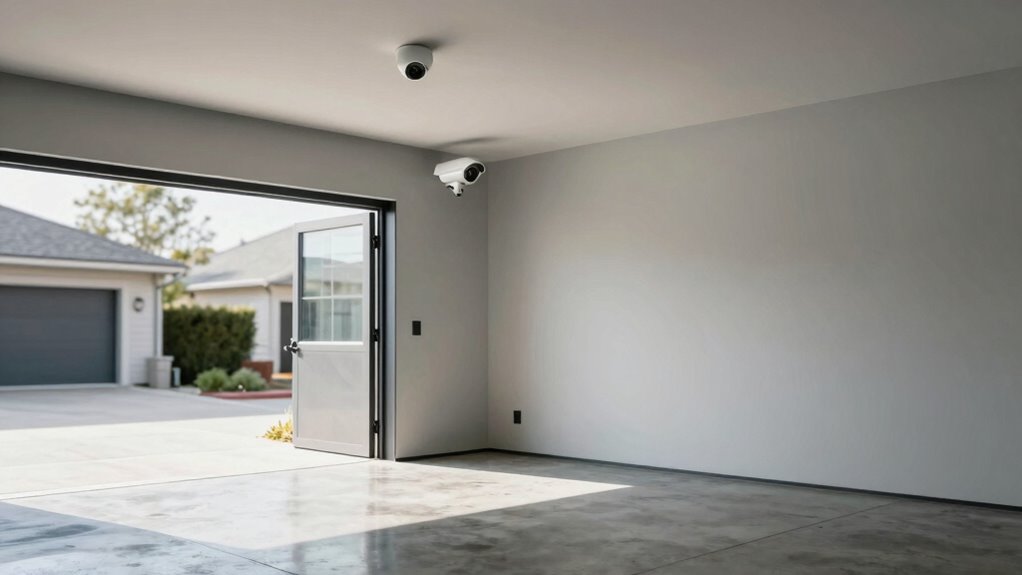
Regularly maintaining and adjusting your garage cameras guarantees they continue to provide reliable security. Perform routine camera maintenance by cleaning lenses and checking for obstructions. Keep firmware updates current to guarantee peak functionality and security features. To stay effective over time, follow these steps:
- Schedule regular inspections to verify camera positioning and clear sightlines.
- Update firmware promptly to address vulnerabilities and improve performance.
- Adjust camera angles as needed to adapt to changing garage layouts or lighting conditions.
Frequently Asked Questions
How Can I Prevent My Garage Cameras From Being Tampered With?
To prevent your garage cameras from being tampered with, you should install them in secure, hard-to-reach spots. Use vandal-proof or tamper-resistant cameras, and consider adding protective covers. Regularly check for signs of camera tampering or signal interference, and upgrade your system’s security features. You can also use motion alerts to detect suspicious activity, ensuring your cameras stay protected and reliable.
What Features Should I Look for in a Garage Security Camera?
You should look for a garage security camera with clear night vision and advanced motion detection. Night vision guarantees you can see clearly in low light or darkness, while motion detection alerts you instantly to any activity. Choose a camera with a wide-angle lens to cover more area and features like remote viewing, weather resistance, and tamper alerts. These features help you monitor your garage effectively and respond quickly to any suspicious activity.
How Does Weather Affect Garage Camera Performance?
Weather can weaken your garage camera’s performance, making weatherproofing tips vital. Harsh conditions like rain, snow, or extreme heat can cause fogging, water damage, or electrical issues. You should position your camera wisely, avoiding direct exposure to elements, and guarantee it’s weatherproofed. Proper camera positioning combined with weatherproofing not only protects your investment but also ensures clear, consistent coverage, keeping your garage safe and secure through every season.
Can I Connect My Garage Cameras to My Smart Home System?
Yes, you can connect your garage cameras to your smart home system, especially if they have wireless connectivity. Most modern cameras are compatible and can be integrated seamlessly. Make certain they have reliable power sources, like wired or battery options, to guarantee continuous operation. Once connected, you can monitor your garage remotely, receive alerts, and control the cameras through your smart home app for added security and convenience.
What Is the Typical Maintenance Schedule for Garage Security Cameras?
Did you know that regular maintenance can extend your garage camera’s lifespan by up to 30%? You should check your camera lens for dust and debris weekly to guarantee clear images. Additionally, perform power supply checks monthly to prevent outages. Clean the lens gently with a microfiber cloth, and verify wiring connections to keep your security system running smoothly and reliably.
Conclusion
By strategically placing your garage cameras, you’ll create a safety net that covers every nook and cranny—like a watchful eye casting a wide, protective net. Remember to choose the right spots, angles, and camera types, and keep them well-maintained. With thoughtful positioning, you’ll turn your garage from a shadowy blind spot into a fortress of security, ensuring peace of mind knowing nothing slips through the cracks.