
TL;DR

Get home appliances delivered free with Prime
- Fast, free delivery on millions of items
- Prime Video, Amazon Music and more included
- Member-only deals all year
Toro’s 60V 900 CFM handheld blower is the company’s highest-performing battery-powered handheld model, according to the product report. Toro product marketing manager Ben Waldera described design choices intended to support year-round yard cleanup, including airflow tuned for broad coverage, a front handle and materials selected for cold-weather operation.
Toro’s 60V, 900 CFM handheld blower is the company’s highest-performing battery-powered handheld model, and Toro says it was designed for cleanup across all four seasons. In a report based on an interview with Ben Waldera, Toro’s product marketing manager, Pro Tool Reviews outlined how the blower’s airflow, handling and materials are intended to support tasks beyond autumn leaf clearing.
The report says Toro prioritized airflow volume and practical control rather than maximizing every specification. Waldera said users often hold a blower’s Turbo button to get the force they want, which uses battery charge more quickly. Toro tuned this model’s full-throttle performance to handle common jobs without requiring continuous Turbo use, the report says. No independent runtime figures or test results are provided in the supplied material.
Airflow is measured in cubic feet per minute (CFM), while air speed is measured in miles per hour (MPH). Waldera said Newton force offers a useful overall measure of the force coming from a nozzle, but the balance between airflow and speed affects how a blower works. Higher CFM can help move leaves across a wider area; higher air speed can help dislodge debris in tighter or more stubborn spots. The report says this Toro model favors airflow, with lower air velocity than some competing models, but it does not name those models or provide comparative test data.
For handling, Toro placed the battery close to the user’s wrist to reduce the effort needed to rotate the tool, according to Waldera. The design also includes a front handle for two-handed control, particularly when managing stronger airflow or working around obstacles. Toro says it used materials similar to those in its winter equipment to help the blower operate in freezing conditions, and added static-dissipative resin. The report advises keeping batteries charged and stored indoors during winter; it does not provide a temperature range or cold-weather runtime figures.
A Battery Blower Beyond Autumn
The product’s all-season positioning addresses a practical limitation of many yard tools: a leaf blower may be bought for fall cleanup but used only intermittently through the rest of the year. Toro’s examples extend its proposed role to spring debris, summer yard maintenance and winter cleanup, potentially making one battery-powered tool useful across a broader range of jobs. These are intended applications described by the company, not independently verified performance findings.
The design choices also show why a headline airflow number does not, by itself, establish how a blower will perform for every task. Air volume, speed, force, ergonomics and runtime all affect usability. For readers comparing battery and gas tools, Toro’s account offers a rationale for its product’s specification balance, but the report does not establish that it outperforms gas models or competing battery blowers in measured tests.
As an affiliate, we earn on qualifying purchases.
How Toro Defines All-Season Use
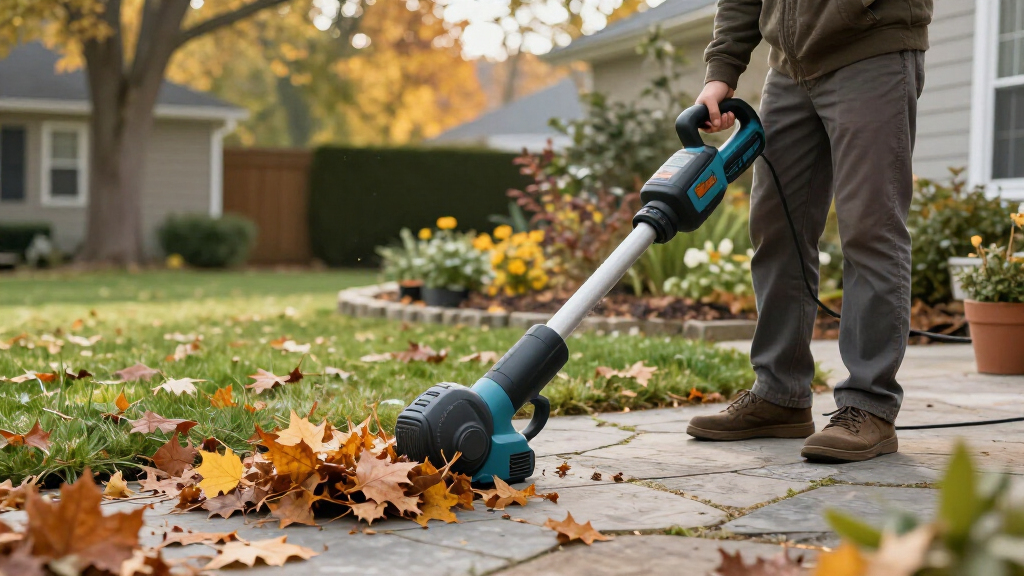
The source report frames “all-season” as the ability to tackle different kinds of yard debris throughout the year, rather than simply using a leaf blower during autumn. Its spring examples include leaves that remained in landscaping over winter, oak leaves caught in grass, and debris in gutters. Toro also offers a gutter-cleaner kit, which the report says can help with gutter cleaning without requiring a climb onto the roof.
For other seasons, the report points to moving leaves into piles for collection or mulching, clearing debris from planting areas and dealing with material lodged in crevices. Waldera’s explanation focuses on how the blower’s airflow and speed trade off across those jobs. The source material is an editorial report produced in partnership with Toro, so its description of the product’s design and intended uses should be read as company-supplied information, not as a standalone independent evaluation.
As an affiliate, we earn on qualifying purchases.
Performance Figures Still Missing
The supplied report does not give the blower’s air-speed or Newton-force figures, battery capacity, price, weight, runtime, charging time, warranty details or launch date. It also does not identify the competing blowers behind its comparison of higher CFM and lower air velocity, nor does it include independent head-to-head test results.
The source excerpt ends during its discussion of spring applications, so it does not set out the full seasonal-use account. Toro’s claims about cold-weather materials and reduced fatigue are attributed to the company, but the report does not provide laboratory results, a rated operating-temperature range or measured ergonomic comparisons. Actual performance may vary with battery, conditions and the debris being moved.
As an affiliate, we earn on qualifying purchases.
Check Specs Before Comparing Models
Readers considering the blower will need to consult Toro’s current product information or a retailer for price, availability, battery options and complete performance specifications, which are not included in the supplied report. A meaningful comparison with other models would also require matched testing of airflow, force, runtime and handling under the same conditions.
The source does not announce a forthcoming product milestone or testing schedule. The immediate next step is to verify the full specifications and battery-system details with Toro, and to assess whether the tool’s intended balance of wide-area airflow and controllability fits the cleanup tasks at hand.
As an affiliate, we earn on qualifying purchases.
Key Questions
What is the Toro 900 CFM blower?
It is Toro’s 60V handheld battery-powered leaf blower, described in the report as the company’s highest-performing handheld battery model. CFM refers to airflow volume.
What does Toro mean by all-season?
Toro’s description refers to yard-cleanup uses throughout the year, including spring leaves and gutter debris, rather than only autumn leaf clearing. These applications are presented as intended uses, not independent test findings.
Why does the blower emphasize CFM rather than air speed?
According to Toro product marketing manager Ben Waldera, higher airflow can help move leaves across a wider area, while higher air speed can be more useful for dislodging debris in concentrated spots. The report says this model favors airflow volume, but does not provide its air-speed figure.
Can it be used in freezing weather?
Toro says the blower uses materials intended to withstand cold conditions and includes static-dissipative resin. The report recommends charging and storing its batteries indoors during winter, but supplies no rated temperature range or cold-weather runtime data.
Does the report provide price or runtime?
No. The source material does not state the blower’s price, battery capacity or runtime, and it does not include independent performance comparisons. Those details would need to be checked in Toro’s current product information.
Source: rss
Halloween Picks
halloween
As an affiliate, we earn on qualifying purchases.