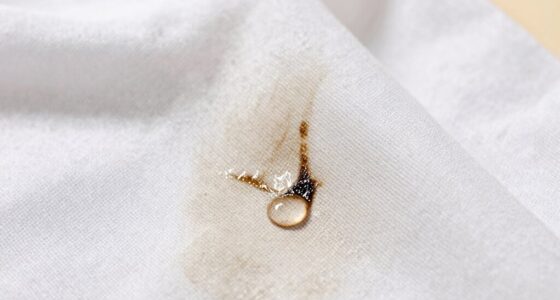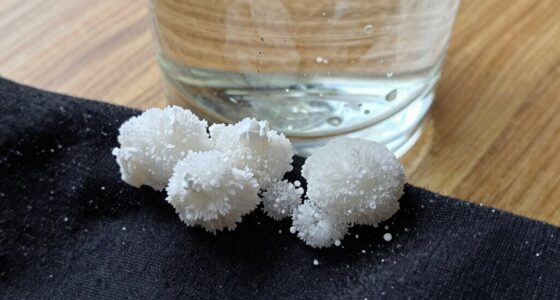
Your washing machine smells because moisture gets trapped in seals, gaskets, and detergent compartments, creating an ideal environment for mold, mildew, and bacteria to grow. Residual detergent, softener buildup, and leftover grime from laundry also contribute to unpleasant odors. Not leaving the door open after washing or neglecting regular cleaning worsens the problem. If you want to find out how to eliminate these smells effectively, there’s more you can do to keep your washer fresh.
Key Takeaways
- Residual detergent, softener buildup, and mold in seals and drawers trap moisture, causing unpleasant odors.
- Poor ventilation and leaving the door closed after washing create damp environments conducive to mold growth.
- Infrequent cleaning of seals, filters, and detergent compartments allows mold, mildew, and bacteria to accumulate.
- Overloading the washer prevents proper rinsing, leaving residues that promote bacterial growth and odors.
- Using natural cleaners like vinegar and baking soda, along with regular maintenance, helps eliminate odors effectively.

OxiClean Washing Machine Cleaner with Odor Blasters, 4 Count
Includes: One 4 count box of OxiClean Washing Machine Cleaner with Odor Blasters to supercharge your washing machine…
As an affiliate, we earn on qualifying purchases.
As an affiliate, we earn on qualifying purchases.
What Causes a Musty Smell in Your Washing Machine?

Ever wondered why your washing machine sometimes develops a musty smell? It often comes down to poor air circulation inside the drum and leftover detergent residue. When the machine isn’t drying out properly, moisture gets trapped, creating a damp environment perfect for mold and mildew growth. Detergent residue can stick to the drum, seal, and rubber gaskets, providing additional breeding grounds for odors. If you don’t leave the door open after washing, air can’t circulate freely, trapping moisture inside. Over time, this stagnant environment encourages the development of that telltale musty smell. To prevent it, make sure your washer dries out between loads, and clean away any detergent buildup regularly. Good air circulation and residue removal are key to keeping your machine fresh. Exploring home organization tips can also remind us of the importance of proper storage and cleaning techniques to preserve freshness, especially in areas prone to moisture buildup. Regularly inspecting and addressing air circulation issues can further help prevent mold and mildew from taking hold. Proper ventilation and regular cleaning are essential to prevent mold and mildew from taking hold.

Palksky Washing Machine Cleaning Brush Set, Front Load Washer Machine Cleaner Accessories with 1PCS Drum Slot Cleaner Brushes and 5PCS Crevice Cleaning Brush for Washer Rubber Seal
Washing Machine Cleaning Brush Set: is specially designed for front load washer machine, it can easily clean the…
As an affiliate, we earn on qualifying purchases.
As an affiliate, we earn on qualifying purchases.
How Residual Detergent Creates Odors in Your Washer
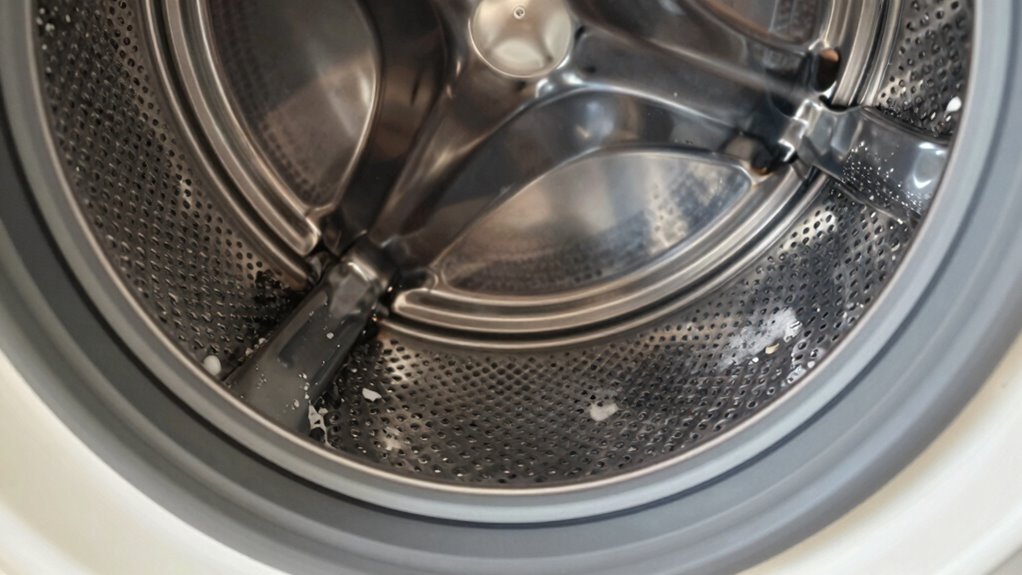
Residual detergent left behind after washing can be a hidden culprit behind persistent odors in your washer. When you use too much detergent or don’t rinse properly, detergent residue and residual buildup accumulate inside the drum and seals. This buildup creates a damp environment that traps moisture, providing an ideal breeding ground for bacteria and mold. Over time, these bacteria feed on detergent residue, producing foul smells that linger even after washing. High-efficiency washers are especially prone to this because they use less water, making it easier for detergent residue to stick around. To prevent odors, use the correct amount of detergent and run regular cleaning cycles. Regular maintenance, including cleaning your washing machine’s gasket and drum, can help prevent residual buildup from developing. Proper calibration of your washer’s settings can also improve cleaning efficiency and reduce leftover residues. Additionally, ensuring proper airflow around your washer can help keep it dry and odor-free, as recommended in aero guardians air purifier maintenance tips. Using appropriate cleaning agents can further eliminate lingering residues and odors, keeping your washer fresh. Regularly inspecting and addressing detergent residue can help maintain a clean washing machine environment and prevent odors from developing. Removing residual buildup keeps your washer fresh and odor-free.

Affresh Washing Machine Cleaner, Helps Power Away Odor Causing Bacteria & Grime Deep Inside Pump, Valve & Hoses, 6 Time Release Tablets, 6 Month Supply
Suitable for various washers: front, top, and HE machines
As an affiliate, we earn on qualifying purchases.
As an affiliate, we earn on qualifying purchases.
Why Mold and Mildew Grow Inside Your Washer
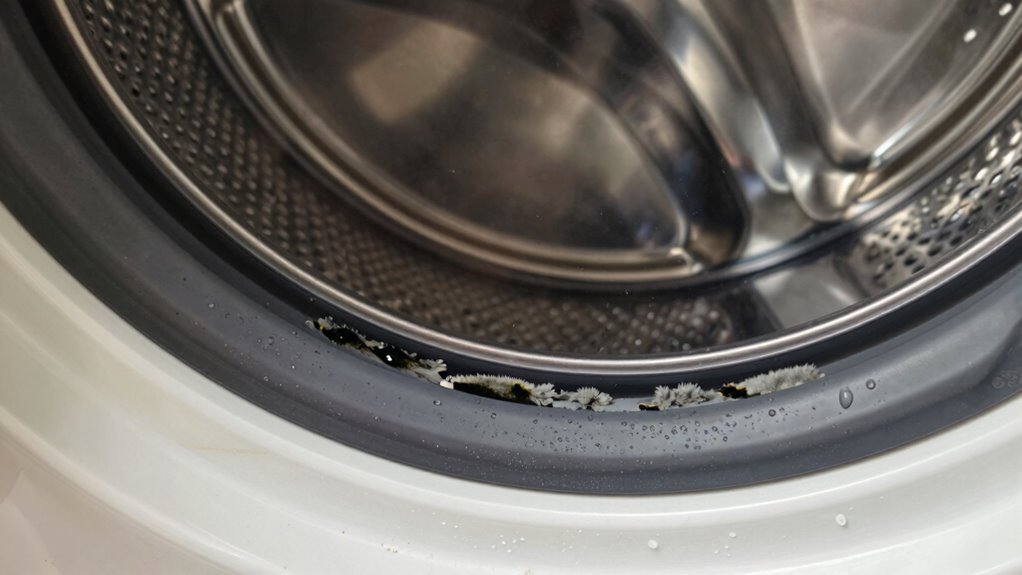
Mold and mildew thrive inside your washer when moisture remains trapped in damp areas, creating the perfect environment for their growth. Your laundering patterns can contribute to this issue, especially if you leave the door closed after washing, preventing proper drying. Fabric softener buildup also plays a role by leaving a residue that retains moisture and provides a breeding ground for mold spores. Over time, these residues accumulate in seals, gaskets, and detergent compartments, making it easier for mold and mildew to take hold. Poor ventilation and infrequent cleaning worsen the problem. To prevent growth, it is crucial to run regular maintenance cycles, leave the door open after washing, and eliminate fabric softener buildup by using less or switching to alternative softening methods. Additionally, ensuring proper indoor plant care can improve overall humidity levels and airflow around your appliances, helping to reduce moisture buildup inside your washer. Proper washer maintenance routines can further minimize the risk of mold development by addressing hidden areas where moisture tends to accumulate, especially in hard-to-reach spots that are often overlooked. Regularly inspecting and cleaning these areas helps prevent the buildup of residues that promote mold growth, especially in tight spaces that are difficult to access. Incorporating proper ventilation can also significantly reduce indoor humidity, creating an environment less conducive to mold growth inside your washer.
OxiClean Washing Machine Cleaner with Odor Blasters, 4 Count
Includes: One 4 count box of OxiClean Washing Machine Cleaner with Odor Blasters to supercharge your washing machine…
As an affiliate, we earn on qualifying purchases.
As an affiliate, we earn on qualifying purchases.
How Moisture Traps Lead to Laundry Odors
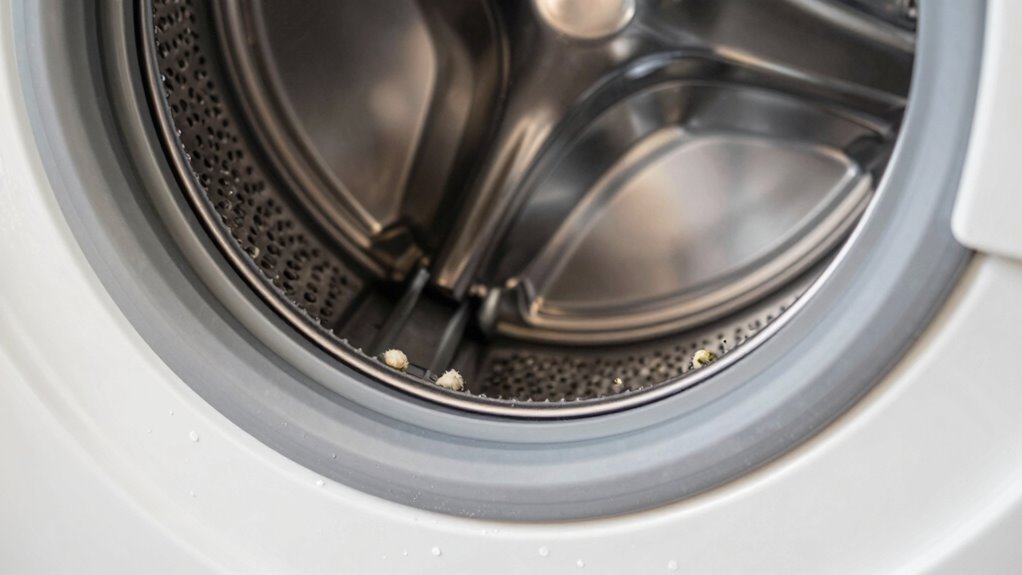
Moisture traps inside your washing machine, such as door seals, gaskets, and detergent drawers, can hold water long after a cycle ends. When water collects in these areas, it creates a damp environment that promotes mold and mildew growth. Poor air circulation makes it harder for trapped moisture to evaporate, allowing odors to develop and persist. If you don’t regularly wipe and dry these spots, bacteria thrive, producing foul smells that linger even after washing. Ensuring proper air circulation by leaving the door open between cycles helps moisture escape. Additionally, cleaning these moisture traps regularly prevents water from stagnating. When moisture stays trapped, it becomes a breeding ground for odor-causing bacteria, making your washer smell musty and unpleasant. Using the right performance parts like high-quality gaskets and seals can also improve airflow and reduce moisture buildup, helping your washing machine stay fresh. Proper maintenance and air circulation are essential for preventing lingering odors and keeping your laundry fresh. Regularly inspecting and replacing worn seals and gaskets can further minimize moisture retention and odors. Incorporating natural cleaning methods can also help eliminate mold and mildew buildup, ensuring your washer remains odor-free. Additionally, understanding how indoor air quality impacts your laundry space can help you better control excess humidity and prevent odors from developing.
How to Tell If Your Washer Needs a Deep Cleaning

If your washing machine starts to smell musty or sour, it’s a clear sign that it’s time for a deep clean. Over time, residue from detergents, fabric softeners, and trapped moisture can cause odors, especially if your laundry room isn’t well-organized. Check for signs like mold growth around the door seal or a persistent funky smell after cycles. Different washing machine brands may have specific cleaning needs, so refer to your model’s instructions. To stay proactive, inspect these indicators regularly:
| Sign | Common Cause | Action Needed |
|---|---|---|
| Musty or sour smell | Residue buildup, trapped moisture | Deep clean the drum and seals |
| Visible mold or mildew | Poor laundry room organization | Improve storage and airflow |
| Unusual laundry odors | Detergent residue, clogged filters | Clear out residue and filters |
| Excessive vibration | Imbalanced laundry loads | Balance loads and check for debris |
| Longer wash cycles | Blocked drainage or filter issues | Clean filters and check hoses |
Regular maintenance can also help prevent odor buildup, which is often caused by residue from detergents and softeners, and keep your washer smelling fresh. Maintaining proper ventilation in your laundry area can further reduce excess moisture that contributes to mold growth inside your washing machine. Ensuring proper laundry room organization can also reduce moisture and mold growth inside your washing machine. Additionally, using appropriate cleaning products can enhance the effectiveness of your deep cleaning routine.
Effective Ways to Remove Odors From Your Washing Machine
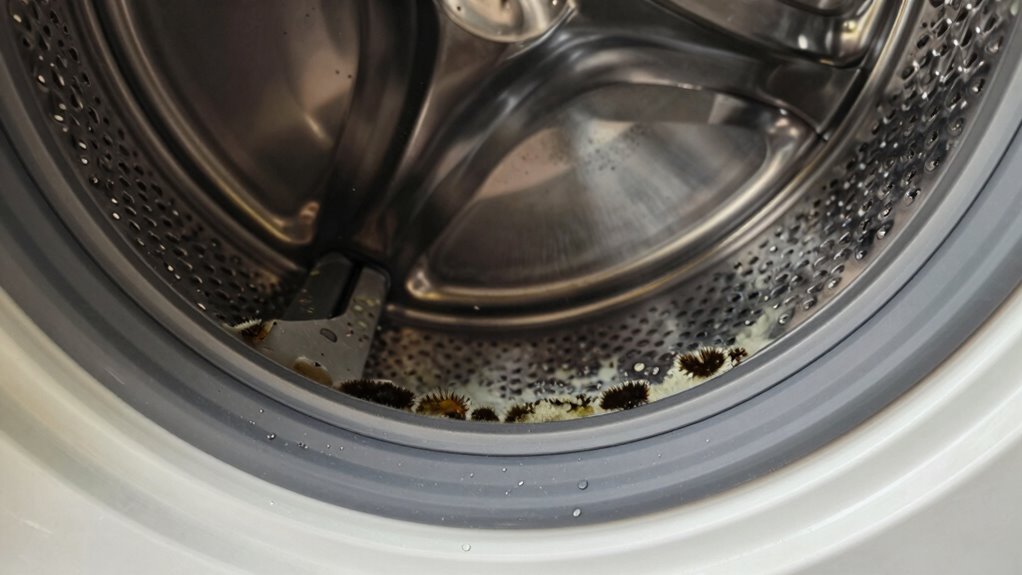
To keep your washing machine smelling fresh, start by running hot water cycles to eliminate buildup. Using natural cleaners like vinegar or baking soda can also neutralize odors effectively. Additionally, make sure to leave the door open after each wash to promote proper ventilation and prevent mold growth.
Run Hot Water Cycles
Have you tried running a hot water cycle to eliminate odors from your washing machine? This method helps flush out soap scum, mold, and bacteria that can cause bad smells. Before starting, make certain proper laundry sorting so you don’t overload the machine, which can prevent thorough cleaning. Use the right detergent selection—preferably one designed for deep cleaning—to enhance the effectiveness of the hot water cycle. Run the cycle on the hottest setting your machine allows, with no clothes inside. The high temperature will help break down residues and kill odor-causing germs. Afterward, wipe down the rubber seals and door gasket to remove any remaining grime. Regularly performing hot water cycles keeps your washer fresh and odor-free, ensuring your laundry always smells clean.
Use Natural Cleaners
Using natural cleaners is a safe and eco-friendly way to eliminate odors from your washing machine. You can make your own cleaning solutions using eco friendly ingredients like white vinegar, baking soda, and lemon juice. These DIY cleaning recipes are simple and effective at breaking down soap scum, mold, and mildew that cause unpleasant smells. For a quick clean, run a cycle with two cups of white vinegar, which disinfects and neutralizes odors. Follow it with a baking soda rinse to absorb remaining smells and freshen the drum. These natural methods are not only cost-effective but also gentle on your machine and the environment. Regular use of DIY cleaning recipes helps prevent buildup, keeping your washer smelling fresh and functioning efficiently.
Regular Door Ventilation
After completing a natural cleaning routine, ensuring proper ventilation of your washing machine can make a big difference in preventing lingering odors. The ventilation significance lies in allowing moisture to escape, reducing mold and mildew growth that cause smells. Keep your washing machine door open after each cycle to promote air circulation, which helps dry out residual moisture. Avoid shutting the door tight immediately, as trapped humidity worsens odors. Regular door ventilation encourages airflow, preventing dampness from building up inside the drum and seals. This simple step maintains a dry environment, discourages bacteria, and keeps your machine smelling fresh. Incorporating good air circulation practices is essential in the fight against persistent washing machine odors.
Tips to Prevent Musty Smells in Your Washer
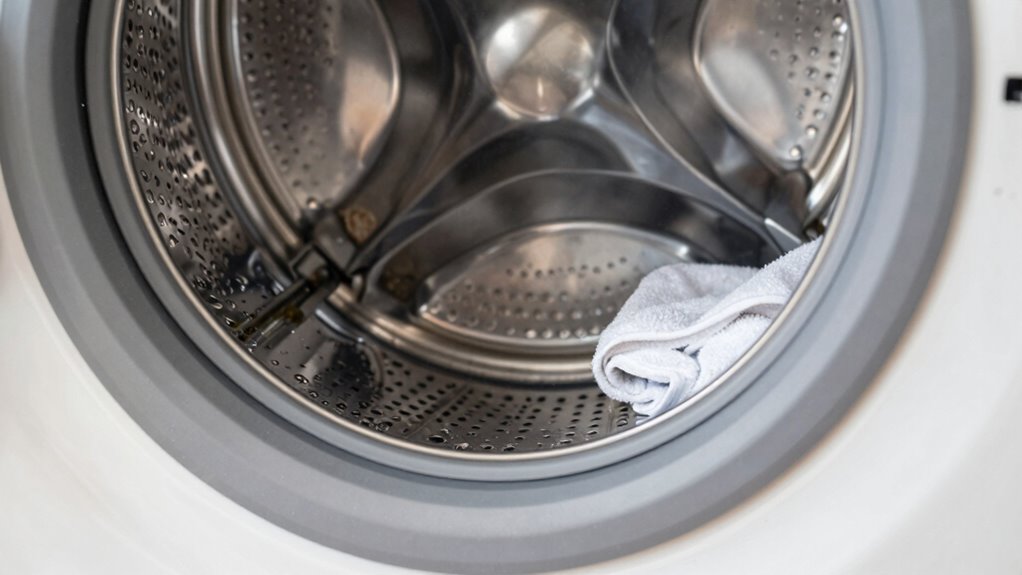
To keep your washing machine smelling fresh, taking proactive steps to prevent musty odors from developing is essential. Start with laundry room organization—keep the area tidy and make sure the door stays open between uses to promote airflow. Regularly perform washer maintenance tips, such as running empty cycles with hot water and a cleaning agent to clear out residues. After each load, wipe down the door seal and gasket to remove trapped moisture and detergent build-up. Avoid leaving wet clothes inside the machine for extended periods, as this fosters mold growth. Guaranteeing proper ventilation and keeping the interior dry are key to preventing musty smells. These simple habits help maintain a fresh-smelling washer and extend its lifespan.
Best Products for Cleaning a Smelly Washing Machine
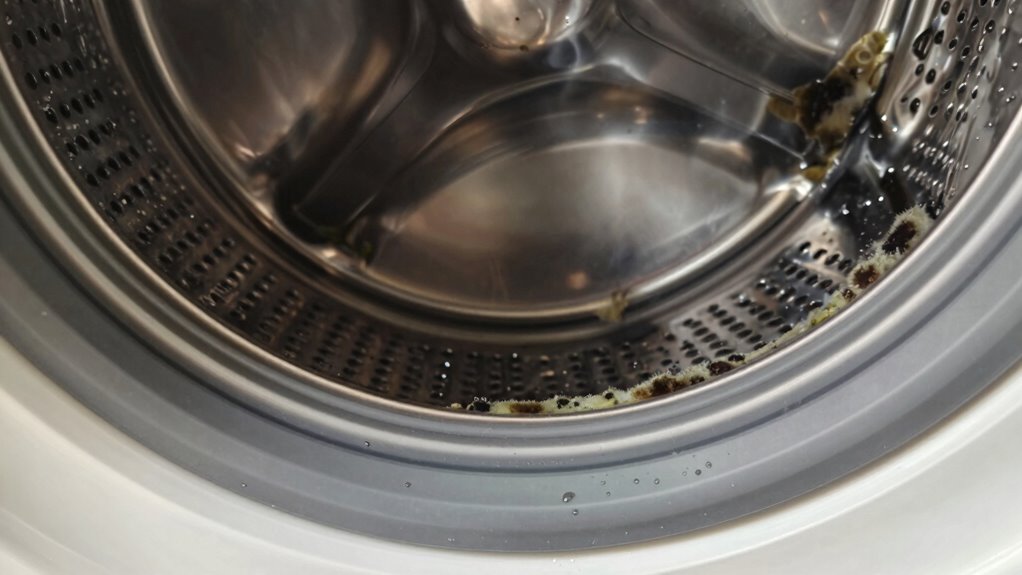
To eliminate musty smells, you should consider effective cleaning solutions like specialized washing machine cleaners or bleach. Natural odor eliminators, such as vinegar or baking soda, are also great options to freshen your machine without harsh chemicals. For stubborn buildup, heavy-duty descaling products can restore your washer’s performance and banish lingering odors.
Effective Cleaning Solutions
When tackling a smelly washing machine, selecting the right cleaning products can make all the difference. Use products designed specifically for deep cleaning, like washing machine cleaners or descaling agents, to eliminate built-up residue. Avoid fabric softeners during cleaning cycles, as they can leave residues that contribute to odors. Instead, focus on maintaining proper detergent consistency—using the right amount prevents excess suds that trap dirt and mold. Consider running an empty hot water cycle with a cup of white vinegar or a commercial cleaner to break down mold and soap scum. Regularly cleaning the door seal and detergent dispenser also helps prevent odor buildup. By choosing effective products and following proper cleaning techniques, you can keep your washing machine fresh and odor-free.
Natural Odor Eliminators
Natural odor eliminators offer a safe and eco-friendly way to freshen up your washing machine without harsh chemicals. They work by neutralizing smells caused by detergent residue and trapped moisture that cling to laundry fabric and the drum. Vinegar is a popular choice—simply run a hot cycle with a cup of white vinegar to break down buildup and eliminate odors. Baking soda is another effective option; adding half a cup during a wash cycle helps absorb unpleasant smells. Essential oils, like tea tree or lavender, can also be added to vinegar or baking soda for a fresh scent. These natural products are gentle on your machine and environment while effectively tackling lingering odors. Regular use prevents smells from developing and keeps your washer smelling clean.
Heavy-Duty Descaling Products
Heavy-duty descaling products are essential for thoroughly cleaning your washing machine and eliminating persistent odors. These products break down tough mineral deposits, detergent buildup, and fabric softener residue that often cause smells. Using a descaler guarantees your machine runs efficiently and smells fresh. To get the best results, choose a product designed for heavy-duty cleaning, especially if your washer has mineral deposits or stubborn grime. Regular descaling prevents the buildup of fabric softeners that can trap odors and keeps your drum smelling clean.
- Use descaling tablets or liquids monthly for deep cleaning
- Opt for products with natural acids like citric or lactic acid
- Avoid mixing incompatible chemicals to prevent residue
- Follow manufacturer instructions for safe, effective use
Common Mistakes That Make Washer Odors Worse
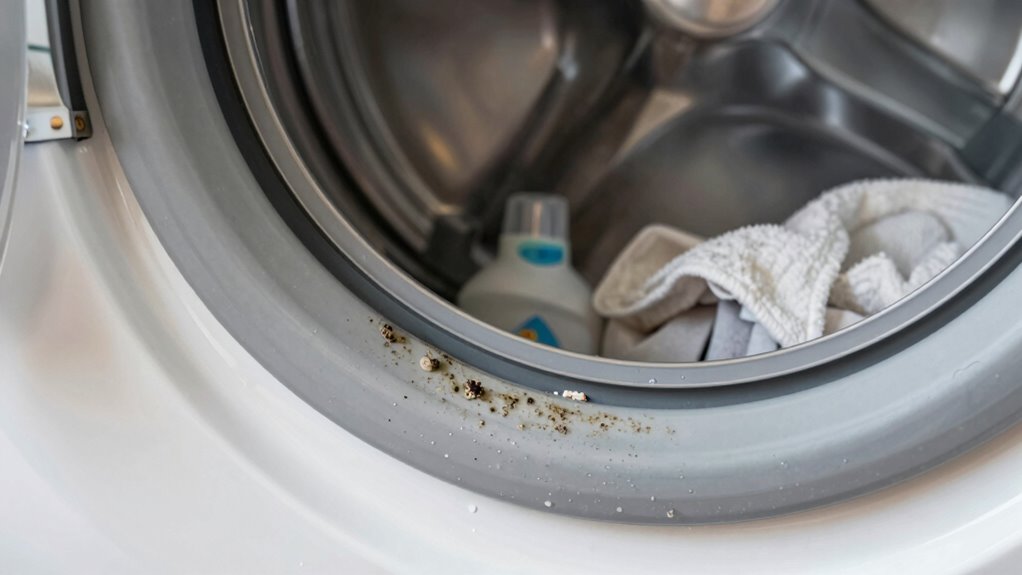
One common mistake that worsens washer odors is overloading the machine, which prevents proper cleaning and rinsing of clothes and the drum itself. When you stuff too many items into your washer, soap and fabric softener residues can cling to fabrics and linger in the drum, creating a musty smell. Using too much fabric softener can also build up over time, trapping moisture and bacteria that cause odors. Additionally, tossing laundry baskets full of clothes directly into the washer without sorting or cleaning them first can introduce dirt and grime that contribute to mold and mildew growth. To avoid these issues, load your washer properly, use softeners sparingly, and regularly clean your laundry baskets to prevent dirt transfer and odor buildup.
When to Call a Professional for Washer Odor Problems
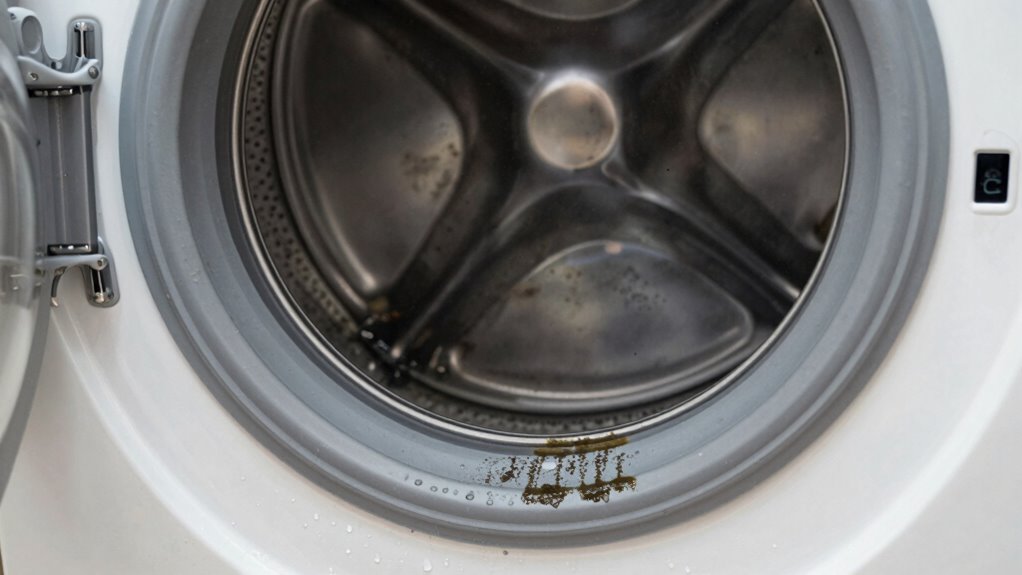
If you notice persistent odors or strange washing behavior, it’s time to contemplate calling a professional. Frequent repair needs or ongoing smell issues can indicate deeper problems that DIY fixes won’t resolve. Addressing these signs early can prevent more costly repairs later.
Persistent Odor Signs
Persistent odors that refuse to go away even after cleaning are a clear sign it’s time to call in a professional. If your efforts to eliminate smells fail, it might be due to underlying issues like poor laundry room organization or problems with specific washing machine types. You could be dealing with mold buildup, clogged drainage, or hidden leaks that require expert inspection. Watch for these signs:
- Smell persists despite regular cleaning
- Unusual mold or mildew growth
- Visible grime in seals or detergent drawers
- Frequent drainage or mechanical issues
Addressing these problems early can prevent costly repairs and ensure your washing machine functions properly. If you notice these signs, a professional can diagnose and resolve the root cause efficiently, keeping your laundry space fresh and odor-free.
Unusual Washing Behavior
Have you noticed your washing machine behaving strangely during cycles? If it’s leaving detergent residue on clothes or making odd noises, it could signal an issue. You might also see lingering smells even after washing, or your laundry baskets fill with damp, smelly clothes. These signs suggest your washer isn’t rinsing properly or is trapping excess moisture, creating an environment for bacteria and mold. If adjusting settings or running extra rinse cycles doesn’t resolve the problem, it’s time to call a professional. Ignoring unusual behavior can lead to worse odors and potential damage to your appliance. Addressing these signs early helps prevent long-term issues and keeps your laundry smelling fresh and clean.
Frequent Repair Needs
When your washing machine continues to emit foul odors despite troubleshooting efforts, it’s a clear sign that professional repair may be necessary. Persistent smells can indicate deeper issues, especially if your laundry room organization isn’t ideal or if washing machine accessories like seals and filters are damaged or clogged. You might notice recurring odors despite cleaning, which suggests a problem beyond surface cleaning.
Consider calling a professional if:
- The odor persists after deep cleaning and maintenance
- You find mold or mildew buildup in inaccessible parts
- Unusual noises or leaks accompany the smell
- Your laundry room setup hampers airflow or cleaning access
Addressing these issues promptly ensures your washing machine operates efficiently and keeps your laundry smelling fresh.
Frequently Asked Questions
Can Using Too Much Detergent Cause Washing Machine Odors?
Using too much detergent can definitely cause washing machine odors. In fact, excess detergent leaves behind residue that builds up over time, leading to unpleasant smells. This residue traps dirt, mold, and odor-causing bacteria, resulting in persistent odor buildup. You might think more detergent cleans better, but it often worsens the smell. To keep your washer fresh, use the right amount and run regular cleaning cycles.
Do Fabric Softeners Contribute to Washing Machine Smells?
Yes, fabric softeners can contribute to washing machine smells. When you use softeners, residue can build up inside your machine, creating a breeding ground for mold and bacteria. Over time, chemical reactions between softener residues and moisture can produce unpleasant odors. To prevent this, use softeners sparingly, run regular cleaning cycles, and leave the door open after washing to allow everything to dry thoroughly.
How Often Should I Run an Empty Cycle for Maintenance?
You should run an empty cycle with hot water once a month to prevent water residue buildup and drum corrosion. This maintenance helps flush out lingering detergent or fabric softener residues that can cause odors. Regularly doing this keeps your washing machine clean, prevents smells, and extends its lifespan. Make sure to add a cleaning agent or vinegar during these cycles for thorough cleaning and to keep your machine smelling fresh.
Are Certain Types of Laundry Detergents Better for Preventing Odors?
Did you know over 70% of people prefer detergents with odor-fighting ingredients? You should choose laundry detergents with effective detergent ingredients like enzymes and antimicrobial agents, as they combat bacteria that cause odors. Avoid heavy scent additives, which can trap residues and worsen smells. Opt for a detergent that balances cleaning power with fresh, natural scents, helping your washing machine stay odor-free and leaving your clothes smelling clean longer.
Can Bacteria Buildup Inside the Washer Cause Health Issues?
Yes, bacteria buildup inside your washer can cause health issues. Bacterial proliferation and mold formation thrive in damp, unclean environments, leading to potential skin irritations or respiratory problems. If you don’t regularly clean your machine, these microbes can transfer to your clothes, spreading germs. To prevent this, run maintenance washes with hot water and vinegar, and leave the door open after use to discourage bacterial growth and mold formation.
Conclusion
Did you know that nearly 60% of laundry machine owners experience musty odors at some point? Regular cleaning and proper maintenance can keep these smells at bay. By understanding what’s causing the odors and following simple tips, you can keep your washer fresh and your clothes smelling clean. Don’t let mold, mildew, or residual detergent take over—stay proactive and enjoy the crisp, clean scent of freshly washed laundry every time.