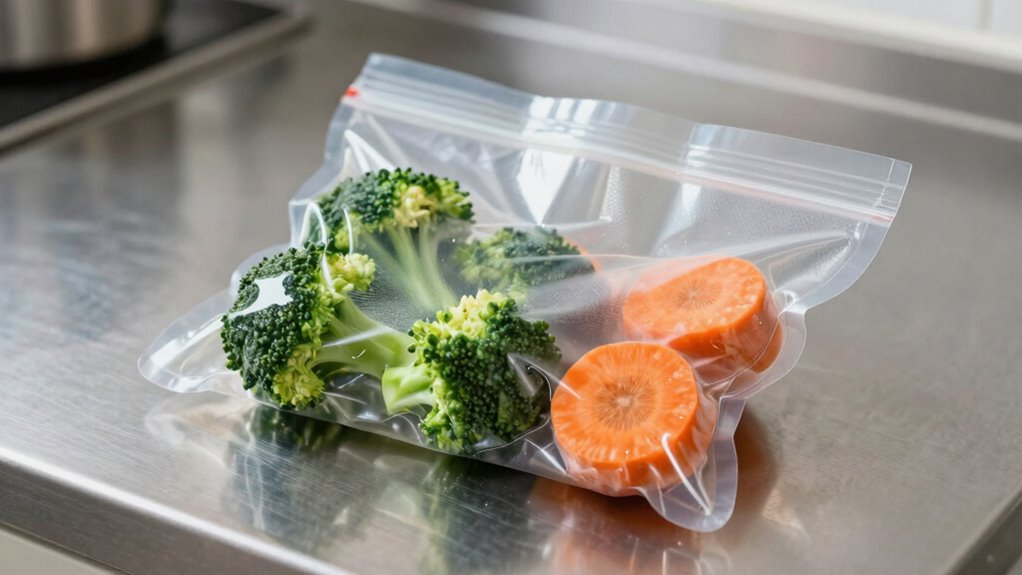

To guarantee safe vacuum sealing, always clean your work area, tools, and hands before starting. Use proper equipment and inspect bags for tears or punctures, and remove excess air before sealing. Label and date your packages, store them at the right temperatures, and keep the sealer well-maintained. Proper techniques help prevent contamination, spoilage, and foodborne illnesses. Keep these safety tips in mind, and you’ll improve your vacuum sealing practices for fresh, safe food every time.
Key Takeaways
- Always clean and disinfect equipment, utensils, and work surfaces before vacuum sealing to prevent contamination.
- Handle and cool foods properly before sealing to inhibit bacterial growth and ensure safety.
- Use durable, food-safe vacuum bags free of tears, with proper sealing techniques to prevent leaks and spoilage.
- Label packages with dates, remove excess air, and store in the coldest freezer area to maintain freshness and safety.
- Regularly inspect and maintain the vacuum sealer to ensure proper function and prevent cross-contamination.

Syntus Vacuum Sealer Bags, 150 Gallon 11" x 16" and Quart 8" x 12" and Pint 6" x 10" Commercial Grade PreCut Bag, BPA Free Food Vac Bags for Storage, Meal Prep or Sous Vide
Compatible with All Desktop Vacuum Sealers: These vacuum sealer bags are designed to work with all traditional desktop…
As an affiliate, we earn on qualifying purchases.
As an affiliate, we earn on qualifying purchases.
Why Food Safety Matters When Vacuum Sealing
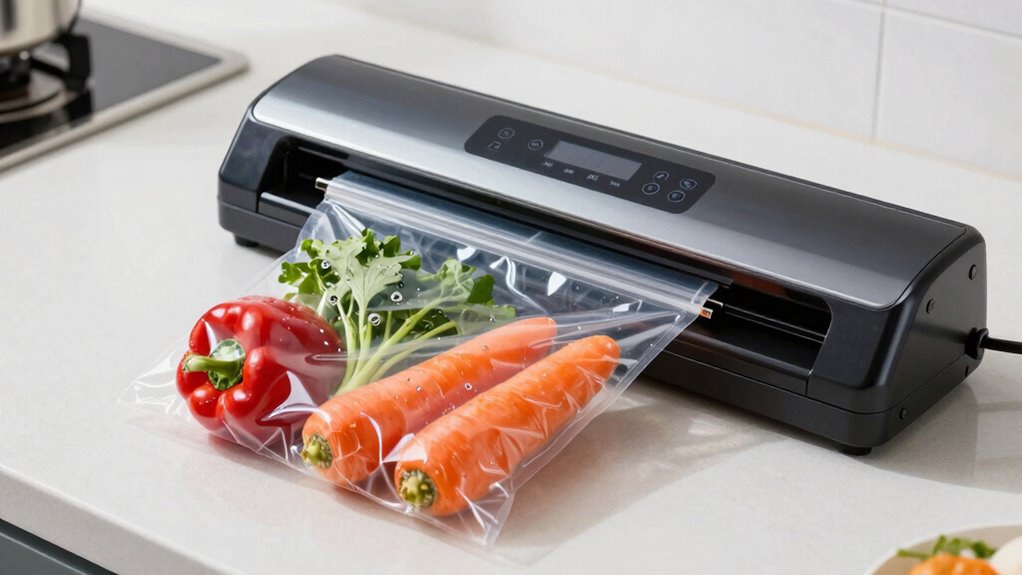
Vacuum sealing can substantially extend the shelf life of your food, but it also comes with safety responsibilities. When you don’t follow proper procedures, you risk food poisoning caused by bacteria or mold growth. Contamination prevention is essential, so always clean your work area, utensils, and hands before sealing. Remove as much air as possible without compromising the seal, since oxygen can promote bacterial growth. Avoid sealing foods that are already spoiled or have been left out too long, as bacteria can thrive even without oxygen. Properly stored vacuum-sealed food reduces the chance of cross-contamination and preserves freshness. Using specialized kitchen gear like quality vacuum sealers and accessories ensures optimal safety and effectiveness in your food preservation efforts. Being diligent in your process helps guarantee your food stays safe to eat and prevents health risks associated with contaminated food. Paying attention to food safety practices further enhances your preservation efforts and minimizes risks. Additionally, understanding the importance of projector contrast ratio and other visual qualities can help in other areas of home technology. Proper training and awareness about foodborne pathogens can also improve your overall safety in food handling. It is also helpful to stay informed about proper storage temperatures to prevent bacterial growth during storage.

Chef Preserve Compact Vacuum Sealer for Food (Vacuum Sealer Machine + 30 Reusable Vacuum Bags) Powerful Handheld Vacuum Sealer Machine, Seal Meal Saver, Portable Food Sealer
💰REDUCE WASTE AND SAVE MONEY: Chef Preserve vacuum seals your food in less than 5 seconds, extends freshness,…
As an affiliate, we earn on qualifying purchases.
As an affiliate, we earn on qualifying purchases.
How to Vacuum Seal Food Safely and Effectively
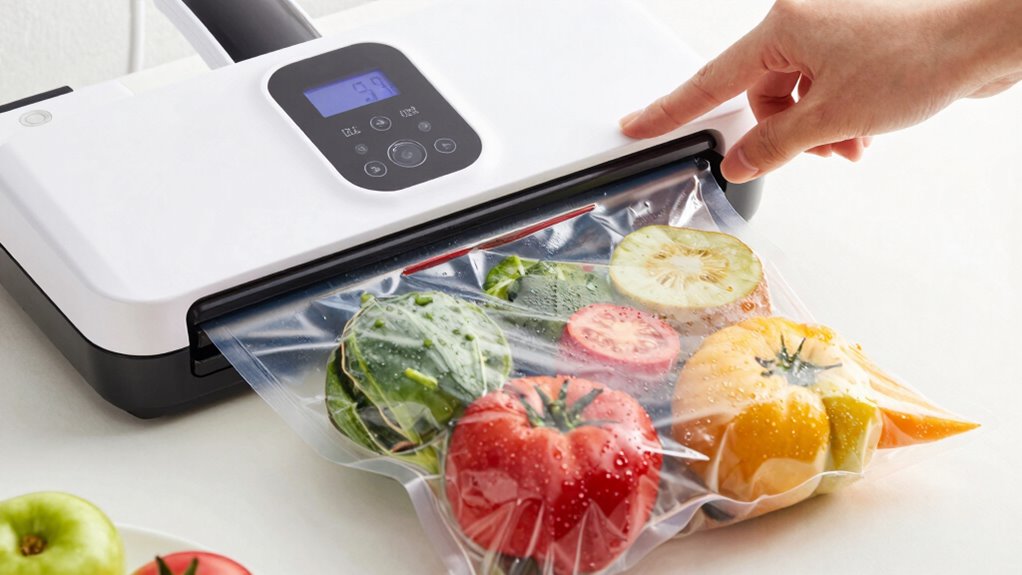
To vacuum seal food safely and effectively, start by preparing your bags properly—removing excess air and guaranteeing they’re free of tears. Use correct sealing techniques to create a tight, secure seal without overfilling, which can compromise the process. Always handle food safely before sealing to prevent contamination and ensure freshness. Additionally, consider incorporating sustainable practices such as eco-friendly packaging options to reduce environmental impact. Ensuring proper food storage methods can extend shelf life and maintain quality over time, especially when paying attention to organizing food supplies for better inventory management.
Proper Bag Preparation
Preparing bags properly is essential for safe and effective vacuum sealing. You need to focus on two key aspects: air removal and bag selection. First, choose bags that are designed for vacuum sealing, guaranteeing they’re sturdy and free of tears. When preparing the bag, leave enough space at the top for sealing—about 2-3 inches. Remove excess air from the bag before sealing to prevent air pockets, which can compromise freshness. Use the table below to help you select the right bag and understand air removal:
| Bag Selection | Air Removal Tips | |
|---|---|---|
| Heavy-duty bags | Squeeze out excess air | |
| Compatible sizes | Flatten to eliminate air bubbles | |
| Food-safe material | Guarantee a tight seal without wrinkles | Additionally, understanding digital concepts can help you better manage your vacuum sealing process for optimal food safety. Recognizing measurement accuracy in your tools can also improve your sealing results by ensuring consistent performance across different batches. Paying attention to proper calibration can further enhance the overall effectiveness of your vacuum sealing system. Incorporating proper maintenance of your vacuum sealer can significantly extend its lifespan and maintain sealing performance. Moreover, being aware of safe handling practices can help prevent contamination during the sealing process. |
Correct Sealing Techniques
Ensuring a proper seal is essential for maintaining food safety and freshness during vacuum sealing. To achieve this, you need to apply the correct sealing pressure, ensuring the bag’s edges are securely compressed without over-tightening. Use effective air removal techniques by slowly and steadily pulling out excess air before sealing. Make sure the bag is flat and free of wrinkles or folds at the seal area, as these can compromise the airtight barrier. When sealing, double-check that the vacuum seal bar or strip is properly aligned and that the machine indicates a complete seal. Proper sealing pressure and thorough air removal prevent air pockets that could lead to spoilage or bacterial growth, ensuring your food stays fresh longer and remains safe to consume. Additionally, understanding proper sealing techniques can help you achieve consistent results and extend the shelf life of your stored foods. Paying attention to region-specific flavors can also enhance your culinary experience, especially when storing specialty items.
Safe Food Handling
When vacuum sealing food, handling it safely is essential to prevent contamination and guarantee freshness. Always wash your hands thoroughly before starting, and use clean utensils and surfaces. Be mindful of food allergy awareness by clearly separating allergenic items to avoid cross-contact. Verify labels are accurate, indicating content and date, so you can track freshness and avoid consuming expired products. Properly cool cooked foods before sealing to prevent bacteria growth. Check for any tears or leaks in the packaging to maintain an airtight seal. Store sealed foods in a cool, dry place or refrigerator promptly. Additionally, understanding the importance of proper storage conditions can help maximize the shelf life of vacuum-sealed foods. Maintaining a clean environment, similar to the practices in small wood stove maintenance, can further reduce contamination risks. Regular professional servicing of your equipment, like mechanic shops for fuel injection cleaning, ensures optimal performance and safety. By following these safety practices, you reduce risks and keep your food safe and fresh longer.

Accessory Hose Compatible with FoodSaver Vacuum Sealer,Suitable for all sealing zipper bags, wine plugs, jar seals, vacuum sealing agents (accessory hose compatible with foodsaver)
widely compayible: Accessory Hose Compatible with FoodSaver Vacuum Sealer,compayible with ALL zipper bags, containers canisters wine stoppers, jar…
As an affiliate, we earn on qualifying purchases.
As an affiliate, we earn on qualifying purchases.
Choosing the Best Vacuum Sealing Bags and Materials
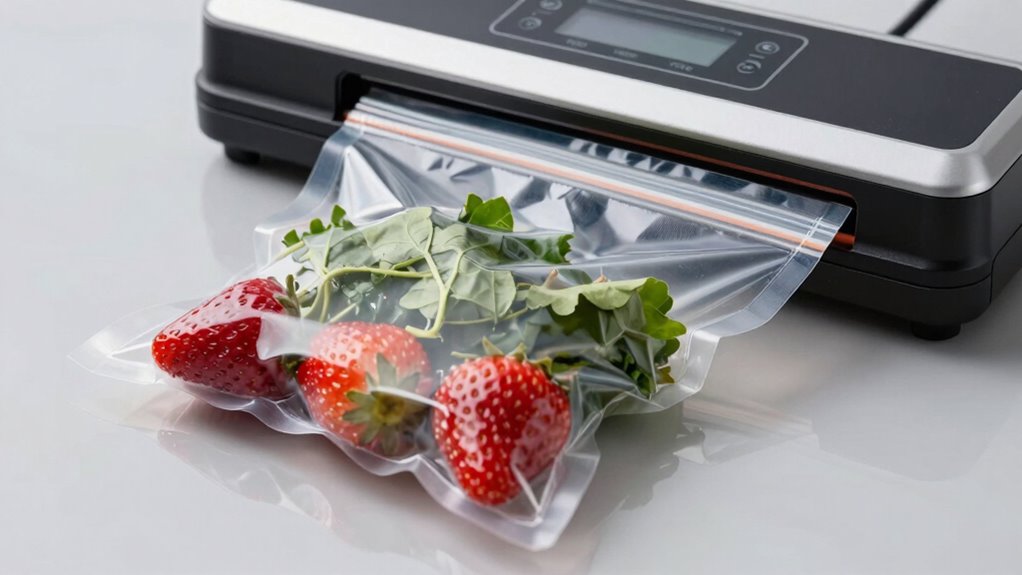
When selecting vacuum sealing bags, make certain they’re compatible with your sealing machine and safe for food contact. Pay attention to the bag thickness; thicker bags are more durable and better at protecting your food. Choosing the right materials guarantees your food stays fresh and safe longer. Additionally, using appropriate storage techniques can help prevent spoilage and maintain quality.
Material Compatibility and Safety
Choosing the right vacuum sealing bags and materials is essential for maintaining food safety and preventing spoilage. You need to take into account material compatibility to ensure the bags won’t react with your food or compromise the seal. Chemical safety is equally important, as some plastics may contain harmful substances that leach into food.
To select the best materials, focus on:
- Ensuring the bags are BPA-free and food-grade to avoid chemical contamination.
- Verifying compatibility with your vacuum sealer to ensure proper sealing.
- Checking that the materials are resistant to punctures and tears, maintaining integrity during storage. Regularly inspecting your body jewelry for signs of wear or damage can help prevent contamination or injury, just as inspecting vacuum bags ensures food safety.
Prioritize high-quality, food-safe plastics to protect your food and prevent potential health risks. Additionally, understanding the different types of pool features & accessories can help you choose storage solutions that are durable and suitable for your needs. Being aware of material safety standards can further ensure that your chosen bags meet necessary health and safety regulations.
Bag Thickness and Durability
Have you considered how bag thickness impacts the durability of your vacuum-sealed foods? Thicker bags generally offer better protection against punctures and tears, increasing durability during storage and handling. When choosing vacuum sealing bags, pay attention to the bag thickness, typically measured in mil (thousandths of an inch). Thicker bags, around 4-5 mil, often pass durability testing more effectively, ensuring your food stays fresh longer. Thinner bags may be more flexible but are prone to punctures, reducing their lifespan. Conduct durability testing if possible, to find the right balance between flexibility and strength. Selecting the proper bag thickness helps prevent leaks and spoilage, maintaining food safety and quality throughout storage, especially considering silly mishaps like punctures or tears that can occur during mishandling. Additionally, understanding fabric technology and its role in developing more resilient packaging materials can further enhance your storage solutions.

Vacuum Sealer Maintenance Kit, Compatible with Weston Pro-2100/2200/2300, Includes Heat Wires, Rubber Seals and Seal Bar Tapes
COMPATIBILITY: Designed for Pro-2100, Pro-2200, and Pro-2300 vacuum sealer models (65-0101, 65-0201, 65-0401-W)
As an affiliate, we earn on qualifying purchases.
As an affiliate, we earn on qualifying purchases.
Common Mistakes That Can Compromise Food Safety
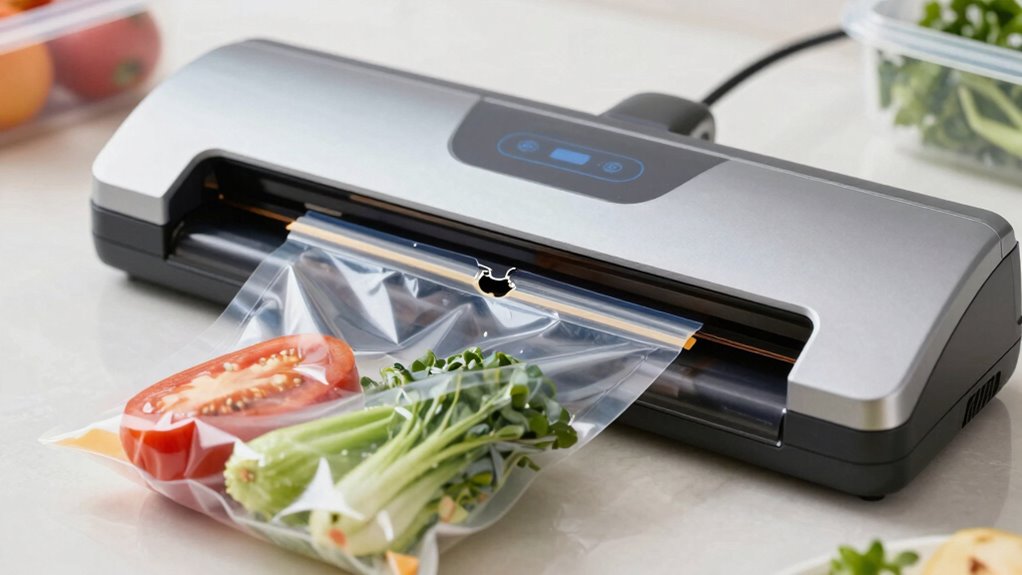
One common mistake that can compromise food safety during vacuum sealing is not properly cleaning and sanitizing all equipment and surfaces beforehand. Handling contamination can occur if bacteria or dirt transfer from unclean tools or countertops. To avoid this, always:
- Thoroughly wash and disinfect vacuum sealers, bags, and work surfaces.
- Check for any tears or punctures in the bags that could allow bacteria to enter.
- Use clear labels with dates to prevent improper labeling, which can lead to confusion about storage time or contents.
Failing to handle contamination properly increases the risk of spoilage and foodborne illness. Additionally, improper labeling can cause you to consume spoiled food or overlook items that need to be discarded, further risking safety.
How to Store Vacuum-Sealed Food for Maximum Freshness

Proper storage is essential to keep vacuum-sealed food fresh for as long as possible. Use durable food storage containers or high-quality freezer bags designed for vacuum sealing. Label each package with the date to track freshness and avoid keeping food too long. When freezing, employ proper freezing techniques—try to remove as much air as possible and keep the temperature consistent. Store vacuum-sealed items in the coldest part of your freezer, away from fluctuating temperatures and direct airflow. Avoid overcrowding, which can cause temperature variations. Keep similar foods together to prevent cross-contamination. When you’re ready to use the food, thaw it in the refrigerator or use cold water for quicker results. Proper storage maximizes freshness and prevents freezer burn.
How to Keep Your Vacuum Sealer Clean and Safe to Use
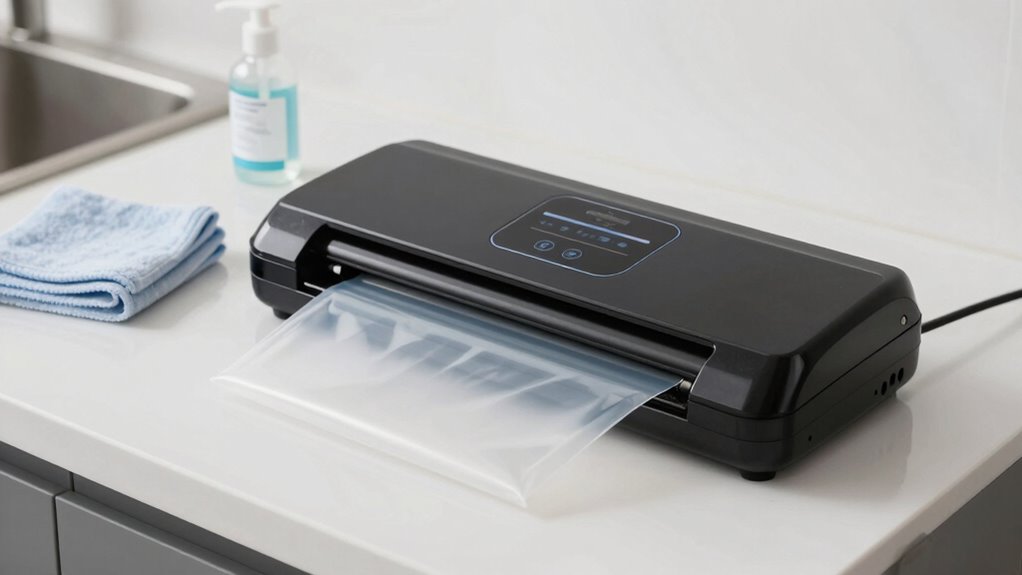
Keeping your vacuum sealer clean and safe is essential to guarantee it functions properly and prevents contamination. Regular cleaning routines help maintain performance and extend its lifespan. Follow these maintenance tips:
- Wipe down the sealing bar and gasket with a damp cloth after each use to remove residue and prevent buildup.
- Periodically clean the vacuum chamber and filters according to the manufacturer’s instructions to avoid clogs.
- Store your sealer in a dry, cool place, and avoid exposing it to dust or moisture.
Frequently Asked Questions
How Long Can Vacuum-Sealed Food Be Stored Safely?
You can typically store vacuum-sealed food safely for 1 to 3 years in the freezer, depending on the type of food. Proper storage techniques and maintaining seal integrity are vital to prevent spoilage and freezer burn. Always check for leaks or broken seals before storing, and label packages with dates. This guarantees your food stays fresh longer and reduces waste, keeping your meals safe and delicious.
Can Vacuum Sealing Prevent All Types of Bacteria?
While vacuum sealing slows bacterial growth and reduces food contamination, it can’t prevent all bacteria. Imagine the peace of mind you get knowing your food is safer, yet still being cautious. Some bacteria, like spores and certain pathogens, survive in low-oxygen environments. So, vacuum sealing is a helpful tool, but it’s not foolproof. Always refrigerate or freeze perishable items and cook thoroughly to guarantee complete safety.
Is It Safe to Reseal Previously Frozen Food?
Yes, it’s safe to reseal previously frozen food if you use proper packaging materials and guarantee seal integrity. Make sure the seal is airtight to prevent bacteria growth and freezer burn. Check the packaging for tears or gaps before resealing. Using quality vacuum seal bags or rolls helps maintain freshness and safety, so always verify the seal’s strength after resealing frozen items.
What Are the Signs of Spoiled Vacuum-Sealed Food?
Imagine your food whispering its secrets—if it smells sour, has a slimy texture, or shows discolored spots, it’s a sign of spoilage. These are clues that the packaging freshness has faded, and the storage duration has exceeded safe limits. Don’t ignore these signals; they warn you that bacteria may be lurking. Trust your senses to protect your health, and discard anything that seems off.
How Does Altitude Affect Vacuum Sealing and Storage?
Altitude effects can make vacuum sealing more challenging because lower air pressure at higher elevations reduces sealing pressure. You might notice that bags don’t seal properly or that sealing takes longer. To counter this, you should modify your vacuum sealer’s settings, if possible, or increase sealing time. Proper sealing at high altitudes ensures your food stays fresh and prevents spoilage, even when pressure differences make sealing trickier.
Conclusion
So, now that you know the secrets to safe vacuum sealing, go ahead—seal away your doubts! Just remember, if you skip cleaning your sealer or use the wrong bags, your food might not stay fresh, but your sense of security will. It’s almost like magic—except it’s science, patience, and a little bit of vigilance. Keep it safe, keep it fresh, and you’ll be the hero of your own kitchen (minus the food poisoning drama).