
TL;DR

Get home appliances delivered free with Prime
- Fast, free delivery on millions of items
- Prime Video, Amazon Music and more included
- Member-only deals all year
Many modern plastic food-storage containers are dishwasher-safe, but the label or manufacturer’s care instructions—not the recycling number—are the guide. For approved containers, use the top rack and avoid heated drying; hand-wash older containers with no care label.
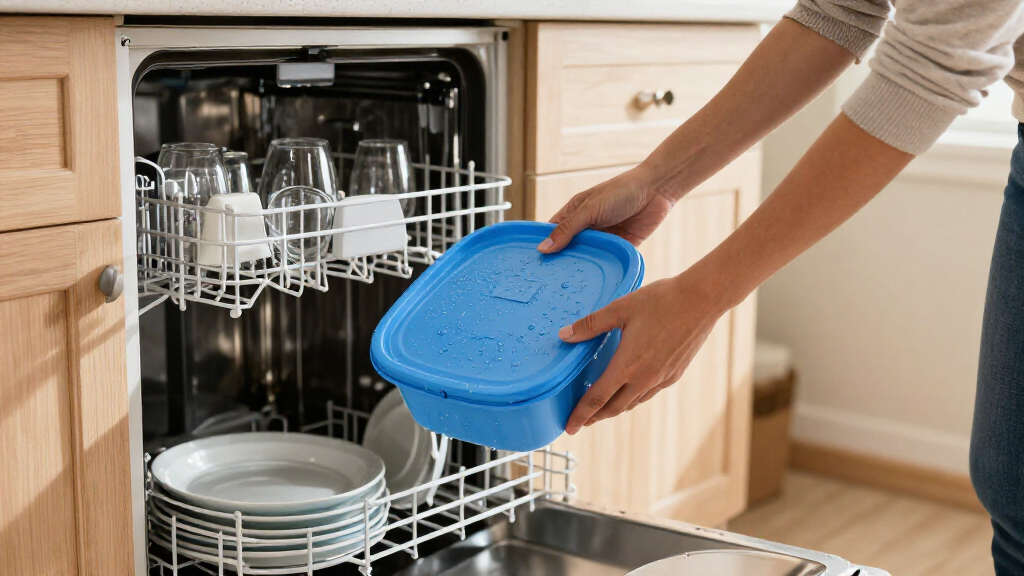
Many modern plastic food containers can go in the dishwasher, but not all, according to Noah Pinsonnault, a reviews analyst in the Good Housekeeping Institute’s Home Care & Cleaning Lab. He advises checking the container’s label or manufacturer instructions, then placing approved plastics on the top rack and skipping heated dry to reduce the risk of warping.
A dishwasher-safe symbol or label, often printed on the bottom of a container, is the most direct indication that it is approved for dishwasher cleaning. If the marking is missing or unclear, check the manufacturer’s care instructions. Pinsonnault says the recycling number molded into the plastic does not establish whether a container can withstand dishwasher conditions.
Dishwasher and microwave labels are separate: approval for one appliance does not automatically mean a container is suitable for the other. Even containers marked dishwasher-safe can be affected by repeated heat exposure, particularly if they are lightweight or have thin lids. Pinsonnault recommends putting approved plastic items on the top rack, farther from the heating element, and turning off the heated-dry setting.
Older reusable containers without care labels should be washed by hand, Pinsonnault says. Plastic can become more brittle or deteriorate as it ages, and without manufacturer guidance it is difficult to know how an older item will respond to a dishwasher cycle. For containers with lid seals, wash around the gaskets, where food residue can collect. To address lingering smells, wash the item thoroughly and leave it open to air; a baking soda and water solution may help absorb odors if the smell remains.
Tupperware in the Dishwasher What to know before washing
Some plastic food-storage containers are dishwasher-safe, but care instructions vary by item. Check the label or manufacturer guidance before loading.
Check the right markings
A recycling number does not tell you whether a container is dishwasher-safe.
| Marking | What it tells you |
|---|---|
| Dishwasher-safe label | Dishwasher care |
| Microwave-safe label | Microwave use only |
| Recycling number | Plastic resin, not dishwasher suitability |
Lower heat exposure
For containers approved for dishwasher cleaning, these steps can reduce the chance of warping.
Keep plastic farther from the heating element.
Repeated heat can affect plastic, especially lightweight items and thin lids.
Food residue can collect around lid gaskets.
Choose care by condition
The guidance applies to plastic food-storage containers generally; individual Tupperware products may have different care requirements.
- Follow the item’s dishwasher guidance.
- Check microwave safety separately.
- Hand-wash rather than guessing.
- Older plastic may be more brittle or deteriorated.
If odors linger
Wash thoroughly and leave the container open to air. A baking soda and water solution may help absorb a remaining smell.
How Heat Can Affect Plastic
The practical issue is that a dishwasher’s heat can distort some plastics, leaving containers or lids warped and less useful. The risk is not determined by appearance or recycling code alone: a container needs to be assessed according to its specific care label and condition. Top-rack placement and skipping heated dry are precautions, not a guarantee that every plastic item will remain unchanged.
Checking labels also helps avoid treating different appliances as interchangeable. A container that is dishwasher-safe may not be microwave-safe, and the reverse does not follow either. Following the correct instructions can help preserve food-storage items and prevent users from relying on a recycling symbol that does not answer the dishwasher question.
Products Worth Considering

Bose Lifestyle Ultra Soundbar and Ultra Subwoofer Bundle

eufy Security SoloCam S340 3K Dual-Lens Solar Security Camera

Dyson 360 Vis Nav Robot Vacuum
As an affiliate, we earn on qualifying purchases.
What Container Labels Actually Say
The advice applies to plastic food-storage containers generally, not a single Tupperware model. The guidance does not say every product sold under the Tupperware name has the same care requirements; the label and instructions for the individual item remain the relevant reference.
Pinsonnault’s guidance distinguishes three markings or conditions that are easy to confuse: a dishwasher-safe label indicates dishwasher care, a separate microwave-safe label addresses microwave use, and a recycling number identifies plastic resin rather than dishwasher suitability. For an older item with no readable label, the recommended fallback is hand-washing rather than assuming it is safe for machine cleaning.
When Care Instructions Are Missing
The guidance does not identify which specific Tupperware products or models are dishwasher-safe, nor does it provide a universal temperature or cycle setting for all plastic containers. Those details depend on the individual product’s instructions. If a container has no legible label and its manufacturer guidance cannot be found, its dishwasher tolerance remains uncertain; the stated recommendation is to wash it by hand.
The advice also does not promise that top-rack placement or turning off heated dry will prevent all warping. Those steps reduce exposure to heat, but the outcome can depend on the container’s age, material and design.
Check Before the Next Wash
Before loading a plastic container, look for a dishwasher-safe mark on its bottom or consult the manufacturer’s care instructions. Confirm microwave safety separately if you plan to heat food in it. For a labeled dishwasher-safe item, use the top rack, skip heated dry and clean carefully around lid seals. Hand-wash older containers without care information, and let washed containers air out with their lids off if odors linger.
Key Questions
Can Tupperware go in the dishwasher?
Some plastic food-storage containers can, but the answer depends on the specific item. Check its dishwasher-safe label or manufacturer instructions rather than assuming all Tupperware or other plastic containers share the same care requirements.
Does the recycling number mean a container is dishwasher-safe?
No. Pinsonnault says the recycling number does not indicate dishwasher safety. Use the care label or manufacturer’s guidance instead.
Where should dishwasher-safe plastic containers go?
Place them on the top rack to keep them farther from the heating element. The guidance also recommends skipping heated dry, especially for lightweight containers and lids.
What should I do with an older container that has no label?
Wash it by hand, according to Pinsonnault. Older plastic may be more brittle or deteriorated, and its dishwasher tolerance is difficult to determine without manufacturer instructions.
How can I remove a lingering smell from a food container?
Wash it thoroughly and leave it open to air. If the odor remains, a baking soda and water solution may help absorb it.
Source: goodhousekeeping.com