One common mistake that speeds up spoilage is neglecting proper food storage techniques, like setting the right fridge temperature, using incorrect containers, and overpacking the fridge. Failing to label, rotate, and organize your food can lead to waste and unsafe leftovers. Improper humidity control for produce and storing perishable items in the wrong spots also cause faster deterioration. Keep these tips in mind to extend freshness and reduce waste; there’s more to learn for better food storage habits.
Key Takeaways
- Failing to label and date stored foods leads to forgotten expiration dates and increased spoilage risk.
- Overpacking refrigerators restrict airflow, causing temperature fluctuations that promote bacterial growth.
- Storing perishable items at incorrect temperatures accelerates spoilage and reduces shelf life.
- Using inadequate or improperly sealed containers exposes food to oxygen and contaminants, speeding up deterioration.
- Poor organization and neglecting rotation cause older foods to spoil before use, increasing waste.

2 Pack Refrigerator Thermometer, 30-30°C/20-80°F, Classic Fridge Thermometer Large Dial with Red Indicator Thermometer for Freezer Refrigerator Cooler
Convenient and practical: Our refrigerator thermometer is suitable for traditional refrigerators, freezers, insulated boxes, etc. It has a…
As an affiliate, we earn on qualifying purchases.
As an affiliate, we earn on qualifying purchases.
Why Proper Food Storage Matters for Freshness
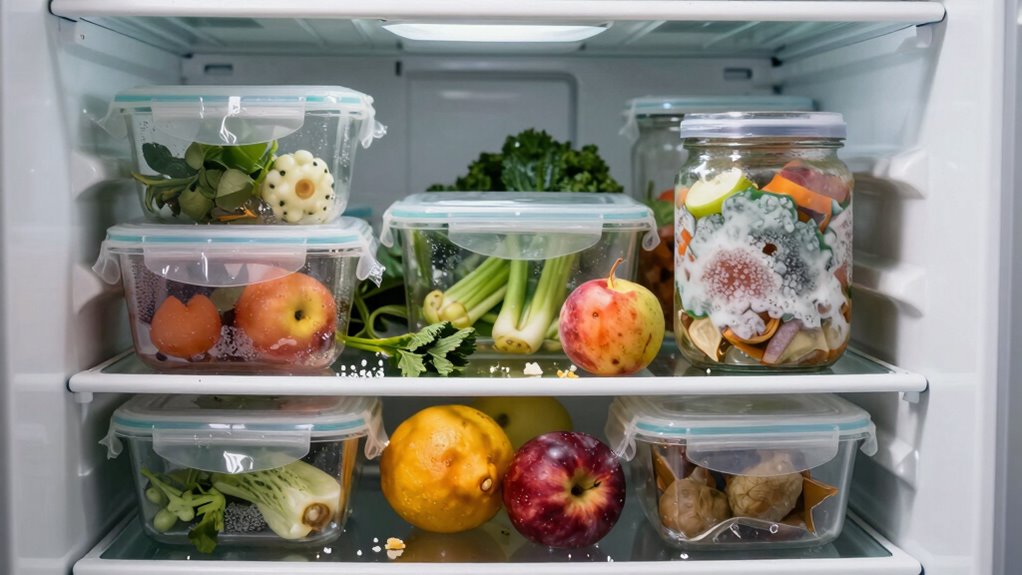
Have you ever wondered why some foods stay fresh longer than others? Proper food storage plays a crucial role in preserving freshness. Food labeling helps you identify expiration dates and storage instructions, so you know when to use items before spoilage sets in. Implementing food rotation ensures older products are used first, preventing waste and reducing the risk of consuming spoiled food. When you store food correctly, you maintain quality, flavor, and nutrients, saving money in the long run. Incorrect storage can lead to faster spoilage, bacterial growth, and waste. Paying attention to food labeling and practicing food rotation keeps your food fresh longer and keeps your kitchen safer. Good storage habits are key to minimizing spoilage and enjoying food at its best. Additionally, understanding proper food storage methods can help prevent common mistakes that accelerate spoilage, such as improper temperature control or inadequate packaging, which are essential aspects of food safety practices. Proper temperature control is especially important, as even slight deviations can significantly impact food freshness and safety. Using appropriate storage containers can also help maintain optimal conditions and prevent contamination. Proper temperature regulation is vital because it inhibits bacterial growth and extends the shelf life of perishable items.

Airtight Food Storage Containers with Lids, Vtopmart 24 pcs Plastic Kitchen and Pantry Organization Canisters for Cereal, Dry Food, Flour and Sugar, BPA Free, Includes 24 Labels,Black
Help Organize Your Kitchen and Pantry— Imagine every time walking to your kitchen or pantry, found everything is…
As an affiliate, we earn on qualifying purchases.
As an affiliate, we earn on qualifying purchases.
The Right Temperature Settings to Prevent Spoilage
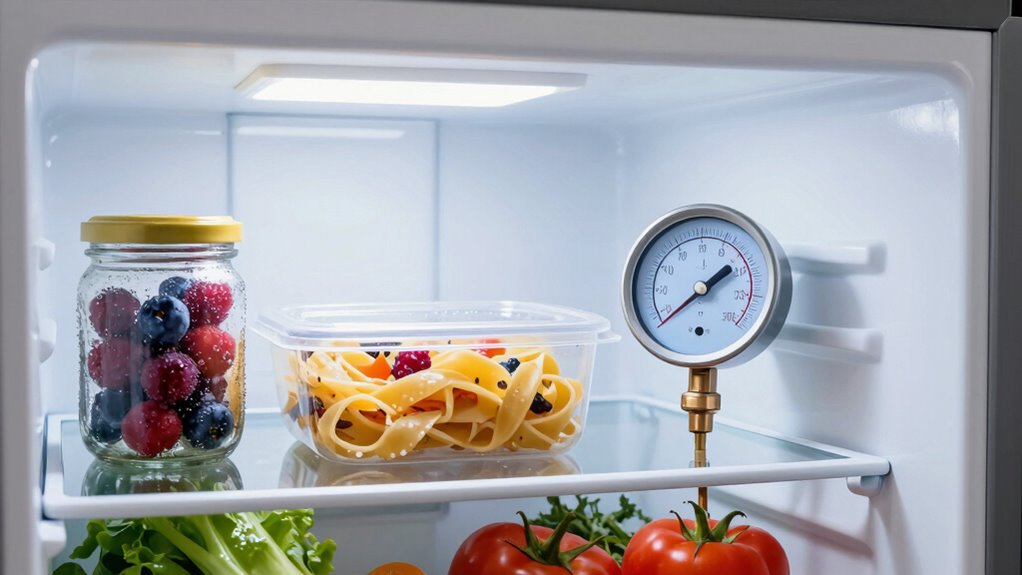
Setting your refrigerator to the right temperature helps keep food fresh longer; aim for around 37°F (3°C). Your freezer should stay at 0°F (-18°C) to prevent spoilage and freezer burn. Regularly checking these temperatures guarantees your food stays safe and tasty. Additionally, proper storage routines can further reduce the risk of spoilage by minimizing temperature fluctuations and contamination. Ensuring proper airflow around the unit can also improve the efficiency of your refrigerator and prevent uneven cooling.
Ideal Refrigerator Temperature
Ever wondered how to keep your food fresh longer? Maintaining the right refrigerator temperature is key. First, verify proper refrigerator calibration—use a thermometer to check if your fridge runs at the recommended 37°F (3°C). Avoid relying solely on the built-in thermostat, as it can be inaccurate. Regular temperature monitoring helps catch any fluctuations before food spoils. Keep the fridge door closed as much as possible to maintain consistent temperatures. Avoid overcrowding, which can block airflow and cause uneven cooling. If you notice temperature inconsistencies, adjust the settings or call a professional. Staying vigilant about your fridge’s temperature helps prevent bacteria growth and spoilage, saving you money and reducing waste. Proper calibration and monitoring are simple, effective ways to keep your food safe and fresh longer. Additionally, understanding current U.S. tax laws can help you plan your finances more effectively, just as maintaining proper refrigerator settings helps preserve your food. To further protect your investments, be aware of potential scams and frauds in financial products like IRAs. Being aware of food safety guidelines can also help you adopt best practices for storage and spoilage prevention. Regularly reviewing food storage tips can further enhance your efforts to keep food fresh and Indonesian decor masks can add a cultural touch to your kitchen or dining space by showcasing artistry and tradition.
Freezer Temperature Tips
To prevent spoilage and maintain food quality, keeping your freezer at the right temperature is essential. The ideal setting is 0°F (-18°C), which prevents freezer burn and inhibits bacterial growth. Avoid temperature fluctuations by regularly checking your freezer’s thermometer. Sudden rises can cause partial thawing, leading to spoilage or freezer burn. Use the table below for quick tips:
| Tip | Explanation |
|---|---|
| Keep at 0°F | Maintains food freshness and prevents spoilage |
| Avoid Fluctuations | Use a reliable thermometer to monitor temperature |
| Limit Door Openings | Reduces temperature swings |
| Properly Seal Food | Prevents freezer burn |
| Don’t Overload | Ensures even cooling |
Consistent temperature control keeps your food safe and preserves quality. Proper filtration efficiency in vacuum devices highlights the importance of maintaining a clean environment, which parallels the need for temperature stability in food storage. Regularly defrosting your freezer can also help maintain optimal cooling performance, preventing uneven temperatures that could lead to spoilage. Additionally, understanding the impact of temperature fluctuations can help you develop better storage habits and prolong the freshness of your food.
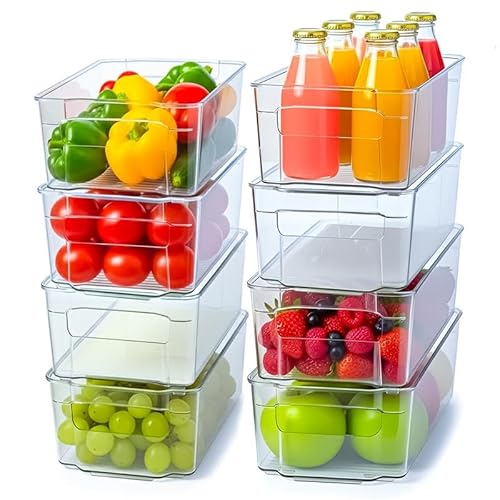
Utopia Home – Fridge & Refrigerator Organizer Bins (8 Pack), Clear Stackable Durable Plastic Storage Containers with Easy Grip Handles for Pantry, Kitchen Cabinets & Countertops
Set of 8 Pieces Pantry Organizers and Storage – fridge organizers and storage bins box allows for better…
As an affiliate, we earn on qualifying purchases.
As an affiliate, we earn on qualifying purchases.
Choosing the Best Packaging to Keep Food Safe
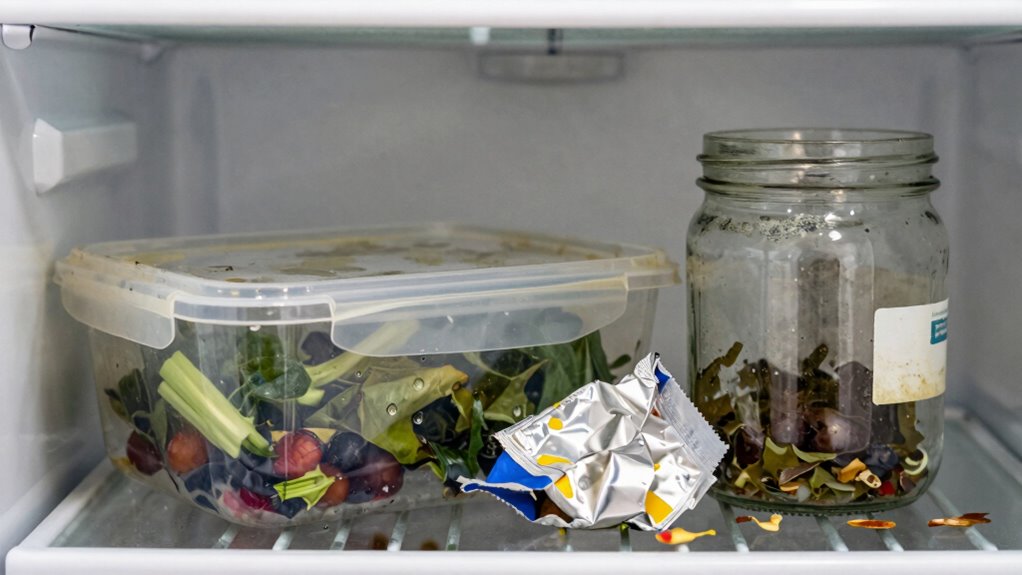
- Use airtight containers to limit oxygen exposure.
- Choose vacuum-sealed bags for longer preservation.
- Opt for BPA-free plastics for safety and durability.
- Consider glass or stainless steel for reusable, sturdy options.

Higfra Reusable BPA Free Vacuum Sealer Bags (8.5 * 8.5in), 31 Pcs (24 Pcs Vacuum Zipper Bag & 2 Seal Clips & 5 Air Valves), Plastic, Clear, Double Zipper Seal, Microwaveable, Food Storage, Cooking
MULTIPLE SIZES: 24 reusable vacuum low temperature cooking bags with 2 bag sealing clips and 5 air valves,…
As an affiliate, we earn on qualifying purchases.
As an affiliate, we earn on qualifying purchases.
Controlling Humidity for Fruits and Vegetables
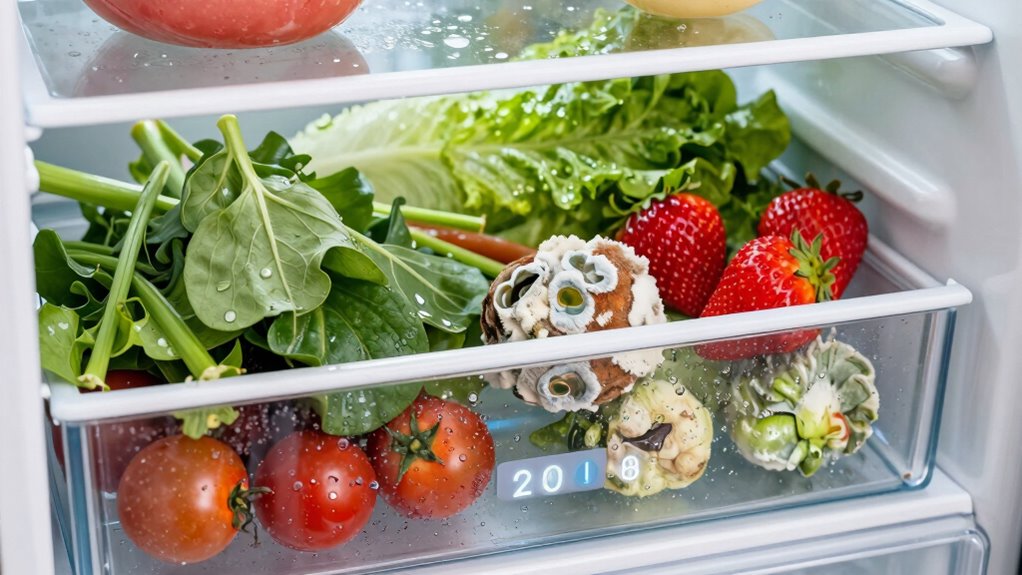
Choosing the right packaging is essential for keeping fruits and vegetables fresh, but controlling humidity levels inside storage areas is equally important. Proper humidity control prevents spoilage and extends fruit preservation. Additionally, monitoring indoor air quality can help identify excess moisture or contaminants that may affect produce. Too much moisture causes mold and rot, while too little dries out produce. To help you maintain ideal humidity, consider the following:
| Humidity Level | Ideal For | Consequences of Improper Control |
|---|---|---|
| High | Leafy greens, berries | Mold, faster spoilage |
| Moderate | Apples, carrots | Slight wilting, dehydration |
| Low | Citrus, grapes | Shriveling, loss of flavor |
| Very Low | Root vegetables | Drying out, crumbling |
Maintaining proper humidity levels is crucial for preventing failures such as cabling issues that can compromise storage conditions. Using appropriate humidity control devices can also help maintain consistent moisture levels and protect your produce. Proper humidity management tools ensure that storage environments stay within the optimal range, reducing the risk of spoilage. Incorporating environmental monitoring can further optimize storage conditions by providing real-time data on humidity and temperature.
Common Mistakes When Storing Different Types of Food
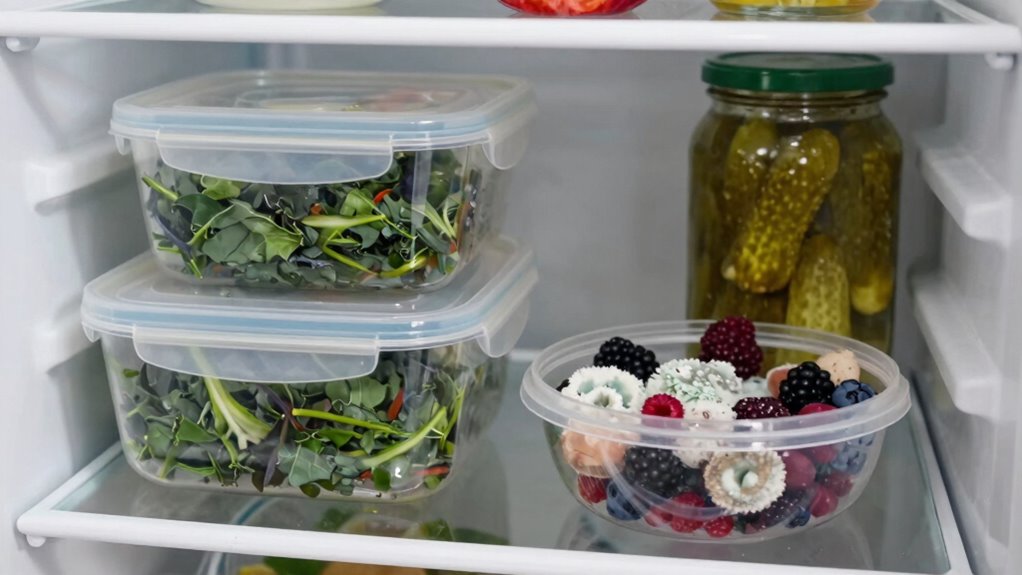
Storing different types of food correctly requires awareness of common mistakes that can lead to spoilage or loss of quality. One mistake is neglecting proper food labeling, which can cause you to forget expiration dates or mix up items. Second, failing to practice storage rotation means older items stay buried, risking spoilage. Third, storing foods at incorrect temperatures—like keeping perishables in the fridge door—accelerates spoilage. Additionally, storing incompatible foods together, such as fruits and vegetables that emit ethylene gas, can spoil produce faster. Proper food storage techniques and understanding how to maintain ideal temperature control are essential for maintaining freshness. Pay attention to food safety guidelines, which emphasize correct storage conditions to prevent bacterial growth and extend shelf life. By paying attention to food labeling, ensuring proper storage rotation, maintaining correct fridge temperatures, and separating incompatible foods, you extend freshness and prevent waste. These simple steps help you avoid common storage pitfalls.
How Overpacking Your Fridge Can Speed Up Spoilage
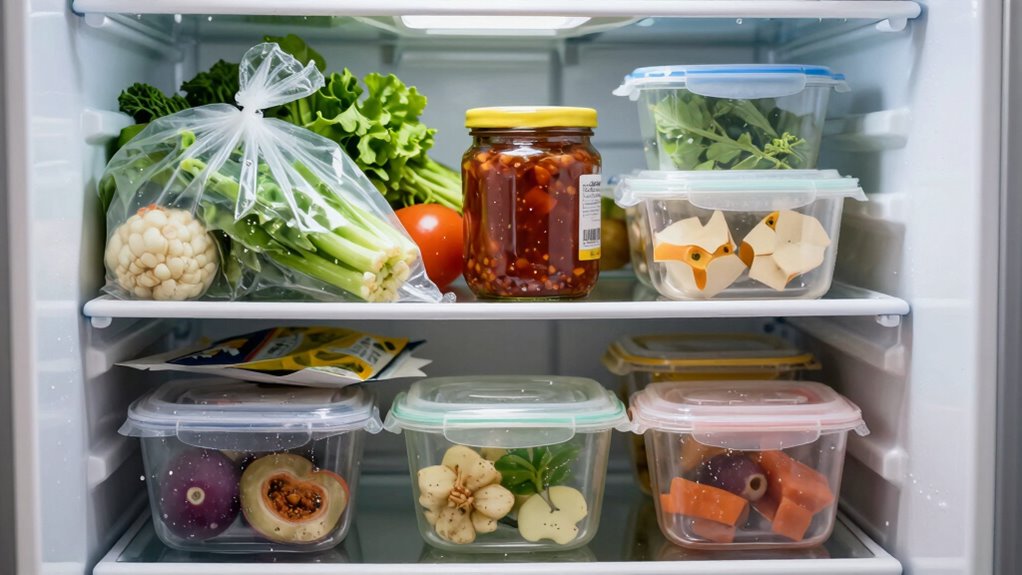
Overpacking your fridge might seem like a way to maximize space, but it actually speeds up spoilage. When you cram too much inside, air circulation becomes restricted, preventing cold air from evenly reaching all areas. This can cause temperature zones to fluctuate, creating warm spots that promote bacterial growth and spoilage. Proper airflow is essential for maintaining a consistent temperature, especially in different parts of your fridge designed for specific foods. Overloading disrupts this balance, making it harder for your appliance to keep food fresh. To prevent spoilage, avoid packing your fridge too tightly. Leave enough space between items to allow air to circulate freely, ensuring all areas stay at the right temperature and keeping your food fresh longer.
Using the Right Containers to Extend Food Shelf Life
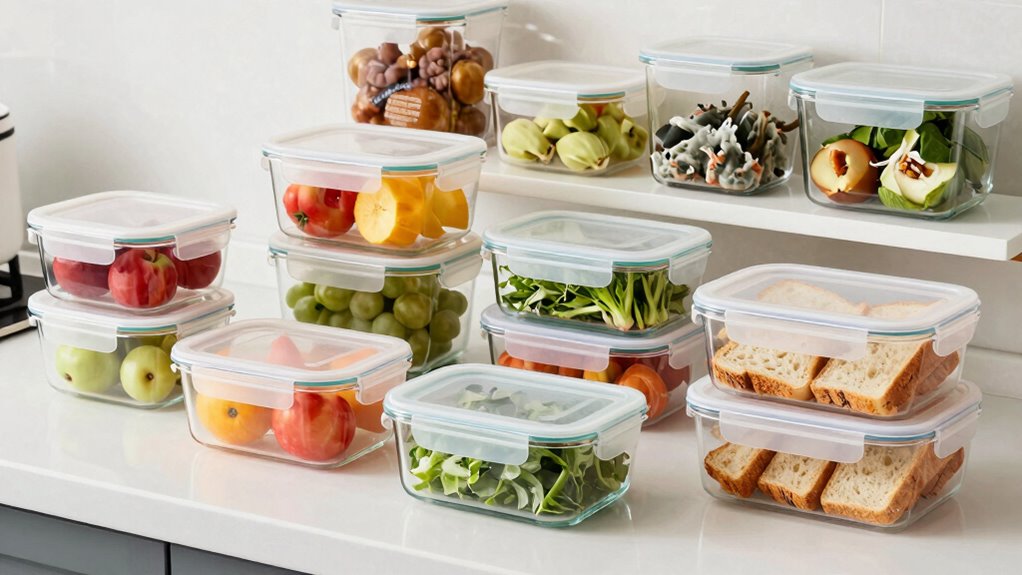
Using the right containers can markedly extend the shelf life of your food by preventing spoilage and preserving freshness. Choosing airtight containers helps keep moisture and air out, slowing bacterial growth. Opt for BPA-free plastics to avoid harmful chemicals leaching into your food. Here are four tips to maximize food longevity:
Using airtight, BPA-free containers with proper labeling and filling practices keeps food fresher longer.
- Use airtight containers for leftovers and cut produce.
- Select BPA-free plastics to guarantee safety and freshness.
- Label containers with dates to monitor storage times.
- Avoid overfilling containers, allowing space for expansion and proper sealing.
Smart Pantry Organization Tips to Reduce Food Waste
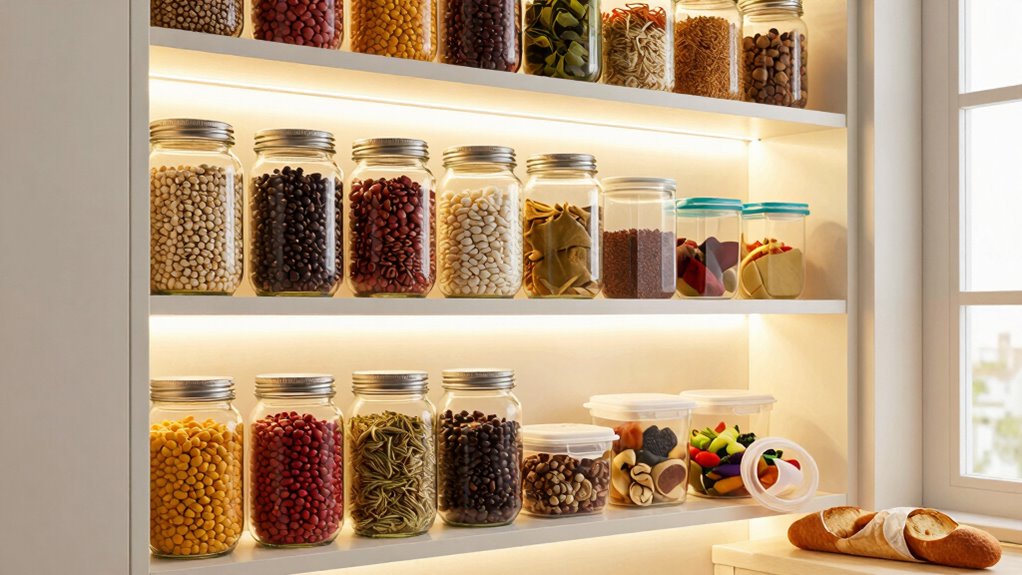
A well-organized pantry can considerably cut down on food waste by making it easier to see what you have and use items before they spoil. Start by adding clear pantry labels to categorize everything—cans, grains, snacks—so you can quickly locate what you need. Incorporate meal prep into your routine by rotating older items to the front, ensuring they’re used first. Use transparent containers for staples like flour, sugar, and pasta, so you see at a glance when supplies run low. Keep frequently used items within easy reach, and designate specific zones for different food groups. This organization not only reduces spoilage but also streamlines shopping and meal planning, saving you money and time.
Frequently Asked Questions
How Does Light Exposure Impact Food Spoilage?
Light exposure accelerates food spoilage by causing UV damage, especially to light-sensitive items like dairy or produce. When you leave food in direct sunlight or bright artificial light, it can degrade nutrients, alter flavors, and promote bacterial growth. To prevent this, store your food in dark, opaque containers or in cool, shaded places. Reducing light exposure helps preserve freshness, extends shelf life, and keeps your food safe to eat.
What Are the Signs of Improper Food Storage?
You’ll notice signs of improper food storage through changes like unpleasant odors, mold, or slimy textures. Pay attention to expiration dates, as expired food is a clear sign of spoilage. Temperature control is essential; if food is kept too warm or too cold, it can spoil faster. Discoloration or off-flavors also indicate that your food isn’t stored properly, increasing the risk of foodborne illness.
Can Storing Food in the Freezer Cause Nutrient Loss?
Imagine you’re a time traveler, but freezing food isn’t like stopping the clock. Storing food in the freezer can cause some nutrient degradation, especially if it’s kept too long or exposed to freezer burn. While freezing preserves many nutrients, prolonged storage may lead to a slight loss of vitamins. To minimize this, use airtight containers and consume frozen items within recommended timeframes, ensuring your food retains its nutritional value.
How Often Should I Clean My Food Storage Containers?
You should clean your food storage containers after every use to prevent bacteria buildup and odors. The cleaning frequency depends on the container materials; plastic containers need more regular cleaning, ideally weekly, as they’re porous and can harbor bacteria. Glass or stainless steel containers can be cleaned less often but should still be washed thoroughly after each use. Regular cleaning keeps your containers hygienic, safe, and ready for fresh food storage.
Does Storing Food Near Strong Odors Affect Freshness?
Storing food near strong odors can definitely impact freshness. Odor absorption happens when your food picks up nearby smells, leading to flavor contamination that ruins taste. To keep your food fresh, avoid placing it close to pungent items like onions or spices. Think of your storage as a sponge—if it absorbs bad odors, your food will suffer. Keep your containers sealed tightly and away from strong-smelling foods for best results.
Conclusion
If you keep making these food storage mistakes, your leftovers might come back from the dead—or worse, turn into a science experiment! Proper storage can save your groceries from a quick death, preserve their freshness, and even prevent a kitchen catastrophe. Don’t let spoiled food take over your fridge or turn your kitchen into a biohazard zone. Master these tips, and you’ll be a food storage superhero—saving money, time, and your sanity!