
To clean your kitchen appliances properly, gather the right supplies like microfiber cloths, gentle cleaners, and brushes. Regularly wipe down your microwave, fridge, and stove using safe, effective methods, and descale coffee makers and kettles to prevent buildup. Deep clean appliances like ovens and dishwashers, and keep small items like toasters spotless. To stay fresh, control odors with natural methods. Keep going for more detailed tips on keeping your appliances in top shape and odor-free.
Key Takeaways
- Regularly clean each appliance using appropriate tools and gentle cleaners to prevent buildup and ensure hygiene.
- Unplug appliances before cleaning and remove removable parts for thorough washing.
- Use specific cleaning methods, like steam for microwaves and descaling solutions for coffee makers.
- Wipe down surfaces, seals, and vents to prevent odors and grime accumulation.
- Establish a routine cleaning schedule to maintain appliance efficiency and prolong lifespan.

USANOOKS Microfiber Cleaning Cloth Grey – 12 Pcs (12.5"x12.5") – High Performance – 1200 Washes, Ultra Absorbent Microfiber Towel Weave Grime & Liquid for Streak-Free Mirror Shine – Car Washing Cloth
10x GRIP-ROOT WEAVE – TRAP MORE, WORK LESS: Ultra-absorbent microfiber towels for car Grip Root weave works like…
As an affiliate, we earn on qualifying purchases.
As an affiliate, we earn on qualifying purchases.
Why Regularly Cleaning Your Kitchen Appliances Matters
Regularly cleaning your kitchen appliances is essential because it helps prevent the buildup of dirt, grease, and bacteria that can compromise your food safety and health. Consistent appliance maintenance keeps your appliances functioning efficiently and extends their lifespan. Establishing cleaning schedules ensures you don’t forget to maintain each appliance, avoiding potential issues like odors or mechanical failures. When you stick to regular cleaning routines, you reduce the risk of cross-contamination and maintain a hygienic environment in your kitchen. Skipping routine cleaning can lead to stubborn stains, mold growth, and decreased appliance performance. By making cleaning a regular part of your kitchen habits, you protect your health, save money on repairs, and keep your appliances operating smoothly for years to come. Additionally, following proper cleaning techniques and schedules for your appliances can prevent damage from harsh chemicals and ensure optimal performance over time. Incorporating natural cleaning methods can further support sustainable practices in your kitchen. Utilizing knowledge about test accuracy and appropriate cleaning agents helps maintain the integrity of your appliances and ensures they function as intended. Regular maintenance also reduces the likelihood of mechanical breakdowns, saving you time and money in the long run.

Descaler (2 Pack, 2 Uses Per Bottle) – Made in the USA – Universal Descaling Solution for Keurig, Nespresso, Delonghi and All Single Use Coffee and Espresso Machines
2-Pack Coffee Descaler and Cleaner – Clean and rinse away residue and oil buildup in your coffee maker…
As an affiliate, we earn on qualifying purchases.
As an affiliate, we earn on qualifying purchases.
Gather the Right Supplies for Effective Appliance Cleaning
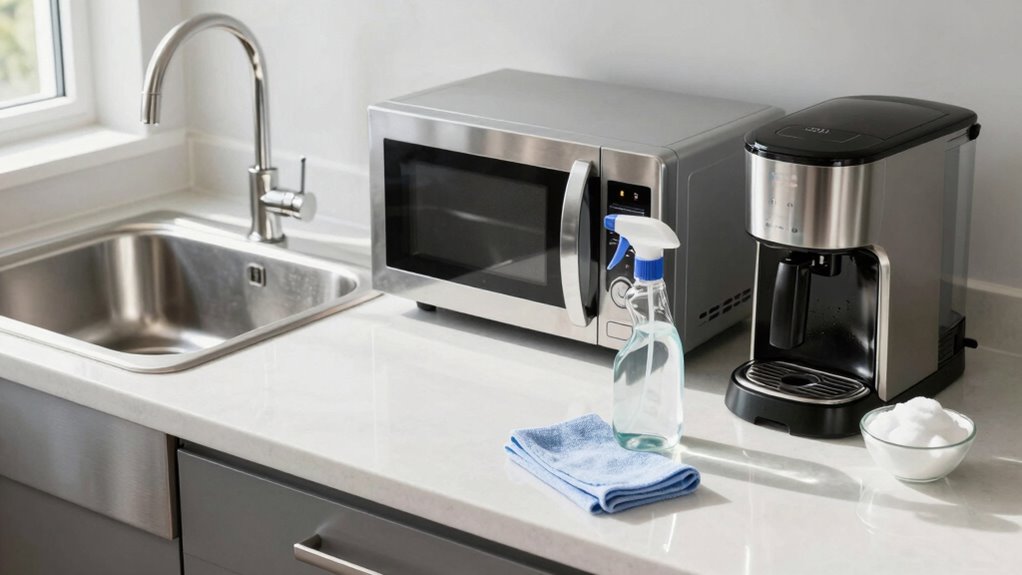
To clean your appliances effectively, you need to gather the right supplies. Choosing the proper cleaning products and tools guarantees you don’t damage surfaces or miss spots. Make sure you have essentials like microfiber cloths, gentle cleaners, and scrubbing brushes before you start. Additionally, using protective covers can help prevent accidental damage during cleaning. For added protection, consider using enterprise USB backups or optical drives to store cleaning instructions or maintenance logs securely. Being aware of the contrast ratio can also guide you in choosing appropriate lighting conditions to better see dirt and smudges during cleaning. Proper household product selection is crucial to ensure safety and effectiveness during the cleaning process. Understanding the importance of consumer ethics can also help you make environmentally friendly choices when selecting cleaning supplies.
Essential Cleaning Supplies
Having the right cleaning supplies on hand makes appliance maintenance much easier and more effective. When you keep a well-stocked set of essentials, sticking to cleaning schedules becomes less stressful and more efficient. Focus on quality tools and products that target common stains and grime. A natural cleaning method using baking soda and vinegar is especially effective for deodorizing and stain removal, making your appliances sparkle without harsh chemicals. These supplies help you maintain your appliances properly, preventing buildup and extending their lifespan. Staying prepared with the right cleaning tools ensures your kitchen appliances stay in top shape, making appliance maintenance a quick, routine task. Additionally, understanding basic filtration and suction techniques can improve your cleaning results and prolong the life of your appliances. Incorporating knowledge about sound vibrations can also assist in delicate cleaning tasks, especially for appliances sensitive to vibrations or requiring gentle handling. Being aware of vibration control methods can further enhance your cleaning effectiveness, especially for fragile components.
Proper Tool Selection
Are you choosing the right tools to clean your kitchen appliances effectively? Picking the proper supplies guarantees thorough cleaning without damaging your appliances or voiding warranties. Use gentle brushes, microfiber cloths, and non-abrasive sponges suited for different surfaces. Avoid harsh chemicals that could harm finishes or affect cooking techniques. Here’s a quick guide:
| Tool | Purpose |
|---|---|
| Soft-bristle brush | Scrubbing stubborn spots |
| Microfiber cloth | Wiping and polishing surfaces |
| Non-abrasive sponge | Cleaning delicate areas |
Choosing the right tools protects your appliance warranties and keeps your appliances in top shape. Proper tool selection makes cleaning efficient and safe, preventing costly repairs or replacements.

Betanull Crevice Cleaning Brush Set, Multi-Purpose Hard Bristle Brushes for Deep Cleaning Kitchen, Bathroom, Grout, Sink, Cup, Teapot, Bottle, Blender, Corners, Tight Spaces & More
【8 Piece Ultimate Crevice Cleaning Brush Set】 Tackle every corner of your home effortlessly with our versatile cleaning…
As an affiliate, we earn on qualifying purchases.
As an affiliate, we earn on qualifying purchases.
How to Safely and Effectively Clean Your Microwave?
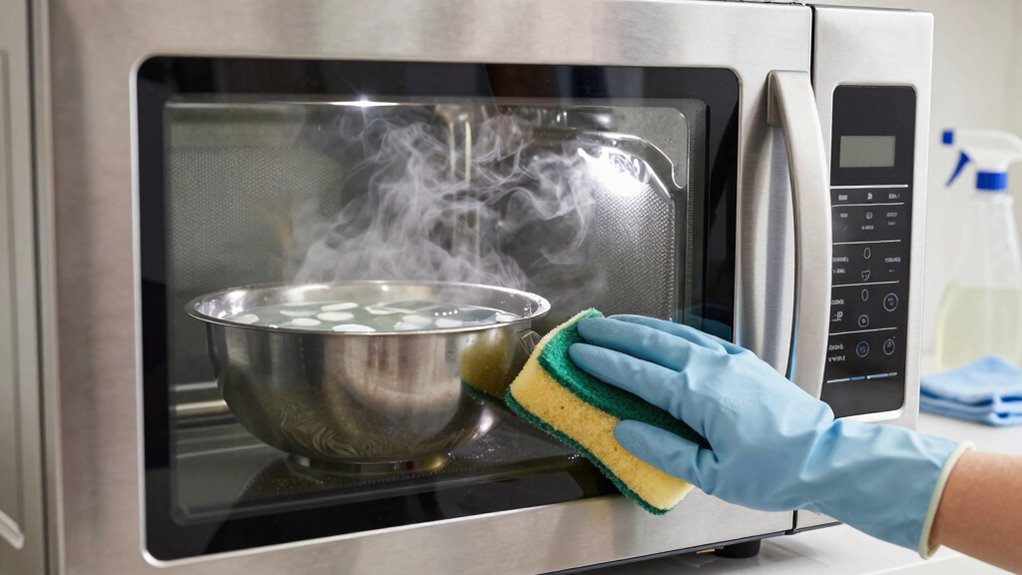
Cleaning your microwave safely and effectively starts with gathering simple supplies like a microwave-safe bowl, water, and a mild cleaning cloth. First, fill the bowl with water and add a few lemon slices or vinegar to help with cleaning microwave stains and freshening the interior. Microwave the bowl on high for 3-5 minutes until it steams up. Let it sit for a minute, then carefully remove the bowl and wipe down the interior with a damp cloth. This method guarantees microwave safety and loosens stubborn stains. Incorporating these simple steps can enhance your lifestyle upgrades, and ensuring your appliances are properly maintained can prevent common issues like cable failures that may occur over time. Additionally, understanding smart thermostat setup can contribute to maintaining a comfortable and energy-efficient home environment. Regularly checking for cleaning appliance filters can also improve the longevity and performance of your devices. To keep your microwave in optimal condition, it’s helpful to familiarize yourself with small appliance maintenance, which includes routine cleaning and inspection.

Holikme 2 Pieces Dryer Vent Cleaner Kit, Dryer Lint Vacuum Attachment and Flexible Dryer Lint Brush, Dryer Vent Vacuum Hose Attachment,Blue
Home Essentials: Holikme dryer vent cleaner kit can easily help you to remove years of built up lint…
As an affiliate, we earn on qualifying purchases.
As an affiliate, we earn on qualifying purchases.
Tips for Deep Cleaning Your Refrigerator and Freezer
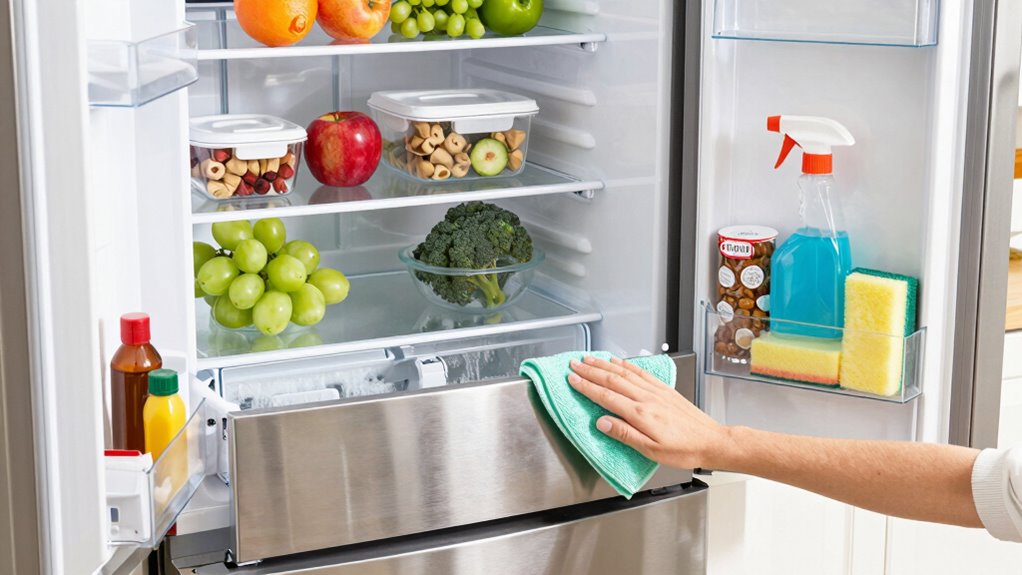
After steam-cleaning your microwave, it’s a good idea to turn your attention to your refrigerator and freezer. Start by unplugging the appliance and removing all food items. For refrigerator organization, take this opportunity to discard expired or spoiled items and wipe down shelves with a mixture of warm water and mild detergent. For the freezer, defrost it regularly to prevent ice buildup, which can hinder efficiency. Use a plastic spatula to gently loosen ice and a towel to catch drips. Once defrosted, clean the interior thoroughly. Wiping down door seals and handles to remove grime is also essential for maintaining cleanliness. Keeping both appliances organized and defrosted guarantees ideal performance and makes future cleaning easier. Additionally, proper appliance maintenance can help extend the lifespan of your refrigerator and freezer, and understanding the importance of regular cleaning can prevent odor buildup and bacterial growth. Regular cleaning also supports energy efficiency, especially in appliances that may contain ice buildup, which can impact their performance. Recognizing the influence of environmental factors on appliance function can further enhance your maintenance routine.
Maintaining Your Dishwasher for Peak Performance
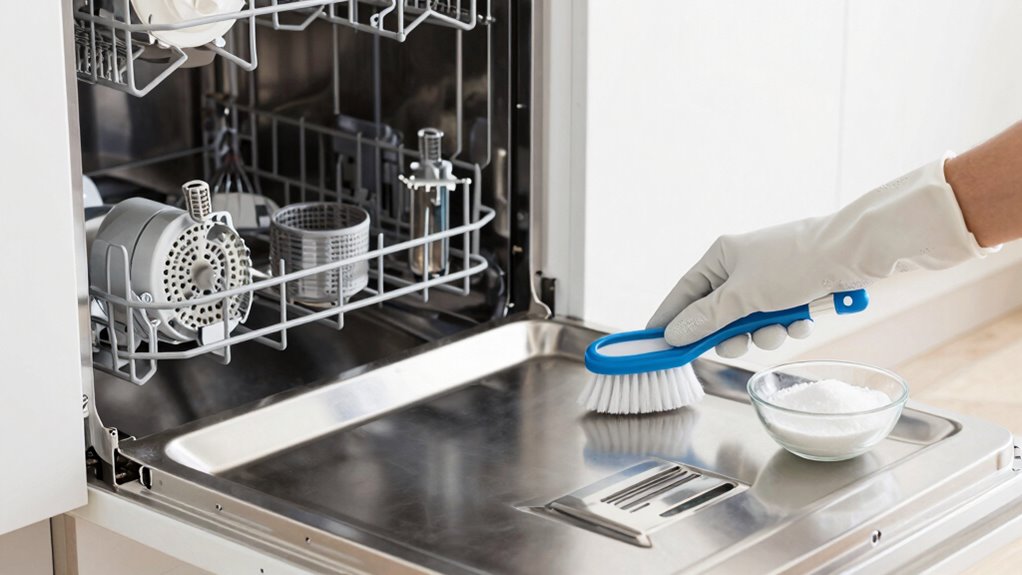
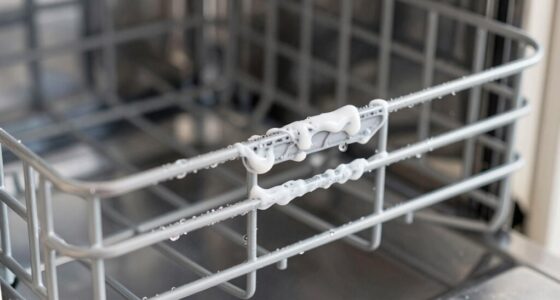
To keep your dishwasher working its best, regularly check for clogs in the drainage and spray arms. Running hot water cycles helps clear out any buildup, while cleaning the spray arms and filter guarantees water flows freely. These simple steps will help maintain peak performance and extend the life of your appliance.
Regularly Check for Clogs
Clogs can quickly diminish your dishwasher’s efficiency, so it’s important to check for blockages regularly. When you clear obstructions, you help prevent clog formation and guarantee proper airflow, which is key for clog prevention and airflow optimization. Here are three simple steps:
- Inspect the drain filter and remove any trapped debris or soap buildup.
- Check the spray arms for clogs in the holes and clean them out with a toothpick or small brush.
- Look at the drain hose for kinks or blockages, and clear any obstructions you find.
Additionally, understanding how to maintain airflow in your appliance can help keep it running smoothly. Regularly cleaning and inspecting your dishwasher’s components also supports overall outdoor gear selection principles, ensuring your appliances stay in top condition for years to come.
Run Hot Water Cycles
Running hot water through your dishwasher before starting a cycle helps guarantee it operates efficiently. This simple step ensures the appliance flushing process begins with warm water, which improves cleaning performance and helps remove residual buildup. Many dishwashers have a feature for hot water cycles—using these regularly helps maintain peak performance. To do this, run the hot water tap at your sink until the water is hot, then start your dishwasher. This pre-warming step prevents the dishwasher from working with cold water initially, reducing strain on the motor and heating elements. Consistently running hot water cycles can also extend the lifespan of your appliance by keeping internal components clean and functioning properly. Incorporate this routine into your dishwasher maintenance to keep it running smoothly.
Clean Spray Arms and Filter
Regularly cleaning the spray arms and filter keeps your dishwasher performing at its best. Proper spray arm maintenance guarantees water reaches every dish, while filter replacement prevents clogs and odors. To do this:
- Remove the spray arms and check for blockages or mineral buildup; clear any debris with a brush or toothpick.
- Rinse the spray arms thoroughly and reattach them securely.
- Inspect and replace the filter if it’s dirty or clogged, following your dishwasher’s instructions.
How to Descale and Care for Your Coffee Maker and Kettle?
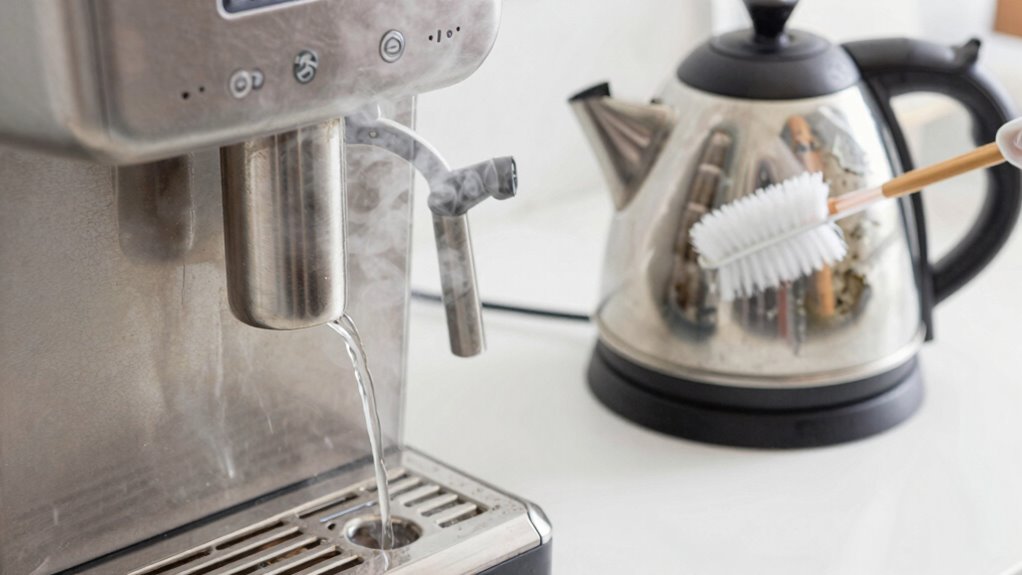
Over time, mineral deposits from water can build up inside your coffee maker and kettle, affecting their performance and the flavor of your drinks. To keep them functioning well, you need to regularly descale using effective descaling techniques. For your coffee maker, run a mixture of equal parts water and white vinegar through a brew cycle, then rinse with clean water to remove residue. For your kettle, boil a solution of vinegar and water, then rinse thoroughly. Regular coffee maker maintenance prevents buildup and guarantees ideal brewing. Remember to check your appliance’s manual for specific descaling instructions. Consistent care not only prolongs the lifespan of your appliances but also assures better-tasting coffee and hot water whenever you need it.
Easy Steps to Deep Clean Your Oven and Stove
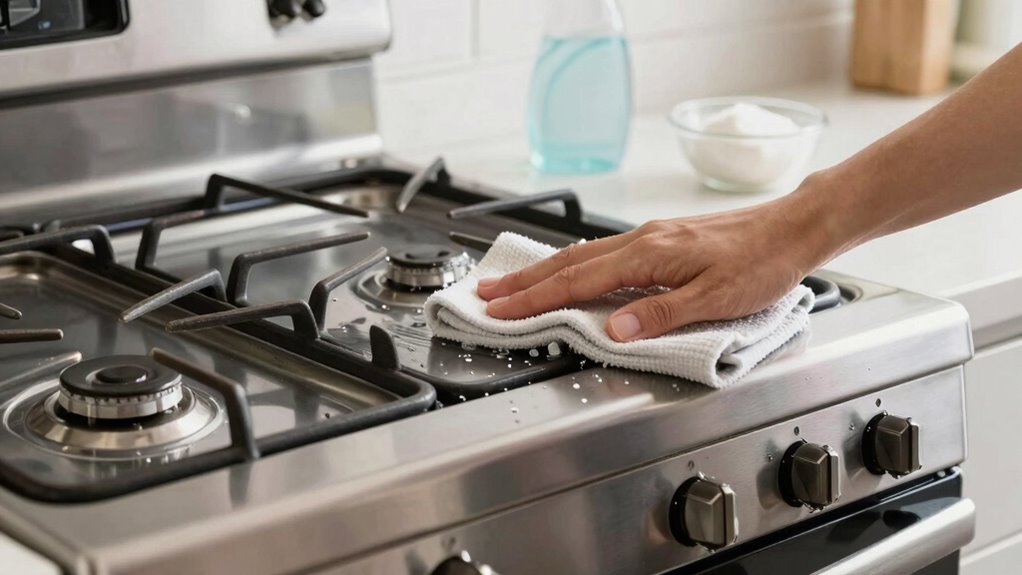
Cleaning your oven and stove doesn’t have to be complicated; with a few simple steps, you can restore their shine and guarantee they work efficiently. Regular deep cleaning not only improves appliance safety but also helps maintain ideal performance. Start by removing grates and burner pans, then soak them in warm, soapy water. Next, wipe down the interior with a non-abrasive cleaner, paying attention to grease buildup. Finally, scrub the grates and pans, dry everything thoroughly, and replace. To stay on top of maintenance, set a cleaning schedule—monthly or biweekly—so grime doesn’t accumulate. This routine keeps your appliances safe, efficient, and looking great. Consistency is key to avoiding stubborn stains and ensuring your kitchen stays clean and safe.
Cleaning Small Appliances Like Toasters and Blenders
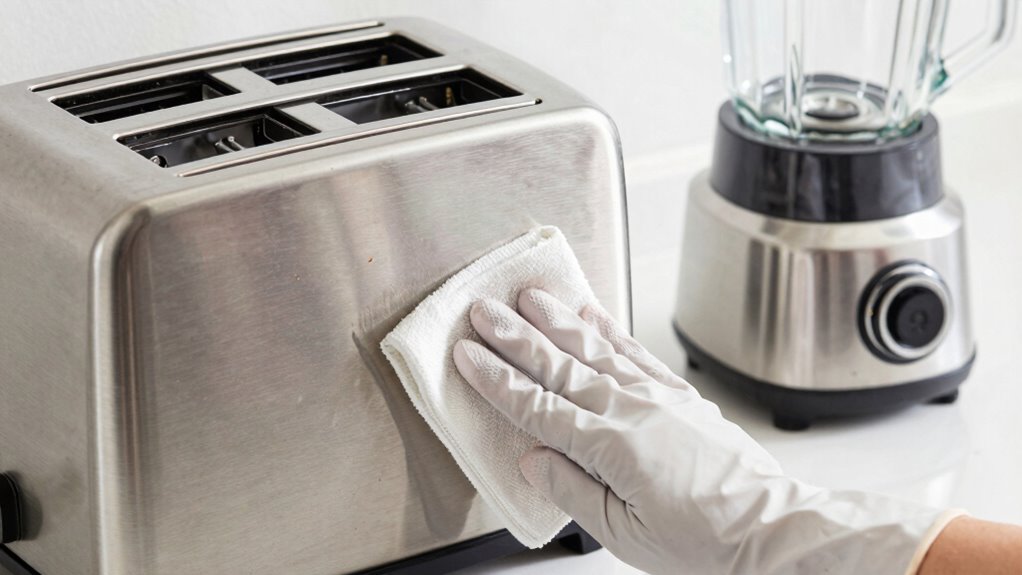
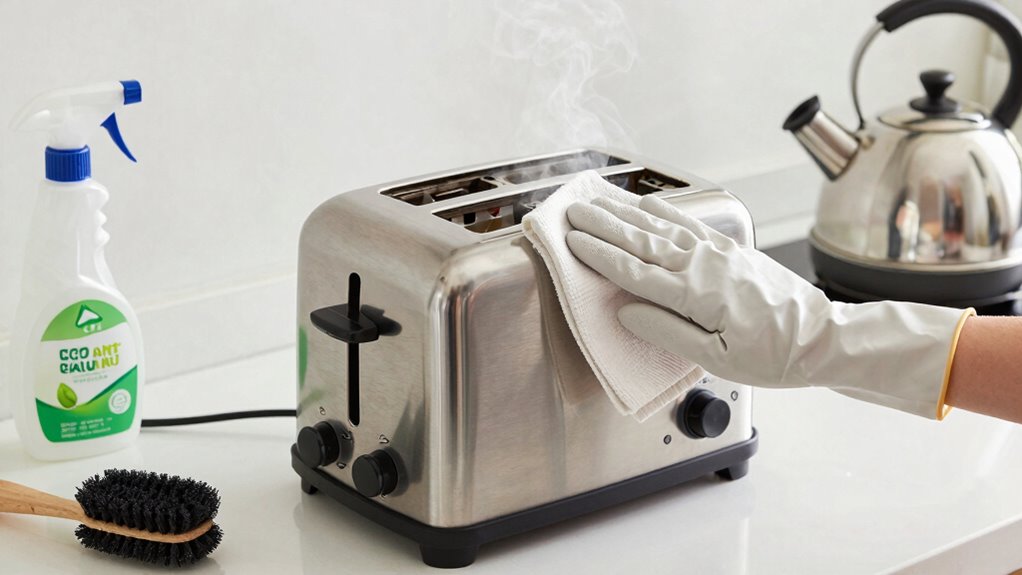
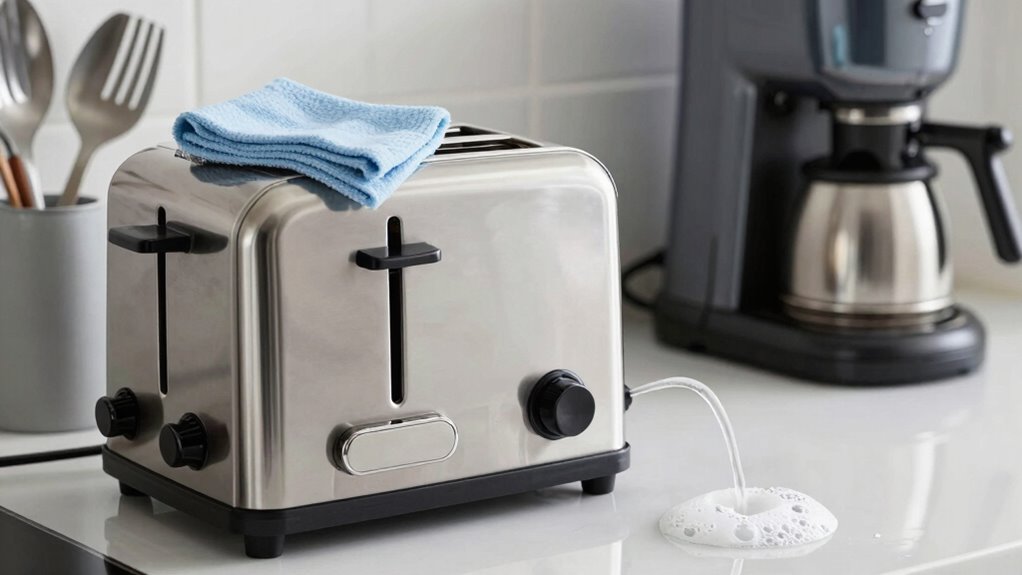
To keep small appliances like toasters and blenders functioning their best, it’s important to clean them regularly to prevent buildup of crumbs, residue, and stains. For toaster maintenance, unplug the appliance, remove the crumb tray, and shake out loose crumbs. Wash the tray with warm, soapy water and dry thoroughly before reinserting. Wipe down the exterior with a damp cloth. When it comes to blender cleaning, disassemble removable parts like the jar and blades. Wash these parts with warm, soapy water or run them through the dishwasher if safe. Wipe the blender base with a damp cloth, avoiding water contact with electrical components. Regular cleaning guarantees your small appliances stay in top shape and perform efficiently.
How to Keep Your Kitchen Appliances Odor-Free and Well-Maintained?

Have you noticed unpleasant odors lingering in your kitchen appliances despite regular cleaning? To keep them fresh and well-maintained, try these odor absorber techniques. First, place baking soda or activated charcoal inside appliances like the fridge or microwave overnight to absorb odors. Second, use natural air freshener options such as lemon slices, cinnamon sticks, or essential oils to brighten the smell. Third, regularly clean seals and vents, since grime traps odors. Combining these methods guarantees your appliances stay odor-free. Additionally, opening windows or running exhaust fans helps circulate fresh air. Consistent maintenance and simple odor absorber techniques make a big difference in preserving your appliances’ cleanliness and freshness, creating a more pleasant kitchen experience.
Frequently Asked Questions
How Often Should I Clean Each Kitchen Appliance?
You should clean your kitchen appliances regularly to maintain proper appliance maintenance and guarantee they work efficiently. For example, clean your refrigerator weekly, microwave monthly, and oven every few months. Creating cleaning schedules helps you stay consistent and prevent buildup. Small tasks like wiping down countertops and cleaning coffee makers weekly also make a difference. Regular cleaning not only prolongs appliance life but also keeps your kitchen hygienic and safe.
Are There Specific Cleaning Products to Avoid?
You should avoid using harsh chemicals and abrasive scrubbers on your kitchen appliances, as they can damage surfaces or leave residues. Instead, opt for gentle, appliance-specific cleaners or natural alternatives like vinegar and baking soda. Always read labels and test in a small area first. Using the wrong products can lead to discoloration, corrosion, or decreased appliance lifespan, so choose cleaning methods carefully to keep your appliances in top shape.
Can I Clean Appliances Without Disassembling Them?
You can definitely clean appliances without full disassembly, making the process smoother and more enjoyable. Focus on surface cleaning using gentle, effective methods like wiping with damp cloths and applying suitable cleaning solutions. For deep cleaning methods, target accessible parts like countertops or removable trays. If appliances have tricky areas, consider minimal appliance disassembly for thorough cleaning. This way, you keep everything fresh without the hassle of complete disassembly.
How Do I Remove Stubborn Stains From Appliances?
To remove stubborn stains from appliances, start with a mixture of baking soda and water or a gentle cleaner suitable for the surface. Apply it directly to the stain and let it sit for 15-20 minutes. Use a soft cloth or sponge to scrub gently. Regular stain removal helps with appliance maintenance, keeping your appliances looking new and functioning efficiently without damaging their surfaces.
What Safety Precautions Should I Take During Cleaning?
You should unplug appliances before cleaning to prevent electrical safety hazards. Wear gloves and guarantee good ventilation to avoid chemical hazards from cleaning products. Keep liquids away from electrical parts, and never use abrasive tools that might damage surfaces or cause sparks. Read labels for safe usage instructions, and store cleaning supplies safely out of children’s reach. Taking these precautions helps ensure your safety while effectively cleaning your appliances.
Conclusion
Keeping your kitchen appliances clean isn’t just about appearance; it’s about prolonging their lifespan and ensuring they work efficiently. With the right supplies and regular care, you can tackle each appliance confidently. Remember, an ounce of prevention is worth a pound of cure—so make cleaning a habit. By doing so, you’ll enjoy a healthier, more pleasant kitchen environment, saving time and money in the long run.