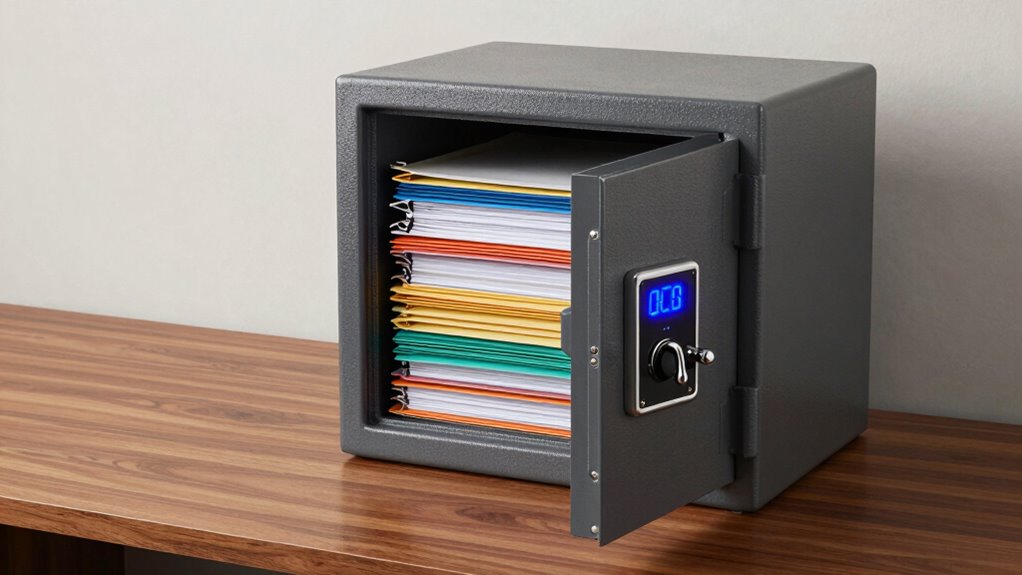

To store important documents safely, start by identifying your most essential papers, like birth certificates and legal files. Use a fireproof safe or secure cabinets for physical copies, and consider digital backups stored securely in the cloud with strong passwords. Organize everything with labels for easy access and establish a plan for emergencies. Regularly review and update your system to stay protected—there’s more to guarantee your documents stay safe over time.

Get home appliances delivered free with Prime
- Fast, free delivery on millions of items
- Prime Video, Amazon Music and more included
- Member-only deals all year
Key Takeaways
- Use a fireproof, waterproof safe in a secure, accessible location to protect physical documents from damage and theft.
- Digitize important documents and store copies securely via encrypted cloud services and external backups.
- Organize documents with clear labels and color coding for quick retrieval during emergencies.
- Limit access with locks, encryption, and secure storage methods to prevent unauthorized viewing or theft.
- Regularly review, update, and test your storage systems and backups to maintain security and accessibility.
As an affiliate, we earn on qualifying purchases.
Assess Which Documents Are Most Important to You
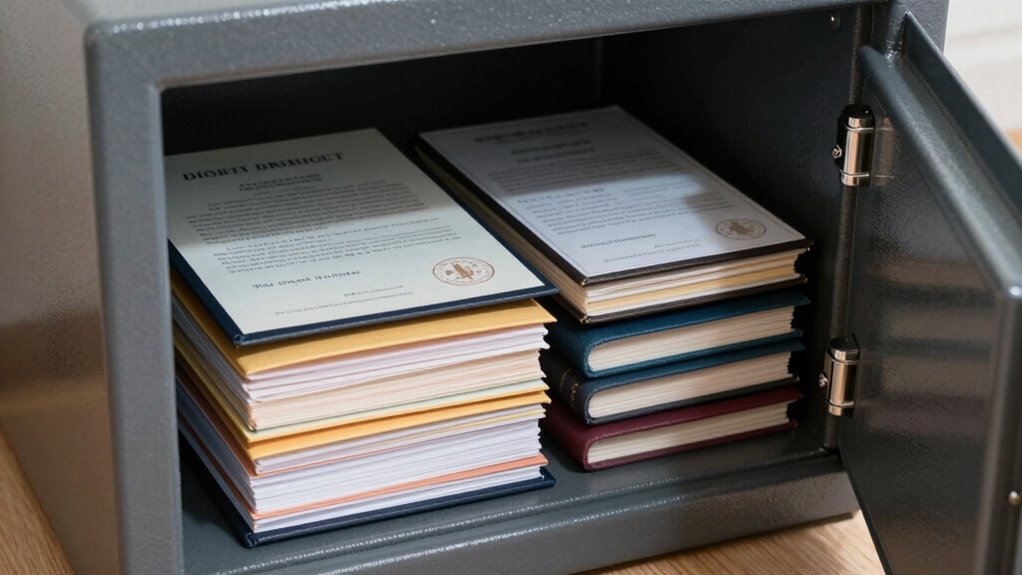
Before you can determine where to store your important documents, you need to identify which ones matter most to you. Using prioritization strategies helps you focus on essential papers, like birth certificates, passports, or wills. Start by categorizing your documents into groups such as personal, financial, or legal. This document categorization makes it easier to see what’s truly crucial and requires quick access. Ask yourself which documents would cause the most trouble if lost or damaged. Keep those at the top of your priority list. By clearly identifying your most important documents, you can develop a storage plan that guarantees their safety and accessibility. Incorporating electronic backup methods can further protect your vital records from physical damage or loss. Implementing digital security measures ensures your sensitive information remains protected from unauthorized access. Recognizing the importance of document organization can streamline the process and make retrieval easier in emergencies. Regularly updating your storage system and inventory management can help you stay on top of your important documents, especially as your circumstances change. Maintaining a regular review system can help you keep your storage strategy aligned with any changes in your personal or legal circumstances. Prioritization strategies make the process efficient and help you allocate resources wisely.
waterproof security safe for documents
As an affiliate, we earn on qualifying purchases.
As an affiliate, we earn on qualifying purchases.
Choose the Best Physical and Digital Storage Solutions
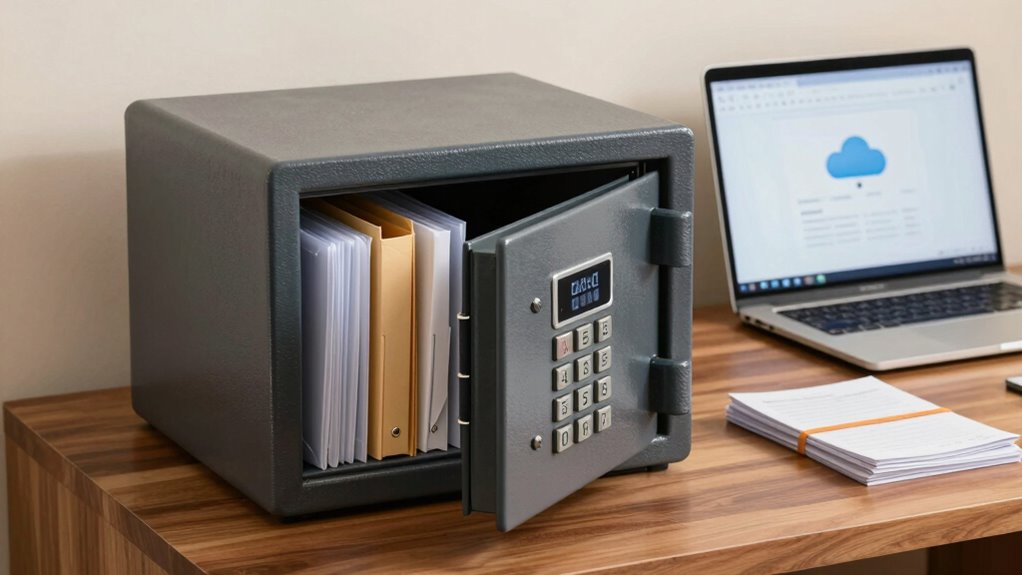
Once you’ve identified which documents are most important, it’s time to select the right storage solutions to keep them safe and accessible. For physical documents, a fireproof safe offers crucial protection against fire, water, and theft. Choose one that’s sturdy and appropriately sized for your needs. For digital storage, prioritize document encryption to secure sensitive files from unauthorized access. Use strong passwords and consider encrypted cloud services or external drives with built-in encryption features. Regularly update security settings and back up your digital files to multiple locations. Incorporating encryption techniques into your digital storage strategies can significantly enhance your data security. Utilizing skincare product trends and understanding the latest formulations can help you choose the most effective options for your needs. Combining a fireproof safe for physical documents with encrypted digital storage ensures thorough protection. Implementing digital security strategies can also help keep your digital files safe from cyber threats. Additionally, understanding data protection best practices can further strengthen your overall document security. This dual approach helps safeguard your most important documents against physical damage and cyber threats, giving you peace of mind.
As an affiliate, we earn on qualifying purchases.
Set Up a Safe and Accessible Storage Space at Home
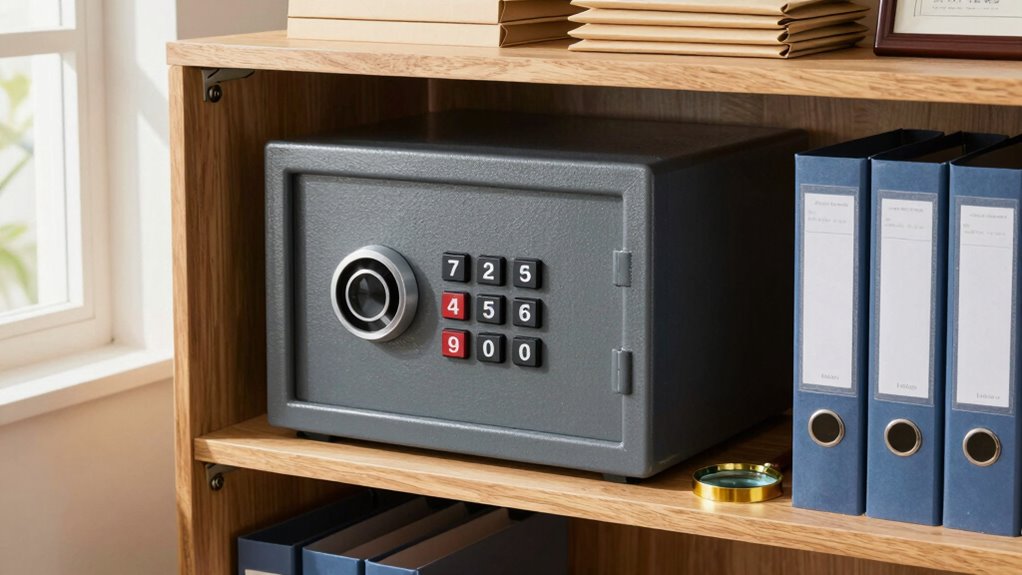
To keep your important documents safe and easy to find, start by choosing a secure location in your home. Use labels to organize your files clearly, so you know exactly where everything is. Make sure the storage space is accessible when you need it, without compromising security. Consider adding a vetted storage solution that offers reliable protection and peace of mind. Additionally, ensure your storage area is properly ventilated to prevent damage from moisture or temperature fluctuations. Proper ventilation can also help maintain a stable environment, similar to how Eco-Friendly Natural Pools promote biodiversity and reduce chemical usage, ensuring your documents stay in good condition over time.
Choose a Secure Location
Have you considered where your most important documents would be safest and easiest to access in an emergency? Choosing the right location is vital. A hidden safe or fireproof cabinet offers added protection. Place it somewhere discreet yet accessible, like a closet or behind a false wall. Avoid obvious spots like the garage or basement, which are vulnerable to floods or fires. Here’s a quick visualization:
| Location Type | Security Level | Accessibility |
|---|---|---|
| Hidden safe | High | Moderate |
| Fireproof cabinet | Moderate to high | Easy |
| Bedroom closet | Moderate | Easy |
| Attic or crawl space | Low to moderate | Less accessible |
Pick a spot that balances security and convenience, ensuring your documents stay safe yet reachable when needed.
Organize With Labels
Organizing your important documents with clear labels guarantees you can find what you need quickly and avoid clutter. Start by customizing labels to categorize your documents effectively—use labels like “Tax Records,” “Insurance,” or “Birth Certificates” for easy identification. When selecting storage containers, choose ones that are durable, weatherproof, and appropriately sized to hold your documents without cramming. Label each container clearly to match its contents, which makes retrieval straightforward and prevents misplacement. Consider using color-coded labels for different categories to enhance visual organization. Consistent label customization helps you maintain an orderly system, saving time and reducing stress when searching for specific documents. Proper storage container selection combined with effective labeling assures your important papers stay protected and easy to access. Understanding dream symbolism related to time and life mysteries can also inspire a mindful approach to organizing your personal space.
Ensure Easy Accessibility
Creating a storage space that’s both safe and easy to access guarantees you can quickly retrieve important documents when needed. To achieve this, choose a designated spot at home that’s organized and secure. Use access control methods, like locks or secure cabinets, to restrict unauthorized entry. Incorporate document encryption for digital files, ensuring that even if someone gains access, the information remains protected. Label folders clearly and keep frequently used documents within arm’s reach. Regularly review and update your storage setup to maintain accessibility. Additionally, understanding storage organization can help optimize your setup for better efficiency and security. Incorporating security measures such as surveillance or alarm systems can further safeguard your important documents from theft or damage. Implementing a comprehensive storage plan can also help ensure all types of documents are properly stored and easy to find when needed. Developing a document management system can streamline your process and improve overall security. By combining physical security measures with encryption and proper access control, you’ll create a system that’s both convenient and secure, and staying informed about privacy policies can help you understand how to better protect your digital documents.
external hard drive with encryption
As an affiliate, we earn on qualifying purchases.
As an affiliate, we earn on qualifying purchases.
Digitize and Back Up Your Important Files Securely
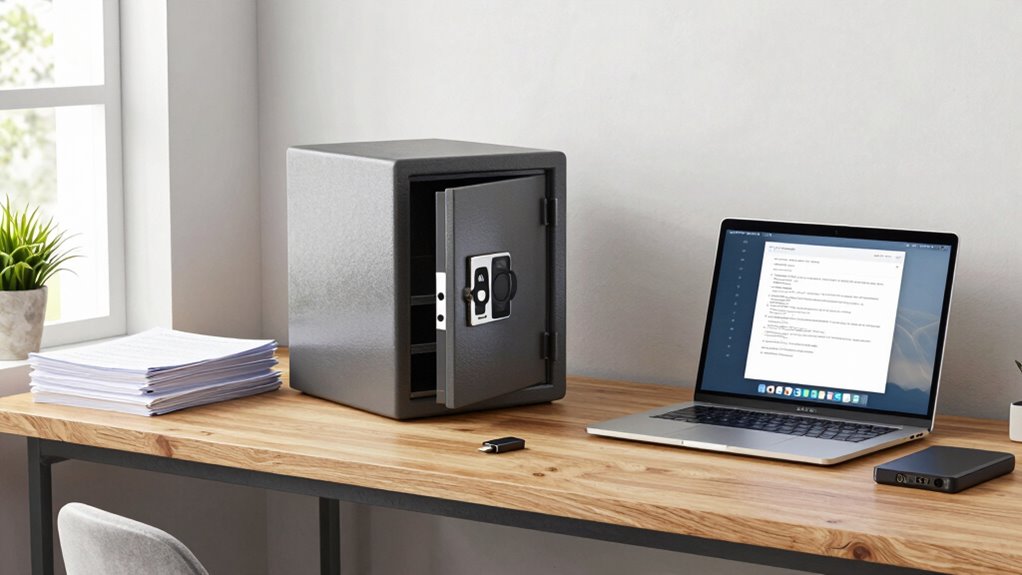
Digitizing your important documents is a smart way to guarantee they’re protected from physical damage or loss. Once scanned, store digital copies securely by using cloud encryption, which safeguards your files from unauthorized access. Also, implement data redundancy by backing up files in multiple locations, such as external drives and trusted cloud services. This approach helps maintain transaction security and ensures that if one backup fails, others remain intact. Regularly update your backups to include new or modified documents, keeping your digital archive current. Avoid relying on a single storage method, as it increases vulnerability. Additionally, understanding regional security practices can help you adopt more effective storage strategies. For example, considering the geographical risks and local infrastructure can inform better safety measures. Incorporating privacy policies and understanding how your data is handled can further enhance your document security. Being aware of compliance requirements related to data protection can also help you align your storage practices with legal standards. By taking these steps, you create a resilient system that preserves your important files against theft, damage, or technical issues, giving you peace of mind that your documents are safe and accessible whenever you need them.
Create Clear Access and Sharing Protocols
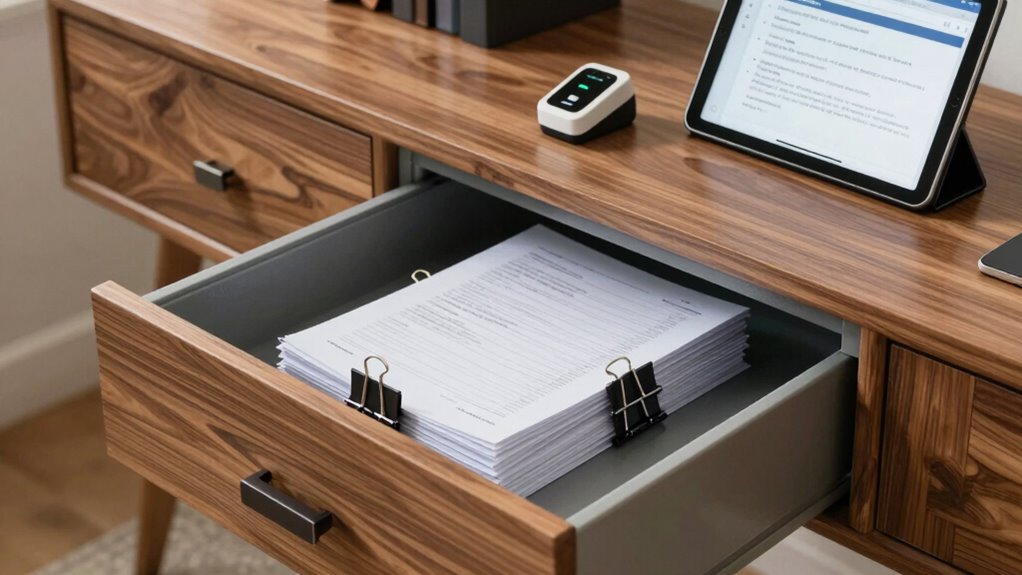
To safeguard your important documents remain secure and accessible only to authorized individuals, establishing clear access and sharing protocols is essential. You should implement effective access control and define sharing permissions carefully.
Protect your important documents by establishing clear access controls and sharing protocols for maximum security.
- Determine who needs access and assign roles accordingly.
- Use strong passwords and multi-factor authentication for digital files.
- Limit sharing permissions to only what’s necessary, avoiding broad access.
- Regularly review access rights to ensure they stay appropriate.
Review and Update Your Storage System Regularly
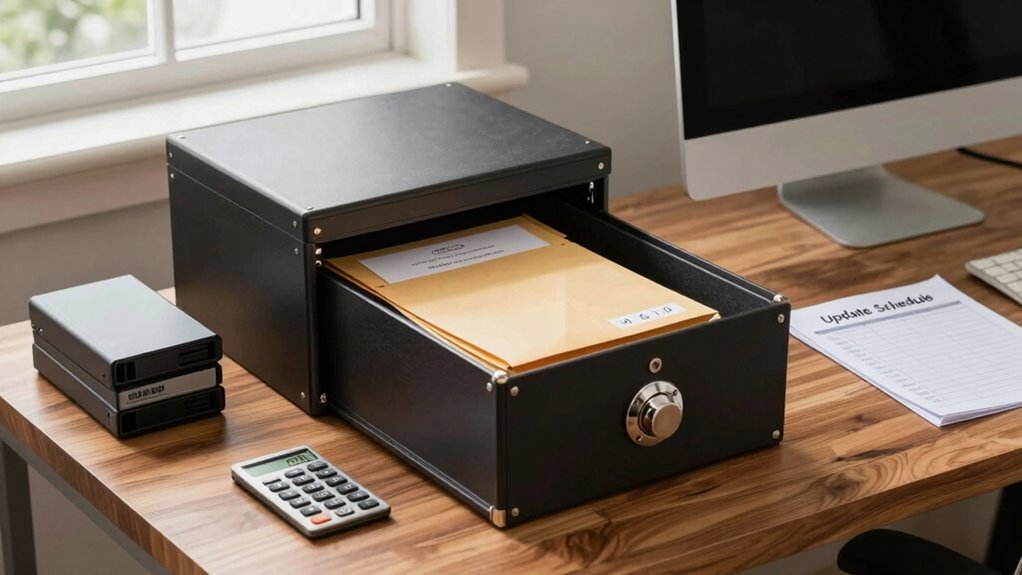
Regularly reviewing and updating your storage system guarantees your important documents remain organized, secure, and easy to access when needed. Over time, digital files may become outdated, or security measures like document encryption might need strengthening. Regular storage maintenance helps identify outdated or duplicated files, ensuring your system stays efficient. Consider updating your encryption protocols to keep sensitive information protected. Use the table below to remind yourself of key areas to review:
| Area | Action | Frequency |
|---|---|---|
| Document encryption | Update passwords and encryption methods | Quarterly |
| Organization | Reassess folder structure | Biannual |
| Backup procedures | Test backups and restore process | Monthly |
| Physical storage | Check for damage or deterioration | Annually |
Consistent review keeps your system secure and functioning smoothly.
Plan for Emergency and Disaster Preparedness
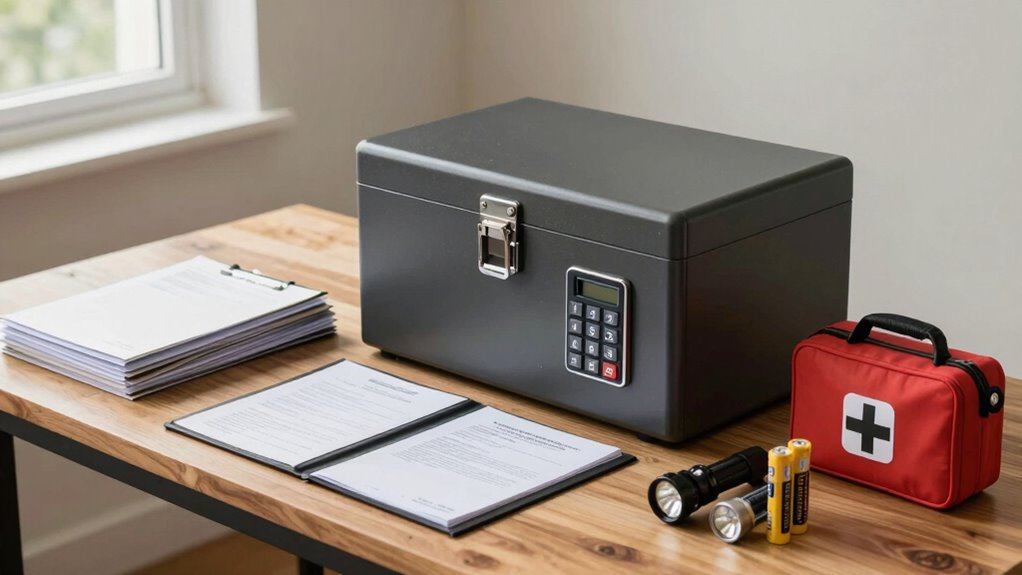
To prepare for emergencies, you should assemble an emergency kit with essential documents and supplies. Storing digital copies guarantees you can access important information even if physical copies are lost or damaged. Developing a family plan helps everyone know what to do and where to go during a disaster.
Create Emergency Kit
Creating an emergency kit is a crucial step in guaranteeing you’re prepared for unexpected disasters. Your kit should include essential emergency supplies to keep you safe and comfortable. First, assemble enough non-perishable food and water for at least three days. Second, pack a first aid kit with bandages, antiseptics, and any necessary medications. Third, include a flashlight with extra batteries to navigate in the dark. Fourth, add basic personal hygiene items like soap and wipes to stay clean. These supplies help you manage immediate needs and stay resilient during crises. Regularly check and update your kit to confirm everything remains functional. An organized emergency kit provides peace of mind, knowing you’re ready to face emergencies efficiently.
Store Digital Copies
Storing digital copies of important documents is a smart way to safeguard your essential information in case physical copies are lost or damaged. Use cloud storage services with strong cloud security to keep your files protected from unauthorized access. Guarantee your cloud provider employs robust encryption methods both during data transfer and at rest, adding an extra layer of security. Regularly update your passwords and enable two-factor authentication for added protection. Organize your digital files clearly so you can access them quickly during an emergency. Remember to back up your digital copies frequently to prevent data loss from technical issues. By choosing secure cloud solutions and employing effective encryption methods, you can confidently store your important documents, knowing they are protected from disaster.
Develop Family Plan
Have you ever thought about what your family would do if disaster struck unexpectedly? Developing a family plan is essential for effective emergency preparedness. Start by establishing clear family communication strategies, like designated contacts or meeting spots. Next, create a list of emergency supplies everyone can access. Then, review and practice your plan regularly to ensure everyone knows their role. Finally, keep important documents, such as IDs and insurance papers, in a secure, easily accessible location. Make sure each family member understands the plan and knows how to reach each other. A well-developed family plan reduces confusion and panic during emergencies, helping everyone stay safe and organized when it matters most.
Frequently Asked Questions
How Often Should I Review My Stored Documents for Relevance?
You should review your stored documents annually to guarantee they remain relevant and organized. Regularly updating your document organization helps you identify outdated or unnecessary files, simplifying storage frequency. Set a reminder each year to go through your files, discard what’s no longer needed, and add any new important documents. This routine keeps your storage system efficient and ensures you always have access to current, essential information when you need it most.
What Are the Best Encryption Methods for Digital Document Security?
Think of encryption algorithms as the vaults guarding your treasures. To keep your digital documents safe, use strong encryption algorithms like AES-256, which is like a fortress for your data. Pair it with robust password protection, creating a double lock system that only you can open. Always keep your passwords complex and unique, and consider multi-factor authentication for added security. This way, your important documents stay locked tight.
How Can I Ensure My Documents Remain Protected During Power Outages?
To keep your documents protected during power outages, you should implement backup strategies that include cloud storage. Cloud services automatically sync your files, ensuring they’re safe even if your local systems go down. Additionally, maintain offline backups on external drives powered by a reliable battery backup or uninterruptible power supply (UPS). This way, you can access your important documents anytime, regardless of power disruptions, and prevent data loss.
Are There Specific Legal Requirements for Document Storage in My Region?
Think of your documents as treasures that need guarding. You should check if there are specific legal requirements for document storage in your region, as legal compliance and regional regulations vary. Some areas mandate secure, fireproof safes, while others have electronic storage rules. Always stay informed about local laws to confirm your documents are protected legally and securely, avoiding unnecessary risks and penalties.
How Can I Securely Share Sensitive Documents With Family or Professionals?
To securely share sensitive documents with family or professionals, use encrypted sharing platforms that prioritize privacy. Opt for secure transfer methods like password-protected files or secure file-sharing services that offer end-to-end encryption. Always verify the recipient’s identity before sending, and avoid sharing sensitive information through unprotected emails or unsecured channels. This way, you protect your documents from unauthorized access while ensuring they reach the right person safely.
Conclusion
Think of your important documents as the keys to your castle—guard them wisely. By choosing the right storage, setting up a secure system, and regularly reviewing it, you’re building a fortress that’s both resilient and accessible. Just like a skilled gardener tending to delicate blooms, nurture your system with care. With these steps, your essential papers remain safe and ready, no matter what storms may come, ensuring your peace of mind endures as timeless as a well-kept treasure.
Cold & flu season Picks
humidifiers
As an affiliate, we earn on qualifying purchases.