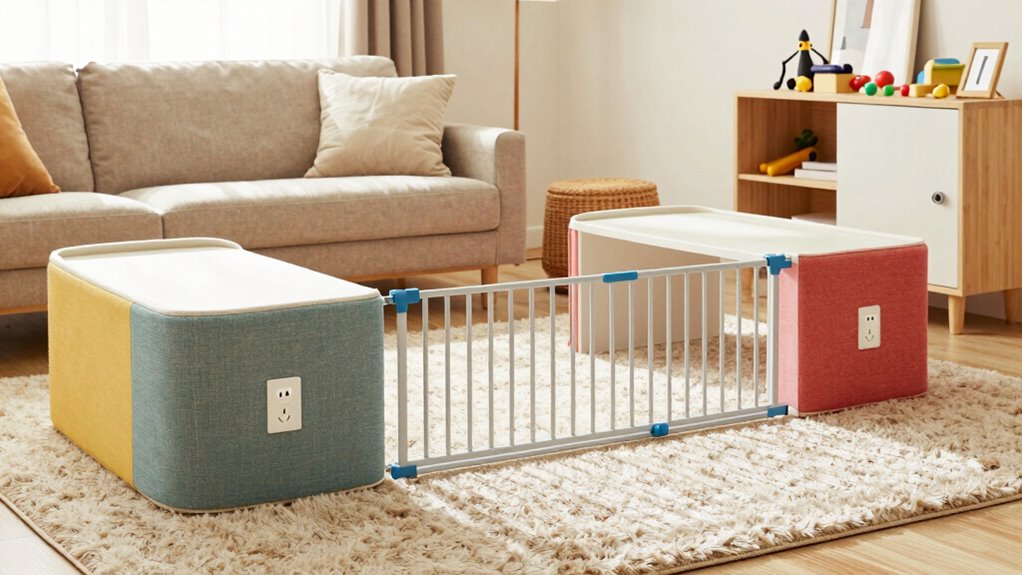

To childproof your living room properly, start by evaluating hazards like sharp furniture edges, unsecured heavy furniture, and small objects that could cause choking. Cover electrical outlets, conceal cords, and secure cords along walls to prevent tripping or pulling. Use safety gates, anchor furniture, and remove fragile or dangerous items out of children’s reach. Keep the space tidy and well-lit to spot hazards easily. Staying proactive with safety measures will help you create a secure environment—exploring these tips further will guide you step by step.
Key Takeaways
- Secure heavy furniture and mount or anchor it to walls to prevent tipping accidents.
- Cover electrical outlets with safety plugs and conceal cords to reduce electrical hazards.
- Remove small objects and choking hazards, and store fragile or hazardous items out of children’s reach.
- Add corner protectors and use furniture with rounded edges to prevent injuries.
- Create designated safe zones and use safety gates to restrict access to potentially dangerous areas.

Safety 1st Electrical Outlet Baby Proof Covers, Secure Outlet Plugs, Baby Proofing, 36 Count
CHILD PROOF YOUR HOME: Keep sharp objects and curious fingers from electrical outlets with Safety 1st's baby-proofing outlet…
As an affiliate, we earn on qualifying purchases.
As an affiliate, we earn on qualifying purchases.
Assess Your Living Room for Childproofing: A Safety Checklist
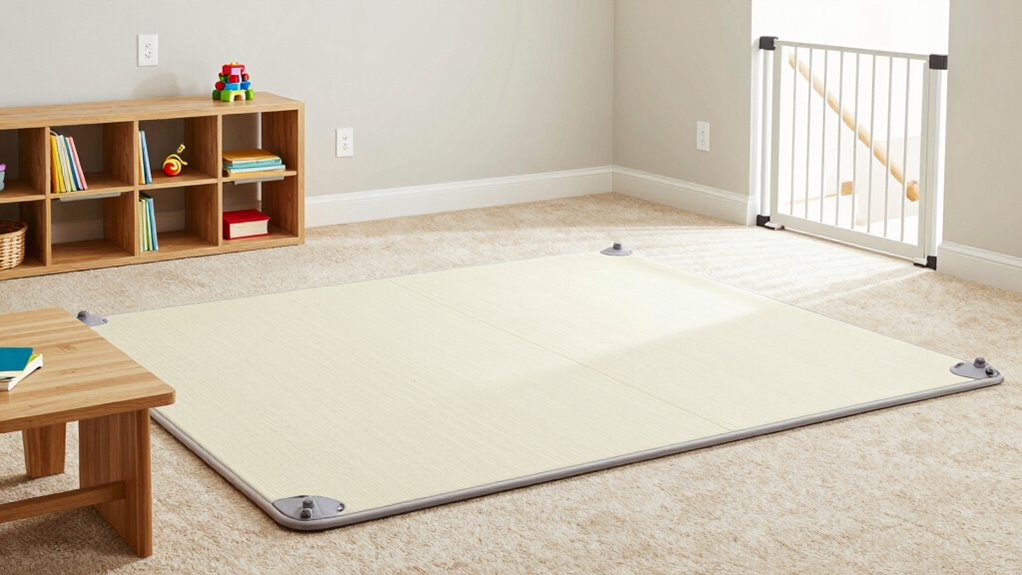
Before you begin childproofing your living room, conducting a thorough assessment of the space is essential. Start by examining decorative accessories like vases, picture frames, and small ornaments, which could be tempting for your child to grab or knock over. Make certain these items are out of reach or securely mounted. Next, check all electrical outlets. Cover unused outlets with safety plugs or outlet covers to prevent accidental shocks. Look for cords from lamps, electronics, or chargers that could pose tripping hazards or tempt your child to pull them down. Evaluate furniture edges for sharp corners and consider adding corner protectors. This initial assessment helps you identify immediate risks and creates a safer environment, making it easier to implement effective childproofing measures. Understanding vetted products and how they are tested for safety can help you select the most reliable childproofing tools that meet the highest standards. Incorporating child safety standards into your planning ensures you’re choosing the most effective solutions for your home. Additionally, being aware of sauna safety tips and potential hazards can remind you to keep hazardous areas or items out of your child’s reach. You may also want to consider the importance of essential oils in your home, ensuring they are stored securely away from children to prevent accidental ingestion or misuse.

Baby Proofing Corner Protectors Guards – Furniture Edge Protector for Babies & Kids – Safety Guards & Cushions for Table, Desk, Crib, Fireplace, Corners & Edges | Clear, Safe | 12 Bumpers Pack
𝐎𝐕𝐄𝐑 𝟏𝟕,𝟎𝟎𝟎 𝟓-𝐒𝐓𝐀𝐑 𝐑𝐄𝐕𝐈𝐄𝐖𝐒: Babyproofing is easier with Amazon’s most successful corner protectors, loved for their combination of…
As an affiliate, we earn on qualifying purchases.
As an affiliate, we earn on qualifying purchases.
Identify Common Living Room Hazards and How to Fix Them
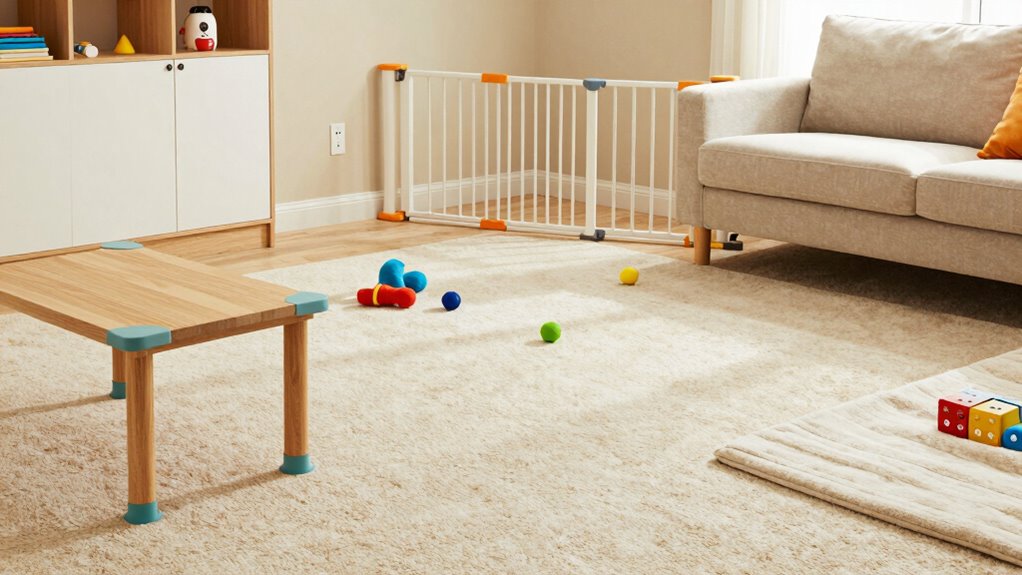
Many common living room hazards can pose risks to your child if left unaddressed. Electrical outlets are a major concern; they can be easily accessed and pose a risk of electric shock. To fix this, install outlet covers or safety plugs to prevent curious kids from inserting objects. Sharp edges on tables, shelves, or furniture can cause injuries if your child falls or bumps into them. Use corner protectors or padding to cover these hazards. Additionally, secure heavy furniture to the wall to prevent tipping. Keep cords from blinds, electronics, or lamps out of reach to avoid strangulation risks. Regularly inspect the room for loose items or small objects that could be choking hazards. Being aware of safety hazards in the living room can help you identify potential risks early and take preventative actions. Incorporating childproofing techniques from trusted resources can further enhance your efforts. Ensuring that all household products are safe and properly stored is also a crucial aspect of home safety for children. To stay ahead of potential dangers, consider consulting Lifevest Advisors for additional safety strategies and tips.

Regalo Safety 192" Super Wide Baby Gate & Play Yard, 2-in-1 Convertible Extra Wide Safety Barrier, Hardware Mounted for Toddlers & Pets, Tested & Safe for 30 Years, American Designed & Owned, Black
SUPER WIDE BABY GATE FOR LARGE OPENINGS: Expands to fit openings up to 192 inches wide and stands…
As an affiliate, we earn on qualifying purchases.
As an affiliate, we earn on qualifying purchases.
Must-Have Childproofing Devices for a Safe Living Room
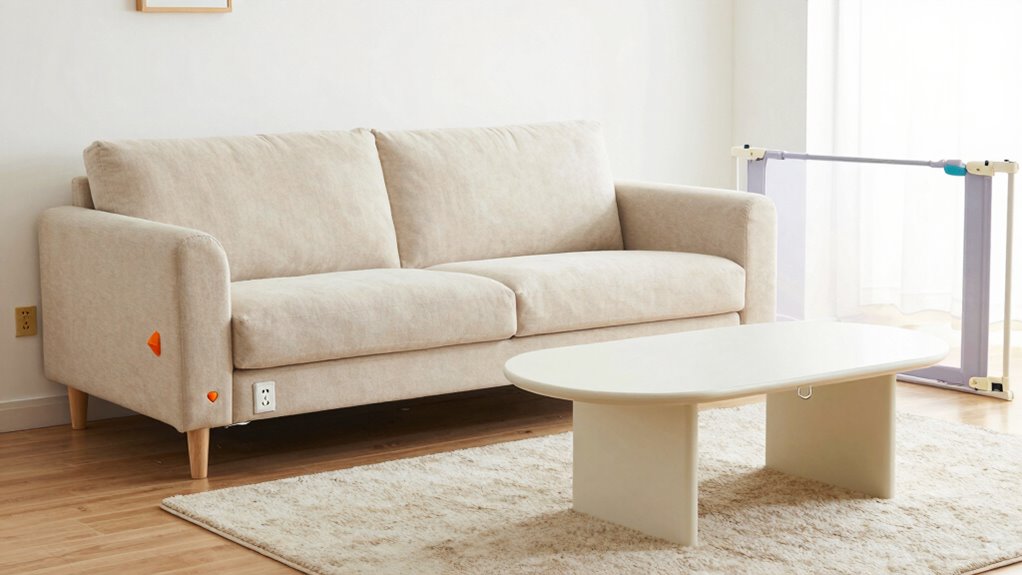
To effectively childproof your living room, investing in essential safety devices is crucial. Childproofing gadgets and safety accessories help prevent accidents and keep your little one safe. Outlet covers are a must-have to stop curious fingers from exploring electrical sockets. Corner protectors shield sharp furniture edges, reducing injury risks. Cabinet locks keep dangerous items out of reach, while door stoppers prevent pinched fingers. Anti-tip straps secure heavy furniture, avoiding tip-overs. Door and drawer locks stop unwanted access to potentially hazardous spaces. Safety gates can be necessary at entry points, especially near stairs. These gadgets are easy to install and provide peace of mind, creating a safer environment for your child to explore freely while minimizing hazards. Incorporating childproofing strategies that blend with your existing decor can also make the space more inviting and less cluttered. Additionally, integrating safety accessories like hidden outlet covers and furniture anchors can further enhance protection without disrupting your home’s style. Understanding home safety principles can guide you in choosing the most effective childproofing measures for your living room. For example, selecting a variety of childproofing devices tailored to your specific furniture and layout can optimize the safety of your space. To ensure comprehensive protection, researching latest safety innovations can also introduce you to new tools designed specifically for modern homes.

Ougourim Furniture Anchors (10 Packs) Anti Tip Furniture Anchors for Baby Proofing, Furniture Wall Anchor Earthquake Straps for Furniture Dresser Wall Safety Anchor Furniture Fasteners to Wall, White
Baby Safety Guard: Let your little one explore and climb to their heart's content! Baby proof furniture anchors…
As an affiliate, we earn on qualifying purchases.
As an affiliate, we earn on qualifying purchases.
Smart Furniture Arrangements to Protect Your Kids
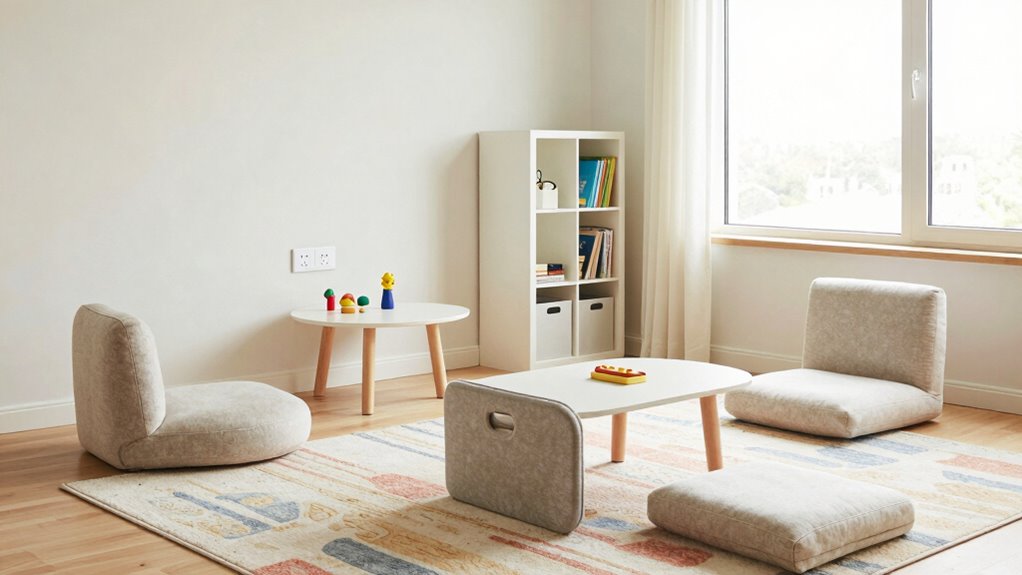
Arranging your furniture thoughtfully can considerably reduce hazards in your living room. Start by placing heavy furniture, like sofas and bookshelves, against the wall to prevent tipping if pulled. Keep pathways clear of clutter to avoid tripping. Use furniture placement to create safe zones, especially around electrical outlets and cords. Opt for low-profile, rounded furniture to minimize injury risk if your child falls. Decorative elements should be secured or kept out of reach, as they can be tempting to pull or knock over. Avoid sharp-edged tables or furniture with protruding hardware. Incorporating child-safe design principles can further enhance the overall safety of your living room. Additionally, choosing furniture with rounded edges can significantly decrease the severity of injuries if falls occur. Proper furniture arrangement also helps in reducing noise levels, making the space more peaceful and child-friendly. To further ensure safety, select child-friendly furniture that adheres to safety standards and is designed with kid-proof features. Using furniture with robust construction can also prevent accidental breakage or collapse, adding an extra layer of safety.
How to Keep Your Living Room Safe as Your Child Grows
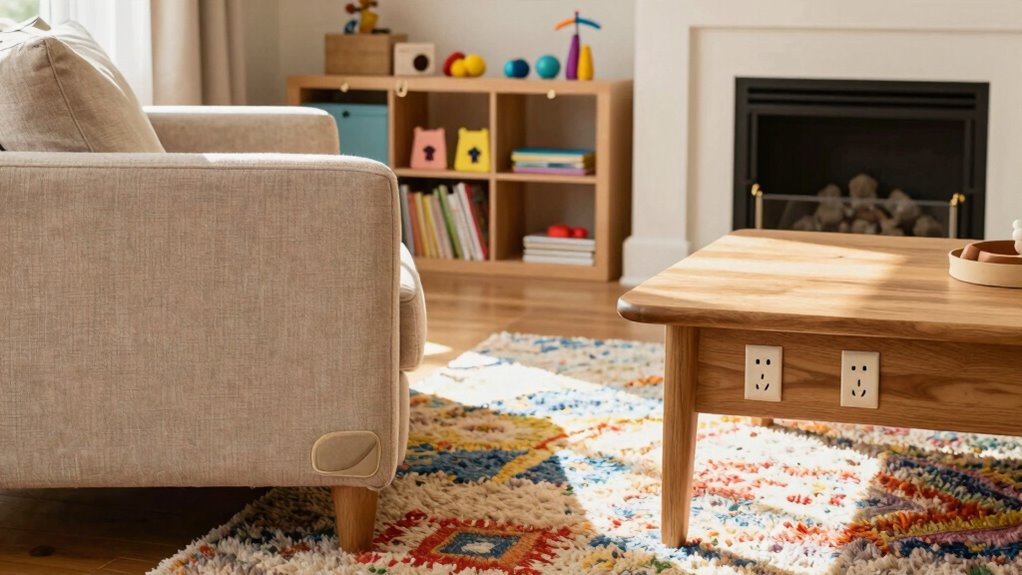
As your child starts to grow and explore more independently, it’s essential to adapt your living room to keep them safe. Consider a playroom transformation by designating a specific area for play, which helps contain messes and minimizes hazards. As your child becomes more mobile, safety gate options become vital. Choose sturdy, easy-to-use safety gates to block off stairs or dangerous zones, ensuring they can’t access areas with sharp edges or fragile items. Regularly assess your furniture and décor, securing heavy pieces that could tip and removing small objects to prevent choking. Utilize smart home gear like motion sensors or cameras to monitor for potential hazards and respond promptly. Incorporate regional safety standards to ensure your childproofing measures meet current guidelines and best practices. To stay ahead of your child’s evolving abilities, regularly update your safety measures based on their developmental milestones and child safety research. Staying informed about safety regulations can help you adapt your measures effectively as new guidelines emerge. Adjust your childproofing measures as they develop new skills, maintaining a safe environment that encourages exploration without compromising safety. For added security, ensure all projector cabling is properly managed and out of reach to prevent accidental pulling or tripping hazards.
Frequently Asked Questions
How Often Should I Re-Evaluate My Living Room’s Safety Measures?
You should re-evaluate your home safety and risk assessment every few months or whenever there’s a change in your living environment. Kids grow quickly, and new hazards can appear unexpectedly. Regularly inspecting your living room helps you identify potential dangers and keep your child safe. Stay vigilant, especially after renovations or when new furniture is added. Consistent checks guarantee your safety measures remain effective as your child develops.
Are There Specific Childproofing Products for Pets in the Living Room?
Yes, there are specific childproofing products for pets in your living room. You can use pet-safe barriers to keep your furry friends away from hazards or fragile items. Opt for non-toxic cleaning products to guarantee safety if pets lick or sniff surfaces. These barriers and cleaning choices help create a secure environment, preventing accidents and ensuring both your child and pets stay safe while enjoying the living room.
How Can I Childproof a Rented or Temporary Living Space Effectively?
You can childproof a rented or temporary living space by anchoring furniture to the walls, preventing tipping accidents. Use outlet covers to block electrical sockets and avoid shocks. Keep small objects out of reach and secure cords to prevent tripping. Regularly inspect the space for hazards and reposition furniture if needed. These simple steps guarantee a safer environment without causing damage to your temporary home.
What Are Budget-Friendly Ways to Enhance Living Room Safety?
To boost your living room safety on a budget, start by securing furniture with affordable furniture anchors, preventing tipping accidents. Install outlet covers to keep curious kids from inserting objects into electrical sockets. Use couch cushions or corner protectors to soften sharp edges. Keep small items out of reach, and regularly check for hazards. These simple, cost-effective steps create a safer space for your little one without breaking the bank.
How Do I Keep My Child Entertained Safely During Childproofing Adjustments?
Think of your living room as a safe harbor, where your child’s curiosity sails freely. Keep them entertained by organizing toys in accessible bins, creating a dedicated play area with soft mats and colorful rugs. This setup acts like a magnetic island, drawing their attention and keeping them engaged. As you make adjustments, rotate toys regularly to keep their interest alive, ensuring safety and fun sail smoothly together.
Conclusion
By taking these steps, you turn your living room into a cozy fortress where your little explorer can giggle and grow safely. Imagine plush cushions and sturdy furniture, all arranged like a gentle hug, shielding your child from surprises. With a few simple adjustments, your space becomes a welcoming haven—bright, secure, and full of wonder. Now, you can breathe easy, knowing your home is a playground of safety and love.