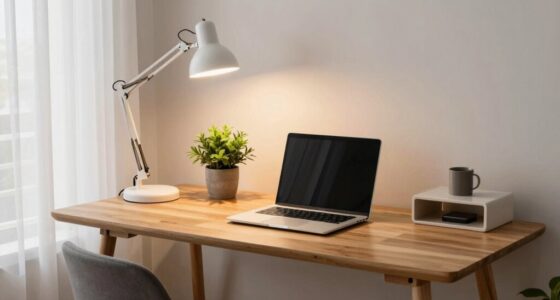
Choosing the right office lighting color temperature can boost your mood and productivity. Warm tones (2700K-3000K) create a cozy, relaxing environment but may reduce alertness, while cooler tones (5000K-6500K) mimic daylight, helping you stay focused and energized. Using adjustable LED fixtures allows you to fine-tune your lighting for different tasks and comfort. Keep in mind that combining layers of light and avoiding glare are key—continue exploring to learn how to optimize your workspace lighting.
Key Takeaways
- Choose warmer lighting (2700K-3000K) for a cozy, relaxing environment; cooler lighting (5000K-6500K) enhances focus and alertness.
- Use adjustable LED fixtures to fine-tune color temperature based on tasks and time of day.
- Incorporate layered lighting—ambient, task, and accent—to ensure even illumination and reduce glare.
- Avoid mixing warm and cool tones within the same space to maintain visual consistency.
- Regularly monitor and adjust lighting to prevent eye strain, shadows, and fatigue for optimal well-being.

Airlonv LED Desk Lamp for Office Home, Eye-Caring Desk Light with Stepless Dimming Adjustable Flexible Gooseneck, 10W USB Adapter Desk Lamp with Clamp for Reading, Study, Workbench (Black)
Stepless Dimming Mode: The desk light offers effortless switching of color temperatures (2700K-6500K) and stepless dimming (1% -…
As an affiliate, we earn on qualifying purchases.
As an affiliate, we earn on qualifying purchases.
What Is Office Lighting Color Temperature and Why Does It Matter?
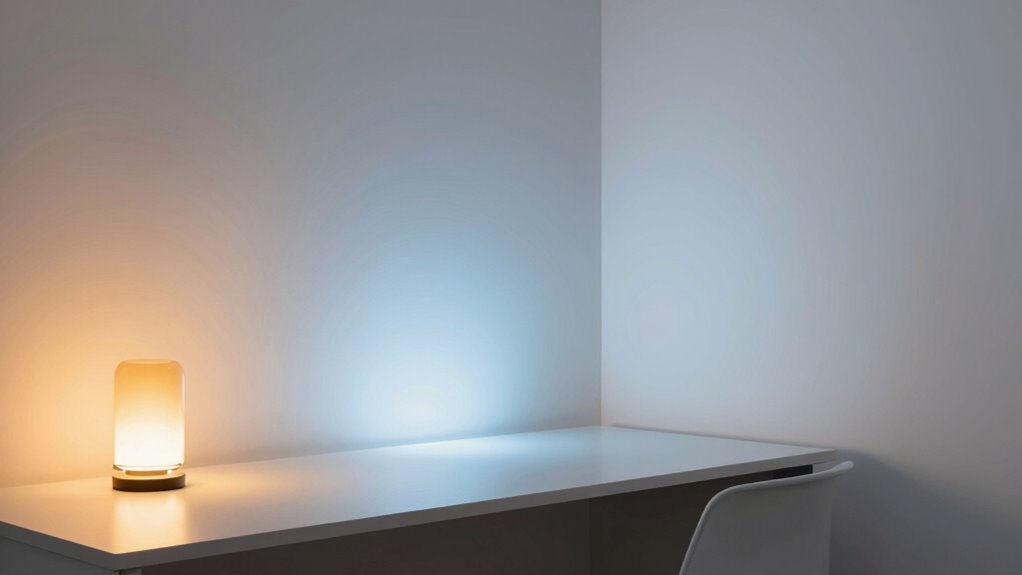
Have you ever wondered how the color of your office lighting affects your productivity and mood? Office lighting color temperature is the measure of the light’s warmth or coolness, typically expressed in Kelvin. It influences how you feel and work in your space. Decorative lighting isn’t just about style; it also impacts the overall ambiance, making your environment more inviting or focused. Choosing the right color temperature can enhance concentration or relaxation, depending on your needs. Additionally, selecting energy-efficient lighting options helps reduce power consumption and lowers costs. Understanding these factors allows you to create a beneficial workspace that boosts efficiency while maintaining a pleasant atmosphere. Proper lighting choices are essential for maintaining comfort and productivity throughout your workday. For instance, natural light integration can significantly improve your workspace environment. Moreover, being aware of lighting regulations and standards can help ensure your lighting setup complies with safety and energy efficiency guidelines. Recognizing the importance of lighting quality can further optimize your workspace for health and performance.

Zi-ZOHNSON 6 Pack Dimmable 4FT Led Shop Lights,30W T8 Integrated LED Light,3000-6500K Tunable with Switches 6CCT 6Watts,4500LM Frosted Cover,Linkable, Plug-in Shop Lights for Workshop,Garage,Basement
Triac Dimming Compatible – Designed to work with Triac (phase-cut) dimmers, these dimmable 4ft LED shop lights provide…
As an affiliate, we earn on qualifying purchases.
As an affiliate, we earn on qualifying purchases.
How Do Different Office Light Temperatures Affect Your Mood and Productivity?
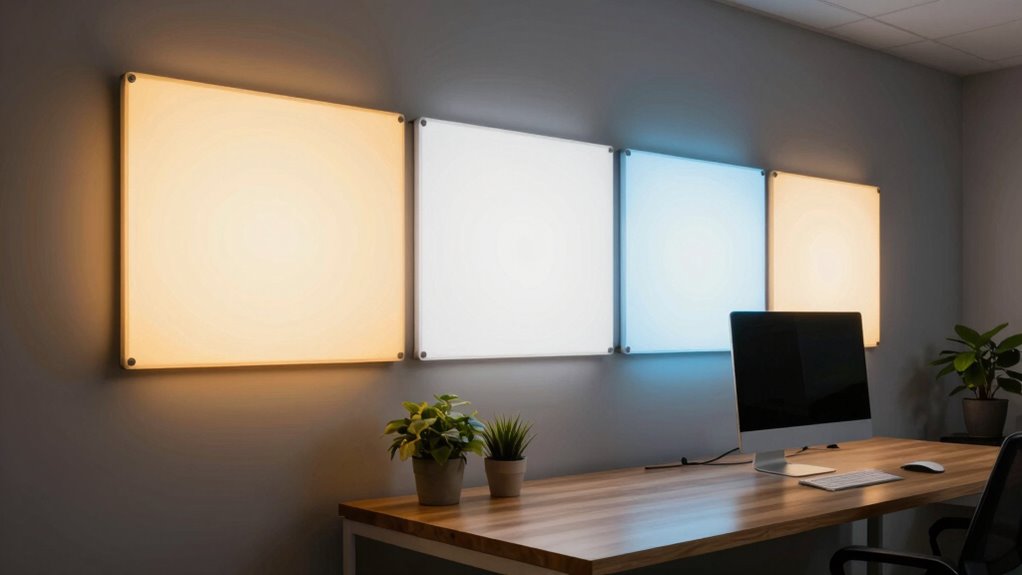
Different office light temperatures can markedly influence how you feel and perform throughout the day. Warm lighting (around 2700K-3000K) creates a cozy atmosphere, boosting relaxation but potentially lowering alertness. Cooler temperatures (5000K-6500K) mimic daylight, helping you stay focused and energized. Here’s how different temperatures impact you:
- Warm light can encourage comfort but may cause drowsiness, especially in decorative lighting setups. Color temperature plays a key role in shaping the ambiance and functionality of your workspace.
- Cool white light enhances concentration, ideal for productivity. Understanding the photobiological effects of different light temperatures can further optimize workplace well-being.
- Bright, bluish light can improve alertness but might contribute to eye strain. Being aware of light exposure during work hours can help manage potential health impacts.
- In winter months or low-light environments, cooler lighting may help combat Seasonal Affective Disorder, lifting your mood.
- Proper lighting setup is essential for maintaining optimal mood and productivity levels in an office setting. Additionally, awareness of the lighting temperature options available can help you tailor your environment effectively.

2 Packs Video Conference Lights for Zoom Meeting, LitONES Podcast Lighting Kit for Working from Home Office, Desktop Video Light with Stand and Phone Holder CRI 97.8
【ZOOM LIGHTTING FOR COMPUTER】LitONES Video conference light with side-emitting technology makes the light glare-free, soft, natural and real,…
As an affiliate, we earn on qualifying purchases.
As an affiliate, we earn on qualifying purchases.
How to Choose the Best Lighting Color Temperature for Your Office Tasks
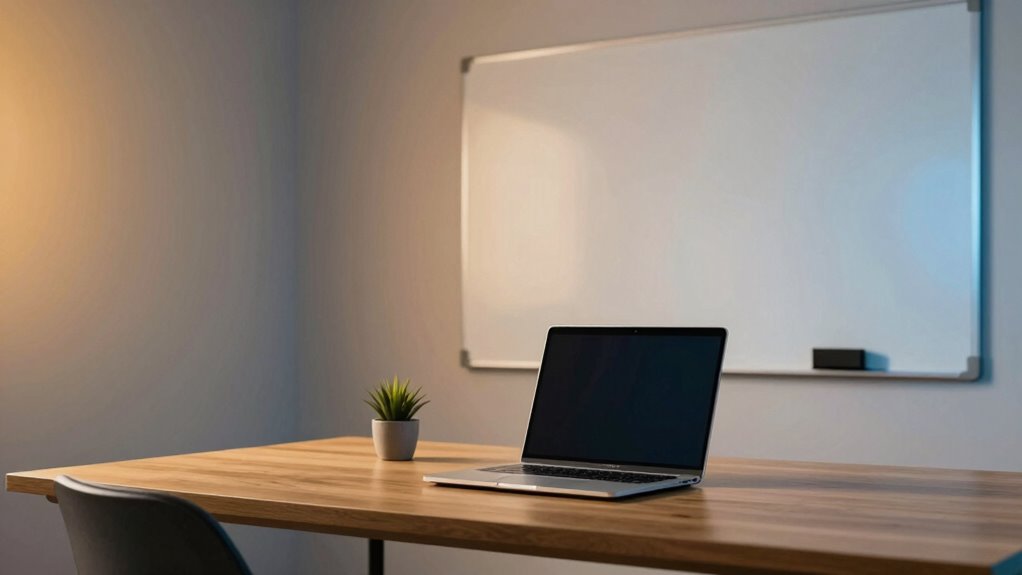
Choosing the right lighting color temperature for your office tasks depends on what you need to accomplish and your personal preferences. Current color temperature trends favor versatile options that support focus and reduce eye strain, typically between 3500K and 5000K. For detailed work or tasks requiring high accuracy, cooler temperatures like 5000K or higher mimic daylight, enhancing alertness. If you prefer a warmer ambiance for comfort, 2700K to 3500K can create a cozy environment. LED lighting options offer great flexibility, allowing you to select adjustable color temperatures to suit different tasks and moods. By understanding your task requirements and exploring LED lighting options, you can optimize your workspace for productivity and comfort. Proper lighting safety and comfort is essential for maintaining focus and preventing fatigue during long work hours. Additionally, choosing the appropriate lighting color temperature can significantly improve your overall wellbeing and efficiency in the workspace. Incorporating lighting protocols can further enhance your workspace environment, ensuring optimal lighting conditions tailored to your needs. Understanding lighting technologies can help you make more informed choices about your lighting setup. Being aware of lighting system components, such as dimmers and sensors, can also contribute to creating a more adaptable and energy-efficient workspace.

ShineTech LED Desk Lamp, 31.5" Ultra Wide Double Head Architect Light with Clamp, 50 Adjustable Lighting Modes, Eye-Caring Bright Task Lamp for Home Office, Large Monitor, Memory & Auto-Off Timer
Ultra-Wide 31.5″ Double Head Design: This adjustable LED desk lamp features an expandable dual-head design that spans 31.5″,…
As an affiliate, we earn on qualifying purchases.
As an affiliate, we earn on qualifying purchases.
How to Evaluate and Fine-Tune Your Office Lighting for Comfort
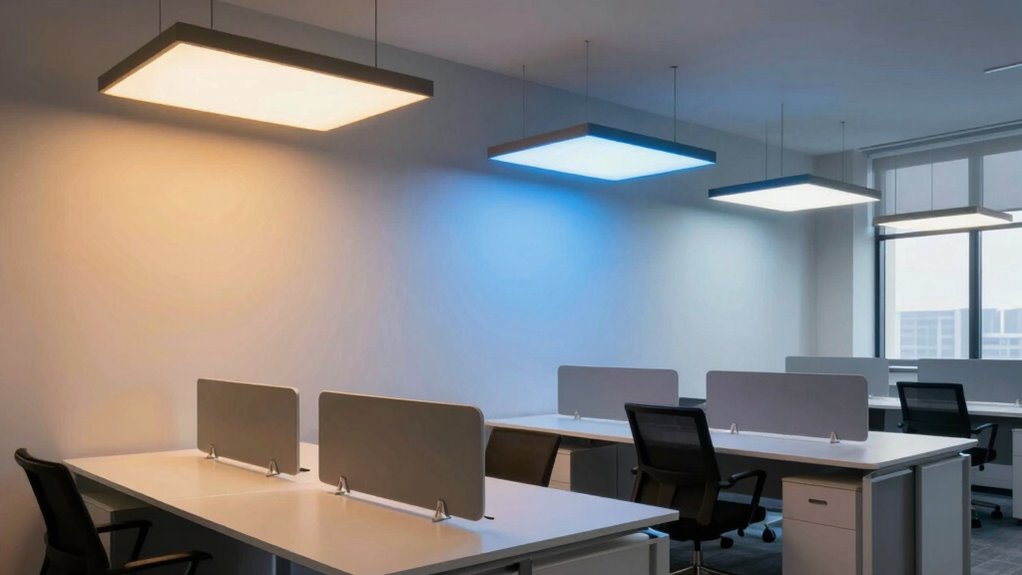
To guarantee your office lighting feels comfortable and supports productivity, it’s essential to actively evaluate how your current setup affects your eyes and overall well-being. Start by observing if you experience glare or eye strain, especially near decorative fixtures. Next, assess the ambient lighting—does it create a balanced, soft glow, or are there dark spots? Consider adjusting or adding fixtures for even coverage. Third, test different brightness levels to avoid harsh contrasts that tire your eyes. Additionally, understanding lighting color temperature can help you select the most suitable light for your office environment. Proper light distribution ensures that your workspace is evenly lit, reducing eye fatigue. Incorporating effective home soundproofing strategies can further enhance your workspace by reducing distracting noise, creating a more focused and comfortable atmosphere. Regularly monitoring your lighting setup can prevent issues like glare or shadows, which can negatively affect your productivity. Paying attention to lighting quality can make a significant difference in how comfortable and efficient your workspace feels.
Best Ways to Combine Multiple Light Sources in Your Office
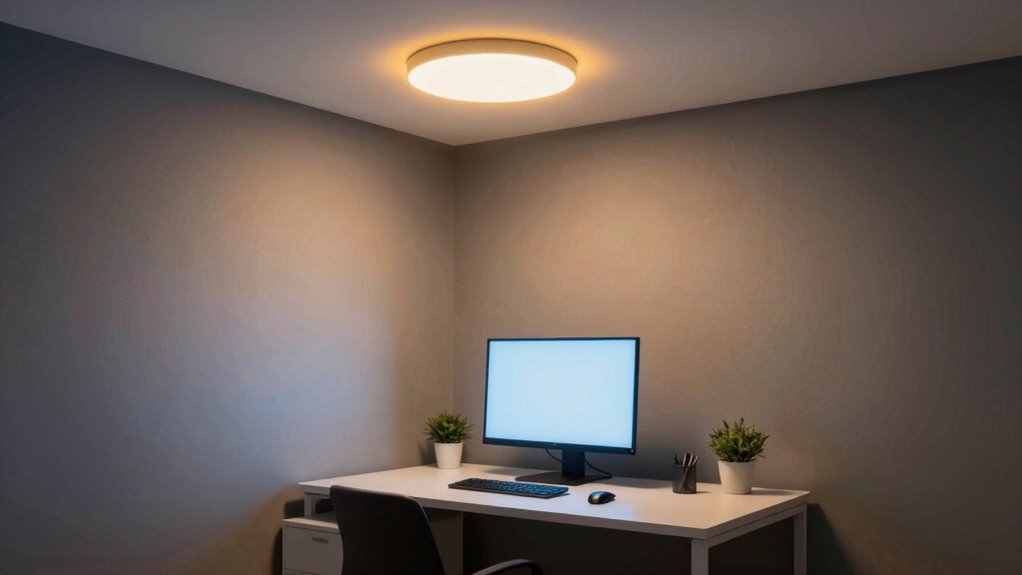
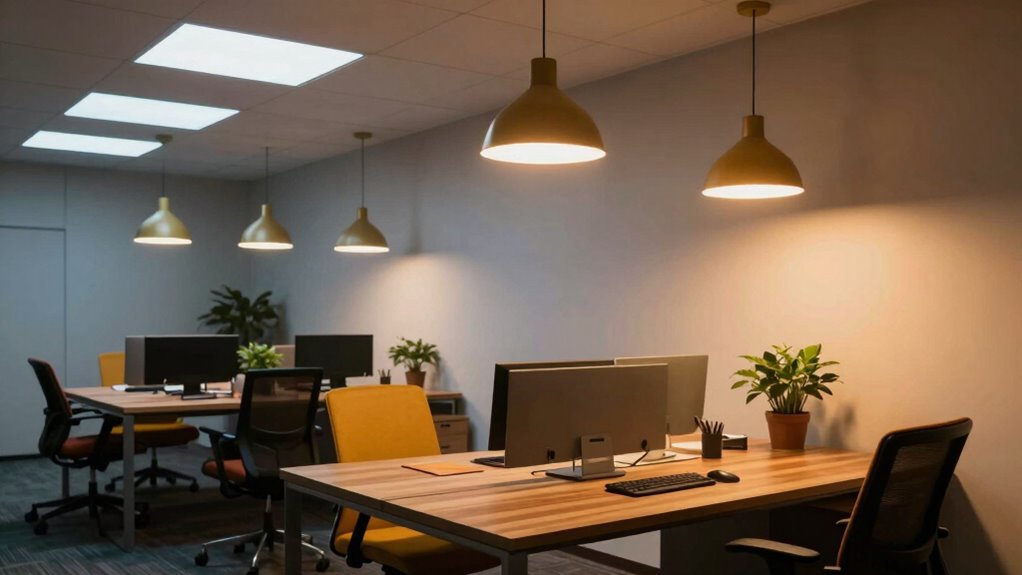
Combining multiple light sources effectively can transform your office into a well-lit, versatile workspace. Start with a layered approach: use ambient lighting, such as ceiling fixtures, to provide general illumination. Add task lighting, like desk lamps, for focused activities. Incorporate smart lighting to easily adjust brightness and color temperature, creating the right mood for different tasks. Decorative fixtures, such as stylish pendant lights or wall sconces, enhance aesthetics and add visual interest. Balance the light sources to prevent glare and shadows, ensuring even coverage. Use dimmers and smart controls to fine-tune the lighting throughout the day. Integrating a centralized analytics hub can help monitor and optimize your lighting setup for better efficiency. Additionally, understanding lighting design principles can help you create a more harmonious environment. Considering light quality and how it impacts comfort can further improve your workspace ambiance. Paying attention to light placement can help maximize natural light and minimize unwanted shadows, making the space feel more open and inviting. Properly managing light distribution is essential for achieving a comfortable and productive workspace. Mixing these elements thoughtfully creates a functional, comfortable environment that boosts productivity and style.
Common Mistakes to Avoid When Setting Up Office Lighting
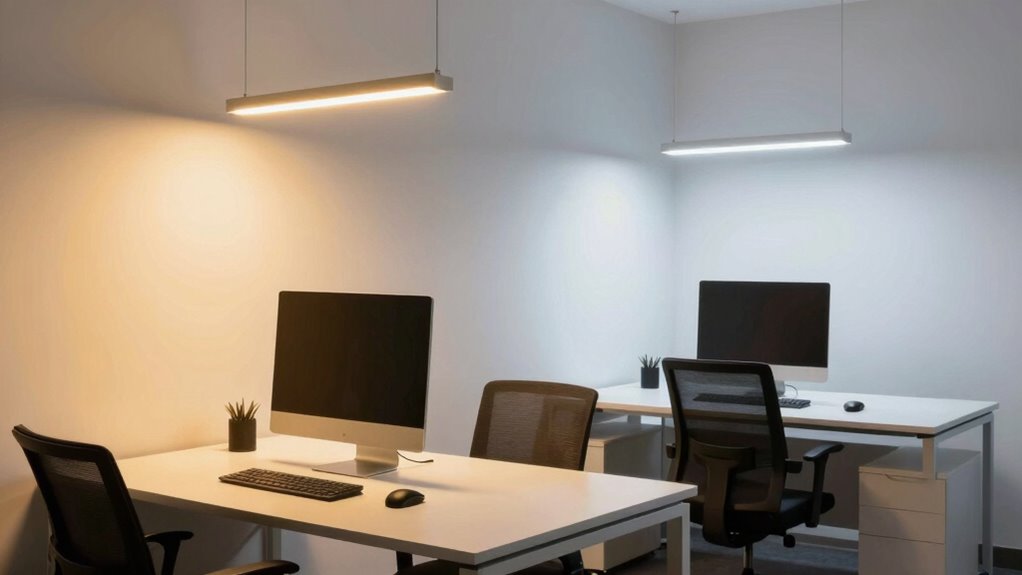
When setting up your office lighting, you might overlook important issues like inconsistent light color, glare, and shadows that can strain your eyes. You also risk choosing fixed fixtures that don’t allow for adjustments, making it harder to create a comfortable workspace. Paying attention to these common mistakes helps guarantee your lighting setup supports productivity and comfort. Incorporating appropriate color temperature options can significantly improve visual comfort and focus throughout your workday. Additionally, understanding nail biology can remind us that just as nails require proper care and environment, your workspace needs suitable lighting conditions to maintain comfort and efficiency.
Overlooking Light Color Consistency
Overlooking light color consistency often leads to a confusing and uncomfortable office environment. When the lighting lacks uniformity, it becomes difficult to focus and can cause eye strain. To avoid this, pay attention to:
- Matching color temperatures across different fixtures to guarantee consistent color appearance.
- Using the same type of bulbs for all lights to maintain lighting uniformity.
- Checking color rendering index (CRI) ratings to ensure colors appear natural under all lights.
- Avoiding mixing warm and cool tones in the same space, which can disrupt visual coherence.
Focusing on color consistency helps create a seamless, professional atmosphere. Proper lighting uniformity not only enhances productivity but also reduces visual fatigue, making your office a more comfortable workspace.
Ignoring Glare and Shadows
Ignoring glare and shadows can considerably impair the effectiveness of your office lighting setup. Excessive glare causes eye strain and reduces visual comfort, so prioritize glare reduction by positioning lights to minimize direct reflections on screens and work surfaces. Proper shadow mitigation ensures even illumination, preventing dark spots that strain your eyes and cause fatigue. Use diffusers or indirect lighting to soften harsh light sources, reducing glare and creating a balanced light environment. Adjust fixture heights and angles to eliminate deep shadows that hinder visibility and focus. By addressing glare and shadows, you improve overall lighting quality, boost productivity, and promote comfort. Don’t overlook these factors—they’re essential for a well-lit, functional workspace.
Neglecting Adjustable Lighting Options
Failing to incorporate adjustable lighting options can lead to discomfort and reduced productivity in your office space. Without flexibility, you might struggle to create an environment suited to different tasks or times of day. Consider these key points:
- Use lighting automation to easily switch between lighting modes for focus or relaxation.
- Install smart bulbs that allow you to change color temperature and brightness remotely.
- Incorporate dimmable fixtures to adjust lighting intensity based on needs.
- Avoid fixed lighting setups that don’t adapt, which can cause eye strain or fatigue.
Frequently Asked Questions
Can Color Temperature Influence Eye Strain Over Long Work Hours?
Yes, color temperature can influence eye strain during long work hours. Cooler temperatures (around 5000K-6500K) tend to improve eye comfort by reducing eye fatigue, but too much blue light may cause screen glare and discomfort. Warmer temperatures (around 2700K-3000K) can minimize glare and enhance comfort, but may lead to eye strain if they don’t match ambient lighting. Adjusting color temperature helps manage screen glare and maintain eye comfort throughout your workday.
What Is the Ideal Color Temperature for Video Conferencing Lighting?
Think of your video conferencing setup as a canvas; the ideal color temperature is like a gentle sunrise, around 4000K to 5000K. This range guarantees color accuracy, so your skin looks natural and your surroundings are true-to-life. It also boosts mood enhancement, keeping you alert and engaged. Using this lighting, you create a professional, welcoming environment that fosters clear communication and comfort throughout your meetings.
How Does Natural Light Impact Artificial Office Lighting Choices?
Natural light creates a natural balance in your office, influencing your artificial lighting choices. You should aim for daylight integration, blending artificial lights seamlessly with natural sunlight to reduce eye strain and improve productivity. Consider adjustable lighting to match the changing natural light throughout the day. By harmonizing artificial and natural light, you enhance comfort and create a more inviting workspace. This approach guarantees consistent, well-balanced illumination for your daily tasks.
Are There Specific Color Temperatures Recommended for Different Industries?
In a tech startup, you opt for higher color temperatures around 5000K to boost alertness and focus, demonstrating effective lighting design. Different industries benefit from specific color temperatures; creative fields may prefer warmer tones around 3000K to foster comfort, while healthcare settings often use cooler tones near 4000K for clarity. Tailoring color temperature to your industry enhances productivity and ambiance through strategic lighting design choices.
How Often Should Office Lighting Be Reassessed or Updated?
You should reassess your office lighting at least once a year to guarantee ideal lighting maintenance and energy efficiency. Over time, bulbs may dim, and lighting needs can change due to renovations or shifts in work tasks. Regular evaluations help you identify when to upgrade fixtures or switch to energy-efficient options, reducing costs and maintaining a comfortable, productive environment for your team.
Conclusion
Choosing the right office lighting color temperature can boost your mood and productivity—studies show that proper lighting can increase work efficiency by up to 15%. By understanding how different temperatures affect you, you can create a workspace that’s both comfortable and energizing. Remember, mixing light sources thoughtfully and avoiding common mistakes will make all the difference. Invest a little time now, and you’ll enjoy a more focused, pleasant work environment every day.