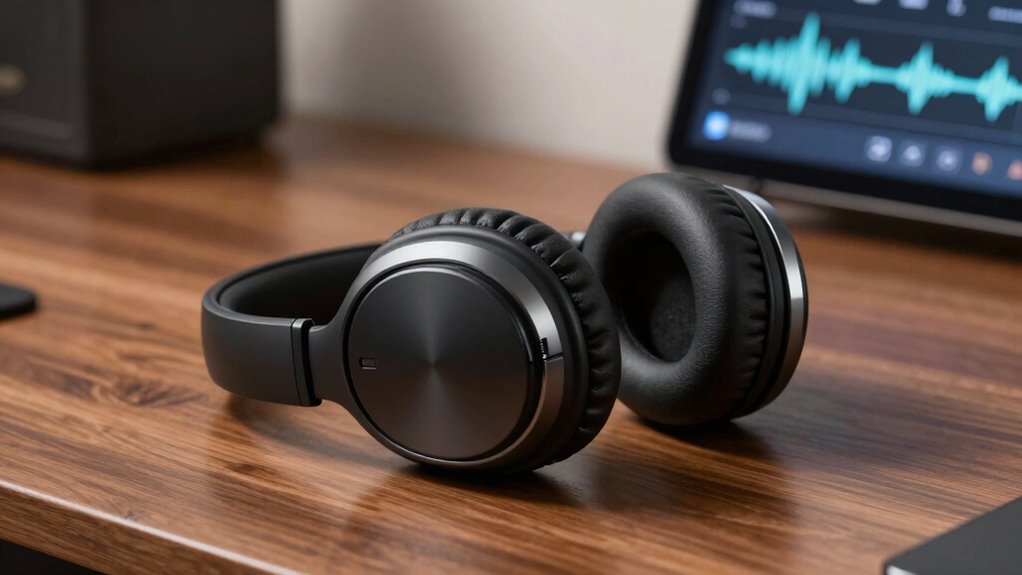
Noise-canceling headphones use sophisticated technology to analyze ambient sounds with microphones and generate anti-noise signals through speakers, canceling background noise in real time. They combine soundproof materials and digital processing to create an immersive listening experience. Different types include over-ear, on-ear, and in-ear models, each suited to different needs. Advanced features like adaptive algorithms and improved materials are shaping future designs — if you want to discover more about how this technology works, keep exploring.
Key Takeaways
- Noise-canceling headphones analyze ambient sounds with microphones and produce anti-noise signals via speakers to cancel background noise.
- They combine passive soundproofing materials with active electronic noise reduction for effective sound isolation.
- Digital Signal Processors (DSP) analyze noise in real-time and generate anti-noise sound waves to achieve destructive interference.
- Different types include over-ear, on-ear, and in-ear models, each utilizing specific components for optimal noise cancellation.
- Future advancements focus on lightweight materials, AI-driven adaptive algorithms, and enhanced environmental awareness for improved performance.

Soundcore by Anker Q20i Hybrid Active Noise Cancelling Headphones, Wireless Over-Ear Bluetooth, 40H Long ANC Playtime, Hi-Res Audio, Big Bass, Customize via an App, Transparency Mode (Black)
Hybrid Active Noise Cancelling: 2 internal and 2 external mics work in tandem to detect external noise and…
As an affiliate, we earn on qualifying purchases.
As an affiliate, we earn on qualifying purchases.
How Do Noise-Canceling Headphones Actually Work?
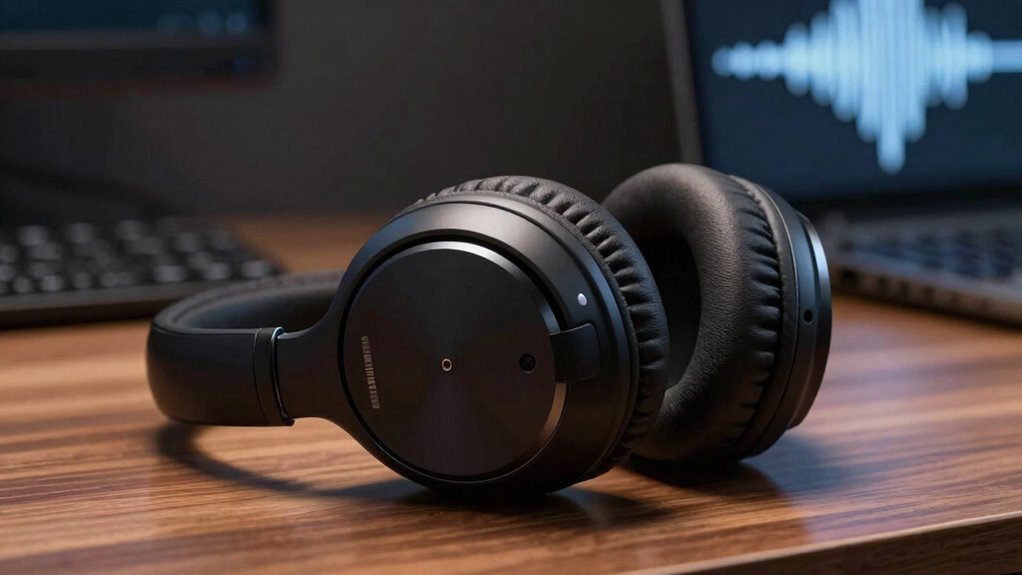
Noise-canceling headphones work by actively reducing ambient sounds so you can focus on your music or calls. They use soundproof materials and advanced technology to analyze incoming sounds and generate anti-noise signals. These signals are played through the speakers, canceling out background noise. This process allows you to enjoy a quieter listening experience without needing complete silence. While noise-canceling features are effective, they can sometimes limit your ambient awareness, making it harder to hear your surroundings. Some headphones incorporate transparency modes to let in essential sounds without sacrificing noise reduction. Overall, these headphones use a combination of soundproof materials and real-time sound analysis to create a more immersive auditory environment, helping you concentrate or relax in noisy settings. Additionally, the effectiveness of noise cancellation can vary depending on the environment and the quality of the technology used. Understanding noise reduction techniques is key to appreciating how these innovative devices enhance our daily experiences. Moreover, advancements in signal processing algorithms continue to improve the precision and comfort of noise-canceling headphones. Regular updates and optimization procedures are essential to maintaining peak performance over time.

TOZO NC9 Hybrid Active Noise Cancelling Wireless Earbuds, 6 Mics ENC Clear Call, IPX8 Waterproof, in Ear Bluetooth 5.3 Headphones Stereo Bass Ear Buds 60H Playtime with LED Display 32 EQs via APP
[Hybrid Active Noise Cancelling] With a maximum noise reduction depth of 45dB, Immerse yourself in your music without…
As an affiliate, we earn on qualifying purchases.
As an affiliate, we earn on qualifying purchases.
What Are the Different Types of Noise-Canceling Headphones?
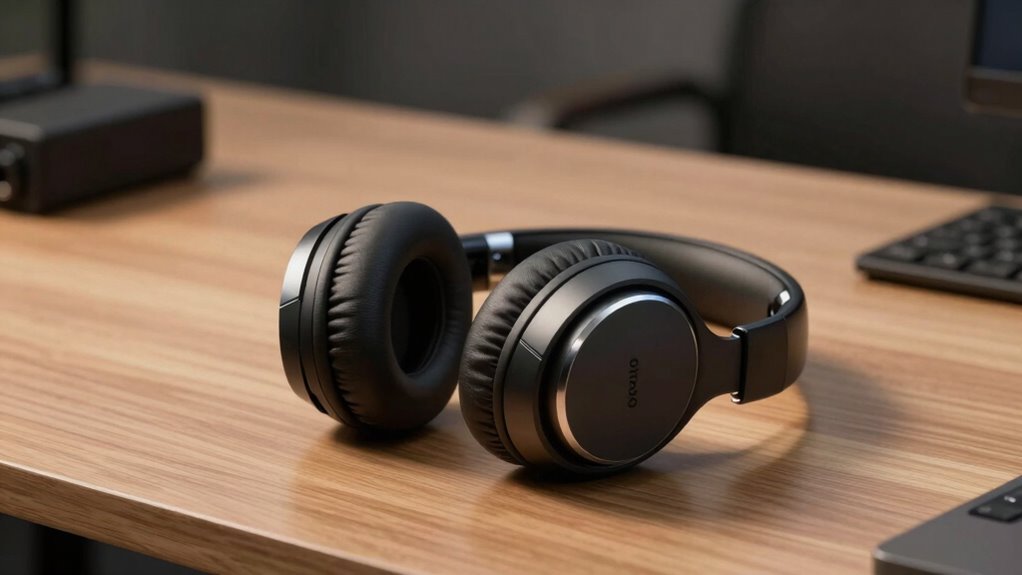
There are several types of noise-canceling headphones designed to suit different environments and preferences. The most common are over-ear models, which provide excellent noise reduction and often feature enhanced comfort features for long wear. On-ear headphones are smaller and lighter, offering a balance between portability and noise cancellation, but may sacrifice some comfort for extended use. In-ear or in-ear monitors are compact and highly portable, ideal for active lifestyles, though they might have shorter battery life. Some headphones combine active noise cancellation with passive isolation, optimizing battery life while maintaining comfort. Battery life varies across types, from a few hours to over 30 hours, depending on the model and features. Additionally, sound quality can influence your overall listening experience, especially in noisy environments. When selecting noise-canceling headphones, considering different types ensures you find the best fit for your needs, comfort preferences, and how long you plan to use them. Understanding the variety of designs available can help you make a more informed decision. Incorporating features such as backward-facing microphones can enhance noise cancellation effectiveness in certain models. Recognizing how existential themes influence design choices can also lead to more innovative and user-centric features.
Soundcore by Anker Q20i Hybrid Active Noise Cancelling Headphones, Wireless Over-Ear Bluetooth, 40H Long ANC Playtime, Hi-Res Audio, Big Bass, Customize via an App, Transparency Mode (Black)
Hybrid Active Noise Cancelling: 2 internal and 2 external mics work in tandem to detect external noise and…
As an affiliate, we earn on qualifying purchases.
As an affiliate, we earn on qualifying purchases.
What Are the Key Components That Make Noise Cancellation Possible?
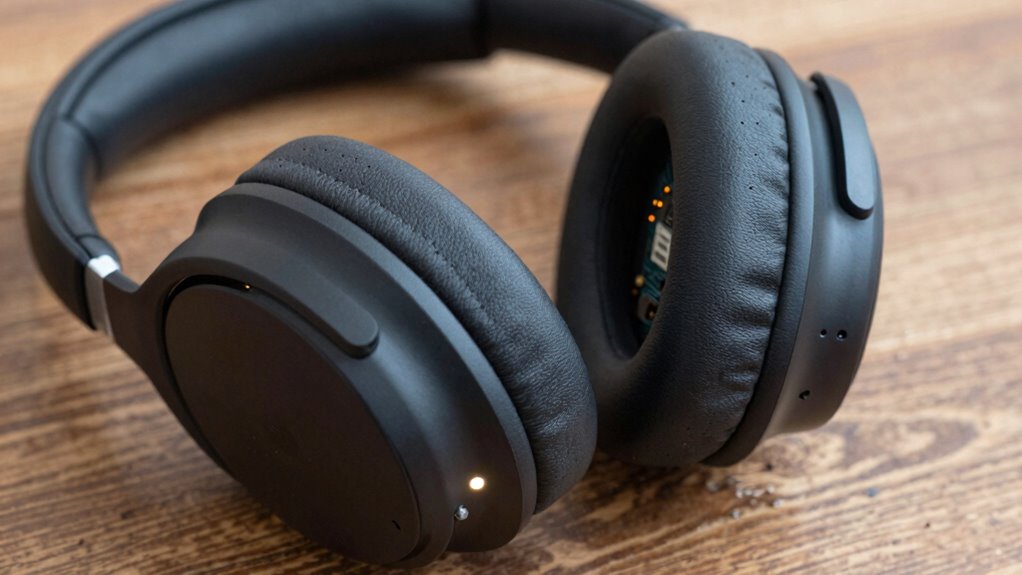
The key components that enable noise cancellation work together to detect and counteract unwanted sounds effectively. Passive isolation and acoustic shielding create a physical barrier, reducing sound waves before they reach your ears. Inside the headphones, three main components play a vital role:
Passive barriers and advanced electronics work together to block out noise and enhance your listening experience.
- Microphones detect ambient noise, capturing sound waves around you. They are strategically placed to pick up diverse sound frequencies.
- Digital Signal Processor (DSP) analyzes the noise and creates an anti-noise signal.
- Speakers emit this anti-noise sound wave, canceling out the unwanted noise through destructive interference.
These components work in unison, with passive isolation and acoustic shielding providing an initial barrier. The active noise cancellation then fine-tunes sound waves in real-time, ensuring a quieter listening experience. Understanding the basic technology behind noise cancellation can help you make more informed choices when selecting headphones.

Soundcore by Anker Q20i Hybrid Active Noise Cancelling Headphones, Wireless Over-Ear Bluetooth, 40H Long ANC Playtime, Hi-Res Audio, Big Bass, Customize via an App, Transparency Mode (White)
Block the World, Keep the Music: Four built-in mics work together to filter out background noise — whether…
As an affiliate, we earn on qualifying purchases.
As an affiliate, we earn on qualifying purchases.
How Can You Evaluate the Best Noise-Canceling Headphones for Your Needs?
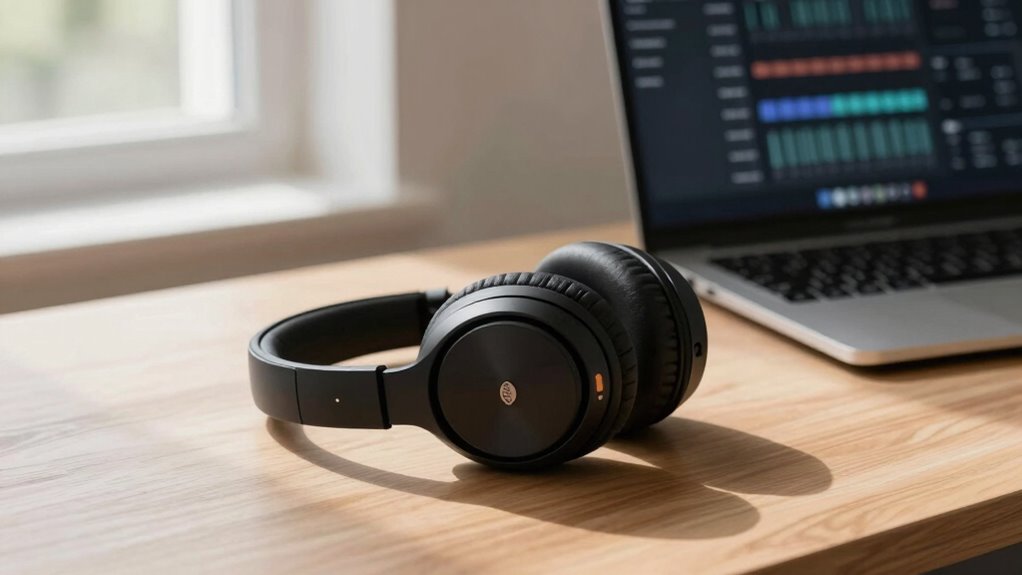
Choosing the best noise-canceling headphones for your needs involves evaluating several key factors to guarantee they meet your preferences and lifestyle. First, consider comfort features—look for adjustable headbands, cushioned ear cups, and lightweight designs to ensure long-term comfort. Comfort is essential if you wear them for extended periods. Next, examine battery life; longer battery life means fewer interruptions, especially during travel or long work sessions. Check if the headphones offer quick charging or replaceable batteries for added convenience. Also, read reviews to gauge real-world performance and durability. Think about your primary use—commuting, gaming, or office work—and prioritize features accordingly. By evaluating comfort features and battery life, you’ll find noise-canceling headphones that truly suit your needs and enhance your listening experience. Additionally, understanding noise-canceling technology can help you choose headphones with the most effective sound isolation. Knowing how noise reduction works can further assist in selecting the right model for your environment. A deeper understanding of sound isolation techniques can also help you distinguish between different types of noise-canceling methods and their suitability for various settings. Exploring product reviews can provide valuable insights into the real-world effectiveness of different models. Furthermore, considering the type of noise cancellation—whether passive or active—can influence your choice based on the environments in which you’ll use the headphones.
What Are the Future Trends Shaping Noise-Canceling Technology?

Advancements in noise-canceling technology are rapidly transforming the way you experience sound, driven by innovations in both hardware and software. Emerging materials, like lightweight composites and flexible polymers, will make headphones more comfortable and durable. AI integration is set to enhance noise-canceling accuracy by analyzing sound environments in real-time. Future trends include:
- Smarter noise-canceling algorithms that adapt instantly to changing surroundings.
- Use of emerging materials to improve comfort and reduce weight.
- Deeper AI integration for personalized sound profiles and better environmental awareness.
These developments mean your headphones will be more intuitive, comfortable, and effective at blocking unwanted noise, all while seamlessly adapting to your environment.
Frequently Asked Questions
How Effective Is Noise Cancellation in Extremely Loud Environments?
In extremely loud environments, noise cancellation is quite effective at reducing environmental noise, but it can’t eliminate all sounds. You might still hear some background noise due to signal interference, especially with sudden or unpredictable sounds. These headphones work best with consistent, low-frequency environmental noise. While they considerably improve your listening experience, remember that in very loud settings, some sound may still penetrate, so always stay aware of your surroundings.
Do Noise-Canceling Headphones Affect Sound Quality?
You might feel like you’re trading an earful of sound for a quieter world, but noise-canceling headphones don’t have to compromise sound quality. When designed well, they enhance sound clarity and maintain high audio fidelity, letting you enjoy your music or calls without distraction. However, cheaper models might affect audio quality, so investing in quality headphones guarantees you get the best of both worlds—peace and pristine sound.
Are There Health Risks Associated With Long-Term Use?
Long-term use of noise-canceling headphones generally doesn’t pose significant health concerns if you keep the volume at safe levels. However, prolonged use at high volumes may lead to hearing damage over time. Be mindful of your listening habits to avoid potential long-term effects like hearing loss or ear discomfort. Taking regular breaks and maintaining moderate volume levels can help mitigate any possible health risks associated with extended use.
How Does Battery Life Impact Noise Cancellation Performance?
If your headphones run out of battery, your noise cancellation might vanish faster than a flash of lightning, leaving you with the world’s chaos. Battery life directly impacts noise cancellation performance because of battery optimization and power consumption. The longer your headphones hold a charge, the better they maintain effective noise cancellation. So, keep an eye on battery levels, and you’ll enjoy uninterrupted peace, no matter how long your day gets.
Can Noise-Canceling Headphones Be Used for Live Concerts?
Yes, you can use noise-canceling headphones for live concerts, but your personal comfort and design preferences matter. Look for headphones with a secure fit and adjustable headbands to stay comfortable during long events. Choose a design that blocks out overwhelming sounds while allowing you to enjoy the music. Keep in mind, some models might reduce ambient sound too much, so select ones that balance noise cancellation with safety.
Conclusion
If you’re considering noise-canceling headphones, you’ll be glad to know that over 80% of users report improved focus and relaxation with them. As technology advances, expect even smarter designs with better sound quality and adaptive features. Whether for travel, work, or leisure, choosing the right pair can transform your listening experience. Stay tuned to future innovations—your quiet, immersive escape is just a headphone away!