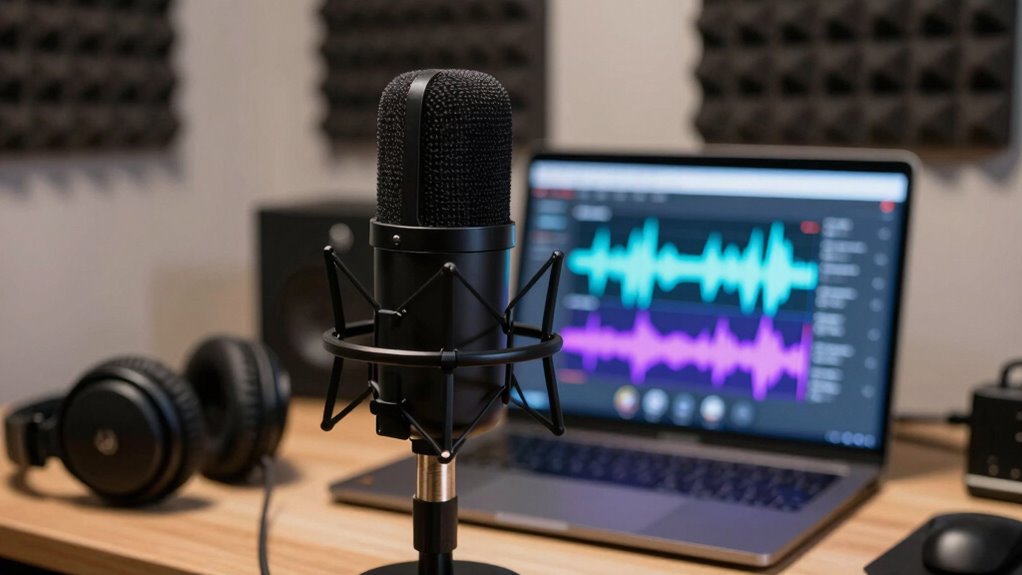

To improve your Zoom audio quality, invest in a high-quality, noise-canceling microphone and position it 6-12 inches from your mouth. Adjust your microphone settings and enable Zoom’s noise suppression and echo cancellation features. Enhance your room with soft furnishings to reduce echo and background noise. Keep your software updated and troubleshoot connection issues for stable audio. If you’d like detailed tips on each step, there’s more to explore to make your calls clearer and more professional.
Key Takeaways
- Use high-quality, noise-canceling microphones positioned 6-12 inches from your mouth.
- Enable Zoom’s noise suppression and echo cancellation features for clearer audio.
- Optimize room acoustics with soft furnishings and avoid reflective surfaces near the microphone.
- Ensure your device’s audio drivers and Zoom are updated to the latest versions.
- Switch to a wired internet connection or move closer to Wi-Fi for stable, lag-free audio.

CMTECK USB Computer Microphone G009, Noise-Cancelling Recording Desktop Mic for PC/Laptop for Online Chatting, Home Studio, Podcasting, Gaming, Skype, YouTube with Mute Function(Windows/Mac)
【Crystal Clear Audio Quality】Our Cardioid pattern condenser microphone accurately captures your voice, making it perfect for dictation, online…
As an affiliate, we earn on qualifying purchases.
As an affiliate, we earn on qualifying purchases.
Choose the Right Microphone for Clear Zoom Audio
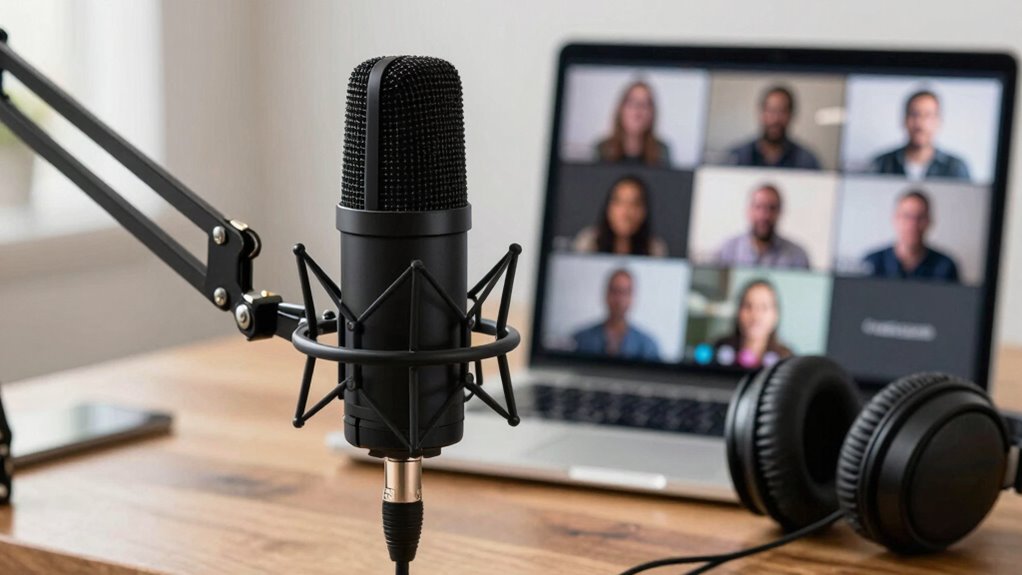
Choosing the right microphone is essential for achieving clear Zoom audio. Your microphone placement makes a big difference; position it close to your mouth, ideally about 6-12 inches away, to capture your voice clearly and minimize background noise. Consider your environment and add acoustic treatment, like soft furnishings or foam panels, to reduce echo and unwanted sounds that can interfere with your audio. A good-quality microphone with noise-canceling features can also improve clarity, especially in noisy settings. Additionally, selecting a microphone with color accuracy can help ensure your voice remains natural and easy to understand. Avoid using built-in laptop microphones, which often pick up more ambient noise and lack focus. By selecting the proper microphone, placing it correctly, and improving your room’s acoustic treatment, you’ll enjoy much clearer, more professional-sounding Zoom calls. Incorporating smart home safety enhancements like soundproofing or noise reduction devices can further enhance your audio experience. Paying attention to your testing accuracy can also help you evaluate the quality of your audio setup and make necessary adjustments. Regularly assessing your microphone’s performance with sound quality tests ensures consistent clarity during your calls. To optimize your setup, understanding how environmental factors impact sound quality can guide you in making effective improvements.

TONOR Conference USB Microphone, Omnidirectional Condenser PC Mic for Video Conference, Recording, Skype, Online Class, Court Reporter, Plug & Play Compatible with Mac OS X Windows PC Compute, G11
Omnidirectional Microphone – It is not a Speaker or Speakerphone, it is a condenser microphone. The microphone has…
As an affiliate, we earn on qualifying purchases.
As an affiliate, we earn on qualifying purchases.
Check and Optimize Your Microphone Settings
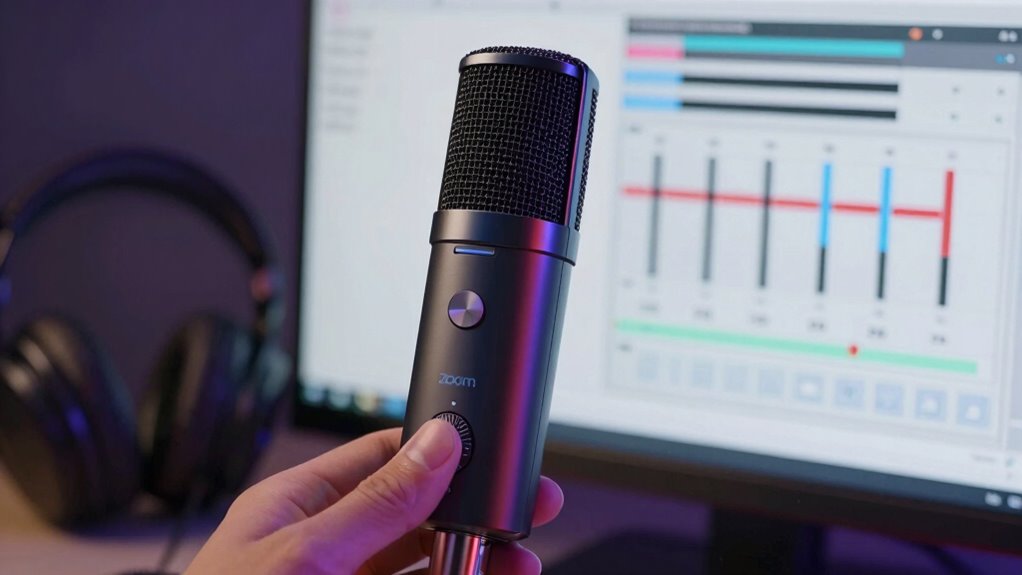
Ensuring your microphone settings are properly configured is essential for clear Zoom audio. Start by checking your microphone placement; position it close to your mouth without blocking it to capture your voice clearly. Make sure your microphone is selected correctly in Zoom’s audio settings. Perform an audio calibration by speaking at your normal volume and adjusting input levels so the software picks up your voice without distortion or clipping. Test the audio with a quick call to verify clarity. Avoid background noise interference by turning off unnecessary devices or moving to a quieter space. Regularly reviewing and fine-tuning your microphone settings helps ensure your audio remains crisp and professional, making communication smoother and more effective. Additionally, consider air purifier maintenance best practices to reduce indoor dust and allergens, which can contribute to background noise during calls. Incorporating a noise reduction technique can further improve audio quality by minimizing ambient sounds. Being aware of your microphone placement and positioning it correctly plays a crucial role in achieving optimal sound. Proper backyard landscaping can also help reduce external noise sources, enhancing your overall audio environment.

Focusound 52 Pack Acoustic Foam Panels 1" x 12" x 12" Sound Proof Foam Panles Soundproofing Noise Cancelling Wedge Panels for Home Office Recoding Studio with 300PCS Double-Side Adhesive
Soundproofing – Acoustic foam panels triangular grooves structure for better noise absorption, helps to reduce and absorb unwanted…
As an affiliate, we earn on qualifying purchases.
As an affiliate, we earn on qualifying purchases.
Maximize Noise Suppression and Background Filters
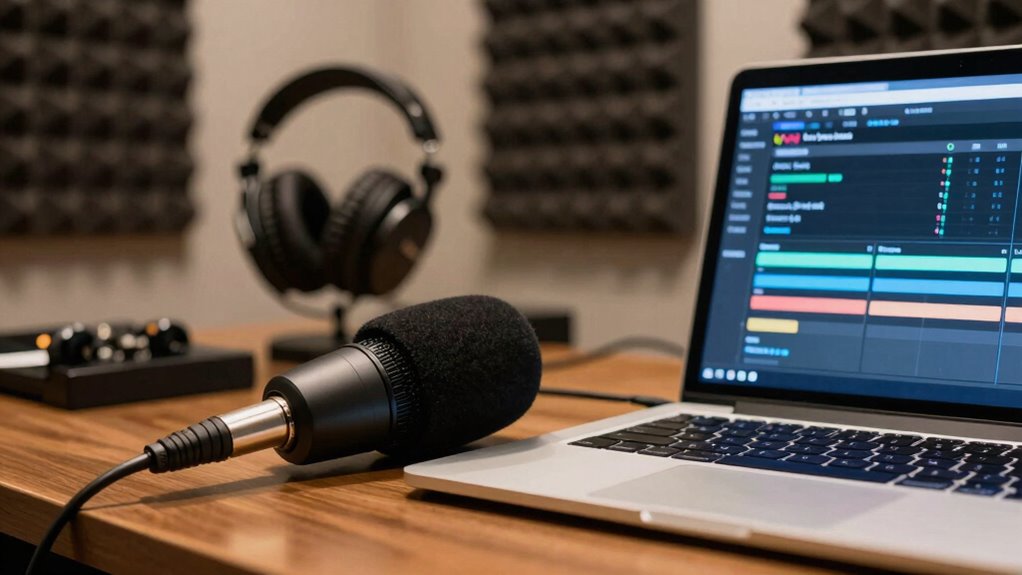
To improve your Zoom audio quality, take advantage of noise suppression and background filters available within the platform. These features help reduce background noise, making your voice clearer. Ensure your microphone is positioned correctly—place it close to your mouth and avoid pointing it at noisy surfaces. Adjust noise suppression settings in Zoom’s audio options; selecting high suppression can block out more background noise but may slightly alter your voice. Use the background filters, if available, to minimize distractions from your environment. Keep in mind that proper microphone placement enhances the effectiveness of these filters by capturing more of your voice and less of the surrounding noise. Regularly test and tweak these settings to find the best balance for your environment. Incorporating body-based methods can also help you stay grounded and reduce internal distractions during calls, especially when maintaining focus is important for golf training or other concentration-heavy activities. Additionally, understanding the audio troubleshooting basics can help you identify and resolve common issues quickly. Recognizing background noise sources in your environment allows for more targeted adjustments, further improving call clarity. Being aware of market trends and insights can also inform you about external factors that might influence your communication environment, such as noise from market activity or promotional events.

Starlink Ethernet Adapter for Rectangular Satellite Internet V2, Starlink Adapter Ethernet Gen 2 for Wired External Network Fast & Stable Connection Star-Link Standard Actuated Gen 2
【Designed for the Starlink Actuated Gen 2】Starlink ethernet adapter designed to connect a device directly to the Gen…
As an affiliate, we earn on qualifying purchases.
As an affiliate, we earn on qualifying purchases.
Reduce Echo and Improve Sound Clarity
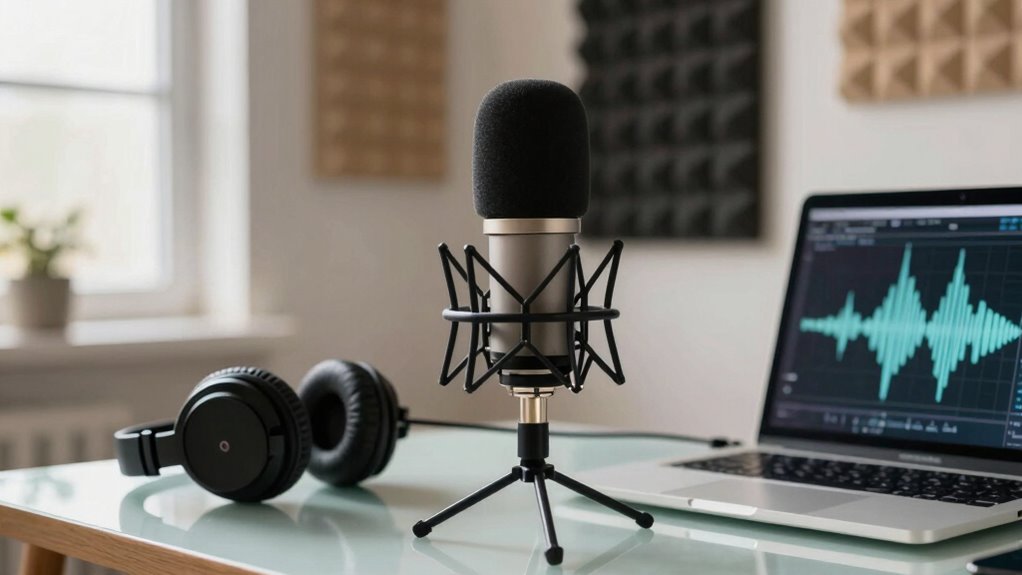
After setting up noise suppression and background filters, it’s time to tackle echo and improve overall sound clarity. Room acoustics play a big role in echo, so consider softening hard surfaces like walls, floors, and windows with rugs, curtains, or furniture. These materials absorb sound waves, reducing echo and making your audio clearer. Enable echo cancellation features available in Zoom settings, which automatically detect and suppress echo during calls. Position your microphone away from reflective surfaces and near your mouth to capture direct sound. Using headphones instead of speakers also prevents sound from bouncing back into the microphone. Additionally, room acoustic treatment such as installing acoustic panels can further minimize echo and enhance sound quality. Improving room acoustics and sound absorption techniques can make a significant difference in your audio clarity. Employing soundproofing materials is another effective way to block external noise and reduce echo, providing a cleaner audio environment. Incorporating performance parts, such as acoustic panels or soundproofing materials, can further enhance your room’s sound quality. Proper room setup and soundproofing strategies are essential for maintaining clear audio during virtual meetings.
Troubleshoot Common Zoom Audio Issues

When you experience audio issues during a Zoom call, addressing common problems quickly can save you time and frustration. First, check your audio hardware—verify your microphone and speakers are properly connected and selected in Zoom’s settings. Sometimes, simply switching to a different device or updating your drivers can resolve issues. Next, confirm your internet stability; a weak connection can cause audio dropouts or lag. Try moving closer to your Wi-Fi router or switching to a wired connection for a more reliable signal. Restarting Zoom or your device can also fix temporary glitches. If problems persist, test your hardware on another app or device to identify whether the issue lies with your equipment or network. Taking these steps helps ensure clear, uninterrupted audio. Additionally, adjusting your audio settings within Zoom can sometimes improve sound quality. For enhanced reliability, consider using smart office gear such as dedicated microphones or audio interfaces to improve overall audio clarity. Ensuring your connection stability is vital for consistent audio during calls. Regularly updating your software and drivers can also prevent compatibility issues that affect audio performance. For example, using quality microphones designed for clear sound can make a significant difference in audio quality.
Frequently Asked Questions
How Can I Prevent Audio Feedback During Zoom Calls?
To prevent audio feedback during Zoom calls, start by adjusting your microphone placement—keep it close to your mouth and away from speakers. Enable echo cancellation in Zoom settings to reduce sound reverberation. Also, consider using headphones instead of speakers, which prevents the microphone from picking up speaker sounds. These steps will help minimize feedback, ensuring clearer communication and a smoother Zoom experience.
Does Using Wired Headphones Improve Zoom Audio Quality?
Using wired headphones can definitely improve your Zoom audio quality. They often have better microphone placement, which helps capture clear sound and reduces background noise. Wireless earbuds are convenient, but they may introduce latency or inconsistent audio if their microphones aren’t optimized for calls. For the best experience, opt for wired headphones with a good microphone, ensuring you’re close enough to the mic for clear communication without feedback or echo.
What Are the Best Practices for Speaking Clearly on Zoom?
To speak clearly on Zoom, focus on good microphone positioning—keep it close and slightly below your mouth. Practice voice modulation by varying your pitch and pace to keep listeners engaged, much like a teacher maintaining student interest. For example, a presenter who uses steady volume and clear enunciation sees better engagement. Take deep breaths and pause for emphasis, ensuring your message is understood and impactful during every conversation.
How Does Internet Bandwidth Affect Zoom Audio Performance?
Your internet bandwidth greatly impacts Zoom audio performance. If your bandwidth is low, your audio may cut out or become choppy. To avoid this, focus on bandwidth optimization by closing unnecessary apps and devices that use the internet. Also, guarantee network stability by connecting via a wired connection or staying close to your Wi-Fi router. These steps help maintain a consistent connection, leading to clearer, more reliable Zoom audio.
Can External Audio Interfaces Enhance Zoom Sound Quality?
Can an external audio interface really boost your Zoom sound quality? Absolutely. It allows you to use premium microphones, improving audio clarity. Proper microphone placement guarantees you’re capturing your voice clearly, while advanced audio signal processing reduces background noise and echo. With an external interface, you gain better control over your sound settings, making your Zoom calls sound professional. Isn’t it worth investing in quality audio tools to communicate more effectively?
Conclusion
Improving your Zoom audio can make a real difference in your meetings. Did you know that poor audio quality is responsible for nearly 70% of communication misunderstandings? By choosing the right microphone, optimizing settings, reducing background noise, and troubleshooting issues, you’ll guarantee clearer, more professional-sounding calls. Taking these simple steps can help you stay focused and connected, making every Zoom meeting more effective and engaging. Don’t let audio problems hold you back—upgrade your sound today!