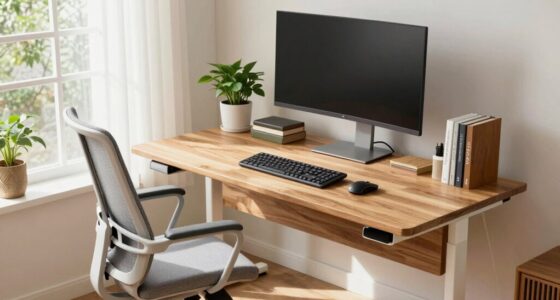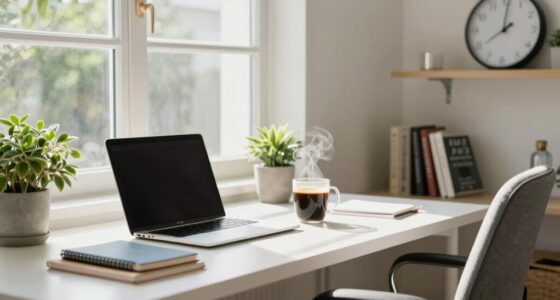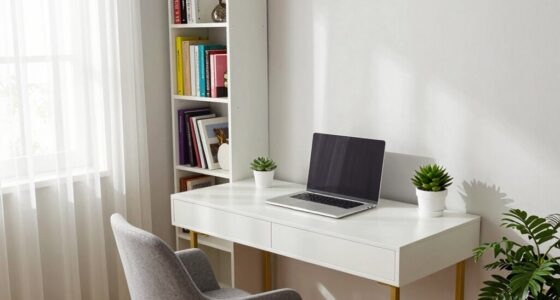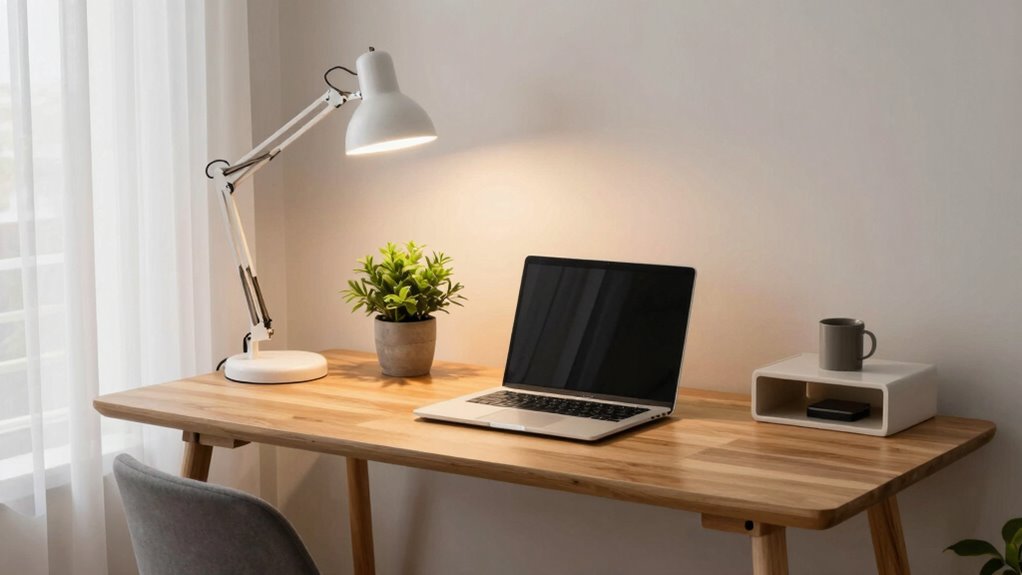
To create the perfect home office lighting setup, start by evaluating your task needs, focusing on bright, adjustable task lights and ample natural light near windows. Balance this with ambient lighting to reduce eye strain and add warmth with decorative fixtures. Customize brightness and color temperature with dimmable and smart controls, and position lights strategically to minimize glare. By combining these elements, you’ll boost focus and comfort—and if you keep exploring, you’ll discover more tips to optimize your workspace.
Key Takeaways
- Incorporate a mix of natural, task, and ambient lighting for a balanced, comfortable workspace.
- Position lights to minimize glare and shadows, optimizing productivity and reducing eye strain.
- Use adjustable fixtures and dimmable lights to customize brightness and color temperature for different tasks.
- Maximize natural light with window placement and treatments, complemented by indoor plants for a calming atmosphere.
- Regularly evaluate and adjust lighting to reduce eye fatigue and enhance focus throughout the workday.

Dimmable LED Desk Lamp with USB Charging Port, 50 Lighting Modes Dual Swing Arm Architect Table Lamp Light Desk Lamp for Home Office Dorm Piano Nail
【Foldable & Larger Lighting Area Desk Lamp for Office home】The LED desk lamp is with double head design,…
As an affiliate, we earn on qualifying purchases.
As an affiliate, we earn on qualifying purchases.
Assess Your Home Office Lighting Needs

Before setting up your home office lighting, you need to assess your specific needs. Consider the tasks you’ll perform daily—do you need bright, focused light for detailed work or softer lighting for general tasks? Understanding your preferred color temperature helps create a comfortable environment; cooler tones (around 5000K) boost alertness, while warmer tones (around 2700K) promote relaxation. Think about how much lighting control you want; adjustable fixtures or dimmable options allow you to tailor brightness levels throughout the day. Your lighting needs also depend on natural light availability and the layout of your workspace. Clarifying these factors helps you choose the right fixtures and features, ensuring your home office remains functional, comfortable, and conducive to productivity. Proper lighting placement is also essential to minimize glare and shadows, further enhancing your workspace efficiency. Additionally, considering ergonomic lighting design can help reduce eye strain during long work sessions.

Motumen Led Desk Lamp for Home Office, Eye-Care Architect Light with Clamp, Smart Double Head Computer Monitor Table Clip Lamp, Adjustable Flexible Goose-Neck, 25 Lighting Models, Task Lamp, Black
Super Bright & Eye-Caring: This LED desk lamp features a dual-head design for a wider lighting range, delivering…
As an affiliate, we earn on qualifying purchases.
As an affiliate, we earn on qualifying purchases.
Learn About Types of Lighting for Your Workspace
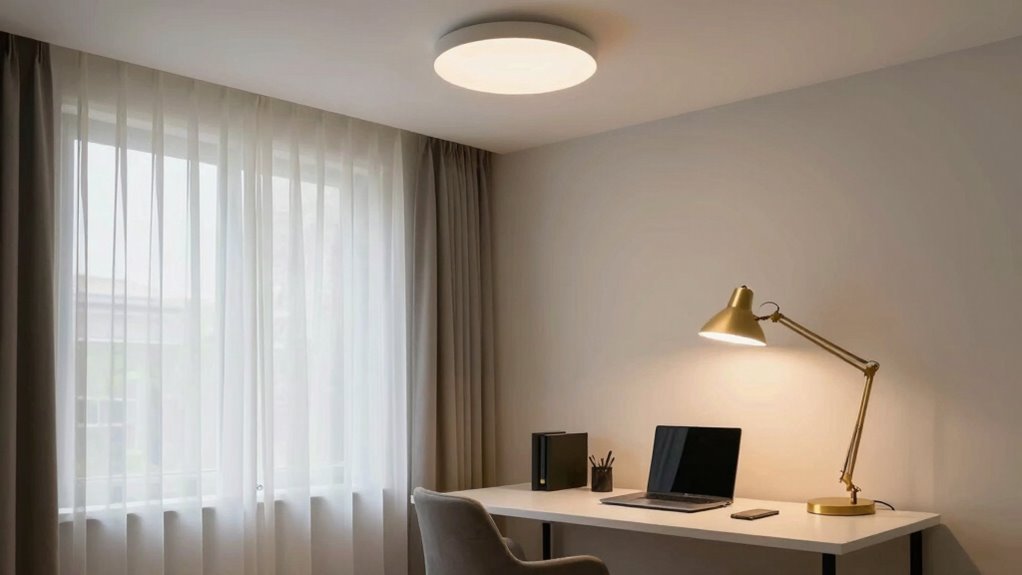
Understanding the types of lighting available can help you create a comfortable workspace. Natural light offers numerous benefits, but task lighting and ambient strategies guarantee you stay well-lit throughout the day. Exploring these options allows you to design a lighting setup that boosts your focus and reduces eye strain. Incorporating outdoor lighting techniques can also enhance your overall comfort and productivity during long work hours. Additionally, being mindful of indoor air quality by minimizing pollutants like microplastics in dust can contribute to a healthier and more comfortable environment. A well-designed lighting setup considers factors such as color temperature adjustments to optimize visual comfort and reduce fatigue, making your workspace more inviting and efficient. Embracing curiosity about different lighting solutions can open new possibilities for optimizing your workspace.
Natural Light Benefits
Natural light offers numerous benefits for your home office, making it an essential element of a productive workspace. It improves mood, boosts productivity, and reduces eye strain. Plus, natural light enhances the appearance of indoor plants, helping them thrive and creating a calming atmosphere. The right color temperature from sunlight can also influence your focus, with warmer tones fostering relaxation and cooler tones promoting alertness. To maximize these benefits, position your desk near windows and use window treatments that control glare. Incorporate indoor plants that thrive in natural light to improve air quality and add vibrancy. Additionally, understanding the horsepower of electric dirt bikes can inspire you to set up a workspace with enough light to stay energized during long work sessions. Proper lighting is also essential for reducing glare and reflections, which can cause discomfort and hinder productivity. Ensuring adequate natural light access can make a significant difference in your overall comfort and efficiency. Incorporating adjustable lighting options can further optimize your lighting setup for different times of day and tasks. Being mindful of light quality can help create an environment that supports both comfort and focus throughout your workday.
Task Lighting Options
Are you choosing the right task lighting to keep your workspace bright and focused? Task lighting options include adjustable desk lamps, clip-on lights, and under-cabinet fixtures, all designed to direct light exactly where you need it. Incorporate decorative fixtures to add style and personality while ensuring proper illumination. For a comfortable atmosphere, consider adding mood lighting that reduces glare and minimizes eye strain. These fixtures can be subtle and blend seamlessly into your decor or serve as statement pieces. The key is to choose lighting that provides sufficient brightness without creating harsh shadows or glare. Proper task lighting enhances productivity and keeps your workspace functional, so tailor your choices to your needs and workspace layout for the best results. Additionally, understanding digital concepts can help you optimize your lighting setup with smart controls and automation. Being aware of cybersecurity principles can also help you safeguard your digital workspace, especially when integrating smart lighting systems that connect to your home network. Incorporating lighting technology can further improve energy efficiency and customize your lighting environment to suit different tasks and moods.
Ambient Light Strategies
While task lighting helps you see clearly at your workspace, creating a comfortable environment also requires the right ambient lighting. Ambient light sets the overall tone and reduces eye strain. To achieve this, choose lighting fixtures that distribute soft, even light without harsh shadows. Pay attention to color temperature; warmer tones (around 2700K-3000K-3000K) create a cozy feel, while cooler tones (4000K-5000K) promote alertness. Here are some effective strategies:
- Install ceiling-mounted fixtures for uniform coverage.
- Use wall sconces to add depth and warmth.
- Incorporate dimmable lights for adjustable brightness.
- Opt for lamps with adjustable color temperature to customize the ambiance.
Additionally, selecting appropriate workspace lighting can enhance productivity and comfort throughout your workday. Incorporating lighting design principles helps balance your workspace lighting, making it both functional and inviting. Understanding home design/architecture details such as door swings and stair proportions can also influence your overall lighting plan by ensuring fixtures are optimally placed within your space. A well-planned lighting setup considers lighting placement to maximize both efficiency and aesthetic appeal. Furthermore, considering indoor air quality and humidity control can contribute to a healthier, more comfortable environment overall.

OVZME Natural Curtains for Small Window Treatment, Light Blocking Short Kitchen Window Curtains Over Sink, Dual Rod Pocket Half Window Tiers for Bathroom Basement, Each 40Wx36L, 2 PCS
Sold as 2 Panels: Each package contains 2 pieces kitchen curtains, each panel measures 40" in width and…
As an affiliate, we earn on qualifying purchases.
As an affiliate, we earn on qualifying purchases.
Maximize Natural Light in Your Home Office

Ever wonder how to make the most of sunlight in your home office? To maximize natural light, start with the right window treatments. Choose light, airy curtains or blinds that can be easily adjusted to control glare and brightness throughout the day. Bright, reflective color schemes also help bounce sunlight around the room, making the space feel more open and inviting. Opt for light-colored walls, desks, and accessories to enhance the effect. Position your desk near windows to soak up the most sunlight, but avoid direct glare on screens. Keep windows clean to guarantee maximum light flow. Using vetted lifestyle products such as reflective mirrors or light-enhancing accessories can further improve light distribution in your workspace. Additionally, understanding the importance of cultural celebrations can inspire you to incorporate vibrant decor that naturally reflects sunlight, creating a lively and welcoming environment. Incorporating lighting controls can help you adapt your lighting setup to changing daylight conditions, ensuring consistent brightness throughout the day. Being mindful of history and milestones in lighting technology can also guide you to choose the most effective fixtures and solutions for your space. Exploring lighting technology innovations can provide additional options for optimizing your home office lighting. By optimizing window treatments and choosing the right color schemes, you’ll create a bright, energizing workspace that minimizes the need for artificial lighting during daylight hours.

Micomlan Led Desk Lamp with Clamp, Architect Desk Lamp for Home Office with Atmosphere Lighting, 24W Ultra Bright Auto Dimming Computer Light Stepless Dimming and Tempering LED Table Light
7 Rotatable Joints: Micomlan swing arms led desk light features 7 strongly damped joints with 3 ultra bright…
As an affiliate, we earn on qualifying purchases.
As an affiliate, we earn on qualifying purchases.
Choose the Best Task and Accent Lights
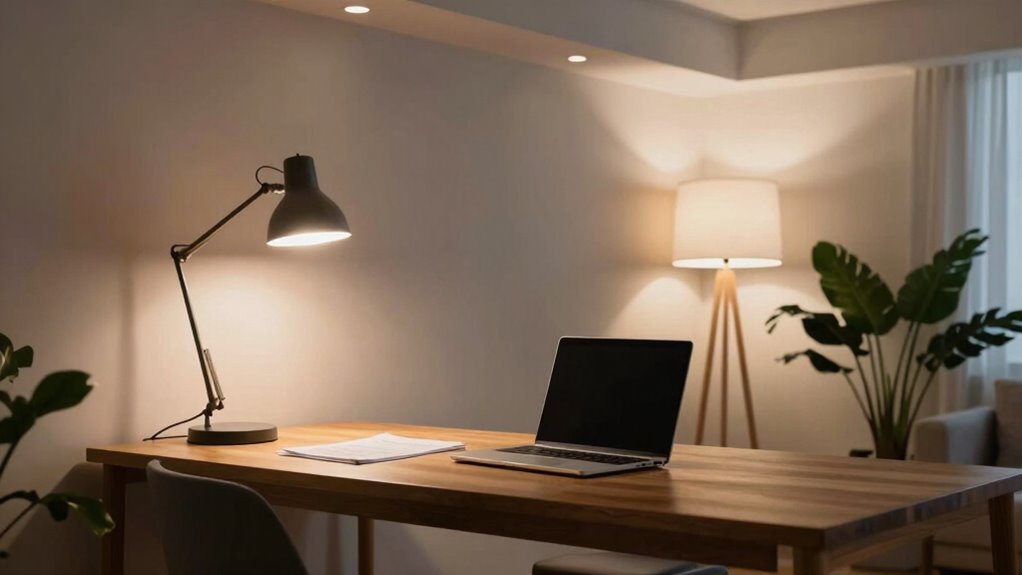
To get the most out of your home office, you’ll want to carefully place your task lights where they provide the best illumination for your work. Adding accent lights can highlight features and make the space feel more inviting. Thoughtful lighting choices can boost both your productivity and the room’s overall ambiance.
Optimal Task Lighting Placement
Choosing the right placement for task and accent lights is essential to create a well-lit home office that boosts productivity and reduces eye strain. Position your task lights to illuminate your workspace directly, avoiding glare on screens. Use lighting color to match your work environment—cool whites for focus and warmer tones for comfort. Fixture styles should complement your decor while providing adequate light.
Here are key placement ideas:
- Place adjustable desk lamps close to your work surface for flexibility.
- Position wall-mounted lights at eye level to prevent shadows.
- Use under-shelf lighting to brighten specific areas without clutter.
- Guarantee accent lights highlight architectural features, not interfere with task lighting.
Proper placement ensures balanced lighting, minimizing fatigue and creating an efficient workspace.
Enhancing Space With Accents
Once you’ve established ideal task lighting, adding well-placed accent lights can considerably enhance the overall ambiance and visual appeal of your home office. Decorative fixtures, like wall sconces or pendant lights, create focal points and add personality. Incorporating color accents through subtle colored bulbs or LED strips can evoke mood and energy, making your space more inviting. Choose fixtures that complement your decor, blending functionality with style. Here’s how different accents can transform your setup:
| Decor Style | Color Accents | Mood Created |
|---|---|---|
| Modern minimalism | Cool blue LEDs | Calm, focused vibe |
| Vintage charm | Warm amber glow | Cozy, nostalgic feel |
| Eclectic mix | Bright, bold hues | Energetic, inspiring |
These elements help personalize your workspace, making it both functional and inspiring.
Create Ambient Lighting for a Comfortable Environment

Creating ambient lighting is essential for establishing a comfortable and inviting home office environment. It softens harsh light and sets a relaxing mood. To do this, incorporate decorative fixtures like table lamps or wall sconces that add style and warmth. Adjust the color temperature of your bulbs; warmer tones (around 2700K-3000K) create a cozy atmosphere, while cooler tones are better for focus. Consider using dimmable lights to control brightness easily. Use layered lighting by combining ambient sources with task and accent lights to avoid glare and shadows. This balance helps reduce eye strain and makes your workspace more pleasant. Remember, the goal is to create a space that feels both functional and welcoming, encouraging productivity and comfort.
Tips to Reduce Eye Strain With Proper Lighting

Proper lighting is essential for reducing eye strain during long work sessions. To protect your eye health, make sure your workspace has balanced lighting that minimizes screen glare. Position your monitor to avoid reflections from windows or overhead lights, which can cause eye fatigue. Use matte or anti-reflective screen covers if needed. Maintain ambient lighting that’s neither too bright nor too dim, preventing your eyes from constantly adjusting. Adjust your screen’s brightness to match surrounding light levels, reducing strain. Keep a safe distance between your eyes and the screen, approximately arm’s length. Taking regular breaks also helps, but proper lighting is a key step in reducing eye discomfort and preserving your vision during extended work hours.
Set Up Your Lighting for Flexibility and Productivity
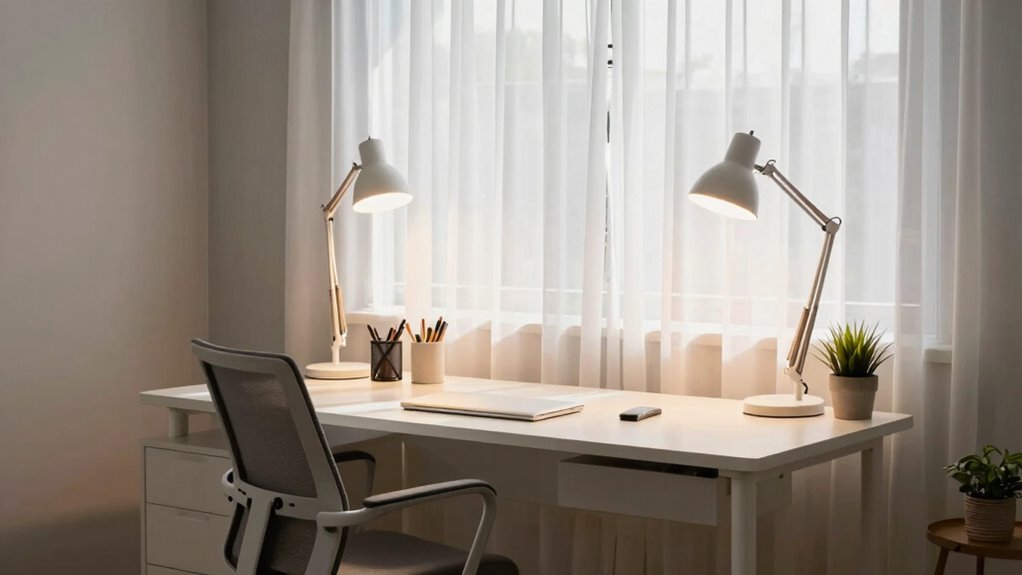
To maximize your productivity and adapt to different tasks, setting up your lighting for flexibility is essential. Adjusting color temperature allows you to switch between warm light for relaxing tasks and cool light for focus. Consider fixture design; adjustable fixtures enable you to direct light where needed, reducing glare and shadows. Here are four ways to enhance flexibility:
- Use dimmable lights to control brightness levels.
- Incorporate fixtures with adjustable arms for precise positioning.
- Choose lighting with adjustable color temperature for task-specific lighting.
- Install layered lighting—ambient, task, and accent—to easily modify the environment.
Affordable Home Office Lighting Solutions
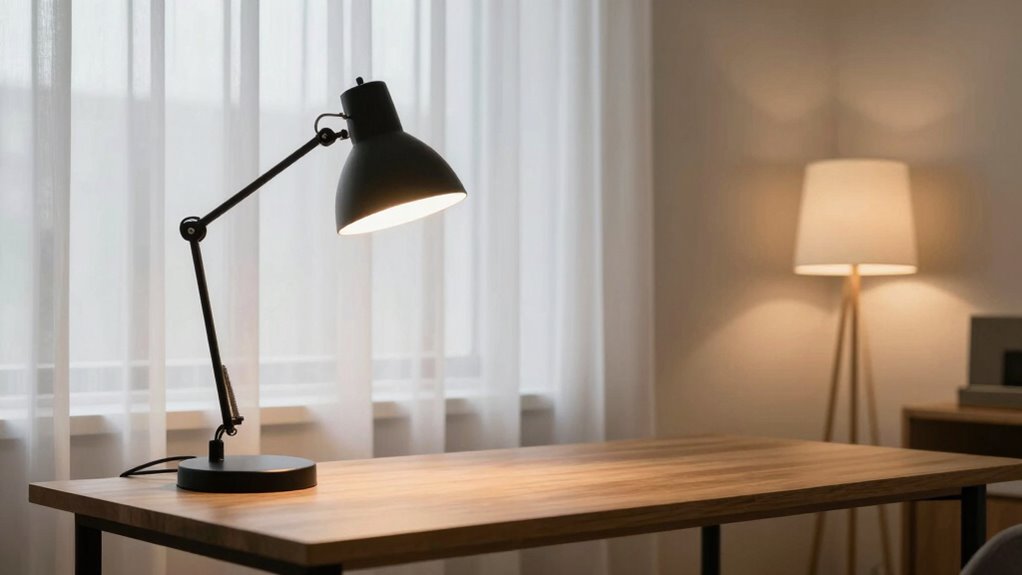
Finding affordable lighting solutions for your home office doesn’t mean you have to sacrifice quality or functionality. You can get budget-friendly options that still enhance your workspace. Look for LED bulbs with adjustable color temperature; warmer tones create a cozy atmosphere, while cooler tones boost focus. Smart lighting controls, like dimmers or app-based systems, give you flexibility to modify brightness and color temperature easily, helping you customize your environment throughout the day. Consider using desk lamps with replaceable bulbs and clip-on lights for added affordability and versatility. These options allow you to improve lighting without overspending, ensuring your workspace remains comfortable and productive. With smart choices, you can create an effective, well-lit home office without breaking the bank.
Troubleshoot Common Lighting Issues in Your Home Office

Lighting issues can disrupt your focus and comfort, but many are easily fixable with some troubleshooting. First, check your lighting controls to guarantee switches and dimmers are properly functioning. Second, evaluate your color temperature; if the light feels harsh or dull, adjust it to create a more comfortable environment. Third, inspect your bulbs—replace any flickering or burnt-out ones promptly. Fourth, consider the placement of your lights; shadows and uneven lighting can cause strain. If your lighting lacks flexibility, add adjustable fixtures or smart controls to better manage brightness and color temperature. Addressing these common issues helps improve your workspace, reduces eye strain, and boosts productivity.
Frequently Asked Questions
How Can I Prevent Glare on My Computer Screen?
To prevent glare on your computer screen, you should adjust your lighting placement. Position your light sources so they don’t shine directly on your screen, and avoid placing bright lights behind your monitor. Use curtains or blinds to control natural light, and consider using matte or anti-glare screens. These steps help reduce screen glare, making it easier to work comfortably and avoid eye strain.
What Color Temperature Is Best for a Home Office?
Think of your home office lighting as the dawn’s first glow—warm, inviting, yet energizing. The best color temperature for your workspace is between 4000K and 5000K, offering a balanced lighting ambiance that boosts focus without causing fatigue. This range mimics natural daylight, creating a comfortable environment. It’s like a gentle sunrise: bright enough to energize, soft enough to keep your mind clear and your eyes relaxed.
How Do I Balance Natural and Artificial Lighting Effectively?
You can balance natural and artificial lighting by creating an ambient glow with soft, indirect light that complements daylight. Use task illumination, like desk lamps, to focus light where you work, reducing eye strain. Position your workspace near windows for natural light, but add adjustable artificial lights to fill in shadows or enhance brightness during cloudy days or evening hours. This combination guarantees a comfortable, well-lit environment that boosts productivity.
Are Smart Lighting Options Suitable for Home Offices?
Think of smart lighting as your home office’s trusty lighthouse, guiding you efficiently through work. Yes, smart lighting options are suitable—they offer smart automation, adjusting brightness based on your needs, and enhance energy efficiency by reducing waste. With these options, you control your environment effortlessly, creating a perfectly lit space that promotes focus and comfort. Embrace smart lighting to make your home office smarter, more adaptable, and energy-conscious.
How Often Should I Replace or Upgrade My Office Lighting?
You should replace or upgrade your office lighting every 2 to 3 years to maintain ideal ergonomic lighting and energy efficiency. As bulbs age, they dim and become less effective, affecting your comfort and productivity. Switch to energy-efficient bulbs like LEDs to save costs and reduce environmental impact. Regularly evaluate your lighting setup to guarantee it continues to meet your needs, especially if you notice flickering or dimming.
Conclusion
By carefully shaping your home office lighting, you’re carving out a sanctuary where productivity blooms like a well-tended garden. Each light source acts as a guiding star, illuminating your path and easing strain, so your focus remains sharp. When your space glows just right, you create a haven that invites creativity to flourish—like a warm sunrise after a long night. With the right setup, your workspace becomes a beacon of comfort and efficiency.