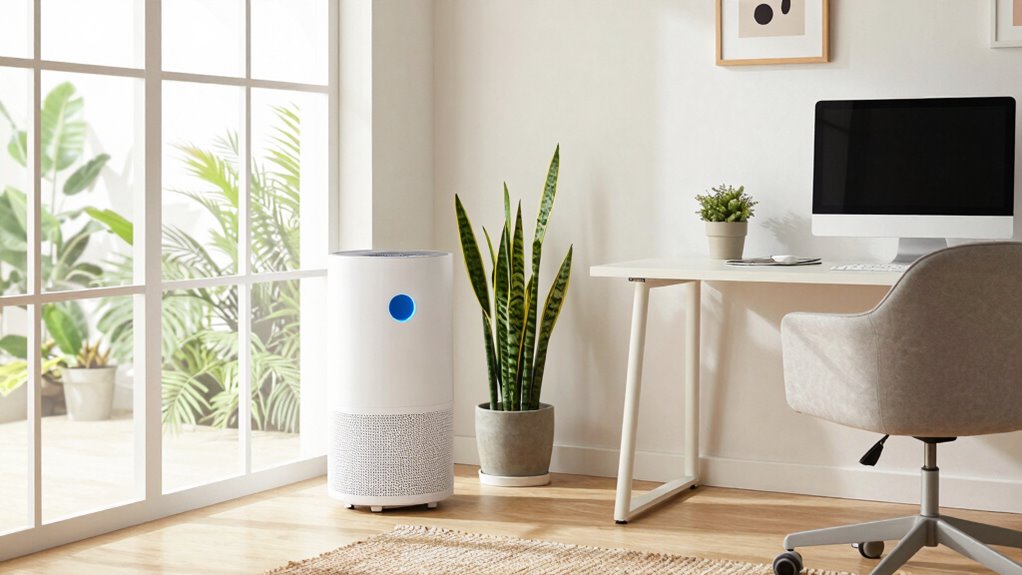

To improve your home office air quality, open windows regularly to boost ventilation and bring in fresh air. Use air purifiers with HEPA filters to remove dust, allergens, and pollutants, and consider adding air-purifying plants like snake plants or peace lilies. Keep humidity balanced to prevent mold growth, clean surfaces often, and maintain your equipment. If you want practical tips on creating a healthier workspace, there’s more to explore below.

Get home appliances delivered free with Prime
- Fast, free delivery on millions of items
- Prime Video, Amazon Music and more included
- Member-only deals all year
Key Takeaways
- Increase natural ventilation by opening windows on opposite sides for cross-breezes during mornings and evenings.
- Use air purifiers with HEPA filters to effectively remove dust, allergens, and pollutants in your workspace.
- Incorporate air-purifying plants like snake plants and peace lilies to help clean the air and boost humidity.
- Regularly clean surfaces, vacuum carpets, and maintain filters to reduce pollutant buildup and improve air quality.
- Monitor indoor air quality with sensors and conduct visual inspections for mold, dust, and other pollutants.
HEPA air purifier for home office
As an affiliate, we earn on qualifying purchases.
As an affiliate, we earn on qualifying purchases.
How Poor Indoor Air Quality Affects Your Home Office Health
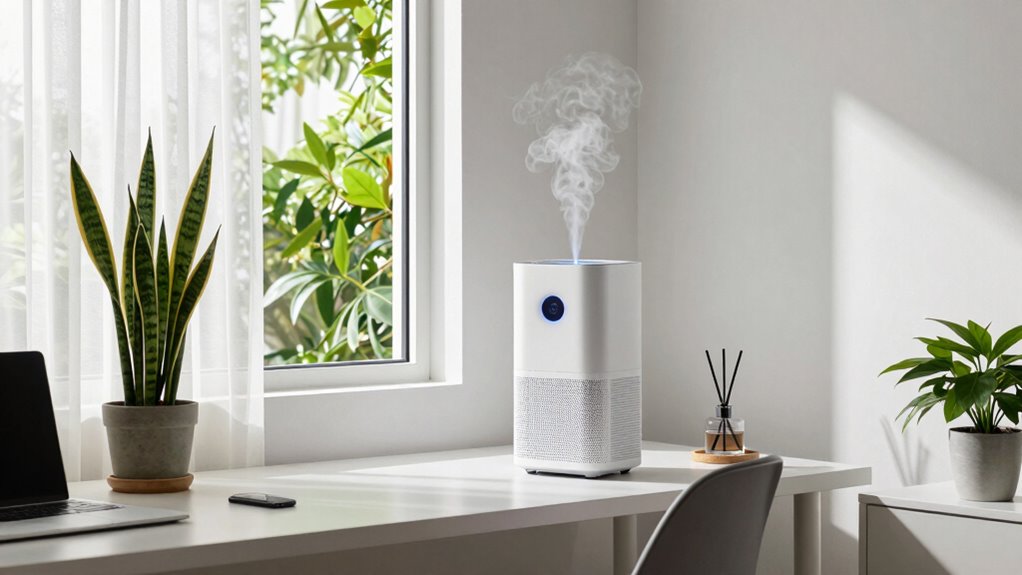
Poor indoor air quality can profoundly impact your health, especially if you spend long hours working from home. Indoor allergens like dust mites, pet dander, and mold spores can trigger allergies or worsen asthma symptoms, making it harder to focus and stay productive. Mold spores, in particular, thrive in damp environments, releasing microscopic particles into the air that you breathe in daily. These pollutants can cause respiratory irritation, headaches, fatigue, and even long-term health issues if left unaddressed. When your home office has poor ventilation or high humidity, these harmful substances accumulate, increasing your risk of developing or aggravating health problems. Recognizing how indoor allergens and mold spores affect your well-being is the first step toward creating a healthier, more comfortable workspace. Proper household products like dehumidifiers and air purifiers can help reduce indoor pollutants and improve air quality. Additionally, maintaining a clean environment and controlling moisture levels can significantly reduce the presence of indoor allergens. Regularly checking for microplastics in dust and using effective filtration can further enhance your indoor air environment. Addressing moisture control is also essential to prevent mold growth and maintain optimal air quality. Implementing strategies to reduce indoor humidity levels can further support your efforts to keep your workspace healthier.
As an affiliate, we earn on qualifying purchases.
Identify Common Indoor Pollutants in Your Space
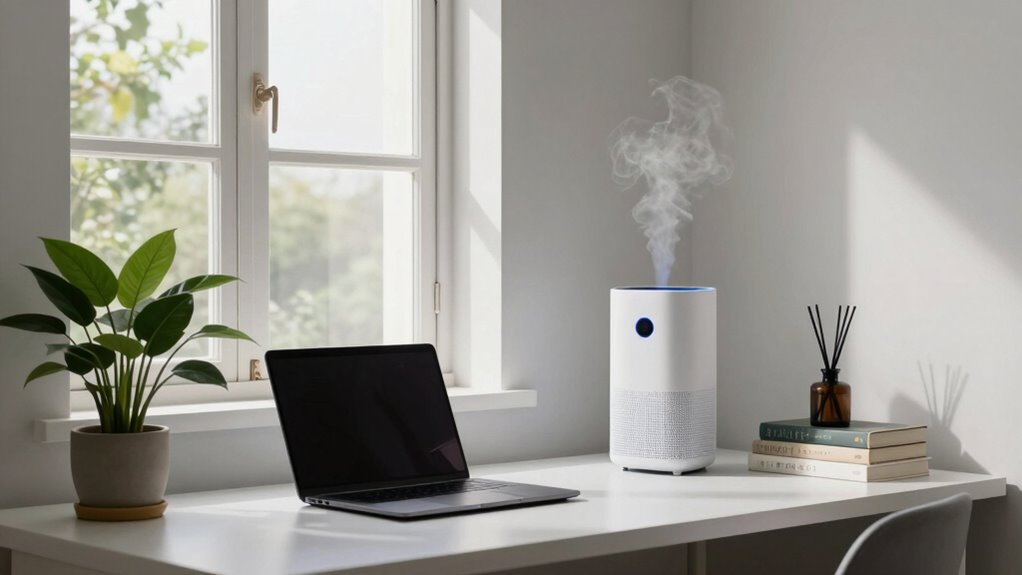
Recognizing the specific pollutants present in your home office helps you take targeted steps to improve air quality. Common indoor pollutants include volatile organic compounds (VOCs) from paints, cleaning products, and office equipment, as well as allergen triggers like dust mites, pet dander, and mold. Identifying these sources allows you to reduce exposure effectively. Use this quick reference:
| Pollutant Type | Typical Sources | Health Impact |
|---|---|---|
| VOCs | Paints, adhesives, electronics | Respiratory irritation, headaches |
| Allergens | Dust, pet dander, mold | Allergic reactions, asthma triggers |
| Particulate Matter | Dust, smoke, pet hair | Lung irritation, allergies |
| Formaldehyde | Furniture, pressed wood products | Eye, nose irritation, respiratory issues |
| Radon | Soil beneath your home | Lung cancer risk |
Being aware of indoor air pollutants enables you to implement effective ventilation and filtration strategies to keep your workspace healthier. Additionally, understanding the sources of radon in your home can help you take preventive measures to lower its levels. Regularly testing for indoor air quality can also help identify hidden hazards that might otherwise go unnoticed.
air-purifying houseplants for office
As an affiliate, we earn on qualifying purchases.
As an affiliate, we earn on qualifying purchases.
How to Improve Ventilation and Bring in Fresh Air
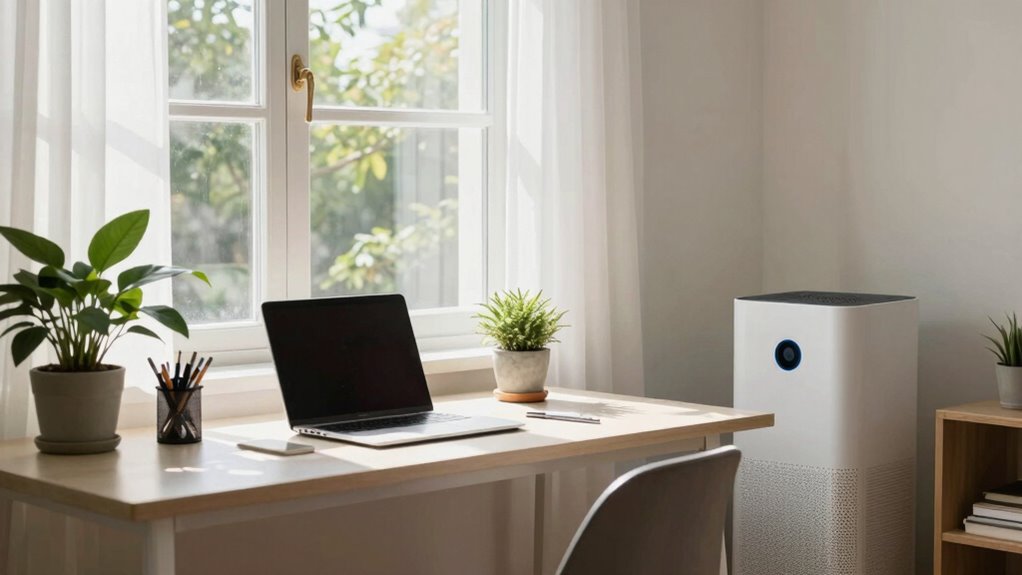
You can improve your home office air quality by enhancing natural airflow through open windows or vents. Using air purifiers helps filter out pollutants and freshen the air even when windows are closed. Combining these methods creates a healthier workspace and keeps air cleaner throughout the day. Implementing proper ventilation protocols can further optimize airflow and maintain consistent air quality.
Enhance Natural Airflow
Enhancing natural airflow in your home office is a simple yet effective way to improve air quality and create a more comfortable workspace. Natural ventilation allows fresh air to circulate, reducing indoor pollutants and stale air. To optimize airflow, open windows on opposite sides of the room to create a cross-breeze, encouraging airflow optimization. Use window screens to keep out insects while keeping fresh air flowing freely. Consider installing window vents or exhaust fans if natural ventilation is limited. Keep curtains or blinds open during the day to maximize sunlight and airflow. Regularly opening windows, especially in the morning and evening, helps bring in fresh air and maintain a healthy indoor environment. By prioritizing natural ventilation, you support better air quality effortlessly. Incorporating open floor plans or removing unnecessary barriers can further enhance the flow of air within your space.
Use Air Purifiers
Air purifiers are an effective way to improve ventilation and introduce cleaner air into your home office. There are various air purifier types, such as HEPA, activated carbon, and UV models, each targeting different pollutants like dust, allergens, or germs. Choosing the right purifier depends on your specific needs and room size. Regular filter replacement is essential to maintain efficiency; neglecting this can reduce air quality and strain the device. Place the purifier near your workspace, ensuring unobstructed airflow. Keep windows open periodically to enhance fresh air intake, but rely on the purifier for continuous air cleaning. Using the right air purifier and maintaining it properly helps create a healthier, more comfortable home office environment. Additionally, understanding indoor air quality and humidity levels can further optimize your indoor environment. Maintaining proper ventilation practices is crucial for reducing indoor pollutants and enhancing air circulation. Incorporating natural ventilation strategies, such as opening windows at optimal times, can further enhance overall air quality. Being aware of air exchange rates can help you better manage indoor air freshness and reduce pollutant buildup. Ensuring proper airflow patterns can also help distribute clean air more effectively throughout your workspace.
As an affiliate, we earn on qualifying purchases.
Using Plants to Boost Indoor Air Quality
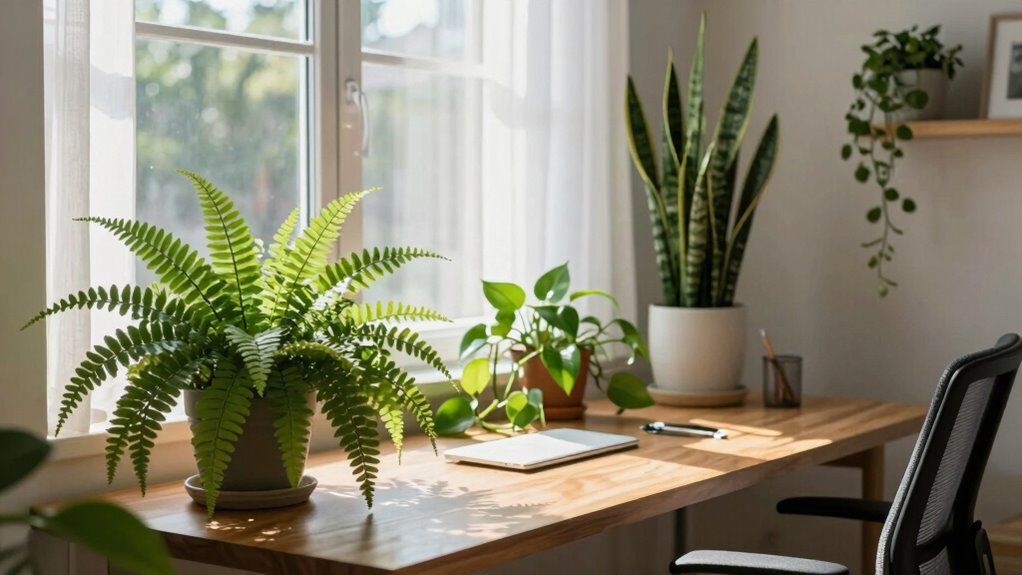
Indoor plants can be a simple and effective way to improve air quality in your home office. Different plant varieties, such as snake plants, pothos, and peace lilies, are known for their air-purifying properties. By incorporating these plants into your indoor gardening efforts, you not only enhance the aesthetic appeal but also help filter toxins like formaldehyde and benzene. A trusted reputation in the market ensures you’re choosing quality plants that will thrive indoors. Regularly caring for your plants encourages a healthier environment and increases humidity, reducing dust and dryness. Embracing calm and clarity by tending to plants can also foster a mindful routine that promotes overall well-being. Place plants near your workspace where they can get sufficient light and be easily maintained. Using hanging baskets to display your plants can also save space and add visual interest to your office. Additionally, choosing the right indoor gardening techniques can maximize the air-purifying benefits of your plants. Implementing proper watering and fertilizing methods can further enhance their ability to clean the air. With consistent attention, these green additions will naturally clean the air and create a calmer, more inviting workspace. Using plants is a low-cost, eco-friendly way to boost indoor air quality effectively.
Choosing the Best Air Purifier for Your Home Office
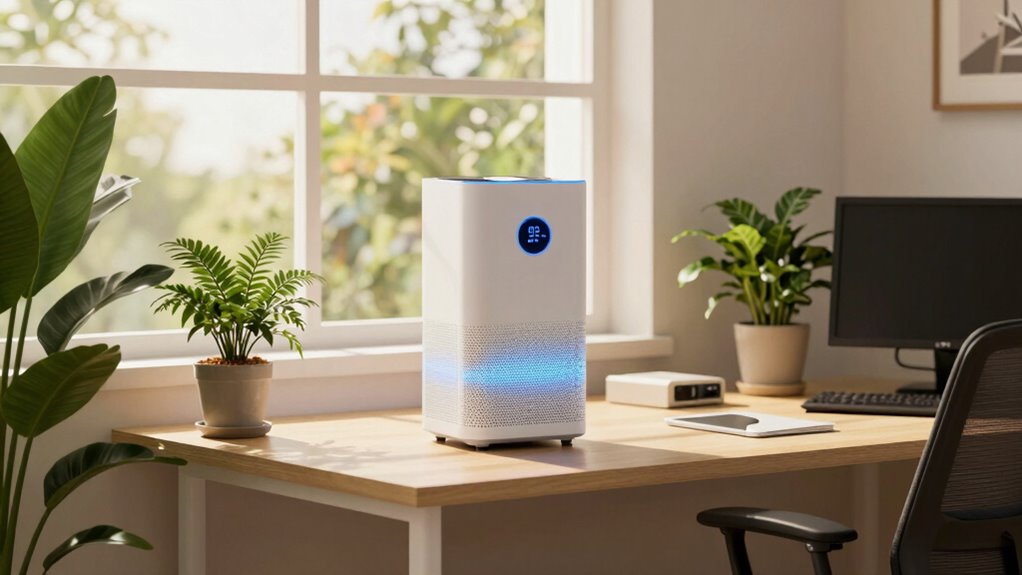
Choosing the right air purifier can considerably improve the air quality in your home office, especially if you spend long hours there. To find the best fit, consider air purifier features like HEPA filters, noise level, and energy efficiency. Look for models that effectively remove dust, allergens, and pollutants. Pay attention to filter replacement costs and frequency—some purifiers require more frequent changes, which can add to ongoing maintenance. An easy-to-access filter replacement process is a big plus. Additionally, consider size and airflow capacity to ensure it covers your workspace adequately. Selecting a purifier with the right features and manageable filter replacement schedules helps maintain clean, healthy air without hassle or added expense. Incorporating air quality improvement techniques alongside your purifier can further enhance your environment in your home office. Regularly checking and maintaining filters according to manufacturer guidelines can prolong the lifespan of your device and ensure optimal performance. Using a purifier with advanced filtration technology can also help target a broader range of airborne contaminants, making your workspace even healthier. Paying attention to air circulation can help distribute purified air more effectively throughout your workspace. Additionally, choosing a model with ventilation features can improve overall airflow and reduce stale air buildup.
Tips for Maintaining Clean and Healthy Indoor Air
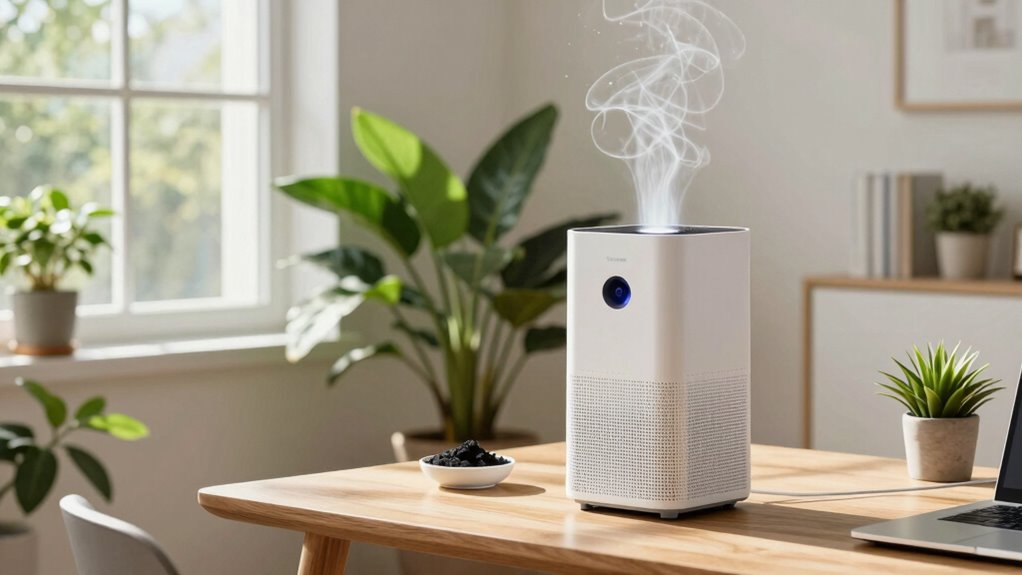
Once you’ve selected the right air purifier for your home office, maintaining its effectiveness is key to ensuring consistently clean and healthy air. Be aware of common air quality myths that can lead to complacency; for example, some believe plants alone purify indoor air, but they’re not enough. To keep indoor pollutant sources in check, regularly clean surfaces, vacuum carpets, and avoid smoking indoors. Keep windows open when possible to improve ventilation, but don’t rely solely on fresh air to remove all pollutants. Change filters as recommended by the manufacturer, and avoid blocking air intake or outlet vents. These steps help your air purifier work efficiently, reducing indoor pollutants and supporting healthier air quality every day.
How to Check Your Indoor Air Quality Regularly
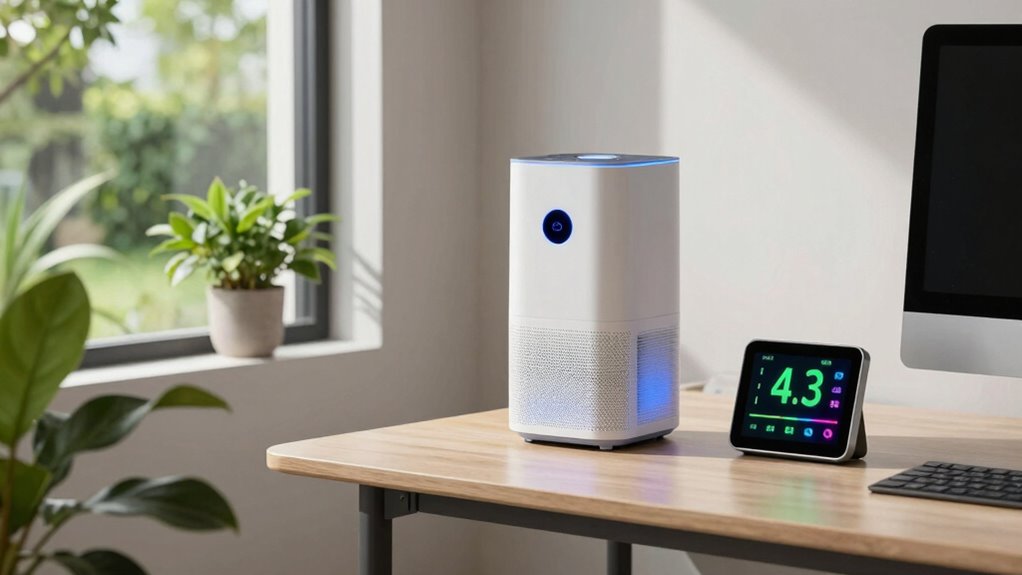
To keep tabs on your indoor air quality, consider using an air quality monitor that provides real-time data. Regular visual inspections can also help you spot issues like mold or dust buildup early. Combining these methods guarantees you stay aware of your home’s air health consistently.
Use Air Quality Monitors
Regularly checking your indoor air quality is essential for maintaining a healthy home environment, and using air quality monitors makes this process straightforward. These devices track levels of indoor pollution, such as volatile organic compounds (VOCs), particulate matter, and humidity. With real-time data, you can identify pollution sources and act promptly. Consider these features when choosing a monitor:
- Ease of use and digital display
- Connectivity with smartphones for alerts
- Ability to measure multiple pollutants simultaneously
Conduct Visual Inspections
Conducting visual inspections is a practical way to spot potential indoor air quality issues before they become serious. Look for signs like dust buildup, mold, or lingering odors. Check decorative fixtures, such as ceiling fans or light fixtures, for dust or moisture. Assess furniture placement; avoid overcrowding, which can trap dust and reduce airflow. Make certain vents and air filters are clean and unobstructed. Regularly examine window seals and curtains for mold or dust. Keep an eye on hidden areas where dust and allergens can accumulate. Use the table below to guide your inspections:
| Inspection Area | What to Look For |
|---|---|
| Decorative fixtures | Dust, moisture, or mold |
| Furniture placement | Clutter, dust buildup, airflow issues |
| Vents and filters | Dust, dirt, debris |
| Hidden areas | Mold, dust, signs of pests |
Frequently Asked Questions
How Often Should I Replace My Air Purifier Filters?
You should replace your air purifier filters based on the filter lifespan recommended by the manufacturer, typically every 3 to 6 months. Follow the replacement schedule to guarantee the best air quality and device efficiency. Regularly check filters for dirt and clogging, especially if you notice decreased airflow or odors. Changing filters on time keeps your air purifier working effectively, helping you breathe cleaner, healthier air in your home office.
Can Certain Houseplants Improve Air Quality Without Maintenance?
Yes, certain houseplants can improve air quality without much maintenance. Plants like snake plants and pothos are low-maintenance and known for their plant benefits, such as filtering toxins and increasing oxygen. They require minimal watering and care, making them perfect for busy home offices. These plants naturally purify the air, helping you breathe easier without additional effort or frequent upkeep.
What Are Signs of Poor Indoor Air Quality?
You’ll notice if your indoor air quality is poor when you’re overwhelmed by persistent indoor odors or suffer from sneezing and itchy eyes caused by airborne allergens. Other signs include lingering musty smells, unexplained headaches, or feeling unusually fatigued. If these symptoms occur frequently, your home’s air might be a silent killer, making your workspace uncomfortable and unhealthy. Addressing these signs promptly can considerably improve your indoor environment.
Are Air Purifiers Effective Against All Indoor Pollutants?
Air purifiers are effective against many indoor pollutants, but they do have limitations. They work best with particles like dust, pollen, and pet dander, thanks to HEPA filters. However, their pollutant specificity means they might not remove gases, odors, or volatile organic compounds (VOCs) effectively. To improve your home office air quality, consider using air purifiers alongside proper ventilation and air quality monitors to address all pollutant types thoroughly.
How Does Humidity Affect Indoor Air Quality?
Humidity levels directly impact your indoor air quality. When humidity is too high, it creates the perfect environment for mold growth and dust mites, which can worsen allergies and respiratory issues. Humidity control helps maintain ideal moisture levels, preventing mold and improving air quality. Keeping humidity around 40-50% balances comfort and health, ensuring you breathe cleaner air and reduce the risk of mold-related problems in your home office.
Conclusion
Improving your home office air quality isn’t just about comfort—it can boost your productivity and health. Did you know that poor indoor air can cause headaches, fatigue, and even respiratory issues? By ventilating regularly, adding plants, and using air purifiers, you create a healthier workspace. Keep checking your air quality to stay ahead of pollutants. Small changes lead to big benefits, so take action today for a fresher, safer home office environment.
Columbus Day / Indigenous Peoples' Day Picks
long weekend sales
As an affiliate, we earn on qualifying purchases.